


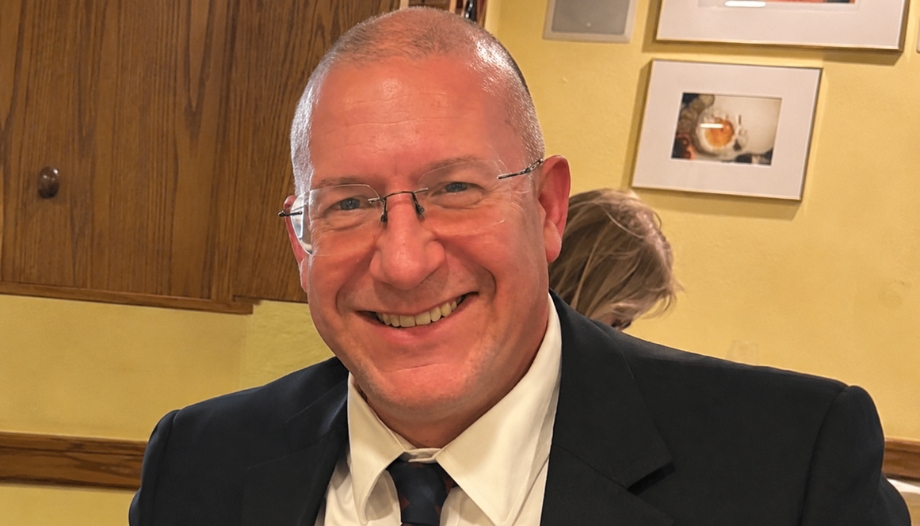
With the start of the new school year just around the corner, OSV News asked John DeJak, director of the Secretariat for Catholic Education at the United States Conference of Catholic Bishops, to provide an overview of Catholic education in the country. As a former teacher and administrator who has worked in both diocesan and independent schools since the late 1990s, DeJak is in a unique position to assess the state of the nation’s approximately 5,800 Catholic schools, which serve nearly 1.7 million students. The interview has been edited for brevity and clarity.
Please describe your role. How do you advise the bishops on matters of Catholic education?
–I am the chief staff member of the bishops’ Committee on Catholic Education, and my jurisdiction covers Catholic education from preschool through high school across the United States, with an emphasis on institutional settings, including Catholic higher education—that is, all our Catholic universities and colleges—and the related public policies.
I have three other staff members and advisors who assist me, and I speak with Bishop David O’Connell several times a week. He is the bishop of the Diocese of Trenton, former president of The Catholic University of America, and chair of the Committee on Catholic Education of the United States Conference of Catholic Bishops (USCCB). My job is to carry out his priorities—and those of the other bishops on the committee—in accordance with the USCCB’s mission.
What trends are new, and which ones are continuing in Catholic education?
–The committee of bishops has focused on several issues that have remained relevant under different presidents.
Before Bishop O’Connell, Bishop (Thomas) Daly (of Spokane) showed great interest in evangelizing those who are not affiliated with any religion or who have become estranged from the Church, with a special focus on young people and young adults.
According to him, an analysis of the data shows that many of our young people leave the Church at age 13 or 14. They view Confirmation as a «graduation» from the Church and never set foot in it again. We must examine this situation: What are we doing right, and what are we lacking?
That is one of the areas—a review of Catholic pedagogy and practice in light of what the Church has always done—that has been a project of the committee for several years.
Another important aspect is the emphasis on the inclusion of students with disabilities in our Catholic schools. Over the past 10 years, with the support and encouragement of the bishops, we have made significant progress in the way we serve all our Catholics. It is a mandate.
Another trend that has emerged since the COVID-19 pandemic—and has been exacerbated by cell phones and the ubiquity of technology—is the issue of student mental health. While family breakdown plays a role, there have also been spikes in depression and suicidal ideation as a result of these new technologies and social media, in a sort of culture of unreality.
It seems there is an increase in the number of independent Catholic schools operating outside the oversight of the dioceses. Is this a blessing or a challenge?
–The Church has always maintained that parents can choose the environment and school that best suit their circumstances and those of their child.
Some choose to homeschool their children. Others choose public school. Still others choose private schools. However, Catholic parents have a duty to educate their children in the faith.
This renewal of Catholic education—which includes some independent schools—is, in reality, a return to a coherent vision of reality, born from the heart of the Church. It helps students understand where they come from, where they are going, and why they are here. And this is what Catholic education has always done.
I believe it has had a stimulating effect on many of our diocesan schools, as well as on schools run by religious orders, so overall it has been positive.
Catholic education also appears to be going through a period of experimentation, with the rise of classical schools, microschools, and hybrid homeschooling. What do these emerging models tell us about innovation?
–What these new schools do is acknowledge the historical reality that, unfortunately, secularizing influences—the progressive education that began almost at the same time our bishops were founding the system of parochial schools—took hold in university departments of education and in the institutions where many teachers were trained. There, certain assumptions exist that contradict a coherent Catholic understanding of the world.
It is inevitable that we have not had access to certain things or received specific training, but it is our duty to understand this and try to get back on track. I believe parents are recognizing the impact of these secular influences, and this is evident in the dropout rates.
So, do you consider this experiment to be innovative, but also a return to the past?
–Yes, exactly. God raises up saints for the times when they are needed. I think something similar is happening here in terms of the renewed appreciation for traditional teaching methods. It’s about awakening these children’s sacramental imagination, so that when they look at the world, they know there’s more to it than that. There’s something deeper and supernatural behind it all. God is bringing all of this to life.
How does homeschooling in general fit into the broader landscape of Catholic education?
–People choose homeschooling for a variety of reasons, some financial, others philosophical. It is an integral part of Catholic education, and parents have the right to make that decision, given their circumstances. The Church has always emphasized the need for schools because it knows that parents cannot do everything, but it certainly does not oppose parents’ choice to educate their children at home.
The freedom to choose a school remains a hotly debated political issue. How does it fit into the current landscape and the future of Catholic schools?
–Freedom of school choice is a crucial issue for the bishops, particularly the federal tax credit for scholarships—also known as the Educational Freedom Tax Credit—which was part of the «One Big Beautiful Bill» passed last year. This is an opportunity for taxpayers to donate $1,700 to a scholarship-granting organization and have that donation count as a tax credit.
It has great potential if the Church takes advantage of this opportunity, as it allows parents and families to apply for scholarships. These are private funds, not federal funds, and they allow families to choose the school of their choice, which may be a Catholic school. .
This truly puts the power back in the hands of parents as the primary and most important educators. It would allow more families to attend Catholic schools and could be transformative if people take advantage of it—provided that communication is effective and people are aware that this option exists.
And, ultimately, that is an opportunity to save more lives.





 Español
  English
  Italiano
  Français
  Deutsch
  Polski
  简体中文
简体中文