



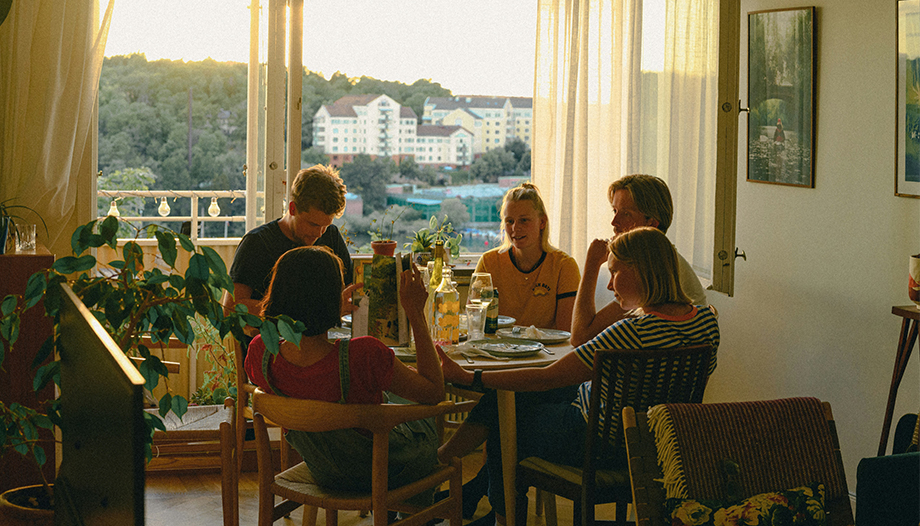
The first time I realized just how fundamentally important the home is for children, for families in general, and, by extension, for societies as a whole, was 60 years ago in Ica, a small coastal city in Peru located south of Chiclayo, where Pope Leo XIV would later spend many years.
A recent graduate of the London School of Economics, I decided to spend 18 months in a UN partnership program to help establish a new university in what was then an impoverished area of the country.
Life Lessons in Ica
Part of the agreement was that I would live in a shantytown with the local indigenous community; I had a small, spartan cabin with water and electricity only for a few hours a day.
There were numerous similar huts that, unlike mine, were crammed with children. It was common to have one child a year, but the lack of medical facilities, family planning, and poor hygiene led to a very high infant mortality rate—nearly 50 % of children died before the age of 5.
Despite all these hardships, there was enough to eat (rice, beans, and papayas almost every day), and I was welcomed into a close-knit community; I even played soccer on the local team; everything revolved around home and family.
I came to appreciate the importance not only of the immediate family, but also of the broader, intergenerational family that they all practiced. No child felt excluded or rejected, and older people continued to be part of the family—something that, unfortunately, is not the case in many of our societies today.
The Balance Between Success and Family
Life went on, and I enjoyed a career that took me to the top of a major oil company. I also married a Swedish woman 59 years ago, and we have two children and five grandchildren.
Visiting and living in many parts of the world—such as Italy, Singapore, Switzerland, and Scandinavia—contributed to my personal growth.
It wasn't easy to balance family life with the demands of a highly competitive career at a time when the importance of work-life balance was not yet recognized, but my wife and I always put our family life first because it was the cornerstone of our lives, providing us with security and happiness.
And that is precisely why it exists Home Renaissance Foundation For the past 20 years, we have been working to persuade governments and international organizations to do everything in their power to facilitate this. I wish we weren't needed.
New Housing Challenges
At Home Renaissance We seek to explore and address the impact of the home on personal development and the challenges of family life that we all face.
For example, the constant challenge of ensuring that different generations live together in harmony—especially now, in societies where an aging population places an ever-increasing strain on housing and healthcare resources.
Young people are becoming independent later in many developed countries because the cost of housing is prohibitive, but there is still a reluctance to design housing that is flexible enough to meet the needs of different age groups.
We could learn from Malaysia, for example, where families traditionally live close to one another in separate units and move to different accommodations depending on the needs of their growing families; Grandparents often help care for children whose parents work, as families struggle to meet the growing demands and expectations of modern life.
We need to find new ways to use today's technology to recreate the sense of community and security that were common to many people in the recent past.
The Impact of the Digital Divide
Another growing and rapidly evolving challenge is finding ways to adapt to the new and changing pressures of social media and young people’s vulnerability to its ubiquity.
We are so far removed from the simple, orderly, and stratified society of the mining village in northeastern England where I began my life in the postwar years that it now seems like ancient history. For people of my generation, this is often frightening because technology has advanced so rapidly that there are no longer any experiences to pass on to our children. One of the tasks of Home Renaissance Foundation, with the help of academics and experts, is to provide guidance on how households can adapt to meet these challenges.
It is not an easy task and requires constant attention to keep up with the ever-faster pace of technological change.
Without a doubt, living standards have improved substantially in most parts of the world, with the possible exception of sub-Saharan Africa; malnutrition in China and India, for example, has been virtually eradicated; and women’s rights have been recognized in many of our societies.
Now we must learn to use these improvements to benefit households around the world—and, in particular, the children who live in them. It is a huge undertaking, but one that is immensely important for Home Renaissance Foundation.
President of the Home Renaissance Foundation and former CEO of British Petroleum.






 Español
  English
  Italiano
  Français
  Deutsch
  Polski