



A macro report, prepared by the US consulting firm Pew Research published at the beginning of that year, noted a stabilization in the decline of Christianity in the United States. Almost in parallel, the newsletter ‘The Morning’, by The New York Times, addressed religion and spirituality, concluding: “The United States wants a God.”. And then came the surprise of the election of Pope Leo XIV, the first pope from the United States.
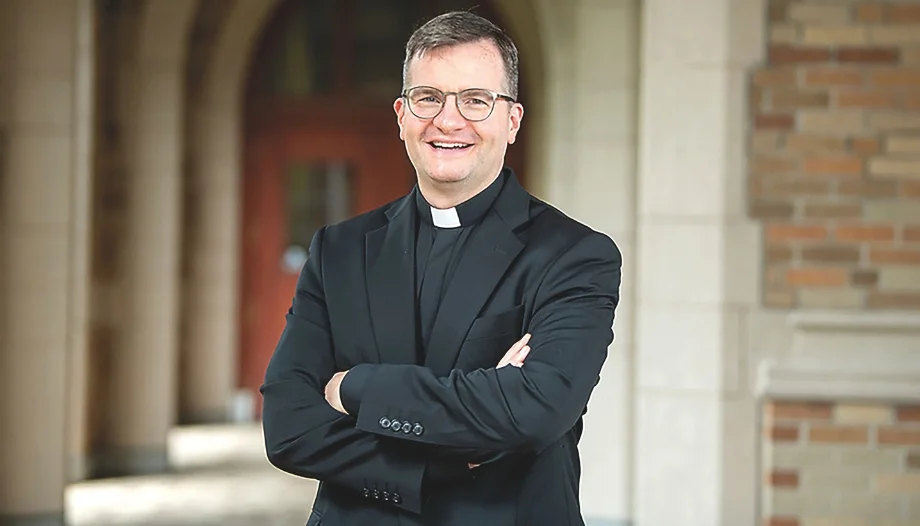
In this context, we interviewed Fr. William Dayley, a priest of the Congregation of the Holy Cross (CSC) and professor at the University of Notre Dame Law School, who recently organized a summit on religious freedom in Dublin.
In his opinion, there are “green shoots in the life of faith” in your country. And although “It is too early to judge whether there will be a significant ‘Leo effect’ on the practice of Catholicism in the United States, but the early signs are certainly encouraging.” states.
How do you rate the study of Pew Research that points to a stabilization of the decline of Christianity over the years in the United States?
—The study of Pew Research This coincides with my own anecdotal experience in several respects. I find myself in an unusual situation at the University of Notre Dame, where more than 80% of the student body is Catholic and, in our university residences and many academic buildings, well-attended daily Masses are held, so the decline is less evident in my daily life.
But there are undoubtedly fewer people attending Mass in 2025, as a percentage of the student population, than when I graduated in 1990. However, at least among those who attend Mass today, the level of catechesis is higher than that of my generation, and the enthusiasm and devotion they show are “often” surprising.
So you see trends in both directions, as the study indicates: we have conversions and reaffirmations in impressive and moving ways, but we also see many disaffiliations. We talk about this a lot in my religious community, the Congregation of the Holy Cross, which founded Notre Dame and continues to serve there, and more broadly throughout the university: how we can draw people back to the practice of faith.
Have levels at least returned to pre-pandemic levels? What about evangelization in university settings?
— We are certainly seeing a resurgence at Notre Dame after the lows reached during the pandemic in terms of Mass attendance, and great fervor in our adult confirmation and Christian Initiation of Adults programs, especially among our international student population. This does not necessarily counteract the overall trend of disaffiliation, which reflects research by Pew Research mentioned above, but things are not one-way.
Do you think there may be a certain resurgence of spiritual life or religious practice, as reported by the New York Times?
—Once again, my daily work with students and fellow faculty members, as well as the numerous random or chance conversations one might have at airports or weddings, are fully consistent with what the New York Times: that even amid declining membership in organized religions, people maintain a sense of belief in God, that we are not alone in the universe, that there is a transcendent dimension to life that they want to pay attention to.
Any anecdotes to illustrate this statement?
—I often think about a man I met years ago when I was working as a hospital chaplain. I visited him late at night because the nurses noticed he was agitated. He greeted me quite politely but told me that although he liked to talk, he wasn't religious. So we chatted about how things were going for him, and after about twenty minutes, I thought I should let him sleep, so I said goodbye. “Aren't you going to pray?”, he asked me. I replied: “You told me you weren't a believer.”, to which he replied “Just because I'm not a believer doesn't mean I don't pray!”. So we prayed together, and he asked me to come back and visit him the next morning to talk about faith and the great improvement he had felt after our visit.
Correlation does not imply causation; perhaps it was just the effect of the medicine. But it was a very intense experience that allowed me to understand the complexity of people's struggle with faith and life.
In addition to the situation in the United States, you are familiar with the situation in Ireland. What do you remember?
—Indeed, I spent the years 2016–2020 in Dublin, Ireland, as the founding director of the Notre Dame-Newman Center for Faith & Reason and in the church of Our Lady Seat of Wisdom, built by Saint John Henry Newman.
There we organized conferences, concerts, various forms of catechesis for young adults, etc., in an effort to present the faith with sophistication, hope, and joy during a period of decline for the Church in Ireland.
We quickly found enthusiasm for a new Mass for young people, but the work takes time and is like in the Gospel of Mark: “This is how the kingdom of God is: it is as if a man scattered seed on the ground and slept and rose night and day, and the seed sprouted and grew, without knowing how.”. We must leave the profound work of conversion to the Holy Spirit and do everything possible to cooperate!
Is there any noticeable impact of Pope Leo XIV's election on the faith of American Catholics? How do you think the election of the first American pope has been received?
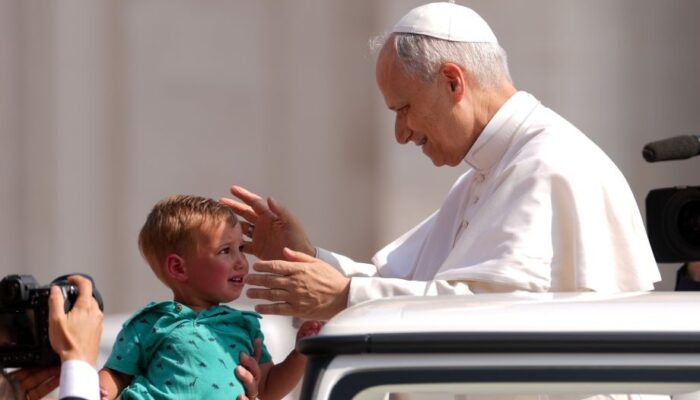
—Without a doubt, it is too early to judge whether there will be a “Leo effect” significant in the practice of Catholicism in the United States, but the early signs are certainly encouraging. Americans were surprised and fascinated to see that one of their own had been elected; this makes the papacy seem quite close, something that must be quite normal for Italians historically, but which is new in the United States. “He's been to our hot dog stands! He's cheered on the Chicago White Sox! He went to Villanova!”.
Beyond these human details, Pope Leo XIV has also shown warmth and depth in his sermons, a gentleness and focus on Christ that I hope, together with the novelty of his election, will attract American Catholics who may have felt a little lost to come back and listen to the Gospel.
You mentioned the polarization we are experiencing socially. Any thoughts on this?
–Pope Leo XIV has focused his preaching on Christ, not on the Church as such, and certainly not on himself. In the practicing Catholic world, we tend to blame each other—for our disputes over liturgy, our different political approaches, or certain controversial theological issues—for the decline in the number of faithful or in Mass attendance. I have always thought that exaggerating this would accelerate, rather than slow down, any decline.
People don't want to engage in arguments. There is enough discord outside the Church. They want to encounter the Lord, experience love, mercy, and inspiration, know themselves as creatures, and know their Creator better. Pope Leo XIV shows every sign of understanding this and urging us to stop obsessing over our internal disputes, which certainly have their place, of course, in order to renew our focus on Christ.
We have just celebrated Easter, Pentecost, and the Solemnity of the Holy Trinity, and many of our biblical texts remind us of Jesus' prayer that we may be one as He and the Father are one. I am convinced that such unity will draw others to the divine life.
In recent months, the United States has experienced a movement of Eucharistic revitalization. How has this been experienced?
—The American bishops have asked priests to renew their sense of the Real Presence and the importance of reverent worship, Eucharistic adoration, and the idea that the Eucharist is the source and summit of our life as a Church in their preaching and parish activities, as well as in their broader efforts at catechesis and worship. We see this at Notre Dame, where there is greater enthusiasm for adoration, Eucharistic processions, and the like than when I arrived here decades ago as a teenager.
Can we look to the future of American Catholicism with hope?
—There are certainly green shoots in the life of the faith. Things may get worse before they get better in numerical terms, but that does not mean we cannot see glimpses of a way forward, or that we do not have reasons to be optimistic. The early Christians faced far greater difficulties and far greater cultural dissonance than the Church faces today in sharing our experience of Christ with our neighbors.
Modern communications and travel make evangelization much less daunting than it was for St. Paul and his companions! Therefore, we must not succumb to the ever-present human temptation to think how much better things were in the past and focus only on our own struggles: the cross comes to us all, paradoxically, we do not invite it, it is a struggle, but when we take up the cross every day with Christ, we discover that we are indeed on the path of life.




 Español
  English
  Italiano