


This year marks the six-decade anniversary of the Neocatechumenal Way, a Christian initiation itinerary that was born in the humble shantytowns of Palomeras Altas, in Madrid, where Kiko Argüello and Carmen Hernandez began to share the Gospel with the poorest, following the example of the hidden life of Jesus in Nazareth. Conceived as a path of rediscovery of Baptism, it is based on three pillars: Word, Liturgy and Community. Today, it extends to more than 6,250 parishes in 1,400 dioceses around the world, forming more than 20,000 communities that live and witness to the Christian faith.
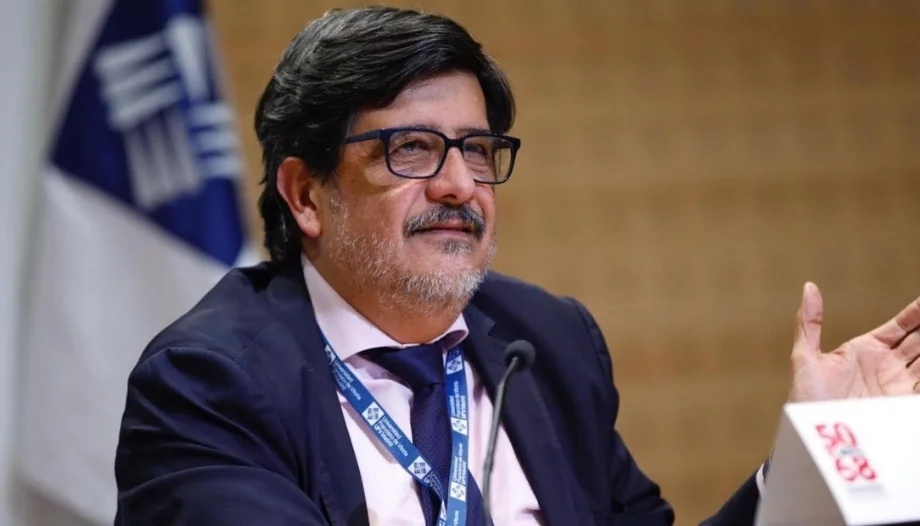
In this context, we spoke with Ángel J. Barahona Plaza (1957), PhD in Philosophy, Bachelor of Science in Education and Dogmatic Theology, Director of the Department of Humanities of the University of Navarra, and Director of the Department of Humanities of the University of Navarra. Francisco de Vitoria University and principal investigator of the International Research Group on Violence and Religion. Barahona is the author of numerous publications on family, love and violence, anthropological and theological themes. In this interview, he shares his vision of the charism of the Neocatechumenal Way, which he met in a parish of Discalced Carmelites in Castellón, and reflects on the fruits that, after 60 years, continue to transform communities around the world.
How would you describe the specific charism of the Neocatechumenal Way to someone who only knows it “from the outside”?
- It is a Christian initiation of adults that wants to recover baptism in the parish environment for those who have left the seed unwatered since they received it, or who have not received it yet. Many times it remained a mere social rite of belonging to a culture, but not having received an adequate formation in time, it lost the capacity to make it vital and existentially determining. The Way intends that “being baptized” embraces and implies our whole existence, in each and every moment and space in which we move.
In an increasingly individualistic society, the Way is committed to community. Tell us about your experience of this way of living the faith in small groups.
- Community life is a model rooted in Christianity from the very beginning. Christ chooses specific people but inserts them into a Way (as the Acts of the Apostles tells us, this is what the Christians were called: the people of the Way) in which the shared faith can be lived in community. The seductive power that Christianity exercised in the Roman Empire, in which everyone tried to survive in a hostile, individualistic world full of injustices, was the “look at how they love each other”. And that of loving each other is not experienced in narcissistic and self-referential or abstract relationships, but in a real relationship, where one learns to love the freedom of the other, to accept him in spite of his sins -knowing oneself-. A small group where the friction, the singularity of each one makes idealism difficult. It is the way to recognize oneself as a sinner, in the impossibility of loving the other as God did.
We always want to change those around us -children, spouse, relatives, partners, friends- because we do not accept them as they are, so when the other becomes a cross, we run away. When the other tells us what we do not want to hear, we separate ourselves from him. To love the other as he is, is to reproduce what Christ has done with us. Obviously this is not achieved by self-convincement, nor by moral will, but by placing the Word of God and the community celebration of the sacraments at the center of our daily life. To let oneself be denounced by the Word, to ask the priest for forgiveness of sins, to begin anew every day. It is absolutely miraculous and supernatural to live in a community in which I started 50 years ago and that I will be buried singing, or I will bury them (of which I have already had enough experiences), because I am the youngest of the first community of a parish in which there are already 18 communities.
In the Way, the catechist has a very important role. What exactly is a neocatechumenal catechist?
- Simply someone who, like a caravan scout in the desert, has passed before the path that those others he accompanies are about to pass. The catechist has his own community, he has lived for some time before what the others are going to live. Although their professions are very varied, their theological formation is dense. They are chosen by the community itself. From the first day they begin to walk, the community begins to frequent the Word, which is prepared in groups by reading together the Fathers, the pontifical documents, the great books of the saints of the history of the Church, going through the Scriptures from cover to cover. During the first years, we scrutinize Sacred Scripture using Leon-Dufour's theological dictionary, looking for all the parallels that the author cites and reading and commenting on each reference together. What we call “steps” are the high points of community life in which we voluntarily and freely put into practice the word received: either with what we call “echo of the word” or landing in our own life what Holy Scripture says, or with the communion of goods, or with the monthly sharing that exposes the brothers to the truth that we are each one of us.
How can a catechist make a mistake and how can this be corrected within the Way?
- Of course. If the brothers receive, always in community, a particular word, the decision to accept or reject it is theirs and no one else's. No one asks for an account of anything, no one is obliged to anything and no one claims anything from them. No one asks for an account of anything, no one is obliged to anything and no one claims anything from them. As in any human group, there are those who are more or less clear about this, but this is what we have received from Kiko and Carmen: total freedom. If something you do does not come from gratitude, from your free will, we always say that it is better not to do it. The law does not save anyone. If the doctrine of the Church is proposed, it is to be taken seriously as a pedagogy, not as an obligation. That is why everything is done in community. Certainly there may be people, as in any social or even ecclesial reality, who are weaker or more affectively vulnerable, or who feel more in need of instructions from others, but acting in this way is not what we have received from our catechists. That is why whenever we visit a community we always go as a team to avoid abuses of authority or personalism. The team is made up of married couples, single men and women, and always with a priest at the head. We never listen to anyone who does not ask for it, and never alone. And it is the community and the team in communion who ratify the word and preach it.
If you had someone in front of you who was very critical of the Camino, what would you want them to be able to understand before judging it?
- To know something truthfully, we must approach it without prejudice. When we assign labels, we often try to save ourselves the effort of searching for the truth. Community life is very healthy, there are no impositions, the catechist appears on rare occasions, the presbyter, the community and the Holy Spirit are the ones who educate in the faith, really, because they are the ones who are always there: in the liturgical celebrations, in the sacrament of confession, in daily life. Then I would tell him that the Holy Spirit is plural, very rich in creativity, and that not everyone fits in everything. Holiness is neither monolithic nor monochord... and the only one who can judge is God or Peter, in whom he deposited the authority to guide his boat. Let him see how throughout the history of the Church there have been various ways and means of living the faith and, therefore, let others have their own experience. The Way is endorsed by the statutes signed by Benedict XVI - the initiative came from St. John Paul II - it has been loved and encouraged by all the popes. When we are corrected, we accept Peter's correction, because they are gestures of love, like those of a father towards his children when he loves them, because no child is perfect, nor does he have to be. We are all poor sinners, but it is through this weakness that the Lord makes Himself present and strong, so that it can be seen that it is He who acts in earthen vessels.
Those who dare to judge may think that it would be better to act differently, that the Way should adopt other ways, or that their perspective should become a universal criterion for defining what is Catholic or what is the work of the Spirit. But the Church's secular praxis educates us in discernment to know that there is not just one way to be holy. We see it in history: there is no single way of living the faith.
But it really wouldn't make much sense for me to tell him, because I could get into a dialectic of opposing arguments and the best thing would be to invite him to find out for himself. And I would pray for him in secret that the Lord would enlighten him and let the Spirit act in his mind and heart. As Wittgenstein would say, if one wants to play mus, even if it is the same cards as tute, one has to respect the rules of mus, not play with the rules of tute. And “our rule” has been recognized and signed by the Holy Catholic Church. And we have to respect it and not change it at the whim of those who may have good will but not the authority conferred by the Lord to Peter. There is only one Pontiff and he has said that the Way is a valid itinerary for the man of today. If we do not like this or that, it does not mean that it is not very good... the only one who can judge is God.
What do you think is the reason for the expansion of the road?
- Because man is a relational being, and community is fundamental to living the faith. People need to know that God loves them, that their life has meaning. And the preaching of the kerygma is the beginning of the journey: we have been proclaiming the kerygma and the Servant of YHWH (Yahweh) for sixty years when it was hardly spoken of except among theologians. From gratitude for this love received and lived in community comes the willingness to become evangelizers and leave everything to proclaim the risen Christ. Thousands of families with children who go on mission, who leave good jobs, homes and security, to go wherever the Spirit sends them; thousands of ordained priests, missionaries and itinerants, this is not the fruit of brainwashing, nor of an imposition, nor of obedience to anyone, but of gratitude.





 Español
  English
  Italiano