


– Katie Yoder, OSV News
“Although I faced challenges, having a community was the most important thing, and that’s a fundamental part of what I strive to achieve today as a doula,” said Catholic doula and coach Nicole Kristensen, who serves communities in New York and Connecticut.
(Editor's note: A doula is a person with no medical training who provides emotional and practical support to women during pregnancy, childbirth, and the postpartum period, without replacing the care provided by doctors or midwives.).
Kristensenowner of Holistic Maternity Care , and other experts on the postpartum period and Catholic leaders have spoken with OSV News about the Church’s role in providing postpartum support and guidance to new mothers who are facing difficulties.
Her comments come at a time when mothers are speaking openly about the difficulties of the postpartum experience amid the highly publicized trial of Lindsay Clancy in Massachusetts, which ended in a mistrial on September 4. The case has raised awareness about postpartum psychosis, a serious maternal mental health disorder.
Postpartum support is a pro-life issue
These experts agreed that the Church and Catholics have a responsibility to be involved in postpartum support as a pro-life issue. The Church is already active in this area, they said, but Catholics can do more. Many of them emphasized the importance of parish involvement.
Although these experts came from different fields and government agencies, they wanted new mothers who are facing difficulties to know that they are not alone.
“The Church plays an important role in postpartum support because Jesus commands us to care for the most vulnerable, and women after childbirth and their babies fit that description,” said Kat Talalas, deputy director of pro-life communications at the Secretariat for Pro-Life Activities of the United States Conference of Catholic Bishops.
The Postpartum Care Landscape
Currently, there are various national resources available for women experiencing postpartum difficulties. Women with maternal mental health issues can contact the Suicide and Crisis Helpline (988) or the National Maternal Mental Health Hotline. Other nonprofit organizations that support mothers during the postpartum period include Postpartum Support International and the Policy Center for Maternal Health.
Maternal mental health disorders, also known as perinatal mental health disorders, are common and affect up to one in five families in the United States each year, according to the policy center. The center notes that anxiety and depression are the most common complications of childbirth. However, these types of disorders are not universally detected or adequately treated.
According to the center, symptoms of postpartum depression include sadness, difficulty concentrating, difficulty enjoying favorite activities, and difficulty bonding with the baby. Symptoms of maternal anxiety include extreme fear, worry, and nervousness.
Recovery time, with imbalances
The experts agreed that the Church should support new mothers, especially those who are facing difficulties.
“In the months following childbirth, it takes all women months—and sometimes even years—to fully recover,” said Caroline Hartley, a nurse specializing in family care and founder of Fiat Integrative Health, a clinic that provides medical care and mental health services in Franklin, Tennessee. “Hormonal imbalances occur, sleep patterns are disrupted, and isolation is common. Approximately one in seven women suffers from postpartum depression, and nearly half are never diagnosed.”.
The mother of seven added, “If Catholics disappear at that moment, our pro-life witness will be incomplete.” Many of these experts and leaders identified postpartum support as a pro-life issue.
“It is absolutely essential—and I would say mandatory—that the Body of Christ be present to support mothers and families during the postpartum period,” said Mary Haseltine, a Catholic doula and mother of seven.
Something Essential
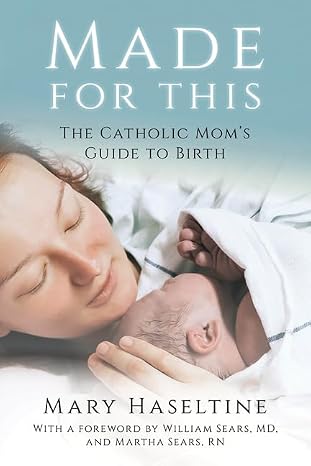
Haseltine is also the founder of Made for This, which offers resources on pregnancy, childbirth, and the postpartum period, and author of “Made for This: A Catholic Mom's Guide to Childbirth".
“This is not only part of the Gospel’s general mandate to care for those in need,” he said. “If, as a Church, we are going to ask families to promise to be open to life—as we do in our marriage vows—and to strive to be a people who value the dignity and beauty of every life and build a culture of life, this is essential.”.
A growing commitment
These experts acknowledged the Church's role in postpartum support, highlighting Catholic hospitals, pregnancy centers, and doulas.
They also mentioned ministries such as Elizabeth Ministry International, a Catholic apostolate that supports women and families through the joys and challenges of motherhood, and Walking with Moms in Need, a parish-based initiative of the U.S. bishops that serves pregnant women and vulnerable mothers.
“Although the ”Walking with Mothers’ program is primarily aimed at low-income women, the available resources and support offered by the parish could be extended to any mother facing difficulties,” said Talalas of the U.S. bishops.
In U.S. dioceses, in parishes
According to Talalas, at least one-third of U.S. dioceses are participating in the “Walking with Moms in Need” initiative, and they have parishes that are also participating, although she added that the number is likely higher.
Parishes with ministries that support mothers in need play an active role in supporting mothers during the postpartum period. The ministry of the parish of San Felipe and Santiago in Exton, Pennsylvania, recently donated postpartum personal care items to The 4th Trimester Mom, a nonprofit organization dedicated to maternal health.
Prayer, peer support, mentoring
Elizabeth Ministry International, Headquartered in Wisconsin, it currently has more than 800 registered chapters. Its members offer prayers, mutual support, mentoring, educational materials, spiritual nourishment, and inspirational resources.
Krys Crawley, executive director of Elizabeth Ministry International, said that her organization hopes to establish branches in every parish around the world.
“Our Catholic understanding of human dignity tells us that both the mother and the child are infinitely valuable,” said Crawley, who is also the founder and executive director of Life’s Connection, a community health and education center that provides support during pregnancy and the postpartum period.
Care for the Baby and the Mother
Hartley stated that Fiat and similar organizations follow a comprehensive model in which they care for both the baby and the mother. Catholic doulas, such as Haseltine and Kristensen, also provide support to women before, during, and after childbirth. Both offer free online resources for the postpartum period.
Haseltine also offers a Bible-based postpartum recovery plan and a directory of Christian birth professionals to connect women with the support they need. Kristensen offers an e-book to help women prepare for a peaceful postpartum period and lists helpful articles for this stage.
A parish-centered solution
However, these experts stated that the Church can do more. Many encouraged parishes to get actively involved. They recommended that parishes start support groups for mothers in need and for the Elizabeth Ministry, or expand existing ones. Others suggested creating spaces where mothers can connect, build community, and help one another.
Many people recommended organizing meal delivery programs and providing childcare for new mothers and growing families. They suggested staying in regular contact with the mothers and maintaining a list of resources that might be useful to them.
“One of the most important changes the Church can make is to stop treating postpartum difficulties as a private matter and instead proactively support mothers,” Hartley said.
“You’re not failing in the gift you’ve been given”
These experts also shared advice for mothers facing difficulties. They recommended that mothers turn to their family members, friends, and parishes. Some advised prayer. Many encouraged mothers not to be afraid or ashamed to ask for help. They wanted them to know that the Church and Catholic ministries want to walk alongside them.
“If you’re a new mom and you’re going through a tough time, listen to this: you’re not a bad mom, and you’re not failing the gift you’ve been given,” Hartley said.
“Loving your baby and feeling confusion, fear, anger, emptiness, or a lack of connection can coexist,” she added. “That doesn’t mean you’re ungrateful. It means your body and mind have gone through something enormous and haven’t recovered yet.”.
“You should never have had to go through this alone.”.
Hartley and others urged women to are going through a difficult time so they can tell their husbands, friends, priests, midwives, counselors, and doctors.
“You said ”yes“ to life, and that ”yes’ still includes you and your needs,” she said. “You should never have had to carry this burden alone.”.
——————-
– Katie Yoder is a correspondent for OSV News. She writes from Maryland.
– This information was originally published in OSV News, and you can read it there here.
—————





 Español
  English
  Italiano