



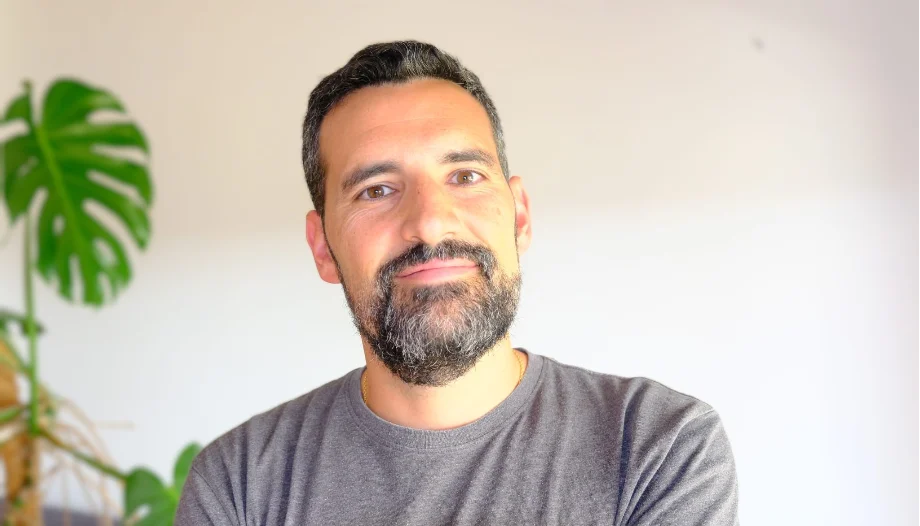
There is a question that makes precisely those who have the most reason not to ask it feel uncomfortable: Is it possible for someone to have received a good Christian upbringing—at home, in school, and in college—and yet not have had a personal encounter with Jesus Christ? The answer is yes. And it is neither a rare nor an isolated case. It is, without a doubt, a common phenomenon.
Thousands of people who have grown up in active parishes, in Catholic schools with sound doctrine, in parishes, movements, and ecclesial communities with decades of history and undeniable fruits, may reach maturity with a faith that is intellectually sound, ritually observant, and emotionally lukewarm. A faith that knows a great deal of theory about God but seems never to have had a true personal encounter with Him. A faith that knows the map of the territory but does not seem to have found the precious pearl hidden in the field.
The current context
In many countries—including Spain—people no longer nurture their faith in just one place. They turn to different realities, follow various paths, and, at the most unexpected moment, God’s grace takes them by surprise when they least expect it.
And it's not always the place where he spent the most time or received the most training; sometimes it's actually somewhere else entirely. This is the story of Tito Unda. And in a way, it's also the story of many others.
Of course, this does not mean that many people continue to find their spiritual path along a single journey, through a single spiritual tradition, or in the same parish they have attended all their lives. What is surprising is how God continues to reach out to each soul at the most unexpected turns along the way, often after failures—at least apparent ones—or after a journey with many stops along the way.
A highly educated Christian
If one were to sketch out on paper the profile of someone who should already have had a profound encounter with God, that profile could be Tito’s. He attended an Opus Dei school in Madrid. During his teenage years, he attended formation groups (círculos), retreats, and gatherings at a center of the Work.
On his mother's side, part of his family was very close to the Neocatechumenal Way, and he had occasionally participated in Masses and activities organized by the group ecclesial journey. And, as if that weren't enough, I also had a very lively parish—San Ignacio, in Torrelodones—and an excellent relationship with the parish priest.
His journey of direct experience with church institutions did not end there. Tito also became acquainted with Communion and Liberation when his parents joined the movement; they welcomed a young man from the Cenacle Community into their home, he attended an Effetá retreat, and he went on a pilgrimage to the Holy Land with Hakuna in the early days of the association.
A Special Year
However, her true encounter with God did not come about in any of those contexts. It came at age 36, just a few months ago, after a period marked by a series of tragedies among those closest to her: she lost two children just a few months into her pregnancies; a Colombian friend, who was married and had a young daughter, died of cancer after years of battling the disease; other friends suddenly lost a 2-year-old son; a nephew, also very young, spent weeks in the ICU; and then a cousin and a close friend passed away as well.
What is striking is not just the succession of misfortunes, one after another—unrelated but coming in rapid succession. There was no anger toward God. There was no crisis of faith. Nor was it a dramatic blow that knocked him to the ground and from which he cried out to heaven in despair.
It was something more subtle and profound: “I didn’t think I was a wreck, but clearly the succession of all those events and seeing how the main characters dealt with them were really softening me up. Those twelve months made me more aware of my vulnerability—that there are things you have to put in God’s hands.”
The Colombian woman holds a special place in his story. Tito’s wife became friends with her during her illness; they began attending a Hakuna worship group together, and something in that process began to tug at his heartstrings as well. “I’m certain that was the moment that sparked my ‘conversion.’ She was a person who had her faith, but what really moved me about her was how she coped with her illness with joy and acceptance. She’s the closest thing to an angel on earth that I’ve ever known. If I go to heaven, the first person I’m absolutely certain will be there is her.”.
From the Head to the Heart
From a professional standpoint, Tito is an entrepreneur and has worked at several startups He's tech-savvy, but he also has a distinctly intellectual side. He's one of those teenagers who had read Dostoevsky before turning 18, and perhaps that's why he tends to mull everything over in his head, turning it over and over again.
The paradox is that a man who had spent his life in Christian settings, who had read, studied, and attended Mass—a man who knew perfectly well who Jesus Christ was in doctrinal terms—yet for whom Jesus Christ was not a living, real presence in his daily life.
What ignited his faith like never before was attending, along with his wife, a “Life in the Spirit” seminar organized by the Catholic Charismatic Renewal in October 2025.
The key, says Tito, wasn't in receiving more content, more doctrine, or more arguments. The key was that Grace chose to touch his heart in a new way, so that he felt loved by God in a way he had never understood before.
“I had spent my whole life searching for God, but focusing on myself, on my own understanding. But Christ doesn’t enter through the mind; the mind can help anchor certain things. But the mind alone… Christ isn’t an argument—he’s a living person.”
For him, one of the most important discoveries was discovering the prayer of praise: “a prayer in which you don’t go to ask for something, or to give thanks, or to ask for forgiveness. And when you do that, you stop praying from the perspective of the self; nothing revolves around you. What matters is Him. You set aside your own abilities, open yourself up, and let Him act.”.
She learned to let go
Tito is the first to admit that his previous training wasn't an obstacle. It was, in fact, a necessary foundation. What he lacked wasn’t more knowledge, but the ability to let go of control over his life. And for someone with a very rational, highly competent mindset—someone accustomed to measuring results in business settings—that isn’t easy.
When he began to wonder what God wanted from him—what this whole process meant, what changes it entailed—he sought spiritual guidance. He found a priest from Opus Dei and had a conversation that, as he says, left him devastated. “I walked out of there bewildered. I came looking for answers and left feeling completely shaken. He told me that God’s will isn’t for you to do things. That God’s will is to win over my heart. And I was looking for a business plan ”with specific milestones—something measurable that would guide my steps with confidence.".
That tension between personal responsibility for fulfilling one’s obligations and surrendering to God’s care is one of the central themes of his journey. From the Work, he learned a culture of effort and responsibility, and from the Way, he learned of God’s unconditional love. However, the charismatic renewal helped him “manage to integrate responsibility and surrender. It’s very easy to surrender to God when only a miracle is possible, when an illness leaves you no other choice. The hard part is surrendering to God the things you believe depend on you.”.
Beyond the usually fruitless debates about whether some charisms are better than others, perhaps the most reasonable approach is to recognize the absolute sovereignty of God’s grace, which always operates beyond any classifications, touching the innermost fibers of each person’s heart at the precise moment and in the way that God chooses.
How is he doing now?
Tito admits that for many years he was more rooted in the Old Testament than in the New. “I lived more by the Ten Commandments than by the joy of the Resurrection,” and now he admits that “I live more by the Acts of the Apostles, the early centuries of Christianity, the letters of the apostles, and the Church Fathers.”.
He adds that he isn't much crazier than other Christians. “We all claim to believe in the resurrection of Christ, but until recently, I didn't realize what that meant for my life.”.
And it is striking that God has not overshadowed the rationality that usually governs Tito’s life, but rather has strengthened it: since then, he has been reading Scripture and the Catechism more attentively; he has read St. Teresa and St. Ignatius of Loyola, St. John of the Cross, and other classics of spirituality.
Today Tito is going to the Tuesday worship service with his wife. He has three children and is expecting his fourth. He just accepted a new job offer. And when he mentions Jesus Christ in everyday conversation, it no longer sounds strange to him.
Thirty-six years is not a delay. It is, at times, the time allotted by Providence to pour out its grace.
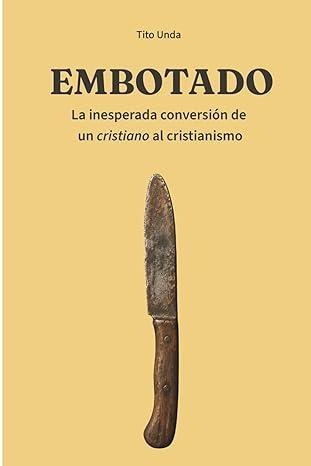
Available in Amazon, and available for free in digital format Apple Books, Google Play y Kindle
Dull: A Christian's Unexpected Conversion to Christianity





 Español
  English
  Italiano