




The starting point is to recognize that life as a couple can be a source of joy, stability and growth, as well as a space of wear and tear, frustration and conflict. This difference has been extensively studied by researchers who analyze which variables increase the probability of satisfaction and permanence, and which increase the risk of crisis, separation or divorce.
This article is supported by relevant scientific literature (with references to authors such as John Gottman, Howard Markman, Wilson, Mahoney and Ellison, among others) and also by the author's doctoral research in Jalisco, Mexico, developed between 2013 and 2021 within the AMAR (Antecedents of Marital Adjustment Research) project of the University of Navarra.
Married people: higher levels of happiness than single people
The following participated in this research 310 engaged couples about to get married, The data were used to analyze the relationship between the two groups, who provided extensive information about themselves and their relationship. With these data, the following were analyzed predictors associated with marital success or failure. The text stresses that understanding these predictors has practical value: it allows one to anticipate risks, correct harmful patterns and develop competencies that make a stable and satisfying relationship more likely.
Marital satisfaction as the core of marital success
A central theme of the article is the marital satisfactionMarital satisfaction is presented as a decisive component of success, closely related to the permanence of the couple and the emotional quality of its members. The author describes marital satisfaction as an experience that emerges from daily coexistence and from the way spouses treat each other, take care of each other and face challenges. In other words, it is not enough to “love each other” in an abstract sense; it is important to how this desire is expressed in actions, words, habits, decisions and interaction styles.
The conflicts themselves are not necessarily the problem.
In this regard, the contribution of John Gottman, whose research has emphasized that the affectivity and daily dealings have a decisive influence on stability. Kindness, mutual respect, the ability to be grateful, forgiveness and the way disagreements are handled are described as factors that not only help a marriage to last, but also help it to become a real source of well-being.
The text makes an important distinction: conflicts in themselves are not necessarily the problem; it is how they are managed that damages the relationship. When disagreements are discussed constructively, with respect and openness, they can even strengthen the bond. On the other hand, when they are discussed out of hostility or contempt, the conflict becomes corrosive and erodes trust and the sense of unity.
Factors that strengthen the relationship
In addition, the article introduces the topic of emotional support and its link to well-being. It is mentioned that several researches have observed that, on average, married people report higher levels of happiness than unmarried people, This is partly due to having more constant affective support. Without idealizing marriage or affirming that it always guarantees well-being, the author suggests that, if the relationship is healthy, there is usually greater emotional support, which contributes to life satisfaction.
Along with this, practices that strengthen the bond are mentioned: talking about problems in a constructive way, sharing goals and projects, carrying out activities together and, in some cases, sharing religious practices. The author points out that some studies have found that when couples share religious practices, the frequency of serious conflicts, infidelity or violence may decrease.
The idea is presented as a research finding (not an imposition) and is integrated into the overall argument: shared habits and common sense frameworks can support stability, as long as they do not substitute for daily emotional and relational work.

Predictors of success and failure: static and dynamic factors.
A central part of the article is dedicated to explaining the predictors of marital success or failure. Following Howard Markman, the author distinguishes two types:
Static factorspremarital conditions that cannot be easily changed because they pertain to the past or to the background context of the person or couple. Examples mentioned include growing up in a home with divorced parents, having children from previous relationships, belonging to different religions, or marrying very young. These factors do not doom a relationship, but they can increase risks or pose specific challenges that need to be recognized realistically.
Dynamic factorsare variables related to daily interaction and the way of bonding. Unlike static variables, these can be worked on and modified. They include communication difficulties, unrealistic expectations, low commitment, or negative styles of discussion and conflict resolution.
The author emphasizes that this distinction is encouraging: although some initial circumstances have an influence, many of the most important variables are developable. In other words, marital success is not just about “getting lucky” with the right person, but about building skills and habits that make love sustainable.
Hostility as a sign of high risk
Among the indicators of failure, the article highlights in a special way the hostility, This is one of the most dangerous factors. Findings are presented that associate relationships marked by hostility with a significantly higher risk of divorce.
Hostility is understood here as a relational climate where attack, contempt, disqualification, hurtful tone or the intention to win at the expense of the other predominates. This type of dynamic not only damages communication, but also undermines the feeling of emotional and team security.
In line with this idea, Gottman's framework of destructive patterns in couple life, popularly known as the “four horsemen,” is incorporated: constant criticism, defensiveness, avoidance and, especially, contempt. In the text, these patterns function as warning signs: when they dominate the interaction, the relationship becomes more fragile.
Systematic criticism targets the character of the other (not specific behaviors), defensiveness prevents taking responsibility, avoidance prevents necessary conversations, and contempt degrades the dignity of the bond. Together, these dynamics create emotional distance and resentment, factors that hinder repair and growth.
What characterizes well-functioning couples
In contrast, the article describes common traits of couples who achieve stability and satisfaction. Among them are:
Healthy communication skillsThe following are some of the key elements: speaking clearly, listening respectfully, validating emotions, and negotiating disagreements without humiliating or imposing.
Adaptation to changesability to adjust expectations and roles when life brings transitions (work, children, family crises, moves, etc.).
Open and respectful conflict resolutionwillingness to face problems rather than avoid them, with a solution-oriented style.
High commitmentA sustained decision to nurture the bond, even when initial enthusiasm wanes.
Knowledge and understanding of the otherGenuine interest in the partner's history, needs and limits; ability to read emotional cues and respond with care.
The text suggests that relational success is based on a realistic view: recognizing the other as he/she is (with strengths and limits), building agreements and maintaining a deep connection without losing individuality.
Attachment and bonding: an especially powerful predictor
One of the strongest points of the article is the assertion that one of the most relevant predictors of the future of a relationship is the type of emotional bond described from the attachment theory. The author explains that experiences of love, care and security during childhood-and also what is observed between parents-influence how adult relationships are built.
A secure attachment is associated with trust, respect and closeness: people with this style tend to build more stable and satisfying relationships. They feel able to depend on their partner without losing autonomy, and to offer support without controlling.
A anxious attachment can make commitment difficult due to insecurity: there is often a fear of abandonment, an intense need for confirmation and emotional reactivity. This can generate cycles of demand and tension.
A avoidant attachment tends to avoid emotional closeness: it can manifest as distance, minimization of affective needs or resistance to vulnerability, making deep connection difficult.
The author does not present these styles as fixed labels, but as patterns that can be identified and worked on. For a healthy marriage, she proposes building a bond where both can care for each other, respect individuality and maintain connection without falling into either suffocating dependence or cold distancing.
Personality also matters
In addition to attachment, the article includes the influence of personality on marital stability. It is clarified that there is no “perfect profile”, but there are tendencies that are associated with a higher risk of conflict. Traits such as high anxiety, impulsivity and emotional instability (neuroticism) are mentioned as factors that can increase friction and increase the risk of separation. In contrast, traits such as agreeableness and responsibility tend to facilitate stronger and more satisfying bonds.
Factors that can increase friction
The text's approach avoids determinism: these traits do not dictate the fate of the relationship, but they do shape a terrain where some dynamics are more likely. Again, the implicit message is that self-knowledge and personal development are part of the path to a realistic “forever.”.
Courtship as a decisive stage: more than romanticism
Another central thesis of the article is that the courtship should not be a simple romantic anteroom, but a time of real acquaintance and preparation for a definitive delivery.
At this stage, the couple can build a strong foundation if it is lived with authenticity, responsibility and depth. This involves talking about relevant issues, observing patterns of treatment, detecting how tensions are dealt with, and cultivating relational skills.
Married love, a daily decision to love each other realistically
The author warns about false expectations and patterns of living together that can hinder genuine commitment. The idea is that rehearsing forms of relationship that avoid commitment or are based on idealizations can prevent the couple from sincerely addressing decisive issues for life together. Dating, if well lived, helps to choose with whom to share life even when the road becomes demanding and unforeseen events arise.
In this sense, conjugal love is described as something broader than shared attraction and dreams: it is a daily decision to love each other with realism, respect and perseverance. Mutual knowledge, realistic acceptance and genuine commitment increase the ability to withstand difficulties and remain united.
Closing: the “secret” of forever
The article concludes that the secret of “forever” is not in chance or romantic idealization, but in a sustained process of construction. Marital success is supported by identifiable and trainable predictors: affective communication, constructive conflict resolution, kindness, forgiveness, gratitude, genuine commitment and emotional maturity.
Likewise, recognizing risk factors - insecure attachment, persistent hostility, emotional instability - allows couples to work in time to prevent burnout and strengthen the bond.
Overall, marriage appears as a daily and responsible choice that can become a space of growth, belonging and permanence, capable of renewal over time if the right skills and attitudes are cultivated.
Key ideas
Marital success is built, not accidental.
The dynamic factors (communication, conflict, commitment) are especially crucial because they can be worked on.
– Supernatural hostility and the contempt are signs of high risk.
The attachment (secure vs. anxious/avoidant) greatly influences stability and satisfaction.
The courtship should be a realistic preparation stage for shared life.
Forever“ requires dedication, fidelity y emotional maturity.
—————————
PhD in neurosciences and director of Marca Familia. Mexico
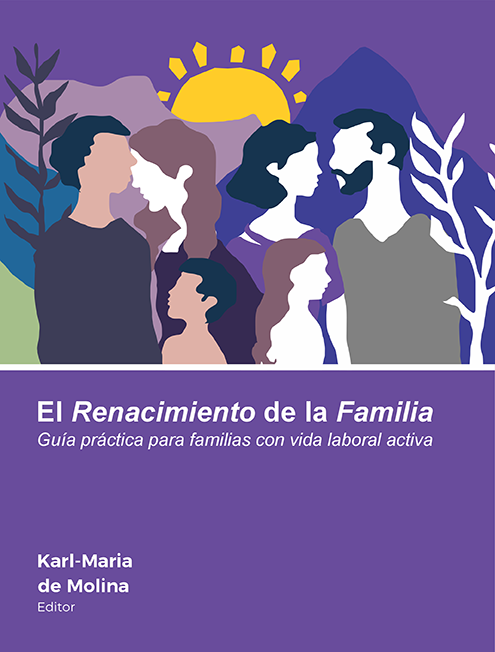
This text is a summary of an article published by Dr. María Elena Anaya Hamue in the book “The Rebirth of the Family”. You can consult here the author's website.
The Rebirth of the Family





 Español
  English
  Italiano