



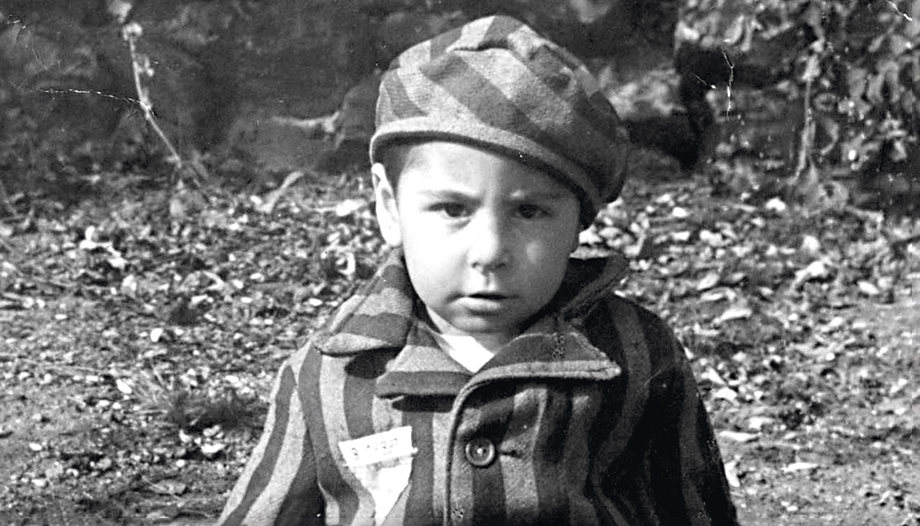
Just over 80 years ago, in August 1945, a bus carrying 300 boys arrived late at night in the Lake District, on the shores of Lake Windermere, one of the most beautiful lakes in England. The group consisted of Holocaust survivors, mostly Polish, from the Terezín and Auschwitz camps, brought there through the efforts of Leonard Montefiore, a Jewish philanthropist.
Windermere seemed the ideal place for them, not only because it had a disused factory but, above all, because the project's promoters believed in the restorative power of the environment. Direct contact with nature and loving care could heal the boys“ deep emotional and spiritual wounds. Many of them, after the desolation and horror of the camps, described their stay in the beautiful valleys of Windermere as ”being in paradise.".
A team of about 35 people, led by Oscar Friedmann, a child psychologist with experience caring for troubled children, had helped set up the Calgarth estate, where the children would stay for a few months. Beds with clean white sheets, small bowls of sweets on the bedside tables, and stuffed animals and dolls on the children's beds were all part of the welcome prepared by the staff.
The reconstruction of childhood
One of the most important figures in the recovery of the guests was the Austrian therapist Marie Julia Paneth, a friend of Anna Freud, who faced a task of enormous proportions. Were they really children? Their age was written on their papers, but their fragile bodies and traumatic experiences were anything but childlike. Years later, Paneth wrote:“They were much younger than their age in some ways, and much older in others… With minds and souls shattered, but with strong muscles, these victims of Nazi decay had to relearn how to be children, how to be human beings. But the question was: how?”(Paneth, Rebuild Those Lives, 1946).
Even during the London Blitz, Paneth had used children's drawings for therapeutic purposes. According to her, the healing function of art consisted of metaphorically reconstructing a damaged self. When assessing the effect of the war on the children's psychological makeup through these works, she was struck by how rare the drawings of rubble were and how frequent the drawings of houses were.
He wrote: “When a child draws a house, however small and primitive the drawing may seem, the child has made the house and is filled with the same pride any adult feels when they have just finished building one… When the soul of the growing individual is filled, it leaves less and less room for aggression, depression, and bad luck" (Branch Street,1942).
In Windermere, the therapist set up a room where she invited the children to paint and draw, but without giving them painting lessons, simply allowing them complete freedom to express their inner world, their suffering. Later, she wrote a detailed account of this work, revealing her surprise at the concentration and silence with which the children dedicated themselves to drawing.
Most of them drew houses, large or small, sometimes tiny, often surrounded by fences, almost always situated on slopes or on diagonal lines as a base, as if they were badly placed; many painted red, although in Poland houses are usually white or light-colored; but the typical drawing of the serene house, with trees to the right and left, did not appear.
The family, essential in the recovery
The manuscript of his work during those years was published posthumously in 2020, with a significant title: Rock the Cradle. “Rocking the Cradle” refers to one of the most important themes that emerged from her observations of older children’s reactions: the care experienced within the family during childhood is so significant that it has a profound effect on future resilience and recovery.“What you learn in the first years of life is so strong that it can withstand all of life's attempts to teach you something different later on. In the case of these children, all the kindness and warmth, the order and gentleness, the refuge and protection, the general feeling that the world is good, that they had learned from a very young age, had not been erased by everything they had been through.”(Paneth, Rock the Cradle, 2020).
The youngest children were deprived of this, as they were deported as newborns and grew up without the affection of role models. Perhaps, Paneth observes, if they had been gently rocked in their cradles as infants, they might have been able to project the positive experiences of the past into the future, creating better conditions for them to move forward with confidence and security.
For the older ones, however, having experienced the affection of family members and the warmth of the family environment at a young age had been a powerful resource for recovering from the mistreatment in Nazi concentration camps.“They were able to leave, after their time there, with qualities that could only be understood by accepting the fact that, for ten or eleven years, as was their case, they had lived in good, happy families, with parents, brothers, and sisters, where they learned what was good and how people lived together. This had made the good in them so strong that they were able to withstand all the evil of their experience in the camps." (Rock the Cradle, 2020).
At the end of their four-month stay, the young guests left transformed. The aim was to offer these orphans the sense of security and continuity that is usually found in a family environment. One of them, now elderly, acknowledged:“Windermere was my first home in England, so I will always be loyal to it.".
Love always surprises. It's no coincidence that the boys renamed that place... Wondermere, “Lake Wonder”.
Directora de HRF y Catedrática de Filosofía Moral y Bioética en la Universidad Roma Tre






 Español
 English
 Italiano
 Français
 Deutsch
 Polski