


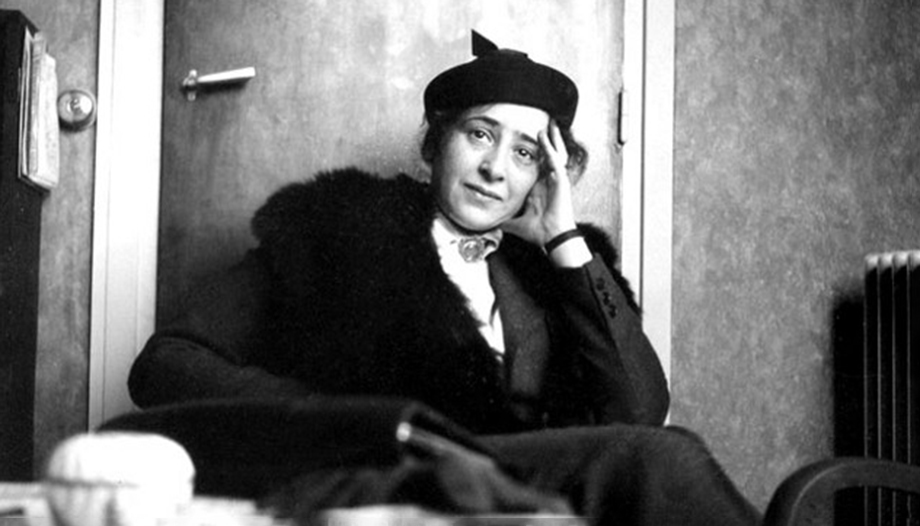
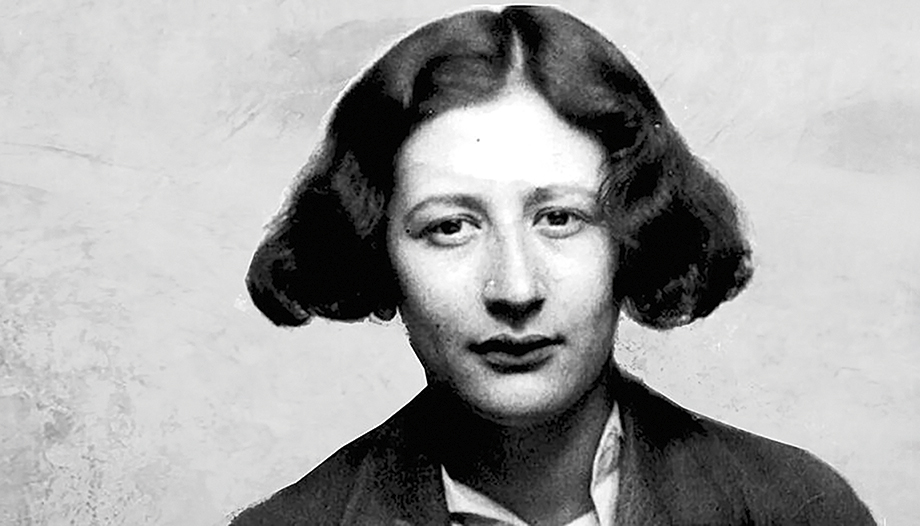
A few days ago, I suddenly came across a post on Network X that said the following: "»The only obstacle to the idolatry of totalitarianism is an authentic spiritual life. If children are not taught to think about God, they will become fascists or communists out of a need to devote themselves to something” (Simone Weil).
It caught my attention, and that was the inspiration for these lines on the uses of power and totalitarianism. I contacted the author of the short text, Ana Marta Gonzalez (@anamartagg), a professor of moral philosophy at the University of Navarra, and suggested the idea of featuring some philosophers and thinkers who had reflected on totalitarianism; she then wrote a few lines.
In addition, Ana Marta Gónzalez has been a full member of the Pontifical Academy of Social Sciences since 2016, and this year she organized the Academy’s plenary session in Rome, with a final statement on the topic “The Uses of Power: Democracy, Legitimacy, and the Rewriting of the International Order.” Pope Leo XIV addressed them with a message, as you can see here.
We reached an agreement on the thinkers. In the end, the professor focused on Hannah Arendt, Tocqueville, Popper, and Simone Weil. For my part, I added the German-Korean philosopher Byung-Chul Han, as you’ll see below.
The Church cannot remain passive or indifferent
Can the Church speak out against totalitarianism, or is that a case of biting off more than it can chew? The answer comes from Leo XIV, who this month commented on the Second Vatican Council’s *Gaudium et spes*: “The Church cannot remain passive or indifferent to what is happening in the world, but is ”called to walk with humanity,’” he stated on September 2.
“We cannot remain “disinterested spectators,”“ he added. Believers are called to take on the burdens of their brothers and sisters, ”especially those who are oppressed by injustice, discrimination, and violence.”.
And what’s happening in the world? Undoubtedly, many things, as described by the Pope himself in “Magnifica humanitas”. One of them is that, worldwide, autocracies (92) outnumber democracies (87), and we are living in an era of global democratic regression.
Only 7 percent of the world's population lives under democratic regimes
Now, “only 7 percent live under regimes that can be considered full liberal democracies, while 74 percent now live in autocracies; and many of those regimes that call themselves democracies do not meet some of their fundamental criteria,” notes a report by the V-Dem Institute, cited in the final statement of the Academy of Social Sciences.
The same statement emphasizes that “we have learned not only that democracy is not an irreversible achievement, but also that the shift from democracy toward authoritarianism does not always take the form of a sudden and violent overthrow, such as a military coup. While this still occurs in some countries, it more often takes place through the use of existing procedures, by weakening the system and exercising power without constitutional checks and balances or ethical limits.”.
Warnings from Thinkers
According to philosopher Ana Marta González, these thinkers “shed light on the situation from different perspectives.” They are as follows.
1. Alexis de Tocqueville “‘He speaks of ”soft despotism“ and ”warns of the dangers of a regime that values equality without offering the counterbalance of freedom through citizen participation,'" says González.
In that sense, “he is a classical liberal, in his view, although he highlights an idea that Arendt develops in her own way: the atomization of society and the lack of social ties weaken individuals” freedom and leave them defenseless against the power of the state….”.
In general terms, according to various authors, the proposals for Tocqueville (1805-1859) The defenses against totalitarianism include freedom of association, civil society organizations, decentralization, the press, and civic participation.
Arendt: “The ”A totalitarian system seeks total domination."
2 and 3. Hanna Arendt (o Simone Weil), according to Professor Ana Marta González, “they could go on to say: it uproots (individuals), makes them vulnerable to propaganda…”
The quote from Weil (1909-1943), “I took it directly from her book *Echar raíces*,” the professor explains. “The term ”totalitarianism’ was used in the 1920s to refer to fascism, and later it was used to draw comparisons with Nazism and communism.”.
For Arendt (1906-1975), totalitarianism is not simply a particularly cruel dictatorship. A tyrant may eliminate opponents, rule arbitrarily, abolish freedoms, and enforce obedience, but he still rules over human beings whom he seeks to subjugate.
In contrast, “Arendt argues that the totalitarian system renders human beings «superfluous» and interchangeable. She considers such regimes to be specifically modern; they presuppose uprooted masses, all-encompassing ideologies, modern techniques of organization, bureaucracy, and propaganda. ”It is characteristic of the totalitarian system to seek total domination over all spheres of life,’ the philosopher explains.”.
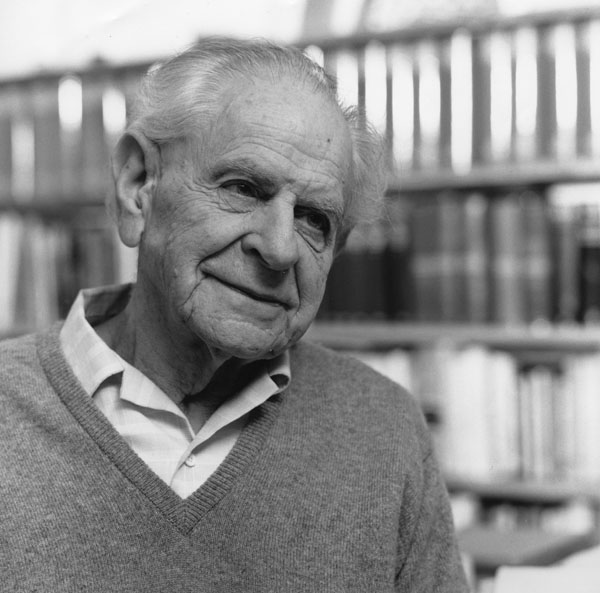
4. Karl Popper (1902-1994) She wrote *The Open Society and Its Enemies* shortly before Arendt and Weil, but ‘her approach is different: from an epistemological perspective, she simply means that no one has sufficient knowledge to rationally design the social whole…, which is why our way of life must leave the door open to criticism and institutional reform,’ the scholar emphasizes.
Popper criticizes the closed society and defends the open society; “but it is important not to confuse the open society with the rootless society, which Weil criticizes.” Other authors mention gradual reforms—what Popper called “fragmentary social engineering”—as opposed to revolutionary utopias.
5. Byung-Chul Han (1959-), a German philosopher of South Korean origin and recipient of the 2025 Princess of Asturias Award for Communication and Humanities, focuses not so much on classical totalitarianism as on contemporary forms of control, self-exploitation, surveillance, mandatory transparency, social media, and the manipulation of attention. His proposals, as you can see here, are aimed at reclaiming inner freedom, contemplation, and spaces not subject to digital control.
Byung-Chul Han has written, for example, that “today’s addicted society is a society without attention. Perception is controlled by addiction and dopamine. Addiction and attention are opposing forces.” Or also: “Social media uses addictive algorithms to make people dependent, to control and direct them. The smartphone is a digital machine of addiction.”.






 Español
  English
  Italiano