


By OSV News
On July 1, the Society of St. Pius X, known as the FSSPX, unlawfully consecrated four new bishops without authorization from the Holy See, prompting Pope Leo XIV to declare its bishops, clergy, and lay members formally affiliated with schism with the Catholic Church.
Below is a brief summary of the FSSPX, what happened, and its significance.
1. The FSSPX was formed in response to the Second Vatican Council.
Archbishop Marcel Lefebvre (1905–1991), a Frenchman who, as a bishop, had been a key leader of the Church in French-speaking Africa, founded the Society of Priests in 1970 in Fribourg, Switzerland. Its priests celebrate the sacraments according to the 1962 Roman Missal, published before the Second Vatican Council but replaced by revised liturgical texts in 1969. The society has been excommunicated twice for consecrating bishops without the authorization of the Holy See.
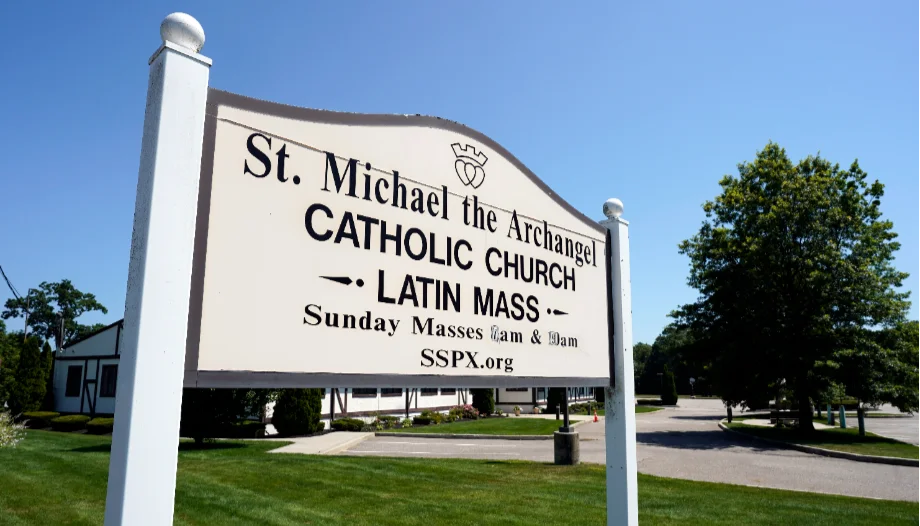
The congregation is headquartered in Menzingen, Switzerland, and operates an international seminary in Écône, also in Switzerland, where the ordinations took place on July 1. In the United States, about 100 priests of the FSSPX reside in 20 houses, or «priories,» and carry out their work in approximately 120 locations, referred to as «missions» or «chapels,» according to its website. Its U.S. headquarters is located in Platte City, Missouri, about 50 kilometers north of Kansas City.
According to the FSSPX, Archbishop Lefebvre chose St. Pius X, who served as pope from 1903 to 1914, as the society’s patron saint because of that pope’s commitment to the integrity of the priesthood.
2. Before the most recent schism, the FSSPX had an irregular status with respect to the Catholic Church, a situation that dates back decades.
Apparently, the society lost its ecclesiastical authorization to exist from the competent ecclesiastical authority in 1975. A year later, Archbishop Lefebvre was suspended after ordaining priests against the express will of the ecclesiastical authorities.
In 1988, St. John Paul II excommunicated Archbishop Lefebvre and four bishops whom he himself had consecrated that year without papal authorization. Their episcopal ordinations were valid but illicit or unauthorized.
All subsequent acts based on orders issued by those bishops have been affected. Acts of jurisdiction are invalid, such as the celebration of marriages and the absolution of sins. Other sacramental acts are considered valid, though unlawful.
In its decree of July 2, in which it imposed excommunication, the Holy See explicitly declared that the sacraments of penance and marriage celebrated within the society are invalid.
3. The FSSPX should not be confused with other communities that celebrate the Traditional Latin Mass.
Many communities Catholic In communion with the Holy See, they celebrate Mass according to the 1962 Roman Missal, commonly known as the Traditional Latin Mass.
In 2007, Pope Benedict XVI issued «Summorum Pontificum,» which expanded the authorization for priests to celebrate the pre-conciliar Mass. In 2021, Pope Francis issued «Traditionis Custodes,» a law that restricted the use of the pre-conciliar form of the Mass. However, many bishops, even in the United States, have continued to offer this form of the Mass within the new parameters.
Priests who belong to the Priestly Fraternity of St. Pius X, for example, celebrate the sacraments exclusively according to the 1962 Missal and are in communion with the Holy See. (The society was founded in 1988 by priests who left the FSSPX following Archbishop Lefebvre’s illicit episcopal consecrations that same year.) FSSP priests are active internationally and exercise their ministry in 39 dioceses in the United States.
Other examples of religious orders dedicated exclusively to the celebration of the liturgy and the sacraments according to the Roman rite as practiced before the Second Vatican Council, which enjoy regular status within the Church Catholic, are the Institute of Christ the King, High Priest, and the Institute of the Good Shepherd.
4. The leaders of the FSSPX assert that the congregation is not in schism and believe that all sacraments and jurisdictional acts are valid.
However, among Archbishop Lefebvre's disagreements with the Church Catholic This is reflected in its refusal to adopt the post-conciliar reform of the rite of the Mass, which the FSSPX considers flawed or containing «heretical elements.».
Archbishop Lefebvre and his followers also questioned—and in some cases publicly rejected—the very orthodoxy of the teachings of the Second Vatican Council, especially the Declaration on Religious Freedom, «Dignitatis Humanae.» While some argued that this declaration amounted to a change in doctrine, the Church recognized it as a development of the doctrine on the dignity of the human person.
In a statement that included a 28-page «Statement of Faith» published On June 24, the FSSPX stated that the Church Catholic faces internal and external pressures «that are pulling it in every possible direction, except—in our view—the right one.» Other doctrines Catholic The issues that the FSSPX rejected in that statement included aspects of ecumenism, post-conciliar liturgical reforms, synodality, and religious freedom.
5. The Holy See has sought a path toward full reconciliation.
For decades, Vatican officials have been seeking ways to fully reintegrate members of the FSSPX into the life of the Church Catholic. Talks between the Holy See and the congregation began during the pontificate of St. John Paul II and continued during the pontificates of Benedict XVI and Francis. Benedict XVI lifted the excommunication of the four bishops in 2009, which allowed for more regular dialogue. The Vatican made it clear that, at that time, the congregation was in a state of canonical irregularity but not in schism.
During the Year of Mercy 2015–2016, Pope Francis established special provisions to validate the absolution granted by priests of the FSSPX through the sacrament of confession. After the Holy Year ended, he extended this provision «so that no one may ever be deprived of the sacramental sign of reconciliation through the Church’s forgiveness.».
In April 2017, the late pontiff continued to promote initiatives aimed at reconciliation with the FSSPX, allowing its bishops to guarantee the validity of marriages celebrated in their traditionalist communities.
St. John Paul II’s 1988 apostolic letter, «Ecclesia Dei,» published in response to illicit ordinations, established a pontifical commission of the same name with the «task of collaborating with the bishops, the departments of the Roman Curia, and interested parties, in order to facilitate full ecclesial communion for priests, seminarians, religious communities, or individuals» who were associated with the FSSPX and «who wish to remain united to the Successor of Peter in the Church Catholic ".
In 2019, Pope Francis dissolved the «Ecclesia Dei» commission and transferred its responsibilities to the Dicastery for the Doctrine of the Faith.
6. The Holy See ordered the leaders of the FSSPX not to consecrate new bishops.
In February, Father Davide Pagliarani, Superior General of the FSSPX, announced that the Society would proceed with the consecration of new bishops on July 1, following a breakdown in communication with the Vatican after requests for an audience with Pope Leo XIV went unanswered.
Cardinal Víctor Manuel Fernández, prefect of the Dicastery for the Doctrine of the Faith, offered to continue the dialogue with the FSSPX on the condition that the congregation suspend its decision to consecrate new bishops. Following the FSSPX’s refusal, Cardinal Fernández stated that the consecration of bishops without a papal mandate would be considered a schismatic act and would result in excommunication.
The Church's Code of Canon Law defines schism as «the refusal to submit to the Supreme Pontiff or to receive Holy Communion with the members of the Church subject to him» (Canon 751).
7. Pope Leo XIV issued a public appeal to the FSSPX asking it not to proceed with the consecrations.
On June 30, Pope Leo XIV appealed to the FSSPX not to proceed with the consecrations. «I beg you to carefully consider the spiritual good of the faithful, because the schismatic act you are about to undertake would deprive them of the lawful—and in some cases, even valid—reception of the sacraments, which they love and seek for their sanctification,» wrote Pope Leo XIV. Father Pagliarani’s response indicated that the Society planned to proceed with the ordinations, insisting that the group «was neither schismatic nor hostile to the Church.».
After the FSSPX went ahead with the illicit ordinations on July 1, the Vatican’s Dicastery for the Doctrine of the Faith, or DDF, declared on July 2 that the six bishops of the FSSPX were excommunicated and warned clergy and laity not to «adhere to the schism» and, consequently, not to incur excommunication themselves.
8. One of the four bishops who were illicitly consecrated on July 1 is from the United States.
A native of North Dakota, Bishop Michael Goldade grew up in St. Marys, Kansas, a hub of the FSSPX community. He is the rector of the FSSPX’s St. Thomas Aquinas Seminary in Dillwyn, Virginia.
9. The DDF has published procedures for those who decide to leave the FSSPX and restore communion with the Catholic Church.
The instructions detail the specific steps that an ordained priest in the FSSPX community or affiliated with it must take following his lawful ordination. The procedures for laypeople are more complex, since the steps they must take to regain communion depend on their degree of involvement with the community and the FSSPX’s teachings.





 Español
  English
  Italiano
  Français
  Deutsch
  Polski
  简体中文
简体中文