



 "Thanks to Caritas, I not only have a home, but a family."Natalia PeiroCaritas' key points of action are people".
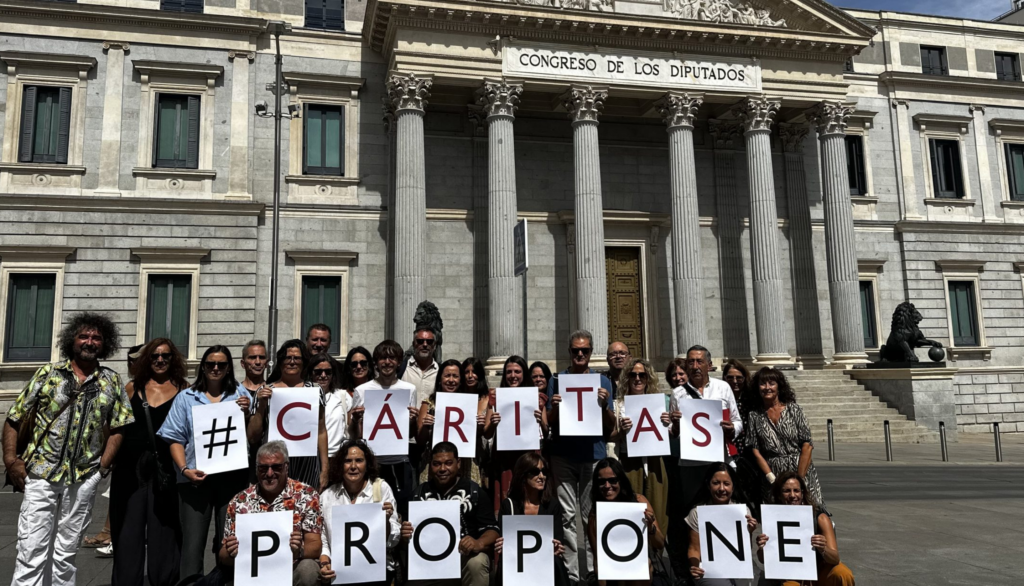
Housing, employment, and “administrative vulnerability” are the three priority areas in which Cáritas is proposing concrete policies to political parties in the lead-up to the elections. eleven-point list It has now been launched into the public eye and aims to gather the demands of those most in need.
The list includes eleven specific points and, as its authors have emphasized, is not intended to be a set of principles that every Catholic must endorse, but rather suggestions arising from the needs of the people with whom Caritas works, and in accordance with the Church's social doctrine, within a framework of pluralism. “We bring the experiences of those who suffer the most closer to the people. We help ensure they are heard,” stated Ana Abril, coordinator of this project.
Consult with people served by Caritas
The “Political proposals for the 2026 general elections”These findings stem from several months of work involving consultations with 940 people, representing all those with whom Cáritas works, who expressed concerns about the ways in which they believe their rights are being violated. Insecurity (in life, work, health, etc.) is the most frequently mentioned consequence of this situation.
“We demand an administration that people can access,” Ana Abril stated, outlining her priorities. This involves addressing the “absent administration.” This refers to the digital divide and waiting lists, as many people currently find themselves unable to access government services to file complaints, claim assistance, or request aid due to barriers erected by public administrations.
Although the law allows personal access to the administration, in many cases appointments are only possible electronically, which constitutes a form of discrimination, according to Cáritas officials.
This problem underlies some of the NGO's proposals, especially those related to receiving social assistance or immigration.
Ana Abril stated that “one of the deepest fractures in our society, as recalled by Pope in his speech to the Spanish Parliament, ”It is the growth of polarization in public debate and the expansion of discourses that fuel confrontation.“ ”In response, Caritas calls for the search for shared solutions to the major social challenges,” Ana Abril emphasizes.
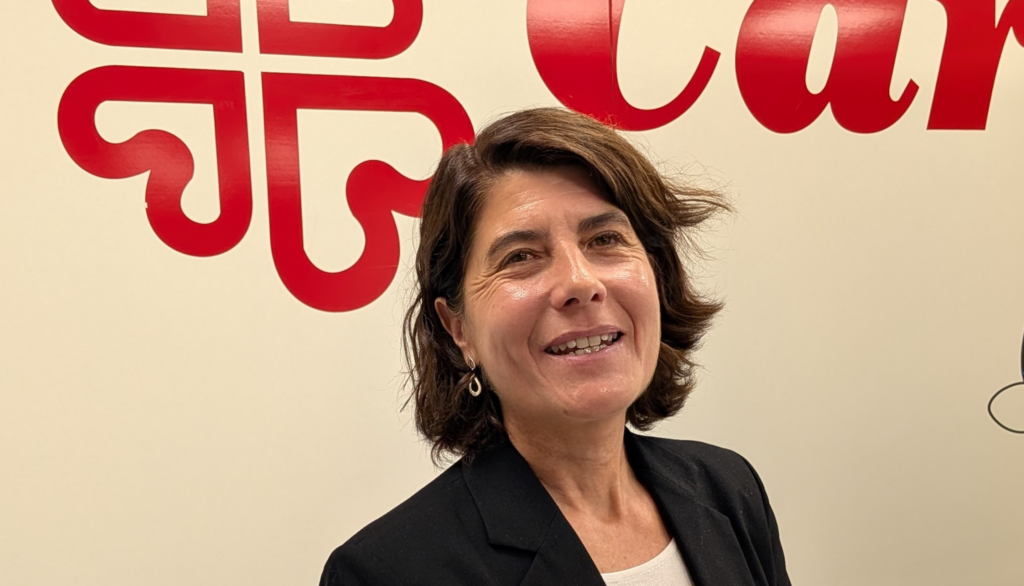
Ana Abril at the presentation of Cáritas' proposals for the elections.
About housing
The eleven proposals for “a more just and fraternal society” cover several areas. Of particular relevance is “comprehensive protection against the loss of housing.”". Caritas is calling for the modification of the Urban Leases Law (LAU) to guarantee all people who live in rooms the same guarantees that protect the rest of the housing leases.
It also requests the modification of the Civil Procedure Law to ensure that people affected by evictions have access to compensation or the option of suitable alternative housing without being evicted from their home until these minimum conditions are guaranteed.
It also proposes “a social housing stock, and within it, emergency housing, so that public administrations can address situations of greater vulnerability and exclusion.”.
In health matters, it is suggested to “expand public coverage in oral, ophthalmological and auditory health to people in exclusion.”.
The NGO also proposes “improving the Minimum Living Income” so that it effectively reaches people in poverty and severe exclusion.
One proposal that could potentially generate broad consensus is the “approval of a comprehensive law against human trafficking.” Raquel Benito, head of equality policies at Cáritas, expressed her “frustration” that this law has been pending for a decade. “The political parties agree, but when the time comes, it gets shelved because other issues are more pressing.”.
To the political parties
Caritas has requested meetings with all political parties to present its proposals. It has already met with all parties represented in parliament. “These meetings have been very positive. They listened to our proposals with a high level of receptiveness, although, understandably, they expressed disagreement with some of them,” Abril explains.






 Español
 English
 Italiano
 Français
 Deutsch
 Polski