


 What is the moral perspective?
The Catholic Church in Tanzania is, as Godfrey Mgusi Makoro—a Tanzanian seminarian who is currently completing his training at the Bidasoa International Seminary in Pamplona—explains, «a young Church that has been in existence for at least a century since its evangelization—the second evangelization—which took place in the late 19th century, in the 1860s.» It was the White Fathers, the Fathers of the Holy Spirit, and the Missionaries of Africa who sowed that faith which today, thanks to «their efforts and dedication deeply rooted in the love of God, Christ with his Gospel, and the Church,» has become a reality for millions of the faithful.
Today, at least 35% of the Tanzanian population is Catholic, spread across 37 dioceses, 7 of which are archdioceses. It is a large, vibrant Church, but one that—like any young Church—has its ups and downs.
The essential task: bringing souls to God
For Makoro, the Church’s mission in Tanzania is not limited to its social works, however important they may be. «The Church, as the people of God, has as its primary task bringing souls to God,» he writes. But he warns of a temptation he considers central: «There is a profound crisis in the Christian identity of Christians. And I say profound because it lies at the very root of what it means to be a Christian.» That crisis consists, in his words, of confusing faith with a transaction: «Above all, what we seek in the Church is not ‘favors from God’ in exchange for our pious deeds, but holiness, divine life—living with God.».
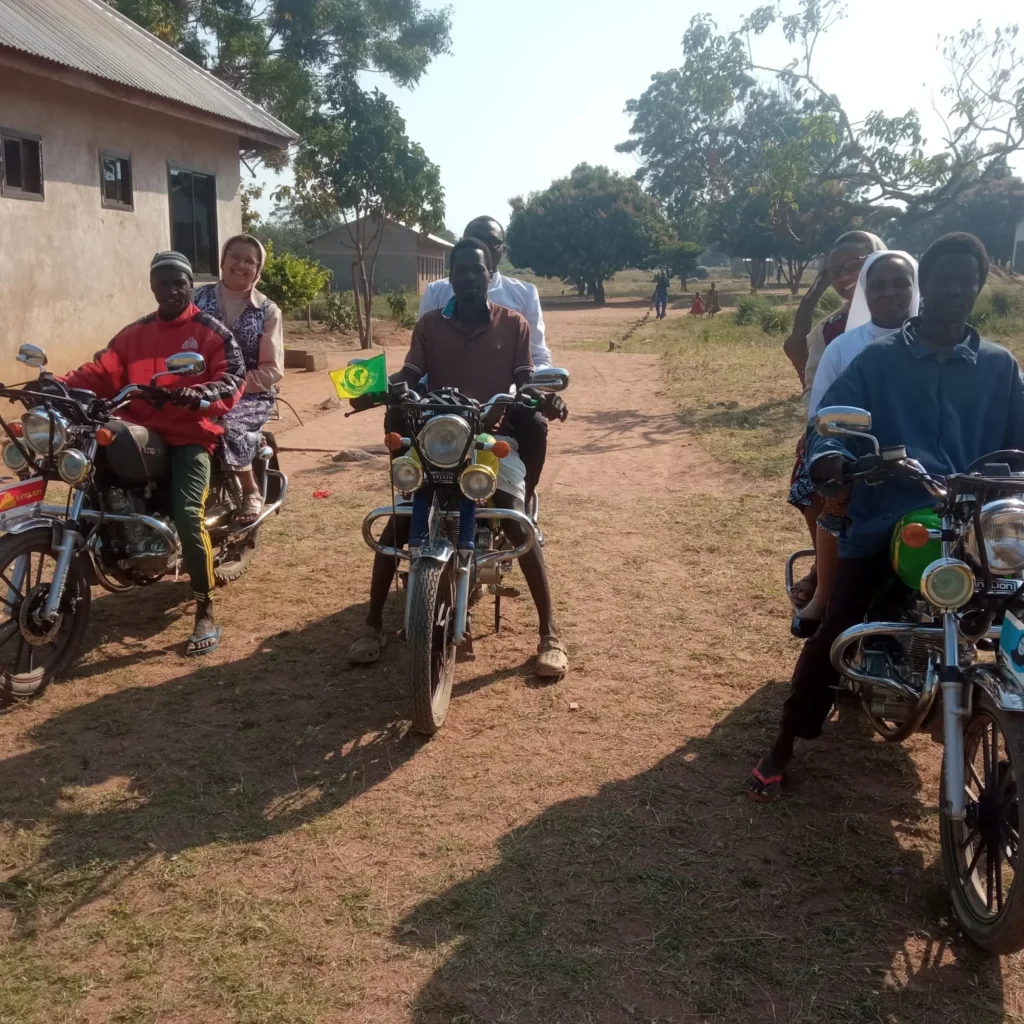
Sister Lizmendy, a Peruvian nun from the Congregation of the Keepers of the Reign of the Heart of Jesus who has been in the Diocese of Bunda, on the island of Ukerewe, for just over a year, agrees that the Church’s primary task is «to keep the faith and formation alive.» She acknowledges that «there is a strong pastoral commitment on the part of the missionaries and priests,» although conditions do not always make it easy: «There are few missionaries, few priests, the distances are quite considerable, the population is large, and yet, despite all this, we try to be present and to accompany them continually.» He adds an image that aptly sums up the missionary spirit: «Sometimes we have to make rather long trips, but we’re still there, because what matters to each community is seeing and feeling the presence of priests and religious sisters who are with them.».
Education and Health Care: The Legacy of the Missionaries
From the earliest days of evangelization, the Church in Tanzania has understood that proclaiming the Gospel also involves caring for the body and the mind. Makoro sums it up with a phrase that was repeated at every mission: «Ever since the time of the missionaries, the Church in Tanzania has focused on both aspects; wherever the missionaries lived, there was a parish, a school, and a hospital.» He sees this firsthand in his own parish, Our Lady of Good Hope in Kagunguli, which has a history spanning 132 years. When the country gained independence, the government took over most of its schools and health centers, though not all of them: «Currently, they are government-owned, except for the secondary school, which was returned to the church.».
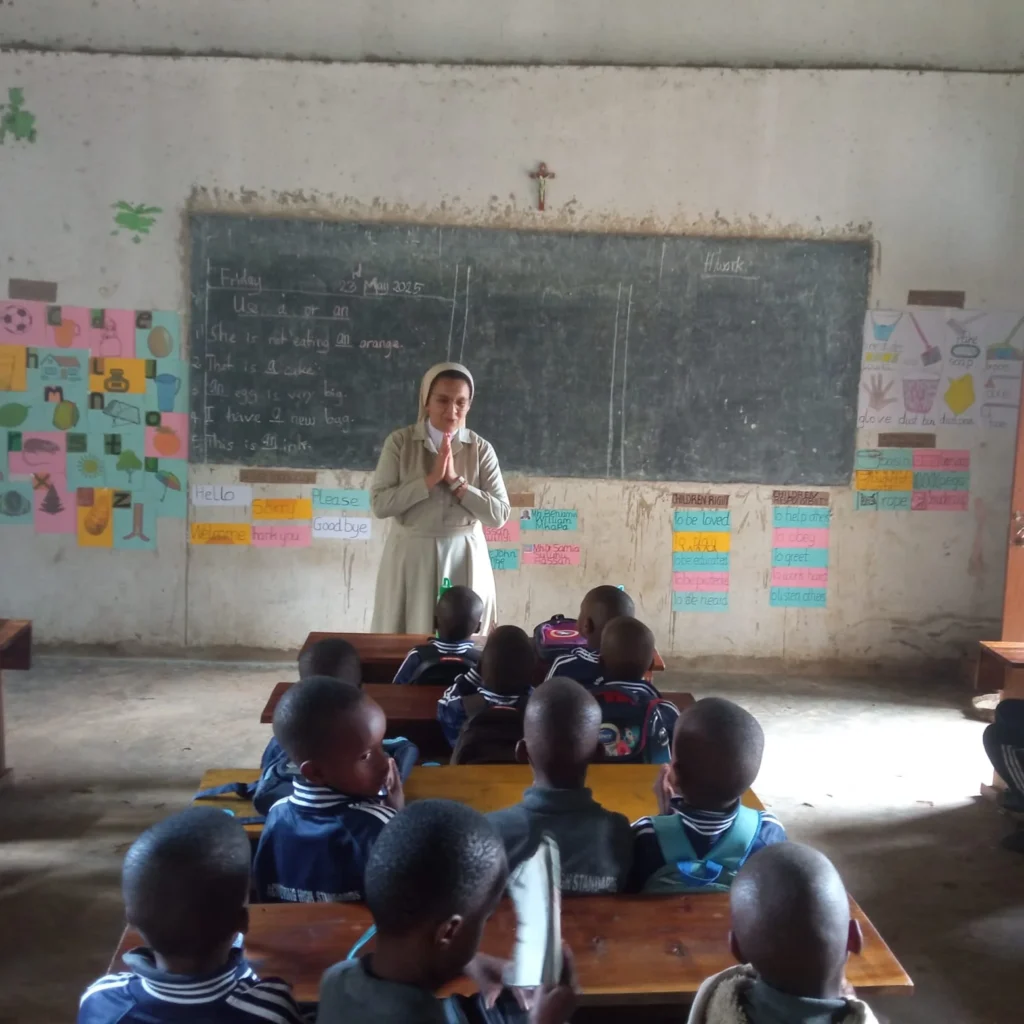
Despite these divestitures, the Catholic educational network remains vast. According to data from Makoro, the Church currently operates «nearly two thousand schools, both elementary and secondary,» five Catholic universities—including Saint Augustine University of Tanzania (SAUT), the Catholic University of Health and Allied Sciences (CUHAS) in Bugando-Mwanza, Ruaha Catholic University (RUCU), Mwenge Catholic University (MWECAU), and Jordan University College—and nearly a hundred diploma-level training centers in fields such as health and education. «This shows that since independence, most people have been educated in Catholic schools,» the seminarian concludes.
In the health care sector, the Catholic presence is equally extensive. «At least every diocese in Tanzania has a hospital, and some have more than five,» explains Makoro, who cites Bugando Hospital as a national model. In total, the Church operates «94 health centers and 338 clinics,» in addition to numerous orphanages and centers for the most marginalized, most of which are run by nuns.
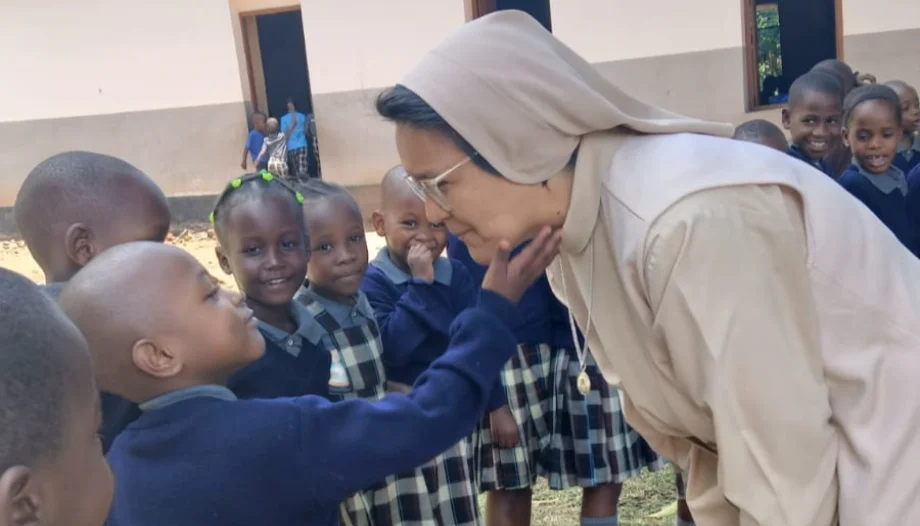
Sister Lizmendy confirms this commitment to service based on her specific experience in Bunda: «In this part of Tanzania, this diocese supports many schools, clinics, and social service projects thanks to the presence of the missionaries.» She adds a detail that reveals the extent to which the school makes up for basic family needs: «The schools provide breakfast and lunch to the children, which facilitates better learning and nutritional development.» She also highlights the specific care provided to a particularly vulnerable group in the region: «There are shelters, especially for the albino community, which is also quite large in this area.».
Poverty: The Challenge That Underlies All Others
If there is a common thread running through both testimonies, it is poverty. Makoro identifies it as the root of many other evils: «Currently, most citizens live in poverty, since its main causes are selfishness and corruption.» He also highlights youth unemployment with a striking statistic: «Of every ten university graduates, three are employed; one may have a job of his own; thus, the remaining six are unemployed.».
Sister Lizmendy, speaking from the field, offers an even more stark account of everyday poverty on the island of Ukerewe: «There is an extremely high poverty rate among families who lack the basic necessities for day-to-day survival. For example, many of them don’t even have one euro a day, which means they can only eat once or twice a day.» This precarious situation, she explains, has a ripple effect: «This also leads to issues of malnutrition and learning difficulties among children.» And when it comes to education, the scarcity of resources forces many families to pull their children out of school as soon as they finish elementary school, which «leads specifically to many girls starting families at a young age and having children at a young age.».
Speaking about her own way of life as a missionary, the nun confesses with simplicity: «We live with only what is necessary, because although we lack nothing, we have nothing to spare either. And that’s how you learn to live among them with that faith that is so beautiful, so growing, and so joyful.».
A Peaceful Town in Times of Social Tension
Makoro emphasizes an aspect of Tanzanian identity that he wants to highlight in the face of stereotypes about Africa: the peaceful coexistence among its more than 120 tribes. «Thank God, in Tanzania we have more than 120 tribes, but we don’t have tribalism; in Tanzania, anyone can live wherever they want without any problems.» He adds, speaking from personal experience: «To be honest, I don’t recall any violence among citizens in Tanzania. I grew up in Tanzania, but I’ve never heard of war among us citizens. Tanzanians are such peaceful people that it has become part of our identity.».
The tensions he does acknowledge are of a different nature: citizen protests against political power. «The violence we have experienced recently is that of citizens against the government, especially when they rise up against corruption, injustice, and the various problems people are facing,» he explains, framing it in spiritual terms: «It is an expression of the thirst for justice and change, as Pope Leo XIV said during his recent apostolic visit to several African countries.».
Vocations: The Fruit of the Family, the Community, and the Liturgy
One of the most striking features of the Tanzanian Church, in the eyes of a European, is its abundance of priestly and religious vocations. Makoro offers three keys to understanding this. The first is faith lived out in community: «Vocations are born in a Christian community and are for that community.» The second is the family, «like the church at home,» which instills the value of a vocation from childhood. The seminarian himself shares a fond memory of his mother: «I remember when I was a child, my mother would spank me if I wasn’t praying at home, especially during the afternoon and evening prayers, and she would make me say the prayer for vocations—even though I would say it while crying—but today I am a seminarian finishing my formation at the Bidasoa International Seminary in Pamplona. May my mother rest in peace.» The third key, which he attributes to one of his teachers, is a well-conducted liturgy, «because a vocation requires that those who are called encounter the One who calls.».
Sister Lizmendy offers a complementary perspective, one more focused on faith lived «at a visceral level»: «I believe that many young people choose religious life and the priesthood because of the faith that is palpable in each of their families.» She adds that the candidates themselves are driven by an almost missionary zeal: «I’m going to bring a little more of God to my family and my community; I’m going to be a conduit; I’m going to become a priest or a religious sister because I want to keep the faith alive in these families and in this community.».
Small Christian communities and faith groups
Makoro describes in detail a characteristic feature of Tanzanian Catholicism: small Christian communities—groups of between five and ten families organized around a patron saint—that meet weekly to read the Word and share in the life of faith. In his view, this structure «can be a good remedy for the individualism that continues to be a threat in Europe.».
Alongside these, there are communities of popular devotion—the Living Rosary, the Sacred Heart of Jesus, Saint Rita of Cascia, Regnum Christi—with very specific requirements for piety, such as daily recitation of the Rosary or monthly adoration vigils. Makoro, who grew up in the Sacred Heart of Jesus community, maintains that this kind of intense religious experience from childhood facilitates vocational discernment: «Imagine a fifteen-year-old boy who has spent every night in prayer from the age of 10 until he was 20; it’s easy for him to discern a priestly or religious vocation—and the same goes for girls.».
In addition to these are the major apostolic movements organized by age and gender, with a national structure, uniform, and their own constitution: the Union of Catholic Men of Tanzania (UWAKA), the Union of Catholic Women of Tanzania (WAWATA), the Catholic Young Workers (VIWAWA), Catholic high school students (TYCS), and college students (TMCS), and the Congregation of the Holy Children of Jesus for the youngest children.
The Family, the First Place of Faith, and the Threats It Faces
Both the seminarian and the nun agree that the family remains the primary setting for passing on the faith. Makoro describes an everyday scene: «They eat together at home, and in the evening, it’s very common to pray before bed. That’s where children learn to talk to God—by praying with their parents at home.» Attending Sunday Mass is practically mandatory in many families, to the point that «whoever misses Mass has to answer for it later.».
Sister Lizmendy clarifies that this is a faith that is lived out rather than purely doctrinal: «While we do not pass on a highly doctrinal faith, we do pass on a faith based on witness, a day-to-day faith.» She cites the scale of sacramental celebrations as an example: «In Tanzania, 250 young people are confirmed or 300 children receive First Communion in a single ceremony.».
But Makoro makes no secret of the fact that the family institution is facing a growing crisis: «The family in Tanzania is in danger right now. It has already become common for a child not to know his or her father or mother, or not to live with his or her parents.» He also points to a shift in mindset among young women, who «see not getting married as a form of liberation,» and mentions homosexuality as a reality that «socially remains a taboo» in the country.
Women: Poverty, Early Motherhood, and Lack of Opportunities
In both testimonies, the situation of women emerges as one of the deepest wounds in Tanzanian society. Makoro lists several issues: material poverty exacerbated by climate change and unemployment; the almost exclusive responsibility for caring for children, especially when the husband dies or abandons the home; teenage marriages and pregnancies, which derail the life plans of many young women; the risk—though not common—of sexual abuse; and the temptation to turn to other religions or superstition «in the hope of finding miracles and solving their problems.».
Sister Lizmendy confirms this based on her firsthand experience in Bunda: «As for women and girls, they really have very few academic and employment opportunities. Many of them, due to a lack of resources, leave school at a very young age to take care of the home or work in the fields, where they face a life of great hardship.» The Church tries to respond by providing training and support, although the nun is honest about its limitations: «From the Church, we try to offer some workshops and support to improve their situation, but the needs are enormous and our resources are very limited.».
Makoro adds a detail that puts this picture into perspective: despite the difficulties, «if you visit Tanzania, you’ll find that in many church institutions, more women than men hold leadership positions.».
Interreligious Coexistence and the Church's Social Contribution
Regarding relations with Islam, Makoro describes a climate of «fairly peaceful coexistence» between Muslims and Christians, although he acknowledges a certain institutional complexity due to the absence of a unified Muslim authority: «So even among themselves, some agree with certain things the Church affirms, while others do not. But in everyday life among the people, there is a great deal of peace.».
In summary, the seminarian sums up the Church’s contribution to his country as follows: «As a citizen, I can say that the Church in Tanzania is the voice of the voiceless. The Church is one of the few institutions that has contributed—and continues to contribute—to the country’s development through education since the country’s founding.».
A Foreign Missionary's Perspective: From Initial Fear to Contagious Joy
Sister Lizmendy’s testimony offers the perspective of someone who arrives from outside and must learn, almost from scratch, to navigate a different culture. She candidly admits to the confusion she felt during her first days: «Not speaking the language made me want to run away. ‘What am I doing here if I can’t speak, if I can’t reach people, if I don’t understand and they don’t understand me?’» She acknowledges that «she felt a little useless in Tanzania.».
She says she was able to overcome that difficult time through prayer, spiritual reading, and spiritual guidance, as well as a phrase from the apostolic nuncio that became her guiding principle: «Evangelization is not done only through words, but through love.» Today, more than a year later, his assessment is a joyful one: «I’m very happy, even though I understand very little Swahili… that doesn’t stop me from seeing the joy on the faces of those around me.» And he adds a reflection that sheds light on the ultimate meaning of his presence there: «Being in Tanzania is something special for me—a gift, something great—a gift from God that has allowed me to live and share.».
When asked about the difference between Tanzanian and European faith, she offers one of the most illuminating insights in the entire report: «A Tanzanian expresses what they feel, conveys joy and emotion, and shares what’s inside them. That immense faith, that love for God—it’s contagious. I think in Europe, that’s experienced a little more inwardly.» And she concludes with an invitation: «Perhaps we could learn from the Tanzanians» attitude when it comes to expressing and living out their faith: they show that they are Catholic and embrace it with joy, despite all the difficulties and hardships they face.”.
From the intersection of these two testimonies—that of a young Tanzanian man training for the priesthood and that of a Peruvian missionary who has made Tanzania her home—emerges the portrait of a young Church, vigorous in its vocations and in its faith, but one that walks alongside a people battered by poverty, youth unemployment, and the inequalities suffered especially by women. A Church that, as Makoro summarizes, continues to understand that its mission does not separate the proclamation of the Gospel from caring for schools, hospitals, and homes; and which, as Sister Lizmendy testifies, finds in the simple joy of its faithful one of the most profound lessons that Tanzania can offer to a Europe that has become more subdued in the way it lives out its faith.
What is the moral perspective?






 Español
  English
  Italiano
  Français
  Deutsch
  Polski