


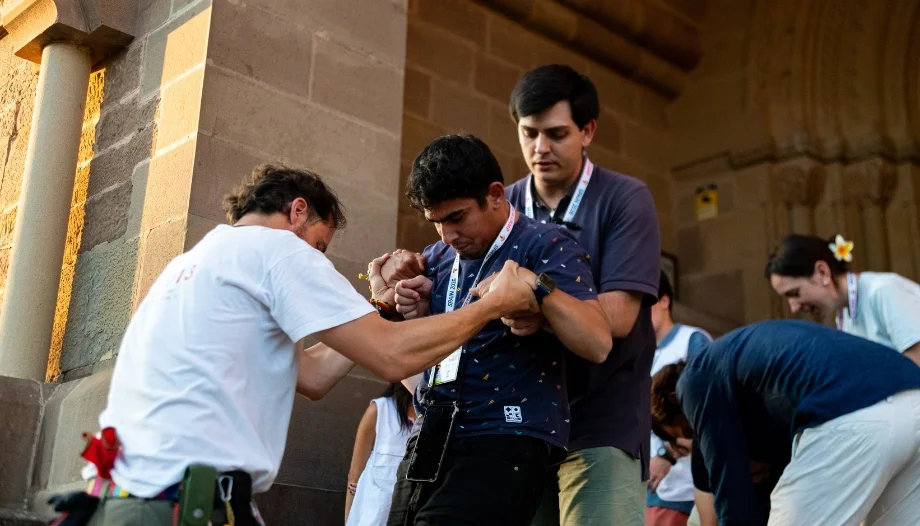
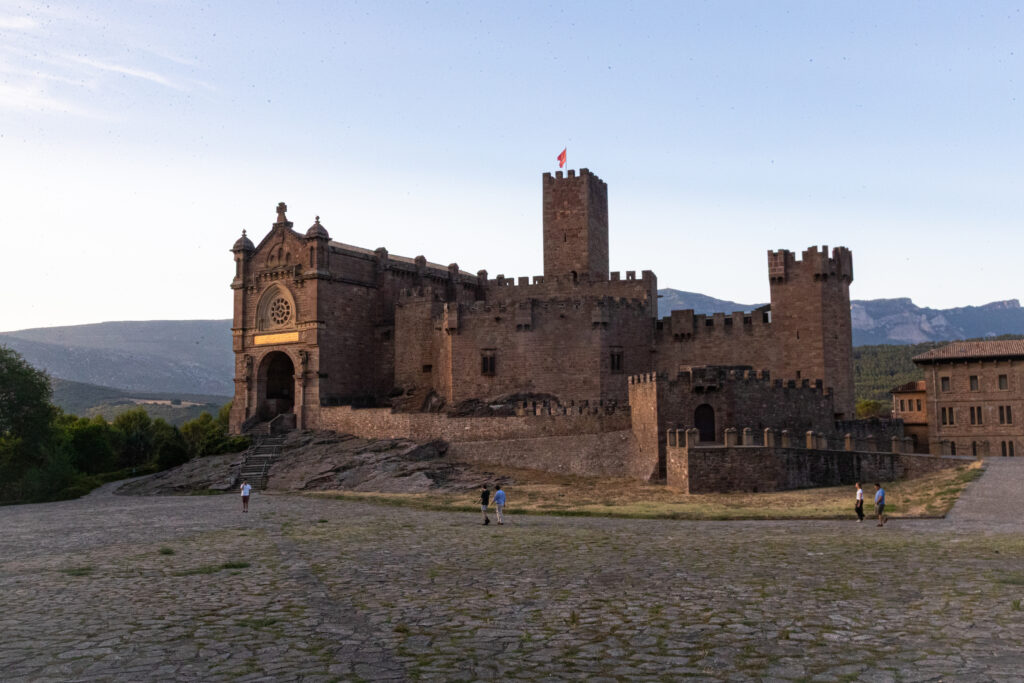
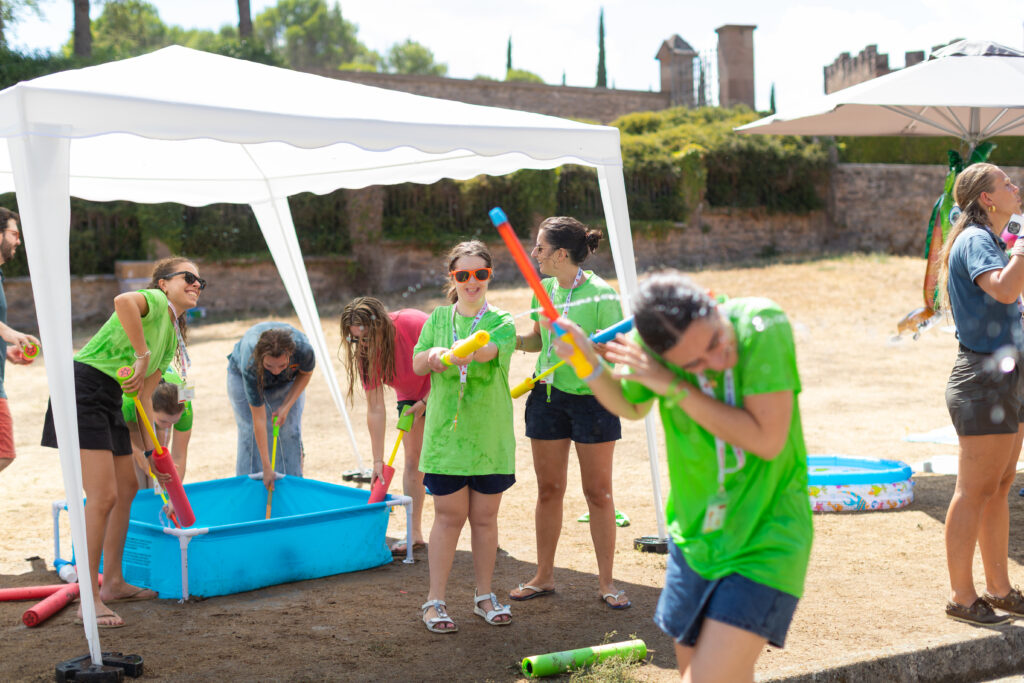
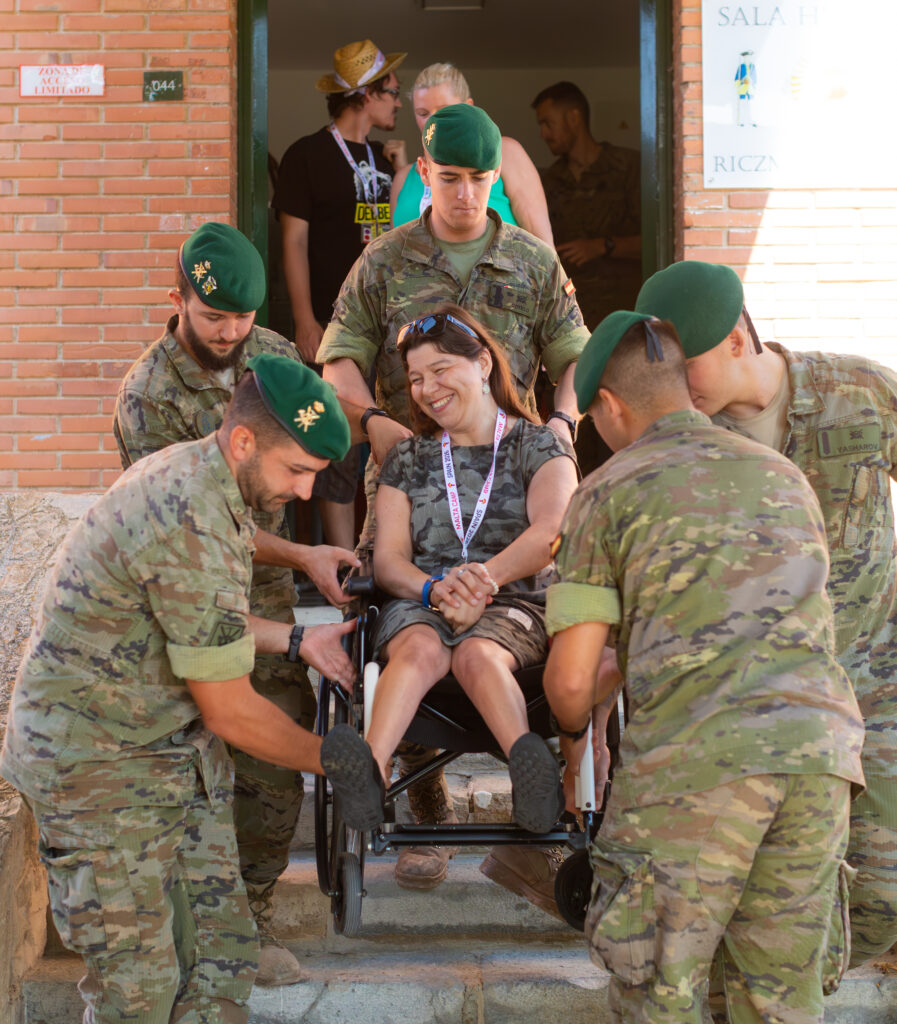
Last week, Javier Castle served as the meeting place for more than 650 young people from 24 countries. Young people with disabilities and volunteers between the ages of 18 and 35, along with helpers (volunteer assistants) participated in the 41st International Summer Camp of the Order of Malta. From August 3 to 10, a gathering took place that, year after year, builds a community in which serving others is also a way of encountering God.
The camp was held, not by chance, at the birthplace of St. Francis Xavier, one of the great missionaries of the 16th century and co-founder of the Society of Jesus. His life, dedicated to evangelization and service, inspired this year’s gathering, whose motto was «Surge et ambula,» «Arise and walk.».
A community, not a welfare project
The Archbishop of Pamplona, Monsignor Florencio Roselló, officially opened the camp and explained to the participants the meaning behind this year’s theme.
«This isn’t just a motivational slogan; it’s not just a theoretical concept,» he said. The goal, he added, «is not to eliminate vulnerability, but to ensure that no one is trapped in it.».
The Grand Commander of the Order wanted to emphasize that the Malta Camp should not be viewed as a charitable project, but rather as «a temporary community where we help one another,» he said. An experience that, in his opinion, will ultimately transform those who participate «far more than you can imagine.».
Alongside the Grand Commander, the Grand Hospitaller, Josef D. Blotz, and the Order’s Prelate, Monsignor Luis Manuel Cuña Ramos, have participated over the past few days. Pope Leo XIV also wished to be present with a message addressed to the young people. The Pontiff expressed his spiritual closeness and hoped that the week would be «an opportunity to contemplate the beauty of God, forge friendships, and strengthen the sense of Christian responsibility.» In addition, he encouraged them to respond generously to the Lord’s call to serve others and to help build «paths of authentic brotherhood and peace» in their communities.
This year, young people from 24 countries participated, and more than 14 languages were spoken during the event. Peru, Mexico, and Estonia were represented for the first time, while Lebanon returned after a two-year absence due to the ongoing conflict in the country. Since 1984, the gathering has brought together young people with disabilities and volunteers from around the world every summer. This year, the event has also been marked by a return to the Order of Malta’s roots and to spirituality, with a special focus on the sacramental life, the celebration of daily Mass, and extended periods of Adoration of the Blessed Sacrament, as Father Pablo Lora, chaplain of the Order of Malta and one of the twenty priests who accompanied the young people, highlighted to Omnes.
«With My Mind on Heaven»
For Juan Martínez Luque, this isn't his first camp. He attended his first one, held in Rome, «just to put it on his resume.» But that first experience left a lasting impression on him: «The first year was such a great experience that I’ve been coming back for five years now,» he says.
For him, the camp is an opportunity to pause and look at his own life in a different way. Interacting with families and people with disabilities makes him realize the effort it takes to cope with certain situations and leads him to feel «quite grateful for what we have.» Volunteering, he explains, allows him to break out of his routine and discover other realities.
And it is precisely during that service that Juan says he encounters God. «Absolutely, all the time,» he replies when asked if he discovers God during camp. He experiences this especially in the closeness among all the participants. Juan says that he leaves every camp «with his mind on Heaven.».
Praying While Working
Lucía Roca de Togores also came to Javier because of a personal connection. Her sister is participating in the camp, and it was important to her to accompany her on an experience she knew meant a great deal. Among the memories she takes with her is a conversation with Guedal, a sister of the Order, in which they discussed how those who receive service can end up teaching more to those who serve.
After a year and a half of preparation, he acknowledges that the work has been intense. However, it is precisely in the midst of that exhaustion that he discovers a spiritual dimension: «That’s when you really see how God is at work in the service we’re performing, no matter how hard it may be.».
The camp, she says, is «full of spirituality, but also full of work.» It is in the midst of that work that Lucía says she encounters God. For her, talking with those she serves is «a way of talking with God.».
Why serve it?
The experience described by these young people is directly linked to the charism of the Order of Malta itself. Monsignor Luis Manuel Cuña Ramos explains that faith and service are inseparably linked in the Order’s identity. Its original charism is expressed in the defense of the faith and in service to the poor and the sick, whom it traditionally refers to as «poor lords» and «sick lords.».
The difference, the prelate explains, lies in our perspective. «Through faith, through prayer, the Lord gives us the ability to see Jesus himself in the sick, in the poor, and in the pilgrim.» That is why, he emphasizes, the Order does not simply engage in philanthropy: «We practice charity.».
Prayer and service feed into one another. In order to recognize Christ in others, we must first encounter Him through the Word of God and prayer. And that encounter then allows us to «pray while we work,» as Lucía explained.
For Cuña Ramos, Christian service also stems from a prior experience of love received. A young person may begin serving because they feel called, but they stay because they discover the joy of giving of themselves. «It’s not done as a job; it’s not done out of obligation,» he affirms. If that were the case, they would eventually give it up. When asked why they serve, the ultimate answer is one: «The Lord.».
The prelate explains this by recounting an anecdote about one of Mother Teresa of Calcutta’s nuns. After seeing her tend to the wounds of a dying man, a journalist told her that he wouldn’t do that even for a million dollars. The nun replied, «Neither would I.».
That, explains Monsignor Cuña Ramos, is the secret: «Doing it because we feel loved, forgiven, cherished, and desired by God.» Those who know they are loved can pass on to others that same love they have received.
The Future of the Order of Malta
The camp also holds significance for the future of the Order of Malta. According to its prelate, these gatherings allow young people from different countries to discover that, although they come from different cultures, they share the same charism and the same desire to serve the Lord through the poor and the sick.
«It is an experience of the Church, of catholicity,» he says. And it is also an opportunity for participants to discover a possible vocation within the Order itself: «They are the future of the Order.» From these gatherings, he explains, future vocations may emerge—as knights, ladies, members of the Order, or chaplains.
But the future could also take a different form. With a touch of humor, Monsignor Cuña Ramos speaks of a reinterpretation of the acronym for the Sovereign Military Order of Malta: «Sovereign Matrimonial Order of Malta.» At the camps, he explains, many young people get to know one another because they share the same charism and the same outlook on life—including marriage and love as a form of service.
These gatherings have also given rise to families connected to the Order, who in turn can become «young evangelizers and evangelizing families.».





 Español
  English
  Italiano