


 Have a God Time. Living face to face with God through beautiful things.DECRUX: Evangelizing homes with light and prayerMass schedules. Find a Mass near you by cell phone.
The richness of the liturgy is immense. And understanding it can help us live our faith more fully. The project Ad Laudem It was born out of this conviction and a desire to make this wealth accessible to everyone and to put that knowledge at the service of the Church through social media.
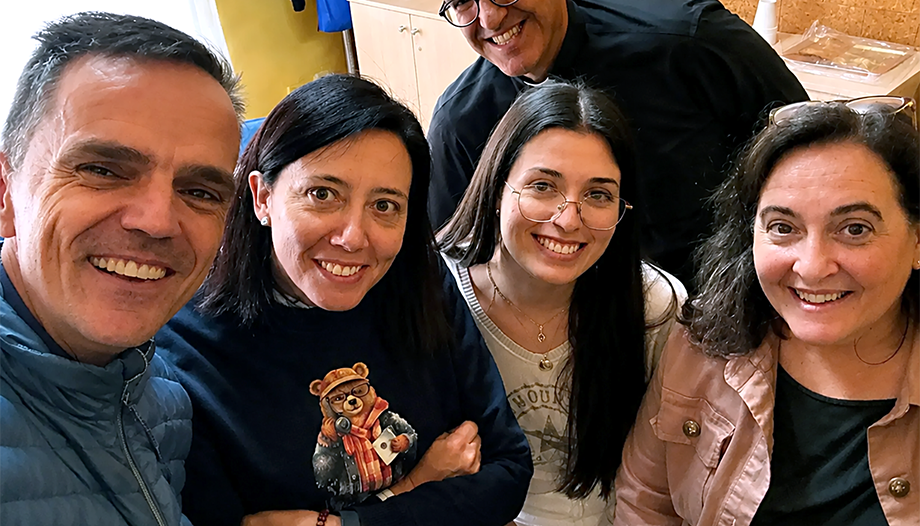
Silvia Casado, who is in charge of the project’s overall management, explains that the idea arose, first and foremost, from a personal interest in passing on all that practical wisdom traditionally found in specialized books on liturgy and ceremonies. These books explained, for example, the use and care of altar linens, liturgical objects, and the various elements of the church. The goal was to bring that knowledge into the digital realm so that any community could benefit from it.
Starting from that initial idea, the project gradually expanded its scope. In addition to offering practical advice on caring for liturgical heritage, Eli Canela, the social media manager, explains that they felt the need to delve deeper into the meaning of the liturgy. That is why they began publishing content that helps people understand what the Mass is, why it is celebrated, and what its meaning is, drawing on texts by saints, the Church Fathers, and contemporary authors. In this way, the ultimate goal of Ad Laudem is to help care for the liturgy in all its dimensions: not only the material aspect, but also the spiritual one, encouraging the faithful to learn to experience the Mass more deeply.
Silvia and Eli say that their experience at Ad Laudem It has shown them a hopeful reality. They explain that, during the project’s research process, they discovered a deep love and knowledge among those dedicated to the care of churches and the divine liturgy. However, they believe that this knowledge does not always reach the faithful who participate in the celebration, so there is an opportunity to bring this heritage of knowledge to all who attend Mass.
“Some people discover aspects of the meaning of the Mass by becoming familiar with other forms of celebration, such as the pre-Vatican II rite, even though the liturgical reform was intended precisely to help the faithful understand and participate more fully in the celebration.”Silvia says. In her opinion, rather than changing the liturgy, what is needed is a better explanation of the meaning of each gesture, symbol, and moment of the Mass.
A desire to delve deeper
The women behind Ad Laudem They also explain that this conviction arose from extensive fieldwork. They interviewed about 50 priests, sacristans, and other liturgical leaders from various countries to understand their needs. Many of those consulted expressed a desire for more training on the value of the sacred, the meaning of symbols, and the significance of the liturgy. This demand was decisive in expanding the project to include educational content.
The women behind Ad Laudem They also emphasize that their main concern is not the number of followers, but the usefulness of the content they offer: “If this project helps even just one person to better understand the liturgy and grow closer to God, then we have already achieved our goal.” Eli says. His mission is to put his knowledge to work for the Church.
Has the sense of the sacred been lost?
When asked if a sense of the sacred has been lost today, the promoters of Ad Laudem They respond with optimism. They say they sense a deep respect for the liturgy and a sincere desire to better understand the meaning of its gestures, rites, and symbols. For them, the challenge is not a lack of reverence, but a lack of formation.
They also highlight the interest these topics generate, especially among young people on social media. They explain that content on Gregorian chant, incense, and liturgical symbolism has been among the most viewed, reflecting a desire to deepen one's faith: “Many people are seeking answers about the meaning of the Mass, the sacraments, and the liturgy, and there is a need for formation in these areas that has not yet been sufficiently addressed.”.
What is most often neglected in the liturgy?
When asked about the most neglected aspects of the liturgy, the leaders of Ad Laudem They avoid a critical approach and prefer to focus on training. They explain that, after interviewing priests and sacristans, they discovered a particular lack of knowledge regarding the care of liturgical linens—purificators, corporals, and pallia—which come into contact with the Body and Blood of Christ. For this reason, they dedicated one of their first videos to explaining how to clean them properly in accordance with Church regulations.
They also point out that much of the deterioration of parish heritage is due to a lack of training, not a lack of respect. As for the Mass, they remind us that, beyond styles or sensibilities, what is essential is that the celebration lead to an encounter with Christ and keep God at the center, avoiding both formalism and spectacle.
The importance of training
When asked how liturgical formation can help people live their faith more deeply, both respond based on their own personal experiences. Silvia explains that it was a course on liturgy that completely transformed the way she participates in Mass: “Realizing that the Eucharist is celebrated by the entire Church—both the pilgrim Church on earth and the Church already in Heaven—helped me discover that every member of the faithful plays an active role in the celebration.”. Thanks to that understanding, he stopped viewing the Mass as a series of rites and began to experience it as a genuine participation in Christ's sacrifice.
Eli recalls a similar experience during a series of catechesis sessions for parents of First Communion children. After a simple session explaining the meaning of the Mass, several attendees confided that they would have liked to have received that instruction much earlier. This showed him that many people want to better understand the liturgy but have simply never had the opportunity to receive an explanation.
Along the same lines, Eli explains that much of the content they publish answers seemingly simple questions—such as the meaning of a moment of silence, the significance of certain prayers, or the reason behind some liturgical gestures—but these can transform the way we experience the celebration.
Ad Laudem It is intended, above all, to be a tool at the service of the Church. It is designed to help priests and sacristans, as well as any member of the faithful interested in better understanding and caring for the liturgy. Beyond simply acquiring knowledge, Eli and Silvia agree that liturgical formation consists of discovering the meaning of the sacraments and the Church’s prayer, thereby fostering a fuller experience of the faith.






 Español
  English
  Italiano