



 «Light from Light»: The Nicene Creed That Still Speaks TodayThe 500th Anniversary of Philip II, "the Prudent"The Adventure of Grace
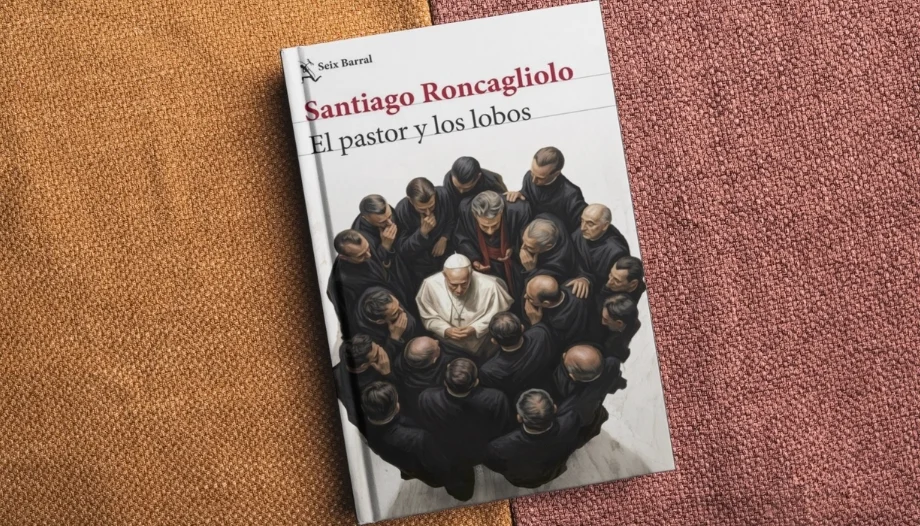
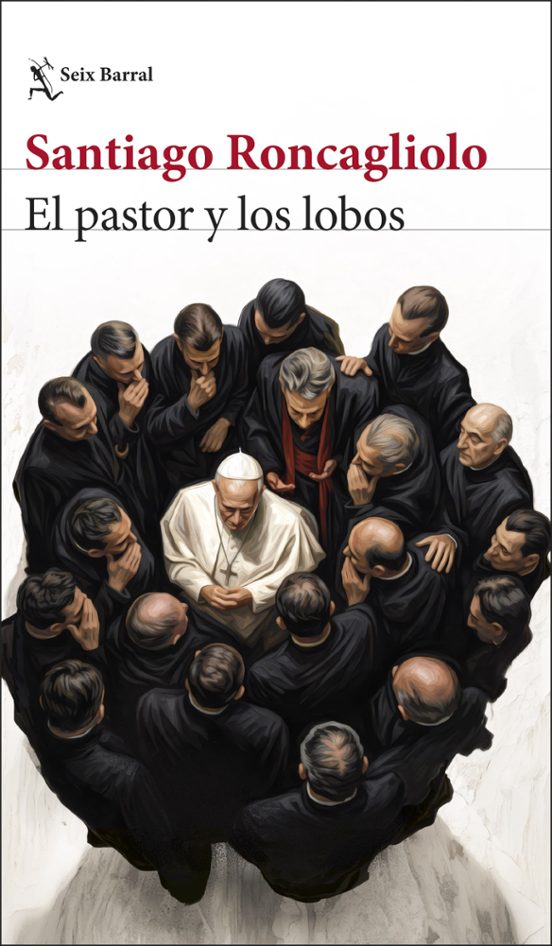
Indeed, the title of this research work written by Santiago Roncagliolo (Lima, Peru, 1975), “The Shepherd and the Wolves,” is truly apt and accurately reflects the content of this extraordinary piece of journalism—and, above all, a deeply personal account—of a period in the history of the Church in Peru and Latin America that is very little known in Europe.
Specifically, this work will focus on a very specific historical period: the time and events that took place between the Americas and Rome, from Pope Francis’s visit to Chile at the beginning of his pontificate (2018) to the recent election of Cardinal Robert Prevost as Leo XIV (2025).
Truly, upon finishing this fast-paced thriller—imbued with extraordinary sensitivity and a truly captivating writing style, with a clarity of truly lucid ideas—the conclusion is clear: Pope Francis had prepared Cardinal Robert Prevost to be elected Roman Pontiff and to complete the task he had begun but had been unable to finish, given the extent to which the abuse had spread in Latin America—and specifically in Peru.
A perspective shaped by personal experience
The author’s perspective and his biases will distort the entire analysis, since his personal situation is certainly not incidental but rather truly central, and this will distort the outcome. This perspective is evident and repeatedly emphasized throughout the work: This is a man who has no faith in God or in the Catholic Church, who suffered sexual abuse as a child at the hands of a Jesuit at the school where he studied in Lima, while his superiors and the school’s administrators stood idly by. Furthermore, he was born into a dysfunctional home with an alcoholic father who mistreated and abused his wife—a woman who worked for social justice from a leftist perspective but failed in every aspect of her life. His mother, left with no choice, appears deeply humiliated and alone as she struggles to raise her children.
From this perspective, the author will examine how Pope Francis, following the mistakes made during his 2018 trip to Chile—where he was allegedly misled by his advisors, allowed the top disciple of the key figure in Chile’s child sexual abuse scandal to rise to the episcopate, and humiliated the victims—has responded. Indeed, Francis’s pontificate has wholeheartedly become the driving force behind the exposure of child sexual abuse cases around the world, often setting aside the principle of the presumption of innocence.
In that regard, one of the central focuses of the investigation would have been to uncover and dismantle the cases of child sexual abuse within the “Sodalicio,” an organization deeply entrenched in the country’s ruling class. Pope Francis reportedly sought a new cardinal from Lima among the leading exponents of liberation theology and the foremost opponent of the “Sodalicio.”.
In addition, the book will describe how, with Rome’s support, legal proceedings were reportedly brought against high-ranking officials of the “sodalicio” as well as against the financial schemes allegedly linked to the main scheme.
In fact, Pope Francis reportedly intended, through this exemplary cleanup effort, to set an example for other countries to follow so that they could take the lead in the investigation.
Prevost, a Key Figure in Peru
To carry out this task, Bergoglio reportedly relied on the tireless, prudent, and impeccable jurist, Bishop Prevost of Chiclayo, who, together with the nuncio and several other bishops, undertook an immense effort throughout Peru.
Certainly, Pope Francis would have realized that the universal Church had to take action and that cases of abuse had to be pursued to the very end: not only to support the victims and provide them with psychological assistance, but also to take the lead in the investigation and even call on bishops who had covered up the abuse to step down from their respective bishoprics, that is, in practice, to treat the presumption of innocence on the same level as the need to investigate every allegation, even if it were nonsensical.
As this study demonstrates, Prevost has certainly been a key figure, first in Peru, where he served on the commission created by Pope Francis for that purpose. Furthermore, the research will clearly highlight his legal, human, and spiritual stature, as well as his impeccable leadership.
This investigation further shows that Prevost was apparently appointed by Francis to carry out that very task from within the Dicastery for Bishops, so that the matter could ultimately be thoroughly investigated.
Conclusions on the abuses
Among the conclusions of this work are the studies conducted during Pope Francis’s pontificate—both in seminaries and novitiates—regarding the heart of the matter. For the author, the problem lies in celibacy; while for Pope Francis, it was necessary to help candidates for the priesthood discover—and to provide spiritual guidance—the importance of valuing personal relationships in spiritual and human care as a human and supernatural relationship that must serve to glorify God and never be turned into a tool for the selfishness of the priest or the other person.
On the other hand, it is clear that the liberation theologies condemned by the Holy See and outlined in “Libertatis nuntius” (1984) constituted a most serious error in the pastoral ministry of some clergy and religious, since they were not based on charity but on a particular understanding of justice and, above all, because they condoned violence. Certainly, it is not the Catholic Church’s task to change temporal structures, but rather to form Christians who live out the Christian virtues—specifically charity and justice—and to collaborate with the justice system to denounce the corrupt. In other words, to live the social doctrine of the Church exactly as it is expressed in the Catechism of the Catholic Church. The errors regarding Opus Dei stem from its Marxist view of history, which sees hatred and class struggle as the driving forces of history, and from its failure to believe that human beings can act out of love for God.
The Shepherd and the Wolves






 Español
  English
  Italiano