


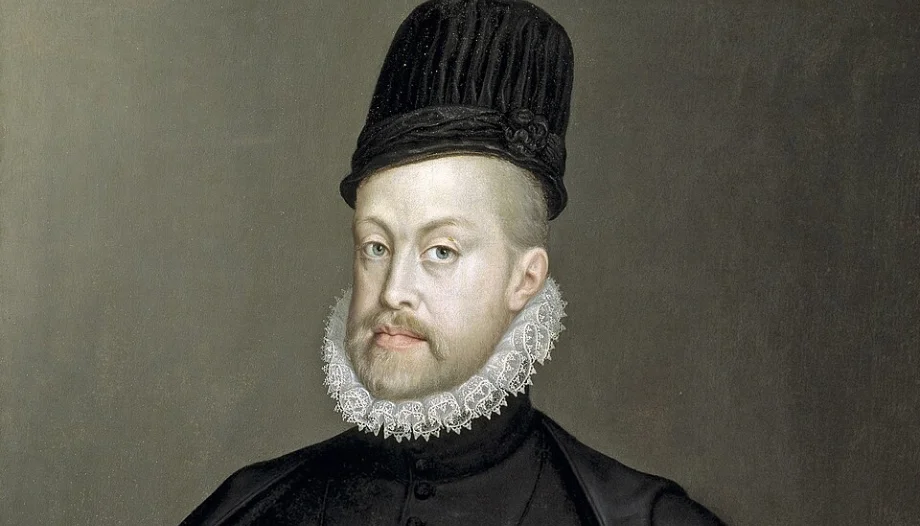
On May 27, 2027, we will celebrate the 500th anniversary of the birth of one of the most influential monarchs in Spanish history. We all remember the famous saying that “the sun never set on his vast territories,” for during his reign there was a time when the crowns of Castile and Portugal were united, and as a result, these two immense empires encompassed a large part of the known world.
In any case, from the very beginning of his immense power and dominion, Philip II always kept in mind a statement by Francisco de Vitoria, founder of the School of Salamanca and of international law, who consistently reminded him, both verbally and in writing, that it was fitting for the entire spiritual realm of the world to be governed by the Roman Pontiff, for it was important that we be one people under one Shepherd: Jesus Christ, universal King of heaven and earth.
The Limits of Universal Power
Likewise, he wrote in his *Relecciones* on “Political Power and Its Limits” that, due to original sin—and, specifically, selfishness and envy—it was not appropriate for there to be a single universal empire that materially governed the globe. As we have indeed seen since his time—and even after the fall of the Berlin Wall—the seemingly global world is divided into large blocs that vie for development and progress in science, technology, and the subsequent advancement of anthropology.
Certainly, there is no single monarch who, through his laws and instruments of government, unifies laws and directives to establish a single political authority. Instead, we have realized Vitoria’s dream that the dignity of the human person would be the foundation of an international law that is far superior to the law of nations of his time and that, at the same time, respected local and provincial autonomy—where people can live in trust and according to their traditions—this provides closeness and security to the weakest and genuine charity among equals.
Philip II, a King in the Service of God
The fact is that this coming year we will celebrate the 500th anniversary of Philip II, the quintessential Catholic king who was attacked by everyone and everything because he never hesitated to affirm that he wanted to be a good son of God and of the Church.
In fact, he lived out to the letter what Alfonso X the Wise had already established as “the kings of the kingdom”: the first section, first title, and first law stated that the monarch’s purpose was for his subjects to go to heaven. Therefore, Philip II placed the interests of the Church above his own.
Governing for the Common Good
Likewise, he sought out the best, most intellectually gifted, wisest, and most prudent individuals for the highest positions in the state judiciary, even though many of them were clergymen, bishops, or cardinals. For example, he did not hesitate to propose to the Holy Father a statesman to serve as viceroy of New Spain and, at the same time, as archbishop of Mexico’s first American diocese.
Certainly, it was not clericalism but rather a pursuit of integrity, dedication to the citizens, and the common good. A letter from Philip II to Diego de Covarrubias—whom he had just appointed president of the Council of Castile, president of the Council of State, and who was also the bishop of Segovia—is illustrative of this. In that letter, he spoke to him from the heart. First, he asked him to devote all his efforts to carrying out the construction of the hospitals that had been decided upon by the Council of State and to release the necessary funds to implement the plan without delay.
Second, he urged him to be cautious with one of the high-ranking officials of the Council of State, noting: “He tends to take on more work than he can handle.” This detail is interesting because it speaks to a king who stays on top of matters to ensure they are carried out and who knows how to ask his trusted men for what they can give—and no more. In reality, that vast empire could only be sustained thanks to a generation of men who had been well-trained at the colleges—especially in Salamanca—and who knew how to take the reins of the state and guide the government of the viceroys and the General Cortes in every part of the empire.
The "Black Legend" Against the Catholic King
We cannot fail to mention the “Black Legend” about Philip II, which was actually intended to attack the Church, since he was certainly the most important Catholic monarch of his time and his territories remained loyal to the Catholic Church, while elsewhere the slogan “cuius regio, eius religio”, which means that attacking the Church was tantamount to attacking Philip II.
Likewise, we must remember that Philip II distinguished all too well between the Catholic Church—governed by the Holy Father and guided by the Holy Spirit—and the pope as a temporal lord and ruler of the vast Papal States, a situation that led to such bizarre alliances as the union of France and the Turks against Philip II to attack the Vatican States.
A New Perspective on Philip II
Certainly, younger generations have already come to know Philip II much better than we have, through the works of great American and European modernist historians such as, for example, Kamen, Parker, etc., who have developed new interpretations of the sources and shed light on many little-known facets, such as his paternal tenderness toward his daughters, the careful education he provided them, his concern for carrying out the Holy Father’s wishes in preparing for the Battle of Lepanto against the Turks, while at the same time defending, through the Roman agent of petitions, the rights of the Spanish crown regarding royalties
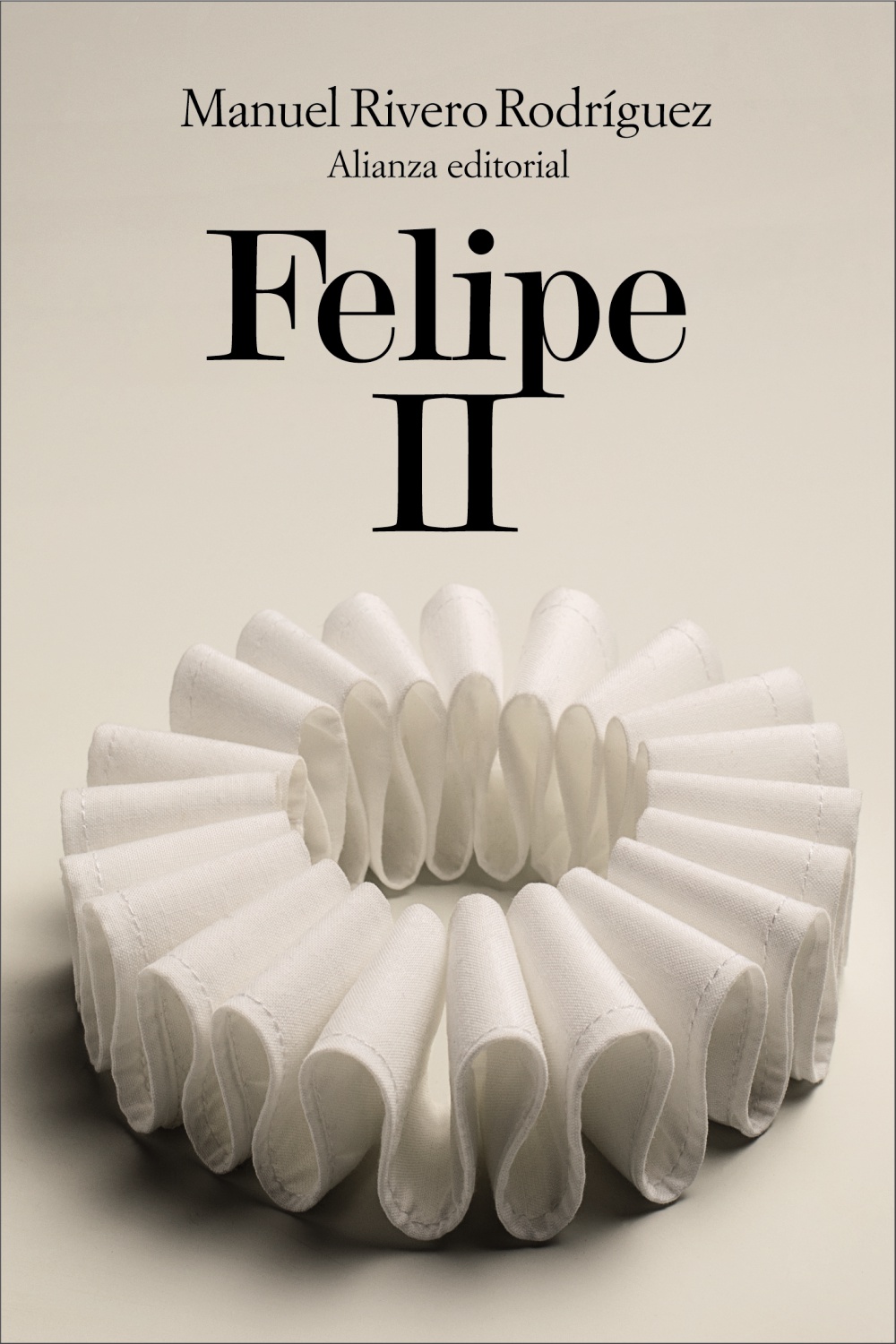
Certainly, the false image of a monarch as the “hammer of heretics” and the “light of Trent” has changed, that is to say, the false image of a stern king—always dressed in mourning, cruel and pompous (as reflected on the cover of this work we are now presenting), clerical, and more Catholic than the Pope—has been dispelled.
We will conclude by recommending Manuel Rivero Rodríguez’s recent book on Philip II as a way to prepare for this centennial, and we hope it will be as fruitful as the centennial of his death.
Philip II





 Español
  English
  Italiano
  Français
  Deutsch
  Polski