



 Here's What Pope Leo XIV's Visit to France Will Look LikeLeón XIV in France. So that the world may have life
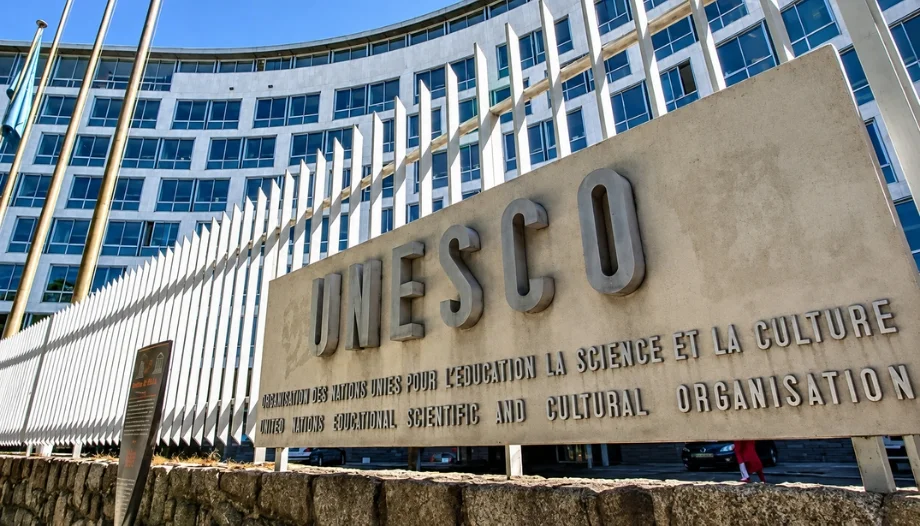
On September 25, 2026, international diplomacy and global ethical reflection will witness a historic event. Pope Leo XIV will begin a pastoral visit to France, one of the most emblematic moments of which will be an official visit and address at UNESCO headquarters in Paris on the very day of his arrival. This visit is in response to the formal invitation extended by the organization's Director-General, Khaled El-Enany, and could be considered a turning point in the relationship between the Holy See and contemporary multilateralism.
The return to Paris after almost half a century
The meeting possesses an undeniable historical symbolism. Leo XIV will become only the second Roman pontiff in history to appear in person at UNESCO headquarters. Forty-six years have passed since Saint John Paul II delivered his memorable speech in that same venue on June 2, 1980. That day, the Polish Pope's address remains etched in the diplomatic and philosophical memory of the 20th century for the lucidity and vehemence with which he tackled the great dilemmas facing humanity on the eve of the new millennium.
In 1980, at the height of the Cold War, John Paul II placed culture at the heart of human destiny. “Man lives a truly human life thanks to culture. (…) Culture is a specific mode of man’s ‘existence’ and ‘being’,”, He affirmed. Faced with the risk that the arms race and the logic of blocs would devour human dignity, the pontiff made an urgent appeal for the mobilization of consciences. He demanded recognition of the “priority of ethics over technology, of the primacy of the person over things, of the superiority of the spirit over matter,”, affirming that world peace and the peaceful future of humanity depend on placing the demands of love, mind, and conscience above the claims of technical or military domination.
From 1980 to 2026: the spirit versus technical power
Nearly half a century later, history seems to be repeating its crossroads, albeit with renewed tools and languages. If in 1980 the challenge lay in the nuclear threat and ideological polarization, today humanity faces the dizzying rise of artificial intelligence, predictive algorithms, and global automation. In this new context, Leo XIV takes up and updates the doctrinal axis that underpinned his predecessor's intervention: the inalienable primacy of the spirit over technical or material power.
This doctrinal continuity was clearly reflected in the encyclical letter Magnificent Humanitas, promulgated by Leo XIV on May 15, 2026. In this document, the Holy Father firmly warns against the dangers of a development model that subordinates the sacred value of the human person to criteria of algorithmic efficiency, economic performance, or technical utility (cf. MH 156, 183, 198). Like John Paul II, Leo XIV reminds us that the true greatness of the human being is not measured by the power of their technological tools or their calculating abilities, but by their moral and spiritual capacity to direct knowledge and science toward the common good, social justice, and reconciliation among nations (cf. MH Chapter V). Ultimately, both papal texts converge on a key lesson: true progress is never merely technical in nature, but eminently ethical, spiritual, and human.
An alliance for the future of humanity
Pope Leo XIV will address an institution that unites the peoples of the world around areas vital to society: education, culture, science, communication, and the preservation of humanity's tangible and intangible heritage. This visit aligns with the cross-cutting themes that the Holy Father has promoted since the beginning of his pontificate, including building peace, safeguarding human dignity, the integral formation of new generations, and ethical responsibility in the face of the rapid advancement of new technologies.
For its part, UNESCO offers an ideal and privileged platform to transmit these fundamental convictions to the international community, overcoming political barriers, cultural divides, and religious differences. In an era characterized by the fragmentation of international consensus and the fragility of mutual trust among states, the Pope's presence constitutes a decisive witness in favor of multilateral dialogue.
Towards a "disarmed and disarming" peace«
This convergence of ideals takes on particular force in the realm of peace and social justice. From his very first words on the day of his election, Pope Leo XIV advocated with conviction for a peace that is "disarmed and disarming," founded on humility and perseverance. This vision demands a decisive renunciation of the logic of military and economic domination, as well as disarming words, behaviors, and consciences in order to rebuild the fabric of trust between individuals and nations.
In this context, the missions of the Holy See and UNESCO are deeply intertwined. Both share the conviction that true peace does not arise from ephemeral political agreements or the balance of terror, but is patiently built over time through the proper education of young people, unwavering respect for cultural diversity, and the uncompromising defense of the dignity of every person. As the Permanent Observer of the Holy See to UNESCO, Archbishop Roberto Campisi, pointed out, this profound convergence translates into a priority focus on the most vulnerable members of global society: children deprived of the fundamental right to education, populations torn apart by armed conflict, migrants and refugees, victims of any form of discrimination or digital marginalization, and those communities whose cultural assets, historical heritage, and ancestral memory are gravely threatened.
The ethical challenge of our time
Looking back on this historic visit after 46 years, Leo XIV's appearance before UNESCO is not only an event of diplomatic significance, but also a direct challenge to the conscience of our time and society. At a time of rapid technological and industrial transformation, it is imperative to maintain a critical and rigorous monitoring of digital and biotechnological advances, always ensuring that technology remains at the service of humankind and never the other way around. The primacy of the person over the machine, of ethics over efficiency, and of the spirit over matter remains the only guarantee for building a truly humane, just, and peaceful future.
Presbyter. @GCandanedoPaez






 Español
  English
  Italiano
  Français
  Deutsch
  Polski
  简体中文
简体中文