



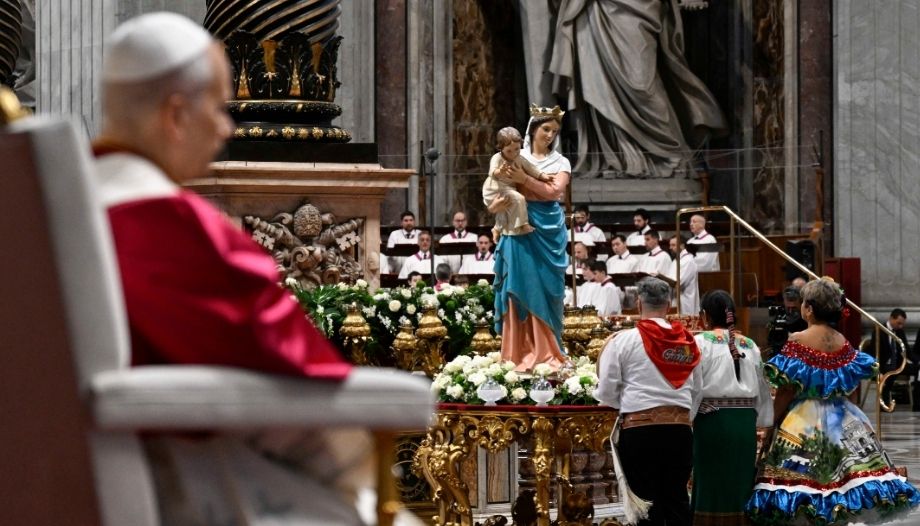
On the Second Sunday of Easter, established as Divine Mercy Sunday, and on the eve of his trip to four African countries, as the Pope recalled in the Regina caeli, Leo XIV referred to the 49 martyrs of Abitinia. One of them affirmed that “without Sunday we cannot live”. Abitinia or Abitina was in the Roman province that included part of Tunisia, Libya and northeastern Algeria.
Faith nourished in the Eucharist
This Sunday's Gospel recounts the Apostle Thomas“ profession of faith, ‘the highest in the entire Fourth Gospel: ’My Lord and my God” (v. 28)".
The Pope said in the Regina caeli that “certainly, believing is not always easy. It was not for Thomas and it is not for us either. Faith needs to be nourished and sustained. That is why, on the “eighth day,” that is, every Sunday, the Church invites us to do as the first disciples did: to gather and celebrate the Eucharist together.”.
In it we listen to the words of Jesus, taught the Successor of Peter, “we pray, we profess our faith, we share the gifts of God in charity, we offer our life in union with the Sacrifice of Christ, we are nourished by his Body and Blood, so that we too may be witnesses of his Resurrection, as the term “Mass” indicates, that is, “sending”, “mission” (cf. Catechism of the Catholic Church, 1332)”.
The martyrs of Abitinia: a beautiful testimony
The Sunday Eucharist is indispensable for the Christian life, the Pope continued. “Tomorrow I will leave for the Apostolic Journey to Africa, and precisely some martyrs of the African Church of the first centuries, the martyrs of Abitinia, They have left us a beautiful testimony in this regard”.
“Faced with the proposal to save their lives in exchange for giving up celebrating the Eucharist, they responded that they could not live without celebrating the Lord's Day. It is there that our faith is nourished and grows”.
Benedict XVI: “we would lack the strength”.”
At the closing of the XXVI Italian Eucharistic Congress in Bari (Italy), in May 2005, Benedict XVI recalled the scene.
It was the feast of Corpus Christi. The Pope said: “It was significant, among others, the answer that a certain Emeritus gave to the proconsul who asked him why they had transgressed the severe order of the emperor. He answered: “Sine dominico non possumus”; that is, without gathering in assembly on Sunday to celebrate the Eucharist we cannot live. We would lack the strength to face the daily difficulties and not succumb”.
After atrocious tortures, saint Saturninus and other 48 martyrs of Abitinia were killed. “Thus, with the effusion of blood, they confirmed their faith. They died, but they conquered; now we remember them in the glory of the risen Christ. On the experience of the martyrs of Abitina we too, Christians of the 21st century, must reflect,” Pope Benedict suggested.
Eastern churches: wishes for peace
After the recitation of the Regina caeli, The Pontiff recalled that many Eastern Churches celebrate Easter according to the Julian calendar. “To all these communities, I extend my most sincere wishes for peace, in communion of faith in the Risen Lord.”.
Beloved Ukrainian and Lebanese peoples
He then prayed for those suffering because of the war, especially for “the beloved Ukrainian people” and for the “dear Lebanese people”.
Three years of war in Sudan
The Pope stressed that “next Wednesday marks three years since the beginning of the bloody conflict in Sudan, and how much the Sudanese people, the innocent victims of this inhuman tragedy, are suffering! I reiterate my sincere appeal to the parties to the conflict to lay down their arms and to begin, without preconditions, an honest dialogue to put an end to this fratricidal war as soon as possible”.
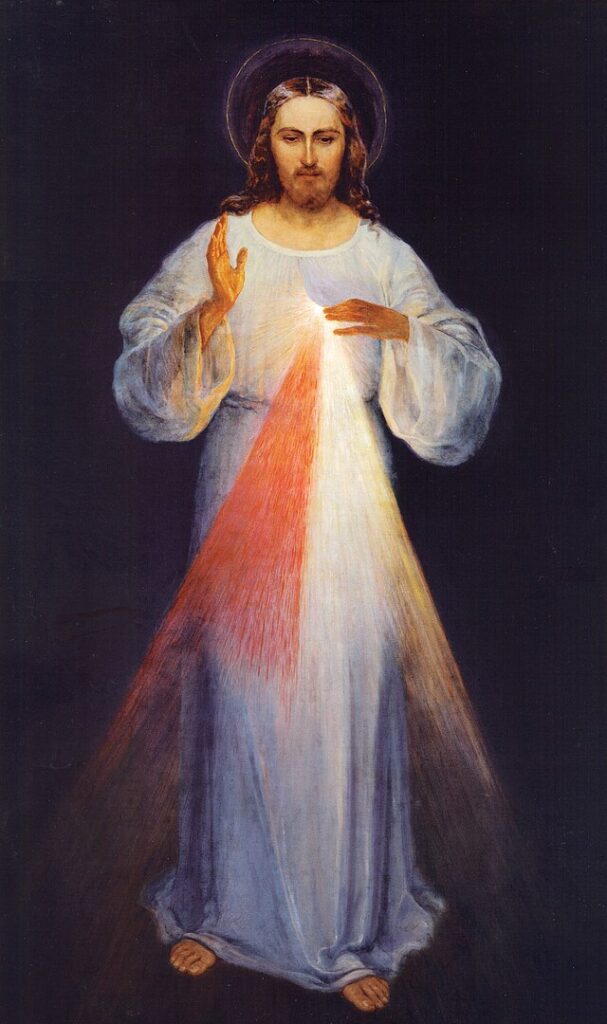
Divine Mercy
Finally, the Pontiff greeted the Romans and pilgrims present in St. Peter's Square, “especially the faithful who celebrated the Sunday of the Eucharist". Divine Mercy in the Sanctuary of Santo Spirito in Sassia”.
Accompanying the Pope on his apostolic journey to Africa
Before giving the blessing, he asked and thanked us to accompany him with prayers during his ten-day apostolic journey to four African countries: Algeria, Cameroon, Angola and Equatorial Guinea. And he referred to “the Virgin Mary, blessed for having been the first to believe without seeing (cf. Jn 20,29)”.




 Español
  English
  Italiano