


 Pope to visit Algeria, Cameroon, Angola and Equatorial Guinea in AfricaHistory, faith and culture in Algeria and TunisiaTunisia and Algeria: the land of St. Augustine
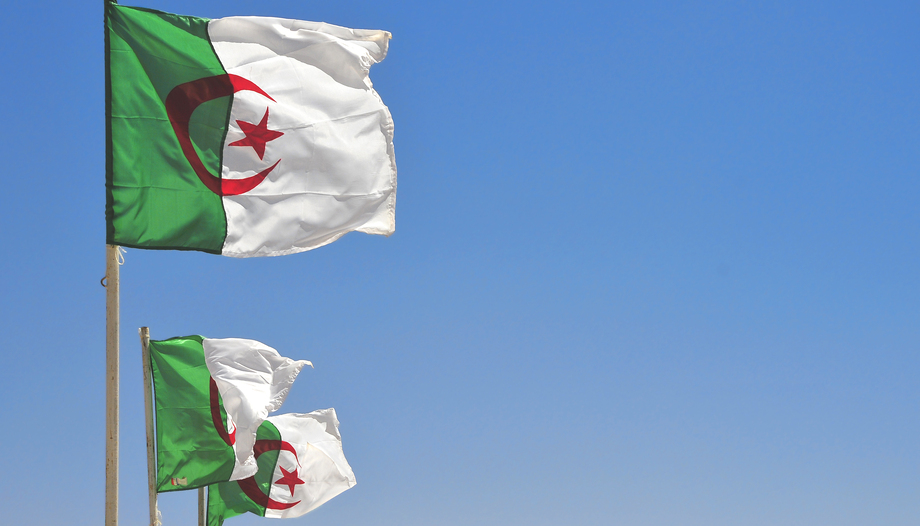
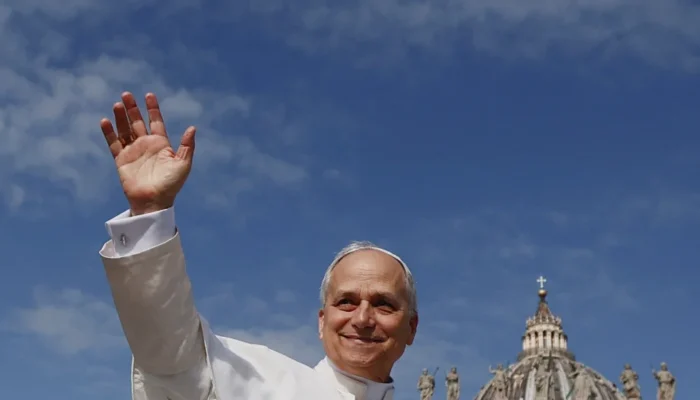
Pope Leo XIV will arrive in Algeria on April 13 for a four-day visit , marking the first papal visit to the country. While the pontiff has visited Algeria twice before, once in 2003 and again in 2014 as Prior General of the Order of Saint Augustine, his return as head of the Catholic Church comes against a backdrop of mounting restrictions for the country’s Christian minority.
To better understand the situation, Omnes spoke with Constance Avenel, Advocacy Officer for Freedom of Religion at the European Center for Law and Justice (ECLJ). Having recently published a report on the treatment of Christians in Algeria, she also helped organize a March 18 side event conference at the United Nations Human Rights Council addressing the discrimination of Algerian Christians.
A Legal Grey Zone
Algeria officially enshrines Islam as its state religion, but non-Muslim communities operate in what Avenel describes as a “precarious legal grey area”. She explains that a 2006 government ordinance and its implementing decrees allow authorities to restrict Christian practice without explicitly banning it.
Churches can be refused registration, administratively closed, or targeted under technical pretexts such as urban planning or safety regulations. “In fact, the authorities have closed several churches on sanitary grounds”, she notes, a legal ambiguity that discourages new initiatives and forces many communities to adopt self-censorship.
The distribution of Bibles exemplifies this dynamic. “Bibles are not officially banned, but their importation into the country is subject to administrative control”, Avenel says.
Pastor Youssef Ourahmane, Vice President of the Protestant Church of Algeria (EPA), confirms that the organization faces “significant difficulties” importing bibles, while distributing Bibles can be interpreted as proselytism, potentially criminal under Algerian law.
The prosecution of Habiba Kouider shortly after the 2006 ordinance for carrying Bibles illustrates how even routine religious practice can lead to legal consequences.
Legal Restrictions and Social Pressures
Algeria’s Christians are constrained not only by administrative regulations but also by broader societal pressures. Converts from Islam experience intense scrutiny, as apostasy is often viewed by family and community as betrayal.
Avenel describes this as part of a climate where non-Muslim religious practice is not just restricted by law, but monitored socially, particularly during Ramadan, when public Islamic observance is highly visible.
“Employers are strongly encouraged, and sometimes even compelled, to report Christian employees to the authorities, thereby contributing to significant social stigmatization”, Avenel explains, highlighting how state and societal pressures intertwine to limit economic and social mobility for Christians.
Institutionally, Protestant and Catholic communities alike operate under constant scrutiny. The EPA has seen dozens of churches closed, while Catholic humanitarian arms, such as Caritas Algeria, was shut down by the Government despite their services benefiting all communities regardless of faith.
The government’s selective enforcement illustrates a larger political principle: only a state-controlled vision of religion is tolerated, often framed as protecting national sovereignty.
This was made public when in 2010, former Minister of Religious Affairs Bouabdellah Ghlamallah, stated, “no one wants there to be religious minorities in Algeria, because that could serve as a pretext for foreign powers to interfere in the country’s internal affairs under the guise of protecting minority rights.” Ghlamallah also declared that “an Algerian can only be a Muslim”.
This reflects the government’s mindset that leaves little room for religious diversity. As a result, churches prioritize presence and service over expansion, focusing on education, healthcare and interreligious dialogue rather than evangelization. Even these modest initiatives remain vulnerable to closure or restriction, a testament to the fragility of institutional space for minority communities.
The Papal Visit: Symbolism and Limitations
The arrival of Pope Leo XIV offers both symbolic significance and practical challenges. International attention can provide temporary protection and visibility, but it does not guarantee religious reform.
“President Tebboune will, in reality, be content to present the Pope with a ‘showcase’ Christianity… and carefully avoid addressing the real issues”, Avenel warns, noting that Protestants in particular may see little visibility during the visit.
Avenel further stresses that the Pope’s itinerary, focusing on historic Catholic landmarks like Notre-Dame d’Afrique Cathedral and the Sacré-Cœur Basilica, will be carefully curated to project religious tolerance without confronting systemic restrictions.
Historical precedent suggests the limits of these gestures. When Pope Francis visited neighboring Morocco in 2019, King Mohammed VI described Christians as “guests”, reinforcing their status outside the social mainstream.
Algeria operates with a similar logic, although in truth, Christians were in Algeria long before Muslims. The nation's pre-Islamic Christian roots are largely unacknowledged by state authorities. The papal visit, coinciding with the 30th anniversary of the martyrdom of the monks of Tibhirine, would stress the symbolic stakes for Algeria’s Christian community, offering a rare opportunity for international scrutiny of systemic repression.
A Path Forward: International Pressure and Domestic Reform
Avenel stresses that “no major legal reform will occur without profound political change,” pointing to the structural limitations inherent in Algeria’s governance of religious freedom.
Recommendations from the UN conference she helped organise as part of the ECLJ, called for constitutional recognition of freedom of conscience, legal functioning of Protestant churches, revision of criminal provisions on proselytism and the reopening of institutions like Caritas Algeria. Engagement from international bodies, including a visit by the UN special rapporteur on freedom of religion or belief, is seen as critical to apply consistent pressure.
Despite geopolitical considerations, Algeria is a major energy supplier to Europe, a counterterrorism partner for the United States and a significant weapons buyer from Russia. None of these international players would want to upset the Algerian government on the basis of providing religious freedom to its minority Christian community.
For the country’s Christians, the Pope’s visit represents both hope and a reminder of ongoing vulnerability. In the face of legal ambiguity, social pressure and institutional fragility that define daily life, restrict religious freedom and prevent charitable activity, Algeria’s Christian community endures. Sustained by resilience, international solidarity and the hope that global attention will translate into meaningful protection.
Journalist and essayist born in the United Arab Emirates and based in Lithuania. He is a contributor to Omnes, EWTN News and CNA Deutsch.




 Español
  English
  Italiano
  Français
  Deutsch
  Polski
  简体中文
简体中文