



- Gina Christian, OSV News
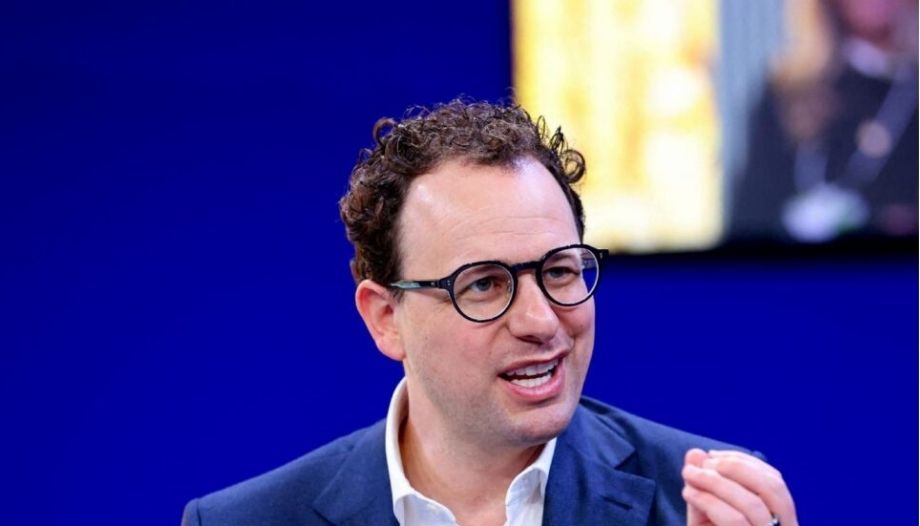
On Monday, May 25, there will be at least two novelties in the presentation of the Pope's first encyclical, «Magnifica Humanitas». One, Leo XIV will be present. In addition, he will be accompanied, among others, by an executive from the field of artificial intelligence: Christopher Olah, co-founder of Anthropic.
Anthropic is the artificial intelligence research and development firm responsible for the virtual assistant Claude, The company has provided an increase in sales, due to the ability of its Mythos agent to detect computer vulnerabilities.
In a May 19 press release, Anthropic stated that “over the past several months” it had been “organizing dialogues with groups whose work and traditions are relevant to the issues raised by AI.”.
The company reported that its “first round of conversations has been with wisdom traditions, including academics, clergy, philosophers and ethicists from more than 15 religious and cross-cultural groups, and we look forward to collaborating with a broader range of people in the future.».
‘Border security’
Anthropic's rise from being a breakaway startup from OpenAI in 2021 to a potential $900 billion valuation (pending the outcome of ongoing negotiations with investors) has been meteoric.
But what has set the company apart from its Silicon Valley competitors is, as Anthropic's website notes, a stated and reiterated commitment to “put safety first» in its research and products.
It's a commitment that Anthropic founder Dario Amodei has long harped on, even going so far as to leave his high-level post at OpenAI due to disagreements over its emphasis on security and moderation. And it may be a key reason why Olah will be present when Pope Leo presents his encyclical to the world.
Anthropic-Vatican Alliance
Some analysts have described Anthropic's presence at the official presentation of the document as a shrewd business move, with which the company, currently at odds with the Trump administration, seeks to gain both moral ground and market share, particularly in European countries.
However, the partnership between Anthropic and the Vatican is part of an ongoing dialogue that dates back several years to before the election of Pope Leo. A dialogue in which ecclesiastical authorities, technology professionals, theologians and ethicists have reflected on the rise of artificial intelligence technology in a world where human rights and dignity are increasingly under threat.
Minerva Dialogues
Under the pontificate of Pope Francis, the Vatican launched in 2016 the Minerva Dialogues - named after Santa Maria sopra Minerva, the Roman basilica where they were inaugurated - which became annual discussions between Church officials and technology leaders on the ethics of AI.
In 2020, the Vatican-based Pontifical Academy for Life held a conference on AI entitled «RenAIssance: For a Human-Centered Artificial Intelligence.” The meeting culminated in the signing of the Rome Call for AI Ethics, a document that outlines six fundamental principles-transparency, inclusiveness, accountability, fairness, reliability, security and privacy-that should govern AI. The document was signed by the Pontifical Academy, Microsoft, IBM, the Food and Agriculture Organization of the United Nations (FAO) and the Italian Ministry of Innovation.
That same year, the North American AI Research Group was created, convened by Bishop Paul Tighe, secretary of the Vatican's Dicastery for Culture and Education. In 2023, the group published “Encountering Artificial Intelligence: Ethical and Anthropological Investigations.”.
Elected in May 2025, Pope Leo XIV has hinted that artificial intelligence is a priority issue of his pontificate.
Technological revolution
The very name of Anthropic -an adjective for human - reaffirms its priorities in AI development, which overlap significantly with those expressed by the Vatican. On its website, the company states that its purpose is “the responsible development and maintenance of advanced AI for the long-term benefit of humanity.».
“We take very seriously the task of guiding the world safely through a technological revolution that has the potential to change the course of human history, and we are committed to helping this transition unfold smoothly,” the company notes.
San Francisco-based Anthropic is a public benefit corporation, a type of for-profit entity that balances profitability with a mission beneficial to stakeholders and communities. (In May 2025, Anthropic's nonprofit competitor OpenAI transformed its for-profit limited liability subsidiary into a public benefit corporation.).
Anthropic has produced a “foundational paper” for its AI assistant, Claude (named, according to some reports, after the 20th century American mathematician Claude Shannon, often called the “father of information theory”).
Claude's Constitution, as the text is titled, “expresses and shapes» the AI assistant, which Anthropic intends to be “useful while remaining generally safe, ethical and compliant with our guidelines.”.
Catholic influence
The constitution reflects input from Catholic experts, including Father Brendan McGuire, a former Silicon Valley executive, and other religious leaders.
In a March interview with the Observer, Father McGuire, whose parish in Los Altos, California, is home to several technology professionals, recounted how Olah had contacted him about developing AI ethics.
Father McGuire told the Observer that Anthropic team members “were basically asking for direct help from the Vatican to come together and help the industry, because the industry was moving so fast down this path.”.
The contacts
The priest had contributed to the creation of the Institute for Technology, Ethics and Culture at the Markkula Center for Applied Ethics at Santa Clara University, a collaboration between the Markkula Center and the Vatican's Dicastery for Culture and Education. The institute provided support for the North American AI Research Group's book on AI ethics and anthropology.
According to the Observer, Bishop Tighe also gave his opinion on Claude's Constitution, along with Brian Patrick Green, Santa Clara's director of technology ethics.
Green joined several Catholic academics in filing an amicus brief on behalf of Anthropic after the Trump administration in February ordered all U.S. agencies to stop using Anthropic's artificial intelligence technology, arguing that it posed a national security risk to the supply chain.
Dispute between the Pentagon and Anthropic
Anthropic countered that it had been vetoed for refusing to allow its technology to be used for domestic mass surveillance or in autonomous weapons. In the months since, the dispute has devolved into ongoing litigation between the Pentagon and Anthropic, with the former asserting in court documents filed this month that Anthropic's ethical concerns were “ideological.”.
The company responded that the Pentagon's rationale for designating it as a risk area in its supply chain, a designation normally reserved for foreign adversaries, has changed.
Anthropic founder Amodei's passion for ensuring that AI remains a force for good goes back years, and runs deep, according to an extensive interview he gave in July 2025 to technology journalist Alex Kantrowitz.
‘A strong sense of responsibility’
Amodei, a biophysicist by training, noted in the interview that he is looking to shape the AI industry itself. Most of Anthropic's revenue comes not from Claude, but from selling its application programming interface (API) to companies that then use the AI models for their products.
He reminded Kantrowitz (whose article was the result of more than two dozen interviews with Amodei, in addition to several personal and professional acquaintances) that his parents raised him with “a sense of right and wrong and what was important in the world,” a sense that instilled in him “a strong sense of responsibility.”.
According to Kantrowitz's interview, the loss of his father to a rare disease - for which a medical breakthrough was discovered only a few years later - prompted Amodei to believe that science can save lives.
Although he has been accused of having a pessimistic view of AI, Kantrowitz said, Amodei's plan “is to accelerate.”.
“The reason I warn of the risk is so that we don't have to slow down,” Amodei said in the interview. “I fully understand what's at stake. In terms of the benefits, in terms of what it can achieve, the lives it can save. I've seen it with my own eyes.”.
——————
Gina Christian is a multimedia correspondent for OSV News. Follow her on Twitter: @GinaJesseReina. Courtney Mares, Vatican editor for OSV News (on Twitter: @catholicourtney), and Kate Scanlon, OSV News Washington reporter (on Twitter: @kgscanlon), contributed to this story.
-------






 Español
  English
  Italiano
  Français
  Deutsch
  Polski
  简体中文
简体中文