


By Isabella H. de Carvalho, OSV News
The Pope approved the creation of the interdicasterial body following an audience with Cardinal Czerny on May 3. The Dicastery for the Service of Integral Human Development will coordinate the work of the Commission during the first year.
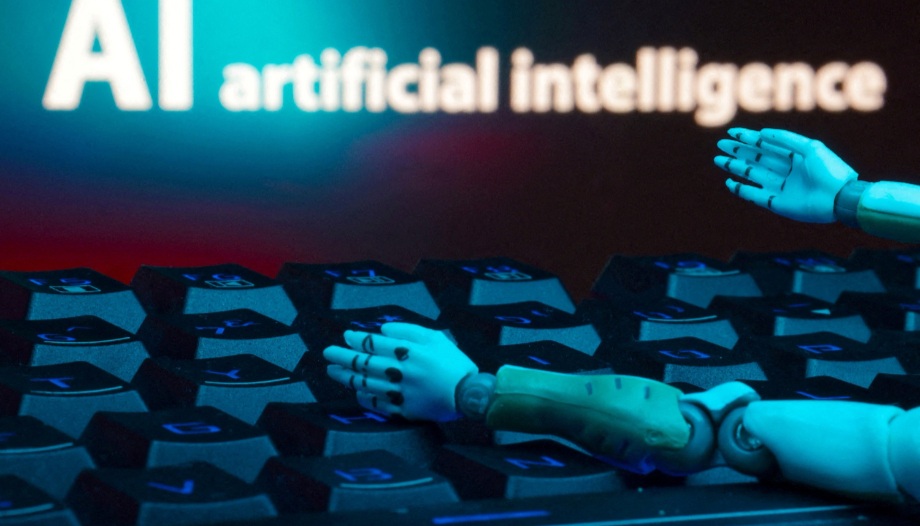
The Pope approved the creation of the commission in view of «the development in recent decades of the phenomenon of Artificial Intelligence and the recent accelerations in its widespread use; its possible effects on human beings and on humanity as a whole; the Church's concern for the dignity of every human person, especially in relation to his or her integral development,» according to the document, dated May 12.
Dicasteries involved
The rescript explained that the Commission is composed of representatives of seven Vatican bodies: the Dicastery for the Service of Integral Human Development, the Dicastery for the Doctrine of the Faith, the Dicastery for Culture and Education, the Dicastery for Communication, the Pontifical Academy for Life, the Pontifical Academy of Sciences and the Pontifical Academy of Social Sciences.
Each of these institutions will be in charge of coordinating the commission for one-year terms, which may be renewed. Subsequently, the Pope will decide on the next body to direct the work of the commission.
The text explains that «it is the responsibility of the coordinating institution to facilitate collaboration and information sharing among the members of the group regarding activities and projects related to Artificial Intelligence, including policies on its use within the Holy See, while promoting dialogue, communion and participation.».
Cardinal Czerny created this body in accordance with Article 28 of the Apostolic Constitution. Praedicate Evangelium, According to this, the superior of a dicastery can create a special interdicasterial commission to deal with matters that affect the responsibilities of several dicasteries and require «frequent mutual consultation».
Recent teaching
This is not the first time that dicasteries have come together to address this issue. In January 2025, the Dicastery for the Doctrine of the Faith and the Dicastery for Culture and Education published the doctrinal note «Antiqua et Nova» («Old and New») on the relationship between artificial intelligence and human intelligence.
Moreover, this theme has been present throughout Pope Leo XIV's pontificate, as he has often spoken about artificial intelligence and other technological advances, as well as the challenges they can pose to our society.
Already on May 10, 2025, a few days after his election, in a meeting with the cardinals, the Pope explained that his choice of papal name was inspired by Pope Leo XIII, who addressed the problems arising from the industrial revolution in his encyclical «Rerum Novarum».
He went on to emphasize that «in our day, the Church offers to all the treasure of her social doctrine in response to another industrial revolution and advances in the field of artificial intelligence, which pose new challenges for the defense of human dignity, justice and work.».






 Español
  English
  Italiano
  Français
  Deutsch
  Polski
  简体中文
简体中文