


 "The Church's work with people with disabilities is not new."Catechesis for young people with disabilities
Is it possible to speak of the religiosity of people with intellectual disabilities? To what extent can a person with autism pray? How can a child with these characteristics be included in catechesis? The relationship between spirituality and disability is a topic of increasing interest within the Church as it seeks to overcome challenges. The Comillas Pontifical University in Madrid has hosted a day where these issues have been addressed. The coordinator, Elisa Pérez-Avellán, explains why this is a growing topic.
The conference “Spirituality Without Barriers: A Right for All” brought together some twenty experts. Of particular note were the experiences focused on the transmission of faith and catechesis initiatives centered on people with disabilities. One of the Daughters of Saint Mary of Providence (Guanellian Sisters), who work with people with disabilities, explained at the conference: “Our mission is to help people with disabilities understand that God is with them. The foundation of our work with them is God’s mercy, his fatherhood.”.
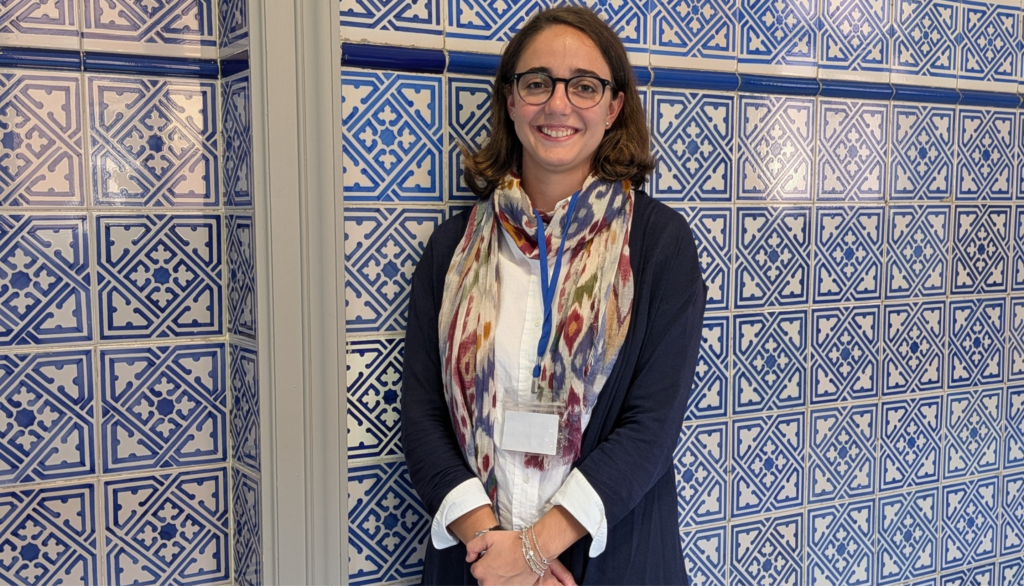
Elisa María Pérez Avellán, the event organizer, highlights the perspectives that addressing these issues opens up. She is a professor at the Comillas Pontifical University, with a background in History, Pedagogy, and Education.
Why talk about spirituality and disability?
–We saw that there was a demand. The congress originated with the Guanellian sisters, in more informal conversations, who wondered why spirituality had never been discussed as a right of people with disabilities.
And then, speaking with other entities, such as the Astier Foundationthe Gil Gayarre Foundationthe Santa Teresa House, This same concern was shared.
I believe that, somewhat providentially, these interests converged, and we saw that it was a response we had to give as a Church. That is why this day of reflection emerged last year, in collaboration with the IUniversity Institute of the Family from the Pontifical University of Comillas.
There was a real need to establish that people with disabilities are part of the Church. They have the same right to experience spirituality as everyone else. And they need a space to do so.
With love, more than with knowledge
Isn't there a certain prejudice that a person with mental health problems cannot pray?
-Traditionally, spirituality was often associated with cognitive ability. So the question was: “If you can't understand, how are you going to pray?”
However, spirituality has much more to do with relationships, with a sense of purpose, with ultimate goals. For example, love.
Because to love, one doesn't construct a concept: one simply loves. Therefore, yes, faith and reason clearly go hand in hand. I love Benedict XVI's phrase that one doesn't become a Christian because one has a grand idea, but through a personal encounter with Christ. Of course, we then give words to that encounter, we articulate it, we conceptualize it, and we delve deeper into the mystery of God. But it is an encounter.
Spirituality is more along these lines, towards that dimension of encounter.
What ideas or topics from the conference would you highlight?
-This year, the theological perspective in the presentations surprised me greatly. The disabilities we all have in encountering God. People with disabilities as a theological locus, in the sense of seeing how the Spirit is poured out upon fragility and vulnerability.
I am also always moved by people's testimonies, whether they are family members, companions, or people with disabilities, because in the end they confront you with reality and you have to let yourself be challenged by that reality.
A very diverse reality
Isn't it difficult to pay attention to religiosity in disability, when it is such a broad world, ranging from physical to intellectual disabilities?
-Yes, that's one of the points we consider when planning these conferences. For example, we see that in the case of a physical disability, the problem is accessibility, never a problem in the experience of spirituality.
However, the biggest gaps and greatest needs we found were with people with intellectual disabilities. Now, these conversations are opening up new areas for us. For example, older adults who are developing certain types of intellectual disabilities due to age-related decline.
Have you addressed the issue of depression? It's a mental health issue, I don't know if it's so much about depression.
–No, we haven't addressed mental health in that area. One of the speakers, for example, stated that disability is not an illness, but a gift from God. A person with Down syndrome is not ill, so we have a path to change that approach.
I believe that depression is indeed an illness. Mental health and spirituality are booming topics, as is psychology and spirituality.
Regarding disability, Do you think there needs to be greater sensitivity to the issue in churches, among the faithful, in order to know how to live with people with disabilities, who may sometimes even exhibit behaviors that, for example, are distracting during Mass?
There are different degrees. The first thing is that people often assume a person with a disability will behave this way, but from my personal experience at countless celebrations I've attended with people with disabilities, it's not at all common. In fact, they've even called me out on them for wearing their shirts a little crooked. I mean, they experience Mass with perhaps a heightened emotion in that sense.
I think the first thing we need to do is eliminate those stereotypes. We lack contact, because I think we develop prejudices because we haven't had contact with this reality.
For example, when I shared training sessions with some of them, I was amazed by the profound answers some of them gave. I thought to myself, "It's like they study theology at the Gregorian University.".
These are answers that come from their experience of God, from their faith.
We must rid ourselves of these prejudices. One of the participants at the congress was referring to her daughter with a severe intellectual disability: she doesn't speak, but she expresses herself in a way that is different from what we sometimes try to get her to say, how she experiences spirituality, God, in her own way.
That's why I think we need to know how to adapt, break our patterns, and let ourselves be surprised.
I would tell people to talk to them, to interact with them normally.



 Español
 English
 Italiano
 Français
 Deutsch
 Polski