


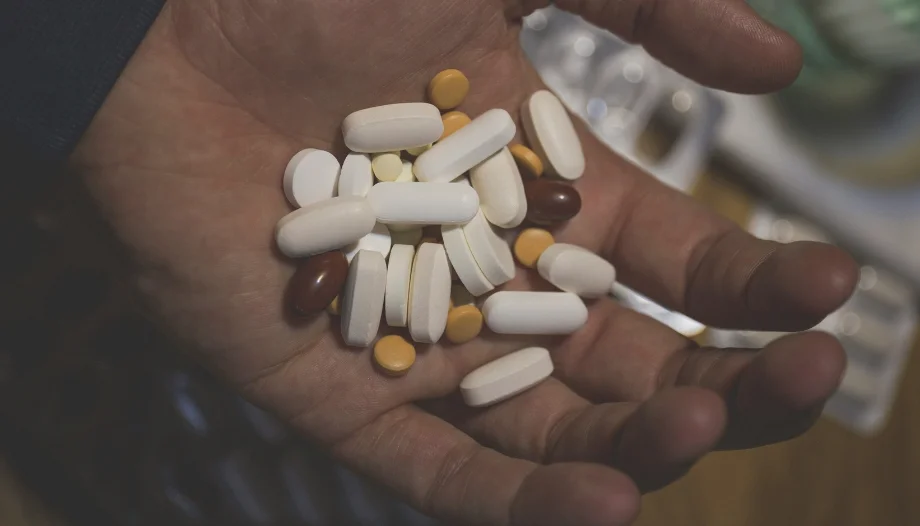
Pope Leo XIV warned on Thursday that addiction is «a complex phenomenon that highlights the failure of a dehumanized world» and called for comprehensive responses to the impact of drugs on young people. The Pontiff emphasized the need to combine community-based prevention, scientific care, a justice system «with a human face,» and pastoral support.
The Pope offered these reflections during an audience held at the Vatican Apostolic Palace for participants in the meeting on situations of dependency in Latin America, organized by the Pontifical Commission for Latin America. In his remarks, Leo XIV expressed his gratitude for the collaboration of the Latin American and Caribbean Episcopal Council (CELAM), the Organization of American States (OAS), and the Pontifical Academy for Life.
He also greeted the leaders of faith-based centers for youth support, prevention, recovery, and integration from the Americas, Asia, Africa, and Europe. Their presence, he noted, serves as a reminder that «suffering and hope know no borders.».
Four Bridges of Collaboration
The Pontiff highlighted the existence of «four bridges» that represent different paths to collaboration in addressing the drug problem.
The first links the Church with international organizations. Leo XIV emphasized that no one can tackle this problem alone and made special mention of the collaboration between the OAS and CELAM, which coordinate training programs for faith-based community organizations and support networks. This cooperation has also made it possible to present the Latin American Pastoral Manual on Addiction Support and Prevention.
The second bridge is the one that connects science and faith. The Church, the Pope explained, does not seek to compete with or take the place of the neurosciences, psychiatry, or public health, «but rather to shed light on this reality through the Gospel and through a holistic understanding of the human person.”.
The third is found within the Church itself, among the communities on pilgrimage across the various continents. Participants from the Americas, Asia, Africa, and Europe have been able to share their «sorrows, hopes, and pastoral enthusiasm» over the past few days.
Finally, Leo XIV has pointed to a fourth bridge of an ecumenical nature. The Catholic Church and other ecclesial communities find, in concrete love for those who suffer, «a common language» for accompanying and integrating young people in accordance with their needs and dreams.
«There is no better way to prevent drug use than a good family.»
The Pope has placed special emphasis on the role of the family, which the Second Vatican Council defined as the «domestic church.» The family, he has stated, is the place «where life is nurtured, cared for, and planned.».
«There is no better prevention against drugs than a good family,» said Leo XIV, while recalling the suffering of many families affected by drug use, violence, the recruitment of children into criminal groups, poverty, or a lack of opportunities.
In this context, he echoed the words of St. John Paul II, who called for the Church to be «the home and school of communion» (Apostolic Letter. Novo millennio ineunte, 43), and Pope Francis, who called on us to touch human suffering, «the suffering flesh of others» (Apostolic Exhortation. Evangelii gaudium, 270). For Leo XIV, this is the core of the mission of those who work in this field: «May the Church be a family, especially including those who suffer.».
Finally, the Pontiff expressed a wish: «that the Church may be a family for all those who have been left by the wayside. Like the Good Samaritan, who became a neighbor to the fallen man, let us not pass by; let us build a Church that stops, draws near, is moved with compassion, binds up wounds, nourishes, and becomes a home.».






 Español
  English
  Italiano
  Français
  Deutsch
  Polski
  简体中文
简体中文