


 Manu Garcia. Connecting young people in the digital ageRebeldes Podcast‘ is born with Fray Marcos (MasterChef) in the first episode
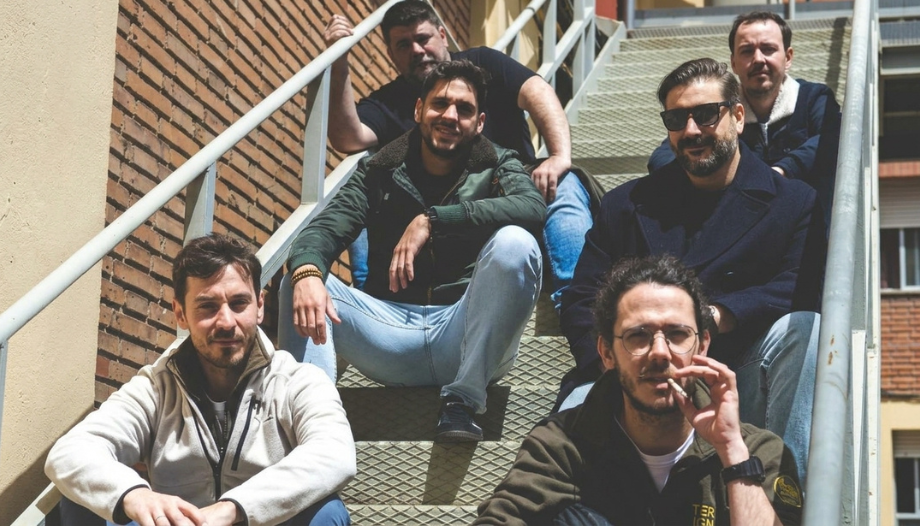
Terra Ignota is one of the most listened-to podcasts among young Spaniards. The name, as explained on their website, comes from a term formerly used on maps to refer to unexplored regions, often associated with unknown dangers or challenges. Even today, with every corner of the world mapped, there are still Terra Ignotas to be discovered. In other words, there are many lands to explore, and that's why they don't waste any time; they cover all the current topics.
They define themselves as “a pub-style gathering among a group of friends who are passionate about good company, unique stories, and cold beer. We have talks about everything (and nothing): music, literature, politics, art, law, and much more.”.
We had the opportunity to chat with them and here is the result of that conversation.
Who are the components, where do they come from and where are they going? How did they meet?
– Jorge and Javi are brothers, Pepe went to school with Jorge, Ike was a lifelong friend, and then Pirata and Getro joined after seeing the first discussions we published and wanting to lend a hand and participate.
Why don't they provide us with context about the previous environment that allowed Terra Ignota to emerge? How and why did Terra Ignota come into being?
– We should thank COVID for locking us down. The calls between Jorge and Javi continued, then between the two of them and Pepe, until Jorge, who's always the one with the brilliant ideas, suggested the three of them get together on a video call because they were all talking about practically the same thing. Then one day they decided to record those conversations and upload them to YouTube. The rest is history.
How was the transition from the virtuality of podcasts to in-person events like bullfighting or meetups with followers?
– It was very organic and not very premeditated. The first time was in a small bar, almost without warning, and the street was practically closed off because of the number of people who showed up. We weren't aware at that moment of the kind of commotion we were really causing. Then, little by little, we started launching ourselves into more ambitious projects and events. Possibly the event we did at the Arapiles Theater to present the documentary 11M: The Beginning of the End live was the one that truly showed us the wonderful community that was being built.
How did other products that have been well-received, such as documentaries, come about? Which one has been the most successful so far? What are your plans for the future?
– After 11M, we started receiving proposals to make more documentaries. And as we always say, if they fall within our value system, we do them.
And because these are topics that are rarely discussed or considered taboo, we like them even more.
Which one works best?
– We don't pay much attention to the number of visits to gauge success. We're very proud of ‘The Silent Genocide,’ and it's the one that's been viewed the least. They're all special, and they've all met the goals we set when we started each project. That's what we consider most important.
What was the growth and expansion process like?
– It was also “unintentional.” We never had any idea when we started of becoming a production company or doing anything beyond what we felt like doing. Simply, as we went along, people's response encouraged us to do a little more.
How do they cope with being recognized on the streets?
– Everyone does their own thing. We're not all equally shy. It's true that it's a bit of a shock at first. But since people always approach us with respect and a lot of affection, it becomes much easier.
Do they consider themselves pioneers and innovators?
– No. We haven't really invented anything. Nor were we the first. Nor the best. We do believe, however, that we're wading into areas that few people dare to touch, and that these discussions are crucial. Fortunately, more and more content creators are refusing to censor themselves, and we like to think that this is partly due to the fact that people like us, and those who came before us, have paved the way.
How do you cope with people trying to pigeonhole you? What do you think of yourselves? How would you define yourselves?
– The truth is… we don't care.
We know how this works and how quickly they try to label you, and if you don't fit 100% with a certain ideology, they'll call you whatever. Besides, there are six of us, and we're all quite different, even if it doesn't seem like it. El Pirata doesn't have much in common with Pepe, nor does Javi with Jorge, even though they're brothers.
We like to say that the six of us defend and seek Goodness, Truth, and Beauty.
With that foundation, the nuances of each one only enrich the whole.
How is Terra Ignota financially supported?
– Oh, but does it stay up? [laughs]
We're going to burst this bubble, because we've been accused of charging in Israeli shekels, using Bizum Moscow, and even being part of the CIA!
The reality is that we all have jobs outside of this, and 99% of what Terra Ignota needs is our time. Specific projects, like documentaries, are usually self-funded. And, of course, we have a good number of patrons and supporters who make small contributions each month, mainly to make sure we don't run out of beer in the fridge.
What other “cultural products” do they admire and encourage others to follow in their footsteps?
– This is one of the dangerous ones, you'll see what happens if we leave someone behind…
If we look at historical references, no one who has watched Terra and is of a certain age could ignore the influence of “La Clave”. Today, we have particular admiration for the work of Iker Jiménez.
In the realm of new media, everything our friends at ViOne do is phenomenal. Whether it's the political talk show, the historical tidbits, or the Tavern, everything is done with care and by the right people.
Finally, during these 7 years we have spoken with writers, film directors, content creators, painters, adventurers, documentary filmmakers, bullfighters… We admire each and every one of them and recommend following in their footsteps, if not in the practical aspects, then in what is truly important: attitude.
What are your future plans?
– To be able to continue doing what we love, just like before. To enjoy the discussions and the documentaries or reports that come out. And, above all, to continue with the feeling of doing something useful together.
What is the team around them like?
– We are incredibly fortunate to have such talented people helping us. Some regularly, others more occasionally. They are driven, concerned about the issues that concern us, and above all, deeply committed. It couldn't be any other way.
What are your thoughts on polarization? Is dialogue the answer?
– No. The solution is to learn from those who know. Dialogue is useful for us, over beers. We're living in a time when history, science, and current events are used for ideological and economic purposes… we have to fight against that.
Do you believe in “civic leadership”? Do you have a better proposal for addressing moral, social, and economic corruption?
– Given the system we have, it's difficult to have civic leadership. What civil society can do is exert pressure. Learn. Not be deceived. And, above all, demand.
Eradicating corruption is a titanic task involving a thousand facets. Our proposal—or rather, our contribution—in this area involves revealing it and showing that there is an alternative, a slightly better world, simply by living according to principles that have inspired our civilization since time immemorial.
How to promote cultural initiatives?
– We need to focus more on what made us great. And translate that into new ways of communicating. And be loyal and honest with the message. But the only truly valid push for cultural initiatives is from each of us: to grit our teeth and get started; everything else will follow.
Whats What would they say to young people today?
– Let them fight. Nobody will do it for them. They must build their own future.





 Español
 English
 Italiano
 Français
 Deutsch
 Polski