
The World

“We exist”: the voice of a Christian from the Holy Land

A good resolution for anyone visiting the Holy Land: not just to look at ancient stones, but to meet the brothers and sisters in faith who have lived there for 2,000 years.

Javier García Herrería-February 23, 2026-Reading time: 5 minutes

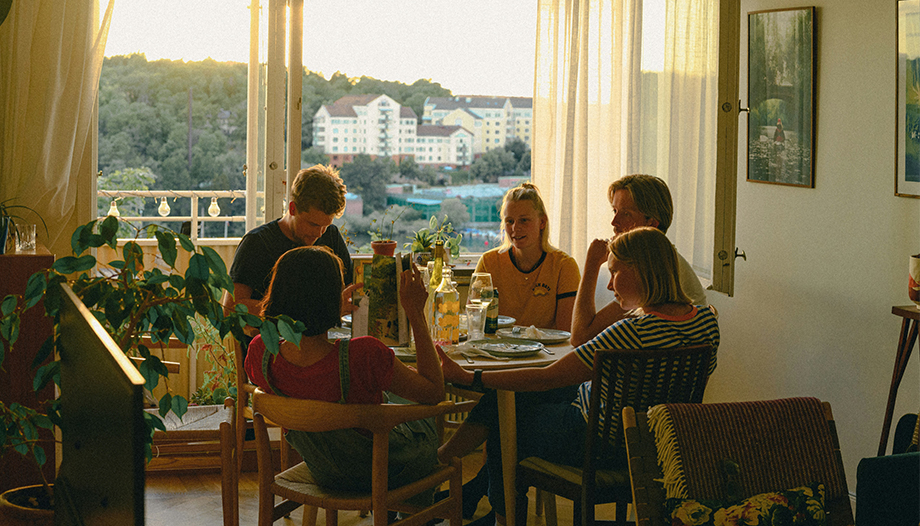
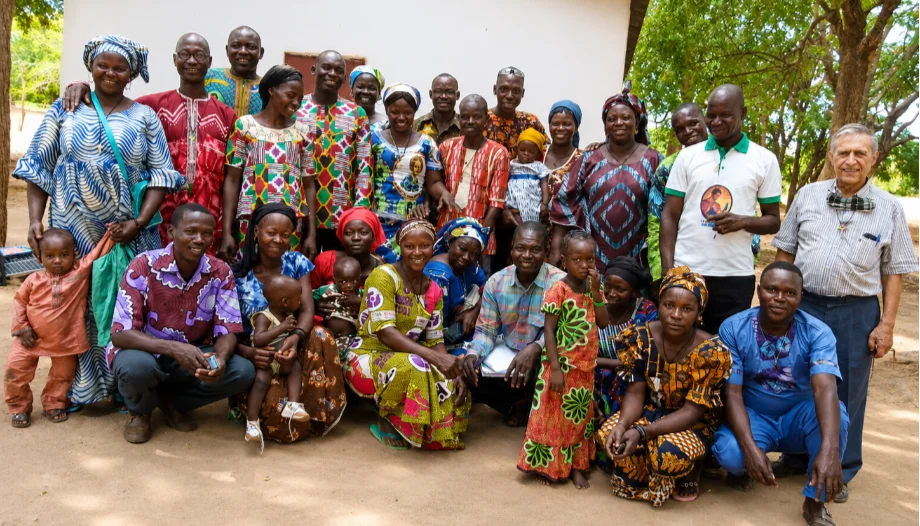
Elias Lucia does not speak from theory, he speaks from biography. From a specific place on the map and in time that many Western Christians venerate, but hardly know. When he says that he is from Galilee, the reaction is usually immediate and automatic: “Ah, so, you are Jewish”. And then he responds, again and again, with worn-out patience: “No, no, I am a Christian”.

The silence that usually follows that sentence says it all. Not because Elias is an exception, but because he breaks with one blow the usual prejudices. As he himself sums it up, “There is Christian community, we have been there for two thousand years, and we exist, even if most people in the West don't know it, but we exist.”.

A minimal biography, a very long story

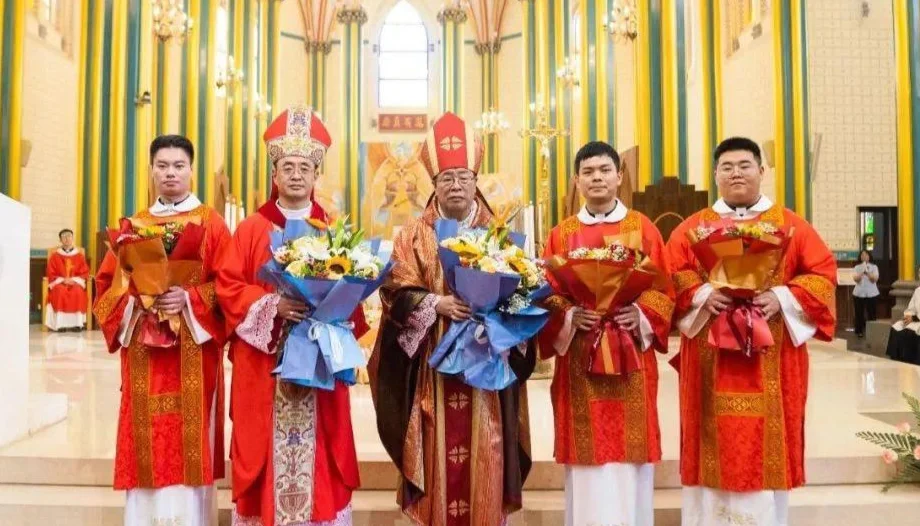
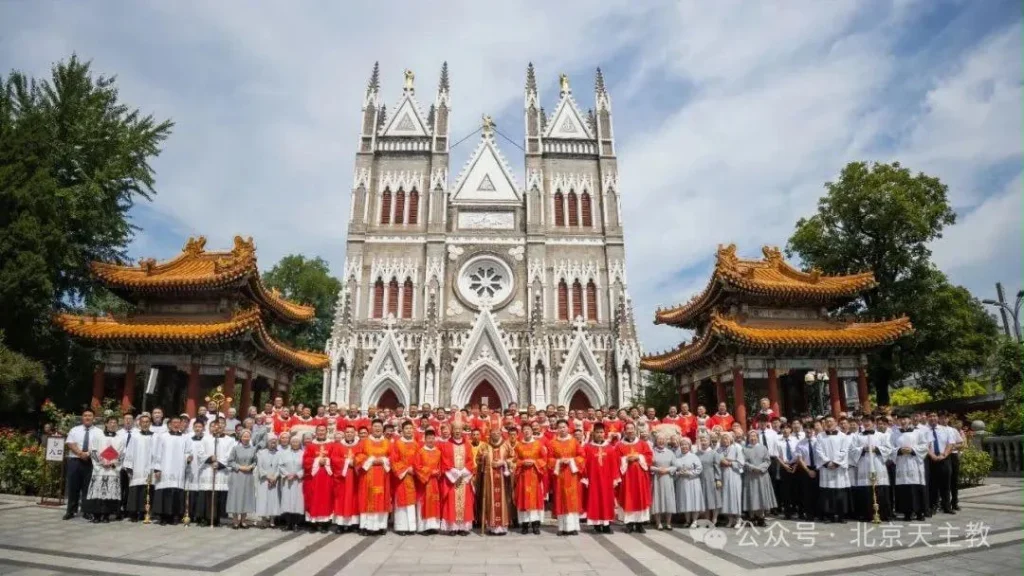
Elijah was born in Galilee, in a village of 50,000 inhabitants today, of which 12,000 are Christians, fifteen minutes from Nazareth, Shefa-Amr. He grew up in a Melkite Catholic Christian family, one of those Eastern communities that have survived empires, conquests and persecutions without ever leaving the place.

“We are four brothers,” he says. Like most Christians in the area, he studied in an archdiocesan school: private centers, yes, but not in the European sense of the word. “They don't cost a lot of money, and for those who can't afford it even so, there are scholarships.”.

Growing up, his faith was something that seemed completely natural to him. “At school we were an absolute majority of Christians, something that doesn't happen in other schools in the Holy Land, where the number of Muslims can be close to 100 %.” The first blow comes later, when you leave that protected microcosm. He studied economics and finance at Haifa University. “You get the first culture shock when you leave school...in my university class of sixty we were four or five Christians.”.

It also changes the calendar. “Your weekend goes from Saturday-Sunday to Friday-Saturday, because Sunday is already a working day”. These are small details that, added together, build a permanent minority consciousness. “Also, if you have to go to class on Christmas Day and January 1, it's something you never get used to.”

Spain as a discovery... also of faith

Elias got to know Spain on a pilgrimage with a group from his parish in 2010, where he visited Barcelona and did the Camino de Santiago. “I liked the city a lot... and the fly on the wall was in my head”. He returned several times and ended up working in a consulting firm after finishing his degree. He now lives in Madrid. What surprised him most about Spain was not the professional aspect, but the ecclesial aspect. “I was amazed at how many offers there are for Mass, catechesis, formation... and I can assure you that I learned more than half of my Christian formation here”.

In the Holy Land, he explains, one lives surrounded by holy places, but not necessarily with a deep formation. “You know where the places are, you enter a church, you have faith... but you don't know the reason for many things, and it's not the fault of the people there or the clergy, but the situation and the instability of the area that makes you lose focus on the main thing while you focus on surviving.”. Jerusalem, Nazareth, Lake Tiberias are part of the daily landscape. “I don't get excited anymore when I go to Jerusalem, because since I was a child we used to go two or three times a year.".

“The living stones”

The central message communicated by Elias is the need for Christians in the Holy Land that when people make pilgrimages “not only visit the stones, but also care about the living stones, which are the Christians there. Let them show us that they are with us, that they support us, and that they have not abandoned us. We are eager to share some time or religious ceremony with the pilgrims. It's something that rarely happens, but when it does, we appreciate it very much”. Without that local community, he recalls, the holy sites would never have been preserved.

For this reason, he encourages pilgrims to visit local communities, to listen to testimonies, to put a face to a faith that is not touristy. The parishes “are very responsive”We have been able to facilitate this type of event. Dinners, simple meetings, real exchange. 

Easter Vigil celebration at Shefa-Amr. ©Jhoni Elias

An uninterrupted presence

“We Christians have been here for 2,000 years without interruption,” he says. “We are very few, but we are the ones who have been on this land the longest.”.

And that permanence came at a very high price. “From the 7th century until not so long ago, you could not convert to Christianity in the Holy Land, they would cut your head off.” Taxes, threats, constant pressure. Many converted. Those who remained, know where they came from. “We know we are descended from the first Christians.”.

Elias has traced his family tree. “I was tracing the baptismal records of my parish, and since 1800 my family has been in the same town, with the same surname and in the same parish.” Before there were no records, but there were remains. “In my village there are Christian remains from the first centuries of Christianity... a column from the first church.” Byzantine tombs from the 4th and 5th centuries. Christian presence from the origins. “Practically since the time of Jesus Christ”.

That's why he is pained by the pious ignorance of the West. “People go to Mass every day, but they don't know where Christianity really comes from.” And he says this without anger, but with a sadness that is hard to disguise.

When faith is defended with the body

There are episodes that mark you forever. One occurred in his own village, when he was a teenager. A conflict with Druze youths escalated to the extreme. “They took out their guns and wanted to go and burn the church and kill everyone in their way.”.

The response was immediate. “Everyone went down to the church...if you want to burn it, you have to kill us all first.” Without weapons. With sticks, with the body, with faith. “There you are giving your life for the church and defending the Christian presence in the holy places.”.

No one was killed by a miracle, although there were injuries. For Elías, it is not a heroic anecdote. It is almost routine. “The worst thing is that for us this is normal.”.

In Shefa-Amr every Good Friday there is a celebration called «the funeral of Christ», to accompany the Lord to the grave. It is the most crowded celebration of the year and since people cannot fit inside the church, chairs are placed outside with screens so that everyone can follow it. ©Jhoni Elias

A Church sustained from below

Maintaining the parishes is not so easy when one lives with Jewish and Muslim majorities around, especially because, from a labor point of view, there is usually a lot of reluctance to hire people of another religion. This means that in economic terms many Christians are in precarious positions, although this does not reduce their commitment when it comes to moving the Church forward. 

For example, when his parish was short of money a few years ago, people responded. “We went from house to house asking if they wanted to contribute on an ongoing basis. The result was that a significant monthly amount was collected from families in the village. ”With this, they built a parish center, restored the entire church, and got the school out of debt. All without significant outside help.

This article could end with figures, but it is better to end with a sentence. One that Elías repeats almost as an act of resistance: “We exist”.

And perhaps that is the first step for any Christian who travels to the Holy Land: not just to look at ancient stones, but to meet those who, against all odds, continue to live there the faith that was born on that very soil.

Read more
Education

Newman and the university in the age of AI

In the face of the rise of AI, classical education reclaims its place. Jonathan J. Sanford, professor of philosophy and president of the University of Dallas, discusses how Newman's teachings can guide toward a critical use of technology, defending the value of the liberal arts at one of America's most prestigious Catholic institutions.

Jonathan J. Sanford-February 23, 2026-Reading time: 4 minutes

When the Church’s newly declared doctor, St. John Henry Newman, delivered the lectures that became The idea of a universitythe steam engine was transforming work, and modern science was reshaping the imagination. 

Today, artificial intelligence is doing something similar—compressing formerly time-intensive tasks to seconds, producing a dizzying array of possibilities, and tempting us to mistake speed for understanding.  

Newman’s core question remains urgent: what is a university for?

Newman's proposal

Newman’s answer is disarmingly simple. A university exists to cultivate the intellect—to form the mind in the pursuit of truth. It is not chiefly a factory for credentials, nor a pipeline for labor markets, nor a vendor of “skills” detached from any wider vision of the human good. It is a place where a person learns how to think: to follow an argument, to weigh evidence, to distinguish the plausible from the true, and to see reality whole.

The education offered by the University of Dallas, and an increasingly rare number of institutions of higher learning, embraces Newman’s view of a university -- that education is not the mere acquisition of information, but the formation of what he called a “philosophical habit of mind.” In other words, an educated person is truly educated when he has the breadth of knowledge to see connections between various disciplines; the ability to rank goods rightly; the restraint to avoid fanaticism or reductionism. 

Close study of special disciplines should contribute to such an education, but specialization alone does not make one educated. 

The educated person’s mind is not narrow; rather it is capable of synthesizing a wide variety of knowledge and make sense of it, so it can be rightly applied to achieve good.

The study of Theology

That is why Newman insisted that a genuine university cannot exclude theology. Not because theology is a decorative add-on for religious people, but because theology speaks about God—the highest object of knowledge—and because excluding it silently deforms the whole map of understanding. A university that says, “We will consider everything except the most ultimate questions,” is not neutral. It has already taken a position, and it will educate students into that position through that omission.

This goes straight to the heart of what AI is doing to contemporary life.

AI excels at pattern recognition, summarization, prediction, and recombination. It can generate passable prose, draft code, create images, and rapidly retrieve what looks like an answer. Used well, these are real gifts. Used naïvely, they can train us into a dangerous confusion: the confusion of information with knowledge, knowledge with wisdom, and outputs with understanding.

Newman enables us to make the proper distinctions. A student can “have” many facts without possessing a formed mind. In fact, our age makes it easier than ever to collect facts while becoming less capable of judging them. AI can place an ocean of content within reach, but it cannot give us what Newman most wanted from education: the ability to discern first principles, to reason about causes, to integrate insights across domains, and to order the whole toward what is truly good.

Even more, the gravest questions in the age of AI are not technical. They are moral and metaphysical.

Fundamental questions 

What is a human person, such that we may or may not replace his labor, imitate his speech, simulate his relationships, or outsource his decisions? What is dignity? What is responsibility when an algorithm mediates choices? What happens to the weak when the powerful gain new instruments of persuasion? What becomes of friendship, attention, and contemplation when every idle moment can be filled by a machine designed to keep us scrolling?

These questions cannot be answered by engineering alone. Engineering can describe what we can do, not tell us what we should do. Newman would say that the university’s task is to educate free persons—capable of self-government—so that they can live responsibly in community. That requires more than competence; it requires virtue.

Liberal arts

This is where the liberal arts matter—not as nostalgia, but as preparation for reality.

The liberal arts and their value in today’s culture has been much maligned, even at many Catholic colleges and universities. Often mistaken as only studies in the humanities, a real liberal arts education is one that embraces everything from literature to mathematics in order to train the student to see the world as it is: complex, textured, and resistant to simplification. 

Philosophy teaches clarity about meaning and argument. Theology teaches wonder and humility before the ultimate. Literature cultivates moral imagination—an ability to enter another’s experience and to see the consequences of choices. History teaches that human nature persists even when technology changes, and that pride is always punished in the long run. Mathematics disciplines the mind toward precision. 

The sciences teach us to be observant of the real world and to weigh evidence with great care. The liberal arts teach its willing students how to observe, how to inquire, how to argue well and how to appreciate beauty—things a machine can mimic, but not possess.

In short, the liberal arts educate people for accurate judgment. And judgment is precisely what our age lacks. We are already seeing a paradox: the more we automate, the more we need leaders who can interpret, not merely execute. The more data we have, the more we need wisdom to decide what is worth pursuing. The more persuasive our tools become, the more we need a moral compass that cannot be programmed.

Newman was not opposed to practical learning; he simply refused to reduce education to utility. He believed that knowledge pursued for its own sake enlarges the soul—a capacious view that has practical consequences more profound than vocational training alone. A formed mind becomes adaptable. It can learn new tools because it has learned how to learn. It can resist manipulation because it can detect bad reasoning. It can lead because it can see beyond the immediate to the enduring. 

Catholic university

A Catholic university, then, should be a place where technology is welcomed but not worshiped; where innovation is pursued relentlessly without surrendering the question of meaning; where the student is not trained to fulfill a function, but educated to be a person. Such an institution forms not only workers, but citizens; not only producers, but stewards; not only problem-solvers, but truth-seekers. 

In the age of AI, we should indeed teach students to use powerful tools. But we must also teach them to ask what those tools are for—and who they are becoming as they use them. Newman reminds us that the university’s highest task is to cultivate the whole intellect in the light of the whole truth. If we recover that vision, AI will not make the university obsolete. It will make the university necessary.

Because the future will not belong to those who can generate the most content the fastest. It will belong to those who can recognize the true, choose the good, and love the beautiful—while remaining fully, irreducibly human.

The authorJonathan J. Sanford

President of the University of Dallas.

The Vatican

Pope's strong call for cease-fire 4 years after “war against Ukraine”

After 4 years of “war against Ukraine”, Pope Leo XIV renewed his “appeal to silence the weapons, to reach a cease-fire without delay and to strengthen dialogue in order to open the way to peace”. At the Angelus, he invited Lent to silence and to “turn off televisions, radios and smartphones for a while”.

OSV / Omnes-February 22, 2026-Reading time: 4 minutes

“It has now been four years since the beginning of the war against Ukraine,” the Pope said without euphemism, and in the Angelus This morning, he expressed with intensity that “peace cannot be postponed, it is an urgent necessity that must find space in hearts and be translated into responsible decisions. For this reason, I renew with force my appeal: that the weapons be silenced, that the bombings cease, that a cease-fire be reached without delay and that dialogue be strengthened to open the way to peace”.

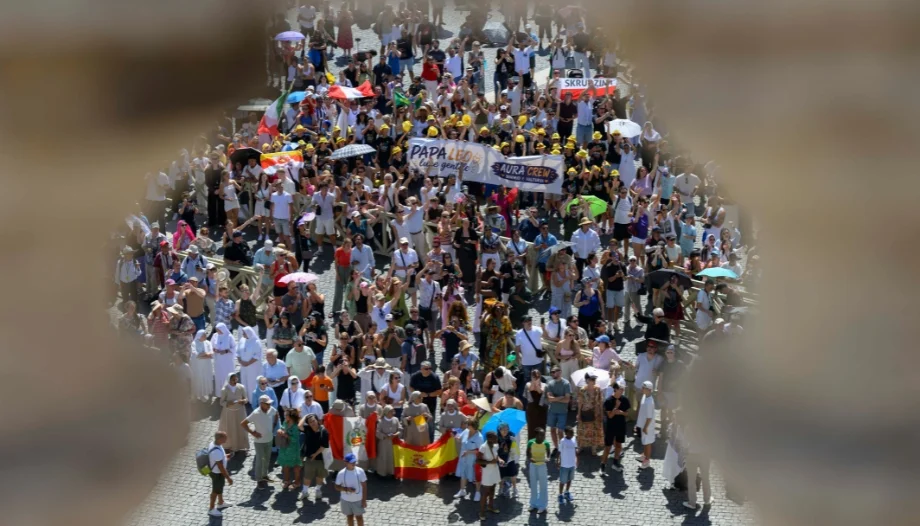
Then, before the numerous faithful and pilgrims gathered in St. Peter's Square on the First Sunday of Lent, the Pontiff invited “everyone to unite in prayer for the martyred Ukrainian people and for all those who suffer because of this war and all the conflicts in the world, so that the long-awaited gift of peace may shine forth in our days”.

Opening his heart after the recitation of the Marian prayer of the Angelus, the Pope revealed that “my heart follows the dramatic situation that we all have before our eyes: how many victims, how many lives and families shattered, how much destruction, how much unspeakable suffering! In truth, every war is a wound inflicted on the human family: it leaves behind it death, devastation and a trail of pain that marks generations”.

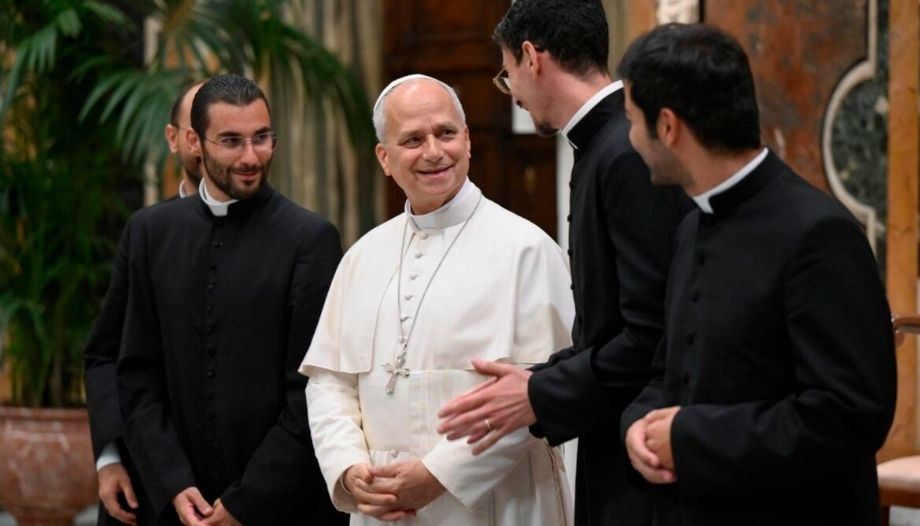
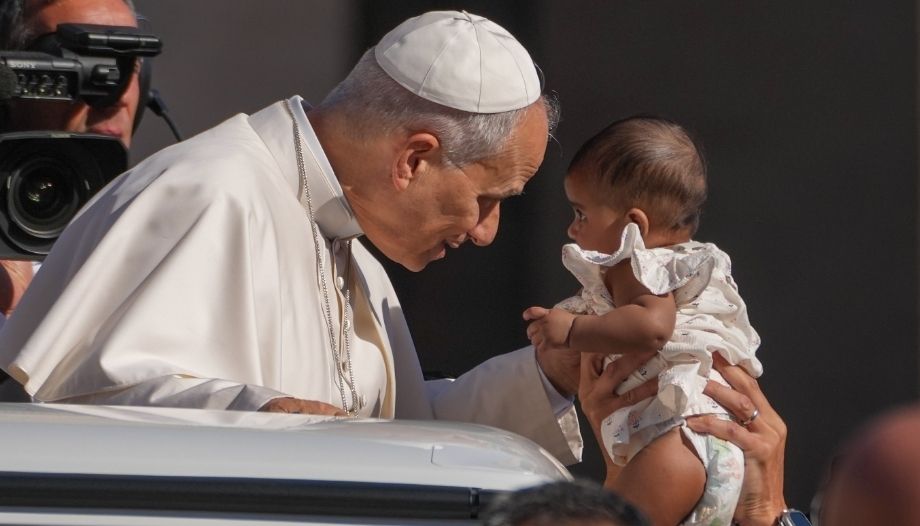
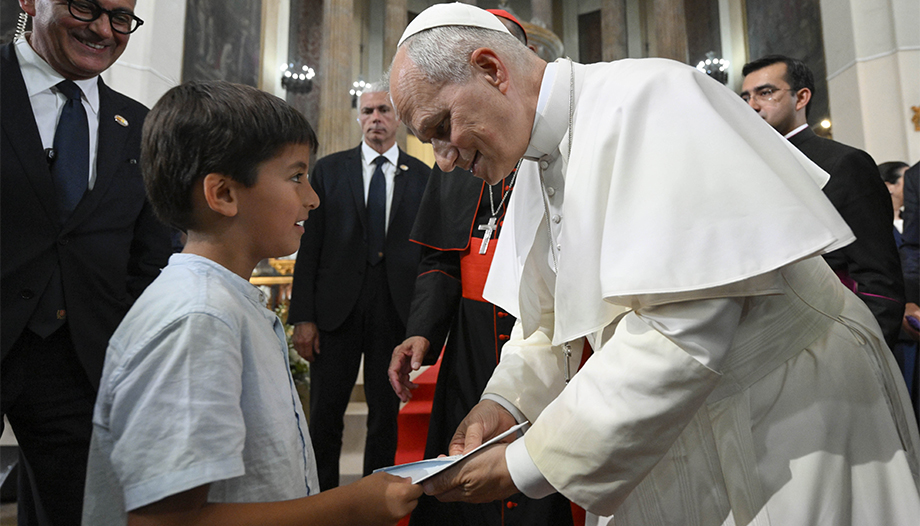
Pope Leo XIV greets children during a pastoral visit to the Basilica of the Sacred Heart of Jesus in central Rome, Feb. 22, 2026. (CNS Photo/Lola Gomez).

Temptations. Turn off the TV, radio and cell phones.

In the first part of his reflection, before the Angelus, the Successor of Peter recalled the Gospel of the day, which “tells us about Jesus who, guided by the Spirit, goes into the desert and is tempted by the devil (cf. Mt 4:1-11). After fasting for forty days, he feels the weight of his humanity: hunger on the physical level and the devil's temptations on the moral level”. 

Jesus faces “the same difficulty that we all experience on our journey and, by resisting the devil, shows us how to overcome his deceptions and snares.” “The Word of life invites us to consider Lent as a resplendent itinerary in which, with prayer, fasting and almsgiving, we can renew our collaboration with the Lord to make our life an unrepeatable masterpiece. 

Pope Leo said that in our journey, “there is a risk that we may become discouraged or be seduced by less strenuous paths of satisfaction, such as wealth, fame and power (cf. Mt 4:3-8). These temptations, which were also Jesus” temptations, are but poor substitutes for the joy for which we were created and which, in the end, leave us inevitably and eternally dissatisfied, restless and empty".

Pope Leo XIV during a pastoral visit to the Basilica of the Sacred Heart of Jesus in central Rome on February 22, 2026. At left, Cardinal Baldassare Reina, papal vicar of Rome, and at right, the basilica's pastor, Father Javier Ortiz Rodriguez. (Photo CNS/Lola Gomez).

Penance, Word of God and sacraments

In particular, after pondering the appreciation of St. Paul VI for penance and the suggestions of St. Augustine, he urged to practice it “generously, together with prayer and works of mercy; let us give space to silence, let us turn off a little the televisions, the radio and the smartphones.”. 

“Let us meditate on the Word of God, let us approach the sacraments; let us listen to the voice of the Holy Spirit, who speaks to our hearts, and let us listen to one another, in families, in workplaces and in communities.”.

Finally, he encouraged us to dedicate time to those who are alone, especially the elderly, the poor and the sick, to renounce the superfluous and to share what we save with those who lack the necessities. 

In the morning, the Pope made a pastoral visit to the parish “Sacro Cuore di Gesù a Castro Pretorio”, the second visit he had planned to make to the diocese of Rome, where he celebrated Holy Mass. 

In his homily at the Mass, he said that while Satan tempts humanity with the lie of obtaining unlimited power, God offers the gift of true freedom that leads to true love, relationships and fulfillment, he said. Carol Glatz (OSV News).

Pope to priests: not to use AI for homilies or to search for «likes» on networks such as TikTok 

The day before yesterday, Pope Leo XIV urged priests not to use artificial intelligence (IA) to write his homilies, nor to look for “likes” on social networks like TikTok, reported Courtney Mares (OSV News).

In a question-and-answer session with clergy from the Diocese of Rome, the Pope said priests must resist “the temptation to prepare homilies with artificial intelligence.” «Like all the muscles of the body, if we don't use them, if we don't move them, they die. The brain needs to be used, so our intelligence must also be exercised a little so as not to lose this capacity,” Pope Leo said at the closed-door meeting, according to a Feb. 20 Vatican News report.

 “To give a true homily is to share the faith,” and artificial intelligence “will never be able to share the faith,” the Pope added. The Pontiff has expressed interest in the topic of artificial intelligence and the dignity of labor since the first week of his pontificate in May last year.

The authorOSV / Omnes

Read more

The resonance of the voice over time

The eemotional mergence that we live is fought not with hedonistic evasion, but with confrontation through the uncomfortable beauty of art that removes our masks.

February 22, 2026-Reading time: 3 minutes

Andrea Bocelli's recent performance at the opening of the Winter Olympics led me to think about three themes: the construction of memory, the metaphor of the states of water, and the function of art as a mirror and refuge in times of emotional emergency.

I cannot read it in isolation, I perceive it as a chord initiated in 2020, when Bocelli sang in an empty Duomo di Milano. That Music for Hope was a gesture of hope in the face of a confined humanity. Six years later, the framework has mutated from a biological crisis to one of values and global geopolitical uncertainty.

The choice of Nessun Dorma, by G. Puccini, functions as a declaration of principles. In 2020 Bocelli's repertoire was religious and meditative, while in 2026 the epic of human will emerges. The Vincerò sounds like perseverance in the face of adversity and an affirmation of love that overcomes darkness.

In 2020, we saw a Bocelli alone in an immense space, a mirror of collective domestic loneliness. Humanity withdrew to survive. Art acted as a balm without applause. The tuning of millions of screens shared a vulnerability that would remain in memory. 

Six years later, the tenor sings in front of thousands of people in a stadium, passing from the temple of stone to the temple of spectacle. However, the essence is the same, the art returns to build memories and confirms that we can meet again.

That memory is not only spatial, it is also temporal. Remembering, inhabiting the present and imagining the future takes almost physical forms and the metaphor of water helps me to think about it. 

The past is solid. The Winter Games, snow and ice, evoke stability. The figures inspired by Antonio Canova, especially the Love and Psyche, reinforce the idea of marble as a fixed memory. They are the memories we keep to strengthen our identity. As Thales of Miletus said, water is the beginning of everything, but in solid form it becomes architecture. It is our inner sculptures that remain despite crises.

The present is liquid, it slips through our fingers. It is the perpetual flow described by Heraclitus, we never bathe twice in the same water. Its uncertainty lies in its lack of fixed form, but at the same time, the liquid allows us to flow to go through the emotional emergency without breaking.

The future is vapor. Diffuse, pure possibility and at the same time unsettling. We walk in the fog and barely see a few steps. We need references, points of density to avoid dispersion.

Here the art intervenes as an orientation. Under the motto of Harmony, The inauguration sought to unite city and mountain, the modern and the primitive. At a time when misinformation fractures access to truth and erodes trust, art acquires an ethical function, operating as a tool for critical thinking, helping to distinguish between the modern and the primitive. person y character.

In this quest for truth, the integration of science and art is the way to reprogramming our brain positively and regain emotional control. The key is to treat art not as consumption, but as a way to find the depth of life. Art acts as a mirror where the viewer looks at himself and recognizes his own capacity for survival. To reach that depth it is necessary to dwell on the psychological mechanism by which art transforms uncertainty into useful memory, as a narrative construction. This orienting role of art is not abstract, it operates directly on our memory. When Bocelli sings in 2026, we are not just listening to a song; we are activating a neural network that contains the memory of 2020. That superimposition of images, the loneliness of the Duomo over the crowd of San Siro, is what generates the meaning of resilience.

In times of war and persecution, this function is critical. Art allows one to experience the other with empathy and strengthens one's own emotional fiber. The eemotional mergence that we live is fought not with hedonistic evasion, but with confrontation through the uncomfortable beauty of art that removes our masks.

If the future is vapor, art proposes that we are the ones who can give it direction, condense it into meaning. We are capable of projecting onto that mist our own stories. In the end, it is the soul or spirit that works, processing the darkness to find in it a new form of light.

The authorPeca Macher

Peca Macher is an architect and art curator, founder of Präsenz, a project that integrates art, education and conscious leadership through pausing, looking and listening. With more than 25 years of experience in cultural management and reflection, she writes and researches about memory, aesthetic experience and art as a tool for personal and social transformation. She is the author of the book Präsenz. Art as a tool for human and educational transformation.

Read more
United States

Dan Guernsey: “We were created for more than just the mush that AI serves our students.”

Dr. Dan Guernsey is director of the Master of Education programme in Catholic Educational Leadership at Ave Maria University, where he dedicates his work to addressing challenges and opportunities in teaching from a faith perspective.

Javier García Herrería-February 22, 2026-Reading time: 5 minutes

Dr. Guernsey's extensive writing focuses on improving Catholic education, with influential publications ranging from pedagogy to school management. He is known for developing Catholic curriculum standards and for his analyses of how schools should affirm their identity beyond secular models.

In addition to his focus on curriculum structure and leadership, Dr. Guernsey has written extensively on the spiritual and moral dimensions of formation, including essential texts on fostering Eucharistic devotion among young people and the teaching vocation.

In this interview with Omnes, we speak with Professor Guernsey about how to help educators foster moral coherence and a transcendent vision in their students.

What do you consider to be the three essential and non-negotiable elements that should differentiate a Catholic curriculum standard from a secular one?

- The most sweeping element is that a Catholic curriculum must provide comprehensive Catholic insight into all academic disciplines. While fully embracing the natural world and natural law, Christianity is also a revealed religion: God has revealed Himself and His plan to us. The fullness of this revelation is in Jesus Christ, true God and true Man. Jesus fully reveals man to himself. So, in Catholic education and the curriculum it inspires, we have sweeping additional insight not just into religion but in into humanity and into the value and meaning of creation. 

Secondly, a Catholic curriculum is differentiated by the integration of faith, life, and culture. We do not just talk about Christian insight, we lead students through our example of an integrated Christian life, where mind, body and spirit are harmonized. Where actions and beliefs are consistent. Finally, a Catholic curriculum is broad in scope and deep in transcendence. We study a broad array of subjects and learn for learning’s sake and not just to gain power or make money. We focus on the fullness of an integrated life and not on test scores. A fully engaged and integrated intellect and a virtuous person is our goal and our definition of success.

How can leadership programs effectively integrate spiritual, intellectual, and moral formation without reducing one to the other?

-We simply “are” integrated beings. It is how we exist in the world. So, we come “pre-integrated.” What we must battle against are the disintegrating forces of nihilistic modernity. They have full control of the secular educational establishment, and the results have been catastrophic. We must reveal the lies of relativism, materialism, and atheism at the heart of the current culture.

When we have our understanding of the natural integration of humanity restored, a solid education will result. There is a natural hierarchy to these elements in the human person with spiritual (faith) being first, moral (goodness) second and intellect third, but schools themselves are particularly focused on the development of the intellect: so that receives our special, but not sole, focus. All academic efforts are always in harmony with and in service to the salvation of the student and in equipping him for service to the common good.

In your experience, what are the most common challenges Catholic leaders face today, and how should their training address these realities?

-In some cases, they may not fully appreciate the chokehold that the common culture has on children and their families. The first step is to identify the sources of the skepticism and lack of commitment afflicting modernity and then to provide a rich community that embodies and leads to a deeper embrace of reality.

This is a civilization-building project and requires, first and foremost, a skilled Catholic leader capable of understanding the challenge, articulating it and guiding others to respond to it.

How can Catholic educational leaders foster a school culture that is both academically excellent and explicitly rooted in the Catholic mission?

-By keeping these two elements together! It is God who designed us and calls us to excellence. It is the integrated man, fully alive, which is the very definition of excellence.

What strategies do you recommend for helping leaders maintain fidelity to Church teaching while also navigating complex social and cultural pressures?

-By flatly stating “to heck with complex social and cultural pressures!” They have been weighed and found wanting. They have no hope and no future and are quickly passing away. We were made for more than the thin gruel our AI, social-media-saturated, and fake common culture is dishing up to our students and families. We have the Bread of Life and the fullness of reality. We are focused on natural intelligence (not AI) and on truth, beauty, and goodness. Make this clear, and enough desperate and good folks will fill our Catholic schools.

You have reflected on teaching young people about the Eucharist. What advice would you give to strengthen young people's faith in this area?

-Tell them. Tell them clearly. Body, Blood, Soul, and Divinity. It is shocking; it is true; and it changes everything. Once they get this reality, the necessity and beauty of the Mass and confession and silent recollection before the tabernacle all make perfect and persuasive sense. 

If possible, put the tabernacle at the center of your school and have students make a brief daily visit. Schedule Adoration and Eucharistic processions into the school year.

What role does mentorship play in forming strong Catholic leaders, and how can institutions structure such mentorship effectively?

-Being a Catholic school principal means assuming an office in the Church. Just like other church leaders, they need Chrisitan fellowship and spiritual guidance. Bishops and superintendents should supply for this, or the burdens and pressures can lead to burn out or going with the flow of secular educational trends and viewpoints.

In your view, what innovations or new approaches are most needed in Catholic leadership preparation programs in the coming decade?

-This question itself, while well-intended, falls into the educational tendency to drift into the logical fallacy of “The appeal to novelty.” This combined with FOMO (fear of missing out) can lead folks to follow fads in forming children. Catholic formation programs should not just follow the current fads. We follow the Lord and His wisdom and vision- with centuries of success.

What I can confidently stay is that Catholic leadership preparation programs need to be bold and confident and not just “better” versions of public-school leadership programs. We have a more complete and comprehensive vision and are working for a richer end in our schools and with our students. Few are convinced the current secular model is achieving impressive results. Catholic institutions should boldly follow their own mission and not cling to a failed model.

In the context of its focus on collaboration with families, what is the irreplaceable role that the father has in the moral formation of the child that the school cannot assume?

-The family is the primary teacher of the child (i.e., first in order and most important). The Church is the primordial teacher (foundational by nature and keeper of revealed divine truth). The father, as head of the family, must faithfully translate, teach, and model, the fullness of truth and the nature of things to his children, as he follows the Church as his guide. Studies show that the father’s attitude toward and practice of the faith is the single most influential dynamic in children continuing to practice the faith into adulthood.

What tools can we give our children in the face of AI?

Artificial intelligence is already shaping the world in which our children will live. That is why cultivating oneself, and to a great extent becoming cultured, is more necessary today than ever. Encourage this attitude in our children and they will be better prepared for the future.

February 21, 2026-Reading time: 4 minutes

A good education is directed, to a great extent, to the formation of the character of our children, promoting their personal growth and facilitating their optimal maturity, to face the circumstances of life. In the early stages the father and mother are the primary reference, so that they are the main educators, and those who help them to shape their personality.

When we educate, we do it more by what we are than by what we say. We shape much more by the example we give than by what we focus on so that our children improve. That is why it is necessary to work on our coherence of life, to educate in the best way, when we are aware of the repercussion of our actions and when we are not. At the same time we grow as people in our effort to be a better reference.

But thinking about the future, when we are not such a clear leader -law of life- or we have less influence over them (in many cases before adolescence), we can give them some tools, as if we were to invest them with knights who go out into the world. They are tools for them to be able to face a polarized society, full of multiple ideas with which they coexist, and the challenge of Artificial Intelligence. 

These are four: reading, writing, listening and speaking.

Read to fight

The importance of reading is more evident today than ever, because we live in a changing world, and we must be prepared for what we have and for what may come. That is why it is necessary to read in order to live, especially in “stormy and windy” times, knowing our fragility.

Julio Llorente says that “reading well is not only choosing good books: it is, above all, reading with the right attitude”. This would be the first characteristic that we should encourage in a good reader, to know why we read a book and what we expect from it. But what to read? “Mostly we focus on reading novels, when each genre brings a different perspective on reality and they are necessary. The preponderance of one genre is already a limitation of the art of reading,” Enrique García-Máiquez once said. So it is good to try different types of books, that discover new worlds. But always progressively and under the guidance and orientation of someone who can show us what to read. The Bible, the classics, encyclopedias, novels, comics...

But how do you find time to read? And the answer is clear: you have to want to. It is necessary to put aside the cell phone for a while a day and have a daily reading plan. 20 pages a day means reading 7,300 pages a year. Or 10 pages a day brings the appreciable sum of 3650 pages a year. Or a rickety 5 pages a day means 1325 pages a year. I assure you that you will not be the same after reading this amount of pages a year!

But how can we awaken a taste for reading?

Visiting a bookstore or a library is like visiting a good Italian ice cream parlor, one of those that are appealing to the senses, but especially to the eye. When you enter it, the colorful, apparent, suggestive and appealing vision generates the desire to taste the more than 150 appetizing flavors... Bacio, limone, fragola, cioccolato, stracciatella, caffè, ferrero rocher, nutella, nocciola, Pistacchio, Rum Raisin, Tiramisù,... After a while of thinking, we make a more or less correct decision: «Give me a scoop of limone and another of... fragola», we ask the clerk, while we keep looking at the counter and we are thinking: «next day I want to try the nocciola and pistacchio one. But I would also like to try the one with stracciatella and Ferrero Rocher, and also...». This indecision, the result of concupiscence, generates the desire to try more flavors and to return to the store as soon as possible.
In the same way that an ice cream shop awakens our desire to try a lot of ice cream, a good library or bookstore can awaken our “reading appetite or concupiscence”. When we see a large bookstore window, the novelty counter of a library, or when we go to look for a book and find a more interesting one, we feel the desire to read, either for knowledge or enjoyment. And not only that, but the variety of literary genres and topics on display invites us to broaden our culture. 

But we do not only cultivate ourselves through reading, but also through writing, listening and dialogue. 

Luri usually says that writing is not only transmitting ideas, as many people think, but also a way of having them. He also says that in order to learn to write well, it is not enough to read a lot and read well, you have to practice. That is why dedicating time to writing is a great way to interpret what happens to us, to shape us as people, to order our ideas, but above all to have them.

The most necessary thing is dialogue

But perhaps what is most urgent and necessary today is the capacity for dialogue, that is to say, for listening and speaking. For it is very necessary to form ourselves well, since it forces us to be up to date on current issues and to have a clear position.

To have polarity (one's own ideas and to defend them) is necessary, but to be polarized is to be out of place, since our ideas can never be above people, because they deserve our respect. In these times, a good Christian, if he is recognized for something, it is for this, for his capacity to understand, to dialogue and to build bridges, even if we think in the opposite way. 

That is why it is more necessary than ever to cultivate and, to a large extent, to educate ourselves. Let us foster this attitude in our children and they will be better prepared for the future, knowing that we are vulnerable.

The authorÁlvaro Gil Ruiz

Professor and regular contributor to Vozpópuli.

Evangelization

Six stories of faith and resilience of Catholic athletes at the Winter Olympics. Winter Olympic Games

As billions of people tune in to the Winter Games in Italy, many will recall highlights from past Winter Olympics over the decades. There is a long tradition of Catholic Olympic athletes, perhaps more women than men, who have made history.  

OSV / Omnes-February 21, 2026-Reading time: 8 minutes

- Lauretta Brown (OSV News).

The Catholic athletes participating in this year's Games join a long tradition of Catholic Olympic athletes who have made history with their inspiring stories of faith and perseverance. Here are just a few of the Catholic stories from previous Winter Games.

“Reina Yuna” and the influence of a priest and Catholic friends 

One of the most admired Olympic figure skaters of all time, Yuna Kim of South Korea, bore witness to her Catholic faith at two Olympic Games where she took gold and silver medals in 2010 and 2014. Called “Queen Yuna” by figure skating fans, Kim converted to the faith in 2008 after a chance encounter with Catholic doctors and a priest.

“I had an injury, in fact, several injuries, starting in 2006, that forced me to be hospitalized several times,” she explained in a 2014 interview with the then Pontifical Council for the Laity (now Dicastery for the Laity, Family and Life).

“In the hospital I had a providential encounter with some Catholic doctors with whom I forged a relationship of trust. They quoted phrases from the Bible and the New Testament to encourage and console me, and all this helped me a lot to overcome the psychological problems I had due to the continuous relapses after the injury.”.

“I would say what impressed me most was that they didn't try to convince me,” she added. “It was a selfless act for a girl who was going through a difficult time in her life and career; they sought to give me the best possible advice, in line with their worldview.”.

South Korea's Kim Yuna, a Catholic, performs during the figure skating gala exhibition at the Sochi 2014 Winter Olympics in Sochi, Russia, Feb. 21. (Photo by OSV News/David Gray, Reuters).

“Faith in Catholicism gave me strength.”

He described the recovery process as “the most difficult time of my life,” with recurring back problems for two years; it seemed like I would have them forever. There comes a time when you find yourself at a crossroads. You wonder if it's really worth it to keep going and, if it is, where you can find the strength to keep waiting. I needed to be able to count on something or someone. Faith in Catholicism gave me all this. For me it was a completely unknown path. Neither my mother nor my father were believers. But in the hospital I met Father Lee.

“He was not only the priest at the clinic, but he was also a patient at the time, and a common destiny seemed to create a bond between us,” he said. “After meeting Father Lee, I began to understand in more detail the fundamental teachings of Catholicism; he tutored me in the Bible and the Gospels; in short, he introduced me to the faith; hence my decision to be baptized along with my mother.”.

He was baptized with his mother

At her baptism, Kim took the name “Stella” in honor of the Marian title “Stella Maris”, Star of the Sea, and told a diocesan newspaper that during the baptism she “felt a huge comfort in her heart” and promised God to continue “always praying,” especially before competitions.  

In 2010 he joined the Korean bishops to explain the rosary through the example of the rosary ring he wore in the competition.

U.S. Olympic gold medalist Tara Lipinski, a Catholic, waves to the crowd after receiving her award in Nagano, Japan, Feb. 20, 2018. Lipinski, an admirer of St. Therese of Lisieux, became the youngest women's Olympic figure skating champion in history (Photo by OSV News/Kimimimasa Mayama, Reuters).

Tara Lipinski and the Little Flower

Another revered Olympic figure skater and current NBC figure skating commentator, Tara Lipinski, who won a gold medal at the 1998 Winter Games, attributed her success, in part, to the intercession of Saint Therese of Lisieux, the Little Flower.

Lipinski, whose mother, Pat, felt renewed in her Catholic faith after a novena to St. Therese, said in a 2001 interview with the Pittsburgh Post-Gazette that she liked the saint “because she didn't seem perfect, which makes you feel like you have something in common with her.”.

She identified with St. Therese's battles with perfectionism and said it was comforting to know that the saint could be “a little spoiled.”.

“She had a hard time getting into the convent, just like I had a hard time being accepted, because I was too young,” she added. Lipinski won her Olympic gold medal at just 15 years old.

Before her long program in Nagano, Japan, her coach held her statue of St. Therese while Lipinski was out skating. «I remember being on the ice and feeling her strong presence there with me,» he said of the saint. “I thought about her constantly. It distracted me from doubts about myself or technical issues.”.

“I think she's changed me as a person,” Lipinski said. “I think about her often. I think, what would she do? Her Little Way applies to everything in life.”.

A skier's Olympic ring for San Pier Giorgio Frassati

Rebecca Dussault skis during the Alberta Centennial World Cup in Canmore, Alberta, in December 2005. Twenty years ago, this cross-country skier and devout Catholic competed in the Turin Winter Olympics (OSV News photo/courtesy of Sharbel Dussault).

Cross-country skier Rebecca Dussault took her faith to the 2006 Winter Games in Turin, Italy, 20 years ago.

Prior to his trip to the games, Dussault married his childhood sweetheart at age 19 and credits his mother-in-law with awakening his faith.

“He really had and has a deep interior life, and that is what he continually transmitted to us: the love and mercy of Jesus Christ, and the beauty, depth and greatness of the Catholic faith,” he said. “He showed us the universal Church with such passion and constancy that we fell in love with his faith.”.

Dussault declared recently told OSV News that the Turin Games were special, even though she didn't come home with a medal. She traveled to the Games with her husband and 4-year-old son, who cheered her on from the sidelines, and used the occasion to spread devotion to the then Blessed Pier Giorgio Frassati by engraving his name on her Olympic ring.

St. Pier Giorgio Frassati, canonized in September, was a passionate skier and mountaineer whose motto was well known: “Verso l'alto” (“To the heights”).

Dussault still skis and enjoys time at his property in Idaho with his eight children and two grandchildren.

“If you can play sports with a clear conscience and at the same time build the kingdom of God, then you have truly achieved a certain greatness,” he emphasized.

A speed skater turned Franciscan sister

Kirstin Holum was a rising star in the speed skating world at the Nagano Winter Olympics. Her future looked bright as the youngest junior national speed skating champion at age 17. She placed sixth for the U.S. team in the 3000 meters and seventh in the 5000 meters.

Her mother and coach, Dianne Holum, was a speed skating legend who won a gold medal at the 1972 Munich Olympics. She was also a devout Catholic who emphasized the importance of faith.

His vocation, in Fatima

He paid for his daughter's pilgrimage to the Marian shrine in Fatima, Portugal.

It was there, at the age of 16, that Holum perceived the meaning of his vocation and the “powerful experience of perceiving the presence of Jesus in the Blessed Sacrament”.

Instead of continuing his speed skating career, Holum decided to join the Franciscan Sisters of the Renewal in the Bronx borough of New York City after finishing college.

Later, at the invitation of the Bishop of Leeds, she was sent to open a new convent in England. “I was asked to be part of the first group of sisters sent as missionaries,” she told the NBC in 2018.

She said she has no regrets about the path she chose.

“I didn't feel in my heart that I was going to skate the rest of my life; I knew there was more to life than the sport,” she said in an interview with Catholic News Service. “I never regretted that decision. I think it was just a grace from God that led me to something more.”.

“The excitement and the joy of competing and being successful, even just doing your best, is a great thrill,” she told NBC. “But it was always a fleeting joy: you're on to the next event, so you get nervous about that.”.

“I think, deep down, we all long to be great and do something great,” he added. “It's only when you fully connect with God's plan for you that you find the peace to do something great, whatever it is.”.

Field hockey coach and priest sets an example of forgiveness

It was an improbable scene at the 1964 Winter Olympics in Innsbruck, Austria: a Catholic priest coaching the Canadian team was hit in the face by a broken field hockey stick thrown by a Swedish player.

Father David Bauer, still bleeding from the blow, ordered his players not to retaliate against Sweden's Carl-Göran Öberg, as he did not want to take penalties in a close game won by Canada.

Father Bauer returned to the stadium the next day to watch the match between Czechoslovakia and the Soviet Union. He invited Öberg to sit with him, conveying that he bore him no grudge.

Although Canada finished fourth that year, Father Bauer was recognized for his sportsmanship in response to the Öberg incident.

Vocation to the priesthood 

Brother of Boston Bruins star Bobby Bauer, Father Bauer was a successful junior field hockey player in Canada in the 1940s. However, instead of entering the world of professional field hockey, he pursued a vocation to the priesthood with the Basilian order and began teaching at St. Michael's College in Toronto and later at St. Mark's College at the University of British Columbia. 

Taking a holistic approach to coaching, Father Bauer said, “If you can improve the child as a person through the virtues of field hockey (courage, judgment, prudence, fortitude, teamwork and fair play), he will improve as a field hockey player.”.

Father Bauer received the Order of Canada in 1967 for his contributions to field hockey. He passed away in 1988 and was inducted into the Hockey Hall of Fame in 1989.

The ‘bobsledder’ who stays on track with prayer.

Curtis “Curt” Tomasevicz, a historic gold and silver medalist in bobsleigh at the 2010 and 2014 Winter Olympics, said in a 2018 interview that his Catholic faith is what keeps his life on track.

“If I wasn't Catholic, I think my life would be the equivalent of a bobsledding accident,” said . “Being Catholic allows me to be clear about my priorities and to know that, despite what most people say, sports competitions are ephemeral and one should not measure one's self-worth by them.”.

“My first crash, which lasted so long that I was able to pray three and a half Hail Marys before the sled stopped, was very shocking,” he recalled, “but I had to charge back and not let fear get the better of me. It was also a strong reinforcement that I never pray to win, but that everyone would compete to the best of their abilities and that no one would get hurt.

Bobsleigh: “I did not allow him to become a god to me”.”

“At the end of my career, I had a void to fill because of my departure from bobsleigh,” he emphasized. “I had gotten used to planning everything around the sport, so there was a big transition when it ceased to exist. It reinforced how important it is for me to be Catholic: to be part of the Church that Christ founded for our well-being. 

I was very motivated to be the best bobsleigher I could be, but I didn't allow it to become a god for me. If I had allowed it, the transition would have been devastating instead of challenging.‘.

Now, Tomasevicz has returned to the Winter Games in a new role as sports performance director for the U.S. bobsled team in Milan.

———————

Lauretta Brown is culture editor of OSV News. You can follow her at @LaurettaBrown6.

——————–

—————-

The authorOSV / Omnes

Culture

Vicente Gaos, between abyss and grace

Although not among the most representative of his generation, the poetic work of Vicente Gaos -always marked by existential inquiry and, above all, by an incessant dialogue with God- continues to offer today's reader an attentive and reflective look at human unease, transformed into a search for meaning.

Carmelo Guillén-February 21, 2026-Reading time: 4 minutes

It was the poet and critic José Luis Cano who was confident that the publication of the Complete poems (1959) by Vicente Gaos would finally consolidate the place it deserved within the canon of 20th century Spanish poetry. However, time did not confirm that expectation. In spite of its depth and its indisputable literary value, his work remains on the fringes of the usual readings among poetry aficionados.

Religiosity and sensitivity 

With profoundly religious roots - Gaos himself said so: “I consider myself a religious poet and much of my poetry is religious poetry”-., his production is inscribed, like that of so many authors of the first post-war period, in a context in which Spain officially recognized itself as Catholic. However, although he shared that framework, his voice differs from the dominant rhetoric, articulating an internalized, agonizing and, at times, heartbreaking religiosity.

From Angel of my night (1943) up to his posthumous collection of poems Last Thule, developed a poetry of remarkable vital breath. And although critics have rightly emphasized his sonnet mastery, this formal virtuosity was never reduced to a mere technical exercise, but was the precise instrument with which he explored the metaphysical restlessness, the search for meaning and the ambivalence of a faith that, far from being reassuring, is configured as an inner struggle.

Active presences and moral conflict

It is not surprising, then, that critics have pointed out the influence of Miguel de Unamuno, at least in his early works. The affinity is evident: both share the tension between the thirst for eternity and the certainty of death, as well as an inclination to doubt and radical questioning, a filiation that, however, only explains a part of the poet's spiritual framework.

What truly defines him is the constant confrontation of evil and temptation, presented not as abstractions, but as personified presences that burst into the consciousness of the poetic subject. Figures like Luzbel possess voice, gesture and capacity for action; they burst in as an “other” that threatens, seduces or hurts, transforming the intimate conflict into a scenario of permanent tension. 

In this imaginary, two sonnets are particularly relevant: Sima and cima y My demon. In the first, the poetic “I" acknowledges his sinking into impurity -figured in a demonic abyss- while retaining an aspiration to the light. In the second, a confessional tone dominates: the poetic character evokes the temptation and the threat of spiritual slavery before underlining the divine mercy that reintegrates him into the "divine".“orderly sky".  

However, the poetic work of Vicente Gaos is not limited to this moral problematic. It also integrates a persistent reflection on Death and Nothingness, conceived as a horizon of absolute annihilation. This is the case in the poem No one responds, where the perplexity of those who search for light in an inaccessible sky is expressed and where silence becomes a symbol of existential loneliness. 

Even more shocking is, if that is possible, the poem The Nothingness, in which it cries out: Oh, save me, Lord, give me death, / Threaten me no more with another life (...) /...Oh God, give me your Nothingness, / Anchor me in your darkest night / In your lightless, starless night.”This fragment reveals the extreme dimension of his rebellion: the plea for total annihilation which, paradoxically, he addresses to God himself as the ultimate addressee.

The poem Error proofing

Within this lyrical universe, one of his most revealing texts is, in my opinion, the sonnet Error proofing. In fourteen verses, Gaos draws a path that leads from doubt to reconciliation, and in which he recalls having felt “...".“hunger, thirst and cold”without realizing that, even then, he was being held by the hand of God. This paradox - the false sense of abandonment that, in reality, prepares the access to grace - is the core of the poem.

Its architecture reinforces this process: first, the erroneous perception of distance; then, the irruption of Christ showing his wounds, like the Apostle Thomas, a sign of a faith born from unbelief; and finally, thanksgiving, where the relationship with God is transformed and the Lord becomes a Friend. Thus, the text unfolds a complete itinerary that summarizes the poetics of the author: tension between doubt and faith, suffering and hope, fall and redemption. Hence Error proofing can be fairly read as a synthesis of the lyrical world of Vicente Gaos.

That is why it is not difficult to return to the statement with which José Luis Cano opened his hopes in 1959. If time has not confirmed -at least in terms of popularity or canonical presence- that recognition he considered fair, it can be said that the careful reading of poems like this one demonstrates the profound validity of his intuition. 

Perhaps today, more than ever, it is evident that Cano was not wrong: Vicente Gaos continues to await the place that his work -because of its density, intensity and expressive purity- claims in 20th century Spanish poetry. That depth and contradiction that run through his writing undoubtedly place him among the most lively and unrelenting voices of his generation -an “uprooted” generation that, in spite of everything, never lost its yearning for transcendence- and explain, at the same time, why his figure continues to challenge the contemporary reader with a force that the passage of time has not been able to attenuate.


When I imagined you closer,
How far I was from You, my Lord.
When I was hungry and thirsty and cold
and distance from You, You of Your hand

you had me, Lord. That is your arcane
mystery. And I, my ungodly thought,
I didn't even believe in myself. Free will?
A Midsummer Night's Dream!

But suddenly You arose, solemn,
showing me the sores, as you did
with doubting Thomas, with me.

And I thanked you for saving me unscathed
from so much blindness in which you have sunk me
to rise up at the end, Lord, my Friend.

Errors - From A lot of shadows (1972)
Read more
Education

Javier Gomá sees dignity as “resistance” in a provocative act of San Damaso

The philosopher and writer Javier Gomá yesterday described human dignity, in an act of the San Dámaso Ecclesiastical University, as “resistance”, for example against the “despotism of the majority”. The Cardinal of Madrid, Archbishop José Cobo, spoke of the model of universality (catholicity) in the face of the power that discards, and of “a logic of encounter”.

Francisco Otamendi-February 20, 2026-Reading time: 9 minutes

Along with numerous coincidences, the philosopher and essayist Javier Gomá, the dean of Philosophy at San Dámaso University, José Antúnez, and the Cardinal of Madrid, Archbishop José Cobo, contributed yesterday their particular views on human dignity in a conference-colloquium held at the Conciliar Seminary of Madrid under the title «Dignity, a revolutionary concept». 
Indeed, “Dignity is the most revolutionary concept of the twentieth century,” Javier Gomá, director of the Juan March Foundation and of the Chair of Exemplarity at CUNED, has pointed out on several occasions. His reflection led him to write a book entitled ‘Dignity’.
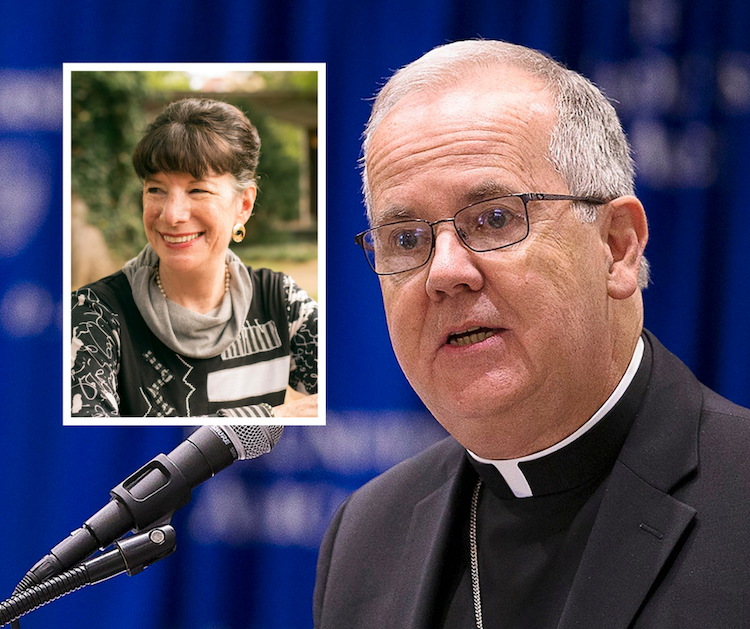
Last night, as part of the permanent seminar “Christianity and epochal change”, Javier Gomá rescued some of its contents, and once again showed his provocative side, with the greatest of respect, in a dialogue format, together with José Antúnez Cid, dean of Philosophy of the center, under the presidency of Cardinal José Cobo, who intervened at the end. An event that you can see here.

“Philosophy in the last 50 years has basically become sociology.”

Dignity is everywhere, and so is exemplarity, but it has never been the object of a philosophical discourse, not a theological one, Javier Gomá stressed in his first 15 minutes. “No matter how much dignity is written in the title of a book, the content has nothing to do with it”. And referring to Kant, Gomá said: “50 percent of the books on dignity are interpretations of the 16 times Kant uses the concept of dignity in the foundations”.

“A general, universal, abstract interpretation, which puts dignity at the center of a reflection, has not existed,” the philosopher pointed out.

In his opinion, moreover, “philosophy in the last 50 years has basically become sociology, and sociology has nothing to do with reflection on dignity. There are no books on dignity, don't be fooled by the title, he added.

Dignity is one of those words that everyone feels but no one defines. Gomá proposes that “dignity is that exclusive property of the individual, by which he becomes a creditor, and the rest of humanity a debtor. The rest of humanity owes something to me, and owes something to each of you.

“The greatest crime against dignity, objectification.”

The greatest crime against dignity is to treat that which has dignity as that which has a price. That is, to treat that which cannot be replaced by something equivalent as if it were. “What is the greatest crime against dignity? Reification,” said Gomá.

Until the eighteenth century, the history of culture was cosmic. Everyone presupposed that truth is in the whole, not in this one or that one, but in the totality. Dignity primarily resided in the totality, in the generality of being, or in the supreme Being, and the other dignities were participatory.

What is new and epoch-making in the history of culture, occurring between the eighteenth and nineteenth centuries, is the emergence of subjectivity, the individual.

What is truly unique about modern dignity is that it is an individual and conflicting dignity. 

Cardinal José Cobo presides over the conference on dignity at an event organized by the San Dámaso Ecclesiastical University. To his left, the philosopher Javier Gomá. To his right, the rector of the San Dámaso University, Nicolás Alvarez de las Asturias, and the dean of the Faculty of Philosophy, José Antúnez (@Universidad Eclesiástica San Dámaso).

“The general interest yields to individual dignity. This is new.”

But the epoch-making modern novelty, in the opinion of the writer and philosopher, is that the following is added to this equation: “the particular interest yields to the general interest, but the general interest yields to individual dignity. This is new”.

Since the 19th century, modern dignity, the dignity of the individual is “a resistance, that which resists. It resists, for example, the despotism of the majority”. And it also resists, “this is what is new, the common good, the general interest, social progress. You cannot produce, invoke or promote the common good or social progress if it implies the trampling of individual dignity”.

“Dignity is the care of those who are in the way, e.g., the vulnerable.”. The law of the weakest

Another definition that I like very much, reflected Javier Gomá, is that “dignity is what gets in the way. What hinders rational plans, even good plans, which would go faster if there were no elements of dignity that hinder that speed. For example, caring for those who are in the way, the vulnerable, those who are good for nothing, does not help rapid progress, but it dignifies humanity and contributes to replacing the law of the strongest with the law of the weakest, which is perhaps one of the secrets of true moral progress”.

Javier Gomá pointed out that the dignity of the 20th century “is a dignity that belongs absolutely and fully to all men and women by the fact of being men and women, unrenounceable, inviolable, unique, universal”. 

In his presentation, he also distinguished between ontological dignity, which we all possess as men and women, which even the most unworthy of men possess, because it is inherent to being human, and pragmatic dignity, which has to do with people's behavior.

Antunez: dignity linked to the person, social and existential

José Antúnez Cid, dean of the Faculty of Philosophy, stressed that Article 1 of the Charter of Fundamental Rights of the European Union is dignity, followed by life.

At the same time, he stressed that the discussions of the European Parliament speak to us of social dignity, that of migrants, discrimination, racism, etc., “issues that are still present in our advanced European societies”.

The dean also referred to a tradition of Christian thought and experience that, “with its shadows and its lights, defends this dignity”.

In this context, he referred to “the ecclesial reference” of Gaudium et Spes, to the document Dignitatis Humanae of the Second Vatican Council, and to the Declaration Dignitas infinita, of the Dicastery for the Doctrine of the Faith, under the pontificate of Pope Francis, “which coincides in part with some of the contributions made by Javier” (Gomá).

In this context, he referred to “two fields of effort to build this dignity, the social and the existential”.

At the end of his brief presentation, Professor Antúnez, who sees the notion of dignity linked to that of the person, asked the philosopher Javier Gomá about the fact that my life, my dignity, meets death, a subject to which the essayist had referred. From where can one draw energy, strength, illusion? What is the engine...

A provocative reflection by Gomá

The philosopher Gomá said that he was going to say something “that sounds a bit radical, but that there would be so many precautions that I would make afterwards, that I am sure everyone would agree”. “What I am going to say is going to generate contradiction,” he advanced.

“The foundations of morality depend on sentiment,” he said. “If I say now: women and men do not have the same dignity. Whites and blacks do not have equal dignity. The rich and the poor do not have equal dignity. If I say this, it is impossible for someone not to call me an imbecile. And yet, throughout history, for everybody, for the most celebrated intelligences, it was an evidence”.

Also for the great thinkers. Even Ortega. It would send shivers down your spine to read some passages of Ortega's work from the 1940”s. What has changed between what Ortega said and what we say? What has changed is that we feel differently. That other things have become evident to us. Society, beliefs, the world as a whole, is on tenterhooks depending on what is evident to the majority. Philosophy and culture are, at bottom, an administration of evidences".

“The realm of education of the heart: I do things out of conviction.”

And if it is evident to us that exemplarity, or dignity, possesses a beauty, or an excellence that recommends itself, if that is evident to us, it has an extraordinary force.

Because in addition to doing things, in the legal field, for fear of punishment, deeper is the field of education of the heart. It is when I do things not out of fear of punishment, but out of conviction.

When you ask me what is the main driving force for me, it is to create, to generate, “a sentimental education of the people, so that they see as evident things that are upright, decent, excellent, such as dignity.

“The greatest moral engine of society is disgust.”

Later, Javier Gomá said that the “greatest moral engine of society is disgust”. He must have seen faces of some surprise, because he argued: “Normally we do not have a direct intuition of values. Of decency, or of the dignity of women. But very often, moral values are so resistant to the concept, that they are perceived not through definition, but through action. 

If I want to explain to my son what bravery is, I don't tell him to look it up in the dictionary, or on wikipedia, but I tell him: look son, that's brave behavior. Or better yet, look, that's cowardly behavior”. 

“Where once rape or the violation of women's dignity was invisible, what suddenly happens in the 19th century? The maximum event, which produces disgust in the reader. And this disgust is mobilizing, it is generative. The novels of the nineteenth century, not the philosophy on dignity, taught a lot to feel the dignity of women, which before, however, was trampled invisibly”.

Cardinal Cobo: defense of indigenous dignity

“Dignity is a revolutionary concept, and it has always been revolutionary in every era, because it has always moved us. Pope Francis spoke of a change of era, where we have the digital continents, artificial intelligence, and so many continents ahead of us,” began Cardinal Archbishop of Madrid, Don José Cobo.

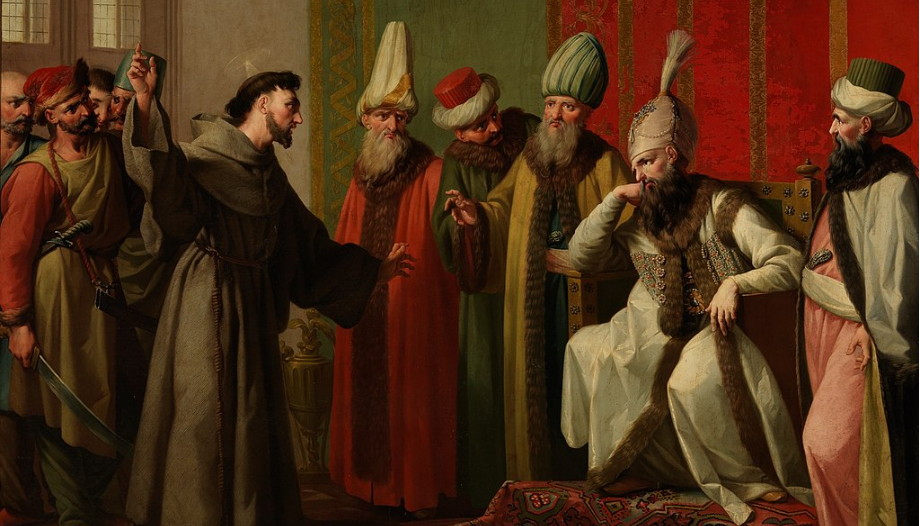
A few centuries ago, some friars ventured across the Atlantic to announce the Gospel to the ends of the earth. Among those events, a sermon delivered by Friar Antón de Montesinos in 1511, on the island that is now the Dominican Republic, stands out and is a bit of a prelude to those Indian laws. 

That sermon, recounted by Bartolomé de las Casas, who was an encomendero and later defender of the indigenous people, constitutes one of the most significant moments of moral conscience, also in modern history, without speaking of dignity in itself. Because I believe that this is what our dialogue, which has begun here, is all about," said Cardinal José Cobo.

The young preacher denounced the cruelty and tyranny exercised by the colonizers against the Indians, and accused them of living in mortal sin. His words may still sound prophetic to us. By what right and justice do you hold these Indians in such cruel and horrible servitude? Are they not human beings like yourselves? Do they not have rational souls? Are you not obliged to love them as yourselves? Do you not understand? Does this leave you indifferent?”.

Root of human rights: the uniqueness of dignity

This episode in our Christian tradition reveals a fundamental conviction, argued the Cardinal of Madrid. “Even before reflection, before theology, even before law, there is life, our life. And that is our nexus of dialogue and the point of interlocution even with different cosmovisions today, which are appearing.”.

The cry of Montesinos did not arise from a theoretical lucubration, but from something very much our own. “The contemplation of wounded life and listening to the Gospel. Concrete life, and especially its vulnerability, and the Gospel of Jesus Christ, constitute two permanent schools from which springs the unconditional imperative of respect for the dignity of every person. What centuries later, we will call human rights, has here its vital and spiritual root in the uniqueness of dignity”. 

The sequence is decisive. “Before law, there is life,” the cardinal added in his speech. “Before the conceptual formulation, there is moral recognition. Human dignity is not invented, nor is it granted, I believe it is recognized. And it is recognized because it is the attribute that we are seeing that comes in the human package, because it is the original gift of God”.

“A person is not worth for what he has or for what he produces, but for what he is.”

“The starting point of Christian anthropology is found, as you know, in the story of creation. God created human beings in his image, in the image of God he created them, male and female he created them. This is what we discover to be the unique dignity. The person is not worth for what he has or for what he produces, but for what he is”.

The Archbishop of Madrid recommended here the “‘Dignitas infinita’, the document of the Doctrine of the Faith, which affirms that ontological dignity belongs to every human being, beyond, he says, all circumstances, as a reality that has its roots in the very mystery of God”.

Cardinal Cobo also recalled, among other things, how philosophical reflection has also recalled the inalienable character of dignity. In contrast to the “liberal tradition,” which has reduced the concept to individual spaces, and can legitimize that “the strongest is the one who organizes coexistence,” “the Christian vision comes from the light of the Trinity,” he said.

The model of Catholicity versus the model of power and globalization that excludes”.”

And therefore offers an understanding beyond the isolated individual. “It is of the ontologically relational person, we are dialogue by the fact of recognizing ourselves as persons. And we launch ourselves with human dignity to make a contribution that I think is very good in our world.”. 

In this line, the cardinal offered “a reflection to build and to live in this new time. Of course, there are two models. I would say that there is a model for building this new world. “One is that of the imperium, that of power, which ends up saying who are the good and the bad, thus always discarding many. It is a political, economic, or media globalization, which also influences a lot, which generates exclusion and weakens the sometimes deepest bonds of the human being”. 

But there is another, and “it is a way that we Christians also understand because it has much to do with Catholicity and the Eucharist. Understanding human dignity from the universality that unites without erasing differences”.

It is the logic of encounter, he said in his concluding remarks, “where each culture can contribute its richness and where we all recognize ourselves as children of God and brothers and sisters. We know, from our experience of the Eucharist, how to articulate unity and diversity, above all based on human dignity and intercultural dialogue”.

The authorFrancisco Otamendi

The World

Fra Giulio Cesareo: “What remains of St. Francis bears witness to a man who spared nothing”.”

Interview with Fra Giulio Cesareo, OFMConv, Director of the Communications Office of the Holy Convent of St. Francis in Assisi (Italy).

Maria José Atienza-February 20, 2026-Reading time: 6 minutes

From February 22 to March 22, 2026, the body of St. Francis of Assisi will be transferred from his tomb, located in the crypt of the Franciscan basilica, to the foot of the papal altar in the lower church. This public exposition of the remains of the “poverello” of Assisi will allow his veneration by people from all over the world. 

Lent 2026 will have a special significance in Assisi. There, the basilica that houses the remains of one of the most important saints in the history of the Church, St. Francis of Assisi, will experience historic days with the public exhibition of the saint's remains for veneration. 

It will be the first time that the faithful will be able to see the mortal remains of the poor man of Assisi in 8 centuries since, although he has been studied and seen by specialists, his remains have never been exposed in this way. 

On this occasion, Omnes was able to speak with the Director of the Communications Office of the Holy Convent of St. Francis, Friar Giulio Cesareo, OFMConv, who emphasized the topicality of the saint of Assisi and his desire that Leo XIV could be one of the people who come to pray before the remains of St. Francis. 

In the coming weeks, we will witness a historic moment with the public exposition and veneration of the remains of St. Francis of Assisi. Why did you decide to organize this public veneration?

-There are two fundamental reasons: the veneration of the relics of the saints is a constant in the history of Christianity, at least in Roman Catholicism and Orthodoxy. In fact, in Christian theology, the life of a saint is not the result of an extraordinary commitment of a hero of the spirit, but the fruit of docility to the Holy Spirit who, according to the letter to the Romans of the Apostle Paul (Rom 5:5), pours into us the love of the Father and thus makes us his children in dignity and conduct of life. 

In this sense, the veneration of the relics of the saints is veneration of the Holy Spirit, who has filled with his grace and action the life of that man or woman of God. In other words, the holy man or woman is a miracle of God and not of human effort. To venerate these relics, so poor and worn out, means to recognize that true life is that which is received from God himself and which is manifested in our life in the love received and shared.

Secondly, we believe that this logic of veneration of relics can also be a cultural contribution in a broad sense, if properly understood, both among believers and among those who do not share our faith. In fact, what remains of the body of St. Francis, a few bones, testifies to the life of a man who spared nothing and gave himself completely, following the logic I mentioned before: by welcoming the love of God, “we become imitators of his goodness.” (says the ancient patristic text of the Letter to Diognetus). Jesus, in the Gospel, expresses this logic of the gift of self in the parable of the seed: “If the seed that falls to the ground does not die, it remains alone; but if it dies, it bears much fruit.” (Jn 12:24). 

The 800 years of the history of Franciscan life after the death of St. Francis are, in our opinion, an eloquent sign that in him this parable of Christ was truly fulfilled: precisely because Francis died for love, giving himself and spending himself completely, he lives and bears fruit. In fact, he is alive among all of us, who recognize him as teacher, friend, brother and father. Here is the cultural contribution of which I spoke earlier: given that we find ourselves in a cultural context - at least the Western one - in which in many ways we are told and we are told that we must spare ourselves, that we must not love too much because otherwise we will be consumed, St. Francis gives us witness to exactly the opposite: that in loving we die, yes, but that this death is in fact the cradle of true life, that of the communion of those who truly bear fruit. 

What can we learn today from the poverello of Assisi?

-For us friars of Assisi, the most synthetic and profound heart of the Franciscan experience is this life totally involved in an experience of benevolence - that of God, which manifests itself not in an abstract form, but in the concrete relationships with the people he met every day - which led him to live according to the same dynamic, that of the gift of self. To live in this way means to spend oneself, to consume oneself, to give oneself precisely. 

The life of Francis is summarized by Giotto in four images that stand out just above the altar of the lower church, and therefore on his tomb: Francis lives in poverty (he shares with the needy), in obedience (he listens to the other, so much...) and in chastity (he is faithful to relationships, he does not betray). He who lives this way, in the eyes of our mentality, is a loser, is someone who deprives himself of the taste for life, is a little deluded; in the eyes of God, instead, he who lives this way, as Giotto shows us, is seated on the throne, he reigns. To love, that is, to give oneself, is not a defeat, but our true greatness. And I believe that to all, to all without exception, believers and non-believers, friars and non-friars, Franciscans and non-Franciscans, this testimony of St. Francis is good for us.

Love for the poor, care for creation... in recent years these have been fundamental themes in the preaching of the Church. Is St. Francis of Assisi a saint who is always relevant? How do the Franciscan friars bring this message up to date?

-Francis is this - love for the poor, care for creation - but also much more: I like to define him as a kind of «positive» Pandora's box. What I want to say, however, is that Francis is not alone and does not communicate only what seems urgent and/or current to us today. 

Francis is a mystic, a man of prayer, a person full of mercy and patience with those who make mistakes, he is an itinerant preacher, he is a promoter and mediator of peace, he is a man of dialogue with everyone, he is an artist, a poet, but also a great educator, etc. 

We friars, without being in any way at his level, try to share his testimony (which, in my opinion, is much more than a simple message), sharing above all the root of his human and spiritual depth, which for us is the bond with Christ, Love made man.

From this, in every context, in every fraternity, in the actions of every friar, we seek to share his person, his intuitions, so that they may become an inspiration for those who enter into relationship with us. I, for example, am entrusted by the fraternity to deal mainly with cultural activities: in this way I try to reveal the cultural implications of the charism of Francis. 

It is not for nothing that the cultural festival we organize every year in Assisi, the Cortile di Francesco, The event is conceived as a cultural expression of fraternity, the heritage of Francis: the event is conceived and oriented as an experience of mutual enrichment around the themes that are addressed or celebrated, because there is no one who does not have something to contribute to others, nor who does not have something to learn from others, regardless of whether he or she is an expert or a simple person. Y mutatis mutandis, similar dynamics exist in the various contexts in which the friars operate, to share solidarity with those in difficulty, to promote the rights of those whose rights are trampled upon and denied, to promote peace, to invite them to be our guardians of creation, and so on.

How was this exposition and veneration of the body of St. Francis prepared? How can those who visit Assisi venerate and pray before it?

-The veneration of the remains of Francis was prepared with much reflection, exchange of opinions and seeking the experience and expertise of many people, ecclesiastical and otherwise, because we realize that it will be a truly special event, unique in its kind. We have also reflected on the meaning of the legacy of Francis and on the intuitions that his companions of the first Franciscan century had about him from the beginning. There are people who have prayed especially for this, we have dialogued with the authorities of the local Church - the Bishop of Assisi - and with the other Franciscans of the city, with our superiors, as well as with the Holy Father, first Francis and then Leo XIV. 

To participate in the veneration it is necessary to make a reservation on the following website www.sanfrancescovive.org or, for Spanish-speaking persons, at www.sanfranciscovive.org, The texts on the website are only in Italian or English. Reservations are required, free of charge, for security reasons and to ensure peace of mind for everyone. There are two possible itineraries: option A, aimed at small groups and accompanied by a friar; and option B, designed to make the tour autonomously.

All information and clarifications are available on the website. From the website you can also contact customer service by e-mail, after booking or to assist you in the booking process.

 The Pope signed his first Apostolic Exhortation on the feast of St. Francis of Assisi. Is Pope Leo XIV expected to participate in this historic moment?

-We wish it with all our might. But, apart from this wish, I cannot tell you anything else for the moment. 

Read more
Books

Is there such a thing as Christian Yoga?

The priest Ignacio Amorós addresses in this brief book the relationship between practices such as yoga or Eastern meditation and Christian prayer, offering clear keys for discernment and recalling the paths of Christian spirituality for the encounter with God.

Maria José Atienza-February 20, 2026-Reading time: 2 minutes

The inclusion of Eastern meditation techniques in the Christian world in general, and the Catholic world in particular, is not new. In recent decades, both in a shared and individual way, many people have joined the current of Yoga, transcendental meditation or Reiki as a form of self-realization or prayer. Some have even promoted them within the Church as a form of “Christian prayer”. 

This search for spirituality, increasingly present in our society in spite of everything, can lead to wrong paths. Therefore, in this short book, conceived in a very practical way and which includes links to videos related to the subject, the priest Ignacio Amorós wanted to explain clearly the nature and root of the practice of Yoga and its relationship with Christian prayer. 

This is a volume, published and distributed through Amazon, It is very useful for all those who want to know more about the relationship between these Eastern techniques and Christianity and, above all, it highlights the teachings of the Church on this issue. 

In addition to explaining what Yoga, Reiki and transcendental meditation are, the priest, promoter of Rebels Wanted, makes a clear distinction between Yoga and Christian prayer, focusing on key points: the concept of God, who Christ is, the invocations, the postures, the purpose of each of the practices, the interiority or the fruits that are born from the exercise of one or the other: in the case of Yoga it is not the union with God, or the personal relationship with Him, but the fusion with an impersonal absolute for whom we are nothing. 

For its clarity, brevity, and expository mode, the book is highly recommended for people of any age, and also especially for those who perform this type of meditation or meditative practices as a way of “prayer”. 

Amorós highlights how there is no such thing as “Christian Yoga but there are Christians who do Yoga.” and, in this line, he turns his eyes to the need for prayer. In this regard, he also looks at prayer practices such as the Lectio Divina, The need for a spiritual life plan as a Christian means of finding the peace that only Christ can give, or mental prayer, the recitation of the Holy Rosary or the need for a spiritual life plan as a Christian means of finding the peace that only Christ can give. 

Book

Title of the workYoga, New Age and Christian prayer
AuthorIgnacio Amorós
Pages: 90
EditorialAmazon Self-Publishing
Read more
The World

Have we forgotten about the war in Ukraine? Caritas advocates for peace

The war in Ukraine risks falling into international oblivion while humanitarian needs continue to grow. Thus, Caritas tells how the situation is and the needs they have there.

Editorial Staff Omnes-February 19, 2026-Reading time: 3 minutes

At a breakfast briefing organized by Caritas, the president of Caritas Ukraine, Tetiana Stawnychyse has highlighted that, according to UN data cited by Caritas Ukraine, about 11 million people will need humanitarian aid in 2026 in a context of “long-lasting and high-intensity” conflict.

There is a sense of «forgetfulness» about the war in Ukraine. The international community has begun to put the conflict on the back burner in the face of the emergence of other geopolitical issues, so that support with funds for humanitarian aid is becoming smaller and smaller.

During the press conference, the organization's officials described what they call a “crisis within a crisis”: continued attacks on energy infrastructure in the middle of winter are leaving billions of people without heat, electricity and even water. The bombings are concentrated in densely populated cities and particularly affect those living in high-rise buildings, the elderly or those with reduced mobility, and families with children.

“If you live on a 15th floor, with no light or elevator and no heating, daily life becomes almost impossible,” they explained.

Farther from the front, but not safe

Although there are relatively more stable areas in the west of the country, the war is not limited to the front line. In cities such as Kiev, massive attacks are recorded every few days, forcing the population to wake up in the early hours of the morning to sirens and to check their cell phones to find out if they are drones or missiles.

In these areas, Caritas focuses its work on sheltering internally displaced persons, providing housing, schooling, psychological care, legal advice, access to healthcare and support in finding employment. So-called crisis centers provide individualized accompaniment to stabilize evacuated families.

The frontline widens: drones and evacuations more dangerous

The organization warned that the area considered most dangerous has gone from 10 to 25 or 30 kilometers from the front line, due to the use of drones that chase civilians and have even attacked humanitarian vehicles. This complicates both food distribution and evacuations.

“Operations are increasingly risky,” they noted.

Mental health: a growing priority

After almost four years of conflict, the psychological toll has become one of the main challenges. Caritas stresses that the war “has not been normalized”, although the population has learned to live with it.

The entity develops individual and group psychosocial support programs, especially with minors who have spent years with online schooling and little socialization. It also promotes therapies through art, work with families and training in non-violent communication to reduce community tensions.

It also collaborates with public initiatives such as the Resilience Centers, promoted by the Ukrainian government, and maintains specific programs for war veterans, with physical rehabilitation after amputations, emotional support and social integration, especially in rural areas.

Volunteerism that heals

One fact highlighted by the organization is that 40 % of the volunteers in the first year of the invasion were displaced people who had previously received assistance. “Helping others also helped them heal,” they explained, highlighting the value of volunteering as one of the keys to staying healthy and integrated with the community.

Caritas acknowledged that in Russian-occupied areas, activity is extremely difficult. There are no active parishes and several religious figures have been expelled. They tell the story of two parish priests who were arrested and taken to prison in war camps for almost two years: «the situation is very oppressive in the occupied territories».

In Mariupol, at the beginning of the invasion, an office of the organization was attacked and two workers and their families were killed. «When this happened in 2022, there was a very strong culture of rejection towards Russia, and towards a logical hatred. But Caritas being an institution of the Church, in the face of tomorrow, we are working in the sense of trying to heal those wounds, in the face of the relationship with the citizens of Russia.».

«It is a promotion of mercy, of forgiveness, even if it is difficult right now, impossible. Peace is a long process, it is not a moment, and it is being built».

International support and Spanish collaboration

From Spain, Caritas Spain maintains a continuous collaboration with its Ukrainian counterpart. According to its leaders, in these four years almost 19 million euros have been allocated to «save, rescue, protect and accompany the most needy people in Ukraine, as well as to rebuild those communities that need so much».

Despite the general fatigue, the final message was one of resistance: the population “is exhausted, but it is still standing”. The organization insists that maintaining international solidarity is key in the face of a scenario which, they assure, has been the most dangerous of the four years of war and could worsen if humanitarian funds are reduced.

“Peace is a long process,” they concluded, “and right now the priority is to sustain people and preserve their mental health so that we can rebuild the country when that time comes.”.

Read more
The Vatican

The “countercultural” repentance preached by the Pope

Under the Roman pines of the Aventine Hill, Pope Leo XIV led a solemn penitential procession on Feb. 18 to Rome's oldest surviving basilica. And he marked the first Ash Wednesday of his pontificate with a call for “counter-cultural” repentance for the sins of individuals, institutions and the Church itself.

OSV / Omnes-February 19, 2026-Reading time: 4 minutes

- Courtney Mares, Rome, OSV News

At the Ash Wednesday penitential procession, priests, bishops, cardinals and the Pope sang the Litany of the Saints as the procession moved from the Benedictine Basilica of St. Anselm to the ancient Dominican Basilica of Santa Sabina. There, Leo XIV offered the Ash Wednesday Mass, and spoke of “counter-cultural” repentance.

“It's rare to find adults who have regrets.”

“How rare it is to find repentant adults, individuals, companies and institutions that admit they have acted wrongly,” Pope Leo said in his homily in the Basilica of Santa Sabina.

In fact, during Lent a people is formed who recognize their sins. These sins are evils that do not come from supposed enemies, but that afflict our hearts and exist in us. We need to respond by courageously taking responsibility for them," he added.

Pope Leo acknowledged that “this attitude is countercultural,” but “it constitutes an authentic, honest and attractive option, especially in our times, when it is so easy to feel powerless in the face of a world in flames.”.

“Embracing the missionary meaning of Lent.”

In his homily, the Pope pointed to young people as an unexpected sign of openness today.

Even in secularized contexts, many young people, more than before, are open to the invitation of Ash Wednesday," Pope Leo observed. Young people, in particular, clearly understand that it is possible to live a just lifestyle and that there must be accountability for wrongdoing in the Church and in the world.

He invited the faithful to “embrace the missionary meaning of Lent,” not as a distraction from personal conversion, but “in a way that introduces this season to the many restless people of good will who are seeking authentic ways to renew their lives, in the context of the Kingdom of God and his justice.”.

Pope Leo XIV imposes ashes during the Ash Wednesday Mass in the Basilica of Santa Sabina, Rome, February 18, 2026 (CNS Photo/Lola Gomez).

Italian custom of ashes

Pope Leo received ashes scattered on his head according to Italian custom, before imposing them on the cardinals and some of the faithful present.

“We perceive in the ashes imposed on us the weight of a world in flames, of entire cities destroyed by war,” he said.

“This is also reflected in the ashes of international law and of justice among peoples, in the ashes of entire ecosystems and of harmony among peoples, in the ashes of critical thinking and of ancient local wisdom, in the ashes of that sense of the sacred that dwells in every creature,” Pope Leo added.

Closing of Vatican II 60 years ago 

The Pope recalled that 60 years ago, on the Ash Wednesday following the closing of the Vatican Council II, St. Paul VI had warned about the “fundamental pessimism” of the modern world and its tendency to proclaim “’the inevitable vanity of everything, the immense sadness of life, the metaphysics of the absurd and of nothingness’”. 

“Today we can recognize that his words were prophetic,” Pope Leo added.

The Pope also reflected on the importance of the tradition of the Lenten Season, in which pilgrims pray at the tombs of Rome's first Christian martyrs. The Basilica of Santa Sabina, where Pope Leo officiated at Mass, is the first church of the Roman Station pilgrimage. The basilica dates back to 422 AD.

Pope Leo XIV blesses as he leads a penitential procession to the Basilica of Santa Sabina to celebrate Ash Wednesday Mass in Rome February 18, 2026 (Photo OSV News/Matteo Minnella, Reuters).

Ancient and contemporary martyrs

“The ancient and contemporary martyrs shine as pioneers on our path to Easter,” he said. “The ancient Roman tradition of the Lenten stations - which begins today with the first station - is instructive: it refers both to journeying, as pilgrims, and to pausing, statio, in the memories of the martyrs, over which the basilicas of Rome stand.”.

“Might this not perhaps be an invitation to follow in the footsteps of the admirable witnesses to the faith that are found today throughout the world?” he added.

Ash Wednesday marks the beginning of the 40-day Lent, during which Christians are called to prayer, fasting and works of charity. Lent concludes with the Easter Triduum.

‘Sign and testimony of the Resurrection’.’

We acknowledge our sins in order to be converted; this in itself is a sign and witness of the Resurrection. In fact, it means that we will not remain among the ashes, but will rise and rebuild, Pope Leo said.

Then the Easter Triduum, which we will celebrate as the summit of the Lenten journey, will unfold all its beauty and meaning. This will happen if we participate, through penance, in the passage from death to life, from impotence to God's possibilities.

—————

- Courtney Mares is Vatican editor for OSV News. Follow her at @catholicourtney.

The authorOSV / Omnes

Read more
Vocations

“The Church, a place of hope and true diakonia for Venezuela”.”

Venezuelan priest Gustavo José Perozo Pérez, ordained in 2020 and incardinated in the diocese of Carora, is studying Canon Law at the ecclesiastical faculties of the University of Navarra. In his opinion, “the Church continues to be a place of hope, it is a diakonia for Venezuelan society, and faith is being renewed".

Sponsored space-February 19, 2026-Reading time: 3 minutes

This is the opinion of the Venezuelan priest Gustavo José Perozo Pérez, ordained in 2020 and incardinated in the diocese of Carora, in statements to the CARF Foundation: “Hope perseveres in the hearts of most Venezuelans”. At present, Gustavo José Perozo is studying for a degree of Canon Law in the ecclesiastical faculties of the University of Navarra.

The priest grew up in an environment of faith in his native country, but his vocation did not arise in childhood. It was later, in his youth, when, through catechesis, his work as an altar boy, the parish, the closeness of some religious and the witness of the parish priest, when he began to consider his call to the priesthood. “All this awakened in me the search for something more,” he said.

And in 2012, at the age of 19, he left his university studies in Geography and History and entered the seminary. Eight years later he was ordained a priest. Today he assures that “Venezuela needs well-trained canonists, and it needs them urgently”.

Training for mission 

After being sent by his bishop to the Ecclesiastical Faculties of the University of Navarra, the young Father Gustavo considers that “Canon Law contributes a lot to the mission of the Church, it is at its service. From this perspective, its contribution to the pastoral action of the Church in Venezuela is evident, and at the same time, the need for specialists in Canon Law in all branches, who can favor this service”.

“To build a society founded on justice, truth, liberty and fraternity, and thus emerge from the grave crisis that has afflicted the country for many years,” encouraged Pope Leo XIV in his Speech to the Diplomatic Corps in January, referring to Venezuela and other countries. And “Canon Law can contribute not only within the Church but also in the current complex socio-political situation,” the Venezuelan priest stressed to the Diplomatic Corps in January. CARF.

Commitment of the Church in Venezuela

In a context of restriction of human rights and freedoms as denounced by Leo XIV, the action of the Church is not passive, but “remains present and committed, trying to enlighten every reality with criteria and initiatives centered on the Gospel”, adds the priest Gustavo José Perozo.

In his opinion, the most visible action is social work, especially through Caritas, with soup kitchens, medicine banks, nutrition programs, medical care and job training. 

However, the Church's commitment goes beyond this: “In the midst of all the reality experienced and suffered, in each place and in different ways, the presence of the Church has been adapting to the needs, evangelizing and offering a response to each need that has arisen; all this, the fruit of a committed listening and a shared effort,” he told the CARF Foundation.

Service profile: “a diakonia”.”

“This service also has a profoundly social and political value thanks to the many pastoral agents who, with their dedication, availability, sensitivity, generosity and prayer, in a spirit of communion and charity, and from the Church's own institutions, are the hands and feet that bring, give, lift, carry and make possible, in short, that this service can be a sign of comfort and hope”.

In this way, he concludes: “the role of the Church transcends the intra-ecclesial sphere and becomes a true diakonia to the Venezuelan society”. That is to say, a service carried out with dedication and love.

Church that suffers with its people, but is hopeful

The Church in Venezuela is not an elite, it suffers the same reality as the rest of the citizens, and faces threats, limitations and consequences derived from the country's situation.

Gustavo José Perozo acknowledges that the prevailing feeling today is uncertainty, both inside and outside. But there is something that has not been lost: “Hope perseveres in the hearts of most Venezuelans”.

“The road to the restoration of democratic institutions will be long,” he says, "but it is not impossible. 

Awakening of faith 

His analysis also takes a positive approach. Far from a massive abandonment of the faith, in many communities one can perceive “a new ardor, a reconfiguration of the experience of faith,” even in the midst of hard difficulties. 

“There are many young people who participate in retreats, movements and various charismatic experiences that bring them closer to the Church and then lead them to processes of accompaniment, maturation, commitment and apostolate,” adds the Venezuelan priest.

Debate

The dangers of McCarthyism

No end justifies unjust means, and the McCarthy case is a reminder of the dangers of sacrificing justice in the name of security.

Santiago Leyra Curiá-February 19, 2026-Reading time: 4 minutes

The term McCarthyism refers to accusations of disloyalty, communism, subversion or treason in which there is no due respect for a fair legal process where the human rights of the accused are considered.

It has its origins in an episode of U.S. history that took place between 1950 and 1956, during which Republican Senator Joseph McCarthy (1908-1957) unleashed a process of declarations, unfounded accusations, denunciations, interrogations, irregular processes and black lists against people suspected of being communists. The sectors that opposed McCarthy's irregular and indiscriminate methods denounced the process as a "black list". «witch hunt», episode that was described, among others, in the play The Witches of Salem (1953), by playwright Arthur Miller.

What is McCarthyism

By extension, the term is sometimes applied generically to situations where a conservative government is accused of persecuting political opponents or failing to respect civil rights in the name of national security.

Joseph Raymond McCarthy was the fifth child of a large Catholic family consisting of his father, Timothy McCarthy (born to an Irish father and German mother), his mother, Bridget Tierney (Irish from County Tipperary, in the province of Munster), and seven children. Joseph was born on a farm in Grand Chute, Wisconsin, near the town of Appleton. He had to leave school at the age of fourteen to help his family in farming. When he was able to resume high school, he was able, thanks to his natural intelligence, to graduate in only one year, at the age of 21.

He first studied engineering, without finishing his degree, and later studied law at Catholic University (run by the Jesuits) in Marquette, Milkwakee, until he finished his degree in 1935, and was admitted the same year to practice law.

In 1936, working for a Shawano (Wisconsin) law firm, he ran for the Democratic Party for District Attorney but lost the election. In 1939 he ran for election to the position of judge of the 10th District Circuit and was elected, finding in his new position a considerable backlog of cases, which he struggled to clear up in sometimes unorthodox ways.

According to Pulitzer Prize winner David M. Oshinsky (A Conspiracy So Immense: The World of Joe McCarthy) Judge McCarthy rounded out his income through his gambling, which is at least partly explained by the difficult economic conditions in America as it struggled to emerge from the Depression.

In 1942, and despite the fact that his profession made him exempt from military service, McCarthy enlisted as a volunteer in the U.S. Marine Corps. He would later declare that he chose this corps because he considered it the destination that could best help him in a political career that he had already decided to pursue. Because of his position as an experienced judge, he automatically earned the stripes of officer - second lieutenant, equivalent to ensign - after his period of training. He served as an information officer in a bomber squadron on Solomon and Bouganville (Solomon) Islands, and was discharged with the rank of captain. It has been shown that McCarthy subsequently lied repeatedly about his military career.

The McCarthy Legacy

He later served as a U.S. Senator representing the state of Wisconsin from 1947 to 1957. During his ten years in the Senate, McCarthy and his staff became famous for pursuing individuals in the U.S. government and others suspected of being Soviet agents or communist sympathizers infiltrating the civil service or the military.

Given to drink, Senator McCarthy miscalculated his strength in trying to investigate the military in 1953. That same year, as chairman of the Senate Subcommittee on Investigations, McCarthy continued his allegations of Communist activity and influence - which came to affect President Eisenhower - and in April 1954 accused the Secretary of Defense of covering up foreign espionage activities. Republican President Dwight D. Eisenhower decided to act against him. The awareness that this «witch hunt» endangered the essence of democracy also led the leaders of his own party to allow a motion of censure against him to prosper in 1954.

That same year, McCarthy lost what little prestige he had left when the Senate hearing against Army officers for alleged communist activity was broadcast on television. His demagogic and brutal style was exposed. He continued for another two years in his duties as senator, but his colleagues avoided him, and what happened weighed like a burden on his spirits and health. His biographers point out that, after the reprobation, he was never the same; hospitalized at the Bethesda Naval Hospital for chronic alcoholism problems, he died at the age of 48, victim of cirrhosis and hepatitis.

There is an ancient ethical principle that the end does not justify the means. Unjust methods should never be used to achieve supposedly good ends. Not even in politics or in business, under the excuse that it is a very difficult world where everyone uses them. Using immoral means (lying, treating people badly, exercising a Bonapartist style of government) may seem profitable in the short term, but in the long run it always turns out badly and the damage done is far greater than the supposed good pursued. The McCarthy case should not be forgotten.

Gospel

Rejecting temptation in order to convert. I Sunday of Lent (A)

Vitus Ntube comments on the readings for the First Sunday of Lent (A) corresponding to February 22, 2026.

Vitus Ntube-February 19, 2026-Reading time: 3 minutes

The first Sunday of Lent is marked by the victory of Jesus over temptation. The Church offers us, at the beginning of the Lenten journey, the story of Jesus tempted in the desert and how he overcomes these temptations. This episode sets the tone for the season of Lent, which calls us to penance and conversion.

Temptation is always an invitation to sin: an attempt to break the unity we share with God. Sin wounds our union with God; it separates us from Him and from others. Temptation can lead us to sin, and if we do not recognize the reality of sin, neither will we recognize temptation when it presents itself. The existence of the season of Lent, the journey to the Cross, is because evil exists, sin exists. On our way to conversion, it is important to recognize sin and the possibility of falling into it. Christ goes to the Cross by the power of the love that desires to free us from the slavery of sin.

Today's Mass readings present us with two contrasting episodes of temptation: that of Adam and Eve, and that of Jesus Christ. The first reading, taken from the book of Genesis, reveals the origin of sin: original sin. The wily serpent tempts the woman by entering into a dialogue with her and, as a consequence, she and her husband eat from the tree in the center of the garden. Scripture tells us: “And he said to the woman, ‘Has God said to you that you should not eat of any tree in the garden? And the woman answered the serpent, ’We may eat the fruit of the trees of the garden; but of the fruit of the tree which is in the midst of the garden God has said to us, ‘Do not eat of it or touch it, or else you will die.’”".

In contrast, we find Jesus in a moment of great vulnerability, able to immediately reject temptation thanks to the firmness of his purpose. Hungry after fasting for forty days, he is tempted to turn stones into bread. Behind this temptation lies an attack on his identity as the Son of God and his filial relationship with the Father. Unlike Eve, Jesus does not engage in dialogue with the devil. The devil is cunning, and dialoguing with him places us in danger. Instead, Jesus responds decisively with the Word of God: “...the devil is the devil....".“If you are the Son of God, command that these stones become loaves of bread. But he answered him, “It is written, ‘Man does not live by bread alone, but by every word that proceeds from the mouth of God’".’”. This understanding of the nature of temptation, which today's readings offer us, is also vividly presented in the literary work of C. S. Lewis, Letters from the devil to his nephew, The correspondence between the veteran tempter Scrutpus and his nephew Orugarius. There we see how the devil adapts his strategies, using subtle and modern techniques to turn people away from God.

Overcoming temptation requires a mature use of freedom and reason. Jesus“ temptations are our temptations, he teaches us to overcome the temptation to believe ourselves self-sufficient, for having gone through the same thing, he gives us his grace, he helps us as our elder brother. As St. Paul reminds us: "just as for a single crime resulted in condemnation for all, so also for an act of justice resulted in justification and life for all.".

The first Sunday of this liturgical season encourages us on the way to Easter, where we contemplate Christ's victory over sin and death. Victory over sin begins with our ability to reject temptation. It does not begin after our death, but in the temptations we encounter in daily life. Recognizing and rejecting temptation is, therefore, an essential dimension of the Christian life.

Integral ecology

Santiago Portas: «It is possible to exercise authority without losing humanity».»

The director of Religious Institutions and Third Sector of Banco Sabadell has published "70 times 7: Leading from forgiveness, truth and reconciliation", a book written for those who lead people and know that important decisions cannot be solved with technique alone.

Maria José Atienza-February 19, 2026-Reading time: 3 minutes

The Director of Religious Institutions and Third Sector at Banco Sabadell, the Sevillian Santiago Portas, has recently published «70 times 7: Leading from forgiveness, truth and reconciliation.», a book in which he reflects on some of the most important characteristics in the leadership and management of people from an evangelical perspective.

Throughout seven short chapters, the author establishes a relationship between different passages of the Gospel with real situations in the professional world and proposes a series of practical exercises through which the reader can evaluate and recognize attitudes and decisions in his daily life.

On the occasion of this publication, Omnes spoke with Portas about this conception of leadership, the importance of Christian coherence in the professional world and the challenge of forgiveness and reconciliation in a world of «sharks».

Why and how was a book like «70 times 7» born?

- The book is born from the concrete experience of leading people in real contexts. As I explain in the prologue, it does not arise from an editorial plan, but from years of accompanying teams, making difficult decisions and learning -sometimes through mistakes- that leadership is a responsibility with human consequences.

Over time I came to understand that categories such as forgiveness, correction and discernment were not just spiritual notions, but profoundly practical skills. The book attempts to sort out this learning and show that it is possible to exercise authority without losing humanity.

To lead is to accompany people. How to do it today?

- To accompany is not to control or invade, but to dedicate real time. In chapter 1, I spoke of time as a measure of love: leadership is not only sustained by decisions, but also by presence.

Accompanying means helping to grow, listening before correcting and always distinguishing between the person and his or her error. In a fragmented society, this form of leadership becomes especially necessary.

How do you distinguish a leader with stated values from one who actually lives them?

- The difference is seen in day-to-day consistency. Values are noticed when there is pressure, conflict or risk. They are noticed in the tone of a correction, in the way merit is distributed, in the ability to assume one's own mistake. At the beginning of the book, I quote a phrase from St. Josemaría Escrivá of Balaguer which sums up this idea well: “Don't live a sterile life. -Be useful. -Leave a legacy.” This invitation to “leave a legacy” connects directly with the leadership of which the book speaks: not to seek prominence, but fruitfulness.

Are practical exercises born from experience?

- Yes, they are not theoretical. They arise from real situations: unresolved wounds, poorly planned corrections, excessive control, decisions made in haste. They are pauses of conscience. Leadership is impoverished when we stop reviewing from where we act.

Is the right decision the one that brings peace?

- In chapter 2, I explain that peace is neither comfort nor absence of difficulty. Sometimes the right decision is uncomfortable, but it leaves inner serenity. This peace is built with silence, listening and right intention. It is not always immediate, but when it appears, it sustains even demanding decisions.

What is the difference between forgiveness and reconciliation?

- Forgiveness is an inner, unilateral decision. It frees the leader from resentment. Reconciliation requires conditions: truth, change and reparation. It is not always possible. Forgiveness does not eliminate responsibility; it allows it to be exercised without resentment.

Forgiveness is not allowing the same thing indefinitely. How to apply it in management?

- Forgiveness is not tolerating without intervening. It means not letting the repetition of the error destroy the relationship or the common purpose. This implies naming the error, correcting with clarity, establishing limits and deciding from the mission, not from the wound.

70 times 7: Leading from Forgiveness, Truth and Reconciliation

AuthorSantiago Portas
Editorial: Self-published by Amazon
Pages: 54
Year: 2026

Correcting in a hypersensitive society, is it possible?

- It is more necessary than ever. Healthy correction protects dignity. It is done alone, with clarity and from a clean intention. It does not humiliate, it does not ironize, it does not expose. Correcting well not only improves results; it builds people.

Is it hard for us to ask for forgiveness also in the Church?

- It costs us wherever there is authority. But asking for forgiveness does not weaken authority; it humanizes it. Moral authority is not born of infallibility, but of coherence.

Have we fallen into a spiral of productivism?

- There is a strong pressure for immediate results. When leadership is measured only by external metrics, the inner self is emptied. Without silence there is no discernment. Without discernment there is no sustainable leadership. The question is not how much we do, but from where and for whom we do it.

The Vatican

Pope calls for conversion of heart as Lent begins

Leo XIV prayed to the Lord during his audience on Ash Wednesday, the beginning of Lent, that he would grant us the gift of “true conversion of heart. He did so in English and in the other languages of the catechesis, which dealt with Vatican II's Lumen Gentium.

Francisco Otamendi-February 18, 2026-Reading time: 2 minutes

In practically all the languages in which the message of this year's catechesis was transmitted Ash Wednesday -the Church is a universal sacrament of salvation and an instrument of God, the Pope called for a profound conversion of heart. 

In the nine languages in which they are transmitted the words the Pope to the Romans and pilgrims in St. Peter's Square, the Pontiff wished everyone “a good Lent” (French) and that “the Lord help us to welcome with open hearts the graces that he wants to give us in this time of Lent. Lent”(German language).

Fasting so as not to hurt others, or encountering Christ in the sacrament of Penance

Then there were some concrete details about the Lenten message. For example, the Holy Father asked us to fast “from gestures and comments that hurt others and distance us from his merciful Heart.

“May Lent be a time of encounter with Christ through the Sacrament of Penance and the works of mercy” (Polish language).

“To be an effective sign of unity and reconciliation among peoples” (Arabic language).

Lumen gentium: the Church, sacrament of union with God and of unity

In the catechesis, the Holy Father has reflected on the Dogmatic Constitution Lumen Gentium, dedicated to the Church. At the beginning of this conciliar document it is affirmed that “the Church is in Christ as a sacrament, that is, a sign and instrument of intimate union with God and of the unity of the whole human race” (n. 1).

This means, the Pope pointed out, “that the Church is a sacrament, insofar as she is an expression that manifests God's plan in the history of humanity, and she is an instrument, that is, she carries out her mission in an active way, driven by the Holy Spirit”.

Jesus continues to act in the Church by the Holy Spirit

In the chapter dedicated to the eschatological nature, the Constitution Lumen Gentium affirms that the Church is “the universal sacrament of salvation” (n. 48). “This makes it possible to understand the link between Christ the Savior and the Church, since he continues to act in her through the work of the Holy Spirit, uniting her members and making them sharers in his glorious life by means of the Eucharist.”.

In other words, the Church is God's instrument for “uniting people in himself and bringing them together” thanks to “the reconciling action of Jesus Christ”. And “sacrament of salvation” through which the Father makes us “sharers in his glorious life” by nourishing us with his body and blood.

Before praying the Our Father and giving his blessing, Pope Leo said: “At the beginning of Lent, I exhort you to live this liturgical season with an intense spirit of prayer so as to arrive, interiorly renewed, at the celebration of the great mystery of Christ's Easter, the supreme revelation of God's merciful love”.

St. Faustina Kowalska on the 22nd

Shortly before, he had reminded the Poles that “February 22 is the 95th anniversary of the first apparition of the Merciful Jesus to St. Faustina Kowalska. Since then a new chapter in the spread of the cult of the Divine Mercy began, through the Chaplet and the painting ‘Jesus, I trust in You’”.

Imposition of Ashes in Santa Sabina

In the afternoon, the Pope will proceed to the Church of St. Anselm, from where a penitential procession will take place to the Basilica of Santa Sabina. There, the Pope will celebrate Holy Mass and will bless and impose the ashes.

The authorFrancisco Otamendi

Read more
Spain

Fabrice Hadjadj creates an institute in Madrid to train “horticulturalists of culture”.”

The French philosopher founds a center in Madrid inspired by medieval colleges where students reside and where their spiritual, intellectual and community life is attended to.

Jose Maria Navalpotro-February 18, 2026-Reading time: 4 minutes

In September 2026, philosopher Fabrice Hadjadj will launch the Incarnatus est Institute, an international Catholic-inspired center dedicated to the integral formation of young adults, where the students, like medieval university colleges, live in the center with their teacher. Hadjadj is one of today's leading philosophers and his project proposes a nine-month academic course of study in community life for forty students.

The innovative project (something like a master's degree in Humanities for an entire academic year, and on a community basis) will be developed at the headquarters in Boadilla del Monte (Madrid), in a former convent. 

When presenting the project, its promoters speak of an integral formative proposal “structured in a year of intensive ‘retreat’”, based on three foundations: spiritual life, intellectual life and community life.

Students will study philosophical and theological anthropology, with an academic program totaling 60 ECTS credits, distributed in courses, thematic modules and experiential sessions. The program is supported by the Francisco de Vitoria University, where students will have academic activity one day a week. Among the faculty, apart from Hadjadj, are professors such as Higinio Marín, Salvador Antuñano and Ángel Barahona.

As for spiritual life, the program for students includes Mass and daily prayer, Lectio Divina, Gregorian chant, Holy Hour and spiritual direction in the schedule. It is not exclusive to Catholic students, but, because of the program, Hadjadj said, they must at least be “Catholic".“catholic-friendly".

Fraternal life will be developed in daily living from Monday to Friday. On weekends, the students will return to their homes, if they wish. With the idea that in order to be together with the heart, it is also necessary to In addition to ordinary household chores, the students will also be able to take part in various workshops, mainly in vegetable gardening and carpentry, and others in sewing, ceramics, painting, poetry and basic handicrafts. During the presentation, Hadjadj highlighted two rooms at the center that play an important role in community life: the Taberna Feliz, a bar-cafeteria staffed by people with disabilities (Down syndrome); and the Lab-oratory, which houses artists' studios and a meeting center for contemporary thinkers.

In this sense, coexistence will be extended in the pilgrimages planned to Covadonga or Guadalupe (Extremadura), among others, with a deeper meaning than mere tourism.

Inspired by a project in Switzerland

The whole project is inspired in some way by the Philanthropos Institute in Fribourg, Switzerland, of which Hadjadj himself has been director for the past thirteen years. There he developed a pedagogy that integrates intellectual life with artistic experience, manual work and community life. According to Hadjadj himself and Miguel Gabián (one of the promoters), it is aimed at young people between 18 and 28 years of age, although there may be some older students. They are offered “a formative experience that integrates the intellectual, community and spiritual dimensions, understood as inseparable aspects,” according to information from the Institute.

In this sense, Hadjadj emphasized that the institute proposes to create “horticulturists of culture,” in the sense of the etymological relationship between culture and cultivation. For the French philosopher, “we Catholics must rid ourselves of the mentality of a ‘besieged fortress’. Christ is already victorious, the only question is whether I will be in victory with him. The goal of the institute is ”to prove the positive of the culture linked to faith, a cultivated culture as the monks did in times of barbarism: they did not fight wars, they dedicated themselves to copy books - also pagan - to preserve them, and to cultivate the countryside“.

Rather than attacking or denouncing artificial intelligence, Hadjadj proposes “to test natural intelligence, and to propose hope to the enemies of faith, who are dying of despair”. That is, “the school as a place of practical hope and living proposition. Not with the military logic of battle. It is good to know in order to know, not only to polemicize. The taste of knowledge”, concludes the philosopher.

Fabrice Hadjadj has developed in recent years his academic work as director and professor at the Philanthropos Institute in Fribourg. He is a Sephardic Jew of Tunisian descent. His parents brought him up in Maoist ideology. He grew up as an atheist and anarchist, until he converted to Catholicism in 1998. He is married to the actress Siffreine Michel, with whom they have ten children. Since last August he has been living in Madrid with his wife and seven of their children. 

Institutional support

The Incarnatus Est Institute arose from the initiative of lay people of different origins attracted by the figure of Hadjadj, who decided to transfer the Philanthropos Institute to Spain, also with the idea of its expansion and diffusion in Latin America. 

It is set up as a non-profit entity, which will be financed by the fees charged to the students, who must pay not only for their studies, but also for their internal stay in the residence for an entire academic year. They are planning to receive aid - a campaign is planned for crowdfounding- for scholarships. The Institute has the support of the Diocese of Getafe and plans to collaborate with other Spanish universities.

For Latin America

In his appearance before the press, Hadjadj stressed the fact that the Institute is being developed in Spain: “I am not here to give lessons, but I want to unearth a treasure, the Spanish treasure. It is a way of reconquering the sense of a globalized world, with an apostolic sense.” “It is now time to showcase the Spanish-American, a culture born of the Castilian genius itself.

The French philosopher denied that the arrival of Incarnatus est should be read through the prism of the so-called “culture war”. He explained why this concept is mistaken: “first, for believing that we are still in modernity and that the modernist polarities are still in force. No, modernity, in losing the vision of faith, has lost reason”.

“Second, he continues, it is a mistake to believe that there are two cultures: one, Catholic, and the other opposite, with which to fight or dialogue. This is not so. The battle is culture against dataism, the reduction of everything to parameters, to a calculation”.

And finally, says Hadjadj, “culture is a garden to cultivate. If we put everyone as soldiers in front of the garden, where are the gardeners? There is no need for ”defenders of Christ“, argues the philosopher, in the sense that Christ has already conquered, ”the goal is to prove the positive of the culture of faith, to communicate hope“.

Evangelization

Ferdinand Habsburg, new ACN International Secretary General

The Pontifical Foundation Aid to the Church in Need (ACN) has announced the appointment of Ferdinand Habsburg as its new international secretary general. An appointment formally made by the CEO, Regina Lynch, on January 13, and now disclosed.

Editorial Staff Omnes-February 18, 2026-Reading time: 3 minutes

The new International Secretary General, Ferdinand Habsburg, joins the ACN Pontifical Foundation after a successful career in the fields of media and education. His appointment was made by the Executive President, Regina Lynch, in accordance with the Foundation's statutes and with the approval of the Administrative Council.

The decision follows the appointment, in November 2025, of the Cardinal Kurt Koch as president of ACN International by Pope Leo XIV.

Extensive professional experience

Ferdinand Habsburg, an Austrian national, is 60 years old, married and the father of three children. He grew up in Zurich, Switzerland, where he completed his secondary education at the Benedictine monastery school in Einsiedeln. His first contact with ACN dates back to 1985, when he worked for a year at the Coptic Catholic Patriarchate in Cairo, Egypt, an ACN project partner.

He then moved to Berlin (Germany) for university studies, where he obtained a master's degree in German literature, international relations and anthropology. After completing his studies, he developed a successful career in the fields of marketing and media, working, among others, in the television department of Bertelsmann, as a manager at Procter & Gamble and as head of television at Red Bull.

In 2007 he founded Da Vinci Media, a company specializing in educational and family content for Europe, Asia and Africa. In September 2025, he joined ACN as Director of Communications and Fundraising.

Love for ACN's mission: support for the persecuted Church

Commenting on the appointment, Regina Lynch said: “During the time we have worked with Ferdinand Habsburg, I and the rest of the management team have appreciated his strong analytical and strategic skills, his ability to listen and create synergies, his broad professional experience and his deep love for our mission.

Ferdinand Habsburg said, “I am deeply grateful for the trust that the ACN Board of Trustees has placed in me. At a time when our Christian brothers and sisters are being persecuted in many countries around the world, ACN's mission to support the suffering and persecuted Church is more relevant than ever”.

Thanks to Philipp Ozores

Ferdinand Habsburg succeeds Philipp Ozores. “During his time at ACN, Philipp Ozores was responsible for driving and accompanying years of significant growth, during which our capacity to support the suffering and persecuted Church nearly doubled,” said Regina Lynch. “We are deeply grateful to him for all he has done for the foundation.”.

5,373 projects to be financed in 138 countries by 2024

Aid to the Church in Need (ACN) is an international organization with national sections in more than 20 countries in Europe, Asia, Oceania, Latin America and North America. Its mission is to support the Church in situations of material and spiritual need, including extreme poverty and persecution. In 2024, the foundation funded 5,373 projects in 138 countries.

ACN also publishes the Religious Freedom in the World Report, The only non-governmental study that analyzes the situation of religious freedom of all religions, in all countries of the world.

“The Church in Syria again needs your help.”

Just today, Aid to the Church in Need, ACN Spain, recalled the voice of Father Fadi al-Najjar, a priest in Aleppo, who alerted ACN on January 6 of the dramatic situation in Syria. “Please, I go out to ask for your prayerful help, your solidarity, to raise your voice for peace”.

Although the bombing has stopped for now, fear, tension and uncertainty continue to mark the daily lives of Christian families in Aleppo. Many have had to leave their homes, others have lost everything, and the shrinking Christian community is struggling to survive in a context of extreme crisis and insecurity.

Christians do not want to leave

About 25 Christian homes have been completely destroyed and some 350 damaged. The Catholic Church in Syria is assessing the damage to help them rebuild their homes. In spite of everything, Christians in Syria do not want to leave. As Father Fadi, a priest in Aleppo, told us: “We, as the Church, have decided to stay because it is our land. We have to be the salt of the earth”.

ACN pleads for help for Christians in Syria: “do not leave them alone”. Here have how to do it. Or call 91 725 92 12.

The authorEditorial Staff Omnes

Gospel

Day of change. Ash Wednesday

Vitus Ntube comments on the Ash Wednesday readings for February 18, 2026.

Vitus Ntube-February 18, 2026-Reading time: 2 minutes

This day, with the penitential rite of the imposition of ashes, marks the beginning of the Lenten season, the journey towards Easter. It is a time of penance, purification and conversion. 

Today is known, in a special way, as Ash Wednesday, and the title of this day fits perfectly with the time we are beginning. The call to spiritual renewal implies a change, a rethinking of our life, a reconsideration of things. The rite of the imposition of ashes expresses well this call to conversion, through one of the formulas that are used: “Remember that you are dust and to dust you shall return".

Wednesday and ash: two words that evoke what happens. Wednesday is a day in the middle of the week. It is an in-between point, a favorable time to look back and look forward. All our Wednesdays are marked by ashes, but, as a poet once said, “Wednesday is a time to look back and look forward.“each of our Ash Wednesdays anticipates your Easter victory over that dry taste of death”.”.

Ash, with its color, is really something big. Ash is a shade of gray. It is a beautiful color with great symbolic capacity. Gray, although it is a distinctive color, has something of an intermediate character. The dictionary will tell us that it is an intermediate color between black and white. It always seems to be on the verge of something, on the threshold of evolution; to see it is to be on the verge of witnessing a change. Chesterton captures this essence admirably when he points out that gray exists so that “let us be perpetually reminded of the indefinite hope there is even in doubt; and when there is gray weather on our hills or gray hairs on our heads, perhaps they may still remind us that there is morning".

Today, the Church puts us on alert for change, an opportune moment to change our lives. This is precisely what Ash Wednesday is all about. The Lenten practices of prayer, fasting and almsgiving, which we read about today in the Gospel, are all geared to inner change, and so it is insisted that they be done in secret. As the Gospel says: “and your Father, who sees in secret, will reward you for it". 

Today's readings remind us that this is a favorable time for conversion, for returning to the Lord. The prophet Joel conveys to us the Lord's invitation: “To return to the Lord.“turn to me with all your heart, with fasting, weeping and wailing; rend your hearts, not your garments, and turn to the Lord your God.”. And the Church addresses her plea to the whole community with the same words of St. Paul to the Corinthians: “In the name of Christ we ask you to be reconciled with God... now is the favorable time, now is the day of salvation.".

As T. S. Eliot expresses in his conversion poem Ash Wednesday, We expect this change to be genuine:

For I never hope to return / For I never hope / For I never hope to return / Desiring the gift of this one and the vision of that one /
I no longer strive to strive for such things.
...

Evangelization

Why people fill the pews on Ash Wednesday

Ash Wednesday continues to compete with Easter and Christmas for the most attended Masses each year. In fact, it has already surpassed Christmas on previous occasions.

OSV / Omnes-February 18, 2026-Reading time: 5 minutes

- Kimberley Heatherington, OSV News

It is a common experience for those attending the Ash Wednesday Mass. The pews are filled with many attendees, many of whom are unfamiliar to regular parishioners.

Who are all these people and why are they there?

They want their ashes.

Tracking Mass attendance between 2019 and 2024, Georgetown University's Center for Applied Research in the Apostolate, which conducts social scientific studies for and about the Catholic Church, reported that Ash Wednesday continues to compete with Easter and Christmas for the most attended Masses each year.

In fact, attendance at the 2024 Ash Wednesday Mass exceeded attendance at the 2023 Christmas Mass. Why do so many people make an extra effort to go to church on Ash Wednesday, the first of the 40 days of Lent when it is not a holy day of obligation and they are not obliged to receive the ashes?

Identity marker: we are Catholic

“One of the things without a doubt is that, for many people, it's a very clear identity marker that they are Roman Catholic,” said Jesuit Father Bruce Morrill, professor of theology and chair of Roman Catholic Studies at Vanderbilt University in Nashville, Tenn.

“I've often seen younger people - even before this era of younger, more conservative Catholics - very excited about this, saying, ‘This is our public declaration that we are Catholic,’” he said.

But, he noted, other Christian denominations also distribute ashes, so the soot stain on the forehead seen on Ash Wednesday may belong to an Episcopalian or a Lutheran.

Reflection on death and sin

But for everyone, the ashes include an invitation to reflect on mortality and sin.

“I think the two things, death and sin, have a strong overlap,” Father Morrill said. While people may rush for his ashes - with their unmistakable outward sign of inner penitence - he hasn't noticed a similar stampede into the confessional.

However, “even in an age when people do not go to the sacrament of penance as often as they did in the early 20th century, this symbol touches us deeply about our sin,” he said. “It is a symbolic ritual action that speaks to them.”.

A man prays during Ash Wednesday Mass at Sacred Heart Church in Prescott, Arizona, March 5, 2025. (Photo by OSV News/Bob Roller).

Ash Wednesday as a way of looking towards Easter

Mixed with the monotony of contemplating “the Four Last Things”, the Four Last Realities (death, judgment, heaven and hell), there is an anticipatory look towards a change of season and, with it, renewal.

“Ash Wednesday is a way of anticipating Easter,” Father Morrill said. “And here in the northern hemisphere, that also means anticipating spring.”.

The ashes are made from the palms blessed on Palm Sunday of the previous year, and the tradition of placing them on the penitents dates back to the 11th century.

Blessing and imposition of ashes

As stated in the Directory on Popular Piety and Liturgy, published by the Vatican's Dicastery for Divine Worship and the Discipline of the Sacraments, “the imposition of ashes is a survival of an ancient rite according to which converted sinners underwent canonical penance. The act of putting on ashes symbolizes frailty and mortality, and the need to be redeemed by God's mercy.”.

But it is not, the directory continues, a gesture to be taken lightly.

“Far from being a merely external act, the Church has preserved the use of ashes to symbolize that attitude of interior penance to which all the baptized are called during Lent,” he says. 

“The faithful who come to receive the ashes should be helped to perceive the inner meaning implicit in this act, which disposes them to conversion and a renewed paschal commitment.”.

Speaker, retreat leader and author Liz Kelly also emphasized the connection between ritual and relationship.

A child receives ashes at Sacred Heart Church in Prescott, Arizona, on March 5, 2025. ©OSV News/Bob Roller photo.

Deep desire for a relationship with God

“Ingrained in the human heart is a deep desire for a relationship with God, a recognition that disciplines such as Ash Wednesday nurture and protect,” said Kelly, who directs women's formation at the Institute. Word on Fire., and that in March she expects to publish her next book, “Anchored by Hope: Meditations to Soothe the Anxious Soul,” with The Word Among Us Press. 

“We were created for order, and whether our lives are orderly or disorderly, we all suffer some disorder and long for the order that infuses us with Divine Order,” he said. “Ash Wednesday responds to this deep desire for order, for reordering, an order that leads to new life, prosperity and peace.”.

To be cleaned

At Kelly Parish in Minnesota, ashes are sprinkled over the top of the head, not imposed on the forehead, which provides a somewhat different penitential experience.

The ash slides through your hair: it stings, it makes it dirty, it irritates, it spreads and stains everything it touches. You almost forget it's there until it's time to brush your hair or go to sleep, or you scratch your head, and then, there it is: this black, irritating stain,» he said. 

“The ash also has a corrosive texture; it is not easily removed by hands or by rubbing,” he added. “It takes water to remove it completely.”.

This provides an opportunity for further reflection, he said.

“And isn't that like sin? We need mediation to remove it,” he said. «Don't we desire precisely what reconciliation produces: to be cleansed of this irritating, corrosive stain?»

The attractiveness of the materiality of ashes

Kelly continued, “This is part of the great genius of the Church: She understands that we need sacramentals, we need to use these things in and on the body as a means to bring about inner transformation and understanding.”.

Timothy O'Malley, who teaches at the University of Notre Dame in Indiana, agreed.

“Religious practice requires the body, and it's just a very trite kind of spirituality that forgets that and tries to think of it simply as a kind of intellectual phenomenon,” said O'Malley, professor of theology, academic director of Notre Dame's Center for Liturgy and associate director of research at the McGrath Institute for Church Life at Notre Dame.

O'Malley added that sprinkling ashes on the head is a common practice around the world, although rare in the United States.

The materiality of ashes seems to attract people, and self-discipline is a natural attraction in a society focused on self-improvement, especially when combined with a realistic awareness that life has proverbial ups and downs.

Fasting is necessary. Penance

“I think people just need those moments in their lives,” O'Malley said. “There's a recognition that existence can't be completely festive. Fasting is necessary, and this is kind of a gateway to the Church's fast.”.

That realization, he explained, can be intriguing to those who do not belong to any particular denomination. He said he has a friend who lives in New Orleans and, although he does not attend Mass, he often stops drinking alcohol during the Lent due to the Catholic culture of the city.

And while it is to be hoped that future penitents will actually find their way inside the walls of a church this Feb. 18, O'Malley noted that on New York City street corners, ashes are often handed out as people exit the subway.

“I've always thought that there is a desire on the part of the human being, for a certain space of silence and contemplation, a kind of penitential day,” he said. “It's fascinating.”.

The authorOSV / Omnes

Resources

Brief history of Ash Wednesday 

Wednesday, which marks the beginning of Lent, is marked by the rite of imposition of ashes.

Editorial Staff Omnes-February 18, 2026-Reading time: 2 minutes

Ash Wednesday is one of the key days of the liturgical calendar in the Catholic Church. In some dioceses, it is the day when most of the faithful attend Mass. 

The beginning of the Lent sets the faithful on a path of conversion and dedication which, despite what it may seem, looks to the Resurrection and Easter, the new birth, and not only to the Passion of Christ. 

From the beginnings of the early Church, the example of Christ, praying and living in a mortified way in the desert before beginning his public preaching, was present in the faith life of the first communities in different ways. 

Ashes and penance

– Supernatural penance, The presence of ashes, whether public or private, has always been a way of reminding man of his fragility, of his condition as a redeemed creature, therefore hopeful. The presence of ashes, with evident biblical connotations, also in the stories of repentance of David, the king of Nineveh, or the Jewish people in the first book of the Maccabees, has always been present as a symbol of this penitence and repentance. 

The season of Lent was liturgically consolidated in the Church throughout the 6th century. In the last years of St. Gregory the Great, the custom of Lenten fasting began on the Wednesday before the first Sunday of Lent.

In those times, the custom of public penance was customary: penitents presented themselves before designated priests, confessed their sins and, if they were serious and public, received, as penance, a cilice sprinkled with ashes. Their penance lasted the whole of Lent, sometimes in places of prayer such as monasteries or hermitages.

In the early Middle Ages was also born the statio or penitential procession that takes place in Rome and consists of a procession presided over by the Pope, Bishop of Rome, and that goes from the parish of San Anselmo to that of Santa Sabina, both located on the Aventine at a distance of about 200 meters, every Ash Wednesday. 

With the disappearance of public penance, the custom arose that both clergy and religious, as well as the faithful, received the imposition of ashes on the Wednesday before the beginning of Lent. In 1901, the Council of Benevento ratified this practice and the custom of imposing ashes spread throughout the Catholic world. 

The specification «of the ashes» is related to the liturgical rite that characterizes the mass of that day: the celebrant places a small amount of blessed ashes on the forehead or head of the faithful.

According to custom, the ashes used for the rite are obtained from the burning of the olive branches that were blessed and used in the procession of palms on Palm Sunday of the previous year. 

Vatican II Reform

Until the liturgical reform that took place at the Second Vatican Council, the imposition of ashes could also take place on the following Sunday, provided that the ashes had been blessed on Ash Wednesday.

In addition, the prayers for the blessing of the ashes were reduced and updated, going from four old formulas to two main options in the new missal, and the meaning of the ashes as the beginning of Lent as a time of conversion and Easter preparation was reinforced. 

Culture

The temptation of the first parents. Albrecht Dürer: «Adam and Eve».»

Adam and Eve, depicted by Dürer in two memorable panels, are much more than studies of the human figure. These works merge Renaissance perfection and Christian spirituality to narrate, from the technical mastery of the German painter, the moment before the original sin.

Eva Sierra and Antonio de la Torre-February 18, 2026-Reading time: 7 minutes

ARTISTIC COMMENTARY

God created man and woman as the culmination of creation, the final touch. The figures of Adam and Eve, depicted here life-size, transport us to paradise, and remind us of the perfection of paradise before original sin took place. The uniform black background and the very low horizon line enhance the beauty and elegance of the bodies, ensuring that our attention is focused on the figures. These are two masterful works that encapsulate the ideals of Renaissance humanism and Dürer's technical skill.

As usual, Adam and Eve are depicted naked, covering their genitals with branches, a detail that accentuates their vulnerability and humanity. The two figures subtly lean towards each other, in a silent dialogue, closing the composition; Eve looks at Adam, although he has his eyes fixed on a distant point, perhaps on God. The serpent coiled around the Tree of the Knowledge of Good and Evil reinforces the biblical narrative of original sin, reminding viewers that this depiction is more than a mere study of the human body: it is a detailed study of the fall of humanity.

Before original sin

Dürer captures the purity of man before the original sin, with a scene charged with Renaissance symbolism and beauty. Dürer's attention to detail is extraordinary. Eve's hair, the different skin tones that distinguish the man from the woman, the meticulous rendering of the hands, the stones in the foreground, reveal his mastery of oil painting, a skill learned in his native Germany. Both panels bear Dürer's signature; that of Adam with his monogram AD, and that of Eve with a tablet indicating that the work was painted after the birth of Christ from the Virgin Mary, thus placing the painting in a specific temporal context and alluding to Mary as the new Eve, redeeming humanity from original sin.

In 2004, both panels were restored at the Prado Museum. Previous interventions had caused the surface to darken with layers of varnish and dirt, distorting the original colors and flattening the images. The supporting structures, particularly that of Adam, were in poor condition, which had created shadows, irregularities and vertical cracks. The restoration process involved meticulously removing the damaged structures from the Adam panel and stabilizing the Eve panel before addressing the painted surfaces. 

The results can now be seen at El Prado, where Dürer's technical mastery shines once again.

Classical Renaissance in the work of Dürer

Dürer painted this pair after his trip to Venice, where he immersed himself in the study of human proportions. The results are visible in these paintings, with a much simpler composition than the engraving with the same subject (1504) on which they are based: the paintings move away from the detailed background of the engraving to focus solely on the human form. The classical ideals that Dürer encountered in Italy, particularly the revival of classical aesthetics, profoundly influenced the realization of these tables. The discovery of statues such as Venus, Apollo or the Laocoon with his children inspired Renaissance artists, including Dürer, who studied these models to emulate their perfect proportions and ideal beauty and adapt them to new characters, as in the case of these works.

The Adam and Eve panels are a sample of this classical renaissance, showing idealized human forms that contrast with the more gothic figures typical of northern European art. For Dürer, perfectly measured and proportioned beauty is synonymous with the good, and this in turn reflects the creative power of God. The depiction of Adam and Eve before their fall serves as a testament to immaculate human beauty, not yet tainted by sin.

The origin of these panels remains a mystery. There is no documentation of the commission or the specific reasons why Dürer painted them. They are not part of any altarpiece or other religious work. After the death of the artist's wife, the paintings were acquired by the city of Nuremberg. In 1624 Queen Christina of Sweden gave them as a gift to King Philip IV of Spain, securing their place in the Spanish royal collection.

These panels are not just works of art; they are cultural objects that unite the Renaissance traditions of Northern Europe and Italy, and invite viewers to reflect on human nature, beauty and the creative power of God.

Adam and Eve, by Albrecht Dürer. Prado Museum. @Wikimedia Commons

CATECHETICAL COMMENTARY

The story of the Creation narrated in the first chapter of the Genesis culminated with the presentation of the human being, created male and female as the image and likeness of God. This completion of the opus ornatus In short, he presents humanity as the supreme ornament of divine creation, brimming with harmony, beauty and order, as Dürer shows us in his panels on Adam and Eve. In them we see a perfect pictorial representation of how the human being has been created in goodness and harmony, not only in bodily proportions, but in full balance with himself, with creation and with God, his Creator. If Bosch emphasized this threefold harmony more in The Garden of Earthly Delights, Dürer seems to invite us to contemplate the harmony of the human being, diversity of male and female, in itself.

The original perfection of the human being

The figures of Adam and Eve, therefore, can help us to contemplate the harmony and perfection of the last of God's creatures, his masterpiece, a harmony that reflects his initial state of righteousness and holiness. Christian revelation reminds us that all the greatness, beauty, order and faculties of the human being derive from the participation that God has given him in his very life. Therefore, contemplating this apotheosis of the human being leads to discovering an epiphany of the glory of God.

In this initial state, the human creature, united to God, enjoyed special gifts, both in the spirit and in the body; the freshness and beauty of Dürer's strokes express how Adam and Eve were free from suffering, sickness and death. Their perfect classical, humanistic and Renaissance order evokes the solid order that both live in their existence, as those who are not yet infested by the triple disorder of concupiscence: the submission to sensuality, the desires for earthly goods and the selfishness that hijacks reason. None of this is seen in the immaculate beauty of these kings of creation, whose dominion extends not only to all creatures but especially to themselves. The power granted by God to the human being is exercised particularly in his self-mastery, in being master of himself, so that he can properly exercise his power over the whole of creation.

As much as original sin, which is insinuated again in this panel with the serpent as it was in Bosch's, has ruined this divine power and order in the human being, leading him to his present fallen state, Adam and Eve do not lose their capacity to recover the divine image. Thus, just as a ruined Romanesque cloister is not contemplated as a heap of rubble, but as an evocation of a beauty and a constructive order that can be restored, so the present state of humanity is contemplated by Christian faith as a ruin that can be restored to its original condition, even improved, by its Creator. Without this, as we see in transhumanist or antihumanist theories, the human creature, marked in its fallen state by evil and selfishness, is simply a defective being to be removed and replaced by another new being, or else a harmful animal to be relegated and controlled.

A fall called to salvation

The fallen state has arrived precisely in the same scenario where God models the first human couple. The second chapter of the Genesis narrates the creation of Adam and Eve within the framework of that marvelous garden, so splendidly contemplated in the work of Bosch. There he receives from God his first Covenant: he can receive everything from the Creator, he can take care of everything, as long as he renounces to take the fruit of the tree of the knowledge of good and evil, planted by God in Paradise next to the tree of life. We have a Covenant between God and humanity that promises some goods, prescribes some tasks and establishes a prohibition, as a first sample of the successive covenants that God will complete with humanity throughout the Old Testament.

And, as in all alliances, the presence of sin will ruin the covenants between God and man. This first sin is present in the serpent, artfully coiled on the branch that hangs over Eve. We can notice that, following a medieval tradition, Dürer paints this tree as an apple tree, because the name of its fruit (called malus in Latin) clearly evokes the fruit that will bring humanity its first sin. But we can also look at the color of the serpent, a disturbing tinsel, or false gold, that evokes the deception of temptation.

The temptation of the first parents of humanity, fanned by the diabolical serpent, consists precisely in the fact that Satan presents to them as gold what is in reality ruin; he makes them see that the act of disobeying God (and therefore breaking his Covenant and his goods, both being reduced to rubble) will lead them to acquire the gold of full equality of nature with God (you will be gods, he whispers to them), thus surpassing with their own actions their condition of image and likeness.

The cunning serpent, then, appears in this painting deceiving Adam and Eve and preparing their ruin, although Dürer himself also includes in his work the promise of their restoration. Even before they both eat the fruit, -which is the moment chosen by the painter to represent the two figures-, it is already being announced that a New Adam and a New Eve would restore the human being from his ruin, raising him to a state even greater than that of the original justice. The inscription on the cartouche containing the date is sufficiently expressive: the painting is not dated simply with the year of its execution, as is usually done, but the precision is added post virginis partum.

This discreet presence of Mary (Virgin) and Jesus Christ (the birth of the Virgin) in the painting is what provides the fundamental meaning of the painting. The human being, created as a radiant divine image, was deceived by the serpent, so that his freedom, still innocent and tender (as some Fathers of the Church used to say) succumbed to temptation. At the very moment of the temptation, however, God wants to remind us that he had already disposed ab aeterno a project to redeem the fallen human couple with a new couple. The New Adam and the New Eve, living their freedom toward full obedience to God, would lead humanity not only to a new paradise and to recover the original gifts, but to share the same divine nature by being adopted as sons in Jesus Christ, the Only Begotten of the Father.

The work

NameAdam and Eve
Year: 1507
TechniqueOil on panel
Measures: 209×80 cm
Location: El Prado National Museum (Madrid, Spain)
The authorEva Sierra and Antonio de la Torre

Art historian and Doctor of Theology

TribuneDaniel Arasa

The particular geopolitics of the Holy See

Vatican geopolitics could be summarized in five concepts and images that, in the author's opinion, describe its essence and modalities, at least since the end of World War II. In his opinion, there is no doubt that the Church is the strongest ‘soft power’ in existence.  

February 18, 2026-Reading time: 12 minutes

Vatican diplomacy is one of the oldest in the world. For this reason, the nuncios - ambassadors of the Holy See to various countries and international organizations - act as deans of the diplomatic corps, at least in countries with a Catholic tradition.

Certainly, the Holy See represents an institution of an eminently spiritual character as the Catholic Church, but it has an enormous influence throughout the world, since the Vatican maintains relations with more than 180 countries.

Although often used interchangeably, it is useful to distinguish between the Holy See, the Vatican and the Catholic Church. In brief, the Holy See is the central government of the Catholic Church, composed of the Pope and the Roman Curia, with international juridical personality to represent the Church in the world. 

The Vatican (or Vatican City) is the sovereign state, the physical place or territory that serves as the seat and guarantor of independence for the Holy See. The Catholic Church, on the other hand, is the global community of the faithful who follow Christ, governed by the Pope through the Holy See, and has its physical and spiritual center in the Vatican, where the See of Peter is located.

Macro-politics and micro-politics

Although these lines are mainly dedicated to Vatican macro-geopolitics, I am convinced of the power and influence, even greater, of its micro-geopolitics, whether through nuncios and local ecclesial representatives (bishops, religious superiors, spiritual leaders, etc.), or through the actions of Christian communities and individual Catholics in their countries, cities and neighborhoods, according to their vision of man and society.

In fact, while the Vatican is only a small structure of the Church, there are many baptized and each one has the responsibility to carry forward the mission of the Church, entrusted to it by its founder.

The Church, a strong ‘soft power’

In this sense, there is no doubt that the Church is the strongest ‘soft power’ in existence. We all remember the famous anecdote in which Stalin wondered how many divisions the Pope had, and Pius XII, as soon as he heard of the death of the Soviet leader, replied: ‘Now Stalin will see how many divisions we have up there (heaven)’.

Jokes and micro-geopolitics aside, it is obvious that the Church, the papacy and the Vatican play a determining role in world geopolitics, and if Rome is important at the political level it is, above all, because it is the seat of the successor of Peter, the global moral authority par excellence.

In confirmation of the geopolitical role of the Church, Pope Leo XIV, last December 6, in an audience to receive the credentials of several new ambassadors, declared that the Holy See will never be “a silent spectator in the face of grave disparities, injustices and fundamental violations of human rights.”.

The essence and modalities of Vatican geopolitics: 5 concepts and images

One could summarize in five concepts and images the characteristics that, in my opinion, describe the essence and modalities of Vatican geopolitics, at least since the end of World War II. 

Specifically, I have called them: geopolitics of mediation, geopolitics of forgiveness, geopolitics of sincerity, geopolitics of peace and geopolitics of patience and discretion. 

These five dimensions are interwoven and are present in one way or another in all the diplomatic and political action exercised by the Holy See in the world. Let us look at them one by one.

Geopolitics of mediation

The events of April and May 2025 - the death and funeral of Pope Francis, the conclave and the election of Leo XIV - were events of such magnitude that they became geopolitical scenarios in themselves. A geopolitics that occurred almost by chance, without being sought after.

In those moments, the Church became a central actor, subject and object of communication. Without detracting from the informative work carried out by the Vatican Dicastery for Communication or by the thousands of journalists present - there were more than 6,600 accredited journalists - it can be said that the events spoke for themselves. The director of the Sala Stampa Vaticana himself, Matteo Bruni, acknowledged this, explaining that the role of his office was “not to stand in the way, but to let reality speak for itself” (a commentary in a special volume of Church, Communication and Culture, published last October).

Precisely because of the attention, weight and interest that moments like the ones mentioned above acquire, things like this can happen...

Meeting between U.S. President Donald Trump and Ukrainian President Volodymyr Zelensky at St. Peter's Basilica before the funeral of Pope Francis, April 26, 2025. (OSV News photo/Ukrainian Presidential Press Service handout via Reuters).

What the two presidents said to each other is partly unknown to us (although the social media irony about Zelenskyy confessing to Trump escaped no one), but only an occasion like the funeral of a Pope (Francis) could bring these two figures together and do it in this context.

This is not the first case, nor will it be the last, of bilateral political meetings facilitated by religious contexts. We see, therefore, in action what we could call the geopolitics of mediation: even before being an actor, the Vatican is a stage and mediator of geopolitics.

In fact, in the case of the Russian-Ukrainian war the Holy See has offered itself as mediator and the current Pope has recalled on several occasions that the doors of the Vatican are open for both contenders to meet and dialogue. 

In the case of the war in Ukraine, the Church's role as an impartial mediator has not been incompatible with Pope Francis' decision to send Cardinals Krajewski (Limosnero of the Pope) and Zuppi (president of the Italian Bishops' Conference) to the conflict zone on several occasions for humanitarian reasons.

Priority to multilateralism

However, it is worth remembering that the Church has always defended and given priority to multilateralism. An example of its major results was the birth of the Organization for Security and Cooperation in Europe (OSCE), to which the Vatican contributed significantly with ideas and proposals. 

Certainly, today the role of the OSCE has been greatly compromised by the war in Ukraine, as the unanimity-based decision-making mechanism makes any agreement impossible when the contenders in a conflict are members of the organization.

It is not possible to present here all the cases of Vatican mediation in various political conflicts in contemporary history. Suffice it to cite the Holy See's mediation between Chile and Argentina in the late 1970s in their territorial dispute over the Beagle Channel, which was resolved with a peace and friendship treaty signed definitively in 1984, or the leading role of the Community of Sant'Egidio in the peace accords for the civil war in Mozambique, signed in Rome in 1992.

Geopolitics of forgiveness

A second teaching is provided by another striking image: that of Pope Francis kissing the feet of South Sudan's political leaders in April 2019.

(Vatican Media).

Images such as this have a powerful communicative and geopolitical impact, and could be considered examples of a geopolitics of forgiveness. In the face of a conflict with terrible consequences for the civilian population, the Pope summoned the leaders in dispute to promote their reconciliation. 

In the global political context, the Church is practically the only institution that speaks of forgiveness and reconciliation. 

Many others could be added to this episode, such as, for example, the one represented by the photo of John Paul II listening to his assailant, Ali Ağca, in prison, in 1983, after the 1981 attack.

Pope St. John Paul II, seriously wounded in his jeep in St. Peter's Square on May 13, 1981, after being shot by Turkish gunman Mehmet Ali Agca (OSV News file photo).

The geopolitics of forgiveness is closely linked to the concept of gratuitousness and service: although the Church speaks and does geopolitics, it proceeds following the example of its founder, Christ, who died on the cross offering his life out of love for humanity. 

As is evident, this gratuitousness is opposed to the predominant social behavior and explains in part why the Church is and will always be a sign of contradiction.

Geopolitics of sincerity and coherence

In the above-mentioned meeting with various ambassadors (December 6), Leo XIV recalled that “the diplomatic work of the Holy See, modeled on Gospel values, is constantly oriented to serve the good of humanity, especially by appealing to consciences and remaining attentive to the voices of the poor, of those who find themselves in vulnerable situations or are pushed to the margins of society.”. 

It is a diplomacy of clear and declared objectives, a sincere and coherent geopolitics. To carry it out, the Church does not need or want to change its identity or the doctrine received from Christ, but to renew human relations.

Most of the world's problems are “ecumenical”, that is to say, they affect many and must be tackled with the collaboration of all. And it is precisely a clear and honest institutional identity that facilitates dialogue and enables the Holy See to collaborate with geopolitical actors of very different ideological orientations: religious denominations, political governments, international associations, etc. 

Among other aspects, this approach makes it possible to work together on such essential issues as religious freedom (not only of Christians) or the dignity and defense of the most vulnerable (ethnic minorities, the sick, the elderly, the unborn, etc.), and many of them expect and desire - not always in a declared way - the prophetic voice of the Pope and the Catholic Church.

Pope Leo XIV, center, leads an ecumenical evening prayer service in the Basilica of St. Paul Outside the Walls in Rome on Jan. 25, 2026, at the closing of the Week of Prayer for Christian Unity (Photo by OSV News/Simone Risoluti, Vatican Media).

The identity given by the Christian faith also has consequences for the consistency of the Vatican's geopolitics. While civilian governments change their foreign policy according to the ideology of the party, or worse, of the ruling leader, the Church acts in diplomacy without betraying its principles.

This openness can also be seen in the fact that Vatican diplomacy does not feel conditioned by the size or political importance of its interlocutors. 

Among other examples, he is not afraid to reject ambassadors proposed by world powers (as the Holy See did with the three initial candidates proposed by Barack Obama as successors to Ambassador Mary Ann Glendon), to speak his mind about injustices and ongoing conflicts (such as

the invasion of Gaza by Israel in the interview of Cardinal Pietro Parolin to Vatican News and harshly contested by the Israeli government), or to establish agreements with small islands in the Indian Ocean (such as Timor-Leste). 

In fact, it is very significant how the newspaper of the Holy See, L'Osservatore Romano, shows so much interest and analytically addresses the politics of remote areas of the world, because for the Church all men are children of God and have the same dignity.

Precisely because of this, and because of its ethical dimension, the Holy See is recognized as having a fundamental role in international forums, even those that might seem far removed from “spirituality”, such as the International Atomic Energy Agency (IAEA), located in Vienna.

Geopolitics of patience and discretion

To the above dimensions, a new one can be added: the geopolitics of patience and discretion. 

The expert former Italian ambassador and current ambassador of the Sovereign Order of Malta to the Holy See, Antonio Zanardi Landi, has defined this Vatican geopolitical dimension as “strategic patience”, exemplified in the constant and prudent diplomatic action of the Holy See in countries with a Christian minority (such as Saudi Arabia or Pakistan) or an Orthodox majority (such as Russia or Serbia), where progress is slow but evident, or in the countries of the Middle East, where any departure from the norm provokes new tensions.

Cardinal Secretary of State Pietro Parolin at a meeting with Saudi Arabian leaders on the occasion of Expo 2030 in Riyadh (Vatican Media).

In many of these places, the representatives of the Catholic Church act through reserved channels, behind the scenes, with the objective of achieving the maximum possible, in a wise, patient and artisanal geopolitics, almost handmade, which is often more successful than that carried out through great public declarations that humiliate those involved in dynamics of winners and losers.

And, undoubtedly, although real history does not always leave traces, many diplomatic results are the fruit of the “fork diplomacy” that often accompanies personal relationships.

Magisterial documents also have their weight and influence, often indirectly, since they lay the foundations for debate on relevant geopolitical issues. Suffice it to mention here cases such as the encyclical Rerum novarum (1891), by Leo XIII, which addressed the social and economic question and gave rise to the modern social doctrine of the Church, or in recent times, Laborem exercens (1981), by John Paul II, on the value of work, Caritas in veritate (2009), by Benedict XVI, with its criticism of an unregulated financial market, and Caritas in veritate (2009), of Benedict XVI, with its critique of an unregulated financial market, and Pope Francis’ apostolic exhortation Evangelii gaudium (2013), with its renewed critique of the thesis of the positive effects of capitalism - taken up in part by Leo XIV in his recent exhortation Dilexi te. Or Francis' encyclicals dedicated to respect for creation (Laudato Si', 2015) and peace among peoples (Fratelli tutti, 2020).

Geopolitics of peace

Pope Leo XIV addresses his first greeting of peace in the Central Loggia of St. Peter's Basilica, May 8, 2025 (@CNS photo, Lola Gomez).

Finally, the geopolitics of peace. From the beginning of his pontificate, Leo XIV insisted on what we might call a geopolitics of peace. 

As soon as he was elected, his first words from the balcony of St. Peter's Basilica were “peace be with you”. This greeting of Christ to his apostles (John 20:19) has become the guiding thread of his pontificate. 

In the audience he granted to journalists following the conclave, a few days after his election, the Pope proposed to those present to promote peace through “unarmed and disarming communication”.

On numerous occasions, as in his recent address before the Urbi et Orbi blessing on Christmas Day, the Pope has recalled so many active conflicts in the world, always asking for a peaceful solution. 

And he does not speak of a theoretical or ideal peace, but is convinced that “peace is possible and that Christians, in dialogue with men and women of other religions and cultures, can contribute to building it” (Angelus, December 7, 2025). 

In this sense, for Leo XIV peace is not only the absence of conflict but “an active and demanding gift that comes from the heart” (Speech of December 6, 2025, during the presentation of credentials of some ambassadors).

Of course, the Holy See seeks a lasting peace, not just a freeze on existing conflicts.

In this sense, Pope Leo XIV follows the concept of peace of his saint of reference, St. Augustine: Pax est tranquillitas ordinis, that is, true peace is not so much the absence of problems, but the serenity that results from everything being in its right place and oriented towards God, its ultimate goal, implying an interior order of the soul and a social order based on justice and charity, where all love each other and seek mutual good. 

In the end, peace is the fruit of justice, freedom and solidarity, and it is not possible where there is injustice.

To achieve this peace, the Pope sees the Church and its members as a fundamental instrument. “This, brothers and sisters,” he said at the Mass inaugurating his Petrine ministry, “is our first great desire: a united Church, a sign of unity and communion, a leaven for a reconciled world. Not for nothing is the motto of the papal coat of arms In illo unum uno (”In the one Christ we are one“).

Personalities count

We have summarized the main features of the geopolitics of the Holy See. If I have insisted on the consistency of its orientation, however, I cannot ignore that there are evident differences between pontificates, whether for personal or circumstantial reasons. 

For example, while St. John Paul II was a pontiff who promoted the fall of communism in Europe (think of his public support for the Solidarnosc trade union), Benedict XVI concentrated on containing the onslaught of relativism, and Francis shifted the axis of geopolitical interest towards the peripheral world, mainly visiting countries with a Catholic minority or appointing cardinals from almost unknown cities, among others.

It is still too early to say what his approach to world geopolitics will be, but his North American geographic origin and, at the same time, his international background (he has visited almost 50 countries as superior of the Augustinians), will probably make it easier for him to face global challenges with a broad vision and a less personalistic approach than his predecessor.

Successes, failures... and more successes

Certainly the moral authority of the Pope or of the Church as a public institution does not guarantee the success of his interventions in favor of peace or reconciliation. 

As history shows, there are cases in which the voice of the Pope and the Church have produced the desired effect: for example, the efforts of John XXIII in the Cuban missile crisis (1962) or the aforementioned territorial conflict between Argentina and Chile (1978). But there are not few failures of papal initiatives in this area.

geopolitical, especially in the case of war conflicts: such as the interventions of John Paul II against the Second Gulf War, or the personal initiative of Pope Francis before the Russian embassy in Rome to stop the invasion of Ukraine.

Certainly, the actions and words of the pontiffs and other ecclesial leaders can have very different and even opposite results. But this human geopolitics is accompanied by a dimension that cannot be forgotten and that is always successful: the supernatural geopolitics of prayer. 

We know, because Christ has said it, that prayer always bears fruit and is always successful, even if it is often not visibly perceived. For example, the fruits of holiness of the numerous prayer vigils and fasting days promoted by the various pontiffs for the sake of peace are and will always be incalculable.

For all these reasons, it is possible to end up remembering that the Church is the most powerful ‘soft power’ that exists and will continue to be so if it is faithful to its evangelical principles.

————————

Daniel Arasa is Dean of the School of Institutional Communication (Pontificia Universidad de la Santa Cruz).

———————–

The authorDaniel Arasa

Spain

CaixaBank strengthens its specialized management for the Church in Barcelona

CaixaBank's commitment to the Church in Spain was reinforced once again with the “Committed to society and investments according to the criteria of the Social Doctrine of the Church” held in Barcelona..

Editorial Staff Omnes-February 17, 2026-Reading time: 2 minutes

CaixaBank has taken a further step in its accompaniment of the Church in Spain with the celebration in Barcelona of the day “CaixaBank, committed to society and investments according to the criteria of the Social Doctrine of the Church.”, The purpose of the meeting was to present a specialized management model and to deepen the integration of the ethical principles of the Social Doctrine of the Church in financial activities.

The meeting was attended by more than 70 Church executives and financial managers. This is the second event of similar characteristics that CaixaBank has organized in Spain, thus reinforcing the dialogue between the bank and religious institutions.

A specialized model at the service of the mission

The territorial director of CaixaBank in Barcelona, Maria Alsina, opened the conference by stressing the importance of offering highly specialized attention to religious institutions, based on experience, knowledge of their specific needs and a long-term relationship of trust. As she explained, the bank seeks to provide tailor-made financial solutions to support their pastoral, social and patrimonial activity.

Patricia Rubio, Director of Institutional Banking in Barcelona, explained the comprehensive service model that coordinates the relationship with this type of client. The proposal combines expert advice, training and a highly specialized team, in order to offer a differential service that responds to the identity and mission of each institution.

During the session, legal, economic and pastoral church documents were also discussed, highlighting the need for professional management based on transparency, accountability and responsibility, principles that are increasingly relevant in the administration of ecclesiastical goods.

Ethical finance and social commitment

One of the main themes of the meeting was the integration of ethical and sustainable criteria in investment decisions. In this context, representatives of Fundación la Caixa presented the institution's social action, highlighting its work with vulnerable groups and the convergence of objectives with the humanist mission of the Church.

The day concluded with a round table discussion in which experts from CaixaBank Wealth Management and CaixaBank Asset Management analyzed how to apply the criteria proposed by Mensuram Bonam, The workshop was a reference document for investments consistent with the DSI. Sustainability policies, controversy analysis, specialized portfolios and investment vehicles specifically designed for religious institutions were addressed.

The importance of having strategic financial plans that include short-, medium- and long-term objectives and that help to align economic profitability with positive social impact was also emphasized.

Economy at the service of the common good

Those responsible for the entity reiterated that professionalism, commitment, trust and quality of service are the pillars for accompanying religious institutions in their operational, investment and insurance needs. The objective, they pointed out, is to promote an economy at the service of the charism and the mission, and not the other way around.

The event closed with a clear message: when finances are managed from ethical and responsible criteria, they can become an effective tool for promoting human dignity, social justice and the common good. Along these lines, CaixaBank reaffirmed its desire to continue collaborating closely with Church institutions, strengthening their spiritual and social work through asset management that is consistent with their values.

Read more
Evangelization

The holy fathers of the Church on the way out

The prelate of Opus Dei gave Pope Leo a book on the reception of Gaudium et Spes by six holy shepherds. In this article, the author of the work summarizes part of his contributions.

Ramón Sala González-February 17, 2026-Reading time: 13 minutes

The image of a missionary «Church on the move», promoted and popularized by Pope Francis (Evangelli Gaudium nn. 20-24), has a precise historical origin. It arose a little more than sixty years ago when the «road map» of the Second Vatican Council was being prepared. Interpreting the desire expressed by Pope St. John XXIII that the Church should be open to the world, the Belgian Cardinal Leo Suenens (1904-1996), in an applauded intervention in the Council Hall (December 4, 1962), introduced the expression «Ecclesia ad extra». He proposed that the Council «on the Church» should also deal with her mission in the world. The idea was accepted by the bishops and bore fruit, at the end of Vatican II (1965), in a single document: the Pastoral Constitution Gaudium et Spes (GS).

This document «on the Church in today's world»The "The example of pastors, together with the faithful and religious, shows the world the authentic face of the Church, whose witness it so badly needs" (GS 43). With these lines I would like to briefly evoke the figures of six holy pastors of the post-conciliar Church, whose life and thought are closely related to the teaching of the GS.

They are two Popes (St. Paul VI and St. John Paul II), three prelates (Saints Josemaría Escrivá and Oscar Romero, and Blessed Eduardo Pironio) and a religious superior (Father Pedro Arrupe, SJ). The latter is in the process of beatification. They are all contemporaries, most of them knew each other personally and some of them were great friends. Each one of them knew how to read the Pastoral Constitution with a personal view and to extract from it valuable orientations, always at the service of the People of God.

Paul VI and John Paul II: Popes of the Gaudium et Spes

It is true that the Pastoral Constitution is the document expressly willed by St. John XXIII. But it is due to his successor, St. Paul VI (1897-1978), the conception, gestation and birth of GS, after its long and complex elaboration process. It was not among the outlines prepared for the Council. It was decisively supported by the words of the «wise helmsman» of Vatican II (Francis) to the Council Fathers, at the beginning and end of the last two sessions. Also contributing to its promulgation from outside the Council was the encyclical Ecclesiam Suam (1964) and Paul VI's famous speech to the UN (1965).

Presenting himself as spokesman for the Church and «expert in humanity» before the representatives of all countries, in that speech the Pope conveyed to them his recognition of their work. And he extended his hand to all to collaborate together in «the paths of history and the destinies of the world» for the good of the individual and of the community of peoples. «Never more than today,» he said, "in an age of so much human progress, has it become so necessary to appeal to man's moral conscience!". 

Paul VI was also the driving force behind the initial reception of the Pastoral Constitution. Since its solemn Closing message of Vatican II, In his theological anthropology, he saw in his theological anthropology the foundation of a new humanism, with which he fully identified himself. In fact, in that last message he summarized in this way what the Council had discovered:

Perhaps never as in this Synod has the Church felt the need to know the society that surrounds her, to approach it, to understand it, to penetrate it, to serve it and to transmit to it the message of the Gospel and to approach it by following it in its rapid and continuous change [cf. GS 4-8]....

The Church, gathered in the Council, has really turned her attention - besides herself and the relationship that unites her with God - towards man, man as he presents himself today... The whole of phenomenal man - to use a recent expression -, clothed in his innumerable circumstances, has presented himself before the Council Fathers, they too men....

The immediate post-conciliar years were not easy for Paul VI. Various circumstances caused him grief and worry. In spite of this, he was not the circumspect man that some have imagined. In an audience, he gave to a group of priests the book with the meditations of the retreat that one of the editors of GS (B. Häring) had preached to the Roman Curia (1964). And, he commented: «It sells very well. Everyone wants to know how to convert the Pope». Convinced of the need for the Church's dialogue with the world, in his magisterium he developed some of the main themes outlined in Part Two of the Pastoral Constitution: marriage (Humanae Vitae), culture (Evangelii Nuntiandi) and economic and social development (Populorum Progressio). 

The first Polish Pope, St. John Paul II (1920-2005), was one of the most prominent protagonists of Vatican II. He actively participated in its four sessions and worked directly in the process of drafting his «particularly beloved» Pastoral Constitution. In fact, before the beginning of the last stage of the Council, Karol Wojtyla was part of the group in charge of realizing the new outline on the Church in today's world. He left his personal mark, above all, in the drafting of its «Preliminary Exposition», and in the chapter on the «mission of the Church in the world», which condenses the theme of the whole document, and with which its first part closes.

After the fleeting pontificate of John Paul I (1978), Cardinal Wojtyla was elected his successor at the age of 58. From the beginning, the teachings of GS inspired his entire Petrine ministry, as he himself had the opportunity to acknowledge on several occasions. For example, when commemorating the thirtieth anniversary of the Pastoral Constitution: «Precisely the intimate knowledge of the genesis of Gaudium et Spes has allowed me to fully appreciate its prophetic value and to assume its contents in my magisterium, already from the first encyclical, the Redemptor hominis".

In this programmatic document, taking up the legacy of the Pastoral Constitution, John Paul II closely linked the Church's mission in the world and the destiny of humanity in the light of the crucified and risen Christ the Redeemer (RH 14; GS 10).

The serious attack he suffered on May 13, 1981 in St. Peter's Square only temporarily interrupted his public presence. A group of Polish pilgrims visited him during his convalescence. They asked him to take good care of himself and not to travel so much. John Paul II commented that his mission was to be with everyone. Then a fellow countrywoman told him that they were praying for His Holiness. Smiling, the Pope replied: «I thank you very much. I am also concerned about my holiness». He soon resumed with renewed energy his daily commitments, his magisterial teaching and his continuous apostolic journeys as Pastor of the universal Church. During his long pontificate, the charismatic personality of St. John Paul II transcended the frontiers of the Church. 

The themes of the defense of the dignity and rights of the human person (Evangelium Vitae), marriage and family (Familiaris Consortio), intercultural and interreligious dialogue (Faith and Reason, Redemptoris Missio), economic and social justice (Sollicitudo rei Socialis, Centesimus Annus), the building of the community of peoples and peace in the world, constituted the basic pillars of his mission to lead the Church into the new millennium. For the last year of preparation for this event (1999), St. John Paul II wrote:

A fundamental question must also be asked about the style of relations between the Church and the world. The conciliar directives - present in the Gaudium et Spes and in other documents - of an open, respectful and cordial dialogue, accompanied by careful discernment and courageous witness to the truth, are still valid and call us to a further commitment (Tertio Millennio Adveniente 36).

Msgr. Escriva and Card. Pironio: Pastors of the Apostolate in the World

A contemporary and personal friend of both Paul VI - his «helping hand» - and Card. Wojtyla, the founder and first President of Opus Dei, St. Josemaría Escrivá (1902-1975), was a fervent promoter of the active presence of the Church in the midst of temporal realities. In his memorable «Campus homily»(1967) said to the thousands of teachers and students of the University of Navarra who attended the Eucharist:

Do not doubt it, my children: for you, men and women of the world, any form of evasion of honest daily realities is opposed to the will of God. On the contrary, you must now understand - with a new clarity - that God calls you to serve him in and from the civil, material, secular tasks of human life: in a laboratory, in the operating room of a hospital, in the barracks, in the university chair, in the factory, in the workshop, in the field, in the family home and in the whole immense panorama of work, God awaits us every day.

Pope Francis has recognized him as a «precursor of Vatican II. Bishop Escrivá joyfully welcomed the convocation of the Council and closely followed its development. In a discreet way, without intervening directly in the work of Vatican II, the debates and various conciliar documents, among them the GS, echoed his spirituality. Interviewed by the newspaper The New York Times (December 7, 1966) on the meaning of the Council, St. Josemaría considered it an event of the Spirit for our times.

A «great movement of renewal» had been set in motion as a result of his life-giving action in the world. «Reading the decrees of the Second Vatican Council, it is clear that an important part of this renewal has been precisely the revaluation of ordinary work and of the dignity of the vocation of the Christian who lives and works in the world.».

Those who knew the founder of Opus Dei closely attest to the intense prayer life of this «down-to-earth» saint. When he heard that the rumor had spread that he had been seen levitating in the chapel, he limited himself to commenting with good humor that it would be a great miracle because he was too fat.... 

In addition to defending the dignity of the human person, many of Bishop Escrivá's writings and addresses address central questions of the Pastoral Constitution. Among the main ones are the just freedom of the person and the value of work (Part One); the dignity of marriage and the family; and the encounter between faith and culture (Part Two). On the occasion of his canonization (2002), John Paul II emphasized his passion for the world and the fruitfulness of his teachings for the Church's evangelizing mission: «Josemaría Escrivá understood more clearly that the mission of the baptized consists in raising the cross of Christ above every human reality and he felt the passionate call to evangelize all environments.

Perhaps the figure of the Blessed Card. Pironio (1920-1998) is less known outside the ecclesial sphere. However, he was surely «one of the greatest personalities of the Church at the end of the millennium» (Cardinal C. M. Martini). His compatriot and friend, Pope Francis, defined him as a «humble pastor according to the spirit of the Vatican Council». Bishop Pironio was an eyewitness to that event as an expert and conciliar father. He had an oral intervention in the discussion of the outline on the lay apostolate and worked in several commissions. In 1964 he presented a document with observations on the first text of the future GS. He proposed that it should include two fundamental themes for the mission of the Church: hope and peace.

The Church's response is found in the genuine notion of «Christian hope» and of «true and integral peace». Theological hope-an essentially dynamic and active virtue that tends toward heavenly things by building up the earthly city in a Christian way-should be at the center of the whole exposition in the scheme of things. On the Church in today's world. And then «true peace» which surpasses all meaning, and which is an internal act of charity, the effect of sanctifying grace and the fruit of the Holy Spirit who dwells in us.

Card. Pironio was also a pioneer in the reception of Vatican II by the Latin American Church, first as secretary and president of CELAM and, later, at the head of the dicasteries for religious and for the laity. In addition to being «sacrament of God» as Body of Christ and Temple of the Spirit, he called the Church «sacrament of the world»: «Distinct from the world, the Church nevertheless feels inserted in it as leaven and soul [cf. GS 40b], profoundly attuned to its earthly lot, savingly responsible for its destiny».

As stated at the beginning of the Pastoral Constitution, the Argentine Cardinal understood that the Church makes her own «the joys and hopes, the sorrows and anxieties of the people of our time, especially the poor and those who suffer» (GS 1) as the incarnation of Christ. The Church's response to the joys and hopes of humanity was the permanent stimulus of Bishop Pironio's work and ministry. He believed in the prophetic timeliness of GS and understood that the Church's mission in the world must be fully human in order to be truly religious. His attunement with young people made him one of the main inspirers of the «World Youth Days» introduced by John Paul II.

Until the end of his life he kept an affectionate and cheerful character. His personal secretary (F. Verges) tells us that shortly before his death he was visited by a young friend to whom he whispered: «This afternoon I will see your grandmother, what do you want me to tell her? As a »Witness of faith in joy« (John Paul II), Blessed Pironio enthusiastically encouraged both pastors and lay faithful to give a credible witness of hope.

Archbishop Romero and Father Arrupe: Apostles of Social Justice

The prophet and martyr of the poor, St. Oscar A. Romero (1917-1980), was canonized on October 14, 2018 at the same celebration as Pope Paul VI. He did not participate in the Council, but he perfectly embodies the figure of the Vatican II bishop. As a pastor who felt with the Church (his episcopal motto), he made a point of bringing the teachings of Vatican II to the people, especially through his Sunday homilies. Gathering the hopes and anguish of the poor, he was the «voice of the voiceless» and became the «microphone» of the Word of God for the Salvadoran Church. 

Like the prophets, Archbishop Romero raised his voice against the powerful, denouncing violence and calling for justice and reconciliation. This way of proceeding provoked serious false accusations against him (getting involved in politics, promoting communism). Unforgettable are the energetic words he pronounced in the Cathedral of San Salvador, the day before his assassination, imploring in the name of God the cessation of repression. «Although I remain a voice crying in the wilderness,» he said, "I know that the Church is making the effort to fulfill its mission. He gave the supreme witness with his martyrdom, while celebrating Mass (March 24, 1980). Because of his preaching he had received continuous threats. He was well aware that his life was in danger, but he overcame his fear even with good humor.

A Mexican nun (Sister Luz Isabel Cueva), from the community of the hospital where the Archbishop was living when he was murdered, told the following anecdote. One morning, at breakfast, she confessed to them that she had hardly slept because she had heard loud footsteps, «like military boots», on the roof of the house. And he told them, «Here I have the evidence.» «We thought he was going to show us bullets or something,» the sister recalled. But he took two avocados out of his pocket. The noise had been produced when they fell from the tree onto the roof's uralite.

From the Pastoral Constitution, one of the Council documents most present in his homilies, he not only adopted the language and methodology, but also its principles and contents. The magisterium of GS, often through its reception in the documents of CELAM (Medellin and Puebla), was a constant reference for the thought of Archbishop Romero. Already at the beginning of his pastoral ministry as archbishop, in the homily of August 6, 1977, he affirmed:

The Church understood that she was living with her back turned to the world and she converted herself to dialogue with the world. At the Second Vatican Council, she wrote a beautiful Constitution entitled: The Church in Today's World. The Church is not a stranger to the world. All that is human touches her heart and she feels that she must be converted to a more evident dialogue with this world which must be of interest to her. It is you, especially the poor, those who suffer, those who are trampled upon, the marginalized, the voiceless. And the Church identifies with this suffering world, but not exclusively. With all the people who build the world.

The texts of the Pastoral Constitution were reread, meditated upon and put into practice during the years of his episcopate, in a particularly difficult socio-political and ecclesial context. In the exhortation Dilexi Te (2025) Pope Leo XIV, recalled his testimony as a living exhortation of the Church's love for the poor: «He felt as his own the drama of the great majority of his faithful and made them the center of his pastoral option...» (DT 89).

He also had to live through very hard times at the P. Pedro Arrupe (1907-1991), a former Jesuit missionary in Japan. As a young priest and doctor, he personally suffered the horror of the nuclear bombing of Hiroshima at the end of World War II. He was elected Superior General of the Society of Jesus a few months before the beginning of the last stage of Vatican II (1965).

Fr. Arrupe had a deep spirituality and an extraordinary capacity for work. He also possessed a fine sense of humor. His first biographer (Fr. M. Lamet), tells that on the very evening of his designation as successor of St. Ignatius, when asked by the sacristan about the time to celebrate Mass the following day, the newly elected Jesuit replied «very early in the morning». When the Jesuit asked if 7:30 would be good for him, he smilingly told him: «Please, brother, don't break my morning».

In spite of many misunderstandings and conflicts, Father Arrupe made his own and carried forward the option for justice, in total fidelity to the origins of the Society. According to him, this commitment was an «integral part» of the evangelizing task. On the eve of suffering the thrombosis that paralyzed him until the end of his life, he explained it in a conference at the Catholic University of Manila (1981). The commitment to «The service of faith and the promotion of justice»far from betraying the founding purpose of the Jesuits' mission (the defense and propagation of the faith), better responded «to the present needs of the Church and of humanity, to whose service we are committed by vocation».

At the end of the Council, the newly elected General of the Society addressed the bishops when discussing the outlines of the Gaudium et Spes and the Decree Ad gentes. His first intervention focused on the attitude of the Church towards the phenomenon of atheism (GS 19-21). In the last one, after evaluating positively the foundation of the outline on the missionary activity of the Church, Father Arrupe underlined the urgency of the missionary apostolate «as the main one in the Church». Among others, he made the following proposal:

May it be more clearly understood, for profound theological reasons, the very serious obligation that falls on the entire People of God and on each of its members - of whatever condition - namely, that they take as their own the missionary task in its different aspects, so that all may be moved to collaborate, the Word of God may be spread and He may be glorified (2Thess 3:1).   

In addition to his participation in Vatican II, Fr. Arrupe became a «prophet of the conciliar renewal» (Fr. H. Kolvenbach) during the post-conciliar years, leading the Jesuits and the Union of Superiors General. Because of his deep-rooted spirituality and missionary experience he was convinced of the urgency of a fruitful dialogue of the Church with the contemporary world. The themes of unbelief, inculturation and commitment to justice and peace were among his constant concerns.

Towards the midpoint of the 21st century

The Second Vatican Council showed the face of a Church «that desires to open her arms to humanity, to echo the hopes and anxieties of peoples and to collaborate in the construction of a more just and fraternal society. Pope Leo XIV recalled this at the end of the Jubilee Year, during the presentation of the series of catecheses on the documents of the Council (General Audience, January 7, 2026). Now «we are called to continue to be attentive interpreters of the signs of the times, joyful heralds of the Gospel, courageous witnesses of justice and peace,» he stressed.  

Without hiding the polyphony of their own accents in their approach to the GS of each of the pastors mentioned above, several convergences are also evident among all of them. In particular, the following can be highlighted:

  1. The openness of the Church to the world. This implies a willingness to engage in a cordial and critical dialogue, with a pastoral language, abandoning prejudices and closed or defensive positions.
  2. The value of each human person and his or her dignity. It is part of the Church's mission in the world to defend the sacred value of human life, especially of the most vulnerable, against any threat.
  3. Recognition of the rightful autonomy of temporal realities. The Church is situated in the world, not above it or in front of it. This implies a new way of being present in it: not by imposition or condemnation, but with a proposal of hope and salvation.
  4. Willingness to a fruitful encounter between faith and culture. In order to carry out its pastoral mission, the Church must promote both the evangelization of cultures and the transmission of the faith with the values proper to each culture. 

The great common legacy of these saintly pastors of the Church is undoubtedly their condition of models of holiness. All of them personally embody the five traits described by Pope Francis in chapter 4 of the apostolic exhortation Gaudete et Exsultate (2018) «on the call to holiness in today's world.» That is to say: 1) they were men of God, faithfully leaning on Him; 2) they overflowed with joy and a sense of humor; 3) they evangelized with their lives; 4) they were aware that the road to holiness is traveled accompanied; and 5) they were men of prayer, who dealt assiduously with God. For this reason, I believe that they should rightly be venerated today as the holy fathers of the «Church on the move».

The Church in the street

AuthorRamón Sala
EditorialRialp : Rialp
Year: 2026
No. of pages: 264
The authorRamón Sala González

Augustinian priest and professor of theology at the Augustinian Theological Study of Valladolid.

The World

11 Pope's advice to parishes

On Sunday afternoon Pope Leo XIV made his first visit to a parish in the Diocese of Rome, Santa Maria Regina Pacis (Queen of Peace) in Ostia Lido. There he met with children, young and old, encouraged them to “form a team”, celebrated Holy Mass, and gave them various pieces of advice.

CNS / Omnes-February 17, 2026-Reading time: 3 minutes

- Carol Glatz, Ostia Lido, Italy (CNS)

“This is the first visit to a parish in my new diocese. I am very happy to start here, in Ostia (16 miles from Rome). Moreover, in a parish that bears the name of St. Mary Queen of Peace, so important in these times in which we are living.” This is how the Pope expressed himself during the visit, during which he offered some advice,

Although it was his first visit to Ostia as pope, he had been to the area many times as an Augustinian friar, due to the port city's close connection to the history of St. Augustine and, especially, his mother, St. Monica, who died there in 387.

In the homily During the Mass, Pope Leo emphasized the need to convert the heart so that there may be peace in the world. In addition, he suggested some points in a meeting, at the request of the pastor.

1- An authentic Christian community knows welcome with sincerity and joy all: Catholics, non-Catholics and people of no faith at all, Pope Leo XIV affirmed. “A true parish” is where “we all learn to say ‘welcome’, not just in words, but in a spirit of hospitality., opening the door and welcoming everyone.”, he said, speaking to members of the community.

2. The Pope encouraged the faithful to cultivate hearts that are humble, peaceful and open to Christ, because “the evil we see in the world has its roots precisely there, where the heart becomes cold, hard and lacking in mercy”.

3. I invite all of you, as a parish community, along with the other virtuous organizations that operate in these neighborhoods, to to continue to contribute generously and courageously to spread the good seed of the Gospel in their streets and homes

“Spread respect and harmony!”

4. Do not resign yourselves to the culture of abuse and injustice. Instead, spread respect and harmony, starting by disassembling the language and then investing energy and resources in education, especially for children and youth. 

Pope Leo XIV addresses young people during a visit to the parish of Santa Maria Regina Pacis in Ostia Lido, Italy, Feb. 15, 2026, accompanied by Bishop Renato Tarantelli Baccari, vice regent of the Diocese of Rome (left), and Cardinal Baldassare Reina, papal vicar of Rome (right). (CNS Photo/Lola Gomez).

5. That children and young people “learn honesty, acceptance and a love that transcends boundaries in the parish; that they learn to help not only those to whom they are entitled, and to greet not only those who greet them, but to approach everyone freely.

6. Learn coherence between faith and life, as Jesus teaches us when he says: “If you present your gift at the altar and there remember that your brother has something against you, leave your gift there before the altar and go, first be reconciled to your brother, and then come back and present your offering." ( Mt 5,23-24).

7. The Pope reiterates the joy of “being here” and of “celebrating the Eucharist, where we all renew our faith in Christ”. “Jesus is alive with us and gives us this hope of living in peace, love and friendship,” he said. And precisely peace is the desire he offers to those present.

“Peace in families”.”

8. “May there be peace in our families, may the Lord bless all our families, all the families of this parish and may peace truly reign among us all”.

9. Addressing young people, the elderly, people with disabilities, Caritas volunteers and the people they serve, the Pope told those gathered that. “We are all part of this parish family and we all have something to say, something to give, something to share.”.

10. “May they have the courage to say ‘yes’ to the Lord!”he said. Then, addressing the members of the parish pastoral council, the Pope said to them. thanked them for the generosity with which they offered their time and talent, helping the local clergy, the Church and the faithful. 

“I encourage them to go out and find others.”

11. However, “I also encourage them to go out and find others.”. “Don't stay inside the church saying, ‘Okay, those who come are enough.’ It is never enough. Invite, welcome, accompany.”, said Pope Leo.

————–

This information was originally published in OSV News. You can consult it here.

————-

The authorCNS / Omnes

Read more
The Vatican

Leo XIV calls for caring attitude for sustainable health systems

In his address to the Pontifical Academy for Life, Pope Leo XIV called for two attitudes. Care as support and closeness to others, and the understanding and practice of the common good, so that it is not neglected under the pressure of individual and national interests.

Francisco Otamendi-February 17, 2026-Reading time: 3 minutes

Pope Leo XIV has vindicated in his speech before the plenary assembly of the Pontifical Academy for Life, presided over by the Archbishop Renzo Pegoraro, two behaviors. “The fundamental attitude of care as support and closeness to others, not only because they are in need or sick, but because they share an existential condition of vulnerability, common to all human beings.”.

And the need that, “in a world torn apart by conflicts, which absorb enormous economic, technological and organizational resources to produce weapons and other war devices, it is more important than ever to devote time, energy and expertise to protecting life and health. Health, as Pope Francis said, ‘is not a commodity, but a universal right.

The common good, a fundamental principle

“We need to strengthen our understanding and practice of the common good, so that it is not neglected under the pressure of particular, individual and national interests,” the Pontiff added yesterday.

The common good - one of the fundamental principles of the Church's social thought -, said Leo XIV, “risks remaining an abstract and irrelevant notion if we do not recognize its roots in the concrete practice of the close relationships between persons and the bonds that are lived among citizens. 

This is the basis on which a democratic culture can grow, one that encourages participation and is capable of combining efficiency, solidarity and justice,” he said.

Restoring confidence in medicine and professionals.

In connection with the care, The Pope added that only with this fundamental attitude of support for others “will we be able to develop more effective and sustainable health systems. Systems ”capable of meeting health needs in a world of limited resources and of restoring confidence in medicine and health professionals, despite misinformation and skepticism about science.“.

Conflict prevention, supranational organizations

Given the scope of the problems, Leo XIV stressed that he had to reiterate “the need to find effective ways of strengthening international and multilateral relations”. So that they can “regain the strength necessary to play the role of encounter and mediation needed to prevent conflicts, without anyone being tempted to dominate the other by the logic of force, whether verbal, physical or military” (Address to the Diplomatic Corps , January 9, 2026). 

This perspective also applies to the cooperation and coordination carried out by supranational organizations committed to the protection and promotion of health”.

This is my last wish, the Pope said. “May your commitment be an effective witness to that attitude of mutual care that expresses the way God treats us, because He cares for all His children.”. 

“Not focusing on immediate profit. Build bridges.”

Shortly before, the Pope reiterated that we must focus not “on the immediate benefit, but on what will be best for all. Knowing how to be patient, generous and in solidarity, creating links and building bridges, working in a network, optimizing resources, so that everyone can feel that they are protagonists and beneficiaries of the common work” (Speech to the participants of the Seminar on Ethics in the Management of Health Care Enterprises, November 17, 2025).

As for prevention, “it implies a broad perspective: the situations in which communities live, which are the result of social and environmental policies, have an impact on people's health and lives”. 

The Pope has noted “enormous inequalities when we examine life expectancy - and healthy life expectancy - in different countries and social groups.”.

“Wars, the most absurd attack on life.”

These inequalities depend on variables such as, for example, salary level, educational qualifications and neighborhood, he reflected. But “unfortunately today we cannot ignore wars, The ”most absurd attack that man himself directs against life and public health", involving civilian structures, including hospitals, constitutes the most absurd attack that man himself directs against life and public health. 

Leo XIV quoted the encyclical ‘Laudato Si’, to recall that “all beings in the universe are united by invisible bonds and form a kind of universal family, a sublime communion that moves us to a sacred, loving and humble respect” (n. 89).

And “this approach is in tune with the global bioethics that your Academy has repeatedly addressed and that it is good to continue to cultivate,” he said.

The authorFrancisco Otamendi

Read more

Humanity is not the enemy

Exaggeration regarding anthropogenic global warming, gender ideology, pandemics, or any crisis or issue presented as a "global" problem, has nothing to do with the environment, identity or health.

February 17, 2026-Reading time: 7 minutes

Since the 1970s, globalists have been pursuing two main objectives: (1) the ceding of national sovereignty to global supranational organizations, which implies the progressive suppression of private property and freedom; (2) the reduction of population and the management of this reduction.

Global warming“ and ”climate change“ are concepts promoted by the globalist neo-Malthusians of the Club of Rome since at least 1991. It is then that global warming began to be used as a pretext for the public to accept supranational global governance. 

The Club of Rome literally says in its 1991 book «The First Global Revolution»:

  • «In the search for a common enemy against which everyone could unite, we came up with the idea that pollution, the threat of global warming, water shortages, famine and the like would be the solution.».
  • These dangers are exclusively man-made and therefore the conclusion, explicitly stated in the book, is clear: «The real enemy then is mankind itself”.
  • If the very existence of humanity is the great threat, it will be easy to rally public opinion and convince it to sacrifice its own rights and submit to global control under the belief that the human species is too dangerous to be allowed freedom.

The Club of Rome describes in its official history that the 1992 UN Rio Summit and Agenda 21 «echoed many of the Club's founding ideas,” such as the need to place limits on growth, the interconnectedness of global problems (climate change, population expansion and resource scarcity), and the urgency of balanced development.

The 2030 Agenda

The 2030 Agenda adopted by the UN in 2015 (whose origins lie in Agenda 21 of 1992 and the Millennium Goals of 2000), took up that banner and developed its objectives around climate change and the “sustainability” of the economy, through the concept of «global governance» that will appear in subsequent UN documents developing the Agenda.

Thus, the Agenda mentions the word «sustainable» 223 times, «climate change» 20 times, «gender ideology» 15 times; while «freedom of expression», «free market», «private property», «freedom of worship», or «transcendence» are mentioned... 0 times.

The promoters of the 2030 Agenda propose a catastrophic climate scenario similar to the one proposed by the Club of Rome, in order to make us believe that the only solution is the acceptance of «global» measures decided by non-democratic organizations.

Concrete proposals

The Agenda claims to want to put an end to hunger and double agricultural productivity, but proposes measures that promote just the opposite. Under the alibi of climate change, the 2030 Agenda proposes a real declaration of war against farmers and livestock breeders, as well as against the industrialization of many countries.

  • He claims to want to fight poverty, but his policies only increase it by suppressing freedom and private property and growth, which are the essence of economic progress.
  • It pretends to make people believe, against all evidence, that it is states and not individuals that create wealth.
  • It poses a neocolonialist attitude towards the inhabitants of the poorest countries, making it impossible for them to use their energy resources and thus denying them the ability to be the protagonists of their own development.

The promoters of the 2030 Agenda do not seem to care that, with almost the entire deadline having passed, progress in achieving its 17 goals is described by many analysts as “insufficient” or even “deficient”.

They are not concerned because the real objectives of Agenda 2030 are the same as those of the globalists: the surrender of the sovereignty of peoples, the reduction of the world population and the management of decline. To achieve these objectives, they know that it is necessary to control minds and, very specifically, to control energy sources. And in these respects the globalists have come a long way.

Indeed, globalism has succeeded in turning “climate environmentalism” into a secular «new religion». The various supranational globalist organizations, from the IPCC to the Davos Forum to the WHO, have used climate change with great success in the formation of what is called “mass psychosis”. 

The process of formation of mass psychosis requires first that a good part of society feels lonely, disconnected, isolated, without meaning in their lives. For that it is first necessary to detach society from its religion, from God, from the transcendent meaning of their lives. In the West this means de-Christianization.

When some establishment or organization subjects that part of the population that has lost the raison d'être of their lives to an intense «state of fear» through propaganda (on any subject), a critical state is reached from which, if these people are offered something to fight for, however irrational it may be, their lives will make sense again and they will immediately feel connected.

Often, such people will become radically intolerant. They will be willing to sacrifice anything to achieve what propaganda has presented to them as a common goal that will solve their fears.

Once this type of psychosis has taken root in the most susceptible population (no more than one 20% or 30% of a society is needed), a large part of the rest will follow them by mimicry, and the majority of society will end up participating in the same psychosis, closing the cycle of the mass formation process.

The end result of mass formation is equivalent to collective hypnosis. 

This process of manipulation, which begins with propaganda about a minority, is used by the elites so that it is society itself that persecutes those who disagree with the official narrative - in different spheres. But the persecution itself is not the important thing, it is merely instrumental for the elites to achieve the goals of their hidden agenda.

The process of de-Christianization first and then of propaganda and exaggeration regarding anthropogenic global warming, gender ideology, pandemics, or any crisis or issue presented as a «global» problem, has nothing to do with the environment, nor with identity, nor with health. It has to do with that process of forming mass psychosis to deconstruct society, so that certain groups or non-democratically elected people can impose their Agenda. And gain more power and money.

They have been particularly effective with respect to population control, because the world is already close to the time when the population, as a whole, will begin to decline.

Decreased fertility

The world fertility rate is already less than 2.2 children per woman, which is the true global replacement rate (not 2.1 as is usually considered, given the high mortality in developing countries). If things do not change much, from 2050 onwards, the world population will begin to decline rapidly. The native population has already begun to decline significantly in almost all European countries, in China, South Korea, Russia, Japan, Cuba and Thailand. 

It is estimated that in countries that now have fertility rates close to 1 child per woman or lower and that do not accept immigrants, such as China, the fall of their population in a few decades will be greater than during the Black Death.

The reduction of the native population has also started in France in 2025 (in Spain it started in 2015). That is why Macron has just asked the French to have more children. It seems an irony in bad taste (of the «you pay, it's on me» type), because Macron has not had children and is the main promoter of the «right» to abortion being included in the French Constitution. 

The collapse of the fertility rate is already occurring in all social classes: For example, Hispanic America as a whole already has a lower fertility rate than the U.S., contrary to what has historically been the case. And the greatest contributions to this fertility decline are coming from young, uneducated women, not among the more educated Hispanic women, as was the case until now.

Demography is not only important for those of us who believe in the transcendence of the human being (having children so that they can enjoy this wonderful world, full of beautiful forms of life, so that they can be happy first here on earth -helping others with their ideas and their work-, and then be much happier with God in eternity). Demography is essential for the economy. Because the economy only grows if productivity or population grows. 

The decline in the birth rate is not due to the Pill, as many simplistically claim. The Pill is a symptom, not the cause. The reason people want to use the pill to avoid having children is deeper. The loss of the transcendent meaning of life has made society more selfish and hopeless. The Pill is an excellent drug for that mentality. Thus, it has been easy for climate environmentalism to replace transcendent meaning and hope.

Food production

The mass psychosis of degrowth is so profound that they are unable to accept how irrational it is to think that the planet is overpopulated and that further growth is unsustainable. Most of planet Earth is uninhabited and food production has been growing much faster than population for decades.

Food production has multiplied since 1961 much faster than the population, on all continents; and this with a minimal increase in the area of land used in absolute terms and with a drastic reduction in terms of hectares used per inhabitant. According to various studies, this large increase in agricultural productivity is not so much due to improvements in cultivation techniques (although this is also the case), but mainly to the higher concentration of CO2 in the atmosphere, which boosts agricultural productivity very significantly (and with lower water consumption).

The area occupied by human settlements, including all roads, represents only 1,56% of the planet's continental land area (not counting a single cm2 of land area).2 of the seashore), or 2,93% if we eliminate the continental areas that are not habitable today (deserts, frozen areas, mountains, rivers, lakes and marshes). The areas dedicated to cultivation occupy 10,56% of the continental land, but these are areas where a lot of wild fauna also lives, they are not lands occupied exclusively by man. 

Some say that AI and humanoid robots will improve productivity so much that the economy will grow exponentially without any push from population growth. In my opinion, to argue that this is what will happen in the long run in a world increasingly full of old people and with sharply declining populations is extraordinarily speculative, not to say naïve. Perhaps sectors such as diapers for the elderly, Imserso trips and robots for geriatric care will grow for a few decades, but from the point at which the vast majority of society is old and the population is declining rapidly, I can't think of any industry that can grow, not even supported by AI and humanoid robots.

There is nothing more important for the Earth (and for Heaven) than reversing the birth rate.

The authorJoseph Gefaell

Analyst. Science, economics and religion. Five children. Investment banker. Profile on X: @ChGefaell.

Education

Ousman Umar, in a boat to «paradise».»

Ousman Umar survived the desert, two trips on a boat and the indifference of the street, and transformed his experience into a mission: to create real opportunities in Africa through education. Today he runs the NGO Nasco Feeding Minds.

Teresa Aguado Peña-February 17, 2026-Reading time: 5 minutes

Ousman Umar did not leave his village thinking he was going to Spain. “I was going to paradise,” he repeats. He was born in a small rural community in northern Ghana, surrounded by jungle, with no access to formal education and less than 100 inhabitants. There, information was passed down from generation to generation and the world was explained through stories. His began marked by loss: his mother died during childbirth and, according to the beliefs of his tribe, that made him an “evil” child, the bearer of a spirit that was too powerful. In many cases, that stigma meant death. Ousman survived because his father was the village shaman and no one dared touch the healer's son.

Since he was a child, he had an inexhaustible curiosity and great ability to build things with his hands. When he was only nine years old, he was sent to the city to learn sheet metal work and welding. He built cars and trucks without ever having seen a real one. He didn't know then that that first trip would be the beginning of a journey that would take him halfway across the African continent and across the sea by boat.

Towards «paradise».»

In the port of Ghana he discovered ships, cranes and goods from the West. He wondered why the “whites” could create all that and they could not. That question, coupled with a lack of information and opportunities, pushed him into the hands of a network of human traffickers. Hiding in trucks, he crossed borders at night until he reached Niger.

«Then we went up to Gades and there they offered to take us in Land Rovers to cross the Sahara desert. After six hours of travel they abandoned us in the middle of the desert and never came back, so we had to cross the desert on foot».

Ousman says that there were 46 of them when they started walking and only 6 made it to Libya alive, «not counting the corpses we found along the way». He describes the 21-day journey as a living hell. Without food and drink, Ousman says that «whoever could pee was lucky.

At the age of 13, he arrived in Libya without family or protection. There he spent four years «practically enslaved» until he gathered the necessary money ($1800) to pay the traffickers. He was promised that in 45 minutes he would reach “paradise”. The reality was a new three-month ordeal through Tunisia, Algeria, Morocco, Mauritania and Western Sahara.

A patera, or a coffin

«Between Mauritania and Western Sahara they hid us in the dunes, and there they gave us wood and we made two small boats. I say »pateras" for the sake of argument, but we were really making a coffin".

«I took two boats. In the first attempt between 150 and 180 people drowned. Mine went back to land. We were in the desert for almost a month and a half until they brought us more wood so we could make a second attempt. We set out on two boats again and in the middle of the sea one of them sank. Mine, after two and a half days, reached Fuerteventura».

The journey of Ousman Umar

Indifference

Once in Spain, the CIE (Centro de Internamiento de Extranjeros) confirmed that he was a minor. In Malaga he was asked where in Spain he wanted to go. He only knew one word: «Barça». So he arrived in Barcelona on February 24, 2005, alone, with no language and no one waiting for him. He slept on the street for almost a month. “The worst thing was not the hunger, it was the indifference,” he recalls. The feeling of not existing for anyone.

«It was terrible to live on the street. In the desert, at least, there were five people surviving with me with whom just looking at their eyes, their looks, gave me back my humanity. But on the street no one looks you in the face. When I tried to ask for a glass of water, people would hide their bags, thinking that you were going to rob them».

Ousman's angel: Montse

Ousman's life changed when one day the woman he calls his «guardian angel» appeared: «I had just got up on Navas de Tolosa street, a very short street, and a lady who lived half an hour from Barcelona was there that morning. Suddenly, something told me ‘get up and talk to that lady who is going to save you’. I got up enthusiastically and followed her as if I knew her from somewhere. When she noticed, she turned around, and instead of getting scared, she grabbed my hand. I had been on the street for more than a month, with the same clothes, dirty... And she took my hand!».

Montse, who is now his foster mother, took him into her home that day. She fed him dinner and tucked him in «like a 5-year-old» and kissed him. Ousman says that despite having gone from the cold of the street to a comforting home, it was the worst night of his life. «It was the first time I didn't have to fight, it was all over. But I kept asking myself, ‘What was the need to suffer so much, what did I do wrong, why did my best friend die, why me?'» Ousman thus came to the conclusion that the question should not be «why» but «what for».

Today Ousman is clear about his «what for» and that is to give a voice to those who did not reach «paradise» alive, and to those who continue to die every day in that infernal journey. «And to work to prevent others from suffering what I have suffered» he adds. This is how the NGO he founded was born: Nasco Feeding Minds. «I understood that all of us who came, came for lack of training, information and an opportunity. It is necessary to generate an opportunity there.

Nasco Feeding Minds

With his own savings, and with help from friends, Ousman went to Ghana and bought 42 computers, hired two teachers and opened the first computer school at St. Augustine June High School. «Today, after 13 years, we have almost 17 computer centers used by more than 58 schools and, this year alone, we reached more than 6,000 students.».

In 2021, when the first graduating class graduated, they created a small outsourcing and programming social enterprise. Now 23 people work at Nascutec, their social enterprise in Ghana, and 13 of them already work for Banco Santander in Spain, «with a decent salary, without the need to get on a boat or jump over any fences.».

«We believe this is the only truly transformative aid: not just giving food for a day, but feeding the mind. Because education allows them to build their own future with dignity,» Ousman says with conviction.

«Africa does not need charity, but prosperity.»

Ousman argues that aid to Africa should be based on respect, dignity and equality, not charity or paternalism. He criticizes the idea of “going to save” anyone or imposing solutions from outside without knowing the local reality. For him, before acting, we must listen, ask questions and treat people as equals, understanding that they know better than anyone else what they need.

Its commitment is clear: “feeding minds”. In other words, investing in education, training and employment so that people can create their own prosperity with autonomy. For Ousman, teaching, training and generating decent work is the only way to bring about real and lasting change, because it is not a question of feeding one day, but of providing tools for life.

What to do with «our poor»?

Ousman suffered firsthand the indifference of passersby in Barcelona. «Many passed by and threw things at me. No one saw me, rather they pretended not to see me. A trash garbage can was worth more than me.»

When asked what can be done for «our poor» his answer is clear: «even if it is only five minutes of your time. What does he need? Don't draw your own conclusions about what you think he needs. Listen to him. And if you don't have time to listen to him, give him a smile: it's free! Give him back his humanity. That's what I missed more than the food.

Evangelization

New website on the history of Opus Dei

On February 14, the Josemaría Escrivá Study Center and the Josemaría Escrivá Historical Institute will launch a new digital platform on the history of Opus Dei, with the collaboration of the Josemaría Escrivá Foundation. St. Josemaria Institute (Chicago).

Eliana Fucili-February 17, 2026-Reading time: 2 minutes

On the occasion of February 14th, a significant date in the history of Opus Dei, the Josemaría Escrivá Study Center (CEJE) of the University of Navarre and the St. Josemaría Escrivá Historical Institute (Rome) are launching a new website dedicated to the history of Opus Dei. 

The site combines academic rigor, an informative narrative and digital resources. Its purpose is to offer keys to understanding the history of the Work in its various historical, social and ecclesial contexts. 

The project is supported by the St. Josemaría Institute (Chicago).

Preparation for the centenary of the foundation of Opus Dei (2028-2030)

The platform proposes a progressive journey through the history of the Work, and mixes short narrative texts with documentary resources and multimedia materials. 

This is a long-range project, designed to prepare for the centenary of the foundation of Opus Dei (2028-2030). 

As the editorial team points out, “we offer reliable and accessible content that allows to understand and contextualize the history of Opus Dei. This project is born with the vocation of reaching a global audience. Our goal is to progressively translate these materials into different languages and to reach increasingly diverse audiences”.

The website is divided into sections of gradual and contextualized reading. A News section gathers current contents, ephemeris and new publications. A monthly section, entitled In a few lines, narrates in a synthetic and chronological way the history of the Work, reviews episodes and contexts and discovers key details in view of the centenary.

St. Josemaría: life, message and priesthood

A space on St. Josemaría Escrivá breaks down his life, message and priesthood, and goes into their successors.

Historias con nombre propio is a series of microbiographies (published monthly) with profiles of the first members of Opus Dei, which puts a face to history and shows very diverse personal and professional trajectories.

These sections are completed with interactive and multimedia content, including a timeline and an interactive map of Opus Dei's presence in different countries, as well as podcasts and audiobooks. 

The platform also provides access to the Josemaría Escrivá and Opus Dei Virtual Library, an open digital repository with more than 15,000 bibliographic records and 8,000 documents in PDF format. Among them are articles from scientific journals, book chapters and publications by Josemaría Escrivá in various languages, available for consultation and free download.

The authorEliana Fucili

Center for Josemaría Escrivá Studies (CEJE) 
University of Navarra

The World

Singapore leads the 10 most religiously diverse countries. France, tenth.

Singapore tops the list of the most religiously diverse countries, according to Pew Research's ‘Religious Diversity in the World’ report. France, the leading European country, is in tenth place.

Francisco Otamendi-February 16, 2026-Reading time: 4 minutes

Most of the 10 most religiously diverse nations in the world are in the Asia-Pacific region (Taiwan, South Korea and Australia) or in sub-Saharan Africa (Mauritius, Guinea-Bissau, Togo and Benin). And Singapore is the most religiously diverse country on the planet in 2020, according to a new study of the Pew Research Center.

Buddhists (31%) are the largest religious group in Singapore, but its population also includes substantial proportions of people not affiliated with any religion (20%), Christians (19%), Muslims (16%), Hindus (5%), and followers of all other religions (9%), as can be seen in the graph.

France is the only European country in the top 10. Its population is mostly Christian (46%) and not affiliated with any religion (43%), with a sizeable Muslim minority (9%).

Seven categories in the Index of Religious Diversity (IDR), with 201 countries

The analysis The Pew Research Center divides the world's population into seven categories (Christians, Muslims, Hindus, Buddhists, Jews, followers of all other religions, and people with no religious affiliation). And it measures fairly how these groups are represented within each country or territory.

Pew has ranked a total of 201 countries and territories using its Religious Diversity Index (RDI). Possible scores range from 0 (for a country that has exclusively one religious group) to 10 (for a country with a perfectly balanced distribution of the seven groups, each representing approximately 14 % of the population). 

With a score of 9.3, Singapore comes closer to an equal distribution of religious groups than any other country. By comparison, South Korea's score is 7.3, France's is 6.9 and the United States' is 5.8.

Suriname, Latin American country after Singapore

After Singapore, Suriname (capital Paramaribo), ranks second in religious diversity and is the only Latin American country in the top 10. Suriname is located in the north of South America and the Caribbean, has more than 633,000 inhabitants, and is the least populated independent country in South America.

Approximately half of Suriname's residents (53%) are Christians. The rest are Hindus (22%), Muslims (13%) and people with no religious affiliation (8%).

United States, the most diverse among the most populated countries

The United States is not among the top 10 most religiously diverse countries in the world (it ranks 32nd overall). However, if we consider only the 10 most populous nations, the United States ranks first in religious diversity, followed by Nigeria, Russia, India and Brazil, according to the report.

Christians are estimated to account for 64% of the U.S. population in 2020, while people with no religious affiliation account for about 30%. The remaining 6% are Muslims, Hindus, Buddhists, Jews, and people in the ‘other religions’ category, with each of these groups accounting for between 1% and 2%.

Muslims, majority in less religiously diverse countries

Nigeria is the second most religiously diverse of these large countries. Muslims and Christians, the largest groups in Nigeria, each represent more than 40% of the population. 

Pakistan, where Muslims account for 97% of all residents, is the least religiously diverse of the 10 most populous countries.

Overall, Muslims account for at least 99% of the population in eight of the ten least religiously diverse countries and territories. The other two - East Timor and Moldova - have almost entirely Christian populations.

The IDR Index scores of the world's most populous countries span a wide range, from 5.8 in the U.S. to 0.8 in Pakistan. Together, these 10 countries account for nearly 60 % of the world's population.

European countries

In addition to France, mentioned above, the table Pew Research reflects the following rankings from most to least religious diversity in European countries. United Kingdom (12), Belgium (13), Netherlands (15), Germany (20), Sweden (22), Estonia (23), Switzerland (27), Luxembourg (33), Austria (40), Slovenia (43), Russia (47), Spain (53), and then Norway (56), and others.

Spain has, according to Pew, 69.5 percent of Christians, 3.6% of Muslims, 26.4% of unaffiliated, and the rest of religions, with a rate of less than 1 percent.

In 173 countries, two majority groups

In 173 countries and territories, at least 90% of the population falls into only two of the seven religious categories cited above.

Eritrea ranks first on this measure, with an almost even split between Muslims (52%) and Christians (47%), as of 2020.

Nigeria and Bosnia and Herzegovina - second and third on the list, respectively - also have large proportions of Christians and Muslims.

Among the 10 countries with the most balanced religious composition, six have a division between Christians and Muslims. In the remaining four, the division is between Christians and unaffiliated (Uruguay and Estonia) or between Buddhists and unaffiliated (Mongolia and Japan).

The authorFrancisco Otamendi

The Vatican

Pope receives Opus Dei prelate for second time since his election

The Holy Father pointed out that the statutes are still "under study and that it is not yet possible to foresee a date of publication"."

Javier García Herrería-February 16, 2026-Reading time: 2 minutes

This morning, Pope Leo XIV received in audience Bishop Fernando Ocáriz, who was accompanied by his Auxiliary Vicar, Bishop Mariano Fazio. This is the second official audience between the Pontiff and the prelate, after a first meeting on May 14, 2025, barely a week after the election of Leo XIV as successor of St. Peter.

According to the website of the prelature, The Prelate «assured the Holy Father of the union and affection of the members of Opus Dei with the Pope and with the whole Church, as well as their prayers for his person and for the intentions that he carries in his heart.

Issues addressed

During the meeting, several topics were discussed, «in an atmosphere of great trust,» related to the work and challenges of Opus Dei's work.

Regarding the approval of the new statutes, the Holy Father pointed out that they are still «in the study phase and that it is not yet possible to foresee a date of publication».

On the other hand, «the institutional perspective on some specific controversies in Argentina was explained to the Pope,» where for years the Prelature has been facing the claims of a group of former auxiliary nuns and has a lawsuit in the process of being admitted for processing.

Finally, they also discussed «the situation of vocations in the Church and, in particular, the contrast between the African and European continents».

Gifts

During the audience, Bishop Ocáriz presented the Holy Father with two books as gifts: «.«The Church in the street. The reception of the Gaudium et spes in six holy shepherds«published by the Augustinian priest Ramón Sala González, who dedicates a chapter to St. Josemaría; and «Yauyos, an adventure in the Andes«Samuel Valero's well-known story about the evangelizing work of Opus Dei priests in two provinces of Peru, now in its 5th edition.

Finally, the Holy Father «imparted his apostolic blessing, which he extended to all the members of Opus Dei and to all those who participate in its apostolates».

Canonical situation of Opus Dei

Opus Dei is a personal prelature of the Catholic Church, whose charism and juridical structure are regulated by specific canon law. With the reform dictated by Praedicate Evangelium and, especially, since the promulgation of the motu proprio Ad charisma tuendum In 2022, the Prelature has been immersed in a process of adapting its statutes.

After several years of internal work and consultations, Prelate Msgr. Fernando Ocáriz formally presented the proposal for the new statutes to the Holy See in June 2025. Since then, the text has been in the hands of the competent dicastery in the Roman Curia, which is responsible for studying its contents and issuing a definitive opinion on its approval.

Meanwhile, Opus Dei continues to operate under its current juridical regime and maintains that it is working in a spirit of trust and unity with the Church to complete this canonical process which, in its opinion, will allow it to consolidate its identity and apostolic mission in the context of the ecclesial reform promoted by the current pontificate. 

Read more
Spain

The musical inspired by Tolkien's life comes to Spain

Getafe will host a special event on February 28th. It is a musical inspired by the British writer J.R.R.Tolkien, which addresses the deep crisis suffered by the soldiers who survived the war.  

Javier Segura-February 16, 2026-Reading time: 2 minutes

The musical inspired by Tolkien's life will be held at the Santa Maravillas de Jesús parish in Getafe (Spain), and has been previously performed in Wales, Great Britain, where it premiered as part of an ecumenical event. 

On this occasion, it will be held in the context of the Diocesan Teaching Day, which will have as its central theme the education of children and young people in times of fragility. It will address the issue of mental health, offering educational keys to manage it.

‘A light in the darkness’.’

Starting at 5:00 p.m., the musical ‘A light in the darkness’which deals with the crisis that J.R.R. Tolkien experienced when he lost his best friends at the Battle of the Somme in World War I. The musical reveals how, through literature and faith, the British author managed to overcome the trauma he suffered in the trenches when, as an adult, two of his sons participated in World War II. The musical reveals how, through literature and faith, the British author managed to overcome the trauma he suffered in the trenches when, as an adult, two of his sons participated in the Second World War.

This musical was created by the youth group of the Militia of Santa Maria, founded by the venerable Tomás Morales S.I. It follows in the footsteps of previous musicals such as Skate Hero, which dealt with the life of Ignacio Echeverría, known as the skateboard hero.

A musical of hope

The musical, born within the framework of the Jubilee Year of Hope, shows a Tolkien as a deep believer, while addressing the profound crisis suffered by the soldiers who survived the war. A crisis that will lead him to consider his own relationship with literature, as a means of therapy while being able to express in a fantastic story his vision of life and the great questions raised by his work.

Tolkien's close relationship with C. S. Lewis is one of the keys that is also addressed in this musical, which plays the role of confidant of that inner struggle. Thus, the musical shows the passage from the “darkness” to the “light” of the author of the Lord of the Rings y The Hobbit.

Psychologist Gloria Howard: screening for mental health problems

The day will also include a presentation by British psychologist Gloria Howard, who has advised on this psychological dimension of the musical. She will talk to educators about how to detect mental health problems in students and how to help them deal with them. 

In addition, throughout the day you can enjoy the exhibition of paintings by Taiwanese artist Ester Tsai, inspired by the philosophical work of the rehumanization of Dr. José Luis Cañas. 

Likewise, the didactic units that the Ignacio Echeverría Association has prepared for both primary and secondary education will be presented, in order to make known the legacy of one of our heroes.

The authorJavier Segura

Read more
Education

Protecting children from screens, the battle of Carolina Perez Stephens

One of Chile's most recognized influencers, Carolina Pérez Stephens, with more than 160,000 followers on Instagram, talks about the risks reflected in his widely distributed books “Secuestrados por las pantallas” and “Atrapados por la red”. She also reveals the heartbreaking testimony of a young woman.

Juan Ignacio Izquierdo Hübner-February 16, 2026-Reading time: 9 minutes

I arrived fifteen minutes early at the Starbucks, but I didn't count on my guest arriving early as well. So when I handed her my recently published book, “Ojos nuevos. El amor es más fuerte que la pornografía” (Semillas Ediciones, 2025), the first page lacked a dedication. It didn't matter: my omission was eclipsed by Carolina Pérez Stephens' enthusiasm when she greeted me and received the gift.

-It was nice to meet you in person," he said.

I felt lucky. I would have the opportunity to speak with one of the influencers I was struck by the way she ordered the coffee: she used a very complex formula that showed her expertise. Maybe that's why I was struck by the way she ordered her coffee: she used a very complex formula that showed experience. What did she ask for? I don't know, for me, a novice in American coffee shops, it was like witnessing a joke: “Decaffeinated coffee, with skim cream; and, oh, sweet, but without sweetener”. 

He said something like that. To complete the joke, I would have given him a glass of water. Instead, they brought him a long, steaming, seductive glass, which I envied. When it was my turn, I asked for a Coke. light. An unconscious stroke of sobriety, the point of rebellion, a sign of my worth... But my smirk collapsed when the vendor made me see that we were in a Starbucks and that, therefore, (“idiot”, he might as well have interjected), they didn't sell cans there. So, a little embarrassed at the look on Carolina's face, who was already on her way to the armchairs in the corner, I ordered the slushy suggested by the sign in front of me. And, as it was 2 p.m., I added the most expensive sandwich of the year to my order.

Two books: “Kidnapped by screens” and “Trapped by the network”.”

With that we went to sit down. Carolina, smiling, and me too. We had connected from the first minute. She has been fighting for seven years, with all kinds of initiatives, while I have only been fighting for two, with my work as a school chaplain, a book and a couple of opinion columns. That's why it was so good for me to ask her advice.

-Actually, this is our third conversation," I said, "because the first and the second we had while I was reading your books.

I was referring to “Secuestrados por las pantallas” (Zig Zag, 2022) and “Atrapados por la red” (Zig Zag, 2024). Two titles that have been widely distributed in our country.

She smiled.

-Yes," he said, "that's exactly what the publisher asked me to do: to write the same way I speak in my talks.

The risks of three hours of social networking

He did well. They are short books that evoke the conversation of a class of proxies. But Carolina does not digress, nor does she beat around the bush, but relies on neuroscience. Children suffer all kinds of problems,“ she teaches, ”but not because they are to blame," she says, "but because their brains are still immature. He points out, for example, that "three hours of daily use of social networks doubles the probability of suffering mental health problems". 

It is up to the adults to protect them from threats and guide them in their education. To do that, the best thing we can do is to delay handing out cell phones. For how long? As long as possible. Even if it costs, even if it is countercultural, even if you have to resist tantrums, it is worth facing the issue, because what is more valuable than your own child's brain? This is the author's approach.

Relationship between education and neurosciences

In this sense, it is appreciated that in these written conversations, Carolina Pérez takes advantage of her university education. She is an early childhood educator, has a degree in aesthetics and a master's degree in education from Harvard, where she gained in-depth knowledge of the relationship between education and neuroscience. 

She now works as the director of Starfish Kindergarten, has more than 160,000 followers at Instagram and she is frequently invited to give talks in schools, radio stations, television programs, etc. At Youtube, for example, is available a very entertaining Ted Talk  she gave in Frutillar, in November 2024. Listening to her, I was struck, again (along with her preparation and handling of the storytelling), his enthusiasm.

-How did you become so successful in spreading your message? -I asked.

-I started writing columns in the magazine Smile mom. Time went by, I never thought it would escalate, until they called me from Zig Zag publishing house to ask me to write a book about the topics I dealt with in the articles. I couldn't believe it. I accepted, thinking that with the money I would earn I could travel to Kiev. Then I realized that it is very difficult to make a living from books, but it doesn't matter.

  We laughed.

-And you have sold more than six thousand copies of your first work, which is a lot for the educational genre.

-I was lucky. I was lucky, because the Ministry of Education was interested and bought copies for schools.

“I'm getting more and more attention.”

-And how has the public's reception been? Do you feel that your books are helping people?

-They pay more and more attention to me. When I started, 7 years ago, I was alone. Many people thought I was crazy when they saw me talking about screens and their dangers for children's brains. But, little by little, awareness has become more widespread and now restriction is a global purpose.

-It must have been difficult in those early years, I can imagine," I empathized. Today there is a global wave of prohibitions, even at the legislative level. But in spite of that, parents continue to give screens to their children... 

Energy from Dostoyevsky's books

Where do you find the strength to keep going?

-From Dostoyevsky. Reading his books gives me the energy I need to row against the current, to face the resistance of skeptics, to give my talks with a sense of humor. Sometimes I feel I am doing Stand Up Comedy, haha. After reading Fiodor, one feels capable of any adventure. In fact, I am so fond of this author that I named my puppy after him.

That's more or less how our first live conversation went. I learned, I had a good time. I hope we will see each other more often.

Heartbreaking testimony of a teenage girl

To finish, I bring you a letter that Carolina copied in her first book. It is a heartbreaking testimony, which explains, perhaps, the author's energy to keep going, to smile in the TV matinees, to try so hard to convince parents, or to swallow saliva and keep her 16 year old daughter without smartphone even though all her friends already have one. With these lines we can keep thinking, suffer a little and join the campaign to protect children.

This is the testimony of a teenage girl:

“I am fifteen years old and at twelve years old I was given my first smartphone, They did it simply because I told them that all the moms and dads in my class were giving them to my classmates. At first they told me no, that I didn't need it because my mom was going to pick me up from school, but I insisted, since all my friends were agreeing on homework assignments and meetings by WhatsApp. I told them that I had not been invited to three meetings because I did not have a telephone. That same day they bought me one. Now I think I wish they hadn't, because I look back and see how immature I was. In any case, I don't blame them.

The first thing I did when I received it was to download WhatsApp e Instagram, (...) The only demand they made was that they were going to follow me on my social media account (...) The only demand they made was that they were going to follow me on my social media account (...) The only demand they made was that they were going to follow me on my Instagram, to know what my friends and I were posting.

I was happy, I spent hours taking off selfies I really wanted to see myself as I looked with the filter!

“My phone was more entertaining than classes.”

Some time went by and my parents started to bother me about reading, since I never really liked reading, but I read what they asked me to read at school. My teachers would send them emails saying that my grades were dropping and saying that I no longer checked out the required books in the library. I didn't really care, my phone was a thousand times more entertaining than school classes.

How much I loved uploading pictures! My friends told me that they all had other accounts that their parents didn't know about and therefore didn't see, so I made up another separate account, and there I could post without thinking about whether my mom or dad would like it or not (...).

When I turned thirteen my life became too complicated. All day long I was on my phone, day and night. My friends did the same thing and we had a competition of who had more likes in publications.

The more body we showed, the more likes We had and I was very embarrassed and afraid (...).

Switching to direct messages and photos 

As the competition was who had the most likes, I started to accept anyone who sent me a friend request, without even checking their profile (...). One day one of my followers started to write me direct messages, I checked his profile, he was my age and in the pictures he looked quite pretty. Every day he wrote me, he told me he was from Arica and that hopefully someday we could meet. He was very sweet and I really felt him as a good friend. I started to tell him my problems and he always had a kind word.

We started dating.

Videos on TikTok

I also started posting videos on TikTok as they all did, and the shorter my shirt or the tighter my pants were, the more likes and more followers he was getting.

I used to feel ashamed when in various confessional groups at my school they would ask questions about who was the best bitching in TikTok, because one day my name came up. At first I felt great, but then the teasing started. They made fun of my hair, that I was a little fat, that my clothes looked bad. I really wanted to die. On the one hand, I was happy that everyone was talking about me, but on the other hand, I didn't want to leave my house.

My mom and dad would ask me all day why I was eating less and why I was looking sad. I knew why it was, but I didn't want to tell them. If I told them that they were making me bullying I was sure that they were going to go to the school to plead and then they would take my phone away. I preferred to keep quiet than to have it taken away. Several of my friends were just like me and one of them recommended an account on Instagram where they told you what to do so you wouldn't eat and no one in your family would notice. All I wanted was to lose weight so they wouldn't say my videos were bad because I was fat.

“Who went the longest without eating anything.”

We found so many beads! We couldn't stop looking at them. With my friends we started doing challenges to see who could go the longest without eating anything. I quickly lost weight and my clothes fit much better, they could no longer criticize me for my weight, I was thinner than many of my classmates.

My boyfriend used to tell me I looked great and every day I would send him pictures so he could see the changes. In the end the best technique was to eat when I was with my family and then I would throw it up. All the time I was away from home I just didn't eat anything. I became friends because of Instagram of many using the same technique.

My parents didn't understand why I was getting thinner, according to my mom it was because I was growing up. It was my history teacher who called me one day to talk to me because she was worried about me. She told me that she was surprised to see me so pale and with my dull eyes; that I could trust her, that we could talk about anything I wanted, that she had known me for many years. But I didn't want to tell her anything. I had one life and things I told at home and school, but I had another on my phone. I didn't want anyone meddling in my life.

Proposals for less clothing

One day my boyfriend started asking me for pictures with less clothes on and I didn't want to, I was embarrassed. He told me that he would soon come to Santiago and that he wanted to get to know me better, that we had been in a virtual relationship for a long time and that he had an aunt with a house in Santiago where we could go. How angry he got when I said no! He didn't write me for four days. I was so sad that I went to the bathroom, took off my clothes and sent him the photo. He sent me a thousand hearts and I was happy. Problem solved, plus I gave in so we could see each other when he came.

 (...) The problem exploded when I had to have my cell phone fixed due to a battery issue. My mom, suspecting things, told the technician to unlock everything and checked my photos, videos, other accounts, everything!

ER...., and detoxification of social networks: “I smiled again”.”

I have erased from my mind the conversation I had with them after that, because when they told me that they had unlocked the phone and that they had checked everything, I had a panic attack. I cried non-stop, screamed and couldn't stand anyone touching me. That's when I was rushed to the clinic. They gave me something to calm me down and I spent the night there. My mother slept with me. The next day a psychiatrist arrived and explained that I had had a decompensation due to my anxiety and depression. I cried a lot and my mom cried with me.

Now I am in therapy. They took away my cell phone and I thought I was going to die, I thought about killing myself. It was a month of terror, they had to give me medicine to sleep, I was shivering and the psychiatrist told me that I was going through a period of detoxification from social networks. I thought that life had no meaning, but little by little, with the help and love of my family and the medical team, I smiled again”.

The authorJuan Ignacio Izquierdo Hübner

Read more
The Vatican

Pope stresses that true justice is love

Almost on the eve of the beginning of Lent this coming Ash Wednesday, and of the Spiritual Exercises next Sunday, the Pope has stressed that true justice is love. Yesterday he completed appointments and renewals of the Dicastery for Bishops.

Francisco Otamendi-February 15, 2026-Reading time: 3 minutes

Pope Leo XIV did not want to enter into the Lent with Ash Wednesday on the 18th, nor begin his Spiritual Exercises on Sunday the 22nd, without first completing appointments or confirmations as members of the Dicastery for Bishops.

This Saturday, February 14, the Vatican made the following announcement public Simona Brambilla, Prefect of the Dicastery for Institutes of Consecrated Life and Societies of Apostolic Life, and appointed her as a member of the Dicastery for Bishops. Raffaella Petrini, President of the Pontifical Commission for Vatican City State and the Governatorato, and Maria Lia Zervino, appointed by Pope Francis in 2022.

Confirmed members of the Dicastery

In addition, the Pope has confirmed several cardinals and bishops as members of the Dicastery of which Archbishop Filippo Iannone, O. Carm. is Prefect. 

Among them are Cardinals Parolin, Koch, Braz de Aviz, Da Rocha, Cupich, Tobin, Omella, Arborelius, Advincula, Lojudice, Aveline, Ryś, Cobo, Tolentino de Mendonça, Grech, Roche, You Heung-sik, Gugerotti, Fernández, Tscherrig, Makrickas, and several archbishops and bishops, such as that of Zagreb, Buenos Aires, Münster or Málaga.

Angelus: “True justice is love”.”

In the Angelus of this Sixth Sunday in Ordinary Time, the Pope meditated on the Gospel of St. Matthew (5:17-37), in which, after proclaiming the Beatitudes, “Jesus invites us to enter into the newness of the Kingdom of God and, to guide us on this path, he reveals the true meaning of the precepts of the Law of Moses”.

Jesus says that he did not come to abolish the Law, “but to fulfill it” (v. 17). “The fulfillment of the Law is precisely love, which realizes its deepest meaning and ultimate end.”. 

“Jesus teaches us that true justice is love,” he told the Romans and pilgrims, very numerous in St. Peter's Square, “and that, in every precept of the Law, we must perceive a requirement of love.”.

It is not enough not to kill or not to commit adultery

As an example, he pointed out that “it is not enough not to kill a person physically, if I then kill him with words or do not respect his dignity (cf. vv. 21- 22)”. 

“In the same way, it is not enough to be faithful to one's spouse formally and not to commit adultery, if in that relationship there is a lack of mutual tenderness, listening, respect, mutual care and walking together in a common project (cf. vv. 27-28.31-32).”.

The Pontiff has thus highlighted the importance of the words of Jesus. On the one hand, Jesus affirms: ‘You have heard that it was said to the ancestors’, and, on the other hand: ‘But I say to you’ (cf. vv. 21-37). This approach is very important (...). The Gospel offers us this precious teaching: we do not need a minimum of justice, we need a great love”. 

“Let us together invoke the Virgin Mary, who gave the world Christ, the One who brings to fulfillment the Law and the plan of salvation,” he concluded. “May she intercede for us, helping us to enter into the logic of the Kingdom of God and to live in his justice.”.

Closeness to Madagascar, and message for the Lunar New Year in Asia

After the recitation of the Marian prayer of the Angelus, the Pope expressed his closeness to the people of Madagascar, affected in such a short time by two cyclones that have caused floods and landslides. “I pray for the victims and their families, as well as for all those who have suffered serious damage.”.

In addition, Leo XIV noted that in the coming days the Lunar New Year will be celebrated, “a feast that will be celebrated by billions of people in East Asia and other parts of the world. May this joyful celebration serve to strengthen the bonds of family and friendship, bring serenity to homes and society, and be an occasion to look together towards the future, building peace and prosperity for all peoples”.

“With my best wishes for the new year, I express to all my affection and invoke upon each one the blessing of the Lord,” he said.

The authorFrancisco Otamendi

Read more
Culture

Elena Egea: «sculpting sacred art is a way of evangelizing in silence».»

Sacred sculpture is still alive! Elena Egea, a young sculptor from Madrid, proves it by giving form to scenes from the Gospel scarcely treated in the artistic tradition, such as the pregnant Virgin and Jesus writing on the ground.

Teresa Aguado Peña-February 15, 2026-Reading time: 4 minutes

Dear artists, you are the guardians of beauty; thanks to your talent, you have the possibility of speaking to the heart of humanity, of touching individual and collective sensitivity, of awakening dreams and hopes, of widening the horizons of knowledge and human commitment. Therefore, be grateful for the gifts you have received and be fully aware of the great responsibility of communicating in beauty and through beauty. You too, through your art, be heralds and witnesses of hope for humanity".

With this quote from Pope Benedict XVI began the Master's Thesis of the sculptor from Madrid. Elena Egea. His great obsession, he says, is that his works should be a testimony and a bridge to beauty: «the artist is called to create beauty».

In an artistic context of visual immediacy, AI and mass production, it might seem that sacred art is outdated or even belongs to another time. However, Elena proves the opposite: religious imagery is not only still alive, but it urgently needs new looks. Her work proposes to renew the sacred sculptural language from a contemporary sensibility, technical research and spiritual reflection.

Elena wonders why sacred art insists on representing the same biblical scenes when there are many other passages, equally relevant and full of meaning, that have barely been explored by sculpture. Far from reproducing traditional models or inherited formulas, Egea understands religious sculpture as an opportunity for experimentation, humanity and creative risk.

Creating without solemnity to reach the sacred

One of the most surprising aspects of his process is his approach to the devotional image. Unlike what might be expected, he does not work from the symbolic weight or the spiritual pressure of the commission.

During creation, avoid thinking that you are sculpting a Madonna or a Christ.

“If you treat the work as something sacred from the beginning, you block yourself from the responsibility that implies. It is important to let your way, your gesture and the conception you have of the image flow. For me, when I make a Virgin or a Christ, I am not aware that I have made a religious image until I finish it and see people praying to it.”.

This distancing allows him to preserve his expressive honesty. Only later, when the work leaves the workshop and enters the liturgical space, does he become aware of its impact: the faithful kneel down, their gazes are moved, silences are generated in front of the piece. It is then that he understands the true dimension of his work: he has created an image capable of provoking devotion.

A Madonna in today's world

Elena's pregnant Virgin hides a peculiar story. To represent a Virgin in today's world is to go completely against the current. And even more so in a university like the Complutense. Elena sculpted it as part of her Final Degree Project and says that opting for sacred art in that context was, in a way, «a way of evangelizing in silence».

So much so that one of her closest companions confessed to her: «Elena, I can no longer mess with the Virgin because now I put a face to her». She was impressed to see that sometimes there is no need for words, but the images themselves speak for themselves.

The artist's challenge: to update without losing essence

For Elena, the challenge for artists is to renew sacred art without losing its essence: “Today's society does not need the same as it did a hundred years ago. We live in a very visual world in which everything is represented with images. If sacred art wants to continue to connect, it has to be updated”.

While religious architecture has evolved towards modern and luminous spaces, sculpture has remained anchored to serial and repetitive models, heirs of industrialization and mass reproduction workshops.

New iconographies

Returning to Elena's pregnant Virgin, it can be said that she tackled a representation almost nonexistent in the history of art. An intimate, human, vulnerable image.

Elena wanted to sculpt the period of recollection and waiting of the Virgin for the arrival of Jesus: “For me it is when she had to think the most. She was pregnant with the Holy Spirit and would have some uncertainty. That emotional tension is almost not represented”.

The work was exhibited in a parish in Madrid and received an unexpectedly warm welcome. It confirmed that there was a real need for new images.

Later, in his Master's thesis, he created a sculpture that represents the moment in which Jesus kneels before the stoning of Mary Magdalene. Again, a passage barely treated, focused on compassion.

Contemporary technology, ancestral spirituality

Formally, his work also breaks with tradition in terms of the materials he uses.

Egea uses casts from life, plaster-impregnated canvases, metallic structures and semiotic concepts linked to «indexical» art. The canvases preserve the trace of the absent body, like a physical trace of something that was there. The work thus becomes the “presence of an absence”, an idea close to the Shroud of Turin: a simple cloth evokes the presence of Jesus.

This technical approach connects sculpture with its spiritual function by seeking the symbolic charge of the material.

Representing the ineffable

Elena's goal is not to break with tradition, but to reactivate it: to give it back authorship, risk, emotion and critical thinking. Because, in her vision, the modernization of sacred art does not consist in making it more modern, but more human.

«The church needs art. Art is the most spiritual means by which contemplation and prayer can be united in a material entity that manages to attract the divine and the spiritual as a direct path to God. It has the capacity to make possible that which in itself is ineffable».

And perhaps therein lies the key to his work: sculpting not to impose the divine, but for the divine to emerge, unexpectedly, in the viewer's gaze.


Obedience, that cursed word

Perhaps we should focus on a sin that is now almost invisible: disobedience. In a society that distrusts all authority and absolutizes the “I decide”, we Christians also run the risk of living the faith in our own way, forgetting that following Christ necessarily implies learning to obey.

February 15, 2026-Reading time: 3 minutes

In a few days we will celebrate Ash Wednesday. Lent begins, a time in which it is our turn to examine our conscience, so I would like to call attention to a normalized sin among Catholics, that of disobedience.

This is one of the dangers of the worldlyization of the Church, when we adopt within the Christian community customs or behaviors contrary to the Gospel because everyone else does it that way. The truth is that, in our society, the very word «obey» is already taboo. Authority, so closely related to the figure of the father, is at its lowest ebb and its serious consequences are suffered by groups that traditionally had enjoyed it, such as teachers or health workers who, today, suffer aggression and lack of respect day in and day out. 

Disobedience as a norm, authority in crisis

Much has been said about the origin of this evil of incalculable social consequences as a paradigmatic example of the «Overton window», that concept that says that an idea or practice that today is inadmissible, in a short time will be considered a radical option, but then it will become acceptable, to be understood as sensible and then popular before becoming a norm or even a law.

Literature, cinema and television have been presenting us, little by little, with models of parents or established authority that are less and less respectable. So much so that the best thing to do is not to obey.

The books of Harry Potter, films such as ET y The Goonies and its current tribute in the form of a series Stranger Things, or animation series such as The Simpsons or children's Peppa Pig they present us with moronic or outright evil authority figures. For the record, I consider myself a true fan of many of these pop culture icons, but admittedly, one ends up thinking poorly in general of parents, police or governments because, according to their arguments, they really hinder the protagonists' fulfillment.

Sowing doubt about authority is what a famous snake did in an also iconic story when he said (and not in Parseltongue), «No, you will not die (if you taste the fruit); it is that God knows that on the day you eat of it, your eyes will be opened, and you will be like God in the knowledge of good and evil.» I'm sure that rings a bell too. 

Disobeying is «appetizing» like that fruit of Eden because who is anyone to tell me what I should think or how I should behave? No one better than oneself (says the individualist in all of us) to know what I should think, how I should behave or decide what is good or bad.

Christian conscience and obedience

The social networks, blogs and Catholic-yellowish websites, from the left and the right, have fostered this little culture of mistrust, sowing doubts about the good intentions of this or that pastor, starting with those of Rome.

That gossip, that slander makes a dent, although we believe it does not, in the faithful people to the point that many of them confuse their own ideology mixed with null formation with heroic prophetism and believe they are Catherine of Siena when they speak against the Pope or the bishops. Others think that the Doctrine of the Church is a kind of limitation to 50 on the freeway, a sign for the gallery but that no one, in fact, complies with.

So, I take from here and there what suits me or fits my individuality and here peace and then glory. There are those who go from group to group, from movement to movement, from parish to parish, from experience to experience, looking for who fits their scheme. But, hey, they never feel satisfied, because what they are told, what they are advised, or the dynamics that are carried out there according to each charism do not end up pleasing them because it means to obey and they only obey their God, who is themselves.

And yes, yes, there are also abuses of power and soulless people with spiritual authority, and we must be vigilant, watchful and defenestrate them if necessary; and above all, we must obey our conscience, that tabernacle that we all have inside; but let it be clear that there are also many ill-formed consciences and arrogant people who do not admit any kind of discipline.

The exemplary obedience of the saints

I am left with the testimonies of the saints, such as Teresa of Jesus, who had many reasons to disobey and to rebel against the injustices of her superiors, but who, even so, taught that «in obeying is the greatest perfection», affirming on her deathbed that she died happy as a «daughter of the Church»; or St. Francis of Assisi, who was also unjustly treated by some superiors, but who advised obedience because it means renouncing one's own will for the love of God.  

Teresa, Francis and so many others did not do it on their own merit, but because they received the grace of being configured to Him who was «meek and humble of heart», who gave «to Caesar what is Caesar's» and who said: «Father, if you will, take this cup from me; but not my will, but yours be done». And so it is. 

The authorAntonio Moreno

Journalist. Graduate in Communication Sciences and Bachelor in Religious Sciences. He works in the Diocesan Delegation of Media in Malaga. His numerous "threads" on Twitter about faith and daily life have a great popularity.

Read more
Culture

Catholic Scientists: Julia Mª González Peña

Julia Mª González Peña was born in the town of Revilla del Campo, Burgos, and graduated in Chemical Sciences in 1948, obtaining her doctorate in 1953.

Alfonso Carrascosa-February 15, 2026-Reading time: 2 minutes

Julia Mª González Peña (1925 - 2010), born in the Burgos town of Revilla del Campo, graduated in Chemical Sciences from the Central or Complutense University of Madrid in 1948, receiving her doctorate in 1953 thanks to scholarships granted by the CSIC, the largest scientific institution in the history of Spain, founded by Catholic scientists. The CSIC also granted him pensions to Belgium and Holland (Ghent, Leuven, Vageningen and Delft), to train in techniques that did not exist in Spain, such as electron microscopy, which he taught both at the Institute of Ceramics and Glass of the CSIC and to industrialists in the sector.

In his thesis he studied the conductivities of soils and characterized many types of clays, collaborating with Vicente Aleixandre, founder of the current Institute of Ceramics and Glass of the CSIC.

In 1962 and 1963 he traveled to Paris with Dr. Madame Oberlin, author of the Encyclopedia of Electron Microscopy, with whom he learned transmission electron microscopy (TEM). He then directed four doctoral theses that opened up lines of research unpublished in Spain in the 1970s, such as glass-ceramic materials or fast-firing pastes. He even founded the Electron Microscopy Laboratory of the Institute of Ceramics and Glass of CSIC.

In addition, he directed research projects included in the Development Plans and the National Materials Plan, on dolomites, sericitic slate, Toledo clays, recycling of wastes for the manufacture of ceramic composites, etc., and produced more than 60 publications and numerous plenary lectures between 1967-1985. He also promoted and founded the Raw Materials Section of the Spanish Society of Ceramics and Glass, where he organized several meetings and courses.

He also collaborated with the Spanish Society of Ceramics and Glass, was a member of the Board of Directors of the Spanish Electron Microscopy Society and elected representative of the scientific staff in successive CSIC Governing Boards, elected member of the CSIC Scientific Commission in the field of Technology and of the CSIC Governing Board, acting in numerous advisory or decision commissions: research management, scientific policy, human resources and external relations.

Her Catholic faith never prevented her from developing a scientific activity of the highest international level. Science and faith were compatible in her, as in Copernicus, Galileo and so many others.

The authorAlfonso Carrascosa

Spanish National Research Council (CSIC).

Evangelization

Cyril and Methodius: the evangelization of Slavic Europe

On February 14, together with St. Valentine, the Church remembers St. Cyril and St. Methodius, the brothers who evangelized Slavic Europe, giving their peoples a language, a culture and a Christian identity. That is why John Paul II proclaimed them co-patrons of Europe, the bridge between East and West.

Gerardo Ferrara-February 14, 2026-Reading time: 5 minutes

February 14 is known for being St. Valentine's Day and Valentine's Day, but it is also the memory of Saints Cyril and Methodius, who contributed so much not only to the spread of the Christian faith in Eastern Europe, but also of culture, law and writing, even inventing an alphabet.

That is why John Paul II proclaimed them co-patrons of Europe, along with St. Benedict. In fact, their contribution was as important for Eastern Europe as Benedict's was for Western Europe.

From Thessaloniki to Slavic Europe

Cyril and Methodius were brothers and were born in the late 8th and early 9th century in Thessaloniki (formerly known as Tessaloniki, a beautiful city I have visited several times), then an important city of the Byzantine Empire with Greek and Slavic populations.

Methodius (ca. 815-885), the elder of the two brothers, had initially chosen an administrative career in the service of the Empire, but later devoted himself to the monastic life. Cyril (ca. 827-869), on the other hand, the brain of the family, was born Constantine and studied in Constantinople, where he received a very high level of training in philosophy, theology and philology, later becoming librarian of the patriarchate and professor, which earned him the nickname of «Constantine the philosopher».

They were brothers in the flesh, but also spiritual, very united and complementary: on the one hand, Methodius, with his pastoral pragmatism and his administrative and organizational skills; on the other, Cyril, with his depth of thought, his eloquence and his capacity for cultural mediation. This incredible synergy proved decisive for their mission.

The mission in Moravia

Moravia is a region of the present-day Czech Republic that was populated, beginning in the 5th century, by the large ethnolinguistic group of Slavs, i.e. the ancestors of the peoples living in many Eastern European countries and divided thus: Western Slavs (Czechs, Slovaks, Poles); Eastern Slavs (Russians, Ukrainians, Belarusians); Southern Slavs (hence Yugoslavia, literally «South Slav»: Serbs, Croats, Slovenes, Slovenians, Bulgarians, Macedonians).

Like other Slavs, the Moravians were characterized by their tribal social structure and highly developed oral culture, but they did not yet have their own alphabet.

Between the 9th and 10th centuries, there was a process of Christianization of the region, both in Byzantine and Latin form, mainly by «Frankish» (Latin, precisely) missionaries.

In this context, Rastislav, prince or duke of Moravia between 846 and 870, wishing to free the country from the Carolingian Empire and its long religious manus, the «Frankish» bishops, asked the Byzantine emperor Michael III for missionaries able to speak the language of the Slavs and to form a local clergy.

The Byzantine emperor and Patriarch Photius entrusted this mission to Cyril and Methodius because of the proven linguistic, theological and pastoral skills of the two brothers.

The Paleo-Slavic language and the birth of Church Slavonic

The mission of Cyril and Methodius was arduous from the beginning: just as today's modern missionaries of communication must «translate» the contents of the Christian faith into a new language, that of the media and social networks, the two brothers were faced not only with the task of preaching the Gospel message, but also with the task of creating a language to transmit it.

Although what is known today as Paleo-Slavic (or Ecclesiastical Slavic) is not an artificial language, but a cultured and literary form of a South Slavic dialect (as Italian is from Florentine), it is certain that it was chosen by the two missionaries because it was understandable to a large number of Slavic populations and, therefore, suitable for their purpose.

Thus, it was standardized through the translation of the Gospels, Psalms, liturgical and canonical texts, and for the first time a Slavic language was written and used for worship, teaching and administration.

But how was it written? With its own alphabet! Yes, because Cyril realized that a specific one was needed for the particular sounds of the Slavic languages, especially those that did not correspond to Latin or Greek letters. So he invented a new one (in Constantinople, around 863), but not the one known today as Cyrillic (which will be an evolution of it), but the Glagolitic (from the Slavic term glagol: «word», «speech», exact translation of the Greek logos).

Cyril's idea was not only to give the Slavs an alphabet to express simple concepts, but to enunciate and transmit the Word.

Glagolitic letters had a complex and symbolic form, a combination of Greek and Oriental influences with original elements, but they provided a group of peoples with a specific identity and linguistic and cultural dignity.

Oppositions and accusations: nothing new under the sun

The «novelties» introduced by the two brothers did not please many (think of the Second Vatican Council, the Council of Trent, the debates on the «Chinese rites», the "Chinese rites", and the "Chinese rites"). Guadalupe and in the commotion they caused).

The Frankish clergy, in fact, rebelled and accused them of attacking the ecclesiastical order based on the exclusive use of Latin. Tensions became so acute that the two brothers were forced to travel to Rome to present to Pope Adrian II their work and the fruits it had produced: according to them, the very evangelization of Eastern Europe was at stake.

In Rome they were well received: Hadrian II not only approved their mission, but sanctioned the legitimacy of the use of the Paleo-Slavic language in the liturgy and even consecrated Methodius as bishop.

Thus, the Church of Rome embraced a principle that became fundamental: ecclesial unity does not coincide with cultural uniformity, but quite the contrary, e pluribus unum: plurality of languages, rites, traditions and different sensibilities.

Only Methodius returned to Moravia. Cyril, seriously ill, remained in Rome and took his vows. He died there in 869 and was buried in the basilica of St. Clement (his tomb is still today a destination of pilgrimages of Slavic Christians and not only).

It was not only the death of his beloved brother that marked Methodius, who later became Archbishop of Sirmium (today Sremska Mitrovica, Serbia). In fact, he did not lack more opposition and persecutions, to the point of being imprisoned for more than two years. But neither did he lack faith and constancy: he continued until his death (in 885 in Velehrad, Moravia) translating sacred texts, training the local clergy and laying the foundations of an autonomous Slavic Church.

From Paleo-Slavic to Church Slavonic and the Cyrillic alphabet

The life and work of Cyril and Methodius are an example of how dramatic the process of inculturation, The company's business model, which inevitably provokes disagreements, forces self-questioning, and affects balance and political and economic interests.

However, the mission of the two brothers contributed in an essential way to the formation of Slavic identities, also favoring the development of national literatures, cultural traditions and an autonomous historical consciousness.

After Methodius' death, his disciples continued his work in much of Eastern Europe and the Paleo-Slavic language gave rise to Ecclesiastical Slavonic, a liturgical and literary language comparable to Latin in the West and used to this day by many Eastern Churches.

The Glagolitic alphabet was gradually replaced by the alphabet developed by the disciples of Methodius, which was called Cyrillic (more similar to Greek).

The legacy of the two brothers thus goes far beyond the religious sphere. As John Paul II recalled in the Apostolic Letter Slavorum Apostoli (1985), in which he proclaimed them co-patrons of Europe together with St. Benedict, their work «demonstrates that evangelization does not destroy cultures, but assumes and transfigures them» and that «the unity of the Church does not require uniformity, but is realized in the communion of the different traditions,» underlining also the right of peoples to express their faith in their own language and the European value of the encounter between East and West.

Evangelization

Meet 5 holy couples

Catholics and people around the world associate Valentine's Day with love and romance. Here are five couples (and a sixth as a gift) who are saints today because they lived a vocation of love for each other and for God.   

OSV / Omnes-February 14, 2026-Reading time: 4 minutes

Catholics and people around the world associate Valentine's Day with love and romance. Here are five couples who are saints today because they lived a vocation of love for each other and for God. And a sixth as a gift.

- Katie Yofer, OSV News

On February 14, the Church and the popular culture celebrate the day of Valentine's Day, and its feast is associated with love and romance. They have here five holy couples who lived a vocation of mutual love and love for God.

1. Louis Martin and Marie-Azélie Guérin (Zélie)

Pope Francis canonized the French couple formed by Louis Martin (1823-1894) and Celia Guérin (1831-1877) in 2015. Louis, a watchmaker, and Celia, a lacemaker, attempted to enter religious life before discerning their marriage. They are perhaps best known for being the parents of St. Therese of Lisieux, their youngest daughter.

St. Therese was one of nine children in the Martin home. Four died in infancy, the other five - all girls - joined religious orders (four Discalced Carmelites). The couple's journey to sainthood embodies the “little way” for which St. Therese is famous: doing little things with great love.

“The holy spouses Louis Martin and Marie Azélie Guérin practiced Christian service in the family, creating day by day an atmosphere of faith and love that nourished the vocations of their daughters,” Pope Francis recalled at their canonization. 

His feast day is July 12.

2. Saints Aquila and Priscilla

Saints Aquila and Priscilla played an important role in early Christianity. Jewish weavers who converted to Christianity, they traveled to Corinth after being exiled from Rome. There they met St. Paul, a fellow weaver, whom they welcomed into their home.

The first century Christian couple appears several times in the Bible because of their faithful witness.

“Greet Prisca and Aquila, my co-workers in Christ Jesus, who laid down their lives for me. To whom not only I am grateful, but also all the churches of the Gentiles,” writes St. Paul in Romans 16:3-4.

The Acts of the Apostles, 18, reveals that the two saints accompanied St. Paul from Corinth to Syria and then to Ephesus, where they instructed others in “the way of God.” They also opened their home as a church to the local Christian community, where together they read the Scriptures and celebrated the Eucharist.

From their example, said Pope Benedict XVI in 2007, the faithful can learn how “every home can be transformed into a small church.”.

According to some traditions, they died as martyrs. Their feast day is July 8.

3. St. Mary and St. Joseph, parents of Jesus

Catholics honor St. Mary and St. Joseph as the parents of Jesus. Throughout their lives, they always said “yes” to God's plan: from the time Mary consented to be the Mother of God until Joseph, a carpenter, took Mary as his wife after the appearance of an angel. 

The Solemnity of Mary, Mother of God, is celebrated on January 1. The feast of St. Joseph is March 19.

4. Saints Joachim and Anne

St. Joachim and St. Anne are revered as the parents of Mary and grandparents of Jesus. Although their story does not appear in the Bible, tradition remembers them as a faithful and holy couple who struggled with sterility before becoming parents of the Blessed Virgin Mary.

His feast day is July 26.

5. Saints Zechariah and Elizabeth

Saints Zechariah and Elizabeth are the parents of St. John the Baptist. The couple also had difficulty conceiving until the angel Gabriel appeared to Zechariah and promised them a son in their old age.

When Zacharias doubted the angel, he was unable to speak until after the birth of his son, when he confirmed in writing that his name was John. His first words were words of praise to God.

Before giving birth, Elizabeth is visited by her kinswoman, Mary, while they are both pregnant. Today, Catholics repeat her words of greeting in the Hail Mary: «Blessed art thou among women, and blessed is the fruit of thy womb.».

The couple's holiday is November 5.

Luigi and Maria Beltrame Quattrocchi became the first couple in the history of the Church to be beatified together. This early 20th century Italian couple had four children and lived in Rome. He was a lawyer and she was a housewife (Photo by OSV News/CNS Archive).

Blessed Luigi Beltrame Quattrocchi and Blessed Maria Corsini

Luigi (1880-1951), a lawyer, and Maria (1884-1965), a catechist, were the first marriage beatified at the same time by the Catholic Church. They had four children at home, three of whom entered the consecrated religious life.

When doctors recommended they abort their youngest daughter, Enrica, due to pregnancy complications, they refused. Today, she too is on the road to sainthood.

The couple lived “an ordinary life in an extraordinary way,” said Pope St. John Paul II during their beatification in 2001, even embracing a rich spiritual life.

“At the center of their life was the daily Eucharist, as well as devotion to the Virgin Mary, to whom they prayed every night with the rosary, and consultation with wise spiritual directors,” he said.

His example, he said, serves as an inspiration to all.

“Dear families, today we have the clear confirmation that the path of holiness lived as a couple is possible, beautiful, extraordinarily fruitful and fundamental for the good of the family, the Church and society,” he added. “This impels us to pray to the Lord that there may be many more couples who can reveal, in the holiness of their lives, the ‘great mystery’ of spousal love, which is born in creation and fulfilled in the union of Christ with his Church.”.

——————–

Katie Yoder is a correspondent for OSV News. She writes from Maryland.

This article was originally published in English in OSV News, and can be found at here.

The authorOSV / Omnes

Evangelization

CARF Foundation, 37 years supporting vocations in 130 countries

February 14th marks the 37th anniversary of the birth of the CARF Foundation in 1989, “integral formation to support vocations around the world”. Nearly 30,000 students in these years, to serve the Church. This is how Omnes described its work last year: “CARF Foundation: 35 years collaborating with 1,256 dioceses and 300 religious orders”.

Editorial Staff Omnes-February 14, 2026-Reading time: 2 minutes

On February 14, 1989, the CARF Foundation (acronym for Centro Academico Romano Foundation) was established and celebrates its 37th birthday in 2026. 

The project had been in the making for five years, in 1984, when St. John Paul II encouraged Blessed Alvaro del Portillo to found the Pontifical University of the Holy Cross in Rome, to promote the excellent formation of seminarians and diocesan priests and religious men and women from any country in the world, without their economic capacity being an impediment.

Although the University of Navarra's ecclesiastical faculties had already been working on the project since 1951, it was launched in 1989. 

“EThey are God's smile on Earth”.”

On the occasion of this anniversary, FundacionCARF has prepared a short video (1’ 15”) in which she recalls, first of all, the beginning: ”Inspired and driven by three great saints, was born in 1989, 37 years ago”.

And then, the mission: “to pray and promote throughout the world the good name of priests; we also seek to flood the world with diocesan and religious priests, because they are the smile of God on Earth, and the face of his mercy in our lives”.

“Nearly 30,000 students from 130 countries have benefited from comprehensive training. And they have returned home to give back the training they received,” the video continues.

And a request to the benefactorsHelp us form seminarians, diocesan priests and religious men and women to serve the Church throughout the world. Donate and deduct in fundacioncarf.org/donate and in Bizum 33420.

More than 1,500 bishops from 130 countries seek training assistance

According to the annual report 2024 presented last year, the CARF Foundation has been “collaborating with 1,256 dioceses and 300 religious orders” for 35 years. 

Indeed, “the CARF Foundation has firmly maintained its commitment to the Church throughout the world and to the integral formation of seminarians and diocesan priests and religious men and women,” said Fernando Martí Scharfhausen, president of the CARF Foundation, at the presentation of the report.

Currently, more than 1,500 bishops and generals of religious orders from 130 countries want some of their priests, seminarians or religious to study at the Pontifical University of the Holy Cross in Rome or in the Ecclesiastical Faculties of the University of Navarra. They complete their human and spiritual formation in the international seminaries Sedes Sapientiae (Rome) and Bidasoa (Pamplona) and in other priestly residences and colleges up to 17 buildings.

CARF Foundation Benefactors, 2025 @CARFoundation.

The authorEditorial Staff Omnes

Father S.O.S

Multitasking“ shepherds”

Today's priest is torn between exhausting administrative management and his true essence as a “father”, where personal accompaniment takes precedence over bureaucracy. The key lies in the co-responsibility of the faithful and in a deep spiritual life.

Manuel Blanco-February 14, 2026-Reading time: 3 minutes

After a management for Diocesan Caritas, The volunteer subtly said goodbye: “Goodbye. I'm sorry you have to remain a wrong priest; and that is not at odds with being a good person, which he is...” The look on the priest's face showed that he did not understand whether it was a compliment or a “joke”. “Don't worry, I'll explain.”, The collaborator tried to reassure his parish priest. And there began a “theoretical” about practical things to try to elucidate the essential from the accessory in the presbyters. 

The impractical, interminable and “disembodied” meetings occupy the first reflections. The impetus of the first years of priesthood gives way to more direct and decisive meetings. With age, “reflection” and casuistry increase... The heavy workload of today's parish priests makes some (sometimes valuable) choose not to attend the meetings, with the danger of isolating themselves and others spend the meeting like those who put “wedges” when sawing a tree trunk to see if it “falls...".", cutting “rolls” and moving forward. Some people prepare their meetings like a “quarterback”: outlines, time limits, A-B-C plans, questions, calendar, contacts... 

Observation: “Look, if we start at 1 p.m., we won't have time.”. Intelligent response: “That's why. Let's wake up and then, let's eat.”. Some use them as a place to let off steam, others as a place of influence. The more parishes and responsibilities, the more meetings: exhausting.

Accompanying the faithful

Synodality has reminded us that the Church is a shared task. We are co-responsible and that requires walking and working together on many fronts. 

But sometimes, building a team requires patience. It takes time. A parish priest told of his odyssey to raise funds to fix the church: “The priest has his palm up, to ask. It's his thing. Otherwise, he would be dead, palm down.”

One day he was asked to join a group of parishioners to go door to door soliciting donations. “If you hadn't come with us, we wouldn't have made it.”. Initially, he had not liked the idea at all. It was very risky and he thought it would waste a lot of time. But that gesture earned him great prestige; a reputation for courage and concern for the heritage. 

This “poster” allowed him to get to know all the houses in the parish, to strengthen ties with several families through shared work and even, with some people, to go deeper into religious or personal questions.

Economic concerns  

The works, the maintenance and the economy occupy an important part of the mental efforts, managements and worries of the priest, especially when he has not yet achieved the collaboration of the parishioners suitable for this sensitive work. A priest summed it up in one of his fraternal meetings: “What a man: to speak about God and prayer, one speaker has come to this conference. And to talk about economics, three have come!”. 

The devilish machinery of property permits, damages, accountability, transparency, charities or details with collaborators; the parish books depending on whether or not there is the help of a “secretariat”; living one's own poverty and detachment... These are issues that generate stress and test both order and supernatural vision (it is not easy to “see” God behind these assignments). 

Without a deep spirit of prayer, persevering and improving “hurts” too much. Without the help of the diocesan institution, temptation is “let them take care of it”.

Looking to the long term

Today, the indispensable personal contact demands preparation in every way. Rarely is the sacrament of penance administered at the first conversation. People need dedication and one can consider as “shocks” the lack of response, the informality, or the “exclusive appropriation” that some people mistakenly claim from the priest. It is probably more tiring to “deal” with people than with any other mechanical task. But therein lies the key: it is not about “people”, but about “family”. The priest is a father. It is in his “genes” and in his sacramental grace. He knows that it will be “hard”; that it will not be easy. He was not born learned. But he will always be there for his “sons” and “daughters”: they have priority. That is what many expect to find. Perhaps they have been looking for it elsewhere like crazy.

Education

6 reasons a professor leaves Notre Dame

Sociologist Christian Smith denounces how the Catholic identity of the university has been blurred over the years.

Javier García Herrería-February 13, 2026-Reading time: 4 minutes

The Catholic identity of educational institutions is back at the center of the debate following the departure of sociologist Christian Smith from the University of Notre Dame. This is not a marginal voice. Smith, a professor for twenty years at the US university, held the Kenan Chair, garnered $15 million in external funding, directed top doctoral dissertations and was, in his words, “an enthusiastic advocate for the Catholic mission of the university.”.

Smith has explained the reasons for his departure and the decline of his university in a long article published in First Things, where he regrets leaving the university for not being true to his principles, when at 65 years of age “almost any professor in a similar situation would continue working five, ten or fifteen years more.”.

1. True Catholic teachers

For Smith, the core of a university is not in its religious aesthetics or marketing, «but in its intellectual life.” And there, he argues, is “precisely where Notre Dame, to a large extent, fails to be Catholic.”.

The official mission statement is clear: “The University requires of all its scholars [...] respect for the goals of Notre Dame and a willingness to participate in the dialogue that gives it life and character.” Moreover, there is “a special obligation and opportunity [...] to deepen the religious dimensions of all human learning.” The problem, however, is that “these fine words are not consistently and rigorously put into practice.”.

One of the most delicate points is the faculty. Former President John Jenkins stated, “We must have a majority of Catholic faculty and scholars.” The goal was to have “dedicated and committed Catholics predominate in number among the faculty”.

Smith charges that, in practice, this criterion is met “through a ‘check the box’ approach, whereby a candidate who was baptized Catholic but now despises Catholicism is considered Catholic.” A Catholic educational institution will maintain its identity only if the majority of its workers are truly Catholic, formed in the tradition and willing to uphold it intellectually.

2. Confronting inconsistencies with ideology

Another serious element is the lack of institutional courage. Smith speaks of “a lack of vision and courage among leaders” and of a leadership “terrified at the prospect of conflict”. When tensions arise over identity and mission, the reaction is to avoid the problem. “Instead of confidently promoting the stated Catholic mission [...], leaders [...] speak with enthusiasm and then shrink back.”.

Not to fight against employees or managers who “actively resist and [...] subvert” the mission is, in the long run, devastating. And if those who denounce public inconsistencies are met with silence or evasions - as happened with his book on Catholic higher education, to which there was “resounding silence” - “it will end badly”.

Obviously, this does not detract from the fact that there may be non-believing professors or professors of other religions who can collaborate positively with the aims of the university, the problem that he denounces refers to those who openly hold anti-Catholic positions.

3. The danger of looking for the world's applause.

Smith identifies a third corrosive factor: “the yearning for general acceptance.” The university “desperately yearns to belong” to the club of large secular institutions. But “only one factor makes Notre Dame suspect: Catholicism.” Hence the temptation to minimize it.

Jenkins“ own question resonates as a reproach: ”If we fear being different from the world, how can we make a difference in it?" Seeking the world's applause, acceptance and political correctness is not the way for an institution that claims to have a specific mission.

4. Q1 publications and neglect of mentoring

The ambition to become a major research university accelerates the problem. The dean's priority was for the faculty to “publish in prestigious journals”. The logic of hyperspecialization ends up displacing the intellectual integration proper to a Catholic mission.

The result is “niches of mission-oriented activities” instead of real integration. Moreover, research and bureaucratic pressure reduces the shared intellectual life: “We are expelling technicians with PhDs, not intellectuals with a solid background”. Focusing exclusively on publications in academic impact journals means neglecting personal mentoring, which is decisive for the integral development of students.

5. Marketing and appearance: “Appearing instead of being”.”

Smith also denounces the hypertrophy of marketing. The university lives more and more in “a world of neat appearances”. The symbolic example is the bookstore turned merchandising store. In contrast to North Carolina's motto, “Esse Quam Videri” (“To be rather than to appear”), he observes that today the opposite imperative prevails: “To appear rather than to be”.

Beware of making marketing and image a permanent distraction: when the brand supplants the mission, identity is diluted.

6. Intellectual formation and Social Doctrine

One of the most eloquent episodes recounted by Christian Smith is that of a brilliant senior finance student - a committed Catholic concerned about environmental issues - who confessed to him that she had not heard of the Social Doctrine of the Church as applied to economics for four years.

For Smith, this is a “mind-boggling oversight”: training future business leaders at a Catholic university without seriously introducing them to the Catholic social tradition is a structural contradiction.

A warning that challenges Spain

Notre Dame is not an isolated case. In Spain, too, there are many schools and some formally Catholic universities whose identity has become tenuous, with little effective transmission of the faith to students and families.

The warning is clear: if there is no real majority of committed teachers, if internal inconsistencies are not addressed, if external applause is sought and mission is replaced by rankings and marketing, Catholic identity becomes a mere label. And, as Smith implicitly concludes with his exit, a label does not sustain an institution.

The Vatican

3 keys to Leo XIV in the Pope's message for Lent

How to live fully this Lent? The Pope Leo XIV has drawn up a simple road map of three attitudes to better live the "mystery of God" and place him at the center of our lives.

Teresa Aguado Peña-February 13, 2026-Reading time: 2 minutes

Pope Leo XIV proposed three very concrete attitudes for living Lent as a true journey of conversion.

In a message addressed to the whole Church, the Pontiff encourages us to recover the center of Christian life - the mystery of God - «so that our faith may regain its momentum and our hearts may not be scattered among the worries and distractions of everyday life».

Listen to

«This year I would like to draw attention, first of all, to the importance of giving space to the Word through listening, since the willingness to listen is the first sign with which the desire to enter into relationship with the other is manifested» the Pope begins by pointing out.

Giving space to interior silence and to Scripture is not just another devotional gesture, but the condition for recognizing the voice of the Lord in the midst of so many voices. This listening, he explains, also educates the heart to perceive the cry of those who suffer, the poor and the victims of injustice, so that faith does not remain theoretical, but that the cry of those who suffer «constantly challenges our life».

Fasting

The second proposal is fasting, understood not only as deprivation of food, but as an integral exercise that involves the body and orders desires.

Fasting helps to discover what is really essential, awakens the hunger for justice and frees from resignation. Leo XIV insists that this practice must be lived with humility and united to prayer, to prevent it from becoming mere formalism: «in order that fasting may preserve its evangelical truth and avoid the temptation to make the heart proud, it must always be lived in faith and humility».

He also invites us to concrete forms of daily abstinence, especially in the use of words: «Let us begin to disarm language, renouncing hurtful words, immediate judgment, speaking ill of those who are absent and cannot defend themselves, and slander. Let us strive instead to learn to measure our words and to cultivate kindness.

«Together.»

Finally, the Pope recalls that Lent is not an individualistic itinerary, but a communitarian journey. Parishes, families and communities are called to walk it together, sharing in listening to the Word, fasting and conversion of life.

It is not only a matter of personal changes, but also of transforming relationships, dialogue and the style of living together, so that the Church may be a place where suffering is welcomed and paths of hope are born.

Leo XIV concludes his message with an invitation to prayer so that we can make these three keys our own: «Dear brothers and sisters, let us ask for the grace to live a Lent that will make our ears more attentive to God and to those most in need. Let us ask for the strength of a fast that also reaches the tongue, so that the words that hurt may diminish and the space for the voice of others may grow. And let us commit ourselves so that our communities become places where the cry of those who suffer is welcomed and listening generates paths of liberation, making us more willing and diligent to contribute to build the civilization of love».

Family

Is the pro-life movement dead in Europe? The president of ProLife Europe answers

Far from political debates, Maria Czernin, president of ProLife Europe, explains how her organization promotes the culture of life in Europe through dialogue and education.

Bryan Lawrence Gonsalves-February 13, 2026-Reading time: 7 minutes

As pro-abortion campaigns gain ground across Europe, many Catholics have begun asking whether the continent’s pro-life movement still exists at grassroots level. 

In that context Omnes interviewed Maria Czernin, the president of ProLife Europe, a student-focused organisation headquartered in Weißenhorn, Germany. They have spent the past six years building a campus-based model of pro-life outreach, focused on calm, one-to-one dialogue in parks, universities and public spaces. They also provide free online training that coach young people to make the case for life using ethical, philosophical and biological arguments rather than party politics. 

Now operating through local groups in Germany, Austria, the Netherlands, Portugal, Poland, Lithuania and Switzerland, the network says its aim is not to win protests but to form persuaders, equip local leaders and plant what it calls “seeds” for a long-lasting culture of life. 

What led to the creation of Pro-Life Europe? 

ProLife Europe grew out of a gradual realization rather than a single dramatic moment. While working in communication and culture, I became aware of how abortion was no longer treated as a tragedy, but as a neutral, even responsible, solution to a problem. What struck me most was not hostility toward life, but indifference toward vulnerability. Together with friends, we sensed that political arguments alone were insufficient, because the deeper issue was how people understood the human person. ProLife Europe was founded to work at that cultural level, where ideas, language and conscience are formed long before decisions are made. It began as a desire to resist resignation and to offer an alternative vision of responsibility, dignity and care.

Many people encounter the pro-life movement only through political headlines or social media arguments. What is something about this work that outsiders almost always misunderstand?

What is most often misunderstood is that pro-life work is not primarily about winning arguments or imposing rules. Much of this work is quiet, relational and slow. It unfolds in conversations with people wrestling with fear, pressure and conflicting values, while also offering resistance to ideologies of deadly indifference disguised as ‘freedom.’ 

Outsiders often assume certainty where there is actually a great deal of attentiveness to complexity and human suffering. Another misunderstanding is the belief that pro-life engagement ignores women’s realities. Many of the people we encounter are not ideologues, but thoughtful individuals who have simply never been invited to think differently. Our work is less about confrontation and more about reopening moral imagination.

Many people associate pro-life advocacy with slogans and confrontations. Can you describe a moment, a conversation, encounter, or experience that permanently changed how you understand what it means to defend life?

One defining moment for me was a long, quiet conversation with a student who did not initially agree with our position, but who stayed because she felt respected rather than judged. She told me she had always assumed abortion was simply what one does when life becomes unmanageable. What changed the conversation was not a slogan, but the realization that no one had ever asked her what kind of support would make life feel possible instead. That encounter clarified for me that defending life often means restoring the question before offering an answer. It taught me that moral clarity does not require moral pressure. Since then, I’ve understood pro-life work less as persuasion and more as presence. A lightful, steady one.

Outreach in Utrecht, Hendrik and Arianne ©Prolife Europe

How do you personally sustain moral clarity without becoming hardened or cynical as the state of European politics moves closer towards being Pro-abortion rights?

For me, moral clarity comes from staying close to concrete human encounters rather than abstract debates. Cynicism grows when politics becomes the only lens through which reality is interpreted. I try to remain grounded in relationships, a simple life, prayer and silence, which prevent outrage from becoming my primary motivation. It is also essential to accept limits, understanding that we are responsible for faithfulness, not outcomes. When politics feels overwhelming, I return to the conviction that cultural change is generational and often invisible. This perspective allows clarity without bitterness and commitment without despair.

ProLife Europe operates across very different cultural contexts. What has surprised you most about how questions of life, family, and conscience are understood differently across European countries?

What has surprised me most is that resistance to pro-life dialogue does not always correlate with economic hardship or religious decline. In some highly secular and affluent contexts, questioning abortion is more socially taboo than in places with fewer resources. Interestingly, our outreach experience with students is often remarkably similar across European countries. I’ve noticed that students share similar moral intuitions, even when public language discourages expressing them, suggesting that lived moral intuitions have not been erased by public discourse. Institutional resistance often comes not from peers, but from administrative or ideological structures. This reveals a gap between official narratives and the quieter moral reasoning people still carry. Beneath cultural differences, there is a shared unease about reducing life to utility. 

Europe is often described as “post-Christian,” yet moral language persists, especially around rights, autonomy, and justice. Do you think Europe is rejecting Christianity, or unconsciously living off its moral capital?

Europe is less consciously rejecting Christianity than it is continuing to live off its moral and intellectual capital. Concepts such as human dignity, equality and human rights are deeply rooted in a Christian understanding of the person as inherently valuable, not because of capacity or utility, but because of being. When these concepts are detached from their source, they gradually lose coherence. Human rights language remains, but it becomes increasingly selective, expanding autonomy while weakening responsibility and relational obligation. What we are witnessing is not the disappearance of morality, but a form of moral fragmentation. Europe still speaks a Christian moral language, including the language of human rights, but increasingly without the anthropology that once grounded it.

Advocacy can consume one’s identity. Outside of public life, what practices or habits help you remain rooted as a person rather than a cause?

I am very conscious of the need to remain a person before becoming a representative of an idea. Ordinary life — friendships, family, meals, walks, painting, writing, beauty and silence — plays a crucial role in that. Prayer and reflection help me remember that my worth is not tied to effectiveness or recognition. I also protect spaces where abortion and activism are not the subject at all. At the same time, my identity does not come from how others perceive or label me, but from what I believe myself to be; I’ve learned to accept that we cannot fully control our “own brand,” especially in a culture that is quick to categorize. 

Even if I were to be misunderstood or reduced to a label I do not recognize, I can live with that if it means standing against injustice and ignorance, that matters more than public perception. Meditating and reflection help me remember that my worth is not tied to effectiveness, recognition, or approval. I also spend time with people who think differently from me and are concerned with entirely different questions, which I find deeply enriching and grounding. Creativity, reading and time present in nature keep my inner life from shrinking. These practices remind me that life is something to be received, not managed. 

Critics sometimes say pro-life movements are oriented toward restriction rather than care. What is something you believe your critics misunderstand not about your arguments, but about your motivations?

What is often misunderstood is that our motivation does not come from a fear of freedom, but from concern about isolation. Defending life is not about controlling choices; it is about asking why so many people feel they have no real choice at all. At the heart of our work is the conviction that vulnerability is not a defect to be eliminated, but something profoundly human, even beautiful, that calls for tenderness, care and support. Critics often assume distance where there is, in reality, deep proximity to suffering. Much of pro-life work consists of listening, accompanying and connecting people to help that already exists.

Looking ahead twenty years, what would success look like to you, not politically, but humanly? What would you hope Europe has remembered, rediscovered or protected?

Humanly speaking, success would mean that Europe has rediscovered the courage to face vulnerability without outsourcing it to technical solutions. It would mean rediscovering beauty in fragility and simplicity, not as demagogy or a marketing strategy, but in reality. 

I would hope that pregnancy is no longer experienced primarily as a threat, but as a shared responsibility of parents, extended family, and communities. Success would look like a culture where women are not left alone with impossible decisions, and where dependence is no longer seen as failure, but accepted as a human condition, perhaps even as a joy: how good it is that we need each other and can rely on one another. I would want our beloved, beautiful Europe to remember that human dignity does not depend on timing, capacity or choice. Even if political outcomes remain uncertain, protecting that moral memory would already be a victory.

Members of Prolife Europe ©Prolife Europe
The authorBryan Lawrence Gonsalves

Founder of "Catholicism Coffee".

Read more

Marriage is not a game

Marriage is a lot of fun, but it is also very serious, so much so that we stake EVERYTHING on it. And no. It is not a game.

February 13, 2026-Reading time: 2 minutes

Valentine's Day is an exhausting date - what's the point? In a way, this romantic-emotional weariness is contributed to by the hypercorazonization of the consumer offer that has turned the so-called Valentine's Day into an embarrassing date.

Reducing love to a box of chocolates is symptomatic: it will expire, run out or even “throw away what we don't like”, like the dark chocolate and rum chocolates that always end up in the trash with the box.

A few years ago, with the laudable idea of “redirecting” this vision of love, the EEC began to promote, on these February dates, the Marriage Week. The aim is to invite you to discover -or rediscover- this wonderful, funny, complicated and sometimes a little bit «trashy» adventure of the marriage, Because there must be everything in a shared life based on love, admiration, respect and the determination to build the future together through our family.

In these years we have seen good campaigns, in which couples of all ages shared their experiences or in which we have seen “adaptations” of the formats of realities more or less fun.

This year, however, the surprise has been a “game”The aim is to “offer an authentic vocational campaign” that “enters into dialogue with the gamified society in which we live and, at the same time, makes it possible and simple to reflect on the deep and essential elements in the gift of human love, necessary for the marriage that satisfies the yearning for happiness of the human heart”.

On the one hand, the effort to innovate in an area in which, as the magnificent dialogue between Frank and Colleen in Yours, Mine and Ours (1968), everything has been invented. I don't see the idea of “playing house” in 2.0 mode to reflect on something so serious. Maybe I'm closed-minded, but I don't see it.

On the other hand, this need to “gamify” or take as a game something key in the life of every human being, and even more so of every Catholic, such as marriage, is astonishing.

No military officer is promoted in his career because of his exploits in the Call of Duty; no player signs for Real Madrid with the endorsement of his points in the FIFA; and I promise you that, no matter how good you are at the Mario Kart, they do not validate your driver's license.

The Church has all the “skills”It can offer society the keys to this magnificent adventure that is marriage: to reinforce good affective education in its schools, to accompany married couples at all stages of their lives by adapting to the vicissitudes of a chaotic world. It can promote a real renewal of the premarital courses, make of the family pastoral a focus of creativity and not a “hiding place”, ally itself with new realities that, whether or not of our profile, work in favor of a marital renewal... etc., etc., etc., etc., etc.

Marriage is a lot of fun, as we are well reminded. Pep Borrell, But it is also something very serious, so much so that we stake EVERYTHING on it. And no. It is not a game.

The authorMaria José Atienza

Director of Omnes. Degree in Communication, with more than 15 years of experience in Church communication. She has collaborated in media such as COPE or RNE.

Read more
Cinema

The wounds of the deaf 

After ten years in prison for killing his best friend, Daniel Brennan returns to a community that rejects him. Reunion is an intense British drama that explores, from the deaf world, guilt, grief and the search for redemption.

Pablo Úrbez-February 13, 2026-Reading time: 2 minutes

Daniel Brennan, deaf since birth, is released from prison ten years after serving time for murdering his best friend, Ray, who is also deaf. Reintegrating into society will not be easy, as neither his daughter Carly, nor his parents, nor any of the members of the deaf community, especially Christine and Miri, Ray's wife and daughter, respectively, want anything to do with him.

This British miniseries, composed of five episodes, is a surprising dramatic gem that invites us to an immersive exercise in the conflicts, ghosts and hopes of deaf people. Many of the characters in the story are deaf and, as such, communicate mainly by signing, so that subtitles predominate to follow their dialogues, as well as other guttural sounds to make themselves understood. In addition to this formal reality, a true exercise in realism to present difficult situations of everyday life, there is the ideation of complex characters. Especially in Meeting there are wounded characters, dragging a lot of pain from the past, frightened characters, afraid of the present and the future, misunderstood.

The pace is generally slow. Although there are some, there are few sequences of action and acceleration of events. Dialogue and, even more, silences prevail. But, despite all this, the script is skillful enough to generate plot twists, unexpected surprises, distressing situations, arguments, screams and fights. Thus, despite these moments of transit through narrative wastelands and valleys, the emotion does not wane nor does it end up generating boredom. 

Although the story begins linearly, it is soon structured in different temporal moments. Daniel Brennan's difficulties in reintegrating into society are overlapped with scenes of what happened ten years earlier (that which led him to prison) and others referring to a more remote past of the protagonists. The performances, of course, are magnificent, and it is worth mentioning that of Daniel, a truly tormented character, with continuous mood swings and no self-control, and that of his daughter Carly, who both desires and rejects an exemplary father, while also trying to find her place in the world.

Series

Title: Meeting
AddressWilliam Mager and Luke Snellin
Distribution: Matthew Gurney, Lara Peake, Anne-Marie Duff
Platform: Filmin
Country: United Kingdom
Year: 2025
The authorPablo Úrbez

Read more
The Vatican

Vatican makes dialogue with Lefebvrians conditional on suspension of new episcopal ordinations

Rome proposes to the Priestly Fraternity of St. Pius X a theological dialogue on the Second Vatican Council in order to achieve "full communion" and a canonical status.

Editorial Staff Omnes-February 12, 2026-Reading time: 2 minutes

The Dicastery for the Doctrine of the Faith has issued an official communiqué following the meeting held this February 12, 2026 between the Prefect, Cardinal Victor Manuel Fernandez, and the Superior General of the Priestly Fraternity of St. Pius X (FSSPX), Rev. D. Davide Pagliarani. The meeting marks a turning point in relations between the Holy See and the traditionalist group.

A theological dialogue under a «precise methodology».»

According to the document, the meeting was “cordial and sincere” and sought to address issues that have strained the relationship for years. Cardinal Fernandez has formally proposed a “percorso (journey) of specifically theological dialogue”, structured under a “very precise methodology”.

This dialogue will focus on issues of high dogmatic complexity which, according to Rome, still lack sufficient precision. Among the key points to be discussed are:

  • The technical distinction between the “act of faith” and the “religious gift of will and understanding”. The act of faith is the full and theological adherence to the truths revealed by God, while the religious gift of the will and understanding is the internal assent given to the teachings of the authentic Magisterium that have not been infallibly defined.
  • The “different degrees of adherence required by the various texts of the Second Vatican Ecumenical Council and their interpretation”.
  • The controversial question of the “divine will regarding the plurality of religions”.

The «brake» on ordinations: The risk of schism

The Vatican has been explicit about the purpose of this rapprochement. The ultimate objective is “to evidence, in the topics discussed, the minimum necessary for full communion with the Catholic Church”. Once these minimums have been reached, the plan contemplates “outlining a canonical statute for the Fraternity”, thus resolving its juridical situation after decades of irregularity.

However, the Holy See has drawn an insurmountable red line. Rome warns that any ordination of bishops without pontifical mandate - which enjoys “supreme ordinary power, which is full, universal, immediate and direct” - would mean a “decisive rupture of ecclesial communion (schism)”.

The communiqué stresses that such acts would have “grave consequences for the Fraternity as a whole”. For this reason, the Vatican has made the initiation of talks conditional on a concrete gesture:

“The possibility of developing this dialogue presupposes that the Fraternity suspends the decision on the announced episcopal ordinations.”.

Expectation of the Fraternity's response

The future of this process now rests in the hands of the FSSPX. The Superior General, Don Davide Pagliarani, “will present the proposal to his Council and will give his response to the Dicastery”. Only in case of a “positive response”, both parties will proceed to establish “by common agreement the steps, stages and procedures to be followed”.

The communiqué concludes with an appeal to the faithful to pray to the Holy Spirit, whom it defines as the “principal architect of the true ecclesial communion willed by Christ,” in what appears to be a last effort to avoid a definitive rupture.