

ColumnistsBernard Larraín

Surrogacy

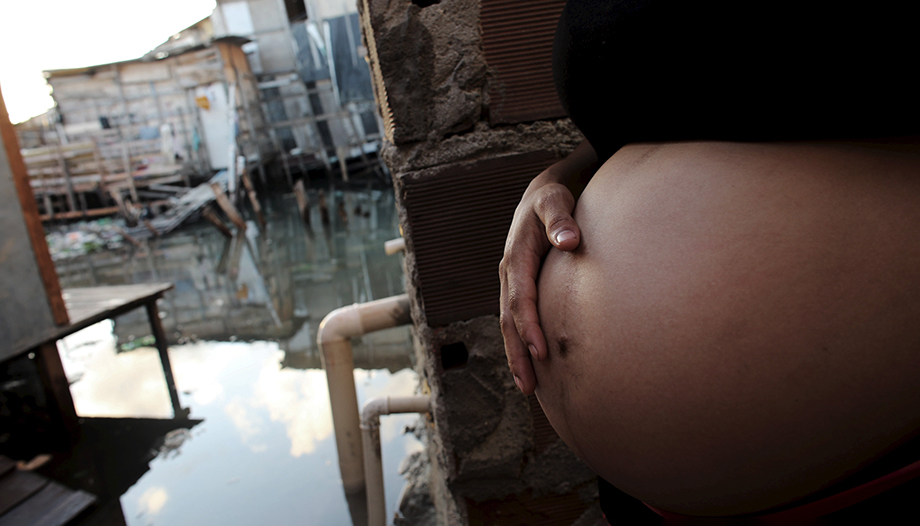
With the turn of the year and the closing of the Jubilee of Hope, it is time to look back with gratitude on the progress made in the defense of human dignity and on the path towards the universal abolition of surrogacy.

February 12, 2026-Reading time: < 1 minute

With the turn of the year and the end of the Jubilee of Hope, it is important to remember the progress made in the defense of human dignity and, in particular, in the cause of the universal abolition of the surrogacy market. 

First of all, it is worth remembering our beloved Pope Francis, who passed away in 2025, and who made an important “call for the international community to commit itself to a universal ban on this practice”and proclaimed a Jubilee Year of Hope, which constitutes an impulse in the defense of human dignity.

His prophetic call has been heard, as the year 2025 was marked by milestones in the cause of universal abolition: 

In June, the Third Casablanca Conference for the Universal Abolition of Surrogacy took place in Lima, Peru, focusing on the protection of Latin American women, with the participation of international experts.

In July, Reem Alsalem, UN Special Rapporteur on violence against women, released a landmark report declaring that all forms of surrogacy constitute violence against women and recommending the development of an international treaty to abolish this market. 

In September, Slovakia became the first country to ban the practice in its constitution. 

In November, the European Parliament, in its resolution on the Gender Equality Strategy, explicitly condemned surrogacy.

These important developments are hopeful signs that there is already a long way to go in the compelling cause of abolishing the surrogacy market.

The authorBernard Larraín

Gospel

Christ, the fullness of the Law. Sixth Sunday in Ordinary Time (A)

Vitus Ntube comments on the readings for the feast of the Sixth Sunday in Ordinary Time (A) corresponding to February 15, 2026.

Vitus Ntube-February 12, 2026-Reading time: 3 minutes

In this Sunday's liturgy we find Jesus seated on the chair on the mountain. We continue the reading of the same chapter of Matthew proclaimed in previous Sundays, the great “Sermon on the Mount”. After announcing the Beatitudes and revealing the identity and mission of Christians as the salt of the earth and light of the world, today we find our Lord speaking with the authority of the Lawgiver himself: “You have heard that it was said to those of old ... But I say to you.".

This decisive expression -“But I say to you” - reveals the authority with which Jesus teaches. He does not limit himself to interpreting the law; he is the law. He knows it from within and leads it to its true and definitive height. Jesus is the fulfillment of the law. In his own person, the law reaches its fullness.

The law given by God to the chosen people through Moses and the prophets was a sign of God's loving revelation, and fidelity to the law expressed Israel's fidelity to him. Obedience to the law was, at its deepest core, an act of love. Now Jesus declares that he himself is that to which the law and the prophets pointed. The relationship of love between God and his people is now definitively linked to the person of Christ.

From the beginning of the Sermon on the Mount, Jesus is clear: he did not come to abolish the law or the prophets, but to give fullness. What does this fullness mean, then? It is not a subtraction, but a plus; not a weakening of the law, but its deepening. Jesus leads us beyond mere external observance to an interior adherence of the heart. This is why he can say: “For I say unto you, Except your righteousness shall exceed the righteousness of the scribes and Pharisees, ye shall in no wise enter into the kingdom of heaven.”. This “more”is not a competition, but a call to a more radical conformity to Christ himself and to what is good. The Christian vocation goes beyond avoiding sin or doing only the minimum. We are called to a continuous growth in our relationship with Christ, to a deeper friendship with him, to an interior communion that transcends external observances. It is a joyful and positive affirmation of following Christ more closely.

In today's Gospel, the expression “but I say to you”.” is repeated several times, and on each occasion Jesus raises the level, exhorting us to reject sin at its root. This harmonizes with the conclusion of the first reading from the book of Sirach, which affirms that God does not incite anyone to sin: “God does not incite anyone to sin.“He compelled no one to be wicked, and gave no one permission to sin”. God desires our holiness and therefore clearly reveals to us what separates us from him. Avoiding sin is an act of fidelity, a grateful response to the love God has shown us. The Christian is called to reject every form of sin, even venial sins, and to strive to live the virtues in a heroic way. Every sin, no matter how small it may seem, is a form of infidelity to the love we have received.

Finally, Jesus reminds us that the Kingdom of God is at stake in our obedience to the law. Our relationship with the Lord, and indeed our eternal destiny, are implicated in what may seem like small things. Our actions in this life resonate into eternity. Not to identify ourselves with the Law-that is, with Christ Himself-is to choose separation from Him. Hence the gravity of Jesus“ words: "For I say unto you, Except your righteousness shall exceed the righteousness of the scribes and Pharisees, ye shall in no wise enter into the kingdom of heaven.”, and also: “it is better to lose a limb than to go to the gehenna”.

Fidelity to the commandments is fidelity to Christ himself. We are called to live this fidelity fully -inwardly and outwardly-, letting the law, fulfilled in Christ, shape our life and lead us to the Kingdom of heaven.

Read more
Spain

“Level Up!”, a video game to find out if you are ready for marriage

The Episcopal Conference is launching a free video game around February 14, Valentine's Day, based on the challenges and adventures of courtship.

Jose Maria Navalpotro-February 11, 2026-Reading time: 3 minutes

“Love, the most epic adventure” is the message launched by the Episcopal Conference in the “Marriage is more” campaign. And what better than a video game to show it. “Level Up!” is the audiovisual product produced by Artex Games, at the suggestion of the Episcopal Subcommission for the Family and Defense of Life, and is available -and free of charge- at the following address. matrimonioesmas.org/game. From next Friday the 13th, it will also be available on the web. matrimonioesmas.org.

“The Episcopal Conference creating a video game is crazy,” said Lía Jurado, an advertising student at the Pontifical University of Salamanca and a member of the creative team that developed the product. The “madness” is an initiative that came out of the classrooms of the advertising students of the Pontifical University of Salamanca, who were consulted.

It is intended to validate if the player is ready for a definitive love, for a full commitment. 

How it works

The video game, which works by touching the screen, proposes a journey that, through virtuous choices, validates the decision to make a definitive commitment to the couple. The protagonists are two normal young people, Fran and Elena, who experience various adventures, understood as everyday situations faced by a couple: the figure of the ex, the tribulations in a shared apartment, the traditions of families, how to cope with economic burdens... There are also couple virtues, presented as “Collectable Gifts”, obtained through different actions.

The story, which unfolds over seven levels, is conceived as a romance novel, rather than an action video game. And there are different endings (there may or may not be a wedding), depending on the decisions made by the player and his freedom, as in real life.

“Level up! The game of two” is presented around the date of St. Valentine's Day (February 14), in the context of the “Marriage is +” campaign of the Episcopal Conference. Taking advantage of this feast, all dioceses celebrate Marriage Week, in which multiple proposals are developed to show the beauty of Christian marriage. 

This is the fifth year of the campaign. The first one was “Marriage is more than you think”, followed by “Forever dates” (the most successful), “Forever match”, “Fill her heart, make it beat”. In this one, the title is very significant: “Level up! The game of two”. And the message: “Love, the most epic adventure”. 

The video game was professionally designed by Federico Peinado, from Narratech Laboratories, and executed by Artax Games. The idea came from Advertising students Lía Jurado, Eva Gangoso, Dana Sierra and Carolina González. 

The campaign wants to show the beauty of Christian marriage. Miguel Garrigós, of the Episcopal Conference's Subcommission for the Family and Life, stressed that “marriage is a treasure. We wanted to convey the idea that when something is worthwhile, one considers doing whatever it takes to overcome difficulties. We wanted the game to transmit this idea”. He also believes that the videogame “helps to understand what makes love grow”.

More proposals to follow

In addition, Garrigós explained that, at the end of the videogame, a link to the website www.matrimonioesmas.org with resources, proposals, links and the “marriage” app of the Episcopal Conference, with different initiatives of accompaniment. The campaign is not addressed primarily to those “already convinced” but aims to encourage couples who want a stable commitment to consider the option of a marriage in the Church.

Level up! The game of two will be presented at a public event at the Centro Príncipe Pío in Madrid on February 14, where attendees will be able to play online from 10:00 a.m. to 10:00 p.m.

The Vatican

Rome-Lourdes-Chiclayo, the axis of Our Lady's protection of the sick

The invocation of Pope Leo XIV to the Virgin of Lourdes in the Vatican Gardens, and the celebration at the Shrine of Our Lady of Peace, in Chiclayo (Peru), of the World Day of the Sick, presided over by Cardinal Michael Czerny, S.I., mark the petition for the sick and their families to the Virgin Mary this February 11, 2026.

Francisco Otamendi-February 11, 2026-Reading time: 4 minutes

Pope Leo XIV, with his appeal to the Virgin of Lourdes in the grotto of the Vatican Gardens this morning, after the General Audience. And the solemn celebration at the Shrine of Our Lady of Peace in Chiclayo (Peru), on the World Day of the Sick, will be the focus of the Church's prayers for the sick and their families on the 11th.

In the Audience Pope Leo XIV prayed for the sick and for all the Romans and pilgrims present in the Paul VI Hall, asking “that Our Lady of Lourdes, whom we celebrate today, may accompany you maternally, intercede for you before God and obtain for you the graces that will sustain you on your journey”.

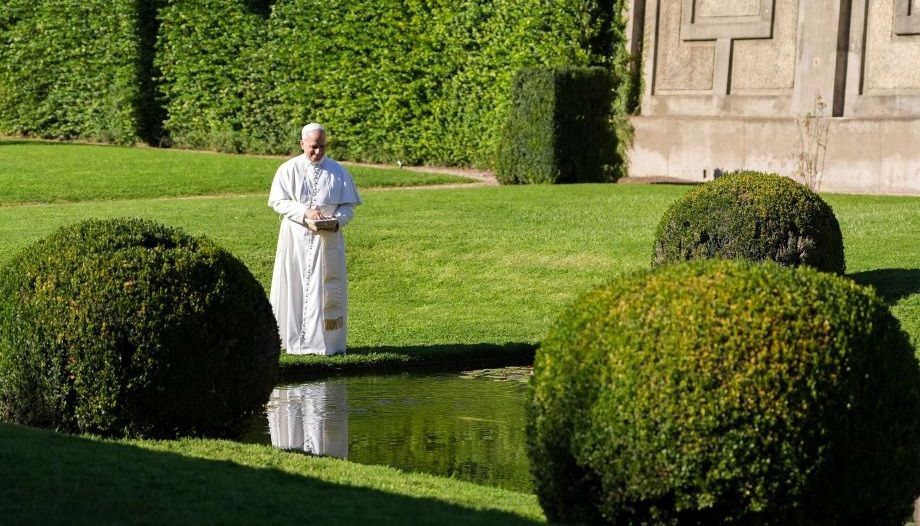
Afterwards, he announced: “At the end of the audience, I will go to the grotto of Lourdes in the Vatican Gardens and light a candle, a sign of my prayer for all the sick, whom today, World Day of the Sick, we remember with special affection”.

“I unite spiritually with all those gathered today in Chiclayo, Peru”.”

Addressing the Spanish-speaking pilgrims, one of the nine languages in which the Pope offers his Wednesday catechesis, Pope Leo said: “I unite myself spiritually with all those who are gathered today at Chiclayo, Peru, to solemnly celebrate the World Day of the Sick and I entrust all, especially the sick and their families, to the maternal protection of the Blessed Virgin Mary”.

At the same time, he commended” the victims and all those affected by the severe floods in Colombia, “while I urge the entire community to support the affected families with charity and prayer. May God bless you. Thank you very much.

Peru: sick people to offer “the pains of their lives” for peace

In the Letter sent by the Pontiff to the special envoy to Chiclayo, Cardinal Czerny, Prefect of the Dicastery for the Service of Integral Human Development, the Pope referred on January 21 to the “beloved land of Peru, whose faithful, guided by piety and love, confidently seek refuge under the protection of the Blessed Virgin Mary”. 

Leo XIV confided to the faithful that since twelve years ago, when “in the cathedral dedicated to Our Lady, Mother of God, we were elevated to the sacred order of the episcopate for the diocese of Chiclayo, so dear to us”, “we have unceasingly entrusted with solicitude to the Blessed Virgin not only our apostolic mission, but also the progress in the Christian faith of the holy people of God and, now in a special way, of the whole Church”.

“We humbly pray for them.”

And he formulated his request: “in special union of prayer with the Church throughout the world for all the sick faithful affected by illness, pathologies or pain, we humbly ask that they, supported by this maternal intercession, may want to offer all the discomforts of their lives to the merciful God, through Mary, for the peace of this world”.

“In fact, as St. Augustine rightly teaches, the human spirit is restless, and only in the ineffable charity of God and in its application to daily and spiritual life can it find true and lasting peace (cf. St. Augustine, Confessions, I, 1, 1).”.

Lent begins next Wednesday

In the Audience, addressing the English-speaking pilgrims, the Holy Father recalled that “next Wednesday, the 18th, the season of Lent begins. It is a time to deepen our knowledge and love of the Lord, to examine our hearts and our lives, and to refocus our gaze on Jesus and his love for us”.

“May these days of prayer, fasting and almsgiving,” he encouraged, “be a source of strength in our daily effort to take up our cross and follow Christ. Upon you and your families I invoke the joy and peace of our Lord Jesus Christ. God bless you!”.

From the Holy Land, Poles, Saints Cyril and Methodius, European Unity

The Pope greeted the “Arabic-speaking faithful, especially those coming from the Holy Land, from the school of the Sisters of Nazareth of Haifa”. And referring to the Poles, he said that “these days we remember Saints Cyril and Methodius, apostles of the Slavs and patrons of Europe, fathers of Christianity, of the language and culture of the Slavic peoples”.

“Let us return to his apostolic work - as St. John Paul II exhorted - in building a new unity of the European continent, to overcome tensions, divisions and religious and political antagonisms (cf. Slavorum Apostoli). My blessing to all!” he greeted.

In his words to the Italian-speaking people, the Pope greeted “the participants in the priestly formation course promoted by the Pontifical University of the Holy Cross, the parish of the Sacred Heart of Andria and the Community of the Resurrection of Rome”.

“Deep link between the Word of God and the Church”. Frequent reading of the Bible

In his catechesis, the Successor of Peter pointed out that “the Dogmatic Constitution Dei Verbum reflects on the profound bond that exists between the Word of God and the Church. The Bible has its origin in the People of God and is addressed to them; this means that its power and meaning are fully manifested in the life and faith of the Christian community”.

In this vein, after quoting Benedict XVI and St. Jerome, he said to the German-speaking pilgrims and faithful: “Dear German-speaking brothers and sisters, the Church has been entrusted with the mission of guarding and proclaiming the Word of God so that it may reach all people and nourish the lives of believers. Therefore, I invite you to read the Bible frequently in order to grow in the knowledge of Jesus Christ and to bear witness to the living Word of God with your life”.

Love and familiarity with the Holy Scriptures

Earlier in his address, the Pope had stated that “Christ is the living Word of the Father, the Word of God made flesh, our Savior. 

Therefore, all the faithful are called to approach the Sacred Scriptures with love and familiarity, especially in the celebration of the Eucharist and the other sacraments”.

Leo XIV concluded by affirming that “all the Scriptures proclaim his Person and his saving presence for all of us and for all humanity. Let us open our hearts and minds to accept this gift, following Mary, Mother of the Church.

The authorFrancisco Otamendi

Read more
The World

“Do not be afraid”: the message of the only Marist in Syria

Brother George Sabe leads a humanitarian and educational aid network in Aleppo that helps Christians and Muslims.

Javier García Herrería-February 11, 2026-Reading time: 3 minutes

Brother George Sabe is today the only Marist Brother stationed in Syria. From Aleppo, he coordinates a wide network of aid to Christians and Muslims through the Blue Marists. 

George Tabeé was born in Aleppo, Syria, and discovered his Marist vocation as a student at a Marist school in his hometown. Today he belongs to the Mediterranean Province of the Marist Brothers and his career has taken him to various countries of the Middle East and Africa, including a period in the Ivory Coast. He is currently visiting Spain to present the Manos Unidas campaign, which supports educational, development and social reconstruction projects in the country.

He speaks Arabic and French as his mother tongues and retains a fluent Spanish learned more than fifty years ago, when he made his novitiate in Spain. “I learned Spanish there and continue to practice it,” he explains with simplicity at 74 years of age.

In 2012, at the beginning of the war in Aleppo, he returned permanently to Syria. Since then he has been living and working in a city devastated by more than a decade of conflict.

The hand of God

Among the harshest memories of his mission, Brother George recounts the kidnapping of a father of a family in 2013. He himself negotiated with the armed group and brought the money for his release, directly confronting armed men.

At that moment, he recalls that “the words of Jesus came to him: ‘Do not be afraid. Days later, the kidnapped man was released. ’There we discovered that the Lord was present, accompanying and illuminating our decisions.”.

An experience that, like so many others, sustains his conviction that even in war it is possible to educate, accompany and sow hope. 

Blue Marists: a Church at the service of everyone

Currently, Brother George is part of the Blue Marists association, born in 2012 as a direct response to the war and the massive displacement of the population. The project has its roots in an earlier initiative, “Ear of God”, created in 1986 to support the poorest Christians in Aleppo.

With the outbreak of the conflict, the action was expanded and transformed. Today, the Blue Marists develop 14 active projects, centered on three fundamental axes: education, human development -especially for women- and emergency assistance.

“We are 160 volunteers,” he explains, “and we believe in a local Church at the service of the local population, Christian and Muslim.”.

The only Marist in Syria

George is currently the only Marist Brother present in Syria. “It takes speaking Arabic and accepting the reality of war,” he says. However, he stresses that he is not alone: a wide network of lay people trained in Marist spirituality supports the daily work.

Most of the projects serve both Christians and Muslims. Some educational programs even target 100% Muslim children, as an expression of a mission based on service rather than religious affiliation.

The support of Manos Unidas has been key to sustaining and expanding these projects. The NGO decided to enter Syria hand in hand with the Marists, financing educational initiatives, development programs for women and economic micro-projects.

“Education is essential to educate in peace, non-violence and respect for those who are different,” Brother George stresses. As for women's development, he stresses its transformative impact in a society where female identity is often defined in relation to others. “We believe that women have their own identity and capabilities.”.

The microprojects, promoted since 2014, seek to prepare the population for a peaceful future, allowing families to make a decent living from their own work.

Christians in Syria: respect, but open wounds

According to George, Christians are not a community persecuted by the current regime, which, despite its Islamist character, has shown respect for Christian life. “We celebrate the Eucharist, we live our faith normally,” he says.

The attacks that occasionally occur, he explains, come from groups linked to the Islamic State, not from the authorities. “What Christians are suffering is the same as what the entire Syrian population is suffering,” he sums up.

Read more
The Vatican

Elise Ann Allen: “Leo XIV is not a Francis II, he has his own style”.”

Elise Ann Allen was the first journalist to interview Leo XIV. Her work was collected in a book that was published worldwide. Omnes talks to her about the first months of his pontificate.

Giovanni Tridente-February 11, 2026-Reading time: 7 minutes

In the first months of his pontificate, Leo XIV has begun to outline his own style: continuity with Francis in social and pastoral priorities, but with a more collegial way of governing and an explicit desire for dialogue. To better understand the profile of the new pope - his roots, his global outlook and his ability to “build bridges” - Omnes talks with journalist Elise Ann Allen, one of the U.S. Vaticanists in Rome who conducted the first interview with Robert Prevost after his election.

His background also offers a particularly valuable perspective: to his knowledge of the Vatican he adds a direct familiarity with Peru, a decisive country in the biography of Pope Leo XIV. In this interview, Allen reviews gestures, priorities and challenges: from synodality and mission to peace, artificial intelligence, communication and the delicate chapter of abuse.

You were the first to interview Leo XIV after his election and to dedicate a book to him. When did you realize that you were no longer simply narrating a life, but that a pontificate was beginning to take shape?

-During the interview, when we began to talk about the period he spent and his work in Peru, it became clear to what extent that experience was decisive for his entire pastoral vision. It shaped him as a person, but above all as a priest, superior and bishop. His work with the poor, the many social projects he was involved in, the way the Augustinians structure their parishes, his way of relating to the local and national political leadership, and his perspective on Vatican II and liberation theology are all key insights that offer a unique look into his mentality and his instincts.

You are an American and have been a Vatican correspondent in Rome for years. What does your experience bring to understanding Leo XIV better than other analysts?

-It allows me to understand it. Like Pope Leo XIV, I am also an American and I know the Vatican, but I also know Peru from personal experience, prior to my work as a Vaticanist. That is why I know the three worlds of Robert Prevost, today Leo XIV, and I think that gives me a privileged perspective to interpret what he will say and do.

What elements of Prevost's roots-his family in Chicago, dual U.S.-Peruvian citizenship, his multicultural sensitivity, and recent findings about his African-American origins-help to understand the way he is Pope today?

-All of them. You can't take just one element and pretend to know and understand Leo XIV. He is a profoundly open person: open-minded, open to new ideas and perspectives, but also to new experiences and to the people around him, including new people he encounters. He has been - and continues to be - shaped by the people and cultures he has met throughout his life, including his childhood experiences of racism. Therefore, to understand him, it is essential to know his background and that fundamental openness.

In the portrait that emerges from your book, Leo XIV is often described as a “bridge-builder” and a “citizen of the world.” What gestures - even small but significant ones - seem to you to best reveal that attitude?

-I believe that his first appearance on the balcony of St. Peter's and his first words were the most eloquent signs. Even his mode of dress is, in a way, a “bridge”, because it combines the simplicity of Francis and, at the same time, recovers some elements of the Pope's traditional attire, which many associate with the Petrine ministry and which they regret to have seen disappear. He has also wanted to meet with figures perceived as very different from each other: for example, with Father James Martin, considered by some as “progressive” and close to the LGBTQ+ community, and also with Cardinal Raymond Burke, seen as “conservative” and favorable to the elimination of restrictions on the traditional Latin Mass. He wants to talk to all sides.

I also think that his meeting with King Charles III and their prayer together in the Sistine Chapel were particularly significant gestures in building ecumenical bridges, as were his trips to Turkey and Lebanon. 

The Holy Year that has just ended and the death of Pope Francis mark the beginning of the new pontificate. Where do you see the main continuities and where, on the other hand, do you see some new accents?

-Most of Leo XIV's priorities are in full continuity with those of Francis: attention to the poor, pastoral care of migrants and refugees, climate and criticism of inequalities. In our conversation he even spoke of the growing wage imbalance between employers and employees, which I believe will continue to be one of his flagships. The novelty will be above all in the style: Francis governed in a very direct way; Leo XIV, on the other hand, prefers to work as a team and collaborate closely with the cardinals and the curia.

In addition, new themes will emerge, such as attention to artificial intelligence and a new approach to Vatican finances. He is also very concerned about the family and polarization: he wants to heal divisions and will make unity a hallmark of his pontificate.

«Most of Leo XIV's priorities are in full continuity with those of Francis: attention to the poor, pastoral care of migrants and refugees, climate and criticism of inequalities...»

Elise Ann Allen

A first session of Leo XIV has already taken place. What is your reading of this meeting and the issues that were put on the table?

-It was a consistory designed to go deeper into various topics: Evangelii gaudium, The Pope left it to the cardinals themselves to choose two, and they opted for two. However, the Pope left it to the cardinals themselves to choose two, and they opted for Evangelii gaudium and along the synodal path.

To me it says a lot that they wanted to prioritize the missionary identity of the Church and a more collaborative, more listening and less clerical way of being Church. It also shows the distance between the media agenda and what really concerns the Catholic people.

And this consistory also shows the style of Leo XIV: it is not common to begin a pontificate by taking the magisterium of the predecessor as a guiding thread. Leo XIV has seen in Francis a great visionary and wants to continue that work. Many present him as a “Francis II”, but this is not so: he has his own style, although his agenda is in full continuity with Francis.

In your book, you deal bluntly with the chapter on abuse and the case of the diocese of Chiclayo. What do the Pope's words - the suffering for the slowness of justice and the desire for reform - reveal about his way of exercising authority and asking for forgiveness?

-His words show a wide experience in positions of authority and in dealing with the abuse crisis. He has dealt with such cases for almost his entire career: as a judge, as a superior and as a bishop, and later in Rome as a cardinal and prefect, also in sensitive situations involving bishops for abuse or cover-ups.

Leo XIV has listened to many victims and understands well what hurts them in these processes. That is why he insists on the importance not only of listening to, but of believing the victims. At the same time, as a canonist and judge, he knows that a judicial system must be objective and protect the rights of all parties: it is a difficult and slow balance.

Ukraine, Gaza, relations with Russia and Israel, dialogue with the Islamic world, ecumenism, the anniversary of Nicaea: what, in your opinion, is the “hallmark” of Leo XIV in the area of peace and dialogue, compared to his predecessors?

-We can say that the “hallmark” of Leo XIV, in this field, is precisely to build bridges and facilitate dialogue. This is not something new, but he will carry it forward with all the strength and energy at his disposal. He is not a man of polemics: he wants to reduce aggressiveness and bring a sense of calm, both in political rhetoric and in the field of arms.

Regarding Gaza and Ukraine, we have already seen that his position is perhaps somewhat clearer than Francis'. Already in our interview he said publicly - without expressing it directly - that what happened in Gaza was genocide. And he is meeting frequently with the Ukrainian authorities: he has met three times with President Zelenski since his election. So he is very involved and will always look for ways out that respect international law and avoid further escalation.

«Leo XIV is a very approachable communicator. He knows how to speak today's language with today's media... He expresses himself directly and clearly, and offers prudent but honest answers.»

Elise Ann Allen

The pope has linked his name to Leo XIII and to Rerum novarum, What vision of AI emerges from his language and priorities, and what contribution can this pontificate offer to the Church's social doctrine?

-The contribution that Leo XIV can offer is, above all, a search for balance. Already in his words - both in what he said to me and in his public speeches in recent months - he has spoken of human creativity and of all the possibilities that exist for doing good and helping humanity through artificial intelligence, but also of the many risks. Among them is the risk of forgetting our own humanity: that which distinguishes human beings from other creatures. But there is also the risk of losing sight of the truth. We live in an age of “fakes": fake news, The technology, false images, false content that is difficult to verify. And then there is the whole economic component: there are billions behind this technology, enriching a few while an increasing number of people live in poverty, with land and labor exploited by large companies dominated by the “1 %”, so to speak.

Leo XIV is a man who wants to foster human creativity, also in the field of technology, but in a just way that respects human dignity and in which people - especially the poor - are not forgotten.

You remember that Leo XIV, even before the election, was already using social networks, including WhatsApp. What kind of communicator does he seem to you and to what extent does this style influence your way of exercising the Petrine ministry?

-He is a very close communicator. He knows how to speak the language of today with today's media, even with a very competent use of the emojis in mobile applications. He expresses himself directly and clearly, and offers prudent but honest answers. He is a very capable person, very attentive to what is happening in the world, and someone who dialogues and knows how to dialogue with the world.

He knows where the people are and he knows how to be present there, with them. He wants to continue to promote that dialogue and, in fact, he is especially prepared to do so.

If I had to point out to the readers of Omnes a single scene from your book that best “tells” who Leo XIV is, which one would you choose and why?

-I would choose the moment in which Leo XIV relates his arrival in Peru for the first time, in 1985. That, for me, is the key to understanding him. He speaks of the culture shock of moving from Rome to Chulucanas in those years, of poverty and terrorism, of being sick with typhus and having to drive three hours to get to the nearest clinic. It was in those conditions - sick and suffering, in the midst of nothingness and extreme poverty - that he clearly understood God's call and decided to accept it without looking back. After his “yes” to the priesthood, that was his first “yes” to the mission: to a call from God that would take him to the whole world and, finally, to the See of Peter.

Evangelization

Alfonso Carrascosa: “Catholic women scientists have existed and do exist”.”

“Catholic women scientists have existed, exist and will continue to exist. Faith is not lost by doing research,” says Alfonso Carrascosa, author of ‘100 Spanish Catholics and Women Scientists’. The researcher reflects on forgotten female trajectories, the science and faith, and references that expand the historical account of science.

Eliana Fucili-February 11, 2026-Reading time: 4 minutes

On the occasion of the International Day of Women and Girls in Science, which is celebrated on February 11, we talked to Alfonso Carrascosa, author of ‘100 Spanish Catholics and Women Scientists’. With a PhD in Biological Sciences from the Complutense University of Madrid, and a scientist at the CSIC, Carrascosa considers that “Catholic women scientists have existed, exist and will continue to exist».

Alfonso Carrascosa began his professional career in the field of microbiology. Over time, his interest turned towards the history of science, where he has developed a unique line of research: the recovery and visibility of Spanish Catholic women scientists whose careers have been, in many cases, relegated to oblivion or narrated in a fragmentary way.

The researcher has now published the book 100 Spanish Catholics and scientists’The book brings together more than a hundred biographical sketches and highlights a central conviction of his work: that science and faith are not only compatible, but have coexisted fruitfully throughout contemporary history. 

In this interview, Carrascosa reflects on the reasons that led her to explore this field of study, the historiographical challenges involved and the importance of offering female references that integrate scientific vocation and believing life.

What inspired you to research and write about Spanish Catholic women scientists?

This topic has always been of deep interest to me. I realized that no one was addressing it in a systematic way, even though there are many women who clearly fit this profile. Making them visible makes it possible to demonstrate, with concrete facts, that science and the Catholic faith are not only compatible, but that they have coexisted and mutually enriched each other over time.

My goal has been to provide names, trajectories and contexts: practicing Catholic women who developed a first level scientific or teaching work, many of them in the university environment.

In ‘100 Spanish Catholics and Women Scientists’ you propose an unusual look at these trajectories. Where do you think the main novelty of your approach lies?

- The main novelty of the project lies in the articulation of these three dimensions: women, scientists and Catholics. These are not secondary features, but constitutive aspects of their life and professional trajectories. Until now, the religious dimension of these women had been largely ignored or directly eliminated from the historiographical narrative. In some cases, their spiritual life was completely unknown; in others, it was considered irrelevant to understanding their scientific work.

The objective is not to add an anecdotal fact, but to recover an essential dimension of their biographies. A history of science that systematically disregards the religious fact necessarily offers a partial and incomplete vision.

What have been the main challenges in researching these trajectories?

- Undoubtedly, to demonstrate their status as practicing Catholic believers. This is true for both women and men. Many people have avoided publicly manifesting their faith for fear of possible professional or academic consequences. Today, in many areas, expressing one's faith is a testimonial, almost martyr-like attitude.

Paradoxically, this silence reinforces the dominant secularist narrative that there are no Catholic women scientists. My work shows that this is false. In order to reconstruct these trajectories, interviews with family members, work in personal archives and consultation of unpublished documentation have been fundamental.

The CSIC features strongly in your research. Why is it a key area?

The Consejo Superior de Investigaciones Científicas marks the birth of the professional scientist in Spain. Between its foundation in 1939 and 1975, the female presence in its staff triples and exceeds 30% of the total. This is an objective fact that is hardly talked about.

Most significantly, the vast majority of these women were practicing Catholics. However, the idea persists that during that period science in Spain was paralyzed, which is false. The development of the CSIC demonstrates exactly the opposite.

What role does the Church play in the intellectual formation of these women?

- A decisive role in many cases. The book includes relevant groups of women scientists linked to ecclesial realities such as Opus Dei, the Catholic Association of Propagandists or the Teresian Sisters, founded by St. Pedro Poveda. These institutions offered many women spaces for high-level intellectual, academic and professional training.

An emblematic case is that of Ángeles Galino, the first university professor in contemporary Spain, who was a Teresian. Until I documented her trajectory, this fact was practically unknown.

How has the reception of your work been?

- Overall, very positive and, above all, surprising. Many people were unaware of the existence of so many women believers dedicated to scientific research. In academia and beyond, these biographies are valued as living examples of the compatibility between science and faith.

That is why I have a strong vocation for writing and publishing these portraits: I believe it is a way to enrich historical knowledge and to offer a more complete and honest narrative.

From your experience, how would you describe the relationship between science and faith?

- As a complementary and, in many cases, synergistic relationship. God lets himself be known through his works, and science seeks to describe and understand them. I have never seen a scientist lose faith because of research; on the contrary, in many cases research reinforces openness to transcendence.

The alleged incompatibility between science and the Catholic faith reflects rather the expansion of certain atheistic discourses, not a real contradiction between the two.

In closing, what advice would you give to young women scientists who wish to integrate their faith with their professional vocation?

- I would tell them not to be afraid. Catholic women scientists have existed, exist and will continue to exist. Faith is not lost by research; it can be a source of strength and meaning.

I would encourage them to rely on the ecclesial realities offered by the Church and not to hide, even in a simple way, that faith and science are compatible. This witness can be a great good for others and also for themselves.

The authorEliana Fucili

Center for Josemaría Escrivá Studies (CEJE) 
University of Navarra

The World

Catholic businessman Jimmy Lai sentenced to 20 years in prison in Hong Kong

Well-known media entrepreneur, pro-democracy advocate and Catholic, Jimmy Lai, whose arrest nearly six years ago sparked outrage around the world, has been sentenced to 20 years in prison.

OSV / Omnes-February 10, 2026-Reading time: 3 minutes

- Junno Arocho Esteves, OSV News

A Hong Kong court sentenced Catholic media entrepreneur Jimmy Lai to 20 years in prison on February 9 after finding him guilty of conspiring with foreign forces to endanger national security. 

It is believed to be the harshest sentence imposed under China's so-called national security law, which criminalizes secession, subversion, terrorism and collusion with foreign forces. 

Law used to silence dissent

The law has been criticized for its vagueness and its use to silence dissent, limit press freedom and prosecute opposition figures, such as Lai, who was convicted of sedition and two counts of conspiracy to reach agreements with foreign forces on December 15.

“Today is another dark day for justice,» Lai's family said in a statement released shortly after the sentence was handed down.

“Sentencing my father to this draconian prison sentence is devastating to our family and endangers his life,” said Lai's son Sebastian. “It means the total destruction of Hong Kong's legal system and the end of justice. After more than five years of relentless persecution of my father, it is time for China to do the right thing and release him before it is too late.”.

‘A heartbreakingly cruel sentence’

Lai's daughter Claire called the 20-year prison sentence «a heartbreakingly cruel sentence.».

I have seen my father's health deteriorate drastically and the conditions in which he is being held get worse and worse. If this sentence is carried out, he will die a martyr's death behind bars, he said.

Lai, a British citizen who founded the now defunct pro-democracy Apple Daily newspaper, campaigned in Hong Kong for press freedom and free speech for decades. Hong Kong was designated a Special Administrative Region of China in 1997, when British rule ended after more than 150 years. 

“High degree of autonomy” 

Hong Kong's Basic Law would supposedly allow the region to “exercise a high degree of autonomy and enjoy independent executive, legislative and judicial power, including final decision-making.”.

However, after a year of pro-democracy protests in 2019, China imposed the national security law, under which Lai was arrested in August 2020 and has been imprisoned since December 2020. 

Following the sentencing, UK Foreign Secretary Yvette Cooper said the 20-year prison term was “a life sentence in practice.” And she called his conviction “a politically motivated prosecution under a law that was imposed to silence China's critics.”.

An appeal to the Hong Kong authorities

“I once again call on the Hong Kong authorities to put an end to this ordeal and release him on humanitarian grounds, so that he can be reunited with his family,” Cooper wrote Feb. 9 in a statement posted on X.

British Prime Minister Keir Starmer, who visited China from January 28-31, was criticized for not doing enough to secure Lai's release. According to BBC News, the UK All Party Parliamentary Group on Arbitrary Detention and Hostage Issues issued a statement saying that the failure to secure the release of the British businessman had been “wasted by weak diplomacy.”.

“These opportunities will cost Jimmy Lai his life,” the statement said. 

Starmer raised Lai's case with Xi

However, Cooper said Starmer had raised Lai's case “directly with (Chinese President Xi Jinping) during his visit,” which had “opened up a discussion about our most acute concerns directly with the Chinese government at the highest level.”.

“Following today's ruling, we will quickly address Mr. Lai's case further,” he said. 

The sentence was also condemned by Amnesty International, calling it “another grim milestone in Hong Kong's transformation from a city governed by the rule of law to one governed by fear”. 

“With this sentence, we see once again how Hong Kong's National Security Law is being used to distort fundamental freedoms into criminal acts,” the human rights organization stated. “The imprisonment of Jimmy Lai is a vicious attack on freedom of expression that exemplifies the systematic dismantling of the rights that once defined Hong Kong.”.

—————–

Junno Arocho Esteves is an international correspondent for OSV News. Follow him at @jae_journalist.

This information has been published in OSV News, and can be viewed at here.

—————

The authorOSV / Omnes

Read more
Evangelization

The tilma of the Virgin of Guadalupe: the eyes and more unexplained issues

Since 1531, the story of the Virgin of Guadalupe and the indigenous Juan Diego has fascinated Catholics and non-Catholics, as well as researchers. The tilma or mantle on which the Virgin left her image imprinted has at least 9 facts inexplicable to science.

Francisco Otamendi-February 10, 2026-Reading time: 4 minutes

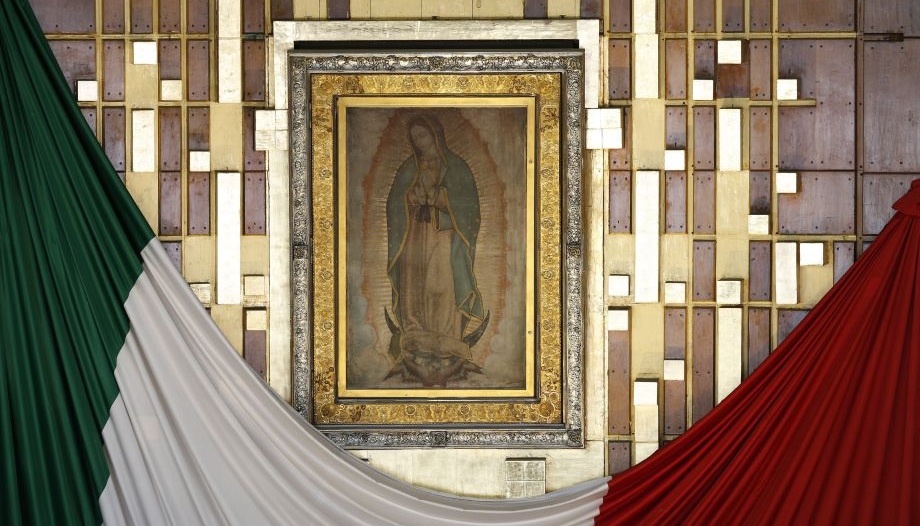
The Virgin Mary appeared on several occasions to the Indian Juan Diego Cuauhtlatoatzin on the hill of Tepeyac, today Mexico City. In one of her visits to the Franciscan bishop Fray Juan de Zumárraga, Our Lady left her image printed on the tilma de ayate, a thin fiber cloth, of the Indian Juan Diego. 

There are numerous facts, at least nine, that experts have concluded as scientifically inexplicable, when analyzing the ayate or tilma of the indigenous Juan Diego, with the printed image of Our Lady. These conclusions concern the tilma itself and, above all, the eyes of Our Lady.

These facts are mentioned below, as explained by Dr. Andres Brito in a documented exposition contained in a video of Nazareth TV, which you can see below. Due to its length, 1h.14’ 53”, a synthesis is included.

Photograph of an image of the tilma of Our Lady of Guadalupe, taken in 1994 (Lyricmac, Wikimedia commons).

Brief history

Before providing a summary, please see a brief synopsis of the well-known historical facts recalled by Dr. Andres Brito in the video.

According to the guadalupana tradition, In December 1531, the Virgin Mary appeared several times to the indigenous Juan Diego Cuauhtlatoatzin on the hill of Tepeyac. In these apparitions, the Virgin asked him to go to the bishop Fray Juan de Zumárraga to request the construction of a temple in that place, and to transmit his message of love. The bishop asked for a sign as proof of the authenticity of the message.

In the next apparition, our Blessed Mother Mary of Guadalupe instructed Juan Diego to cut roses of Castile that miraculously bloomed in Tepeyac -something impossible in that time, December, and place- and to take them to the bishop wrapped in his tilma. 

When he unfolded it before Fray Juan de Zumárraga, the flowers fell and the image of the Virgin Mary was printed in a prodigious way in the tilma Juan Diego, revealing his face and figure. Faced with this sign, the bishop believed and ordered the construction of the requested temple, giving rise to the deep devotion guadalupana in Mexico, in all America, and in the world.

9 conclusions in the light of science

“It gives the impression that the tilma is indestructible,” says the speaker. And that is where the first conclusions come from. In fact, he says, “the following is scientifically inexplicable”:

1. “That the ayate (the cloth, the tilma itself), has survived for 480 years., of which 116 were without any protection whatsoever.

2. “That the image has not deteriorated at all.”.

3. “That it resisted contact with nitric acid in 1795.”.

4. “That it remained intact after the explosive detonation of 1921.”. He survived a dynamite bombing that year.

5. “That the codices present in the tilma are a codex addressed to the Mesoamerican Indians of the 16th century. St. John Paul II called it “a perfect inculturation”.

“No known pigments”

6. “That there are no known pigments or the procedure by which the image was “impressed” onto a canvas on which there are no brushstrokes.

Dr. Richard Kuhn, Nobel laureate in chemistry, stated in 1938 that “no such pigments are known in nature on this planet. The pigments in the image are neither of animal origin, nor of vegetable origin, nor of mineral origin, nor of synthetic origin”.

Ophthalmologists

7. “That the eyes respond to the characteristics of a living human cornea.”.

8. “That there are 13 human figures in the corneal reflections only visible with contemporary technology, which excludes any possibility of chance or fraud.”.

Dr. Enrique Graue, ophthalmologist, rector of the Autonomous University of Mexico, “an authority on the subject, discovers that the eyes of the Virgin of Guadalupe reflect light exactly as a living human eye would (...) which is impossible in a painting made by a human hand”.

Since 1950, a score of well-known ophthalmologists have studied the eyes of the Virgin Mary in the tilma, and have confirmed their observations, says researcher Dr. Brito.

Dr. Rafael Torija, ophthalmologist, pointed out that the images appear reflected in both eyes, and that they “respect the Samson-Burkinje optical proportions” (in a living eye up to three images of what is in front of it can be reflected due to the curved surfaces of the cornea and crystalline lens). “It's not pareidolia, they are real images,” he adds.

Dr. José Aste Tonsmann: thirteen figures in the Virgin's eyes

“Where the incredulous definitely throw in the towel,” the speaker points out in the video (53’), is with Dr. José Aste Tonsmann, an engineer specializing in Computer Science at Cornell University, also a professor at the Universidad Iberoamericana de México, who died in 2024.

Dr. Tonsmann is the one who discovered thirteen tiny, almost microscopic figures in the eyes. To do this, he needed a computer to produce “one-mm-square grids in the corneas. 1,600 grids of 15 x 15 microns. to enlarge the image 2,500 times. And to capture two hundred shades of gray, as opposed to the 30 that the human eye captures” (57′ et seq.).

“Thirteen 8 mm figures, among them that of Fray Juan de Zumárraga, that of Fray Juan González, the interpreter who was at his side, that of the Indian Juan Diego himself unfolding the tilma, which can also be seen, that of a seated Indian...”.

The images are published in Dr. Tonsmann's book, the same figures in the right eye and in the left eye, respecting the Samson-Burkinje laws, and a family group, to complete the thirteen figures”.

9. (Also unexplained): “That the stars of the mantle show with mathematical precision the constellations visible on December 12, 1531”. This and other aspects can be consulted in the video.

St. Juan Diego Cuauhtlatoatzin, indigenous seer of the Virgin Mary of Guadalupe, was canonized by St. John Paul II on July 31, 2002 in the Basilica of Guadalupe in Mexico City. 

Tilma of Our Lady of Guadalupe, in the new Basilica (Karla T. Beltrán, Wikimedia commons).

The authorFrancisco Otamendi

Against anxiety, magnanimity

Anxiety can paralyze daily life, but faith, action and magnanimity show ways to regain peace and hope.

February 10, 2026-Reading time: 4 minutes

Carlos felt a tightness in his chest for fear of losing his job, such was his fear that he acted in such a way as to provoke his own dismissal. Magdalena imagined the worst scenarios if her husband was late in arriving; her mortification took her to the hospital thinking she was having a heart attack...after the crisis she returned home, she had experienced a panic attack. Jorge, a 13-year-old teenager, feared interacting with others, locking himself in his room most of the day. If he had to talk to anyone, his heart would flutter and he would be short of breath. He hated to feel this but could not control it, he lived in isolation. These scenes are repeated more and more every day. These are various manifestations of anxiety disorders which are the most common mental illness worldwide. Latin America reports that 7 % of its population suffers from it and only one in four people are receiving treatment.

Fear rules the mind and body

Anxiety is an adaptive response that our body uses to respond to threatening situations (real or imaginary), they are disproportionate responses, there is an excessive activation that comprehensively affects the life of the sufferer.

The anxious person is afraid of what will happen, imagines the worst possibilities and enters a loop of negative thoughts from which he/she experiences that he/she cannot get out. 

If you are suffering from anxiety there are some basic first aids that have to do with deep breathing, knowing how to stop negative thoughts by paying attention to the present moment (what I am hearing, seeing, smelling, feeling); a change of healthy habits (taking care of your sleep, doing some exercise every day, reducing alcohol and caffeine consumption, consuming omega 3...). Professional therapeutic care is of great help.

Faith, a firm rock in the face of anxiety

But all these efforts must be made on the bedrock of our faith, which is why it is advisable:

  • Increase your knowledge of God's Word, exemplary lives that inspire, and
  •  engage in a good cause worth giving your life for. 

No longer present in our belief system is a Good God who watches over our good. We do not read the scriptures that contain these words spoken by Jesus Christ: “Do not worry about your life, how you will feed yourself; do not worry about your body, how you will clothe yourself. Look at the birds of the air, knitting is not their occupation; nor did Solomon in his glory clothe himself with such beauty. Seek first the kingdom of God and his divine righteousness, and from his hand you will receive the rest besides.” (Mt.6:27-32).

The criteria of the world have drowned out the Divine Word and have taken away our peace. Where fear grows, there is no place for faith. Our confidence is placed in ourselves, and something is really lacking. It is not that a person of faith cannot suffer from anxiety, but when it comes, he knows how to give it its place, he questions it, confronts his fears with the Truth, and promptly frees himself. 

The saints with their lives remind us that the first activity of the believer is not the fight against evil from a negative attitude, but from a confident, creative and restorative attitude. In this way the believer, even if he suffers, builds peace and gives himself to a sacrificial path of continuous offering; only in this way can we free ourselves from the limits imposed by anxiety: by widening the heart.   

Magnanimity: the way to enlarge the heart

St. Thomas Aquinas made an excellent suggestion that today is supported by science. He said that anguish and anxiety make you feel small and lost. To change this and recognize your potential and value there is an attitude to develop.

The word “anxiety” comes from the Latin, anxietas, which means a state of agitation, restlessness or anxiety. It derives from the Indo-European root angh-ank, which carries the sense of tightness, pain or pressure (suffocation). This Latin root is associated with words such as angor and angus, while the word angustia also comes from Latin and means narrow, strait, difficult. 

Its opposite is the exit door!

To confront this paralyzing sensation, St. Thomas Aquinas proposed cultivating the magnanimity which is a broadening of the spirit, means that you can go out of yourself and give yourself to something great, that overcomes you and pushes you. To think of doing a greater good and to undertake it.

Martha's testimony

This is how Martha healed her anxiety. She was afraid of everything, that the child would fall, that she would damage the food, that there would be an accident if they used the car; if she was invited to collaborate with something she felt that she would not do it well, she constantly thought that others would see her in a bad light. She feared she might have thyroid or hormonal problems. She had check-ups that were fine but she doubted the results.

One day she met Almudena, a good friend from her youth who invited her to join a social cause: supporting pregnant and homeless women and defending unborn babies.

Martha accepted with fears included, but when she convinced a young mother to receive her baby, she felt her heart expand. She felt the joy of having saved a life, accompanied this young woman through her pregnancy and met the little baby girl who almost didn't make it. She felt she had done something valuable. During this time she had no time to feed her fears; she said to herself: this fear will not prevent me from doing good for someone else today. Magnanimity!

You are as big as the things you care about. Be victorious: look high, think noble, act brave!

The authorLupita Venegas

Read more
Integral ecology

In Peru, Father Ranera's poor people help the poorest of the poor

Father Miguel Ranera (Pastrana, Guadalajara, Spain, 1960) has done an enormous amount of work for the poor in different parts of Peru. From the “rescue” of “pirañitas” (lazy kids who stop in the streets to steal whatever they can), to schools, medical centers and housing for the poorest, through his NGO, Coprodeli.

P. Manuel Tamayo-February 10, 2026-Reading time: 4 minutes

Coprodeli, a non-profit, Christian-inspired NGO in Peru, whose name stands for Communion, Promotion, Development and Liberation, has been fighting poverty and social exclusion in Peru for decades, as well as in Ecuador, the United States and Spain.

But it does so with a peculiarity: it mobilizes many women and young people in situations of poverty, as volunteers. They are poor people who help the poorest, and parishes that become “communities in action” to solve the problems of their own people. It is “people helping people”.

It currently benefits more than 100,000 people per year, 60% of whom live in extreme poverty, mainly in the regions of Callao and Lima.

Poor people in one of Coprodeli's centers (@Coprodeli).

P. Miguel Ranera: from Alcalá de Henares to Callao, Peru.

Its promoter and president is Father Miguel Ranera, a Spaniard from Pastrana (Guadalajara), who was educated in a convent founded by St. Teresa of Jesus, led by Franciscan missionaries. At the age of 14 he went with his family to Alcalá de Henares (Madrid), and discovered his vocation after two years of formation and apostolate in the oratory of the “hospital of Antezana”, where St. Ignatius of Loyola had lived and developed his charity.

At the age of 17 he entered and was formed in a religious community. After finishing his ecclesiastical studies, he came to Peru in 1982 and was ordained a priest on July 23, 1983, incardinating himself in the diocese of Callao at the age of 23. In Callao he began his work in the poorest neighborhoods of the diocese. He formed a dining room, a small workshop, a kindergarten and little by little it grew.

Fr. Miguel Ranera and people from one of Coprodeli's centers (@Coprodeli).

In urban-marginal sectors and rural areas

The social work ended up going beyond the parish, and in 1989, he founded Coprodeli with people from the same parish, who were poor but wanted to help the poorest. The mission was, and is, to contribute to the integral development of the urban-marginal sectors and rural areas and to eliminate poverty and social exclusion in Peru and Ecuador. And to contribute to the integral development of marginal urban sectors and work for the right of people to a dignified life.

Miguel Ranera set up the NGO by mobilizing many women and young people as Christian-inspired volunteers who organize soup kitchens, distribute humanitarian aid and solve the problems of the excluded. The poor helping the poorest.

Rescuing “los pirañitas” in Lima

Fr. Miguel began to rescue the “pirañitas” (lazy kids who stop in the streets to steal whatever they can), from the center of Lima, to give them clothes, food and advice. Thus was born the first school of Coprodeli, the Agustín de Hipona, recognizing education as an engine for the integral development of people.

As time went by, the number of cooperators, who were American and Spanish volunteers, increased in order to make these aid initiatives viable. Now, Coprodeli has schools, medical centers and housing for the poorest. More than a thousand have been built in different urbanizations in Cañete, Chincha, Pisco and Ica.

Women in another center (@Coprodeli).

The Coprodeli school, Cristo Sacerdote, in Lurin, Peru.

The “Coprodeli, Cristo Sacerdote” school was founded in Lurin, in the province of Lima, 15 kilometers from the capital. The new school, classified as “privately managed public”, offers kindergarten, primary and secondary education. It has 14 classrooms, science laboratories, a library, dining room, chapel and sports fields, on land provided by the diocese of Lurin.

The project has been promoted by the Coprodeli Association, an entity that is part of a network of 30 charter schools in the south of Lima. This educational model, supported by an agreement between the Association and UGEL 01, seeks to guarantee accessible and quality education for the most vulnerable families.

P. Miguel Ranera (@Coprodeli).

Project in El Callao

On the other hand, in the province of Callao, the Project for the Construction of Classrooms was inaugurated at the San Juan Macías Private Public Educational Institution, located in the Ciudadela Pachacútec Settlement Center, district of Ventanilla, Callao. 

The work was carried out by the aforementioned association Communion, Promotion, Development and Liberation, within the framework of the Non-Reimbursable Financial Assistance Program for Community Projects for Human Security (APC).

The authorP. Manuel Tamayo

Peruvian priest

Read more
Vocations

Convivium: Madrid priests reflect on their mission in a day marked by fraternity

The presbyteral assembly Convivium brought together more than 1,000 priests from the diocese of Madrid for a day of reflection on their identity and mission.

Maria José Atienza-February 9, 2026-Reading time: 4 minutes

The Diocese of Madrid has about 2,500 incardinated priests. A large number of them, more than 1,200 were registered, gathered at the Fundación Pablo VI for the two key days of Convivium, the presbyteral assembly convened by the Archdiocese of Madrid, and that these days brings together the priests of the diocese to reflect on their identity and mission in the current context. 

The classroom of the Paul VI Foundation was not enough to accommodate the priests of Madrid gathered for the priestly assembly, who had to spread out in three rooms.

The key days of meetings began with a joint prayer, a video on Madrid accompanied by the voice of Joaquín Sabina, the singing of the hymn composed for this Assembly and the reading of the letter that Pope Leo XIV addressed the priests of Madrid on the occasion of this meeting. 

The Pope to the priests of Madrid: “No one should feel alone”.” 

The Pope appreciates, in this letter, He also pointed out that the priests that Madrid needs must be “men configured to Christ, capable of sustaining their ministry from a living relationship with Him”. 

“It is not a matter of inventing new models or redefining the identity we have received, but of re-proposing, with renewed intensity, the priesthood in its most authentic core - being alter Christus -, letting Him be the one who shapes our life”, the Pope emphasizes in this letter in which, taking as a model the Cathedral of Madrid, the Pontiff wanted to point out how “no one should feel alone in the exercise of the ministry” and encourage priests to confess and to drink from the Fountain that they must then give. 

The Pope also recalled the need for different charisms in the Church, “with the different charisms and spiritualities through which the Lord enriches and sustains your vocation. Each one receives a particular way of expressing the faith and nourishing interiority, but all remain oriented towards the same center,” which is Christ. 

Cardinal Cobo: “We are not Gospel snipers”.”

For his part, Cardinal Cobo gave St. Isidro Labrador as an example and also emphasized priestly fraternity, stressing that “the miracle that the Lord gives us today is not having to “plow alone’. 

“We also work in fields that we do not see flourishing, but we know that we are not snipers of the Gospel, but brothers in a diocese,” the prelate recalled. 

“Let us pray that this time may make us ‘more priests,’” the Archbishop of Madrid stressed in conclusion. 

Cardinal Bustillo: “A shepherd does not manage his flock, he loves it”.” 

Cardinal Francisco Javier Cardinal Bustillo OFMConv, Bishop of Ajaccio (Corsica), was in charge of the inaugural lecture “The situation of priests in the present time”. The Franciscan developed an interesting presentation structured around 5 phrases, some taken directly from the Gospel, to highlight the profile and challenges of the priest today.

The points developed have been: 

The priest is an authentic man

The priest cannot be artificial or superficial. He must be coherent with the Gospel. On this point, the Franciscan, giving as an example some literary titles, emphasized the need to ask oneself “Have I really lived? This question is important for us priests. We have a frenetic life, but does it fill us or empty us? We can fall into the tyranny of the social or ecclesial gaze. Act in order to be looked at”. 

God's word to Jonah: set out on your journey 

Cardinal Bustillo encouraged priests to take advantage of a time when “There are young people thirsting for better lives. Many lives need guidance. The world of faith is there in spite of everything, the Christian Faith is still alive and Christian spirituality helps man to emerge from emptiness and find meaning”. To this end, he appealed to the need for the “vitamin C of the priest: the energy of the Holy Spirit” and encouraged them to take care of joy and health to respond to the challenges of today. 

Feed them yourselves. We have only 5 loaves and 2 fish

This third point was perhaps the most extensive and profound of the talk given by the Bishop of Ajaccio, who repeatedly stressed that “the priest is a man of faith, not a manager”. The priest must be able to integrate changes and passages. Jesus always risks, he leaves the ‘we have always done it this way’.” In this sense, he advocated “to get out of an all too human conception of faith, often linked to tactics and statistics, and to develop a paschal mentality, capable of creating and believing in the opening of new passages.”. 

Priests, Bustillo reiterated, have to avoid three dangers 

Amnesia to forget the first love that was strengthened at his ordination. The priest does not receive these gifts to accumulate them but to share them.

TibiezaLukewarmness turns our life into a cemetery, it is the peace of cemeteries. Lukewarmness is the crisis of non-choice. 

AnemiaThe logic of gift, in vocation, leads us to imitate Jesus, who gave everything. The logic of gift, in vocation, leads us to imitate Jesus, who gave everything. Priests are there to give their lives, not a 20 %.

Peter, do you love me? Shepherd my sheep

On this fourth point, François-Xavier Bustillo emphasized that “we are priests to love, not for the organization. The priest is not a leader, he is a shepherd, a disciple of Jesus. Jesus raises the question of love, because love precedes the mission of leading the flock. From the primacy of love for the Lord flows the mission and not the other way around. The pastor is the opposite of a civil servant. A pastor does not manage his flock, even if he is efficient. He loves him. Within this primacy of love, the Bishop of Ajaccio stressed that ”priestly fraternity is the manifestation of this love“. 

I make all things new

Finally, Bishop Bustillo emphasized that “Jesus is a novelty for us. He says ‘You have heard,...but I say to you’, he proposes a new life to us”. In this line, “the Church has to make us dream, not cry. It is not a matter of erasing tradition but of enriching the life of the Church” and for this, “to live the priesthood with fidelity. In fidelity and joy there is always fruitfulness”.

The day continued with a series of group meetings and, in the afternoon, will continue with Focus groups on the topics proposed in the pre-assemblies, to which the priests will have signed up according to their preferences, followed by the Plenary and Holy Mass in the Almudena Cathedral. 

During the previous weeks, several working groups organized in 28 thematic groups have been held to discuss specific issues, such as:

  • The holiness and affectivity of the priest.
  • The care of elderly priests.
  • The challenges of migration and poverty in Madrid.
  • The exercise of authority and synodality.
  • The mental and relational health of pastors.
Evangelization

Arregui, a pastor with a vision of eternity and feet on the ground

Some pastors leave their mark not only for what they did, but also for how they lived their dedication. Antonio Arregui was one of them: a life of service to Ecuador for more than six decades, with the soul of a mystic and the determination of God's “007 agent”.

Juan Carlos Vasconez-February 9, 2026-Reading time: 3 minutes

More than 30 years ago, when I was just a student, a professor told me something that I never forgot: «I've never forgotten.«I know a bishop who looks like a super agent.«. When I met him personally shortly after graduating, I understood that this was not an exaggeration. Don Antonio Arregui possessed that rare and admirable blend of mystical depth and astonishing practical efficiency. I always thought of him as Agent 007.

His commitment was not improvised; it had deep roots. He asked for admission to the Opus Dei in 1957 and, after his ordination to the priesthood in 1964, he arrived in Ecuador in 1965, never to leave again. It was here that his vocation of service was forged in moments of surprising spiritual density. He spent 62 years serving the country.

In 1974, he experienced the paradox of faith when he received St. Josemaría in Ecuador: the immense joy of the encounter in the face of the weight of the pain caused by the Founder's health. Those were days in which the joy of having our Father was mixed with constant vigil, because the altitude sickness struck hard on his already tired body. It was a great teaching of how to serve in fragility.

Article content
Don Antonio accompanying St. Josemaría on his arrival in Quito together with Blessed Alvaro

We saw that same fidelity when he succeeded Bishop Juan Larrea as Vicar of Opus Dei in Ecuador, and later following in his footsteps as Bishop of Ibarra and Archbishop of Guayaquil. In spite of the difficulties -which were never lacking- he never lost his smile nor did he stop extending his hand to offer a detail, a word or a consolation to whoever needed it.

He followed in the footsteps of Bishop Juan Larrea Holguín.

Don Antonio was a builder in the broadest sense of the word. Thanks to his vision and his close relationship with the German Church and several international foundations, he managed the necessary resources to build numerous churches and finance emblematic projects such as the improvement of the Guayaquil Cathedral. But his legacy went far beyond stone: he gave a strong impetus to the management of the Diakonia Food Bank, the network of Redima health clinics and strengthened the educational network of Catholic schools, convinced that charity, health and education are the pillars on which human dignity is based.

He was, without a doubt, the great champion of the pro-life cause in our country. With a subtle intelligence and tireless perseverance, he dedicated himself to form leaders and defend the truth about marriage and the family. To his prudence and good arts we owe, to a great extent, that our Constitution maintains a pro-life essence. I remember how he insisted that I dedicate my time to get something done in this area, which, thank God, was achieved. consolidated some projects.

Article content
In 2008 with the pro-life movement

In the face of difficulties, he never gave in to discouragement; he continued to work in silence, with the peace of one who knows that he is doing God's will, to reverse the throwaway culture.

An impeccable man who cannot be implicated in any scandal.

Beyond his great management achievements, I prefer to remember him as the gentleman he was. I have witnessed his pastoral dedication in recent years. He attended to the scheduled activities with great care, and we rarely had to replace him.

I cherish with special affection the memory of his sharpness and his fine sense of humor, reflected in those witty and affectionate letters that he personally wrote to celebrate the birthday celebrations. In those small details we could see the man who knew how to love concretely.

I thank God for his life and because Bishop Antonio Arregui was a living reflection of the promise of the prophet Jeremiah in Jer 3:15: “Then I will give them shepherds after my own heart, who will guide them with knowledge and understanding”.

Thank you for so much, Don Antonio! Rest in the peace of the Lord and intercede for us, Agent 007.

Books

Bible for Zoquetes: when the Bible looks at you and says «you didn't think of this».»

Bible for Zoquetes 2 does not pretend to please everyone. It aims to provoke, to awaken questions and to restore to the Bible something that is sometimes lost: the capacity for wonder.

Javier García Herrería-February 9, 2026-Reading time: 4 minutes

Reading the Bible can be an awe-inspiring, enlightening... or downright intimidating experience. María Vallejo-Nágera does not intend to solve this dilemma with an academic treatise or a pious manual. Her proposal is something else: to provoke curiosity, to unsettle the reader and, if all goes well, to leave him or her wanting to go straight to the biblical text. Thus is born Bible for Zoquetes 2, the second installment of a series that is as unconventional as it is deliberately personal.

A series that is not at all neutral (and proud to be so).

In the last two years, Vallejo-Nágera has published the first two volumes of this series designed to teach people about the Bible and encourage them to read it, not to explain it exhaustively. This is not a typical popular essay, nor is it a catechism in disguise. Bible for Zoquetes is a narrative bet, with a very recognizable voice: casual, feminine, sharp, provocative and entertaining.

The author writes from a specific place: after two years of biblical study at Harvard and Comillas Pontifical University, and after teaching courses on biblical popularization, she decides to put in writing a part of what she has learned. The result does not aspire to completeness, but to impact.

Vallejo-Nágera explains that her path as a biblical communicator began almost spontaneously, when she was “so fascinated by the Bible” that she couldn't stop talking about it. “I devoured it,” she recalls, and she told all her friends about it until she thought: “this can't be”. So she decided to set up “a tiny little school”, with no academic or institutional pretensions, designed solely “for a small group of friends”. They were all Catholics, but, as she humorously acknowledges, “they didn't have a clue”, so she looked for an unexpected hook: art. “Since they love art, I began to explain the Bible to them in front of the paintings in the Prado”. Thus was born the «Escuelita Virgen de Guadalupe», a project that began informally and that, “nine years ago now”, became the germ of a different and very personal way of bringing the Bible to new readers.

Few core ideas and many surprises

And what do we find in the pages of the «Bible for Dummies 2»? A handful of key ideas and a shower of interesting curiosities. The goal is to surprise the reader: to discover details he had never noticed before and a veritable gallery of secondary characters with stories of all kinds - disturbing, funny, noble, miserable - that populate the biblical text and usually go unnoticed.

The author's eye for asking uncomfortable or unexpected questions is simply brilliant. Vallejo-Nágera looks right where many read too long... and wonders: Why does it happen this way? What is behind it?

If you connect with the style, you have a great time.

This point is key and should be stated bluntly: this book is not for everyone. And that's okay. Vallejo-Nágera's narrative style is very marked. If you connect with it, you will enjoy it a lot. If you don't, you'll put the book down after a few pages, but it's definitely worth giving it a chance and experiencing it firsthand.
There is no middle ground. It's like that brilliant friend who makes jokes all the time: either you laugh with him or you'd rather sit at another table. In my case, I enjoyed the book immensely, although I didn't connect with the graphic jokes the author intersperses in the narrative. But the whole thing works. And it works very well.

Stories that whet the biblical appetite

Bible for Zoquetes 2 is not intended to replace the reading of Scripture, but to whet the appetite. It already does so, for example, when it approaches the Jewish tradition of Lilith, The author's work is also interesting when he dwells on figures scarcely mentioned in the biblical text, but fundamental for its comprehension.

In several scenes, the author completes the biblical context with references to the particular revelations of Blessed Catherine Emmerich, which often shed surprising light on difficult passages. Particularly illuminating is her contribution to understanding the famous episode of the struggle between Jacob and God, a text as fascinating as it is puzzling.

Or when he presents Melchizedek, a character who appears in just one line of the Bible and yet is a key figure in the Jewish and Christian priestly tradition. Vallejo-Nágera explains why his figure is so relevant, «to the point where the Church ordains priests as «priest forever according to the rite of Melchizedek».

The recourse to Emmerich, used freely and without complexes, reinforces the personal character of the book: Vallejo-Nágera does not hide from where he looks or what traditions help him to read.

In this second volume, Vallejo-Nágera recognizes that she has “spilled her guts” with one of those “tiny” characters that appear in the Bible and before which the attentive reader is forced to stop in his tracks: «Wait, wait, wait... what did the text just say about this poor girl? It is about Dinah, »the little sister of the twelve tribes“, an almost forgotten figure whose story - marked by violence and silence - often goes unnoticed.

From “the small verses that speak of her, which are very few”, the author decided to “dig deep” to investigate what the Talmud said, to consult articles recommended by her professors and to reconstruct a story that she describes as “fascinating”. The result is a very complete chapter that restores Dinah's place in biblical history. The surprise came later, when Vallejo-Nágera discovered that Catalina Emmerich also mentioned her: “I was totally amazed,” she confesses, confirming that even the margins of the sacred text hide stories that ask to be read with different eyes.

Understanding the human heart without anachronisms

One of the book's greatest strengths is its ability to explore human nature as it appears in the Bible. Jealousy, revenge or resentment are familiar to us; not so much personal and family honor, a decisive category in the biblical world and deeply transformed in contemporary culture.

Far from projecting current sensibilities on ancient texts, this work does just the opposite: it strives to understand the characters in their context, without sweetening them or judging them from modern parameters. In that sense, the treatment of the human heart, especially that of women and their historical situation, is worked with intelligence and sensitivity.

Bible for Zoquetes 2 does not pretend to please everyone. It aims to provoke, to awaken questions and to restore to the Bible something that is sometimes lost: the capacity for wonder. If the reader enters the game, the journey is well worth it. And, hopefully, you will end up where the author wants to take you from the beginning: opening the Bible on your own.

Bible for Dummies 2

Author: María Vallejo-Nágera
Editorial: Word
Pages: 320
Year: 2025
Read more
The Vatican

Anti-Trafficking Day: “Peace begins with dignity,” Pope stresses

In the memory of santa Josefina Bakhita, Pope Leo XIV has recalled in the XII World Day of Prayer and Reflection against Human Trafficking, that “peace begins with dignity”. He also praised Blessed Valera as ‘an encouragement for priests’, and prayed for Nigeria, and for Italy, Morocco, Portugal and Andalusia (Spain), affected by floods.   

Editorial Staff Omnes-February 8, 2026-Reading time: 3 minutes

In an Angelus with numerous prayer intentions, the Pope focused on “rekindling joy with concrete gestures of openness and attention to others”. Then, he recalled the feast of the Sudanese nun saint Josephine Bakhita, The first time she was enslaved as a child, she reaffirmed that “peace begins with dignity”.

He also thanked “the nuns and all those who are committed to eliminating the current forms of slavery”. 

In its message for the XII World Day of Prayer and Reflection against Hunger and Poverty Human Trafficking, The Holy Father reaffirms the Catholic Church's commitment to combat this scourge. He also thanks those who serve with delicacy and consideration in approaching victims of trafficking, including international networks and organizations. “I strongly renew the Church's urgent call to confront and put an end to this grave crime against humanity.”. 

‘Cura Valera”: encouragement for priests, “to be faithful in daily life”.”

Along with this appeal, the Holy Father reported on the recently beatified Don Salvador Valera Parra, ‘priest Valera’, in Huércal-Overa (Almería, Spain), “a parish priest fully dedicated to his people, humble and solicitous in pastoral charity. May his example as a priest focused on the essentials be an encouragement to the priests of today, so that they may be faithful in daily life lived with simplicity and austerity”.

The Prefect of the Dicastery for the Causes of Saints, Cardinal Marcello Semeraro, said yesterday that the new Blessed, diocesan priest, archpriest and parish priest, in all circumstances, even the most risky, always stood by the weakest. «The sick, the poor and the needy who walked the streets and inhabited the houses of this land.”.

Pope Leo XIV prays the Angelus in St. Peter's Square at the Vatican, February 1, 2026. (Photo by OSV News/Matteo Pernaselci, Vatican Media).

Prayer for Nigeria, and solidarity with those affected by floods

“It is with pain and concern that I have learned of the attacks in Nigeria, which have caused great loss of human life. I express my prayerful closeness to all the victims of violence and terrorism. I hope that the competent authorities will continue to act with determination to ensure the safety and security of every citizen,” the Pope added.

The Pope also assured his prayers for the populations of Portugal, Morocco, Spain, in particular Grazalema in Andalusia, and southern Italy, especially in Niscemi (Sicily), affected by heavy floods. “I encourage the communities to remain united and in solidarity, with the maternal protection of the Virgin Mary,” he said.

“God never discards us”, “attention to others to rekindle joy”.”

After having proclaimed the Beatitudes, the Pope meditated today on the Àngelus on this message of Jesus: “You are the salt of the earth. [You are the light of the world» (Mt 5:13-14)”.

“It seems that Jesus warns those who listen to him not to renounce joy. The salt that has lost its taste, he says, ‘is no longer good for anything but to be thrown out and trodden underfoot by people’ (Mt 5:13).”.

The Successor of Peter said that “Jesus announces to us a God who never discards us, a Father who guards our name and our uniqueness”, and that “concrete gestures of openness and attention to others are what rekindle joy”.

Jesus himself was tempted, in the desert, by other ways, he stressed: to assert his identity, to show it off and to have the world at his feet. “But he rejects the ways in which he would have lost his true flavor, that which we find every Sunday in the breaking of the Bread: the life given, the love that makes no noise.”.

“Mary, Gate of Heaven”.”

“To Mary, Gate of Heaven,” the Pope concluded, “let us now direct our gaze and our prayer, that she may help us to be and remain disciples of her Son.”.

The authorEditorial Staff Omnes

Education

Alfonso Aguiló: “In education, perhaps there has been a lack of communion between charisms”.”

Alfonso Aguiló addresses some of the challenges facing Catholic schools today: the need to combine Christian identity with academic excellence, the authority of parents and teachers, overly protective regulations and the importance of public funding.

Javier García Herrería-February 8, 2026-Reading time: 4 minutes

We interviewed Alfonso Aguiló Pastrana, one of the most recognized voices in the educational field in Spain and abroad. He has dedicated a large part of his professional life to educational management, pedagogical reflection and the promotion of projects with a Christian identity. He has been director of the Tajamar School in Madrid and currently chairs the Arenales Educational Network, which brings together more than thirty centers in Europe, Africa and America, as well as the Spanish Confederation of Educational Centers (CECE), which represents approximately one third of the country's private and state-subsidized education. In addition, he advises educational institutions in dozens of countries and is the author of more than four hundred articles and a dozen books on education, society and anthropology.

From your experience as a manager, what would you say is the most difficult thing today in providing a truly Catholic education?

-It is difficult to make a general diagnosis, because different things happen to each project. But, globally, we see various scenarios. There are projects that are doing very well; others, on the other hand, have lost a lot of their Christian identity; others maintain it in the pastoral area, but less so in the basic issues; others the other way around; and others have lost almost all public manifestation of the faith.

In addition, there is another important problem: there are people with a very clear Christian identity but who are not good managers. There are also good managers with a weak Christian identity. The challenge is not to choose between one thing or the other, but the unity of all aspects. The Christian vision attends to the person and the school as a whole.

If I had to underline something today, I would say that the Catholic school should distinguish itself especially for its good formation in the use of reason and for its interest in all knowledge. There are moral problems, yes, but I think there are even greater problems related to the lack of rigorous thinking. If a person learns to think well and to be a good person, Christian identity finds a well-fertilized path for growth.

«Here there is a growing problem: a minority of very demanding families, protected by overly protective regulations, is generating a culture of distrust. The teacher feels unprotected, loses authority, and that deteriorates the personal encounter, which is the most valuable aspect of education.».

Alfonso Aguiló

You mentioned the intellectual and academic dimension. What other elements do you consider essential for a school to be truly Christian?

-The viability of the project is essential. If a family provides an excellent Christian education but mismanages its resources, something is wrong. The same is true of a school. Economic and organizational viability is also part of making the talents work. Christian identity does not consist in being a character out of reality, with very lofty speeches, but who then ruins the projects he directs.

I relate it very much to the parable of the talents. We have received talents and we are called to make them work: in the more strictly business management aspect -because a school is also a business- and in the aspect of identity, purpose and mission.

In your opinion, what is the key role that parents should play at school, and what problems or conflicts currently arise in the relationship between the family and the school?

-It is fundamental to achieve the protagonism of parents, in line with the magisterium of the Church: family and school must act in a coordinated manner. But sometimes this protagonism is confused with the government of the center.

In a good hospital, the patient and his family are at the center, but they are not the ones who diagnose, operate or manage. In the school, something similar happens: the family must be central in educational care, not necessarily in technical management.

Here there is a growing problem: a minority of very demanding families, protected by overly protective regulations, is generating a culture of distrust. The teacher feels unprotected, loses authority, and this deteriorates the personal encounter, which is the most valuable aspect of education.

This is not a problem in Catholic schools or in education in general; it also occurs in medicine and other professional fields.

Do you think the current regulations are influencing this situation?

-There is a tendency to protect -with all good intentions- the rights of the child, but with a collateral effect: the teacher feels legally too vulnerable. Without authority it is not possible to generate culture, and without culture there is no real education. School is not only the transmission of content -that is clearly a downward trend-. What is on the rise is the human community that is created, and this is affected by an excess of defensiveness.

I believe that it is necessary to revise certain regulations to give authority back to the teacher. Without authority, a healthy educational culture cannot be generated. I am not talking about eliminating norms, but adjusting them. All laws need revision; that is democracy.

In many countries, the idea seems to be growing that anyone who wants Catholic education should pay for it in full. What is your opinion on this matter?

-That idea is profoundly mistaken. In almost every country in the world there is public funding of private education because, after World War II, it was understood that in order to move away from the horrors of totalitarianism, more must be done to make society plural, and for that it needs plural education. And for access to it to be plural, it must be financed.

Only between 7 % and 10 % of the population can afford private education without public support. If there is no funding, there is no real freedom of choice. The State does not finance the Church: it finances families who want an educational project in accordance with their convictions. Not to do so would be discriminatory. Just as political parties or trade unions -private institutions that operate in the public sphere- are financed, it is natural that there should be private educational centers financed with public money that guarantee pluralism, freedom and democracy. To deny this is neither modern nor democratic; it is a step backwards in terms of rights.

«There is a tendency to protect - with all good intentions - the rights of the child, but with a collateral effect: the teacher feels legally too vulnerable.».

Alfonso Aguiló

In the United States there are organizations that evaluate the “catholicity” of universities and educational centers through qualitative analysis and objective data. Do you think something like this would help in other countries?

-I am in favor of metrics, because they help to complement impressions. But measuring who is “more Catholic” is risky. It would be like ranking who is a better person.

The criteria for “being Catholic” should not be set by a private entity, but by the Church, and I sincerely do not think it is in its interest to do so. What does seem reasonable to me is to analyze objective elements: presence of the sacraments, prayer, social action, quality as a human community, care for creation, etc. Then each family will give more weight to some or others according to its sensibility. This plurality is very healthy in the Church.

You are part of the General Council of the Church in Education of the Spanish Episcopal Conference. What fruit do you expect from this work?

-I believe that one of the most interesting fruits is to generate a culture of collaboration among the institutions. Historically, each charism has taken great care of its own, which is logical and very positive, but there has been a lack of communion between charisms. The Christian message of fraternity should also be manifested in greater institutional collaboration within the Church.

Evangelization

Nerea Castellanos after overcoming cancer: «the only thing that calmed me was to offer the suffering».»

The young woman from Alicante, Nerea Castellanos, faced a brain tumor the size of a tennis ball. She overcame cancer with optimism, a lot of faith and by the hand of her guardian angel.

Teresa Aguado Peña-February 7, 2026-Reading time: 5 minutes

For years, Nerea Castellanos (Alicante, 1995) lived with a tumor the size of a tennis ball without knowing it. What began in April 2023 as headaches, vomiting and vision problems - initially attributed to migraines and a cervical contracture - ended in a life-changing diagnosis: a grade 3 astrocytoma in the right frontal lobe of the brain. Despite two surgeries, radiotherapy and chemotherapy, Nerea says she shared her testimony at Instagram, Among other things, because I wanted to remember all that.

From the beginning she had a certainty that never left her: «I knew she was going to be cured». Indeed, in just nine months, on January 25, 2024, she received the good news: «there is no disease». The first thing she did was to pray before the tabernacle of the San Juan University Hospital. Today she looks back on all that and testifies to the faith that sustained her and the meaning of her suffering.

In this interview, Nerea tells us how she coped with her cancer. We can glimpse her optimism in small everyday gestures, such as the decision to dress up and dress in cheerful colors every time she went to the oncology department, a simple but firm way of facing an environment marked by sadness and suffering.

When you were told you had a brain tumor, what was the first shock like? What role did faith play?

He has had the whole role. As soon as I was told about it, I thought «what should I do now». Maybe without being aware of it, the Holy Spirit and the Lord were in me, because at no time was I worried.

People told me that my attitude was not normal. Now I am even more aware that this peace was a gift that the Lord gave me at that moment, and I have always been very positive and very cheerful. In fact, I was like the one who had to console everyone because I knew I was going to be cured.

Why did you decide to share your testimony in networks?

I was living so many things that I didn't want to forget anything: anecdotes from the hospital, my siblings coming from abroad to see me, deep conversations with my family... I made a second private Instagram account as a diary to keep everything there, but I never uploaded anything. I felt it didn't make sense to separate a “nice Instagram” from the real thing.

Deep down, the only thing that held me back was the fear that it would seem that I was looking for pity or attention. In the end I thought: «this is my reality, I want to keep it for myself and also share it in case someone else finds it useful or feels identified. And if it bothers anyone, they can always stop following me».

In fact, when I was diagnosed with the tumor I read the book by Elena Huelva, the girl who died of cancer. Her testimony helped me a lot, because I felt that, in a way, I was talking to her. No matter how much I talked to my friends or other people, it was not the same. She was describing trials, feelings and moments that I was also going through, and I felt very identified. Even if I couldn't talk directly to her, she was very much with me. So I thought that maybe I could also help someone by telling my story, especially because brain cancer, as was my case, is very scary, and it doesn't always have to end badly.

Have you seen fruits after sharing your testimony?

Yes, there have been some very special cases. One of them is a father I am very fond of. He contacted me because his one-year-old daughter had the same tumor as me. In fact, worse. And it had come to his attention when I told him that the only thing that gave me peace was to offer suffering. He wanted to understand this better.

She felt guilty, she thought her daughter's illness was a punishment from God and we talked about it. I finally got to meet them in person when they came to Alicante for treatment. I spent time with the child, playing with her, and it was a gift. To this day we still write to each other.

What was it for you to offer that suffering?

What I get the most out of everything that has happened to me is the offering of suffering. For me it was a revelation.

One day, after telling me that they had removed practically all the tumor, I had my mind set on going home. But, at the last minute, they told me that they had to give me an injection in my stomach. It may seem silly, but I had a panic attack: I felt that I could not go on any longer, that I had no strength for anything else. And to top it off, they explained that I would have to take it every day for at least fifteen days.

The next day I woke up in anguish, waiting for the moment when someone would come through the door to prick me. I cried, tried to distract myself with music or drawing, but nothing calmed me. Until something did click inside me and I thought: “I'm going to offer it”.

It was instantaneous. Suddenly the suffering made sense, it gave me peace. I understood that it was not in vain, that I could offer it for someone, for the Lord. And that changed everything.

Before the first operation, you were told that you could come out lifeless. How did you face the possibility of dying?

At that time I was alone with my father and we started talking about it. I said, “Dad, if I die, I'm not going to know. I'm not going to suffer, I'm going to be asleep.” Also, I explained to him that if I died, I would have reached the goal, the best place I can be, I would have reached heaven with the Lord and that I would be better off than here.

He understood what I was saying, even if it hurt. I knew they would suffer because of the human attachment we have, but for me it was a very real peace. I wasn't playing hard to get: I really felt it. Now I think it was the Holy Spirit sustaining me, because, if not, it cannot be explained.

Have you seen how this illness has strengthened your relationship with God?

Yes, now I am more aware of the trust I had in Him and the grace He gave me. I see His presence in my life and I am more grateful.

A few months before all this, I was already very strong in my faith. In fact, a friend even told me that it seemed that the Lord was preparing me for that moment. I am not overflowing with faith by any stretch of the imagination, but even then I felt very strong.

Other aspects were also strengthened, such as my relationship with my guardian angel. Before the operation, a priest suggested to my father that I talk a lot with my angel and the guardian angels in the operating room, and I did. Since then I am much more aware of him and talk to him many times a day.

What place has Our Lady occupied in this process?

I slept every night in the hospital with my rosary rolled up in my hand. After all, she is my mother, literally.

Every day my earth mother slept with me and held my hand; she almost always stayed with me. On the day of the operation, however, I had to spend the night in resuscitation and I could not go in there.

That night I really felt that Our Lady was with me, as if she was holding my hand. I couldn't see well or use my cell phone, but I managed to put on music and spent the whole night listening to Am I not here, who am your mother? of Athens and Quiet by Luis Po. I didn't sleep at all, but those songs sustained me, especially the one about the Virgin, which says something like: “I am here, I am your mother, don't be afraid”.

After receiving the news that there is no illness, what do you feel God is asking of you?

I'm still figuring that out. But I felt very clear that I wanted to do something that would really help, both at work and personally. I had a lot of uncertainty, but also the conviction that the Lord had saved me because he had a plan for me. I kept asking him, “Lord, what do you want from me?.

Eventually he gave me the job where I am now, in a foundation for people with mental health problems, where I am very happy. There I also met my partner, whom I will marry next year, and I live it as a gift from God.

I feel that He has saved me for this plan and that I will continue to discover more things, but it is clear to me that I cannot stop talking about Him and trying to help and be His instrument.

Family

Forgiveness in a couple: what psychology reveals about trusting again

A study published in a scientific journal Q1 (Scopus) validates in Spain a key tool to measure forgiveness in couples. The research dismantles myths and shows that forgiveness is an inner, free and complex process.

Javier García Herrería-February 7, 2026-Reading time: 3 minutes

Forgiveness is neither forgetting nor automatic reconciliation, but an inner, complex and deeply human process. This is demonstrated by recent research led by psychologist Agata Kasprzak and Maria Pilar Martinez-Diaz, which has just been published in Journal of Marital and Family Therapy, a scientific journal of international reference in family and couple therapy.

The study validates in the Spanish population the Marital Offense-Specific Forgiveness Scale (MOFS), an international instrument that allows rigorous measurement of how people deal with forgiveness after a specific offense within a couple's relationship. The work has been carried out by researchers from the Universidad Francisco de Vitoria and the Universidad Pontificia Comillas, and represents a relevant advance for both psychological research and clinical practice.

Measuring forgiveness to better understand it

Far from reducing forgiveness to a superficial attitude or a well-intentioned formula, the validated scale makes it possible to analyze it as a profound motivational change. As Agata Kasprzak explains, “from psychology we understand forgiveness as a change in motivation towards the other: when there is forgiveness, avoidance, resentment and the desire for revenge decrease, and a different disposition towards encounter and reparation may appear”.

The tool assesses two major dimensions. On the one hand, avoidance and resentment, which reflect the tendency to withdraw emotionally, ruminate on the damage or keep the wound alive. On the other, benevolence, understood not as naivety or justification of what happened, but as “an internal willingness to look at the other without hostility, once the wound has been recognized and elaborated”.

Forgiveness is not forgetting or denying the damage

One of the main contributions of the research is to help dismantle simplistic ideas about forgiveness, which are widespread in society. “Forgiveness is not forgetting what has happened, or pretending it never happened, or automatically reconciling,” Kasprzak stresses. “Forgiveness is first and foremost a free response to the harm. It does not stem from the event itself, but from the position I take in the face of what has happened to me.”.

In this sense, the psychologist insists that forgiveness does not imply minimizing the wound: “Forgiveness does not mean denying the pain, but recognizing it without letting the wound define me. For this reason, she adds, forgiveness can occur even when the relationship does not continue: ”It is an inner act. I can forgive even when there is no reconciliation“.

A slow, cumbersome and unenforceable process

The research, supported by years of clinical work with couples, highlights that forgiveness is a long and sometimes uncomfortable process. “It's a very complex human experience,” Kasprzak explains. Against the idea that time heals everything, he warns: “Time can alleviate the intensity of the pain, but it does not replace the process of forgiveness, which is only possible from the freedom of the one who has been hurt”.

For this reason, he stresses, forgiveness cannot be demanded. “Forgiveness always belongs to the freedom of the one who has been hurt; that is why it cannot be claimed as a right, but received as a gift”. In many cases, when relationships become blocked in dynamics of silence, distance or mutual reproach, the intervention of a third party, such as a therapist, can be key to unblock the process.

Scientific rigor and clinical application

The study was conducted with more than 700 people in stable relationships, who were asked to recall a specific offense and to respond to the items of the scale based on that actual experience. In addition to statistically validating the instrument in Spain, the researchers tested its equivalence with U.S. samples, allowing international comparisons of results.

Publication in a Q1 journal (Scopus) reinforces the scientific value of the work and its impact on the field of couple psychology. But, beyond the academic indicators, the study offers a fundamental contribution: to help to better understand what forgiveness is - and what it is not - and why it is so decisive for the health of human bonds.

As Kasprzak concludes, “Forgiveness is not submission or naivety; it is an active process that allows me to decide what I do with what happened to me and how I want to continue living.

The Vatican

Pope to formators: “without sacraments there is no Christian life”.”

Pope Leo XIV said in the plenary session of the Dicastery for the Laity, the Family and Life that the formator is more “father” than “pedagogue”: “to beget in faith” is “to share what we live, with generosity, sincere love for souls”. With Benedict XVI, he said that “without sacraments there is no Christian life”.

Editorial Staff Omnes-February 6, 2026-Reading time: 4 minutes

Leo XIV reflected this morning on Christian formation, following a theme dear to St. Paul, he recalled. At the plenary session of the Dicastery for the Laity, the Family and Life, likened the task of the formator more to that of “a father capable of engendering in the faith” than that of a “pedagogue”. And he conveyed with Benedict XVI that “without sacraments there is no Christian life”.

After quoting St. Paul, the Successor of Peter recalled that “after the Resurrection, Jesus entrusted the missionary mandate to the Apostles, telling them to ‘make disciples of all nations,’ to ‘baptize them’ and to ‘teach them to observe his commandments’ (cf. Mt 28:19-20).”.

“Baptism and Sacraments, or their rediscovery.”

“I remember these expressions,” he stressed, “because in them we find summarized other fundamental elements of the formator's mission, which I would also like to emphasize.”.

“First of all, the need to favor constant, involving and personal life itineraries that lead to Baptism and the Sacraments, or to their rediscovery, because without them there is no Christian life (cf. Benedict XVI, Apostolic Exhortation Sacramentum Caritatis, February 22, 2007, 6).”.

“Our mission is higher: as parents who sacrifice for the sake of their children.”

In the Church, at times, the figure of the formator as ‘pedagogue’, committed to the transmission of instructions and religious skills, has prevailed over that of the ‘father’ capable of engendering in the faith, the Pope recalled.

However, “our mission is much higher, so we cannot limit ourselves to transmitting a doctrine, an observance, an ethic, but we are called to share what we live, with generosity, sincere love for souls, willingness to suffer for others, unreserved dedication, like parents who sacrifice themselves for the good of their children”.

St. Paul: “it is I who have begotten you in Christ Jesus”.”

The Pontiff pointed out at the beginning some well-known words of St. Paul to the Corinthians that guided his brief address.

“This is a theme dear to the Apostle and present in several passages of his letters. For example, when he addresses the Corinthians and says: ‘You may have ten thousand pedagogues in Christ, but certainly not many fathers: it is I who have begotten you in Christ Jesus through the Gospel’ (1 Cor 4:15).”.

The Apostle addresses the Galatians and calls them ‘my children’, referring to the ‘childbirth’ with which, not without suffering, he led them to welcome Christ, the Pope meditated.

“Formation is thus placed under the sign of ‘generation,’ of ‘giving life,’ of ‘giving birth,’ in a dynamic that, although painful, leads the disciple to vital union with the very person of the Savior, living and acting in him or her, capable of transforming ‘life in the flesh’ (cf. Rom 7:5) into ‘Christ's life in us’ (cf. 2 Cor 13:5; Gal 2:20).”.

“Respect for human life in all its stages”, and prevention of “all forms of abuse”.” 

The Pope went on to exhort, in an “indispensable” way, to “take care in our communities of the formative aspects oriented towards respect for human life in all its stages, in particular those that contribute to preventing all forms of abuse against minors and vulnerable persons, as well as to accompany and support the victims”.

He also referred to the community dimension. “Just as human life is transmitted thanks to the love of a man and a woman, so too Christian life is transmitted by the love of a community. It is not the priest alone, nor a catechist or a charismatic leader, who engenders in the faith, but the Church (cf. Francis, Apostolic Exhortation Evangelii Gaudium, 24 November 2013, 111).”.

It is about “the Church united, alive, made up of families, young people, singles, consecrated people, animated by charity and, therefore, eager to be fruitful, to transmit to all, and especially to the new generations, the joy and fullness of meaning that it lives and experiences”. 

“The art of training is not easy and is not improvised.”

This is how Leo XIV expressed himself at the Assembly of the Dicastery for the Laity, the Family and Life, whose Prefect is the Cardinal Kevin Farrell.The art of formation requires patience, listening, accompaniment and verification, both on a personal and community level, and cannot do without the experience and company of those who have lived it, in order to learn and take an example”. 

Thus, over the centuries, “giants of the spirit such as St. Ignatius of Loyola, St. Philip Neri, St. Joseph Calasanz, St. Gaspar del Bufalo and St. John Leonardi have emerged. And it is in this perspective that also St. Augustine, recently elected bishop, composed his treatise ‘De catechizandis rudibus’, whose indications continue to be useful and valuable to this day”.

Pope Leo XIV kneels in prayer in the Church of San Pellegrino at the Vatican, in a video released Feb. 5, 2026, by the Pope's Worldwide Prayer Network, for his February prayer intention: for children with incurable diseases. (Screenshot from OSV News/Pope's Worldwide Prayer Network).

World meetings

At the beginning of his speech, the Pope had mentioned the World Encounters, which “involve a large number of participants and require complex organizational work, in listening and collaboration with local communities and with people and organizations, many of whom have long and valuable experience in evangelization”.

“You must not be discouraged.”

In concluding, the Pope acknowledged that “the challenges you face at times may seem beyond your strength and resources. But you should not be discouraged.

Start small, following, in faith, the Gospel logic of the ‘mustard seed’ (cf. Mt 13:31-32), confident that the Lord will never let you lack, at the right time, the necessary energy, people and graces. 

And “look to Mary: in giving us Christ, ‘she has cooperated through love to engender the Church of the faithful, who form the members of that head»” (St. Augustine, De sancta virginitate 6, 6). Imitate her faith and always trust in her intercession".

The authorEditorial Staff Omnes

Read more
ColumnistsMaría Paz Montero

«At least read!»: The dangerous mirage of the juvenile erotic novel.

As a society we have recognized the harm that pornography can cause; let us not now ignore its printed version, disguised as sensitivity.

February 6, 2026-Reading time: 3 minutes

For years, educators, psychologists and families have been warning about the massive consumption of pornography among adolescents. We know -because studies confirm it- that exposure begins earlier and earlier, that it affects the perception of the body and distorts the understanding of consent. That concern is legitimate. But as we look to that shore, another phenomenon has been quietly growing that deserves the same attention: the popularization of erotic novels disseminated through social networks, book clubs and platforms such as BookTok.

Today, it is enough to go into any bookstore to see for yourself. The “juvenile” section is flooded with covers with warnings of spicy, and labels that classify the level of explicit content. Sometimes they are works of fiction for young people; others are clearly aimed at adults, but massively acquired by adolescents. In almost all of them, the plots revolve around hypersexualized bonds, normalized jealousies and a dependency presented as the ideal of romantic love.

This editorial turn is not random. It responds to the explosion of communities on TikTok, where the hashtag #BookTok has transformed algorithms into the most powerful showcases of the decade. Under tags such as Dark Romance o Romantasy, titles that until recently would have inhabited adult niches now lead the global sales rankings. In Chile, it is enough to observe the prominence of these works in fairs and large chains: luxury editions with painted edges and irresistible aesthetics designed to capture the collecting desire of a generation that, paradoxically, consumes fantasies of possession and emotional violence under a cotton candy appearance.

And here a disturbing ingredient appears: the naivety -or resignation- of some parents. While their children devour bulky books, they sigh with relief: at least they are not in front of a screen. They ask few questions and check less. Sometimes they don't want to know. But reading is not an absolute good in itself: content matters and how it shapes a child's affective imagination.

This is not to demonize literature; the written word has the power to open worlds and heal wounds. However, books educate -even unintentionally- and the mass consumption of certain narratives shapes the idea of desire and bonding. When an adolescent girl reads, over and over again, stories where loving means losing herself in the other or justifying any excess in the name of physical attraction, the message is not neutral. She will learn, by osmosis, that love absorbs and controls.

Contemporary erotic narrative does not only eroticize: it also pedagogizes. It teaches what is acceptable in a couple and what can be demanded or tolerated. For many young people with no real experience, these works function as emotional manuals. And if the models are toxic, the print will be too. Some will say that “they are just fictions,” the same as is often argued about pornography. However, both build unrealistic expectations. When sexuality appears without human context, the boundaries of consent become blurred: what in reality would be aggression, on paper is celebrated as “irresistible passion”.

And in the midst of this phenomenon, the publishing industry has found a vein of gold.: the boundary of “fit” while making up the content as "fit". women empowerment. Relationships of control, asymmetrical power or emotional dependence are packaged under the discourse of freedom and self-desire. But if empowerment consists of enduring harm in the name of love, we are confusing something serious. The market sells an affective education of very low ethical cost and very high emotional profitability.

We cannot leave all the responsibility on the child's judgment or on the weary eye of the parent. When a plot that contains dynamics of abuse and romanticized dysfunctional relationships is labeled as juvenile, sales are prioritized over the protection of emotional development. And the result is that many adolescents are receiving, without adult mediation, a “sex education” that is not recognized as such..

What to do? Prohibition is not enough; the clandestine always attracts. What we need is conversation and emotional literacy. Just as we ask for comprehensive sex education, we also need a critical look at cultural consumption. To read with them, to ask: is this love or control? Where does respect appear? What image of the body and of women is transmitted?

As a society we have recognized the harm that pornography can cause; let us not now ignore its printed version, disguised as sensitivity. It is not enough to celebrate our children turning the pages: the real challenge is to help them read with lucidity so that they do not confuse a heart on fire with a bond that consumes them. Because to love is not to possess, nor to annul oneself, and no novel -no matter how successful it may be- should teach us otherwise.

The authorMaría Paz Montero

Journalist and Language and Literature teacher. She combines her teaching work -in high school and university- with cultural dissemination, reading and writing projects.

Ten little-heard ideas from the Social Doctrine of the Church

It is time for the ecclesial narrative to recover the totality of its doctrinal treasure. A Church that repeats only the slogans of the world runs the risk of ceasing to be salt of the earth and becoming an irrelevant echo.

February 6, 2026-Reading time: 3 minutes

In contemporary ecclesial discourse, a certain partial vision of the Social Doctrine of the Church (SDC) seems to have taken root: some of its principles are insistently emphasized while others, equally binding, are relegated to silence. Recovering them does not mean “ideologizing” the faith, but rather restoring its balance and internal coherence, indispensable for an honest analysis of social reality.

In the following, I propose ten fundamental ideas, firmly anchored in the Magisterium, which today rarely occupy a central place in the ecclesial debate.

1. Sovereignty and order in borders

Christian charity is universal, but the right to immigration is not absolute. The Catechism of the Catholic Church (n. 2241) reminds us that civil authorities can regulate this right for the common good of the host country. Order is not the enemy of acceptance; it is its condition of possibility. Helping the needy also requires recognizing the real difficulties of these processes and proposing responsible solutions that avoid counterproductive effects.

2. The right not to emigrate

The focus is often placed almost exclusively on the country of destination, while the responsibility of the governments of origin is ignored. True social justice means creating dignified conditions so that no one is forced to flee. As African bishops have denounced, encouraging the departure of the best educated people is a serious harm to poor countries and a disguised form of plunder.

3. Commutative justice as the basis of social justice.

To speak of social justice without insisting on commutative justice - honoring contracts, paying what is due, respecting agreements - is to build on sand. Without honesty in exchanges, no social peace is possible. Claiming debt cancellation without demanding reforms, responsibilities and structural improvements may condemn poor countries to future financial exclusion.

4. The immorality of structural public debt

The permanent indebtedness of the State to sustain present welfare is a heavy burden for future generations. The DSI reminds us that the financial system must be at the service of the person; mortgaging tomorrow to pay for today violates intergenerational justice and erodes political responsibility.

5. Demand and merit in education

Authentic education fosters personal responsibility and effort. Academic facism, which is increasingly widespread, impoverishes students, weakens their character and limits their ability to contribute their talents to the common good.

6. Entrepreneurship as a vocation

The figure of the entrepreneur and economic initiative are often viewed with suspicion in ecclesial discourse. However, creating wealth and employment is not greed, but a legitimate expression of human intelligence and freedom. Entrepreneurship strengthens the self-esteem of the worker and sustains the social fabric.

7. Criticism of the welfare state

The Social Doctrine of the Church clearly defends the principle of subsidiarity. A State that invades all spheres ends up annulling social initiative and turns the citizen into a dependent client of power, weakening community responsibility.

Work ethics

The Church is not only a defender of labor or union rights; she is also a defender of a job well done. Laziness, unjustified absenteeism, abuse of social benefits or lack of professionalism are as much a threat to the common good as exploitation of the worker.

9. Political identity without complexes

The participation of the laity in public life does not consist in diluting the faith in the dominant consensus. The political commitment of Catholics must be recognizable in the defense of life, the family and educational freedom, without any reduction or complexes.

10. Ecology with truth

In the face of catastrophist discourses that absolutize nature, the Church proposes an integral human ecology. Benedict XVI warned that the person cannot be subordinated to the environment and that ecological concern must be based on reason, not on ideological exaggerations that hinder the legitimate development of peoples.

It is time for the ecclesial narrative to recover the totality of its doctrinal treasure. A Church that repeats only the slogans of the world runs the risk of ceasing to be salt of the earth and becoming an irrelevant echo.

The authorJavier García Herrería

Editor of Omnes. Previously, he has been a contributor to various media and a high school philosophy teacher for 18 years.

The World

What do you know about Iran? 5 answers about the regime of the ayatollahs

The five questions are these: What is going on in Iran? How many major protests have there been since the Iranian revolution in 1979? What has been the regime's repression? What new developments have there been? What is Iranian Shiite Islam like? The recent book ‘The Shadow of the Ayatollah’ explains the history and ideology of the Islamic Republic.

Francisco Otamendi-February 6, 2026-Reading time: 4 minutes

Would you like to take a five-question quiz, like a reduced-format ‘Pasapalabra’, about the Islamic Republic of Iran? If you have read the series in Omnes by writer and historian Gerardo Ferrara, published in early 2024, has it easier.

If you have not done so, or have it in perspective, you can also add the latest contribution of Javier Gil, researcher at the Institute for Culture and Society (ICS) and professor of international relations at the University of Navarra. The book is entitled ‘La sombra del AYATOLÁ’, edited by Citadel Books. Its topicality is evident. 

The works of Gerardo Ferrara, more synthetic, and Javier Gil, are complementary, although the latter contributes, in addition to his strong historical accent, the geopolitical variable in the Middle East, given his specialization in U.S. foreign policy in the area.

Since this is not a conventional review, let's go with questions and answers, We summarize the analysis of the ICS researcher in his book on Iran, outlined in his presentation at the campus of the University of Navarra in December, and in contributions in January in ‘El Mundo’ and on radio stations such as RNE.

1. What is happening in Iran? 

Three years after the last major popular challenge to the regime (2022), Iranians have taken to the streets. Economic discontent has served as an impetus, and the protests have called for the overthrow of the Islamic Republic.

The Iranian regime has gone from being established with the massive support of the citizenry to surviving violently in the face of an opposition that is perceived as a majority of the population. In the last elections of 2024, the turnout barely reached 39.9% in the presidential elections and 41% in the legislative elections. 

2. How has the regime's repression been now?

According to human rights agencies, the death toll has reached several thousand, with thousands injured, and thousands detained. The Iranian government has reported more than 3,000 dead, and the UN and its agencies have significantly raised the figure.

In addition, the regime has taken extraordinary measures such as cutting internet and telephone lines, which are being partially restored.

Demonstrators at a rally under the slogan «Support Iran - Support Freedom» at the Brandenburg Gate in Berlin January 11, 2026, in support of nationwide protests in Iran. (Photo by OSV News/Lisi Niesner, Reuters).

3. How many major protests have taken place since the Iranian revolution in 1979?

In summary, they have been as follows.

First) Summer 1999. Regime forces storm Tehran University campus. Hundreds injured and arrested.

Second) In 2009. Second great period of social protest. Opposition candidates in the presidential elections led protests that ended up shaping the so-called Green Movement. Struggle between reformists and hardliners (Khamenei). 

Third) Hardliners of the regime encouraged a large protest in December 2017, to weaken the reformist government.

Fourth) 2019. Riots and strikes over gasoline price subsidy cuts. Demands for the end of the Islamic Republic began. Hundreds of deaths.

Fifth) 2021, against management of the country's water resources and water cuts.

Sixth) 2022. Death of Masha Amini, young woman arrested for wearing the veil incorrectly. New riots greater in participation and virulence than those of 2019. Catalysts: imposition of the veil and women's rights. Hundreds of deaths and thousands of arrests.

Seventh) 2025/2026. Economic unrest, new protests, also against the Islamic Republic. Repression has been described in point 2.

4. What new developments have occurred?

a) In these protests, the demonstrators may have reached a certain consensus around a symbolic figure, the exiled crown prince, Reza Pahlevi, although there are sensitive divergences among the opponents in the Iranian diaspora. 

b) greater unity among the demonstrators, who are not limited only to the economic situation or human rights. The researcher believes that “we must be cautious”, as there is no evidence of a fracture in the regime.

(c) The regime is currently supported by Russia and China.

5. What is the ideology of Iranian Shiite Islam like?

Sonia Sánchez, professor of international relations at the Francisco de Vitoria University, who participated in the presentation of the book, defined the Iranian regime as an “Ayatolacracy, the tragedy of when fanatics take power”. 

Elías Cohen, also a professor of the same specialty at the Francisco de Vitoria University, stated that «Iran has a hegemonic role in the Middle East”, and with the seizure of power by the clerics, “the Shiite religion is in the hands of the State, which oversees everything”.

Researcher and author Javier Gil explained the genesis, and after explaining the “46 years of cold war between Iran and the US”, he referred to the underlying ideology of the Islamic Revolution.

Revolutionary ideology

In his opinion, this is a “politicization of Shiism”. The Islamic revolution transformed the traditional quietism of Shiism, or Shiite Islam (90 % of Iran), in “a religion of protest that combined ingredients taken from nationalism, Marxism and populism, to put them at the service of a revolutionary reinterpretation of Islam”. In Iran an “ideologized and revolutionary Islam” took shape, writes the author (see pp. 35 ff.). 

But Iran's presence in several Middle Eastern countries has become an unbearable burden on the country's finances, dragged it into endless wars, and subjected it to economic sanctions (pp. 268 ff.).

To make matters worse, on 7-O, 2023, Hamas led a surprise attack against Israel. They killed 1,200 people and captured more than 200 hostages. The aim was to disrupt an impending deal between Israel and Saudi Arabia. Iran denied involvement, but its leaders showed support for Hamas. The rest you know. 

The Shadow of the Ayatollah. A History of the Islamic Republic of Iran.

AuthorJavier Gil Guerrero
Editorial: Citadel Books
Pages: 288
Year: 2025
The authorFrancisco Otamendi

Read more
Evangelization

Bárbara Bustamante. The “Adventures of God”.”

The young Chilean communicator Bárbara Bustamante is immersed in digital evangelization. She smilingly presents the podcasts of Blanket and Faith (Foundation Gospa Arts), whose reels exceed 27 million views (2023-June 2025). We talked to Barbara about the “adventures of God”.

Francisco Otamendi-February 6, 2026-Reading time: 3 minutes

It is worth watching a podcast by Blanket and Faith (@MantitayFe on Instagram), and listen to Bárbara Bustamante with her interviewees. For example, the a guide for Eucharistic Adoration y the visit to the Blessed Sacrament. O the Catechesis at home, with Olatz (@Blessings.es), to teach the faith to children at home. Now he has launched another on the art that gives life, with Javier Viver. They all catch.

We spoke with Barbara about her evangelizing concern. She is on the phone, about to give birth to her third child, Santiago. The eldest is two years old and the second is in Heaven. 

"I come from a Catholic family, but not a practicing one, although there were times when I did. My parents baptized me, even without being fully aware of what the gift of Baptism meant. It was the greatest gift along with my sister”, she comments gratefully. “He made me a child of God from the beginning.”. When he began his faith journey, “let's say, out of conviction, in adolescence”The dialogue with their parents consisted of putting “a share of understanding between me and them".

“Uncomfortable questions...”

Then, the communicator explains that “God came into my life with uncomfortable, existential questions. We are four siblings, but I have a sister a year older than me; we loved each other, but when we fought, it was to the death. When this happened, I was left without my friend, without my sister. Me, who do I play with now?” 

“The experience of frustration I began to feel very strongly from very early on.”she acknowledges. First it was her sister's, and as she grew older, “why there are so many wars in the world, why politics does so much harm in the family, why do we have to aspire to something in life if in the end I am going to die, and nothing is going to happen... From frustration to disillusionment”. At 14 years of age, Barbara had with God “.“a very defensive attitude”, reveals, “a rather distant image of God, as if he did not take responsibility for the horrors experienced by humanity". 

This is how he came to find himself “face to face with God. And He, instead of answering me from reasoning, simply loved me.”, he assures. “And that is why I believe he revealed himself to me in the Eucharist. It was an encounter that had a total impact on me, and it made me lower my defenses, and I really wanted to know him.".

Professional vocation, lay, marriage

"I also asked myself, ‘How am I going to earn a salary preaching the Gospel?’ In the end I studied translation, a tool to be able to proclaim the Lord.”.

“The Lord came to meet me - another adventure of God - and unintentionally, with my sister, who was a journalist, I came into contact with the Aciprensa agency. Through that door, I entered to translate news for the Hispanic American audience in the United States. God wanted to make me an integral Catholic communicator.”, he says.

At the same time, his faith was consolidating, “and I saw clearly that my vocation was lay, marriage. And at the same time, not without difficulties, because in my parish there were cases of abuses of conscience, which caused many people to leave, but thanks to God I never lost my faith, and it was strengthened.".

At that moment, the Lord came back into his life. He was responsible for the coverage of Pope Francis in Chile, and correspondent at WYD in Panama, with Aciprensa. “But suddenly the Lord moved my heart to take care of the little ones, and I went as head of communications to a mostly rural diocese, Villarrica, with a large indigenous community.". 

A change. A mission experience that considers “beautiful”He accompanied the bishop with the Mapuches. In Villarrica, moreover, he met a Spanish missionary priest, and then a nephew of his, from Madrid. “And we fell in love with each other. We started a long-distance relationship, had a normal courtship, and got married in February 2022 in Madrid.” “I am in Spain because of my husband, basically.e,” he says. 

In the podcasts of Blanket and Faith, Bárbara Bustamante likes to “listening a lot”, “because it's really how the Lord speaks to me.”. People have liked what he calls the “theology of the home”, he explains, “how to make God present in my home”, y “consistent evangelization inside and outside the home".

You can click below to listen to one of the episodes of his podcast.

The authorFrancisco Otamendi

ColumnistsÁlvaro Presno

In Defense of an Inconvenient Word: Jesús Sanz and the Immigration Issue 

The Franciscan tradition -from Bonaventure to Scotus, and in more recent authors- has insisted with remarkable balance that charity is not a formless energy, but an ordered love, an ordered love, a ordo amoris that respects the architecture of the common good.

February 5, 2026-Reading time: 3 minutes

Of all the disciplines that make up theology, morality is, in my opinion, the most demanding. It does not rise, perhaps, to the abstract heights of my beloved metaphysics, but neither can it allow itself to take refuge in them. It is obliged to descend to the rough terrain of history and to confront the world as it is: a web of complexities, lights and shadows, persistent injustices and difficult-to-decipher dynamics that gravitate around human freedom, often tainted by spurious interests, culpable weaknesses and heroic resistance. 

Where speculation seeks coherence in the eternal, moral theology must discern in the contingent, between fragile wills and self-interested decisions that shape, for better or for worse, the fabric of reality. Its object is not the abstract proclamation of the good, but its prudential determination in contexts traversed by juridical, cultural, economic and demographic factors. It requires simultaneously upholding universal principles and concrete circumstances, without sacrificing the former to sentimentality or the latter to abstraction. 

That is why tradition has never allowed moral judgment to be reduced to a rhetorical reflex -a decontextualized quotation, a slogan with a pretension of conscience-, but has subjected it to the higher art of prudence: that intellectual virtue that discerns, weighs, orders means and ends and assumes responsibility for the effects. It is not a simple virtue -none is-: it requires memory of the past, intelligence of the present, docility to learn and circumspection to foresee consequences. 

In the face of complex issues, moral honesty consists precisely in resisting the temptation to sloganeering. Authentic mercy is not ashamed of prudence, because it knows that peace is a just order, and that a just order requires discernment, gradualness, limits and reciprocal duties. To describe this responsibility as “extremism” can be, paradoxically, a form of moral superficiality: the substitution of judgment for gesture, of truth for applause, of the common good for an aesthetic of goodness that refuses to look reality in the face. 

An eloquent example is the question of migration, of renewed centrality and painful human and political density. Precisely because of its concrete proximity and the burden of suffering it entails, it is understandable that the first impulse should be that of immediate welcome; but the Christian tradition does not stop at this impulse, but submits it to prudential judgment. The Church has always spoken in a double key that admits of no shortcuts: the irreducible dignity of every person and the responsibility proper to every authority - as such - with respect to the social order, understood as a condition for the common good and not as a mere circumstantial strategy. 

The Franciscan tradition -from Bonaventure to Scotus, and in more recent authors- has insisted with remarkable balance that charity is not a formless energy, but an ordered love, an ordered love, a ordo amoris that respects the architecture of the common good. The legal order is not an extrinsic limit to charity, but its institutional condition. Without normative stability and a minimum of cultural cohesion, what is presented as compassion can turn into structural cruelty: the community fragments, the law weakens and the vulnerable - inside and outside - end up paying the cost. 

For this reason, it is difficult to understand certain public manifestations of perplexity and censure which, in the face of prudential judgments made by pastors in the exercise of their legitimate responsibility, adopt a tone of impugnation more characteristic of factional debate than of ecclesial discernment. In times of discursive agitation, tradition reminds us that ecclesial fruitfulness does not spring from visibility without responsibility, but from virtuous coherence. Obedience-understood as humble insertion into an order received-, silent work for the common good, effective charity translated into works rather than declarations, and a sobriety that distrusts moral protagonism have always been the pillars of Christian action.  

The authorÁlvaro Presno

D. in Engineering and PhD in Mathematics. He is a member of the Artificial Intelligence working group of the Society of Catholic Scientists in Spain.

Read more
The World

New leaders of Regnum Christi and Legionaries of Christ elected

The General Chapter of the Legionaries of Christ, which is taking place in Rome, has elected a new Director General. Carlos Gutiérrez López, L.C., from Mexico, who will serve for the period 2026-2032, and will be the new Director General of the Legion of Christ. replaces Father John Connor, L.C.

Editorial Staff Omnes-February 5, 2026-Reading time: 3 minutes

The choice of the new Director General of the Legionaries of Christ The meeting was held in Rome at the headquarters of the General Government. Carlos Gutiérrez López, L.C., 51, a native of Hermosillo, Sonora (Mexico).

Carlos assumes “the task of accompanying the life and mission of the Congregation in a stage marked by the consolidation of the road traveled in recent years and by the current challenges of evangelization”, according to the information made public.

Sa now opens “a new stage in the path that the Congregation continues to follow, with the desire to serve the Church from a renewed religious life, faithful to its charism and attentive to the signs of the times”.

General Assemblies and Audience of Pope Leo XIV

The election took place within the framework of the General Chapter of the Legionaries of Christthe General Assembly and the General Assembly of the Consecrated Laity of Regnum Christi, to be held in Rome in 2026.

On January 29, Pope Leo XIV received in private audience the participants of the Assemblies of Consecrated Women and Consecrated Laity. The Pontiff encouraged them to live faithfully the charism received, to exercise an evangelical government at the service of the people and to deepen communion within the Church and Regnum Christi. The audience was experienced as a gesture of pastoral closeness and spiritual impulse for the present context.

General Chapter

Carlos Gutiérrez López, L.C., replaces Father John Connor, L.C., who has been Director General since 2020. The General Chapter, the supreme governing body of the Congregation, is composed of 60 priests from 13 countries. In the coming days it will continue its work in electing the General Government and in reflecting on various aspects of the life and mission of the Legion of Christ.

He has worked in America and Europe

Fr. Carlos, 51, entered the Congregation in 1999 and was ordained to the priesthood in 2009. Throughout his ministry he has served in various countries in the Americas and Europe, with pastoral and governmental responsibilities in Chile, Italy, Colombia, Venezuela and Mexico. Until his election, he served as Territorial Director of Northern Mexico.

His academic formation combines studies in industrial and systems engineering at the Monterrey Institute of Technology. He holds a bachelor's degree in philosophy and theology from the Ateneo Pontificio Regina Apostolorum. And a master's degree in psychology at Divine Mercy University, in the United States, which has marked his service in the fields of accompaniment, formation and government.

Evangelistic service 

Among other assignments, Fr. Carlos Gutiérrez L.C. served as Territorial Director of Colombia-Venezuela between 2018 and 2022. In this stage he accompanied communities and apostolic works in a particularly complex social context. Since 2022, he has been territorial director of Northern Mexico.

Regnum Christi and the Legionaries of Christ emphasize that the commissioning of the General Chapter strengthens “their contribution to the whole of Regnum Christi and the evangelizing service to all people, with particular attention to the most fragile realities in need of hope”.

General Council of Consecrated Women of Regnum Christi

During the III Ordinary General Assembly, the consecrated women of Regnum Christi have elected the new board of the general government, which will accompany the life and mission of the Society for the next six years.

The general government was formed as follows. Nancy Nohrden (United States), reelected as President. director general. Perla Guadalupe González de la Fuente (Mexico), Vicar General and First Councilor. Eugenia (Uge) Álvarez Espinoza (Venezuela), second general councilor. Kathleen Murphy (Canada), third general councilor. Camila Melo (Brazil), fourth general councilor.

This council, composed of the general director and four councilors, plays a key role in accompanying the life and mission of the Society of Apostolic Life.

The authorEditorial Staff Omnes

Who wants an atheist funeral?

For some time now, the government has been trying to replace Catholic state funerals with secular tributes, with a liturgy that is partly reminiscent of the liturgy that religions have created to worship God.

February 5, 2026-Reading time: 5 minutes

In 1907 Robert Hugh Benson wrote his best known novel, Lord of the world. It is a fictional dystopia in the style of 1984 or Brave New World, in which the author enters with great intuition into the world he was living in. When one reads this book one cannot help but feel that one is before a prophetic tale that is a great denunciation and a terrible warning about the future. About our present.

The book narrates the advent of a secular messiah, Julian Felsenburgh, a diplomat, a sage, a charismatic and powerful leader who manages to bring peace to the world at a time of great tension and who establishes a humanitarian philosophy in politics. I don't want to reveal the plot, but it is overwhelming to see how, step by step, many of the predictions made by the author are fulfilled. From the general apostasy and a secularization that leaves religion in a corner of social life, to the euthanasia laws or the creation of the European Union and the emerging power of China. In the end, only the Church remains as the last redoubt of a transcendent vision that Julian Felsenburgh wants to destroy.

I was reminded of this suggestive novel when I saw the debate that has arisen in recent days the atheist funeral, secular tribute they call it, that the Socialist Government of Pedro Sanchez wanted to celebrate after the victims of the train accident in Adamuz in which 46 people died.

In the novel the Government promoted by Felsenburgh promotes new festivities, that of Paternity and Maternity and establishes the worship that the citizens must render. Francis, a former apostate priest, is presented on behalf of a group of former clergymen to organize the whole liturgy, because he and the Government know that men need rites and faith, and that the liturgy has a special relevance in it. No one knows this better than he, a former Catholic priest.

For some time now, the Government has been trying to replace Catholic State funerals with secular tributes, with a liturgy that partly reminds us of the liturgy that religions have created to worship God. We saw it for the first time in the pandemic that caused the COVID-19, we saw it again in the tribute after the floods in Valencia, and they have also wanted to do it now, before the terrible railway accident.

But this time the victims have refused to play the government's game and finally the Sanchez administration has postponed its proposal. sine die. A Catholic funeral was indeed held, attended by the King and Queen of Spain and many civil authorities. Only the President of the Government was absent... for agenda reasons, they said.

Liliana Alvarez, daughter of one of the victims, took the floor at the beginning of the ceremony and was clear about this: «Thanks to our diocese for this funeral, the only funeral that could fit in this farewell, because the only presidency we want at our side is that of the God who has made himself present in bread and wine».

Why is the government so determined to organize funerals that leave aside any allusion to transcendence, to religion, to God? Who wants an atheist funeral at the most tragic and painful moment of life? «Only God can console us now,» said one of the victims of the accident at the beginning of the funeral. 

When a government decrees that a religious ceremony must be replaced by an atheist one, it is imposing its own vision of life, which in this case is the denial of God, and it is entering a sphere that does not correspond to it, which is that of consciences and religiosity. And it does so by substituting one rite for another, a religious liturgy for an atheist rite - as in Benson's novel - because they know that men need liturgies and rites. 

The excuse is a half-truth-half-lie. According to this Government there are people of different confessions or without any confession and a State funeral should not be offered in the rite of a specific confession. As it can be seen, we are in the so many times used misunderstanding between the non-confessional State and the atheist State. It is true that the State in our country has no official religion, but it must be a State that welcomes and respects the life of its citizens, especially with regard to the practice of their deepest convictions such as religious ones. The State is non-denominational, its citizens have beliefs and faith. The way to respect the plurality that exists in society is not to impose silence on everyone, but to generate a public space where everyone can be himself in freedom.

In reality, what is intended with this type of tributes as a substitute for religious funerals is to offer a materialistic vision of the meaning of life, without any reference to the spiritual, much less to life after death. But why should the State assume this position of offering the meaning of life and transcendence that corresponds to religions? Would it not be more normal for the authorities to accompany the victims and their relatives to the funeral that corresponds to their religious convictions? Let us imagine that by a fateful misfortune those who died in an accident were all Muslims: wouldn't it make sense that our rulers accompany them in that moment of pain in a funeral that is in accordance with their religious experience? 

But the problem is that it is not a question of respect for the faith of all citizens, but of imposing their atheistic vision of reality, in which the State replaces God himself. Benedict XVI speaks of this temptation when he analyzes how Jesus was tempted in the desert at the beginning of his mission in his book Jesus of Nazareth.

Here the core of all temptation becomes clear: to set God aside, who, before everything that seems most urgent in our lives, becomes something secondary, or even superfluous and annoying. To put order in our world on our own, without God, relying solely on our own abilities, to recognize as true only political and material realities, and to set God aside as something illusory, this is the temptation that threatens us in many ways.

The State has its function, without a doubt. It has to solve and manage the concrete problems of citizens' lives, including the maintenance of proper infrastructures. But it must never go beyond the limits that lead it to invade areas of the life of the conscience of the people. This pretension is dangerous and leads, sooner or later, to totalitarianism, more or less covert.

The victims of the Adamuz accident have understood this and have conveyed it with dignity and courage to the Government. I already tell them that the postponed state funeral will take a long time and will not be held. Because in the end, also in this type of acts, for them political calculation counts more than showing closeness to the victims. The President of the Government was not at the Catholic funeral because he feared the booing at the entrance or exit and he will only call an event of any kind if it has some political gain or if he can introduce his particular and personal vision of life.

The victims of Adamuz have given an example of dignity and faith. When I heard the words of Liliana Alvarez at the funeral I was moved and cried, and I understood, with pride, that faith in God fills with light even the darkest moments of our lives. That no State or Government can offer us the comfort that God gives us at the hour of death.

The authorJavier Segura

Teaching Delegate in the Diocese of Getafe since the 2010-2011 academic year, he has previously exercised this service in the Archbishopric of Pamplona and Tudela, for seven years (2003-2009). He currently combines this work with his dedication to youth ministry directing the Public Association of the Faithful 'Milicia de Santa Maria' and the educational association 'VEN Y VERÁS. EDUCATION', of which he is President.

Evangelization

How is the Church in Denmark? Its bishop explains it in this interview

In Denmark, the Catholic Church is today an oasis of nationalities in the desert of secularization in Northern Europe.

Junno Arocho Esteves-February 5, 2026-Reading time: 5 minutes

The magazine Katolskt magasin interview with the Bishop of Copenhagen, Czesław Kozon, who talks about the challenges and hopes he sees for his diocese and for the Church in Denmark.

There was a time when the Catholic Church was the cornerstone of Danish society. The evangelization of the country began as early as 826, when Emperor Ludwig the Pious sent the Frankish missionary St. Oscar, the “Apostle of the North”, to proclaim the Gospel in Denmark and Sweden during the Viking Age.

Paganism long maintained a strong influence, but Oscar's missionary work bore fruit a little over a century later, when the Danish King Harald Blåtand had himself baptized. Only with the Reformation in 1536 was the Catholic faith banned in Denmark, a ban that remained in place until 1849.

Today Catholics represent less than 1 percent of the population. However, since the middle of the 20th century the Church has grown thanks to immigration from countries with a Catholic tradition. Even so, Denmark remains, as in St. Oscar's time, a difficult mission field. The difference is that today it is secularization that challenges evangelization, even though the Evangelical Lutheran Church is formally the national Church.

«Many politicians claim that Denmark is a Christian country,» says Bishop Czesław Kozon, «but in people's daily lives one can hardly find any traces of Christianity.».

He points out that, of course, one cannot compare the situation today with the Middle Ages, but that the country's Christian roots should not be forgotten. «It should not be considered anti-Danish to be Catholic, but many people think that a true Dane must be Lutheran. That is why we must show that you can also be a good and authentic Dane by being a Catholic. It is often argued against the Danish character of the Catholic Church that it is to a large extent an immigrant Church, as is also the case in the rest of the Nordic countries.».

A triple challenge for the Church

Bishop Kozon has headed the Diocese of Copenhagen since 1995 and is only the third Danish-born bishop since the Reformation. He was born in 1951 in Brovst, in northern Jutland, and his own story reflects the current character of the Church: he is the son of Polish immigrants who came to Denmark to work. After studying philosophy and theology in Rome, he was ordained a priest in 1979 and served in several parishes and as vicar general before Pope St. John Paul II appointed him bishop.

As pastor of the only Catholic diocese in Denmark - which also includes Greenland and the Faroe Islands - he describes three main challenges: being a Christian minority in a strongly secularized society; being a Catholic minority in a dominant Lutheran context; and creating an integrated Catholic community in a Church that today is mostly made up of newcomers. He acknowledges that some Danish Catholics may feel that they are a minority even within their own Church, but he sees diversity as a richness rather than a problem.

«I see it as an enrichment. We are a universal Church and it is in our nature to welcome Catholics wherever they come from,» he explains. At the same time, he stresses that while many Catholic immigrants may not feel like a minority within the Church, they are a minority in Danish society and may feel excluded if they do not actively seek to integrate into the church community.

Catholic positions are ignored

According to Bishop Kozon, about 60 percent of the population is registered as members of the Lutheran Church. The Catholic Church is the second largest Christian group in the country, but has only about 55,000 members.

«There are probably ten to twenty thousand more, but we are still far behind the Lutheran Church in numbers,» he says.

Being a Christian in today's Denmark is, in general, a great challenge, especially on issues related to marriage and family, abortion and euthanasia. The modern view on these issues is widely accepted in society and among politicians, so Christian arguments are rarely welcome in public debate.

The Catholic Church takes a stand on these issues, but because of the small number of Catholics its voice is not taken seriously, the bishop explains. «Many know what the Church stands for, often with a negative tone, but our statements are often met with silence. We are ignored,» he concludes.

A change of attitude

The latest annual Vatican statistics show that the world's Catholic population has grown from 1.39 billion to 1.41 billion. Europe is the least dynamic region, with an increase of only 0.2 percent, although several countries have recorded a notable increase in the number of baptisms. France, “the Church's eldest daughter,” reached record numbers of baptisms in early 2025, despite the deep secularization that has long characterized the country.

Asked whether Denmark is experiencing something similar, Bishop Kozon replies that they have seen an increase in participation in adult courses on the Catholic faith, although the numbers are still modest. «It's about a hundred people a year,» he qualifies.

Nevertheless, he perceives a positive change: today people are more daring to talk about their faith. «A few decades ago it wasn't like that. Back then it was something very private, even impolite, to ask someone if they were a believer. That has changed,» the prelate explains.

Looking to the future

As for vocations, the bishop explains that there are currently seventy-three priests in Denmark, while the number of religious sisters has dropped to less than one hundred. For this reason he maintains that «from a vocational point of view we are not particularly strong. At the moment we do not have any Danish born seminarians in priestly formation».

At the same time, new vocations are emerging thanks to the Redemptoris Mater seminary in Copenhagen, which is part of the diocesan missionary seminaries linked to the Neocatechumenal Way. So far it has trained fourteen priests and another thirteen young men are preparing for ordination. «They ensure the availability of priests to be able to serve our parishes,» he explains.

Despite this, the diocese is looking for ways to awaken local interest in the priesthood and consecrated life. «In Sweden and Norway there are more native vocations. I try to encourage young people at confirmations to think about the priesthood or religious life, but we lack the resources to have a specific vocation minister who can work directly with young people,» the bishop laments.

He notes that the shortage of vocations is not exclusive to the Nordic countries, but a Western phenomenon, especially in the case of women. «Classical religious life, especially in active apostolic orders, no longer attracts young women. It is sad that this way of life is practically disappearing.».

Despite all the difficulties, Bishop Kozon remains fundamentally optimistic about the future. «When I see people rejoicing in their faith, even showing enthusiasm - especially young people - or when more people come to confession, I see that the faith is alive. There are people who really want to deepen their faith and pass it on to others.».

The prelate concludes by affirming that «it is decisive that what remains of the Church be credible and that we radiate joy and hope. That is my hope: that we can do it.


This article originally appeared in the magazine Katolsk Magazin from Sweden. Reproduced here with permission of the publisher.

The authorJunno Arocho Esteves

Read more
Books

The Church on the street: transforming the world from within

God does not redeem from outside, but by entering into history. This same incarnate logic inspires Gaudium et spes and the mission of a Church called to be the soul of the world.

José Carlos Martín de la Hoz-February 5, 2026-Reading time: 4 minutes

In the 11th-12th century, St. Anselm of Canterbury asked in a famous book, “Cur Deus homo?” why God had become man. Certainly in God's redemptive plans after original sin, there was a key element: to redeem the world and illuminate it from within again, it seemed necessary to do it from within, it was not enough to do it from without.

Seen a posteriori, the mystery of the incarnation of the second person of the Blessed Trinity and the hypostatic union; two natures, divine and human, in the one person of Jesus Christ, seemed very convenient to carry out the work of Redemption and Salvation.

“Gaudium et spes” and the Church as the soul of the world.

Precisely on this recent anniversary of the Pastoral Constitution “Gaudium et Spes” (1965) that we have just celebrated, that element of the illumination of the world from within, from the light of so many hearts that are one, one could understand the conciliar expression with deep patristic resonances: “the Church is the soul of the world”.

Ramón Sala OSA (Bilbao 1963), professor of theology at the Augustinian Theological Study of Valladolid, has done a magnificent job of understanding the texts of the Constitution “Gaudium et spes”, taking as a starting point the life and work of great saints who were involved in its drafting and its interpretation according to the light of God that they had received.

The Popes of the Council and its living application

Of course, the selection of persons and themes elaborated by Professor Sala could not be more appropriate: first of all, two Roman Pontiffs: St. Paul VI and St. John Paul II, two saints who knew how to echo the Holy Spirit, first as active protagonists of the and then in its development or application.

St. Paul VI was able to intervene in Vatican Council II, first as Council Father and then as Roman Pontiff to carry it out and close it. Ramón Sala recommends us to read slowly his Encyclical “Ecclesiam suam” (Rome 6, VIII, 1964), to discover many concomitances and synergies with the mentioned Constitution (26).

Then there was St. John Paul II who, first as Council Father and then as Roman Pontiff, carried out the true application of the Second Vatican Council with his travels throughout the world that brought all the particular Churches together with the universal Church in all languages, lives and cultures, and, above all, with the body of Encyclicals and apostolic exhortations. Finally, with the treasure of the 1983 Code of Canon Law, and the 1992 Catechism of the Catholic Church and the true liturgy celebrated by the Church in all the languages of the world or in Latin to show the unity and diversity of the Latin rite (215).

Sanctification of the world from the laity

Next, our author will highlight the figure of St. Josemaría Escrivá, Founder of Opus Dei, who would have anticipated the doctrine of the conciliar Church on the laity and especially would have articulated the sanctification of ordinary work as a theological place to dream of the sanctification of the world from within (30).

It is interesting to note the figure of Cardinal Pironio who would bring from America the Catholic Action and the work of so many years in the application of the Council in the peoples and nations of America and Europe in that capillary work of the laity, as St. John Paul II would underline in the Exhortation “Christifidelis laici: “The Church is a mystery of missionary communion” (187).

Justice, human dignity and option for the poor

The contribution of the holy martyr Saint Oscar Romero, who applied the conciliar doctrine to the particular Church of El Salvador and gave his blood for the Church, is very interesting because he was martyred when he asked for respect for the dignity of the Christian people and specifically for the poorest and most despised of the American continent. 

The conciliar doctrine of “Gaudium et spes” recognizes that all men and women, of every class and condition, have the right to a dignified life and work because they are children of God: “Without Christ there is no true liberation” (118).

Professor Sala reminds us that the Universal Declaration of Human Rights of 1948 was deepened and founded in the Constitution “Gaudium et spes”, when the Council magisterium recognized that this declaration was based on the dignity of the human person and that the dignity of the human person was based on the fact that every human being was created as “the image and likeness of God”.

The fundamental option for the poor, characteristic of the Church since the beginning of Christianity, is present in “Gaudium et spes” and at the same time was courageously applied throughout the world. Therein lies the example of Oscar Romero who was martyred for the truth and of many other Christians who were martyred without dying defending this universal cause (109).

Mission and witness in the contemporary world

The contribution of the Superior General of the Jesuits, Pedro Arrupe, who intervened in the last sessions of the Council and was very active in its application throughout the world through the mission entrusted by God and by the Church to the Society of Jesus in the apostolic mission of the Society (146).

In particular, our author recalls the mission entrusted by Pope Paul VI to the Jesuits of dialogue with non-believers and with the contemporary atheism that plagued and continues to plague humanity in so many parts of the world. Arrupe “contributed in a direct way to begin to overcome the social barrier that still exists today between believers and non-believers” (151).

This mission was concretized positively as a fundamental option for justice, the defense of human rights, the voice of the voiceless and the daily effort to promote justice and the development of peoples in all countries: “Arrupe's insistence on linking contemporary unbelief to social injustice is striking (149).

The Church in the street

AuthorRamón Sala
EditorialRialp : Rialp
Pages: 264
Year: 2026
Gospel

To be light and to give light. Fifth Sunday in Ordinary Time (A)

Vitus Ntube comments on the readings for the feast of the V Sunday in Ordinary Time (A) corresponding to February 8, 2026.

Vitus Ntube-February 5, 2026-Reading time: 3 minutes

Today's Gospel is a direct continuation of last Sunday. Jesus continues his great discourse as the new Moses, developing the Beatitudes. What we hear today is the logical consequence of living the Beatitudes: the Christian becomes salt and light. These images reveal another essential feature of the Christian's “identity card”. With the emphatic words “You are”Jesus does not simply offer advice; he defines what his disciples are called to be. The Christian's mission and witness are made concrete through the images of light and salt, realities that do not exist for themselves, but for others: to enlighten and to give flavor.

“Being light and giving light” is a constant theme running through today's readings, beginning with the first reading. What does it mean for a Christian to give light? It means allowing the Gospel to shine in daily life, through concrete acts of love. Jesus tells us: “Let your light so shine before men”and the prophet Isaiah explains how it happens: “break your bread with the hungry, shelter the homeless poor, cover those you see naked ... Then your light will break forth like the dawn.”. Every good deed is light, but works of charity-especially toward the poor and vulnerable-have a particular radiance.

There is, however, a paradox in being light for others. Not only do we give light through our good works; we also receive light in the process. Charity enlightens us as it flows through us. As Isaiah says: “When you drive away oppression, the accusing finger and slander from you, when you offer to the hungry your own and satisfy the afflicted soul, your light will shine in the darkness, your darkness like the noonday.”. Good begets good. In sharing, we receive; in giving, we are given. This is a profoundly Christian paradox. 

The ultimate purpose of this light is not for personal display, but for the glory of God: “The light is for the glory of God.“give glory to your Father who is in heaven”. Every authentic Christian action refers beyond itself to God, the true source of all light. When good works are motivated by self-interest or vanity, they lose their deepest meaning. The Christian is always called to remember that God is the source and goal of every genuine act of love.

Although light is the dominant image in today's readings, the symbol of salt in the identity of the Christian cannot be overlooked. He is called to transform the world from within and to raise it to its true dignity, just as salt does. Salt acts in a silent way. C. S. Lewis illustrates this beautifully in his book, Mere Christianity.

Imagine someone who has never tasted salt. You give him a small pinch to taste, and he is impressed by its strong, pungent flavor. Then you tell him that, in your country, salt is used in almost all cooking. He might well reply: “Then I guess all your food tastes the same, because that substance you just gave me is so strong that it would overpower any other flavor.”. But you and I know that the true effect of salt is precisely the opposite. Instead of destroying the flavor of the egg, rice or lettuce, it makes it better. They do not reveal their true flavor until salt has been added.

So it is with the Christian as salt of the earth. Through faithful witness and charitable action, the Christian helps earthly realities to reveal their true meaning and beauty, that is, their true flavor.

Books

Undivided heart. Mission and virginity in Carmen Hernández

A work that reveals the spiritual richness of virginity and the feminine vocation, it invites us to live our faith with a heart surrendered to God.

Teresa Aguado Peña-February 5, 2026-Reading time: 2 minutes

Lately, the cultural environment raises incisive questions about virginity: what is the meaning of virginity in a hyper-sexualized world? Why is its value being devalued? How to explain the treasure of virginity?

Undivided heart, by Josefina Ramón Berná, offers lucid answers deeply rooted in the Christian experience. The work not only documents the spiritual and theological richness of Carmen Hernández, co-initiator of the Neocatechumenal Way, but also opens a window into the soul of a woman totally consecrated to Christ and to evangelization, with a radical, undivided and free love.

The text gathers with special beauty Carmen's words on virginity, understood as a gift: “In virginity it is all grace, gift, which is not born of moralism but of God himself.”. This conception unfolds in a self-surrender lived in gratuity, without the need for vows or formal structures, but with a prophetic and eschatological force. As Fr. Mario Pezzi emphasizes, Carmen was a woman “with eyes set on the sky”, The book faithfully conveys that vital tension, that burning desire to fulfill God's will to the end.

Of special value are the chapters dedicated to women in revelation. Hernandez elevates the feminine vocation from its biblical and anthropological roots, clearly confronting the ideological discourses that dilute the identity of women and their generative capacity. Her vision, luminous and challenging, reminds us that woman carries in herself “the factory of life”, which explains, in her words, why the evil one attacks her so strongly.

This is not a book exclusively for young women with a vocation to consecrated virginity, but a work that sheds light on the entire Christian life, especially in an era marked by affective confusion, loss of meaning and vocational crisis. 

The figure of Carmen Hernandez - who never sought to found anything, but to serve the Church - resonates as an urgent call to follow Christ with a whole heart.

Undivided heart is, without a doubt, a gift for the Church: a book to read, meditate, pray and share. As Kiko Argüello states, “The brothers and sisters of the Camino have the right to know Carmen.”. And, it could be added, also the whole Church.

Undivided heart. Mission and virginity in Carmen Hernández

AuthorJosefina Ramón Berná
Editorial: BAC
Number of pages: 256
Evangelization

Bishop Erik Varden to preach the Exercises to the Pope and Cardinals

The Trappist monk and Bishop of Trondheim (Norway), Msgr. Erik Varden, will preach the Lenten Spiritual Exercises to Pope Leo XIV and the Curia from February 22-27. Bishop Varden was the guest star in January of an Omnes Forum, which filled the Aula Magna of the CEU San Pablo University in Madrid.

Editorial Staff Omnes-February 4, 2026-Reading time: 2 minutes

The Bishop of Trondheim (Norway), Trappist monk and writer, Bishop Erik Varden, will preach the Lenten Spiritual Exercises to Pope Leo XIV, to the Cardinals residing in Rome, and to the Heads of Dicasteries of the Holy See, from February 22 to 27.

These are Leo XIV's first Spiritual Exercises as Pope, and will take place in the Pauline Chapel. The Prefecture of the Pontifical Household has reported that the general theme is ‘Enlightened by a hidden glory’. Sunday 22 will begin with Vespers at 5:00 p.m., followed by a meditation on ‘Entering Lent’.

Themes of the meditations

The themes of the following meditations will be ‘St. Bernard the Idealist’ and ‘The Help of God’ (Monday 23). ‘Becoming free’ and ‘The splendor of truth’ (Tuesday 24). A Thousand Shall Fall‘ and ’I Will Glorify Him‘ (Wednesday 25). ’The Angels of God‘ and ’Realistic St. Bernard‘ (Thursday 26). And ’On Consideration‘ and ’Communicating Hope‘ (Friday 27).

Each day concludes with Eucharistic Adoration and Vespers.

At an Omnes Forum in January

A few days ago, the Bishop of Trondheim visited Madrid. He was accompanied by Omnes, from Editorial Encuentro, where he has published his book ‘Wounds that Heal., and the Herrera Oria Cultural Foundation, Varden was the star guest of a Omnes Forum, The event, which brought together more than 250 people, was sponsored by the CARF Foundation and Banco Sabadell.

Shortly before, the Norwegian Trappist monk and bishop, spoke to Omnes on the proposal for prayer and Christian reflection through the wounds of Christ in his latest book publication in Spanish as well as other current issues. 

In the interview with Omnes, Monsignor Varden stated, among other things: “I think the Catholic turn is real and has to be taken seriously. Whether it will last is another question.

The authorEditorial Staff Omnes

The World

Missionary in Sierra Leone: “The first conversion is that of the missionary”.”

Sister Sandra, a missionary in Sierra Leone, explains in Spain her educational work with vulnerable women and youth.

Javier García Herrería-February 4, 2026-Reading time: 3 minutes

Sister Sandra works in Sierra Leone and is currently in Spain to publicize the Manos Unidas campaign “Declare War on Hunger”, an initiative that seeks to raise awareness of the reality of the poorest countries and mobilize support for development and education projects.

For the past eight years, she has been working in Sierra Leone, one of the countries with the lowest per capita income in the world, where her congregation develops educational and social projects aimed especially at women and young people in vulnerable situations.

A missionary between Mexico and Africa

Born in Mexico, Sister Sandra belongs to the congregation of the Poor Clare Missionaries of the Blessed Sacrament, a Franciscan-inspired branch founded by a former Poor Clare during the religious persecution in Mexico in the 1920s.

Before entering religious life in 1995, Sandra graduated in industrial chemistry and worked in a company dedicated to the manufacture of dyes and pigments. “I have always been a person eager to learn,” she explains, an attitude that today she defines as key to living Christian discipleship with an “open mind and docile to the Spirit.”.

After missionary experiences in different countries, she arrived in Sierra Leone in 2018, where she currently coordinates several educational projects of great social impact.

Training for underprivileged women and youth

Sister Sandra is responsible for a technical-vocational school for vulnerable women, mostly single mothers who dropped out of basic education. There they receive training in trades such as sewing, hairdressing or cooking, which gives them access to employment and enables them to improve their living conditions in a real way.

At the same time, the congregation offers vocational training in computer and administrative areas for young people who have finished high school but cannot access university. “Training, especially in computers, opens more doors for them in a country where job opportunities are very limited,” he says.

Some of the women trained have found employment in companies that provide services to the iron and bauxite mines, especially in industrial canteens that serve thousands of workers. “Having a stable salary changes their lives,” she says.

Key support from Manos Unidas

The educational work of the Poor Clare Missionary Sisters is largely supported by international cooperation. In this context, Sister Sandra underlines the fundamental role of Manos Unidas, which has been supporting the congregation's projects in Sierra Leone for decades.

In recent years, the NGO has financed the rehabilitation of school buildings at the Nuestra Señora de Guadalupe school, which is home to about a thousand female students. “The state subsidy is a mere 2.60 euros per student per semester. With that it is impossible to maintain infrastructure or improve the quality of education,” he explains.

The difficulties are compounded by the tropical climate, with long periods of heavy rains that quickly deteriorate the buildings. “Without the help of Manos Unidas, we would not be able to continue offering a decent, quality education,” he adds.

Faith and mission in a majority Muslim country

Sierra Leone has a majority Muslim population (95%), which poses a particular challenge to missionary work. For Sister Sandra, this reality demands “to proclaim the faith with respect, but also with freedom”.

“The first conversion is that of the missionary herself,” she says, convinced that daily experience among the poorest people constantly renews faith. She recalls moments of profound spiritual experience, such as community prayer with the sick and poor children, which made her feel that she was “inside a page of the Gospel”.

Although baptisms are few -five or six a year-, the nun emphasizes that evangelization is advancing silently and steadily. “The Holy Spirit works slowly, but does not stop.”.

A mission sustained with few means

Currently, 27 sisters of the congregation work in Sierra Leone, eleven of them in the Lunsar area, attending five schools with more than 3,000 students. In addition, they run a small dispensary that treats more than 1,000 sick people a year.

“We are few and with limited resources, but we keep going,” concludes Sister Sandra. “We firmly believe that education is the basis for real social transformation, even if it is slow. That's why we are here.”.

Spain

90 % of Spaniards believe that world peace is the responsibility of all countries.

Manos Unidas claims to be a highly efficient NGO, spending only 7 % of its budget on workers' salaries.

Editorial Staff Omnes-February 4, 2026-Reading time: 3 minutes

Manos Unidas has presented today its new campaign «.«Declares war on hunger»The call to action focuses on the close relationship between armed conflict, structural poverty and food insecurity that affects millions of people around the world.

The campaign was unveiled at a press conference at the Press Association of Madrid in which Cecilia Pilar, president of Manos Unidas, and Fidele Pogba, coordinator of studies of the NGO, spoke, accompanied by the testimonies of three local partners from projects supported by the organization in Syria, Sierra Leone and Colombia.

Testimonials from the field

During the event, Brother George Sabe (Syria), Sister Sandra Ramos (Sierra Leone) and Father Jesús Albeiro (Colombia) shared the harsh reality of their communities, deeply affected by violence, political instability and lack of access to basic resources.

Their interventions put a face to the figures of hunger and showed how Manos Unidas accompaniment is key to sustaining vulnerable populations, strengthening local resilience and offering development alternatives in conflict contexts.

A historic commitment against hunger

«Fight Hunger» is a reminder of the founding manifesto of Manos Unidas, born in 1955, when the women of the World Union of Catholic Women's Organizations (WUCWO) pledged to try to eradicate hunger in the world.

More than six decades later, this shortage remains a grim reality for nearly 700 million people, and continues to be both a cause and a consequence of many of the world's active conflicts.

Manos Unidas works to break the vicious circle between hunger, poverty and violence, placing peace at the center of its mission, both through humanitarian action and development cooperation projects and social awareness in Spain.

The campaign's proposals for action are framed within Pope Leo XIV's invitation to abandon the «paradigm of war» and to opt for models of coexistence based on justice, equity and dialogue.

A world increasingly violent and less prepared for peace

The data presented during the press conference reflect a worrisome global scenario. Seventy-eight countries are currently involved in wars beyond their own borders, evidencing the weakening of multilateral conflict resolution mechanisms. There are 59 active armed conflicts, the highest number since World War II and three more than the previous year.

According to the Global Peace Index 2025, the world is not only less peaceful, but also less able to build peace.

In 2024, global investment in peacebuilding and peacekeeping was just $47.2 billion, representing just 0.52 % of global military spending, which reached a record $2.7 trillion.

Violence, natural resources and inequality

Armed violence is closely linked to resource exploitation and economic inequality, as four out of ten internal conflicts in the last 60 years have been related to the exploitation of natural resources (UN, 2024). One in eight people in the world were exposed to conflict in 2024, yet a December 2025 Manos Unidas survey indicates that 90 % of Spaniards believe that world peace is the responsibility of all countries.

The impact of Manos Unidas in 2024

With 67 years of experience, Manos Unidas consolidates its international impact with the following data for 2024:

  • Scope: 1,600,743 people supported directly by means of 575 projects at 53 countries from Africa, America and Asia.
  • Collections: 51.1 million, with a 83.5 % from private funds, The organization's independence is strengthened.
  • Efficiency: The 89,8 % of income went directly to the mission (84.7 % to projects in the South and 5.1 % to awareness-raising in Spain).
  • Human structure: 6,710 volunteers, 72 delegations, 68,398 members and a technical team of 157 professionals.
  • Key sectors: Education, health, water and sanitation, food, women's rights, human rights and environment.
Evangelization

What is the Holy Land campaign money for? The Franciscan Children's Home of Bethlehem

The Home takes in children and adolescents between 7 and 18 years of age who, for various reasons, have been immersed in very vulnerable contexts.

Javier García Herrería-February 4, 2026-Reading time: 3 minutes

Each year, when the faithful collaborate with the Collection for the Holy Places of the Holy Land, their generosity is transformed into concrete help and real hope. The money given not only serves to safeguard the holy places, but also to support social and educational works that protect the life and dignity of the local Christian communities. 

The Franciscan Children's Home of Bethlehem is a living example of this: an initiative of the Custody of the Holy Land where donations are converted into education, medical care, human accompaniment and a possible future for children and young people who have known pain too soon.

A few steps from the Basilica of the Nativity, the home run by Sandro is no longer an institution but a living Bethlehem where a true family spirit is the real shield against tragedy. In this shelter, the bond is so deep that the team and the children have woven a web of belonging that defies the logic of conflict. «We are a family and, if something happens to us, it happens to us together», is the feeling that prevails in a house where everyday life is celebrated in the simplest details, such as the children teaching a parrot that has become a member of this unique home to speak.

This bond has worked what adults in the area describe as a «special grace»: the total absence of fear in the little ones throughout the two years of war. While the sky was tinged with the trail of bombs passing over their heads, Sandro's children slept «peacefully», astonishing the adults with their serenity. Their secret, they tell with emotion, is the physical closeness of the chapel: «We are next to Jesus», they repeat with the certainty of those who know that the presence of the Eucharist in their own home turns any basement into an impregnable refuge. For them, being with family and being with God are literally the same thing.

The origins

The Franciscan Children's Home of Bethlehem is one of the many social services offered by the Custody of the Holy Land at the service of the local Christian community. Founded in 2007 as an affiliate of Terra Sancta College, this Home was born with a clear mission: to open a new window of hope and build a bridge to a brighter and more dignified future for children and young people in vulnerable situations.

Among the many stories that reflect the Hogar's mission, the story of a young boy who, after seven years of silence, was able to resume dialogue with his mother stands out. This process of family reconciliation symbolizes one of the deepest missions of the Franciscan Children's Home: not only to welcome and care, but also to heal wounds, rebuild bonds and help families walk together again.

Under the slogan “Home is not only the place where you live, but the place where you are understood.”, The Hogar is located in the city of Bethlehem, a few steps away from the birthplace of Our Lord Jesus Christ. 

It is specially equipped to welcome children and adolescents between 7 and 18 years of age who, for various reasons, have been immersed in contexts of pain and suffering. Among the causes are orphanhood, abandonment, neglect resulting from divorce, drug abuse in the family environment, physical and emotional abuse, as well as other serious socio-economic problems affecting the Palestinian Christian community.

Brother Sandro Tomašević, current head of the Bethlehem Home.

The present

Currently, the Home accompanies about 30 children, 12 of whom reside permanently in the house. The Custody takes care of all their needs: education, food, medical care, medicine, clothing and daily accompaniment. A team of 10 to 13 people - educators, teachers, kitchen and cleaning staff - is constantly present to ensure a family and protective environment.

The children of the Franciscan Home attend the Terra Sancta School in Bethlehem, a school run by the Franciscans that welcomes more than 1,300 students from the city and surrounding areas. The Hogar was created to care for and accompany Christian children with serious social, psychological and economic difficulties. More than a simple shelter, it offers a safe, stable and welcoming environment, where their educational, spiritual and human needs are attended to. The objective is to foster their personal growth, their social adaptation and their integral formation, preparing them to become responsible and committed young people.


If you wish to collaborate with the Bethlehem Home you can do so by bank transfer to the Franciscan Boys Home. IBAN NO: PS79 ARAB 0000 0000 9050 7285 0053 0. Arab Bank p.l.c Bethlehem branch, swift code: ARABPS22050.

Read more
ColumnistsVictor Torre de Silva

Lion XIV chooses his rowers

After the Jubilee, Pope Leo XIV begins his most personal stage at the head of the Church, facing spiritual, diplomatic and structural challenges with a trusted team that will accompany him in this new stage.

February 4, 2026-Reading time: < 1 minute

The pontificate of Pope Leo XIV officially began with his election on May 8, 2025, but it could be said that it is now that his most personal stage begins. His first months at the head of the Church have been marked by an agenda inherited from his predecessor and strongly conditioned by the magnitude of the Jubilee. This event has subjected the Pope to a frenetic rhythm of audiences, celebrations and speeches; a pastoral effort that Francis heroically sustained and that the new Pontiff assumed with generosity from the first day.

The impact of the Jubilee has undoubtedly been positive, with millions of pilgrims passing through Rome. However, the immense public dedication that such an event demands hardly leaves room for that other work of government that requires slow times of study, prayer and dispatch. Now, with the return to normality, this necessary space is opening up.

The challenges facing the Church are well known and resounded strongly in the general congregations prior to the last conclave. The silent persecution of Christians, the secularization of the West, the urgency of internal unity or the delicate Vatican finances are on the table. In addition, there are complex diplomatic issues, such as the renewal of agreements with China, or ecclesial issues, such as liturgical tensions in the Syro-Malabar Church.

These matters have both a technical and a deeply spiritual dimension. The Pope prays and has these intentions prayed for, but he also needs “hands” to execute them. Therefore, a cascade of appointments in the Curia is to be expected. Leo XIV is now putting together his trusted team, the “oarsmen” who will help him guide the ship in this new stage of navigation on the open sea.

The authorVictor Torre de Silva

Read more
The Vatican

St. John Henry Newman, Doctor of the Church, will be celebrated on October 9, 2010.

Pope Leo XIV has ordained that the liturgical celebration in the General Roman Calendar of St. John Henry Newman, Doctor of the Church, will take place on October 9.

Editorial Staff Omnes-February 3, 2026-Reading time: 3 minutes

The Dicastery for Divine Worship and the Discipline of the Sacraments has published today a Decree, dated November 9, 2025, by which Pope Leo XIV decrees that “St. John Henry Newman, priest and Doctor of the Church, be inscribed in the General Roman Calendar and his free memorial be celebrated by all on October 9”.

This new memorial will be “included in all liturgical calendars and books for the celebration of Mass and the Liturgy of the Hours, making use of the liturgical texts attached to this decree, which will be translated, approved and, after confirmation by this Dicastery, published by the Episcopal Conferences”.

The Holy Father Leo XIV is “aware of the recent recognition as a Doctor of the Church, granted to a holy pastor of such great importance for the entire community of the faithful,” adds the Decree, signed by the Prefect, Cardinal Arthur Roche.

Tireless in mission, intellectual research ministry

During his long life, it is noted, “Cardinal Newman was tireless in the mission to which he had been called, carrying out the ministry of intellectual inquiry, preaching and teaching, as well as service to the poor and the least.”.

Moreover, “his lively mind has left us enduring monuments of great theological and ecclesiological importance, as well as poetic and devotional compositions. His constant quest to go beyond shadows and images to the fullness of truth has become an example for every disciple of the Risen One.”. 

Formerly an Anglican pastor

As will be recalled, Pope Leo XIV approved on July 31 of last year the conferral of the title of Doctor of the Church St. John Henry Newman (London, 1801 - Edgbaston, 1890), eminent British theologian, philosopher and cardinal, who had initially been an Anglican pastor before his conversion to Catholicism in 1845.

Shortly thereafter, on November 1, the Solemnity of All Saints, Newman was officially proclaimed Doctor of the Church in St. Peter's Square during the Jubilee of Education. Shortly before, the Pope had named him co-patron of Education, together with St. Thomas Aquinas.

Numerous articles on Newman's thought have been published in Omnes, including:

John Henry Newman, a saint for our time. Sergio Sánchez Migallón.

The influence of John Henry Newman. Juan Luis Lorda.

Newman's spiritual crises. Pedro Estaún.

Holy priests: Saint John Henry Newman. Manuel Belda.

Luther, Kant and St. John Henry Newman. Santiago Leyra.

Interview with Jack Valero, spokesman for Newman's canonization.

Constant conversion life

As can be seen, the Spanish theologian Juan Luis Lorda published two years ago a text in Omnes on the figure of Newman and his influence. According to Lorda, “the most important thing about Newman is that he is a convert”, not only because of his passage from Anglicanism to Catholicism in 1845, but because his whole life was a “life of constant conversion, in search of the truth that is God”.

On November 1, Pope Leo XIV chose to quote the British saint's poem, ‘Guide, Gracious Light,’ now a popular hymn, in his homily.

“In that beautiful prayer” of St. John Henry Newman, the Pope said, “we realize that we are far from home, our feet are unsteady, we cannot clearly interpret the road ahead. Yet none of this prevents us from moving forward, since we have found our guide” in Jesus. “Guide me, gracious Light, in the midst of the darkness that surrounds me, guide me you,» the Pope quoted in English as he read his homily in Italian, reported Cindy Wooden, CNS News.

The authorEditorial Staff Omnes

The World

More and more people are interested in the Church in Sweden

The diocese of Stockholm is experiencing a boom in young and secular conversions that has tripled interest in the faith in just a few years. Parishes are responding by prioritizing community welcome and lay leadership over mere theoretical instruction.

Greger Hatt-February 3, 2026-Reading time: 5 minutes

Many parishes in the Catholic Diocese of Stockholm report a great deal of interest in the Catholic Church. The number of participants in adult faith formation has increased significantly and the number of baptisms of young people over the age of sixteen and adults is growing rapidly. How are the parishes coping with this great interest?

When, after many years of reflection, in 2008 I realized that the time had come, I knew where to turn, thanks to two priests whom I had met and whom I deeply admired. Franciscan Friar Henrik Roelvink welcomed me with great warmth and gave me a lot of good advice. «But you should talk to someone closer to where you live,» he finally told me.

So I sought out Father Erwin Bishofberger at St. Eugenia parish in Stockholm and said, «Here I am, how can I help?» «Look around a bit first,» he suggested with a smile, and then I patiently began his legendary course. The doctrine and life of the Church.

A partly new group

Today there are many more people interested in the Catholic faith than there were then; some parishes even speak of a tripling of the number in just a few years. According to Deacon Sten Cedergren, ten to twenty people used to attend adult formation in the cathedral parish each year, while now the group numbers sixty-five participants.

Several parishes also point out that this is partly a new type of person approaching the Catholic Church. Father Jan Byström, responsible for adult education at St. Lars parish in Uppsala, explains that they are younger and more often lack a church background. Some have simply «tried out» different churches and today perceive the Catholic Church as a natural part of the Swedish religious landscape. They come to us because they want to be Christians, not primarily because they want to become Catholics.

This breadth, between those who have grown up in secular homes and those who are already well acquainted with the differences between the various Christian denominations, should present a special challenge to those organizing the groups. However, Sten Cedergren explains, these differences become more balanced when it is more a matter of «getting into the Church» than going through a series of doctrinal formulations.

Of course, all of the course leaders contacted by the envoy of KM stress that both doctrine and life are necessary. But in an age when theoretical knowledge is readily available in many formats, the need for the parish to work actively to welcome people into the internal and daily life of the community increases. Let the faith move, so to speak, from the head to the heart to the hands.

Creative variations

If one could bring together the best of the existing good examples in the various parishes, what would it look like? Accessibility would increase if the course, as in Our Savior's parish in Malmö, could also be followed online.

«It started during the pandemic and then we have continued,» says Father Fermin Landa, who is responsible for the formation of converts in the parish.

Lay participation in teaching also helps participants establish contacts more quickly in the parish. At St. Lars, at each meeting someone gives an initial presentation, followed by lay-led group discussions.

«And then we priests withdrew,» explains Father Jan Byström.

At St. Thomas in Lund, three lay people have taken over the teaching from Father Anders Piltz, who was previously in charge of the courses. They are, by the way, a professor of systematic theology (Gösta Hallonsten), a professor of exegesis (Sten Hidal) and a secondary school religion teacher, reports the latter, Malin Loman.

In the past, two years of formation were offered at St. Eugenia with meetings every two weeks: one year with the pastor in charge and the other with a deacon. Now, on the other hand, they meet every week, alternating the pastor and the deacon. The idea is, on the one hand, to move forward a little faster with those who are prepared and, on the other, to alternate doctrine and life, explains Deacon Ronny Elia.

At Christ the King in Gothenburg, the topics for the various introductory course sessions are posted on the website and outside speakers are often invited. At the same time, the rest of the parish is invited to participate in these evenings, according to Paddy McGuire, who is responsible for the training. In this way, course participants also have the opportunity to meet other members of the parish community.

Difficulty integrating into the community

Even after reception into the Church, it is not always easy to integrate into parish life, where many have known each other for years. In the cathedral parish, under the leadership of Deacon Sten Cedergren, the creation of an association named after the convert of converts, Paul, is now being tested. The aim is to support those who are new to the Church and those who wish to spread information about the conversion process. The first meeting took place on January 25, the feast of the conversion of the Apostle Paul.

Even if it is not possible to personalize the accompaniment when there are between fifty and one hundred interested parties, the method of Deacon Conny Strömberg at St. Ansgar's parish in Södertälje is inspiring: starting from the point where each person is in his or her faith journey and offering formation from there.

Perhaps even large groups could be divided according to starting point. Thus, those who wish to discuss more «specialized» issues could do so among themselves, while those who are completely new to the church setting could begin with a study circle, for example, with the book and video series Sycamore of KPN.

Between St. Benedict and the missionary mandate

Chapter 58 of the Rule of St. Benedict deals with the admission of new monks: «If someone comes and perseveres in calling, and after four or five days shows patience in enduring the difficulties and roughness of access, and perseveres in his request, he will be granted entrance and will remain a few days in the hospice» (Rule of St. Benedict, Editorial Veritas).

I think of this prudent monastic tradition, seeking deep discernment, when I visit the websites of larger parishes looking for something along the lines of, «Welcome, you who are curious about Catholic life; what a joy; here's how you can get started.».

For extroverted people, finding the right path is rarely a problem: they ask and they get there. And those who approach the Church because they have a Catholic family member or friend - half of those interested, according to one study - also have someone to ask. But what about shy, introverted people?

It is easy for any group to end up communicating primarily with those who already belong to it. In light of Jesus« command to »go into all the world and make disciples of all," the invitation to newcomers should have an obvious place on every parish website, on the same level as invitations to parish flea markets, and be a regular item on pastoral councils, on the same level as real estate issues. Considering the treasures the Church has to offer and all the qualified people involved in adult formation, the mission deserves greater visibility.


This article was originally published in Revista Katolsk Magazin from Sweden. Reproduced here with permission of the publisher.

The authorGreger Hatt

Stockholm

Books

The Way: the prayer of the children of God

The Way, St. Josemaría Escrivá's most widely read text, celebrates its 100th anniversary, reminding us that prayer is not a flight from the world, but rather a friendship with God in the midst of everyday life. It is an ever timely invitation to unite heaven and earth in everyday life.

José Carlos Martín de la Hoz-February 3, 2026-Reading time: 4 minutes

In these first weeks of the new year, Rialp Editions has launched the centenary edition of “The Way,” the famous text of St. Josemaría Escrivá (1902-1975), which has spread throughout the world.

It is truly impressive to consider that when St. Josemaría sent to press in Valencia in 1939, at the end of the Spanish Civil War, the 999 Points of The Way, he never thought that it would spread so widely in space and time and that it would become a classic treatise on spirituality.

“Notary” of the lights of the Spirit

In all honesty, we must make it clear from the outset that The Way was written by the Holy Spirit and that all St. Josemaría did was to become the notary of those inspirations, to write them down, group them together and draw up an index, which was the true work of the Founder of Opus Dei.

What we have just narrated succinctly is the true story of The Way. From a very young age, St. Josemaría was accustomed to noting down the lights he received from the Holy Spirit: the new Mediterraneans that opened up before his eyes, when he read a book, celebrated Mass or recited the Liturgy of the Hours, and also when he spoke with others.

The lights of the Holy Spirit would burst forth at any moment, because even sleep can be prayer. St. Josemaría had learned from his mother, like everyone else, to love God and others, and therefore he habitually practiced what he called “prayer of complicity.

The prayer of complicity in ordinary life

That is what led him to holiness in the midst of the world through the ordinary chores of life: to keep alive the thread of prayer, but the prayer of complicity. It is very important, therefore, to involve God in our life and to involve ourselves in dialogue with God.

When he preached or when he spoke personally with those university students or professionals who came to his confessional, he always brought out in his conversation sparkling memories, anecdotes, lights that he had received in his prayer or in any moment of prayer during the day.

One day, those kids started asking him to write down those anecdotes so that they could relive the moments when they had heard them in the media or in personal conversations he had with them.

The Way: a lay spirituality

Cardinal Luciani, Patriarch of Venice, Blessed John Paul I, described very graphically in the summer of 1978, a few months before he was elected Pope, the difference between St. Francis de Sales and St. Josemaría Escrivá in the following way: the former, St. Francis, provided formation for the laity and St. Josemaría imparted a lay formation. Indeed, the meditative reading of the points of The Way will eventually convert us, with God's grace, into discerning souls to be good children of God in the midst of the world in our ordinary activities.

In fact, at any time of the day, we can recollect ourselves interiorly and spend some time in prayer: in the tabernacle of our parish, in a chapel or cathedral or in the subway, in a corner of our own home and raise our hearts in complicity of friendship with God and read a point of The Way to relive those divine lights and make them our own or to converse confidently with Jesus about our things.

I remember one morning in the bar of the Faculty of Geological Sciences of the Complutense University of Madrid, when the thirty students of the class met there for a mid-morning drink with some of our professors and one of us took a spoon with coffee and deposited a lump of white sugar on that spoon and the coffee began to impregnate the sugar cube with black color and, at that moment, we all exclaimed happily: “magmatic undermining”. It was the jubilant cry of those of us who were happy to study minerals, rocks and crystals and could exult with our classmates without fear of being considered mad scientist crackpots as had happened to us before we enrolled.

At that moment the Holy Spirit enlightened me and made me realize that with my times of prayer meditating on the points of the Way, by raising my heart in love to God while working, by getting together with my friends and helping each other in their needs, my soul was being transformed into a magmatic undermining and God was making me a saint: in love with the Love of loves.

Bridging heaven and earth: a path for the world

The key to The Way is that it is a lay and secular instrument for converting everyday life into personal, daily encounters with Jesus Christ and with others. Some professors at the University of Navarra have published a book with the one hundred points of the Way that speak directly of the “love of God”. In other words, a 10% of the Way speaks directly of God's Love, like yeast in the dough. And, we will soon discover that the remaining 90% are also expressions of God's love, which is the main issue.

This uniting of heaven and earth, or this illumination of the world from within with the love of God, is the background to all the points of The Way. As St. Josemaría affirmed in another well-known text: “On the horizon, my children, heaven and earth seem to be united, but no, it is in your hearts that you live your ordinary life in a holy way” (Conversations, no. 116). (Conversations, no. 116).

I would like to end by commenting on a memory of one of the first priests of Opus Dei, Father Joseph L. Muzquiz, who was sent by St. Josemaría to begin the work of Opus Dei in the United States, Japan and other parts of the world.

He noted in his memories that when they arrived in a new country with St. Josemaría's blessing, an image of our Lady and little else, they always did so trusting in God's grace and full of joy. Immediately, he added, the first thing they did was to look for a job, a house and begin to make friends and be very close to each other and to the hierarchy of the country and to all the Christians in their new country, whom they had to love and become one of them.

Finally he added: “We were preparing an edition of The Way to teach how to pray and we were looking for a big house to put up a student residence and we were living in good spirits what we had learned from St. Josemaría.

The Way

AuthorSt. Josemaría Escrivá of Balaguer
EditorialRialp : Rialp
Date of publication: 2021
Pages: 304
The World

After the “Synodal Way” and the “Synodal Committee”, now comes the German “Synodal Conference”.

The German Synodal Way intends to become a permanent entity. Although it adopts a new name, its aim is still to share decision-making about the Church in Germany together with the bishops.

Javier García Herrería-February 2, 2026-Reading time: 3 minutes

The German Synodal Path, launched in December 2019 in response to the sexual abuse crisis and the loss of confidence of the faithful, is taking a further step towards its consolidation: the German Bishops“ Conference (DBK) plans to transform this temporary process into a stable structure called the ”Synodal Conference." However, the Vatican has already warned on several occasions that a body with the power to control bishops has no place in canon law.

The Synodal Way was conceived as a space for open dialogue between bishops, clergy and laity to discuss power in the Church, sexual morality, ministries and lay participation, with the aim of proposing organizational and pastoral reforms. However, already in its development, signs of rupture with the government of the Church began to become evident, for example, when asking for equal decision making between laity and bishops, changes in moral matters, etc. Several bishops and participants, in fact, have expressed their opposition to this development and some have left the sessions.

The final intention of this new structure is to consolidate a mechanism in which the laity not only deliberate, but can make decisions together with the bishops, including sensitive aspects such as diocesan budgets. In other words, it is not a consultative body but an executive one.

The new proposal

After several warnings from Rome about the invalidity of a “Synodal Council” as a permanent body, a "Synodal Council" was established. Synodical Committee The new Synod was charged with drawing up a road map for the new structure. Between January 29 and 31, in Stuttgart, the last 27 members of the Synodal Conference, which now replaces the initial name of “Council”, were elected. Although the change of name is intended to reduce tensions, the suspicion persists that it is a permanent monitoring structure of the episcopate.

The future Synodal Conference will be composed of 81 members, divided into three blocks: 27 diocesan bishops, 27 delegates of the Central Committee of German Catholics (ZdK) and 27 other members selected according to different criteria, including youth, religious and women. The statutes have already received unanimous approval from the ZdK, and will be voted on at the end of the month by the Bishops' Conference, scheduled for February 23-26. However, it will then require final approval from Rome.

Criticism

Leo XIV has expressed his concern that “many Catholics in Germany” do not see themselves reflected in some aspects of the process, as was demonstrated by the fact that four women participants will be separated from it.

The Pope also recalled that the Synodal Way is not “the only” way possible in the country. According to Vatican News, the pontiff perceives similarities with the synodality of the universal Church, but also “significant differences”.

Social support for the process shows limited: a September 2025 survey indicates that only 21% of German Catholics are in favor, compared to 17% against, while 58% did not respond.

Among the bishops, The perception is also diverse. Even Cardinal Reinhard Marx, Archbishop of Munich and one of the driving forces behind the Synodal Way, declared that he wanted “a higher authority that constantly controls me as a bishop. That is not possible. That is precisely what Rome did not want”.

For his part, Cardinal Rainer Maria Woelki of Cologne, one of the most critical, declared a few weeks ago that for him the Synodal Path “has ended” and he will not participate in the final assembly or in the steps to establish the permanent body.

The president of the German Bishops“ Conference, Bishop Georg Bätzing, insisted that the Synodal Conference will not begin to function without the approval of Rome, calling any attempt to move forward without Rome's approval an ”unnecessary provocation". consent of the Holy See. Bätzing stressed that the Church in Germany does not intend to act on the margins of the universal Church, keeping the door to dialogue with the Vatican open.

Culture

Jelly Roll rocks the Grammys with words about his encounter with Jesus Christ and the Bible

The Nashville artist becomes the big star of the gala by explicitly proclaiming his faith after winning the award for Best Contemporary Country Album.

Javier García Herrería-February 2, 2026-Reading time: 2 minutes

The 2026 Grammy gala will not be remembered just for record sales or technological displays, but for a moment of raw spiritual honesty. Jelly Roll, the chart-conquering country-rock giant, shocked the Crypto.com Arena by turning his thank-you speech into a heartfelt apology for his faith.

With a Bible in his hand, the artist launched a message that has resonated beyond the music industry: «I believed that music had the power to change my life and that God had the power to change my life,» he said visibly moved. At a time of maximum social polarization, Jelly Roll wanted to distance himself from the ideological use of religion, stating that «Jesus is for everyone. Jesus is not the property of a political party».
The singer's message of redemption was especially powerful when he referred to his criminal past and his years in prison: «There was a time in my life when all I had was a Bible and a radio in a 2 by 2 meter cell. And I believed that those two things could change my life,» he recalled to a standing ovation from the audience. His closing was a resounding statement of gratitude: «Jesus is Jesus and anyone can have a relationship with him. I love you, Lord!.

Who is Jelly Roll?

Behind the tattooed face and rugged appearance of the Jason Bradley DeFord (Nashville, 1984), known as Jelly Roll, hides one of the most powerful stories of overcoming adversity in American music. Raised in an environment of poverty and addiction, he spent much of his youth in and out of jail for serious crimes.

After years in the underground hip-hop circuit, his leap into country allowed him to channel his past through lyrics that speak of guilt, addiction and, above all, hope. Today he is an icon of the American working class, representing those who feel that society has turned its back on them but who have found in spirituality a plank of salvation.

A spiritual resurgence in the charts

Jelly Roll's words are not an isolated event, but the spearhead of a phenomenon that music analysts have dubbed the «new Christian revival» in pop and country.

In recent months, we have witnessed a breaking down of the walls separating contemporary music from faith. Artists like Brandon Lake, who last night shared the stage with Jelly Roll, or the phenomenon of Shaboozey and Lainey Wilson, are integrating explicit references to God into traditionally secular genres. Unlike the Christian music of decades past, this new movement is not seeking isolation on religious stations, but competing head-to-head on the global charts, demonstrating that there is a mass audience hungry for messages of transcendence in uncertain times.

The Vatican

General Assemblies of Regnum Christi and Legionaries of Christ continue in Rome

On January 29, Pope Leo XIV received in private audience the participants of the Assemblies of Consecrated Women and Consecrated Laity.

Javier García Herrería-February 2, 2026-Reading time: 2 minutes

During the months of January and February 2026, the General Chapter of the Legionaries of Christ, the General Assembly of Consecrated Women and the General Assembly of the Consecrated Laity of Regnum Christi will be held in Rome. These meetings mark a decisive stage of discernment, evaluation and projection of the common journey of the whole spiritual family.

In this context, on January 29, Pope Leo XIV received in private audience the participants of the Assemblies of Consecrated Women and Consecrated Laity. The Pontiff encouraged them to live faithfully the charism they have received, to exercise an evangelical government at the service of the people and to deepen communion within the Church and Regnum Christi. The audience was experienced as a gesture of pastoral closeness and spiritual impulse for the present context.

Communion

For Jorge Lopez, delegate to the General Assembly of Consecrated Laity and Director General of Regnum Christi between 2014 and 2020, “the audience was a gesture of Pope Leo XIV's solicitude towards the consecrated women and men and indirectly towards the entire Regnum Christi family”. In continuity with the path begun in previous years, he recalled that “as Pope Francis did in 2020, we are invited to continue and deepen a process of renewal,” stressing that the Pope's message emphasizes “living the vocation in fidelity to the charism and the common mission.”.

Lopez especially highlighted the call to communion: the Pope, he said, “invites us to live our vocation in fidelity to the charism received and to the common mission. It also includes an explicit invitation to live communion within the family of Regnum Christi,” something he considers essential, since “the meeting with the Pope itself we have lived in this way: a moment of communion among us, as Church.”.
Members of Regnum Christi before the audience with the Pope

Subjects covered

The work of the General Chapter and the General Assemblies have as objectives to evaluate the management of the previous period, to elect the new governments for the next six years and to discern, in the light of the Holy Spirit, the current challenges of the evangelizing mission. All of this seeks to contribute specific accents that enrich the common mission and strengthen the path of Regnum Christi in continuity with the General Convention of 2024.

In the General Chapter of the Legionaries of Christ, they address, among other topics, formation in identity, religious and priestly life, vocation promotion and their mission within Regnum Christi. The Consecrated Women of Regnum Christi reflect on their vision towards 2032, financial sustainability, living poverty, ongoing formation and possible modifications to their own law. For their part, the Consecrated Laity deepen their spiritual and community life, the living of evangelical poverty, the apostolic projection, the organizational structure and Regnum Christi understood as a spiritual family and apostolic body.

These meetings in Rome take place in an atmosphere of shared discernment and ecclesial responsibility, with a view to strengthening the identity, mission and communion of the entire Regnum Christi family at the service of the Church and the world.

Books

Revenge or blessing? What the Count of Monte Cristo teaches

The Count of Monte Cristo is one of those novels that, under its adventurous plot, forces us to take a hard look at revenge, identity and the place we call home.

Gerardo Ferrara-February 2, 2026-Reading time: 5 minutes

When a friend gave me «The Count of Monte Cristo» as a gift, the first thing I did was check the number of pages: 1215, a brick! But, despite my doubts about whether I would be able to finish it, I ended up immersed in its complex but perfectly articulated plot, impregnated with very intense emotions that overwhelm you page after page.

Writing changes

As a storyteller, I was envious of Alexandre Dumas. He lived in the golden age of the serialized novel, when chapters were published months apart and narrators could afford endless digressions to entertain aristocratic female readers between installments.

Today we are obliged to comply with strict limits and to write in a fast and scenographic way. Since the advent of cinema, in fact, the narrator must disappear: the reader wants to be at the center of the scene without filters. Eugenio Corti called it «writing by images».

The birth of a masterpiece

Alexandre Dumas (1802-1870), son of a Napoleonic general of Haitian origin, is one of the giants of 19th century French literature. A prolific author (more than 300 works, including The Three Musketeers), he often worked with collaborators and was not very meticulous: there are many historical and geographical inaccuracies in his novels. But his narrative genius is unquestionable. The Count of Monte Cristo was published in installments between 1844 and 1846, inspired by the true story of François Picaud, a shoemaker unjustly imprisoned who later took revenge on his accusers.

The plot

Edmond Dantès, a young sailor from Marseille, is about to marry Mercedès when three men destroy his life: Danglars (who wants his job), Fernand (who wants Mercedès) and the magistrate Villefort (who sacrifices him to protect his Bonapartist father). Falsely accused of conspiracy, he is imprisoned for fourteen years in the castle of If.

There he meets Abbot Faria, also imprisoned, who passes on his immense knowledge and, before he dies, reveals to him the location of a treasure on the island of Montecristo. Dantès escapes, finds the treasure and returns to the world as a mysterious magnate to plot tremendous revenge.

It is not only the adventurous plot that makes this novel a masterpiece: it is the narrative architecture, similar to an octopus with a thousand tentacles, each of which extends freely into the sea, but which then wraps itself, along with the others, to captivate the reader little by little, squeezing him ever tighter and giving him the feeling, like one of Dantès' victims, of no longer understanding from where and how the righteous hand of God that the protagonist believes he represents has come.

Revenge as an exact science

Dantès does not simply want to kill his enemies: he wants to annihilate what is «life» for them (wealth for one, social position for another, family and reputation for yet another). And to do so, he moves like a spider in the center of a web he has woven for years, multiplying identities, wearing masks. He is, according to need, a Maltese count, an English lord, a priest, an adventurous sailor: each mask is perfect, studied, impenetrable.

However, at one point, something in him cracks. An innocent woman runs the risk of falling victim to his tremendous revenge mechanism and the Count realizes that he has gone too far. Doubt takes hold of him: is it justice or just blind revenge? Yes, because revenge, like «luck», has no eyes. And if luck smiles on those who do not deserve it, revenge does not forgive those who are not at fault.

Therefore, Dantès, who previously did not seem to doubt that the faults of the fathers must also fall on the children, wonders if he was really an instrument of Providence, as he had convinced himself, or simply a man devoured by obsession.

Waiting and waiting

The bitter reflection of the protagonist, embodied in a letter written to a friend, leads to the awareness of having lost his innocence, not because of what he has suffered, precisely innocently, but because of what he has made suffer voluntarily. However, it concludes with a desire that is also a recovered identity: «to wait and wait», «attendre et espérer».

It is the confession of a man who has spent years plotting revenge, who has always acted instead of waiting, who has sought justice with his own hands instead of waiting, but who realizes that perhaps he has been wrong. If, as he himself admits, only those who have known extreme unhappiness can taste true happiness, it is also true that, as is evident from the story, that happiness can only be given and received, not conquered with a thousand and one subterfuges.

This also made me think of a beautiful metaphor by Friedrich Nietzsche: the three metamorphoses of the spirit, described in Thus Spake Zarathustra.

Nietzsche distinguishes three transformations performed by man:

The camel that travels through the desert identifies the spirit burdened with the weight of the values received or the burdens imposed by others or by the tradition and morality to which it is subjected: «I must».

The lion is the rebellion, the spirit that says «I want» and no longer «I must». In this phase there is negative freedom, rejection: the lion destroys, fights, conquers its freedom through the negation of what it was before and of those who made it so.

The child represents innocence recovered, the ability to create new values spontaneously: «I am». It is to say «yes» to life without resentment, without submission or regret, believing freely, playing, living in the present.

Edmond Dantès and Joseph

While reading «The Count of Monte Cristo», I was struck by a strange similarity between Edmond Dantès and Joseph, the biblical patriarch thrown into a well and sold by his brothers.

Both were victims of great injustice; both were imprisoned for years (Dantès in the castle of If, Joseph in the Egyptian prisons); both were betrayed by those who should have loved or respected them; both, once out of prison, find themselves in a position to do good to themselves and others, endowed with unthinkable power and resources. However, they choose opposite paths.

Dantès lives for revenge. He multiplies identities, disguises himself, puts on masks. His «home» is not a home (in fact, he constantly changes it!), he lives in exile from a curse that grips him, from the rancor that haunts him and inhabits every palace he conquers. He lives only to destroy those who have harmed him. And above all, he is no longer himself, Edmond, but always someone else.

Giuseppe, on the other hand, finds himself for a moment in the skin of another (which is not his denial, but an evolution of himself). And when his brothers, having arrived in Egypt, do not recognize him, he is faced with a choice: to take revenge or to help them? In the end, he decides to remain himself, realizing that living to curse is just a waste of time, a waste of «vital energy», as we would say today.

When he finally reveals himself to his brothers, Joseph weeps. Not out of anger, but out of recognition. And he utters a phrase that changes everything: «You thought evil against me, but God turned it to good» (Gen 50:20). It is not naivety or weakness, but the awareness that everything contributes to good, and not in a «magical» way, but when one chooses to guard one's own good, one's own mental health, the desire to bless oneself and others, to be a blessing and not a curse.

Where we really live

«Home,» then, is not Monte Cristo or Paris, not Israel or Egypt, but that place - interior or physical - where we need no disguises or trappings, where all the things we love, are, believe and desire stop fighting each other. The place where we can say: «I belong. I am home». And «home» is also where we stop living to curse and go back to living to bless, first and foremost ourselves.

Family

María Álvarez de las Asturias and Mercedes Honrubia: «True love grows when it is ‘used'».»

María Álvarez de las Asturias and Mercedes Honrubia share in this interview with Omnes some keys to their latest book "Crisis, no rupture".

Maria José Atienza-February 2, 2026-Reading time: 8 minutes

María Álvarez de las Asturias and Mercedes Honrubia have been accompanying couples and engaged couples on their relationship journey for more than 25 years.

As a result of this experience, these experts have published «Crisis, not rupture», a book published by Palabra, in which the basic foundations for a healthy marital relationship and key lines to prevent and face possible crises during marriage are collected.

A useful and realistic book, aimed at engaged couples and married couples at any point in their relationship and in which the authors have wanted to emphasize the need for communication in the couple, honesty, the need to ask for help or advice before «going through a bump» and the awareness that crises are not always a synonym of a breakup, but an opportunity for growth.

Against this backdrop, Omnes spoke with the authors about marriage, dating, key issues and how to detect early that «snowball» that may be forming in a relationship.

At a time when terminology is badly flawed, what differentiates marriage from any other love relationship? 

M.A.A. -What differentiates marriage from other types of unions is that it is a commitment to live love forever. That commitment, which is often frightening because we think it takes away our freedom or that we won't be able to keep it, is actually a help.

Commitment gathers the elements of love: “how comfortable we are together” and, as we are comfortable together, we spend time together to see what we think about life, about love, about marriage, about family, about work..., about everything. When the two things fit together, -I am comfortable together and I am discovering more things that make me more comfortable with you- then we decide if this is what we always want to live: commitment.

Commitment is a compass. I have decided this, I will go in this direction, and the difficulties that may come we will overcome them together. That is commitment and that is marriage. 

So..., what is courtship? 

M.A.A. -Dating is a relationship that has to end somehow. A good courtship is the one that ends either in marriage or in the thoughtful and meditated decision of “this has no future”. That is a courtship. 

Choosing the person if the other person does not want to be chosen. uh 

Well, if the other person does not want to be chosen, you can only respect the other person's freedom, you cannot impose yourself. Therefore, you have to move away from that person. And be careful, falling out of love is not automatic. It takes time, you have to go through a mourning process to get that person out of your heart and that place can be occupied by another person. This always, obviously, when we talk about courtship. The case of marriage is completely different. 

Crisis, not rupture

Author: María Álvarez de las Asturias and Mercedes Honrubia
Pages: 240
Editorial: Word
Year: 2025

Is it possible to promise love “forever” - are we not being idealistic?

M.H. - What a good question! I think the longing we all have is to love and be loved. That to love and be loved is something one longs for forever. Circumstances change, just as people change. 

It is not about staying in the butterflies of the beginnings, but it is a free choice where I update that yes, every day. Updating that yes every day, -in the present-, implies building a future. If I get to know the other person and I get to know myself, I accept my circumstances and I accept the circumstances of the other person, it is from there that I can update that yes. That is why it is a yes forever. 

When we hear “marriage counseling”, it seems that we always think of “marriage problems”, is that so? 

M.A.A. -The personal accompaniments, The professional family and marriage counseling programs have arisen because there are people who have asked for them. Until a relatively short time ago, in families, more or less, there was a unity of thought on important issues.

Now we find that there are many people who have a way of seeing family and marriage that they do not share with the rest of their environment. And, when they have a small doubt or a difficulty that is not very serious, they do not find someone with their values and principles to turn to within this close environment. We have been approached by people who have asked us for this accompaniment because they know that we share their way of understanding life, love and marriage. 

Many times, couples do not come because they have a difficulty, but also to reaffirm themselves in the path they have chosen, to lay a good foundation before marriage or because they have already laid that foundation and want to expand their knowledge and the way to put it into practice. 

Saying things in front of a neutral third party is much easier. First of all, because you can say things objectively and see if it was really important or not. In addition, the pact of the coaching session is to listen to the other.

Many times, when these things that were kept quiet are manifested, in front of a third party, the other person is surprised because “he/she had no idea about this”. That is why the accompaniment is not necessarily for the moments when you are thinking about a breakup, but much earlier, to avoid these ruptures.

When there is something that is getting stuck, something that is getting stuck in a couple, an accompaniment session is requested and these little knots are untied.

How to distinguish an insurmountable situation from a “growth” crisis in the relationship?  

M.H. -This is a subject we dealt with in “Crisis, not rupture”. It is important to know that there are evolutionary crises: just as the person is changing, the marriage is also evolving, growing and maturing.

Knowing those moments, those stages of life, places you in a perspective from which, when you see the crisis appear, it does not scare you, because you know that it is part of your own growth. Knowing gives you the security to be able to overcome. 

Another thing is the circumstances that do not depend on one, but come and we do not know how to deal with them. That is where two positions can be adopted.

The first is to consider that it is a crisis, but not in a negative sense, but it can allow me to know myself better in order to overcome this difficulty.

The second, on the contrary, is that in a couple, when faced with this situation, one of the partners does not want to work on the relationship and this implies a breakup. 

Sometimes, we encounter situations like this, in which one of the parties does not want to and, no matter how much the other is committed, it cannot be overcome. In the book we also talk about those situations in which you can no longer have control, for example in the face of a pathology, or an illness or alcohol dependence, and in which you may have to opt for a separation. 

There are stages in which marriages have many fronts open at the same time: raising children, professional deployment, parents are getting older... So it is very good to keep in mind that marriage is a long-distance race.

There are stages that are like a succession of hurdles in the race, but we have to be aware that this is temporary, but that our union is definitive. That it is a long-distance race and that we have a lot of time to continue working on what is ours. 

What key issues do we need to be clear about already in the courtship?

M.A.A. -When, in courtship, we think of “a life together”, it is about choosing the person and what kind of love relationship I want to live with him/her. To choose the person, I have to get to know him or her. That's why we talk a lot about time dating relationship. We can't go too fast, because you don't meet people overnight. 

We need to spend time in courtship to know how the other is, what he thinks, what illusions he has, what fears, what hurts, what things he likes, what things he worries about in all this. Once it is clear to you that this is the person, whom you know with his or her positive and negative aspects, then you have to talk about what type of relationship we want. 

If we choose the marriage, This is the foundation on which we build. We cannot later “remove” elements of the relationship we have chosen. That is, if we go to a de facto union, we can later add the commitment forever. But if we choose a union forever, it is not fair play to remove the element of commitment. And this is immutable. 

Everything else, -which comes around this union of the two of us and which we have called “family project” to distinguish it-, does not depend on us. We cannot foresee everything because, maybe we wanted children and they don't come, or one of us is out of work, or the parents are suddenly not there.

It is in all this, which is changing, that crises will occur, because they are alterations of the reality we are living that we cannot control. As we cannot control them, it is a matter of knowing them together, facing them together, solving them together. 

In courtship, we can talk about “what we would like”, but these are not decisions we can make. a priori. Talking about “what we would like”, we know a lot about each other.

That is why, in courtship, we have to know the person, the type of relationship we want and the elements of the family project that each of us likes. Because, if they are radically incompatible, surely that will make me decide that this is not the person I can commit to. 

In your latest book you touch on two painful and complicated topics, what you call the “sudden death” of marriage and infidelity. How do you deal with such complex realities?

M.H. -In the book we have a separate chapter where we deal with both infidelity and the sudden death of marriage. These are two different issues. 

Perhaps in the sudden death there may even be infidelity, which is what leads to that decision and the other person is faced with it without seeing it coming. 

Many times, the sudden death What it implies is having been silent for a long time, not having said what one needed to say. Then, the other person believes that everything is going well, it continues to work because he/she believes that everything is going well. 

Sometimes, people do not speak to avoid a conflict, because of wounds or circumstances that have accumulated from the past and that prevent them from having that assertive communication. That is why in the book we talk a lot about the importance of communication. When someone says “it's over”, they have already gone through a grieving process to make that decision, and many times it is irreversible. 

Infidelity is a different matter. There are different types of infidelity and I believe that none is justifiable. Infidelity is a betrayal. A betrayal of the person, whether male or female, and a betrayal of the relationship. There you are really hitting the waterline of commitment. 

It is true that it is possible to overcome an infidelity, but the wound of betrayal is very difficult to heal. It requires a lot of time and to recover a trust that is absolutely devastated. For that it is necessary, not only that the person who has been betrayed wants to work on that relationship and wants to work on forgiveness towards the other, but also that the person who has committed that infidelity also needs to work on recovering trust and, above all, to work on being a team, because there we are both committed.

Many questions will arise, many doubts, many issues of which, perhaps at a given moment the person who has been unfaithful already wants to turn the page because he has asked for forgiveness and it seems that everything is already restructured and, however, the person who has been unfaithful needs to constantly ensure that the other person is really here.

Sometimes, infidelity is not the cause but can be “the consequence”. It is usually the consequence of poor communication within the relationship: not trusting the other, not being able to say how I am at a given moment, what I need from you..., can cause us to put our heart in a person who is not the one we have chosen.

It is never justifiable and can be worked through, it can be forgiven, but it is a wound that is difficult to heal. 

The wound of infidelity strikes at the waterline of self-esteem. It is necessary to work a lot on that self-esteem and that way of communicating. Everything that sometimes needs to be said, even if it hurts, so that the other person also puts all the meat on the grill. 

That hackneyed phrase from the world of celebritiesIs it true: “Our love has worn out from using it so much”..., is it real? 

M.A.A. -The love really grows when it is used. What happens is that you have to take care of it. We talk a lot about gestures of affection. Love, not “butterflies”.

On the one hand, we receive queries from people who say, “I don't feel those butterflies”. It seems to me that we have greatly exaggerated the effervescence of falling in love. 

Falling in love, more than an effervescence, is a warmth of the heart that you have with one person and you do not have with another. And this warmth of the heart must be maintained throughout the life of love.

And how is this done? With gestures of affection, with a little note, with a WhatsApp, with a handshake..., with all the gestures of courtship. If the courtship has been well used, it has gone slowly and all the steps that can be taken have been taken, we will have learned to value these small gestures.  

Then, we have to know that, if there are moments in which we are both very tired, -because many times more than wear and tear in the relationship, what we have is a lot of tiredness-, then we have to accept it and talk about what we can do -realistically- to continue reviving this. 

We also say that, from the union of the heart we go to the union of the body, and from the union of the body the union of the heart resurfaces, that is why we ask couples who come “worn out”: How long has it been since you have been together? That you don't talk? That you don't have half an hour for yourselves? When they recover those moments to reconnect, love is used again and not worn out. 

Pope's teachings

Disarming“ peace and fidelity

Is it not true that the peace we are being offered is paradoxically an “armed peace”? But this false “peace” is the result of fear. Leo XIV's insistence runs along other paths, even if he seems to be alone in his attempt.

Ramiro Pellitero-February 2, 2026-Reading time: 7 minutes

Among his teachings in recent weeks, in the wake of the Jubilee of Hope, we focus on his message for the 59th World Day of Peace, which marks the beginning of the year 2026, and his apostolic letter Loyalty that generates future, on the occasion of the 60th anniversary of the conciliar decrees Optatam totius y Presbyterorum ordinis.

The revolution of a disarming peace

Leo XIV's message for the World Day of Peace (1-I-2026) is entitled: Peace be with you all: Towards a ‘disarmed and disarming’ peace’. It is a direct and extended echo of the first words he pronounced when he stepped out onto the balcony of St. Peter's Basilica in the Vatican (May 8, 2025). 

The peace brought by the risen Christ,“ he observes in the introduction, "is not a mere wish, but "... the peace of the Risen Christ.“The result is a definitive change in the person who receives it and, thus, in the whole of reality.”(cf. Eph 2:14). The Christian mission, which involves peace with its luminous aspect in the face of the darkness and obscurity of conflicts, continues to move forward. With the proclamation of the successors of the Apostles and the impetus of so many of Christ's disciples, it is “a mission of peace" (Eph 2:14).“the quietest revolution".

An unarmed “struggle

Christ brings “an unarmed peace” because, in the face of conflict and violence, He brings a different path. "Sheathe your sword.", he says to Peter (Jn 18:11; cf. Mt 26:52). 

"The peace of the resurrected Jesus is disarmed -The Pope affirms, because their struggle was unarmed, within specific historical, political and social circumstances. Christians, together, must prophetically bear witness to this newness, remembering the tragedies in which they have so often been complicit.". 

Jesus proposes, instead, the way - the protocol, Pope Francis called it - of mercy (cf. Mt 25:31-46). 

Paradoxically, today, “in the relationship between citizens and rulers, the fact that we are not sufficiently prepared for war, to react to attacks, to respond to aggressions, is considered to be a fault.". 

But this is just the tip of the iceberg of a deeper and more widespread global problem: the widespread lThe logic justifying fear and domination. “Indeed, the deterrent force of power, and in particular nuclear deterrence, embodies the irrationality of a relationship between peoples based not on law, justice and trust, but on fear and the dominance of force.". 

Let ethics prevail over economic interests

It is not a question, says Leo XIV, of denying the dangers that loom over us because of the domination of others. It is a question, first, of the cost of rearmament, with the economic and financial interests it entails. Secondly, and more fundamentally, there is a major cultural problem affecting educational policies. The path of listening, encounter and dialogue, as advised by the Second Vatican Council (cf. Gaudium et spes, 80).

Hence, it becomes necessary, on the one hand, to “denouncing the enormous concentrations of private economic and financial interests that are pushing states in this direction”. And, at the same time, encourage “the awakening of consciences and critical thinking" (cfr. Fratelli tutti, 4).  

Pope calls for united efforts “to contribute reciprocally to a disarming peace, a peace that is born of openness and evangelical humility.”. And all this, attention, not only as an ethical response, but also with attention to the Christian faith, which promotes unity. 

Promoting mutual trust

First of all, in the Christian perspective goodness is disarming. "Perhaps that is why God became a child”. God wanted to assume our fragility; while we, as Pope Francis pointed out, “we often tend to deny boundaries and avoid the fragile and wounded people who have the power to question the direction we have taken, as individuals and as a community.” (Francisco, Letter to the editor of “Corriere della Sera”, 14-III-2025). 

In his magna carta of Christian thought on peace (the encyclical Pacem in terris, 1963), St. John XXIII introduced the proposal of an “integral disarmament”, based on “a renewal of the heart and intelligence”.”. To this end, Leo XIV now confirms, the logic of fear and war must be replaced by mutual trust between peoples and nations; without giving in to the tendency to “transform even thoughts and words into weapons.”

Religions, says Pope Leo XIV, must help to take this step and not the other way around: to substitute faith for political combat until - he clairvoyantly denounces - “...".“blessing nationalism and religiously justifying violence and armed struggle".

For this reason, and it is addressed first and foremost to believers, he proposes: “together with action, it is increasingly necessary to cultivate prayer, spirituality, ecumenical and interreligious dialogue as ways of peace and languages of encounter between traditions and cultures”.”

And this has an educational translation: that every Christian community becomes a house of peace and a school of peace, “where we learn to defuse hostility through dialogue, where justice is practiced and forgiveness is preserved.”; "today, more than ever, it is necessary to show that peace is not a utopia, through attentive and generative pastoral creativity.".

Clearly, adds the successor of Peter, this corresponds in a special way to politicians: “It is the disarming path of diplomacy, mediation and international law, sadly belied by the increasingly frequent violations of international law. agreements reached with great effort, in a context that would require not the delegitimization, but rather the strengthening of supranational institutions.".

Disarming the heart, mind and life

In continuity with his predecessors, Leo XIV denounces the desire to dominate and to advance without limits, by sowing despair and arousing distrust, even disguised behind the defense of certain values.

"To this strategy -proposes as a fruit of the Jubilee of Hope. the development of conscious civil societies, of responsible forms of associationism, of experiences of non-violent participation, of small and large-scale restorative justice practices must be opposed.”. All this, based on both anthropological and theological reasons, in the horizon of human fraternity (cfr. Leo XIII, Rerum novarum, 35).

This, the Pope concludes, requires, first and foremost for believers, “to rediscover themselves as pilgrims and to begin within themselves that disarmament of heart, mind and life to which God will soon respond.r -with the gift of peace- delivering on their promises” (cf. Is 2:4-5). 

Fruitful priestly fidelity

The apostolic letter Loyalty that generates future, The new Constitution, signed by Leo XIV on December 8, 2025, was published at the end of December.

The title already contains the proposal addressed to priests and specified at the beginning: “...".“Persevering in the apostolic mission offers us the possibility to question ourselves about the future of the ministry and to help others to perceive the joy of the priestly vocation.” (n. 1). Fruitful fidelity“ is a gift to be understood and received in the context of the Church and her mission. At the same time, the priestly ministry has an important role to play in the longed-for renewal of the Church (cf. Optatam totius, Proem). 

Hence Leo XIV's invitation to reread the conciliar decrees Optatam totius y Presbyterorum ordinis, where it was desired to reaffirm the priestly identity and, at the same time, to open the ministry to new perspectives of doctrinal deepening. A rereading that should be enlightened by the fact that, after the Council, “the Church has been led by the Holy Spirit to develop the Council's teaching on its communional nature according to the synodal and missionary form." (n. 4). 

Keeping God's gift alive and caring for the fraternity

In the face of painful phenomena, such as abuse or the abandonment of the ministry by some priests, the Pope stresses the need for a generous response to the gift received (cf. 2 Tim 1:6). The basis must be the “following of Christ", with the support of integral and ongoing formation. In this formation, from the seminary stage, the “affective” aspect (learning to love like Jesus), human maturity and spiritual soundness stand out. “Communion, synodality and mission cannot be realized, in fact, if in the hearts of priests the temptation of self-referentiality does not give way to the logic of listening and service.” (n. 13). In this way they will be effective in their “service” to God and to the people entrusted to them.

Within the fundamental “fraternity” that arises in Christians as a result of Baptism, there is in priests, through the sacrament of Orders, a particular fraternal bond, which is a gift and a task. This is how the Council expresses it: “Each one is united with the other members of this presbytery by special bonds of apostolic charity, ministry and fraternity.” (Presbyterorum ordinis 8). 

The Pope says that this means, in the first place, on the part of each one, “overcoming the temptation of individualism”(n. 15) and a call to fraternity, whose roots are in unity around the bishop. Institutionally, it is necessary to promote economic equality, provision for sickness and old age, reciprocal care, and also “... to promote the development of a fraternity of brothers and sisters" (n. 15).“possible ways of living together”The "spiritual and intellectual life, avoiding the possible dangers of loneliness (cfr. Presbyterorum ordinis 8). 

Priesthood and synodality for mission

Encourages priests to participate in the synodal processes underway, referring to the Final document of the synod on synodality: “The Synod on Synodality: "It seems essential that, in all the particular Churches, appropriate initiatives be undertaken so that priests can familiarize themselves with the guidelines of this Document and experience the fruitfulness of a synodal style of Church.” (n. 21 of the letter).

As for priests, this must be manifested in their spirit of service and closeness, welcoming and listening. They must reject a “unique leadership”Instead, choosing the path of collegiality and cooperation with the other ordained ministers and the entire People of God. It is necessary, he points out, to avoid identifying sacramental authority with power, which would lead to placing the priest above all others (cf. Evangelii gaudium, 104). 

Regarding the mission: “The identity of priests is constituted around their ‘being for’ and is inseparable from their mission.” (n. 23 of the letter). 

Pope warns priests about the danger of two temptations: activism (giving priority to what one does over what one is) and quietism (linked to laziness and defeatism). He points to pastoral charity as the unifying principle of priestly life (cf. Pastores dabo vobis, 23). Thus “each priest can find a balance in daily life and know how to discern what is beneficial and what is proprium of the ministry, according to the indications of the Church." (n. 24). 

In this way, too, he will be able to find harmony between contemplation and action, and the wisdom to disappear when and how it suits him, in the midst of a culture that exalts media exposure. It will be able to promote unity with God and fraternity and the commitment of people in the service of cultural, social and political activities, as proposed in the Final Document of the Synod (cf. nn. 20, 50, 59 and 117).

With reference to the “future” and in the face of the scarcity of vocations, Leo XIV proposes prayer and the revision of pastoral praxis, so as to renew both the care for existing vocations and the call in the youth and family contexts.

Hope in everyday life

The degree of civilization of a society is measured by the treatment of prisoners. When the same hands that committed crimes are capable of creating something sacred, like the hosts that embody the path of rebirth, that is pure poetry.

February 2, 2026-Reading time: 2 minutes

For Romano Guardini, hope was linked to patience, to the ability to live in the tension between what one is and what one desires, finding a calm and profound strength to grow and face the future of life, without fleeing from suffering, but embracing it as a way to experience being in shipwreck. An active hope that does not stop at perfection, but is embodied in everyday life.

If there is one place where it is easy to lose hope, it is behind bars; it is the so-called “prisoner syndrome”. The prisoner feels alone and out of place, and the idea of rebuilding his life distresses him.

In prison, the inmate experiences that he is alone in the real world, probably with no one waiting for him when he comes out, resulting in a loss of self-esteem and, perhaps, of the meaning of life.

It is difficult for a free person to realize what it means to be deprived of freedom, and only the intuition of it makes us shudder.

When, in a hospital, I found an establishment selling bread made by prisoners, I entered without hesitation. “Today's bread has been kneaded last night by someone who is in prison,” I said to my family during dinner, and I perceived an invisible embrace made of sacred silence.

I was moved to learn that, in a prison, some women have created a workshop that produces hosts for Mass, which offers them an opportunity for personal and professional growth.

Women who every day strive to carry out this work, carrying out a project that unites an educational dimension, civil responsibility and a path of rescue.

The degree of civilization of a society is measured by the treatment of prisoners. When the same hands that committed crimes are capable of creating something sacred, like the hosts that embody the path of rebirth, that is pure poetry.

The authorMiriam Lafuente

The Vatican

Pope calls for dialogue between Cuba and the U.S., and recalls vocation to holiness

At the Angelus, Pope Leo XIV called for “a sincere and effective dialogue to avoid violence” in the face of the tension between Cuba and the United States. Yesterday, together with the Peruvian bishops, he inaugurated a new Marian mosaic and a statue of St. Rose of Lima, and recalled the universal call to holiness of the Second Vatican Council.

OSV / Omnes-February 1, 2026-Reading time: 5 minutes

- Paulina Guzik, OSV News.

At the Angelus on this first Sunday of February, and the Fourth Sunday in Ordinary Time, Pope Leo expressed his “great concern over the news of increased tension between Cuba and the United States of America, two countries that are close to each other”, and invited all those responsible “to promote a sincere and effective dialogue to avoid violence and any action that could increase the suffering of the beloved Cuban people”. 

Following these words, pronounced after the recitation of the Angelus, He prayed that “the Virgin of Charity of El Cobre assist and protect all the children of this beloved land”. 

Beatitudes: “lights that the Lord kindles in history”.”

In his meditation before the Marian prayer of the Angelus, before the thousands of Romans and pilgrims in St. Peter's Square, the Holy Father reflected on the Gospel of the Beatitudes, which the liturgy proposes this Sunday.

The Pope said that “they are lights that the Lord kindles in the darkness of history, revealing the plan of salvation that the Father carries out through the Son, with the power of the Holy Spirit”.

“He is the poor one who shares his life with everyone, the meek one who perseveres in pain, the one who works for peace and is persecuted to the point of death on a cross,” said the Successor of Peter. “In this way, Jesus illuminates the meaning of history; not the one written by the victors, but the one that God accomplishes by saving the oppressed.”.

D.R. Congo, Portugal, Mozambique, O.G. in Italy

The Pontiff also assured of his prayers for the many victims of the collapse of a mine in the Democratic Republic of Congo. “May the Lord sustain these people who are suffering so much,” he said. He then encouraged prayers for the deceased and for those who are suffering because of the storms that in recent days have hit Portugal, southern Italy, and also Mozambique, severely affected by floods.

The Winter Olympic Games in Italy, which will begin next Friday, and the Paralympic Games have also been the object of the Pope's attention. Leo XIV wishes “that these great events may constitute a strong message of fraternity and revive the hope of a peaceful world”.

Pope Leo XIV during the inauguration of a new mosaic of the Virgin Mary and a statue of St. Rose of Lima in the Vatican Gardens, Jan. 31, 2026. (OSV News/Vincenzo Livieri, Reuters).

Mosaic of the Virgin Mary, and statue of St. Rose of Lima

The Vatican Gardens yesterday welcomed a new Marian mosaic and a statue of St. Rose of Lima, both created by young artists from Peru. The ceremony thrilled Pope Leo XIV, an American-born pope who holds Peru in “a special place” in his heart, reports Paulina Guzik, international publisher of OSV News.

Calling the ceremony a “joyous occasion” as it rained on the Vatican, the Pope said the donation from the Peruvian bishops, unveiled on the occasion of his ad limina visit, “renews the deep bonds of faith and friendship that unite Peru, a country so dear to me, with the Holy See.”.

Deep ties with Peru

The Ambassador of Peru to the Holy See invited Pope Leo to come to Peru during the ceremony. During the ceremony on January 31, Jorge Fernando Ponce San Roman, shared the “infinite gratitude of all the people of Peru to our Pope Leo XIV for this new expression of affection” by placing the mosaic and statue of Peru's beloved saint in the Vatican Gardens.

Carlos Enrique García Camader, bishop of Lurin and president of the Peruvian Episcopal Conference, affirmed that the Blessed Virgin Mary in the Vatican Gardens “will forever represent our people, our Peruvian people, profoundly Marian”. She, the bishop added, “in her various invocations, will represent what Peru is: an unshakable faith, a firm hope and a people marked by charity”.

Peruvian bishops pose for a photograph, with the new mosaic of the Virgin Mary in the Vatican Gardens behind them, Jan. 31, 2026. The mosaic and a statue of St. Rose of Lima were blessed by Pope Leo XIV (OSV News/Vincenzo Livieri, Reuters).

Don Bosco Artisans

“Gathered in this beautiful place, where everything speaks to us of the Creator and of the beauty of creation, I wish to express my gratitude, first of all, to the artists who created these works and to all those who made it possible for us to enjoy this happy occasion today. And to the entire Salesian Family, precisely on this feast day of St. John Bosco,” said Pope Leo XIII in the Vatican Gardens.

The creation of the two works was entrusted to the Artisan Family. Don Bosco, Ugo De Censi, a community of young artists from the Peruvian Andes, trained in art and religious research by Father Ugo De Censi, a Salesian priest who spent 70 years in the Andes, creating, among other ecclesial works, handicraft schools for disadvantaged youth.

The young Peruvian artist, Edwin Morales, created the sculpture, in white travertine marble from Huancayo, Peru. Lenin Alvarez Medina, responsible for the Virgin Mary mosaic, remembered Father Ugo as someone who changed his life. “He had a profound impact on my life and on the lives of thousands of young people in Italy and South America,” he said of the priest who died in 2018 after founding several seminaries and art schools in the region.

The central image of the Immaculate Virgin of the rich mosaic is surrounded by “seven of the most representative Marian invocations of Peru”, the artist pointed out, “intertwined with the national colors as a symbol of national unity”.

Universal call to holiness

“The two figures evoked, our heavenly Mother and the first Latin American saint, St. Rose of Lima, refer us to the theme of holiness.”, said the Pope at the end of the ceremony of unveiling the two works, which he blessed and sprinkled with holy water.

“These beautiful images that we contemplate today remind us of the greatness of the vocation to which God calls us, that is, the universal vocation to holiness. I encourage you to be, with God's grace, witnesses and examples of that holiness in today's world,” the Pope said. 

“For that is the will of God: our own sanctification (cf. 1 Ts 4,3; Ef 1,4), he added, after citing the Constitution Lumen Gentium, n. 40, of the Second Vatican Council.

“May the Virgin Mary and all the saints intercede on our journey to our heavenly homeland. With gratitude, I bless you from my heart,” the Pope concluded.

————

- Paulina Guzik is international editor of OSV News. Follow her on X @Guzik_Paulina

————

The authorOSV / Omnes

Read more

The meaning of existence 

In a world focused on efficiency and competencies, Catholic education reminds us that to educate is to accompany existence. It is not just a matter of forming professionals, but of offering meaning, placing the person at the center as the place where the Spirit continues to act.

February 1, 2026-Reading time: 2 minutes

“The history of Catholic education is the history of the Spirit at work”. This is how Pope Leo XIV expresses himself in the apostolic letter Designing new maps of hope, written on the occasion of the 60th anniversary of the Conciliar Declaration Gravissimum Educationis, In it, the Second Vatican Council recalled, among other things, that education is not an ancillary activity, but constitutes the very fabric of evangelization.

In the midst of the 21st century, the question of the relevance of Catholic identity in the field of education remains controversial. What makes an education truly Catholic? Can we offer something to the world that cannot be remedied by technology, digitalization or artificial intelligence?

The answer is affirmative, evidently, but not for its obviousness does it cease to be complicated and challenging to carry out: the meaning of education enlightened by faith is this very thing: to offer meaning. When a Catholic educational institution forgets its DNA and adopts other identities, however humanly laudable they may be, it betrays the very key to its existence. To put the person at the center is to give that sense of transcendence: to know that every human being “is a face, a history, a vocation”, not a “profile of competencies” (cf. Apostolic Letter Designing new maps of hope, 4).

In a world obsessed with productivity, access scores and digital skills, Catholic education is challenged to propose a humanistic vision of its work, in which it reaches not only professional preparation, but an understanding of life in an integral way and to do so from a full experience of communion, in Christ and with others. “To put the person at the center means to educate in the long view of Abraham: to make them discover the meaning of life, the inalienable dignity, the responsibility towards others”, the Pope underlines in number 5 of Designing new maps of hope.

Educating is the first task of every human being: whether as a teacher or as a student. This accompaniment in the encounter with the meaning of life begins in the family and extends, more and more, into the different social circles of every human being. And once again, witness emerges as the key to this task: moving from indoctrination to witness, from theory to experience, is the challenge that today and always marks the existence, not only of every Catholic educational institution, but of each one of us..

Education

5 errors of religious education, according to Dietrich von Hildebrand

In October 1969, the magazine Palabra (No. 50) published an article by the famous German philosopher and theologian Dietrich von Hildebrand on the teaching of religion. We published this same article on the occasion of Omnes' 60th anniversary.

Dietrich von Hildebrand-February 1, 2026-Reading time: 17 minutes

If we want to expose the true notes of education in religious matters it is indispensable that we include the unmasking of the current errors that fill the environment; we must refute the «slogans» that confuse many faithful and pious people, because they fail to understand the heretical character of these «slogans» and their incompatibility with the true Christian faith.

There are five basic errors that are making their way into the supposed «reform» of the teaching of religion. Let us briefly examine each of them.

1. The myth of the «modern man».» 

The first error is the myth of «modern man» which proclaims the total change in the nature of man in our time. It is argued that man has changed so radically that we cannot expect him to have the same way of approaching the faith and the Church that he had in the past two thousand years. Because man now lives in an industrialized world, it is believed that he has undergone a total change; he can increasingly dominate the world through technological progress. And this, supposedly, makes him a different creature. 

The myth of «modern man» has been invented by a few sociologists, but has been, unfortunately, accepted by many as a simple and unquestionable truth.

Certainly, external life has changed a lot, but man himself has not changed. The principles of his happiness are the same as they have always been: love, marriage, family, friendship, beauty, truth and, above all, peace of soul, a good conscience. Its moral dangers are the same as they were before: pride, concupiscence and its fruits, evil passions, exorbitant ambition, envy, blind desire for power, greed, covetousness, etc. The same can be said of the moral virtues, whose practice is required of him: justice, integrity, purity, generosity, humility and charity.

Man has the same condition today as he had before, the same capacities of intelligence, knowledge and free will; the same heart that can rejoice and suffer, the same destiny. He has as much need of redemption as before. The words of St. Augustine apply to him as much as before: «Thou hast created us, O Lord, for Thyself, and our hearts are restless until they find their rest in Thee.».

In reality, what is the source sociologists use to know that today's man has totally changed? On what do they base the existence of this «modern man»? Have they perhaps made a survey and asked each man if he is a “modern man”, with completely different needs, to whom the same moral norms no longer apply? Undoubtedly, no.

And how can those who proclaim at the same time that all knowledge is limited by time, assume that their theses on «modern man» will not be laughed at fifty years from now?

 a) Man's nature does not change 

In reality, the nature of man has not changed throughout history. It is enough to read the dialogues of Plato or Herodotus to see that man remains always the same in his basic structure. There is only one radical change in history: the coming of Christ, the Redemption of man through his death on the cross, the gift of the life of grace through baptism. Thus, by his vocation to holiness every man is called to bring about this change within himself. 

In spite of the identity of man's nature throughout all ages of history, there are, naturally, great differences between men and men, in their mentality, in their moral and intellectual criteria... But these differences are found among men in every age.

The claim, therefore, of complete change in man is a myth, not only because man's nature has not basically changed, but also because «modern man» himself is a myth: as if at one time all men had the same mentality and structure! This is a completely arbitrary claim without any scientific foundation. In fact, the difference in mentality between men of the same epoch is even greater than the contrast between the different epochs. 

b) A fatal influence 

This myth of «modern man» has a fatal influence on education, especially religious education.

There are too many pedagogues of religion who believe that the child of today should be given a completely different religious diet. They take it for granted that the religious education of former times cannot be profitable today, and this not because it was flawed, but because it was addressed to a young person who no longer exists today. They assume that teaching methods and even the content of teaching must be adapted to this mythical being, to «modern man». They forget to recognize the basic equality of man's nature in all times, including the identity of youth.

Man has always had the same spiritual needs, the same dangers (such as self-deception), the same lack of maturity during puberty, the same temptations of the flesh, the same essential thirst of the soul for God. naturaliter christiana, of the «naturally Christian» soul.

Man's nature is always prone to the same rebellion against authority, on the one hand; and he is, on the other hand, the same being fascinated by false «teachers». Man always has in the depths of his soul the same need and the same thirst for direction exercised by a true authority.

Instead of seeing all this, these pedagogues fall victim to the illusory concept of the «modern youth» which, it seems, can only be achieved through a completely new kind of religious education. But the worst effect of this myth is that these pedagogues believe that not only the methods must be changed, but also the very content of religious education... That is, religious truth itself must be adapted to this modern mind. Such an attitude clearly leads to the emptiness of wanting to modify the divine revelation entrusted to the Magisterium of the Holy Church and of wanting to adapt it to the supposed spirit of an epoch, which is a contradiction. 

2. Experimentation 

The second basic error is the belief that in order to find the most effective way to guide the souls of young people to a religious life that is not formalistic, but vital, experimentation must be resorted to. The basis of this notion of experimentation is the fetishization of natural science, the naive belief that the only method of achieving any certainty in knowledge is that of the laboratory; hence the «experimental angle of vision.» It is forgotten that this can lead to results only in certain fields, and that its use in others is the ultimate expression of the anti-scientific method.

It makes no sense - and it is completely impossible - to use the experimental angle in spiritual fields such as morality, religion, marriage, love; and in intellectual matters such as logic, epistemology, metaphysics, aesthetics or ethics. In all these objects, the only way to obtain results is through a completely different method. These are all matters in which intuitive knowledge, true evidence, can and must be obtained. For all these things, experiments are meaningless. No one would say: we must do experiments to know that 2 and 2 are 4, or to discover the principle of contradiction. 

But experimentation in some of these fields cannot be discarded only because it has no raison d'être, because it is inapplicable and sterile, that is, for epistemological reasons; in some cases it must also be discarded because it is immoral, incompatible with the reverence that certain things demand or with the very nature of a being.

Experimentation implies the possibility of control and repetition of an event under the same circumstances. However, there are many fields in which the same circumstances cannot be produced in successive attempts and in which testing something also contradicts the very nature of that something.

Suppose a man says: «Let us make experiments on contrition»; you must first commit robbery, then adultery, and then we will observe whether your contrition has the same characteristics in both cases. The absurdity and immorality of such a proposition must seem obvious to anyone in his right mind.

It is not only that the gravity of any sin forbids such experimental research, but it is also impossible to make sin an object of experimentation. Neither observation by another person, nor one's own observation can lead to any result worthy of consideration, because true contrition is directed toward God and based on the fact that we have offended Him. As soon as I make of it an «experiment» on the basis of seeing it with a neutral laboratory attitude, it ceases to be contrition. 

This kind of experimentation, terrible and empty, is nothing but a deceptive action of the kind found in the unfortunate book by Masters and Johnson, where sexual intercourse is made the subject of laboratory study. 

We are all aware of the enthusiasm with which many advocate experimentation in the fields of liturgy and religious education. Experimentation is believed to be the remedy for overcoming conventionalism in education, which has undoubtedly become widespread in recent times.

Experimentation is acclaimed as a realistic method; it brings us into living contact with reality, it substitutes theories for facts, it enables us to hear reality in its fullness and variety. But this very belief that experimentation is the only way to come into living contact with reality is pure theory, abstract and, moreover, erroneous. It turns life and the fullness of being, with all its flavor, richness and beauty into a mere laboratory. 

In order to know what is the best method of religious education, we must certainly attend to reality. But this attention is opposed not only to abstract theories, but also, to the same extent, to experimentation.

To attend to reality, in this context, means, on the one hand, a profound analysis of the nature of religion, and, on the other hand, an analysis of the proper way to transmit religious truth to souls. This second task requires an analysis of the human soul in general, and of the nature of each young person in particular. What is essential here is a reverent attitude, an admiration which is the basis of true philosophy.

Assuming this attitude and also the desire to understand the intelligible elements of being in their true nature, we can hope to reach a deeper understanding of the true notes of religious education and discover the causes of past failures. Such truths can only be grasped by this reverent, cooperative attitude, and never by that neutral laboratory access. 

It is simply immoral to make the souls of children an object of experimentation with regard to the one thing necessary, to the fundamental question of faith, of union with Christ. This approach undermines ab ovo any true religious education; it is a kind of spiritual vivisection, an abomination in the sight of God. 

3. Accommodation

The third basic error is the misleading concept of «vitalization». The new pedagogues say that religion should not be something abstract for the young person, something separate from his daily life, something he thinks about in Church, but quickly forgets when he goes out; something that is so foreign, that is so up in the clouds that he never feels comfortable in it, something he never quite gets used to. That is why, these pseudo-reformers continue, we must present religion in a way that fits into the daily life of the young person, that becomes part of the world in which he normally moves and lives.

We must adapt the content of religion to the present time; we must adapt it to the mentality of our time in such a way that the young person can accept it easily. Religious lessons must be combined with things that amuse and attract him. 

So too - they continue - worship must be adapted. Mass should be interspersed with jazz and rock and roll so that the young person feels at home. He will then see religious worship, not as a mere boring obligation, but as something joyful and lively.

As I have pointed out in my book The Trojan horse in the city of God, This idea of a «living religion» reveals a complete ignorance of the nature of religion and of Christian revelation. It brings with it, not the vivification, but the burial of religion. The true vivification of religion consists precisely in the opposite. 

Undoubtedly, the evil of a merely «conventional» religion was widespread in the last fifty years before Vatican Council Il. By conventional religion I understand that in which man considers his relationship with Christ and with his Church as a simple legality, similar to that which he has towards the State of which he is a citizen. He is a Catholic because he was born a Catholic and belongs to the Church, just as he belongs to his family and his country. He fulfills the obligations deriving from this fact as something expected of him: thus he goes to Mass on Sundays, and at least once a year he goes to Confession and Communion. He marries in the Church, and does not remarry if he has the misfortune to separate, etc. 

Thus religion is regarded as a normal part of man's conventional life, something that fits into his way of living. This man does not have the slightest desire to inquire about the religion into which he was born. But he never makes a real confrontation with Christ. He never realizes man's need for redemption; he never comes to realize that Christ has redeemed us. He never feels God's world, an absolute, new and sacred world. It has no spiritual eyes for the supernatural reality that has been revealed to us in the Holy Humanity of Christ.

This conventional religious man has never been amazed at the miracle that is the very existence of the Church, at the fact that she has begotten countless saints, each one of them being unequivocal proof of the redemption of the world by Christ. She has never seen in the saint a luminous example of the very reason for our life, the very raison d'être of our existence: to glorify God through our transformation in Christ, to become a new creature in Christ. 

As soon as we have understood the true nature of living, existential religion, which is the genuine antithesis of a merely conventional religion, we easily see that the attempt to blur the difference between the natural and the supernatural is precisely the way to conventionalize religion, and to undermine the possibility of a true, lived Christianity.

The failures of the past were rooted in the fact that religious truths were presented in an abstract, conceptual way. The startling reality of the supernatural, and its radical difference from the natural, was never elaborated in a correct form and style; that is, in a way that gave the student a living, intuitive awareness of the great things before him. 

Faith, then, became conventional, because no one sufficiently prepared the souls of children for a knowledge of the infinite beauty and glory of Christ's Revelation; no one sufficiently developed their sense of the sacred, the intrinsic beauty of holiness, to perceive the gulf that separates holiness from mere efficiency; no one sufficiently discovered to them the difference between any human happiness and the ultimate happiness that only Jesus can pour into the soul of everyone who believes in Him and loves Him, a happiness that can be present and savored already in this earthly life. 

A bitter irony 

And how bitter is the irony with which we are now confronted! What used to be omitted as a kind of bureaucratic dullness is what some today are systematically, explicitly and consciously aiming at: the obscuring of the difference between the sacred and the profane, the suppression of the sense of the supernatural. And this is done by way of deconventionalizing the faith and making it alive. It is a singular cure that tries to fight the disease by producing a greater abundance of the same disease. And it should be noted that this is not a case of immunization by inoculation.

The «cure» of secularism is prescribed by those pedagogues who have lost the true faith. They no longer understand the radically different planes in the soul of man: that to which God calls and where man is drawn to Him, and that to which they call worldly pleasures, the spirit of the world. They are satisfied that young people are attracted to religious teaching. They never ask why young people are attracted: are they attracted to the authentic world of Christ, or is it that what is offered to them has been adapted to the environment and the spirit that surrounds them, in a desacralized and dehumanized world that naturally has an attraction of its own to such an extent that the content of religion is completely falsified? 

4. A secularized creed

And this brings me to the consideration of a fourth error. In their eagerness to make the teaching of religion successful, the «new pedagogues» forget the nature of true success, which is the only thing that matters. They are satisfied if a means succeeds, even if this success is completely antithetical to its genuine end. They undermine the authentic meaning and raison d'être of religious education, which is exclusively to transmit to people the teaching of the Church, to plant in their souls a deep, living, unshakable faith and to foster in them a love for Christ, a full desire to follow him and to live according to God's commandments. 

These pedagogues congratulate themselves on the brilliant success of their «new approach» to religious teaching; they do not seem to realize that the appeal of their method was bought by repudiating, for their part, the very supernatural truths and realities they were supposedly trying to impart.

Their «success», then, is comparable to that of the surgeon who boasts: «The operation was a brilliant success, but the patient died». Thus, the end to which they tend and which gives the operation its meaning is sacrificed for the brilliance of the operation.

The faith of any young person who has suffered this unfortunate treatment is no longer the true Christian faith. A secularized, humanitarian creed that lacks the basic characteristics of Christ's Revelation has been instilled in his mind. It no longer believes in original sin, in the need for redemption, in the fact that we have been redeemed by the death of Christ on the Cross. He no longer believes in the one thing necessary: our transformation in Christ, our loving personal relationship with Christ.

They completely ignore the true charity that can be born exclusively in the heart of the one who loves God above all things; God as He has revealed Himself in Christ. Their knowledge of the faith does not include the role of contrition, the horror of sin, the glorious supernatural union of all the members in the Mystical Body of Christ. 

What sense, what significance does a religious teaching have, what right does it have to exist if it leads to a creed that has more affinity with the New York Times than with the Gospel and the deposit of faith? What does it matter that many young people are attracted to this pseudo-religious teaching?

Why are people attracted to this pseudo-religious teaching? What is so special about this pseudo-Catholicism that it is easily and happily accepted by the youth; that they «cooperate» with the teacher without difficulty? This success is, in reality, a false success. It may, perhaps, satisfy the vanity of the teacher, but it is the burial of the true faith and the betrayal of the true vocation of the teacher. This teaching operation has really been a «success»: the faith of the students is dead! 

Authentic faith must be presented 

The true antithesis of conventional Christianity is the vitality rooted in the authentic Catholic faith, the unshakable faith in the Creed that our Holy Father Pope Paul VI solemnly proclaimed at the end of the Year of Faith. It is the deep love of Christ, the decision to follow him, the longing for him, the love of his Church, the reaching out and possessing her beauty and splendor, the deep gratitude to God for all his gifts. 

If we understand the above, we can more clearly elaborate the notes of a true religious education and the requirements for it to be truly fruitful.

First of all, the content of our faith cannot be presented as just another subject of knowledge, in the manner of history or mathematics. It must be presented in its absolute uniqueness, in the spirit of the Easter Saturday Mass: Anuntio vobis gaudium magnum, I announce a great message of joy.

The fundamental truths must be presented to the young listeners in such a way that the ineffably holy atmosphere of revelation is transmitted to them. A supernatural aura must surround these truths: the creation of the world and of man, the fall of Adam, original sin, the Revelation of the Old Testament, God speaking to Abraham and Moses, the formidable Revelation of the Decalogue and the solemn, overwhelming voice of all the prophets, especially Jeremiah and Isaiah, and then the ineffable mystery of the Incarnation, the Epiphany of God in Christ, the revelation of God Himself in the Holy Humanity of Christ, the miracles of Christ. His eternal words, His death on the cross, His glorious Resurrection and Ascension, and Pentecost, the birth of the Holy Church. 

5. The teacher

All this requires a deep faith on the part of the teacher. We can never overestimate the importance of the master's radiating personality, his own reverent approach to these mysteries and his delicacy in avoiding any impression of laziness, self-indulgence and vulgarity in his style.

Not only must he be deeply rooted in the Christian faith-in his love and fidelity to the Church-but he must also emanate it in his way of teaching, in his dialogue with students. His deep sense of the supernatural and his love for Christ must permeate his teaching. And at that moment the student must not be for him a little boy going to school, an ordinary pupil as in the other subjects, but rather a soul infinitely loved by Christ. 

The teacher of religion who wants to be truly successful must avoid a fault that has often been committed in the past: the abuse of authority. Harsh, pedantic, bureaucratic authority imposed on children and young people is, in itself, an unfortunate thing, and it is so within the context of religious education. However, we must strongly insist that a complete absence of authority is even worse: a weak yielding to the whims of the young or an affected familiarity, a tone of camaraderie, the use of a tone, as a French expression, of frère et cochon. 

In approaching the boy in a recalcitrant manner, in which a noble reserve is interwoven with a great love, the teacher should act with genuine authority. He should also try to show young people the beauty and dignity of true authority and its difference from the pseudo authority that so easily takes hold of youth. I am referring to the pseudo authority of those who have the ability to impress young people with their slogans, with their supposed independence and by presenting themselves as the pioneers of the future, as the modern, fashionable oracles.

A great and important task, especially today, is to stimulate in young people a skeptical attitude towards these modern but false prophets. These prophets must be unmasked and recognized for what they are: superficial men. Their theories, for the most part contradictory, are to be exposed. And they themselves are to be stigmatized, given their transient condition, as ephemeral flies. 

Freedom or slavery 

It will never be enough all that the teacher does to show that to be fascinated by the pseudo authority of false prophets is the greatest intellectual slavery and an abdication of one's freedom. On the contrary, submitting ourselves to the sacred authority of God and His Holy Church makes us free. It gives us the possibility to see everything in its true light, to discover the true hierarchy of goods, to be freed from gregarious instincts and, above all, from slavery to our own pride. 

In this context a great failure of past religious education must be mentioned: the omission to show the beauty and depth of noble natural goods such as human love, friendship, marriage and beauty in nature and in art. This was a great mistake.

When the teacher awakens in the boy his sense for the noble natural goods and shows the difference between these and the merely passing goods or worldly goods, he is preparing the soul of his pupil for the ascent to incomparably higher goods, to supernatural goods. These noble natural goods are a reflection of God's infinite glory, a great gift of his goodness. They have the capacity to evoke nostalgia for the Absolute, whom they reflect in a natural way. St. Augustine underlines this admirably in his Confessions. 

Certainly created goods can separate us from God if we become too attached to them, if we turn them into idols. But, on the other hand, they also have this great positive mission: to drag our minds upward and prepare our souls for the supernatural message of God.

And when we have encountered Christ, when our heart has been touched by the supernatural good, when we come to apprehend the incomparable superiority of the supernatural over the natural, then the true natural goods are not discarded. Rather, they are transfigured by Christ and we are even able to understand their value more deeply. «In the light we see the light,» says the psalmist.

One of the most urgent tasks of religious education today is to develop the moral sense of students, to awaken in their souls a sense of the fascinating beauty and splendor of moral values and a deep horror of the most catastrophic symptoms of spiritual decay and a singular threat to a true relationship with Christ.

And here again we must say that the world of morality has often been presented too abstractly, too negatively. Assertions about the goodness and badness of an act have been based on weak arguments. This has to be corrected. The ultimate importance of the categories of moral good and evil must be exposed. We must insist on the primacy of moral values over all other values. Only moral values have eternal projection. Already Socrates saw this primacy in a grandiose way when he said, «It is better for man to suffer injustice than to commit it.» 

A serious responsibility 

The responsibility of the religious educator at the present time is great. Amidst the waves of apostasy among Catholics, amidst the deplorable disintegration that is occurring in the Church, it is a difficult but beautiful task to row against the tide and help establish a firm and unshakable Catholic faith in the souls of the young.

It is a beautiful task to awaken in young people a true love for Christ, a strong desire for greater union with Him, a firm decision to follow God's commandments and a resolution to approach all noble natural goods with the light of Christ and with deep gratitude to God.

To fulfill this task conscientiously, the religious educator will have to face many persecutions coming not only from the world, but also, and especially, from false brethren. But such persecutions will never seduce him to the point of leading him to compromise. The words of Our Lord should always be in the mind of the teacher: «Whoever scandalizes one of these little ones who believe in me, it would be better for him if a millstone were hung around his neck and he were drowned in the depths of the sea. 

As in all difficult tasks, however, we can draw great consolation from the words of St. Paul: «Nothing can separate us from the love of Christ». May the faithful teachers of religion undertake their great and noble task, filled with hope and fervent ardor. May they remember that Our Lord said, «Heaven and earth shall pass away, but my words shall not pass away.»

The authorDietrich von Hildebrand

German philosopher and theologian. Converted to Catholicism in 1914, he had to flee Germany because of his firm intellectual opposition to National Socialism.

What did I do in front of ICE?

The images of ICE shooting in the street or detaining a child are evidence of the extent to which fear has replaced the Christian values that shaped the West.

January 31, 2026-Reading time: 4 minutes

The dramatic images of U.S. Immigration and Customs Enforcement (ICE) agents gunning down citizens in the middle of the street or detaining a five-year-old child are a new sign of the West's drift away from its Christian roots.

The controversial immigration control operation carried out by the federal government is the result of irrational fear of immigrants, a fear that works very well as an electoral tool in contexts of uncertainty and economic crisis. But fear has never been the driving force of our civilization, the one Trump claims to defend.

Fear did not build cathedrals or universities; fear did not promote human rights or the creation of hospitals, schools and social institutions; fear did not drive anyone to set out to sea in search of new trade routes and to widen the world. On the contrary, it is fear that leads us to fear human life and to promote abortion and euthanasia; it is fear that leads us to fear precariousness and to promote a selfish and exclusionary economy; it is fear that leads us to fear human relationships and to reject the family and to prefer cities of «singles» instead of authentic villages; it is fear that leads us to wars and to design weapons of mass destruction.

Some, however, try to stir up fear of migrants by accusing them of being the ones to blame for destroying our culture, when the truth is that it is they, on many occasions, who maintain the values that we have lost here. Values such as family, care for the elderly, solidarity or religious practice are firmly defended by those who come from abroad, serving as a brake on the secularist drift of Europe and North America.

We have so much to learn from migrants! They have so much to teach us about not being afraid! «In a world darkened by wars and injustices, even where all seems lost - Leo XIV reminded us this summer - migrants and refugees stand as messengers of hope. Their courage and tenacity are a heroic witness to a faith that sees beyond what our eyes can see and that gives them the strength to defy death on the various contemporary migratory routes.».

Of course we must regulate the flows, of course we must defend the right not to migrate and fight the mafias that traffic in people, of course we must protect societies from those who take advantage of the welcome of a community to do evil and of course we must demand that immigrants respect the culture and laws of the country that welcomes them; hence the four verbs that Pope Francis repeated: welcome, protect, promote and integrate; but we will continue to sink into misery if we do not incorporate people with a will to live, with hope and illusion to open new paths, new routes, new horizons. With the sky closing, the West has stopped dreaming of the promised land, of God's providence in the middle of the desert, and has preferred to stay in Egypt eating onions. The welfare society is terrified of those who do not have full barns but believe in the future, those who do take risks for a better world, those who are capable of leaving behind their security by crossing the desert and throwing themselves into the void, only trusting in God. Let us take advantage of the wealth they bring us!

In Spain, the Government has announced the extraordinary regularization of half a million immigrants. It has not been the parties who have promoted this measure, it must be remembered, but the people and social organizations, among them the Spanish Episcopal Conference, Caritas or CONFER. The Popular Legislative Initiative (ILP) that has ended up achieving this extraordinary measure has been signed by no less than 600,000 citizens and 900 entities, which makes it the ILP with the most support in history. 

It is very good news for Europe, because the 500,000 immigrants who lived in no man's land, despite avoiding the collapse of our birth rate, paying taxes for us and maintaining our productive and service fabric, will recover their human dignity and will transmit us their hope, that which we have lost along the way. And it is also very good news because in our polarized world, where if you are of one side you cannot be of the other, this ILP promoted by the bishops and finally approved, although in that way, by the most radical left, is also a ray of hope that dialogue and the search for the common good is still possible. 

And if anyone is still moved by the discourse of fear, they should be even more afraid to read that foundation of our civilization which is Matthew 25 with that Lord who rebuked his own saying: «I was hungry and you gave me no food, I was thirsty and you gave me no drink, I was a stranger and you did not welcome me, naked and you did not clothe me, sick and in prison and you did not visit me”. Then these also will answer, “Lord, when did we see you hungry or thirsty, or a stranger or naked, or sick or in prison, and did not minister to you?” He will reply to them: “Truly I tell you, whatever you did not do to one of these, the least of these, you did not do to me.” And these shall go away into eternal punishment, and the righteous into eternal life», so much for the quotation.

And now, let us ask ourselves this question: What about me? What did I do when the Lord was a stranger? What did I do in front of ICE?

The authorAntonio Moreno

Journalist. Graduate in Communication Sciences and Bachelor in Religious Sciences. He works in the Diocesan Delegation of Media in Malaga. His numerous "threads" on Twitter about faith and daily life have a great popularity.

Books

Our Father in heaven

A meditation on the Lord's Prayer that reveals its spiritual richness and its invitation to an authentic dialogue with God and with others.

Javier García Herrería-January 31, 2026-Reading time: 2 minutes

The young Italian priest Luigi Maria Epicoco - known for his work as a writer and columnist for the Italian newspaper L'Osservatore Romano- It is a collection of simple and profound reflections on the Christian prayer par excellence. With an accessible style, the author offers an updated reading of each invocation of the Lord's Prayer, underlining its communitarian dimension and the logic of God's love for his children. 

Although there are nine of Epicoco's works published in Spanish, the author became especially known for his work “Salt, not honey: for a Faith that stings”, where he offered a provocative reflection criticizing the tendency to soften the Christian message in order to make it more digestible.

On this occasion, Epicoco also achieves an illuminating meditation on the foundational prayer of Christianity, demonstrating how each word pronounced by Jesus contains great spiritual jewels: from divine filiation to the demand for forgiveness as a bridge between heaven and earth. A book that transforms the most repeated prayer into a path of human authenticity and fraternal commitment.

To understand the tone of the book, this text may serve as a sample: “Immediately after the word ”Father', Jesus uses the possessive adjective 'our'. He does not use the adjective 'mine' for a very simple reason: the condition for addressing God as Father is to recognize ourselves as brothers among ourselves. The paternity of God and the fraternity among us cannot be separated. Our relationship with God cannot be in contradiction with our relationship with our brothers and sisters: 'If anyone says, "I love God," and hates his brother, he is a liar; for he who does not love his brother whom he sees, cannot love God whom he does not see. And we have received this commandment from Him, that whoever loves God, let him love his brother also`". 

Epicoco's work clarifies misunderstandings about prayer and explains its foundations. It stresses that prayer is an intimate dialogue with God, “the alphabet of lovers”, and a transforming personal encounter where we talk about “with Jesus face to face”. Each phrase of the Lord's Prayer is seen as part of a step-by-step spiritual journey: they are not single phrases, but a journey that goes from discovering God as Father (“Abba!”) to confronting evil (“Don't let us fall...”).

Our Father in heaven

AuthorLuigi Maria Epicoco
EditorialSt. Paul's
Number of pages: 106