



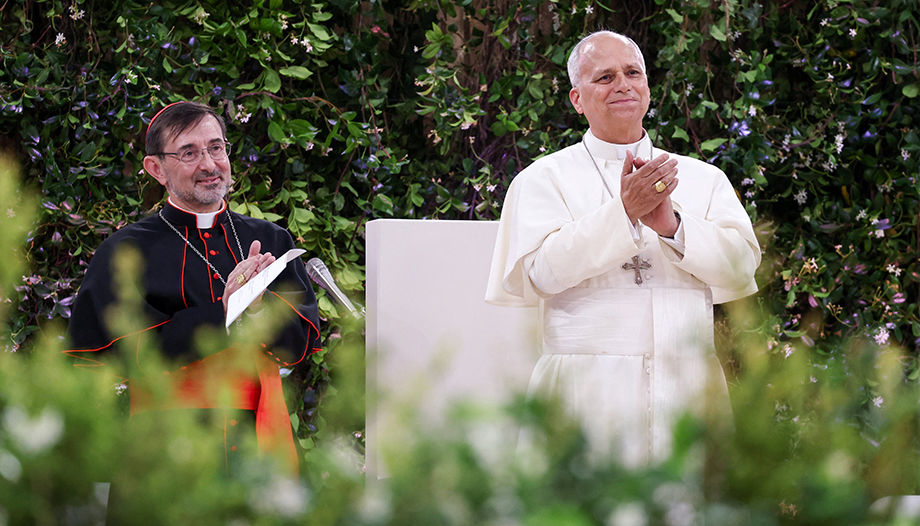
 Pope Leo XIV's complete speech at the Congress of DeputiesPope Leo XIV warns in Montserrat about the violence with which we cover up our woundsLeo XIV to the prisoners of Brians: “God loves you as you are, but he dreams you better”.”
For years, sociological commentary has insisted on an unchanging diagnosis: the West was advancing by leaps and bounds toward a silent secularization, in which faith was confined to the strictly private sphere. However, the events of early June have shattered all preestablished paradigms. The Pope Leo XIV's apostolic visit to Spain—his first major seven-day trip to a European democracy with Catholic roots—has not only been a huge success in terms of attendance but has also confirmed a phenomenon that can no longer be ignored: the existence of a “Catholic turn” in Spanish society or, at the very least, a new—and positive—positioning of faith in the social sphere.
During an intense week, God, the Church, and the lived experience of faith have stepped out of the sacristies to become the focal point of gatherings, dinners, and debates. What was truly revolutionary was not only the Pope’s presence, but also the impressive positivity and ease with which the country embraced this moment.
León XIV’s time in Spain has left a profound legacy that resonates directly in the soul of a society that seems to have awakened from a state of inertial lethargy. This “Catholic turn” rests on three fundamental pillars that the Pope has successfully catalyzed:
A Faith Without Complexes: Fortunately, we have overcome that old social inertia that dictated that expressing one’s beliefs was either rude or an anachronism. The papal visit has fostered an atmosphere of mutual respect and genuine interest in Catholicism, even influencing those who do not share the faith but recognize its anthropological and cultural value.
Joy as a Response to Detachment: In contrast to the stale media stereotype that associates believers with bitterness or a stern expression, Spanish youth have responded with an overflowing, natural, and contagious joy. In an era marked by an epidemic of loneliness, depression, and existential emptiness, Leo XIV has reminded us that faith is not a burden, but an anchor that never fails.
The Maturity to Accept Imperfection: One of the most honest and powerful messages this visit leaves us with is the ability to overcome our mistakes. The Church is learning to walk with its wounds still open, coming to terms with the past—painfully, yet with a firm resolve to make amends. The Pope has reminded us that the goal is not arrogant perfection, but greater closeness to those who suffer and the humility to move forward.
For believers, the success of these seven days cannot be reduced to a media sensation or a fleeting mass phenomenon; the real challenge is to transform that excitement into something lasting. Now that the echoes of the crowds are fading, the most profound task remains. As this journey has taught us, it is not simply a matter of temporarily putting God in the spotlight, but of making God the focus.





 Español
  English
  Italiano