



 Is sex a sin? Fabrice Hadjadj answers
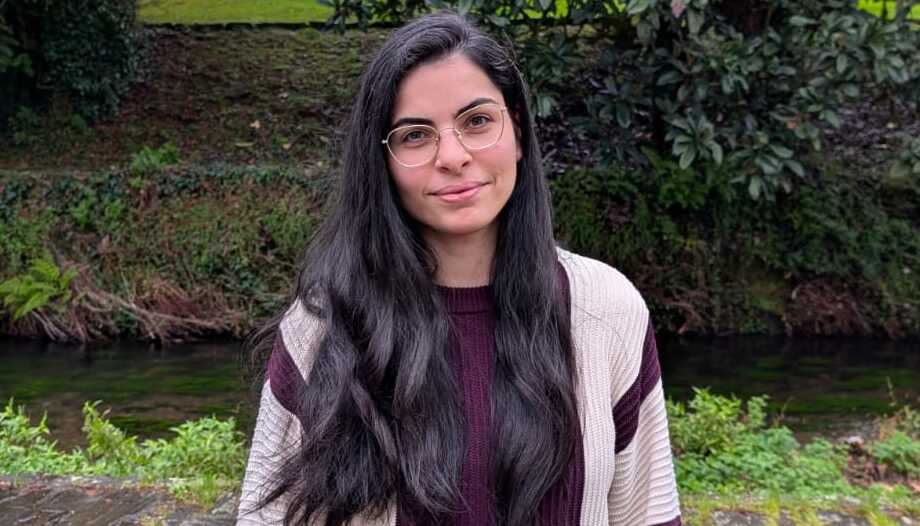
It takes a lot of courage today to confront the postulates of radical feminism. Simple disagreement causes fear. Rejecting feminism in the workplace, let alone in politics, is problematic. However, a reflection on feminism and femininity is necessary. Cris Cons is a young wife and mother, and pedagogue, an expert in affective-sexual education, with the program “Feminism and femininity".“Love Revolution”aimed at young people and families.
He lives in Santiago de Compostela with his family. In 2018 he was one of two Spaniards who participated in the Pre-Synod of Bishops in Rome, dedicated to young people. Since then he has offered hundreds of conferences and formation sessions on affectivity. But it was not always like that. He has just published in Palabra a book with the challenging title of “A woman as God intended".
“Simone de Beauvoir used to say, ”A woman is not born, she is made," and she reflects it in the book. This is a sign of a whole mentality. Is that so?
- I believe that this phrase has worked because it is interesting. The error is obvious. We are born male and female, and that is the greatest of the evidences. And it is not until this cultural era that this reality is suddenly called into question.
There are people who act from naivety, with the desire to have maximum freedom and to be able to decide everything, and they confuse freedom with the capacity to decide. Then, any reality that they feel oppresses them, even nature itself, they experience it as oppression. It is a deep desire to be able to decide and be what one decides, as if it were not determined. Culturally and philosophically perhaps this is the origin and therein lies the error.
In the case of Simone de Beauvoir, she actually experienced machismo as such, that is to say that she would be taken less into account in her opinions because she was a woman. In “The Second Sex” she argues that since we are discriminated against, we will make the difference between man and woman no longer exist and then discrimination will end. But that is barbaric. The fact that there is discrimination is not because there is a difference.
The difference between men and women is a cause for celebration. If there is discrimination, it will be necessary to provide education, above all, so that it does not occur.
Simone's thinking starts from here. But then you see a lot of interests. All the support that this gender ideology is getting, that sex is a social construct, and it's not significant. What is important is gender and how one feels.
But the truth is that gender studies are being subsidized by the same people: foundations such as the Rockefellers, and also by universities, such as Berkeley. From the spheres of culture and power, this kind of thinking is being financed and encouraged.
I think it is best to go back to normality and see what is obvious to everyone's eyes.
Is the main thing to be realistic and to start from biology? These approaches deny reality and biology.
- Yes, or they manipulate it. They say that sex is not something fixed and that there are people who are born with genes of one type or another. But even when there are people who are born with these alterations (a tiny percentage of the population), there is a certain predominance. It can be seen that it is a genetic alteration. In these cases, medicine traditionally used to let the child grow up and see how it developed, what preferences it had. Then identify their own nature. Rather the dominance, because they are small alterations that have to be discovered. In the child itself, naturally you see differences, but also in the character, in the way of being. From the time he is a baby there are sexual differences in the brain; the brains of men and women are different.
There is research at the moment of birth. For example, Baron-Cohen, a professor at Cambridge, studying autism, discovered that there were differences according to sex at the moment of birth. For example, he placed two images in front of a baby: one of a human face, and one of a mechanical mobile, a stroller or something like that. Almost all the girls looked at the face and almost all the boys looked at the car.
Most differences of this type that are seen in children occur between the ages of 0 and 3 years, which is a time when they have not yet identified and do not understand sexual differences. They do not have gender stereotypes until the age of 3.
Personally, I can say that it caught my attention when we took my son to daycare. They told us that they are careful not to take more boys than girls because it would get out of hand if they had more boys, because they are very intense.
When our second baby was born, and we went to pick up our other son with the baby, all the girls came running to greet the baby and the boys kept playing alone. The teacher said to us, “It's strange that only girls do this. Well, we are different.
The differences are there and they are great. They are cause for celebration.
Do you think there is a problem in understanding equality, confusing legal equality with biological equality?
- Absolutely. On a social and political level, there has to be equality. In fact, it is something that does not really exist today, but not against us.
But biologically, psychologically, spiritually, we are not the same men and women. And that's fine. Fortunately, there is complementarity.
Personally, you haven't always thought that way, have you? It has had its own evolution.
- Yes. In fact, my husband ate all the feminist badges my husband ate when we were dating and in college. Of today's feminism, politicized.
I don't know what it was. Life, maturity. The world is making you wake up.
I think this is being seen at the societal level. On the one hand, feminism is politicized and instrumentalized. But the moment you are a person who seeks the truth, this ends up jumping in your face. There comes a point when you say “we are different”, and being different is a good thing and that's it.
She defends a feminism, I don't know whether to call it classical, because, as she explains in the book, in principle, what the feminist movement defended was the dignity of women.
- I personally would not label myself as a feminist, because nowadays it carries specific connotations. Although there are people who do it from a Christian feminism or with approaches related to Christianity and I think it's fine. But I do defend women. As an affective-sexual educator, I see a very real machismo.
Where?
- For example, in pornography that teaches rape and in books that teach rape and romanticize rape. This is a world that is absolutely unknown to most adults. Pornography consumption is barbaric. Almost 90 % of the pornography on the Internet is violence against women and very grotesque violence.
There are video games that are about this, like GTA, that all the kids play. You access prostitution and then you kill the prostitute, you keep the money... This is not normal.
Many books that teenagers read are absolutely toxic. They teach them to get into abusive, violent and abusive relationships. In particular, there is now a genre called “dark romance,” which literally romanticizes rape and abuse and torture.
I hear it from the kids who are reading it. It is a very flagrant machismo that takes place in our society and it seems that nobody cares.
I fight against this. I try to show the consequences of these evils, and that we are human beings with infinite value, and the dignity, the respect of people, of women.
I don't see any real criticism of all this, on the contrary. They try to generate a feminist pornography or they try even from the “mainstream” feminist spheres, politicized, to normalize, for example, the sexual relations of minors. And it is not normal. If you don't have a developed brain until you are 20 years old, you can't make a serious sexual decision, that is, to have a sexual relationship in a free way because you don't have a developed brain to understand the long-term consequences.
And in this chapter of machismo, does it include abortion?
- It is an outrage, like so many things about the lack of protection for women. The other day I heard a man on the program “Sexto Continente” say that he was dedicated to protect women who were going to have an abortion, to talk to them and ask them what they needed in order not to have an abortion. Phenomenal. I wish we asked that question before.
The question is whether we care about the woman or what we want is to save effort and money, because if we gave these women the resources they need, how many would not abort.
When you hear about women's empowerment, what do you think?
- It depends on who is using the concept.
I believe that women should be aware of the power we have. And in fact, it seems to me that today, socially, we have been deprived of much of that power. For example, to take us completely out of the home, as has been done culturally (mind you, I think it's great that women work outside the home, I do it).
But really, is there anything more powerful than a woman raising her children? Don't you understand the influence, the power and the impact of raising human beings? Just from age 0 to 3, by raising a child you are laying the foundation of who they are going to be as a person.
A woman in the home seems to me to be one of the most absolutely powerful things there is, because that woman is raising her children and laying the foundation for who they are going to be someday, how they are going to think. There is nothing more powerful than a mother.
I think to what extent, by selling us the theme of empowerment, what we have done is to wear ourselves out absolutely, because we have to be perfect in everything: at home, as mothers, as wives, as professionals... and that is absolutely impossible. We spend eight hours away from home, we live exhaustively, and then we have to come back with a lot of guilt for not having been with our children.
Nowadays there is a lot of talk about quality time instead of quantity. But now that I am a mother, I realize that quality time, when one is exhausted, is not possible. What quality time? If I'm exhausted, I scream at the drop of a hat, but when I'm rested, I'm the most tender and kind and wonderful mother in the world.
Maybe we need to rethink things and re-empower ourselves, which doesn't mean that we don't have to work and we have to go back to being at home all day. There are women who love their careers, and they are at the top of their game and live like that. That's great. But I think it would be very empowering in this day and age to open up the possibility of being able to reduce hours, for example, of work, or to take it off completely for a period of time in our lives without guilt, not only personally but professionally and socially.
It would be great to be able to make the adjustments to understand that in the first years of life, a mother has to be very present. Today it is seen as something secondary, and it is something that is the most powerful thing we have. And I think it is intentional the fact that we have been made to feel that empowering ourselves is to take on professional responsibilities leaving the maternal ones.
She gives affective-sexual training courses. I don't know if frustration sometimes arises, because the environment is not conducive to it. What can you do when addressing adolescents on affective issues?
- In my case there is zero frustration because teenagers are very well made and are eager to hear a different proposal. I wish people could see and hear what I see and hear, because the kids are burned out, they are sick to death of it. You think that they have been watching pornography since they were 8, 9 or 10 years old, they are disgusted, they have been told that they are objects, that they have to have sex.
We don't understand the violence you have to do to yourself to say yes to the world's proposals. You feel like an object. You suffer because you feel used and you feel treated like a thing. And we are very well made. So, the feelings we have very well.
Unless we end up so bad that we end up making a dissociation, feelings are warning us. When I hook up with someone, sleep with someone, without wanting that person, my feelings react and I feel bad and I feel used and I feel sad, empty and lonely. And I need something else, but I don't know what that something else is.
So, when I speak in a classroom and make a different proposal, what I see are faces that shine and are excited. They ask themselves: “What are you telling me? In other words, I don't have to let myself be used, I don't have to go around undressing”.
You would be amazed at the number of young people who have come to tell me that they want to stop having sex with their boyfriend, they want to start living differently. A lot of them. Or they write to me: “We were having sex and have decided to stop having sex. And now we want to wait until marriage to have sex, because we have understood the value of sex. We haven't had sex for a year now because we listened to you in I don't know what talk.” You tell me, in a one-hour talk, how is it possible to make this decision? I don't speak so well. I would love to speak well enough to convince someone of this. But that's not the point. It's about the fact that we are desperate.
I have lived it myself. So I know what it's like to be desperate to discover something else and think it doesn't exist. And when you suddenly discover it you say “I need this”.
Because she doesn't come from an environment where that has always been the case, right? You've experienced what you're talking about, you can't be called a prude.
- No, no. I lived the other. It sucks. It sucks to be on the other side.
You feel so bad and you also think you're the only one who feels that way because all your influences tell you that's the bomb and you're empowered and you have to live that way because that's what gives you power and control over others and I don't know what.
You expose yourself to sexually abusive situations because you're with guys who don't give a damn about you. One day, in a talk, a college guy said to me, “Hey, isn't it more pleasant to have sex with a girl you don't love? Because then you can do whatever you want with her and you don't feel guilty.”.
This is the mentality we live in today, because this is what pornography has taught our generations.
It's very cruel to be on the other side. That's why it's so easy when you discover that there is something new, I'm not telling you to assume it, but at least to desire it, to desire something different. The problem is usually in feeling if I am worthy or not worthy to live something like that.
In my case, the difference is that I met Jesus and I did feel worthy of living something like that because I suddenly felt loved by Him. And He told me that I was precious in His eyes, of great value, and that He loved me and had given His life for me. That began to change the way I perceived myself.
When was that?
- When I was 13 years old I met Jesus, but in reality I started to live the sexual theme in college, when I was about 20-21 years old, because I did convert and I went all out with everything related to faith, but I had never had any training in affective issues, I didn't know anything about it.
Then when at 17 I met a boy I loved and started making out with him, I started having a normal courtship in the world. It was in college when I met a happy marriage and I thought I would like mine to be like that. I researched what I needed to do and I started seeing courtships around me that I found out that they didn't have sex. This was something absolutely unknown to me and I started to hallucinate. Moreover, when I understood this world of affectivity and sexuality from the perspective of personal anthropology I thought: “I want this”. That's when I also changed my relationship. I told my boyfriend that I wasn't going to have sex with him anymore, and he was fine with it, and we got married five years later.
You can see that it does not come from a bubble....
- I wish I came from a bubble and could have been spared all the injuries I had, but no, I lived through them and now I can speak with full knowledge of the facts. It is true that what I have lived through helps me a lot to speak with authority.
With all that it reflects, it seems an obvious conclusion that the Church's sexual morality is based on purely anthropological issues, not meaningless impositions. Is that so?
- Yes, absolutely. Living like this is brutal. It gives you freedom, you order everything, everything makes sense.
In fact, as I comment in the book, there are those who see this as one of the reasons for the expansion of Christianity. Authors who, from a non-Christian, external point of view, maintain that sexual morality favored the expansion of the Christian faith. Before, polygamy, abortion and debauchery were normal. How did the Romans live? Suddenly something appears that puts order here. And it is that order gives a lot of peace and freedom.
Suddenly, couples are monogamous, and not only that, but for life; that precious idea of man, protect your wife; love your wife as Christ loved the Church and gave his life for her. I want a man like that, capable of giving his life for me as Christ gave his life for his Church.
This is a different story. Because sex is designed for marriage, for forever. Even the hormonal consequences of having a sexual relationship (oxytocin, vasopressin), which provokes an affective bonding, attachment. Sex is very well done, the person is very well done, and it is very well done to listen to the Creator to make our design, but of course it gives happiness. You can ask any person who is living it well, if it gives happiness or not.
With the multiplication of marriage failures, is the key to a correct affective or sexual education?
- I think so. Look, from the Church it is very “heavy” that in order to prepare someone for marriage we give them a course that may last three days. We have to see how we are taking care of marriages, which is the most important thing.
A happy marriage changes everything. Because those children will be happy, those communities will be nurtured by it, we are all nurtured by a happy marriage. And there is no more perfect picture of who God is than a happy marriage.
God in the Bible constantly uses the allegory of marriage - it is the most used - to speak of how much he loves us and how we are loved. Therefore, we must guard and protect happy marriages. And that begins by taking care of the children, from childhood, with an affective-sexual accompaniment, working on their self-esteem, their relationships, their friendships. In adolescence, answering their questions, their concerns, giving them training and formation. When they start looking for a boyfriend, we accompany them in their single life, accompany them in their engagement and, of course, accompany them in their preparation for marriage, which is not a matter of three talks. In three days you cannot prepare me for the rest of my life.
Suddenly you get married and say, "What now? If I, who am highly trained in the subject, find it challenging at times, in some situations, I wonder how people who don't have that training do it. What surprises me is that there are not more divorces. It is that there has been an absolute abandonment of what marriage is.
It is necessary to ask ourselves, from each Christian community, if we are doing an adequate accompaniment, training and formation of married couples and affective or sexual education throughout life.
One last point that caught my attention. You maintain that “women should not have friendships with anyone with whom we are not in a relationship”. Haven't some people thrown their hands up in the air?
- When I wrote it I thought I was going to make a mess by putting this... But when you are in a marriage you understand. It's very sensible, because the areas of my heart that are intimate for the opposite sex have to be full for my husband.
Obviously, we have friends of both sexes, but the intimate friendship to whom I turn to... I believe that women need the experience of welcoming another woman in friendship, which is fundamental.
Beware of having an intimate friendship with another man when I am married or when I am trying, or I am in another vocation, because it can be a risk, because we are very well made and we are made for complementarity and it is very easy to fall in love.






 Español
  English
  Italiano
  Français
  Deutsch
  Polski