


- Gina Christian, OSV News
The text of the encyclical ‘Magnifica Humanitas,’ signed by the Pope on May 15 and published on May 25, invokes the wisdom of the Church's social doctrine as a framework for shaping AI amid rapid technological advances, a fragmented global landscape and growing threats to human life and dignity.
Here is a guide to some of the terms that are covered in the encyclical.
- 1) Artificial intelligence: general term for technology that emulates human intelligence. The ability to learn from data, recognize patterns, solve problems, make decisions, and generate original content from human cues are characteristics of AI.
In “Magnifica Humanitas”, Pope Leo XIV writes that “it is not possible to offer a single and complete definition of AI”.
“What can be said is that we should avoid the misconception of equating this type of ‘intelligence’ with that of humans,” he continued. “These systems simply mimic certain functions of human intelligence. In doing so, they often surpass human intelligence in speed and computational capability, offering tangible benefits in many fields. However, this power is still entirely tied to data processing.”.
AI is programmed in several programming languages, including Python, C++, Java and R. Everyday examples of AI in action include various types of chatbots such as OpenAI's ChatGPT and Anthropic's Claude, online product recommendations and virtual personal assistants such as Amazon's Alexa and Apple's Siri. AI has a wide range of business applications in almost every market sector, including healthcare, education, energy and security.

- 2) Algorithm: In essence, a routine, sequential process for performing a task. More complex AI algorithms are designed to contemplate multiple what-if scenarios in a given situation and to learn from the data they are trained on. Pope Leo XIV warns in his encyclical that AI algorithms can be used to exert dominion over the vulnerable and over humanity itself, eroding responsibility and empathy.
“From this follows a simple but compelling consequence: we cannot consider AI to be morally neutral,” he writes. “In reality, every technical tool incorporates decisions and priorities through what it measures, ignores and optimizes, and how it classifies people and situations.”.

¿Dominion over humanity?
- 3) Alignment: In AI development, the process of ensuring that technology conforms to human values, so that AI models safely serve human interests. The “emerging misalignment”, where AI deviates from such norms and behaves in harmful ways, is a growing concern among experts in AI ethics and theology.
Pope Leo XIV insists that alignment entails an additional condition: “the possibility of openly discussing the ethical frameworks involved and subjecting them to shared standards of social justice. Otherwise, those who control AI will impose their own moral vision, which will become the invisible infrastructure of these systems.”.
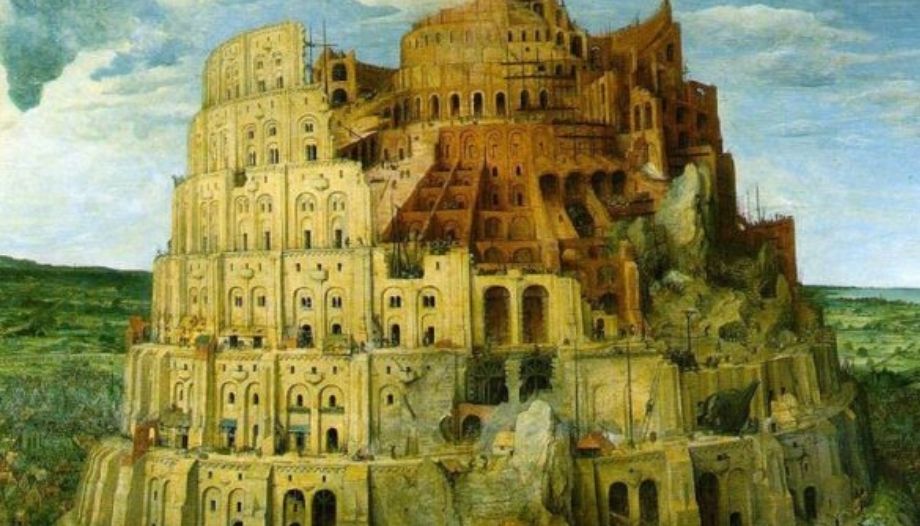
– 4) Babel, the Tower of Babel: Described in Genesis 11:1-9 , The city and tower built by the nations of the earth in the valley of Shinar after Noah and his family survived the flood. Because the nations, who spoke the same language, undertook the project with human pride, the Lord confused their language, which caused division and dispersion throughout the earth. In section 7 of his encyclical, Pope Leo XIV uses this example to show “the limits of any effort which, however grandiose, springs from self-assertion, sacrifices human dignity for efficiency and aspires to reach heaven without God's blessing.”.
- 5) Catholic social doctrine (social doctrine): The Church's teaching - which is based on papal, conciliar and ecclesiastical documents - on the means for building a just society and living holiness in modern life. As Pope Leo XIV explains in his encyclical, the term was coined by Pope Pius XII in 1950, but owes its development to “a long tradition of ecclesial reflection on life in society, rooted in Sacred Scripture, the Fathers of the Church and the theological and legal developments of the Middle Ages and the modern era.” Pope Leo XIV also notes that his “beloved predecessor,” Leo XIII, pushed that tradition toward modern applications in his 1891 encyclical “Rerum Novarum.”.
Principles of Catholic Social Teaching
The key principles of the catholic social doctrine are: the common good; the universal destination of goods, which holds that the goods of creation are destined for all (even when private property is justly acquired). Subsidiarity, which emphasizes that the larger institutions of society, including the state, should not overwhelm or interfere with the smaller ones (including families and ecclesial communities). Solidarity holds that humanity, even with its differences, is one family. And justice, which according to the Catechism of the Catholic Church “consists in the constant and firm will to give what is due to God and to one's neighbor”.
In his encyclical, Pope Leo XIV stresses that AI and its inherent power must be evaluated according to the principles of Catholic social teaching.
- 6) City of God, city of man: symbols, respectively, of faith in God and unbelief. St. Augustine contrasts the two in his best known work ‘The City of God’.
In his encyclical, Pope Leo XIV (a member of the Order of St. Augustine, who frequently invokes the saint's thought) quotes this image and the observation of St. Augustine: “Two loves have built two cities: the earthly city, self-love to the point of contempt for God; the heavenly city, love of God to the point of contempt for oneself.”.
Pope Leo XIV then reflects: “As throughout history, these two loves continue to vie for dominance in our hearts today. The age of AI is no exception: the building of Babel or the rebuilding of Jerusalem begins within each of us.».
- 7) Ecology of communication: A model for understanding the dynamics between communication and social order. This concept, sometimes referred to as ‘media ecology’, has its roots in the communication studies of the 1960s.
In his encyclical, Pope Leo XIV uses this term to advocate, among other things, transparency in Church communications, personal data protection and content selection; digital and media literacy; serious journalism; verification of information; and the promotion of critical thinking.
The Pope notes that these actions reflect “the fundamental principle” that “truth is a common good and not the property of those who hold power and influence.”.
Focus on present and future generations
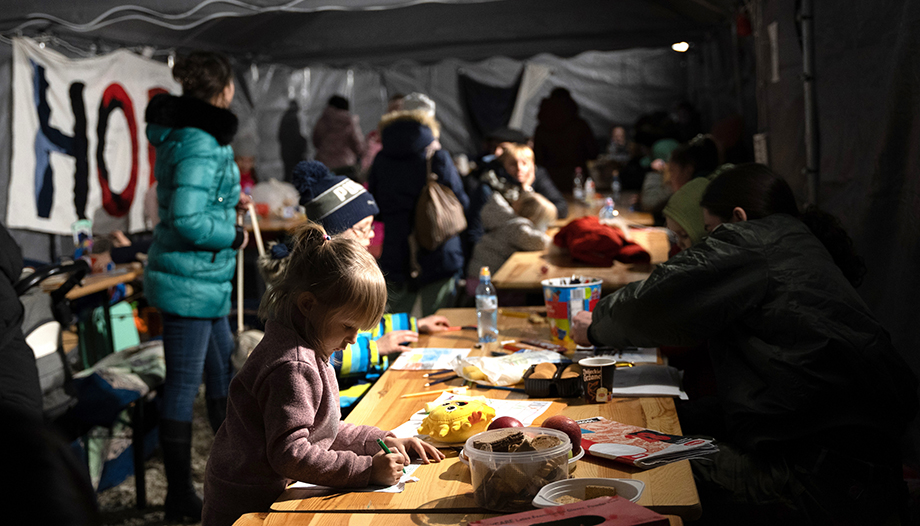
- 8) Integral human development: term that appears in St. Paul VI's 1967 encyclical, ‘.‘Populorum Progressio’.’. In this text, the flourishing of individuals and peoples is conceived holistically, taking into account spiritual, cultural, moral and relational concerns, with an eye not only to present generations, but also to future generations.
The concept is central to Catholic social teaching (see above), and Pope Francis established the Vatican's Dicastery for the Service of Integral Human Development in 2016.
In his encyclical, Leo XIV describes integral human development as “the framework through which we can interpret the changes of our time, including those brought about by the digital revolution.”.
- 9) Large-scale language model: A type of AI model capable of being trained to understand and generate language in a human-like manner, with context and nuance.
- 10) MultilateralismIn international relations, the concept of cooperation among diverse nations. Originally a geometric term meaning “multilateral”. Multilateralism is central to entities such as the United Nations and to international agreements on a rules-based order that safeguards human life and dignity.
In his encyclical, Pope Leo XIV points to a crisis in the current multilateral system, not only due to “structural limitations”, but also to “a frequent lack of shared will to support and reform it, or to recognize its moral authority”.
He notes that economic globalization following the collapse of European communist regimes in 1989 is far from “genuine multilateralism.” Instead, he writes that globalization's “almost blind faith in markets” has “provoked fundamentalist, identitarian and nationalist reactions,” and has degenerated into “a disorderly and conflictual multipolarism with a widespread sense of distrust.”.
International law is replaced by ‘might makes right’.’
Joint efforts for the common good are further threatened by resurgent attempts to “forge a collective identity in opposition to an enemy”, where each side declares itself a “victim with the right to retaliate” and substitutes international law for the idea that “might makes right”.
As a result, Pope Leo warns, power politics is relegating peace-building initiatives to the background and compromising “the achievements of humanitarian law,” and the protection of civilians, and “especially children,” in the midst of conflict is considered “a naive relic of the past.”.
- 11) Nehemiah: Name of both the governor of Judah and the book biblical. Around 444 B.C., the Persian king Artaxerxes I granted Nehemiah permission to return to Jerusalem - where some Jews, after the Babylonian exile of the sixth century B.C., had begun to resettle - in order to gather and lead the people in the joint restoration of their ancient city.
Unlike Babel, as stated by Pope Leo XIV in his encyclical, this effort led by Nehemiah (and later by Ezra) put God at the center and prioritized communion and the rebuilding of relationships over uniformity.
- 12) Political realism, realpolitik: Political realism is a political theory that puts power ahead of morality and ethics, arguing, in effect, that “might makes right”.
In international relations, realpolitik (a term popularized in the 19th century) also privileges power, as well as national interest, over other principles and considerations, framing it as a pragmatic policy.
In his encyclical, the Pope warns that both philosophies-the latter he condemns as “truly irresponsible”-contribute to presenting war as inevitable, thus preventing a genuine peace based on justice and charity.
- 13) Technocratic paradigm: a term also used by Pope Francis in his 2015 encyclical, ‘Laudato Si’’, to describe a worldview in which humanity employs technology for the primary purpose of “possession, mastery and transformation,” rather than humble and grateful stewardship of God's abundant gifts.
Pope Leo XIV writes that this “pervasive technocratic paradigm...amplified by the digital revolution and AI, threatens to normalize an anti-human vision. In that vision, fullness of life is equated with having more, reducing weakness, eliminating uncertainty, and exercising total control. When efficiency becomes the ultimate measure of value, human beings are tempted to see themselves as a project to be optimized rather than as persons called to relationship and communion.”.
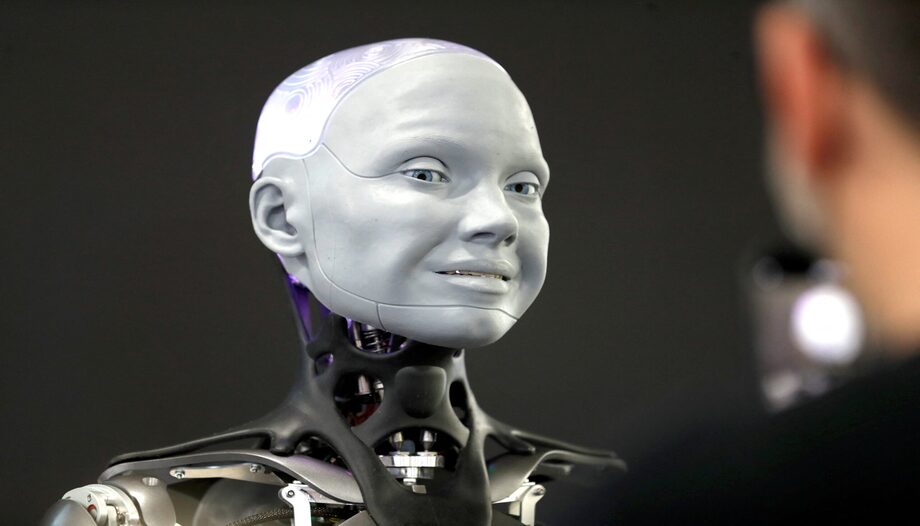
- 14) Transhumanism and posthumanism: Transhumanism argues that humans can transcend their limitations, especially through scientific advances such as informatics, cryogenics, biomedicine and other technological interventions. Posthumanism, on the other hand, contradicts this view of human centrality, with some posthumanists advocating a hybridization between humans, machines and the environment.
“Although these ideas remain largely speculative, they acquire relevance by altering the collective imagination and thereby influencing social, economic and political decisions,” writes Pope Leo XIV in his encyclical.
They contrast these perspectives with the Christian conception of humanity as God's creation, noting that human limitations constitute vital opportunities to “recognize the inviolable dignity of each person,” live with compassion and “encounter the presence of the Lord.”.
- 15) «Disarming» the AI
Pope Leo XIV has called for vigilance at the Vatican press conference. His conversations with industry leaders, including “very troubling voices” who warned him about autonomous weapons systems beyond effective human governance, had led him to the “disturbing conviction,” expressed in Magnifica Humanitas,” that Artificial Intelligence (AI) must be disarmed.” said Pope Leo.
In presenting “Magnifica Humanitas,” the Pope revealed that the document was “born out of listening” to scientists, educators, parents and technology leaders, including those who expressed concerns about algorithms that deny health care, jobs and security using “data tainted by bias and injustice.”.
Comparing AI to nuclear power, Pope Leo said that technology must serve the common good, not domination or exclusion.
- 16) And “build” the city
Leo XIV has pointed out that disarming AI is not enough, but that “we must build.” He highlighted the first sentence of his encyclical, in which he wrote that humanity today faces “a crucial choice: either to build a new Tower of Babel or to build the city in which God and humanity live together.”.
At the press conference, the Pope drew on his missionary experience in Peru, recalling the 2017 floods that devastated communities in the north of the country and the arduous reconstruction work that followed.
“Rebuilding does not mean simply replacing what has been destroyed,” he said. “It means repairing ties, restoring trust and rekindling hope for the future.”.
Christopher Olah, and the Pope's response
Chris Olah, co-founder of Anthropic, warned that AI could displace human labor “on a large scale,” and noted that it was critical that people without the financial incentives of tech executives pay close attention to AI development as “serious and thoughtful critics.”.
Olah called the encyclical “profoundly timely” and pointed to the need for external and moral control over AI development. There is a need for “moral voices that incentives cannot bend” and “informed critics.”.
Pope Leo XIV accepted the proposal on behalf of the Church, and invited all to seriously address the challenges presented by AI, affirming that the Church “brings a wisdom about the human that our age desperately needs.”.
———————-
Gina Christian is a multimedia reporter for OSV News. Follow her on X @GinaJesseReina






 Español
  English
  Italiano
  Français
  Deutsch
  Polski