


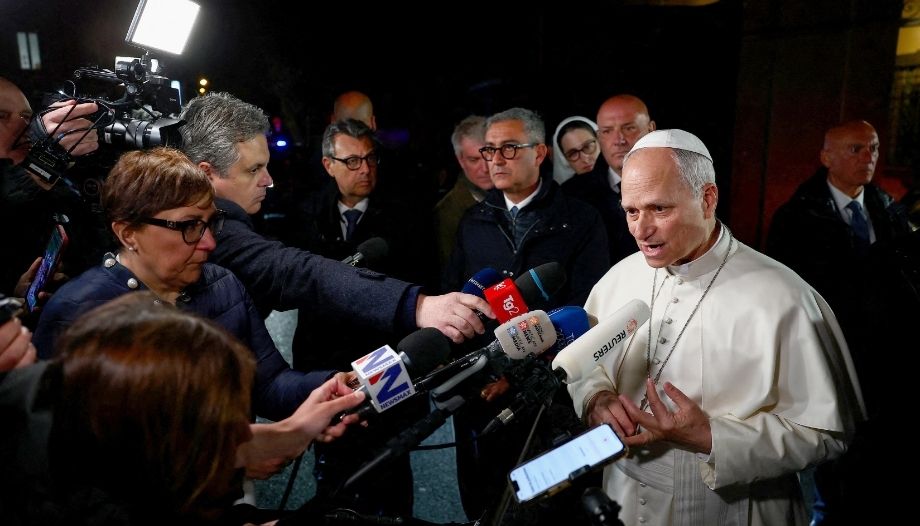
Following an extensive quotation from Benedict XVI, in his reflection on the Constitution “Sacrosanctum Concilium” of the Second Vatican Council, Pope Leo XIV said in this morning's Audience that “we contemplate the liturgy from the perspective of tradition and evolution”.
Pope Pius XII defined the Church as a “living organism” that needs to grow, mature and adapt to circumstances. And indeed, “desiring that Christian life should flourish and grow, the Second Vatican Council recognized that it was time to adjust some adaptable elements of the liturgy for the sake of the health and vitality of the Church, to strengthen and rejuvenate Christians, and to foster unity and evangelize men and women.”.
However, as the Pope pointed out in addressing the English-speaking pilgrims and all the faithful, “the Council affirmed that legitimate progress in the liturgy must also preserve sound tradition, and that ‘certain elements of the liturgy can never change because they are of divine institution’.
“In a particular way, I encourage all priests to respect the texts and norms of the liturgy with openness, humility, trust in God's greatness and with sincere fidelity to ecclesial communion,” the Pontiff said.
“Preserving tradition and openness to legitimate progress.”
In its catechesis, The Pope has deepened the intention of the Council Fathers: "In order to promote the access of the faithful to the richness of the gifts of grace dispensed by the sacred liturgy, the Constitution Sacrosanctum Concilium indicates, therefore, with a very effective formula the direction to follow: ‘Preserving tradition and openness to legitimate progress’ (SC, 23).
Benedict XVI welcomed in this declaration of intentions the ‘program of reform’ of the Council Fathers, continued Pope Leo, who quoted verbatim some phrases of the German Pope.
Benedict XVI: tradition and progress are integrated
“Not infrequently tradition and progress are clumsily opposed to each other. In reality, the two concepts are integrated: tradition is a living reality and therefore includes in itself the principle of development, of progress. It is like saying that the river of tradition also carries within itself its source and tends towards its mouth” (Address to the participants in the Congress for the 50th anniversary of the foundation of the Pontifical Liturgical Institute of St. Anselm, May 6, 2011). (So much for the quotation from Benedict XVI).
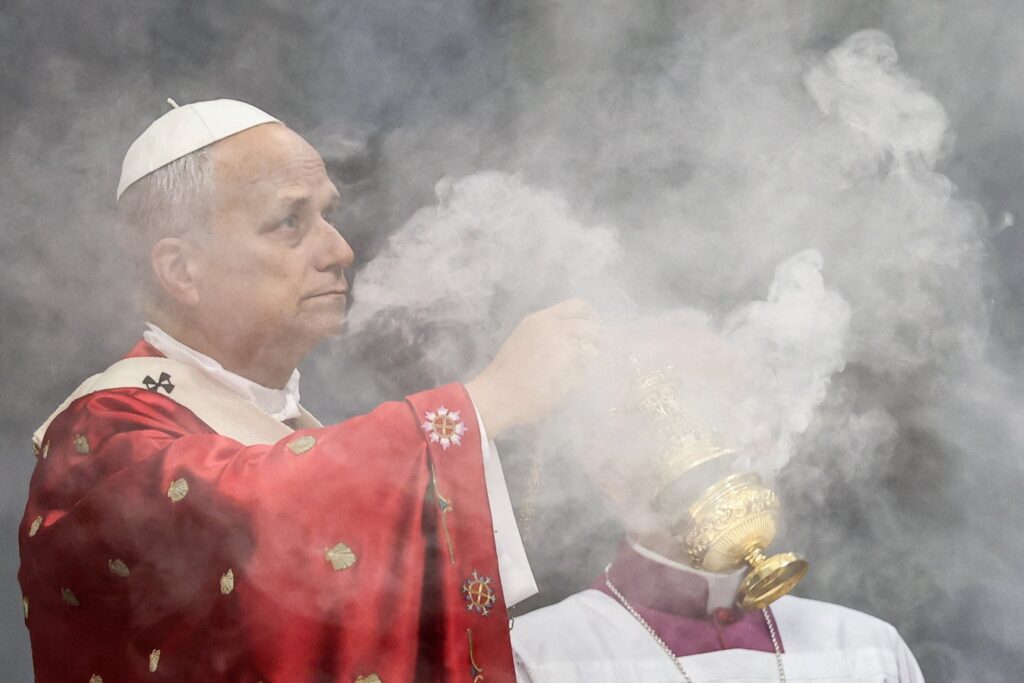
One part immutable, and others subject to change
The Council affirms the legitimacy of this process, Leo XIV continued, “rooted in authentic Tradition, distinguishing within the liturgy ‘a part which is immutable because it is the divine institution’ from ‘other parts subject to change, which in the course of time can and even must vary, if elements have been introduced into them which do not correspond well to the intimate nature of the Liturgy itself or which have become less appropriate’ (SC, 21).
Then, in words to the Spanish-speaking pilgrims, he added that “this need (for an adaptation to current demands, thus renewing the ritual forms of the Sacred Liturgy) can be seen throughout the Church's history, for worship has been ”incarnated“ in the cultural forms of each era and has been able to influence them and even transform them.
“The liturgy has thus been, for centuries, an engine of evangelization,” he reiterated in the Audience.
Does not compromise ecclesial communion
“The conciliar Magisterium thus invites us to avoid disorienting the faithful by dissuading anyone from adding or subtracting or modifying anything in liturgical matters on his own initiative (cf. SC, 22)”, the Successor of Peter pointed out, clarifying that “the progress evoked by the conciliar Constitution in no way compromises ecclesial communion: rather, it seeks to confirm and favor it”.
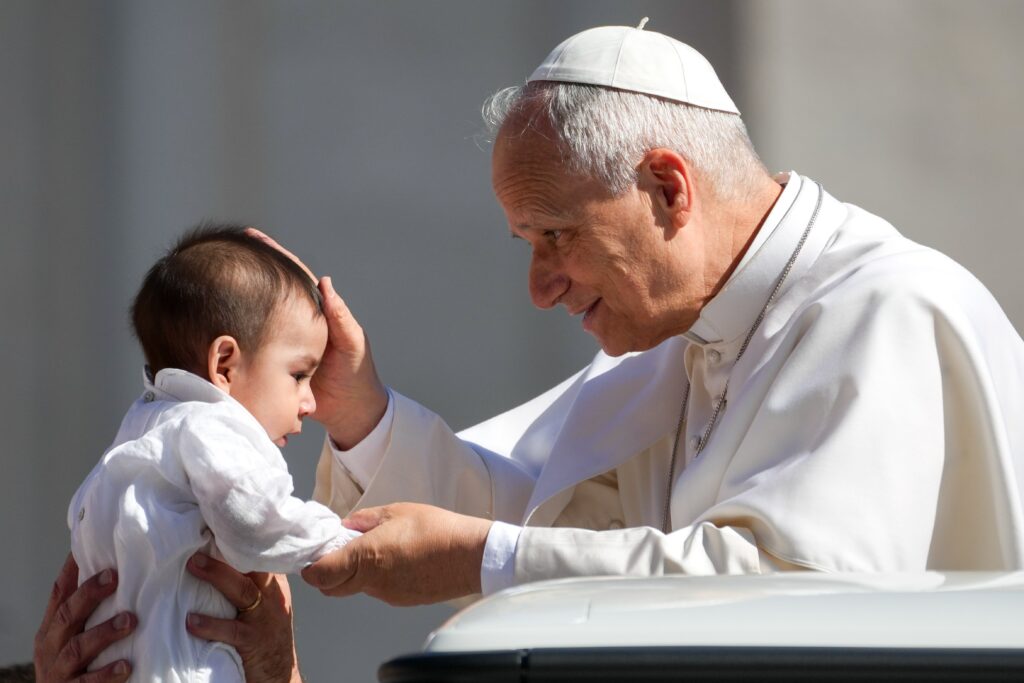
May Mary, Mother of the Church, watch over the faithful of Lebanon.
In his greetings to Romans and pilgrims from various countries, the Pope made special reference to invoking the protection of Mary, Mother of the Church - he called her “Mother” on several occasions - especially to Portuguese and Arabic-speaking pilgrims.
“I greet the Arabic-speaking faithful, especially those from Lebanon. Mary, Our Mother, is always present among us, prays for us and watches over us with maternal love. May the Lord bless you all and protect you always from every evil!”.
And protect the life of every person, from conception to natural death.
Then, addressing the Poles, he recalled Mother's Day, and asked them to “protect in their homeland the life of every person, from conception to natural death”.
These were his words: “I cordially greet the Poles. Yesterday they celebrated Mother's Day. I thank all mothers who, with generosity, have passed on the gift of life and take care of their children, teaching them the love of God and neighbor”.
May the Holy Mother of God intercede for them so that they may obtain the grace of a lasting bond with Jesus, the Holy Father concluded, “and with her help, may they protect in their homeland the life of every person, from conception to natural death.”.
In his summary in English, delivered by the Pope himself, today he expressly greeted “the groups from England, Ireland, Cameroon, Kenya, Nigeria, India, Pakistan, the Philippines, South Korea, Canada and the United States of America”.





 Español
  English
  Italiano
  Français
  Deutsch
  Polski
  简体中文
简体中文