


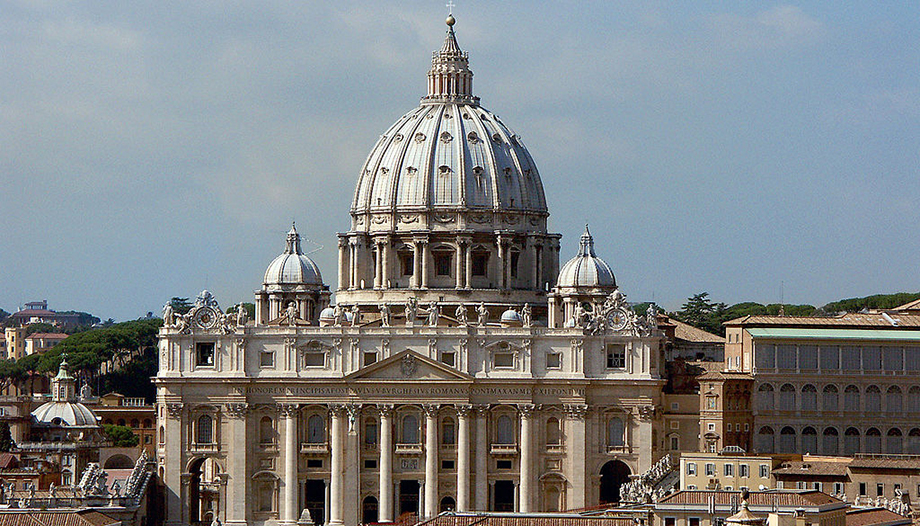
I still remember my astonishment when I first saw the immense façade of St. Peter's Basilica, and my disappointment when I discovered that those large Latin letters were not a Gospel quote, but the name of a Pope who wanted to leave his mark on one of the most important churches in Christendom. Over time, I have come to better understand the history of this peculiar building, which this 2026 celebrates four hundred years of its dedication after having replaced the ancient Constantinian basilica.
In anticipation of this anniversary, the Vatican has organized a series of initiatives to help deepen the immense spiritual value of the church. There will be times of prayer and liturgical singing every Saturday afternoon, an app to help pilgrims better follow the liturgy in the basilica and meditations by the preacher of the Pontifical Household, among other things. Also noteworthy is the inauguration of a new Stations of the Cross commissioned to the Swiss artist Manuel Dürr. Other initiatives also highlight the artistic value of the Gregorian and Clementine domes, which can now be visited, as well as new exhibition areas.
This program of celebrations brings back the memory of the most impressive visit I made to this basilica. It was in May 2020, the day the confinement in Rome ended. I went with a friend walking through the empty streets. The long lines of pilgrims in the square had disappeared and only the murmur of the fountains could be heard. As we entered, we discovered the immensity of the temple immersed in absolute silence. There were barely fifteen of us in the entire enclosure. In the midst of that overwhelming solitude, my friend leaned over and whispered: “Truly, this is the house of God.”.






 Español
  English
  Italiano
  Français
  Deutsch
  Polski