


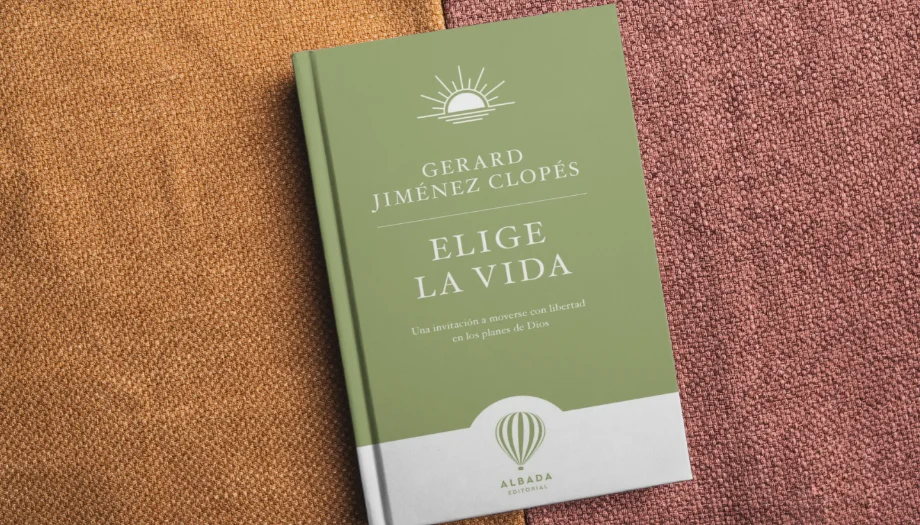
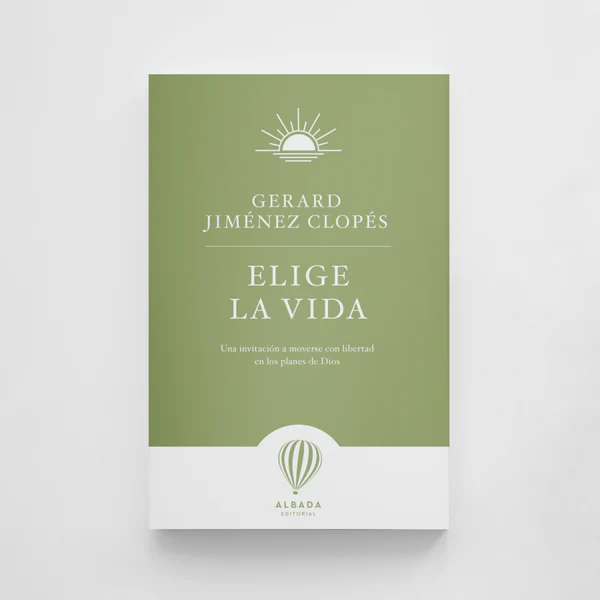
That human freedom plays a role in the way God's plan for each person is made concrete is something that is present in the teaching of recent Popes. The synod which, in 2018, was dedicated to “Young People, the Faith and Vocational Discernment” recalled it once again. Now, that which sounds so good, how does it fit in with the common idea of Providence and the Will of God? How does it fit in with the Commandments? And with the vocation stories we read in Scripture? This booklet The idea is illustrated with reflections, examples from life and biblical passages (especially scenes from the life of Mary).
The exposition is structured in five chapters, divided into brief sections. The first proposes a broad vision of the Will of God and its relationship with human freedom. It takes as its starting point the complicity that is proper to personal relationships marked by affection and the value that Christian revelation gives to freedom (which we find in the Gospel and which has been developed by theologians of the stature of St. Thomas Aquinas).
The second chapter develops this aspect a little more, showing how God enjoys seeing his creature put the best of himself - and, in particular, his creativity - at the service of the plan of salvation. God enjoys our freedom, he “goes crazy” (with love) when he sees our generous response, and we can even “dance” with God, as the saints have done.
Hence, the third chapter becomes an invitation to deploy to the maximum the possibilities of our freedom. An invitation to leave behind fears and embarrassments, but also the comfort of being content with little. It is Christ himself who said: “He who believes in me will do the works that I do, and greater works than these, because I am going to the Father” (Jn 14:12).
Of course, on the path of following the Lord, not everything is rosy. In chapter 4, the book focuses on the reality of the Cross, which in one way or another presents itself in life. It approaches this reality in an encouraging way, using real stories and, at the same time, drawing inspiration from the example of Mary at her Son's side at the culminating moment of his Passion. Knowing our limits," the author proposes, drawing inspiration from J.M. Esquirol, "is also a way to build communion with others.
The chapter that closes the book develops some aspects of this relational dimension of the Christian life: we are not shipwrecked people lost in the middle of the ocean, but, as the Second Vatican Council recalled, a people gathered around the Lord. There are many ways in which we live this beautiful reality, and one of them, to which the volume dedicates the last sections, is spiritual accompaniment.
In short, a short, simple book that can be read in one sitting and that helps - and encourages - the unfolding of one's own freedom in the response to the God who comes to seek us. The reader will not find a theological discussion of the possible objections to theological thinking. However, the illustration of the main thesis is so rich in its exposition that it illuminates in a remarkable way a question that is not at all easy.
Choose life. An invitation to move freely in God's plans.





 Español
  English
  Italiano
  Français
  Deutsch
  Polski