


On April 27, 2009, the Daily bulletin of the Holy See published the promulgation of the decrees relative to the cause of beatification of various faithful of the Church. Among them, and for the first time, a cause for beatification by the way of “offering of life” was indicated.
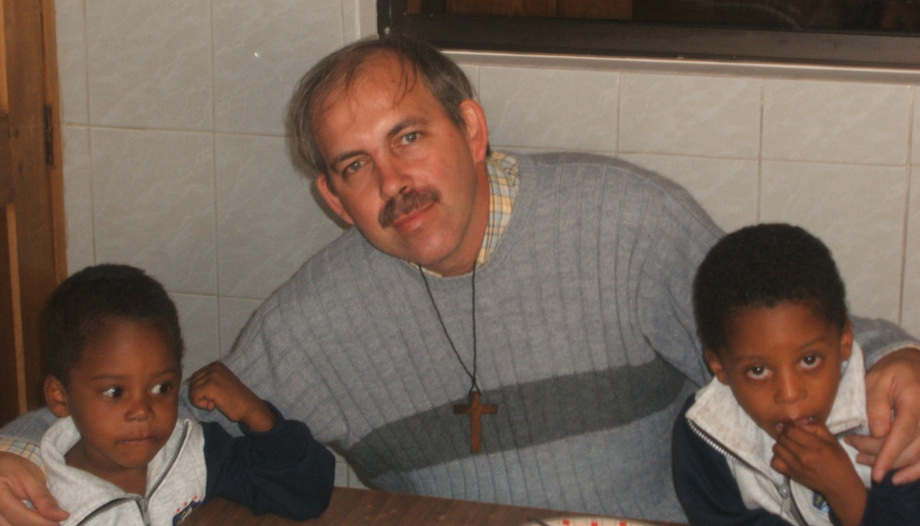
He is Pedro Manuel Salado Alba, “a lay faithful, member of the «Hogar de Nazaret» Association, born on January 1, 1969 in Chiclana de la Frontera (Spain) and died on February 5, 2012 in Playa de Tonsupa, near Atacames (Ecuador)”.
With this step, only a miracle performed by God through the intercession of this man from Cadiz is needed to see Pedro Manuel Salado on the altars as Blessed of the Catholic Church.
The «offering of life» is a path to beatification and canonization introduced by Pope Francis in 2017 through the. Motu Proprio «Maiorem hac dilectionem».». This way allows the elevation to the altars of Christians who, driven by charity, heroically offered their lives for their neighbor, accepting certain death, as was the case of Pedro Manuel Salado.
Omnes has spoken with the postulator of the diocesan phase of the cause of Pedro Manuel Salado, Miguel Varona, who sent the archives of this first phase to Rome and whose work has been continued in the Holy See by Friar Alfonso Ramirez Peralbo, OFMcap.
Pedro Manuel Salado died in Ecuador, why is his trial being initiated in the Spanish diocese of Cordoba?
-Normally, the causes of beatification and canonization are initiated in the dioceses where the person died. However, permission was requested from the diocese of Esmeraldas, in Ecuador, where Pedro Manuel Salado died, to initiate it in the diocese of Cordoba.
In Cordoba there were quite a few witnesses of his life, including some of those who were present at the moment of death.
In addition, Pedro Manuel lived for some time in Córdoba. So the case was initiated in Cordoba. During the process, the court was sent to Esmeraldas to take testimony from some people who lived there in Ecuador.
In fact, the seven children who were saved by Pedro Manuel were interrogated and some people were also present at the time.
Pedro Manuel gave his life in a heroic act, but was his life extraordinary?
-Saints are not superheroes, they are not strange people who do strange things. The saint is not levitating all day long, nor is he or she dedicated only to prayer.
The saints make the ordinary extraordinary: love, faith, hope, fortitude, justice, in addition to the virtues attached to their own state in life, married or celibate, etcetera.
I have seen in Pedro Manuel -and I said it on another occasion- that he is like an iceberg. He shows tremendous humility.
He is sent to Ecuador, and accepts by obedience, to serve there in the mission of Hogar de Nazaret. He also has an enormous charity, which is demonstrated in how he treated, cared for, educated and watched over the children of his Hogar de Nazaret group.
I believe that, above all, it was this love for children that made him cry out at the supreme moment of this surrender, of this offering of life. “I have to save my children!” .
That is not an impulse, it is not an outburst, it is the consequence of a lifetime. At that moment, he says the exact word, “I give my life for my children, I have to go save my children.” and went into the sea to save these seven children.
How did Pedro Manuel Salado get to know Hogar de Nazareth?
-Hogar de Nazaret was founded in Cordoba in 1976, and has had ecclesiastical approval since 1978. It was founded by María del Prado Almagro, who is also in the process of beatification.
Pedro Manuel became acquainted with this association of the faithful in 1987 and saw his vocation. He arrived in Cordoba in 1988 to serve in a home of the Hogar.
He lived in Cordoba until 1999, when he was appointed secretary general of Hogar de Nazaret. A little later he was even appointed general councilor.
In 1999 he was assigned as a missionary to Ecuador, to a children's home in Quinindé, Ecuador, an area of the Prelature of Esmeraldas.
There he lives a very different reality. There is a school for boys and another for girls. Some time later he was appointed director of an educational unit in Quinindé.
The work is very big because they have a huge number of children in schools and homes. So he gives his life, little by little, until he offers his whole life.
For those who do not know Pedro Manuel's death, what was that moment like?
-From the Hogar they would go, from time to time, to a house they borrowed on the beach in Atacames. We are talking about February 2012. They are very beautiful beaches, but they have surprising and treacherous currents.
There were children from 17 years old to toddlers playing on the shore and suddenly a wave came and swept seven children, of various ages, out to sea.
At that moment, Pedro Manuel says that shout “.“I have to save my children!», and threw himself into the sea. It should be pointed out that, although Pedro Manuel was from Chiclana (Cádiz), and knew how to swim perfectly well, he had a sovereign respect for the sea. He himself had taught many of his children to swim, in fact.
Faced with the force of the current, he jumped in, while other people on the shore were paralyzed.
Pedro Manuel began to bring children out little by little, someone threw him a surfboard on which he rides some of the minors.
In the end there were two siblings left, Selena and Alberto, and with great effort, he took them to the shore. That is where he died, from a cardiac arrest produced by the mixture of exhaustion, the swallowed water, etc.
What does the life of Pedro Manuel Salado say to Christians today?
-I think what it tells us is that giving one's life out of love, following the example of Christ, is something that Christians should feel compelled to do.
Certainly there are people who give their lives for others as part of their profession or their work, but in the case of Pedro Manuel it is not an isolated gesture, but a growth, a progress in love.
His testimony tells us that life is to give it, to give it away, in many ways, in daily life, yes, but also in those extreme moments in which, with God's strength, we can give our lives for others.





 Español
  English
  Italiano
  Français
  Deutsch
  Polski
  简体中文
简体中文