


 Nigeria and Kenya, where the most Catholics attend MassCecil from Kenya: working for his community
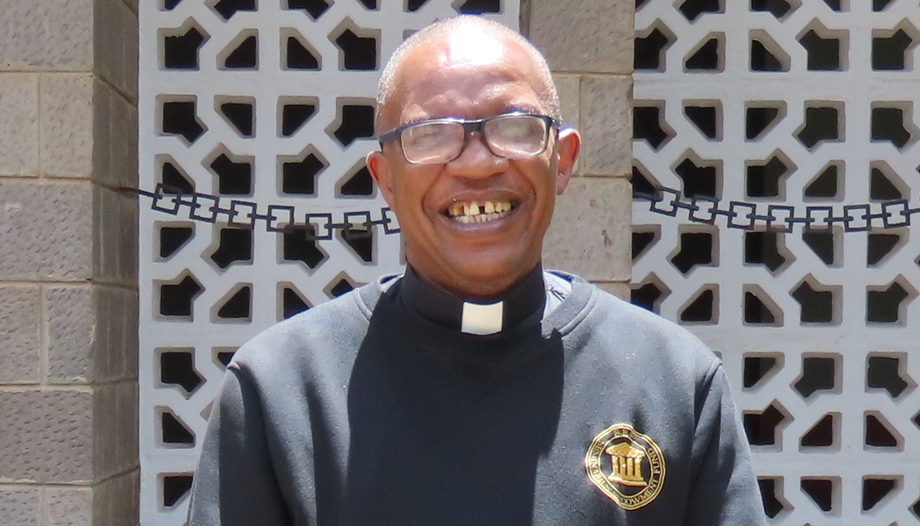
Fr. Antony Mwituria is a the priest Kenyan. He is the director of the Seminar Endowment Fund (SEF), an entity dedicated to ensuring the financial sustainability of Kenya's national seminaries. Omnes interviewed him about the experience of its creation, its prospects and challenges.
Over the years, you have held a variety of roles, how has that experience prepared you for your current position?
- I was a parochial vicar for a very short time. But the fact that I was the financial administrator (procurator) of the Archdiocese of Nairobi for almost two decades had a profound effect on me.
One of the great challenges at that time was the financial sustainability of the Church in Africa. Shortly after my appointment as procurator in 1999, I remember Archbishop Ndingi Mwana ‘a Nzeki handing me a booklet produced by the 1999 AMECEA (Association of Bishops“ Conferences of East Africa) conference, entitled ”On Self-Sufficiency.".
At that time it was evident that funding from international donors was decreasing, while the financial needs of the Church were increasing. My mission in the procurator's office was to make the Archdiocese of Nairobi self-sufficient. I believe we achieved a good degree of financial sustainability.
Perhaps what has most influenced what I do now was my assignment at St. Augustine's Major Seminary in Bungoma as a teacher and formator. In Bungoma I found the facilities in very poor condition. The building was never built to be a seminary, so there is much to be done to adapt it to the needs of a seminary.
It was evident that the seminary was experiencing financial difficulties. The most basic needs - repairs and purchases - were a challenge. The question was: where did they get the money for that?
So the idea for the fund came up when you were working at the seminary?
- Yes, we soon realized that it was not only St. Augustine's seminary that was experiencing difficulties. Other national seminaries, such as St. Mary's in Molo, St. Thomas Aquinas in Nairobi and St. Matthias Mulumba in Tindinyo, were in a similar situation.
This is how we came up with the idea of the Seminary Endowment Fund (SEF). Basically, all funds raised are invested appropriately. Only the interest generated by the money is used for the operation and improvement of the seminaries. The Kenya Conference of Catholic Bishops (KCCB) fully supported the idea and launched the fund in November 2018.
How were Kenyan seminaries historically funded?
- For a long time, Kenya was considered a mission territory. That meant having access to funding from abroad. Every year, seminaries received a grant. If you wanted to build something, all you had to do was write a proposal, get the money and build.
We have become donor dependent. Kenya is no longer a missionary territory. Now the opposite is expected: we should be the ones helping other mission territories. The response to this challenge has been very positive. The motto that unites us now is self-reliance.
What are the most promising prospects for the endowment fund?
- Our greatest asset is the 15 million Catholics in Kenya (estimates vary). The key message is that, unlike before, when others funded the formation of our priests, the responsibility now falls on us. We encourage the faithful to contribute to the fund.
With the help of a competent board of directors, we try to be as prudent as possible when investing the funds. At present, we invest in financial instruments. In addition, we organize activities and events - sports tournaments and an annual dinner - to supplement the contributions of the faithful and spread the message.
For now, the fund is quite small, amounting to about 50 million Kenyan shillings (US$387,000). We hope to double that amount before the end of the year.
What is the target fund size?
- One billion Kenyan shillings ($7.73 million). When we started, we were very naïve. We thought we could raise a billion in one year. The reasoning was very simple: if 200,000 of the 15 million Catholics donated 5,000 shillings each, we would raise a billion. We discovered that it was not that simple.
Many people do not know about SEF. We have visited 22 of the 28 dioceses in Kenya. We have talked to priests about SEF. Last year we opened accounts on TikTok, YouTube and Facebook. The effort is beginning to bear fruit. Last year, for the first time, individual contributions exceeded tournament and dinner proceeds.
You mentioned some of the challenges you have faced. What other challenges are there?
- First of all, sending messages to all the people who contribute to the fund (more than 4,000 people) is very costly. We do our best to thank and encourage our contributors. We are still working with Excel, and it is a nightmare. But somehow the team has managed to keep up. The right software for it is quite expensive; we haven't bought it yet.
Secondly, the country is simply huge. There are a lot of people to reach, but our team is quite small.
Third, parishes and dioceses already organize numerous fundraising campaigns to build churches, schools, hospitals and other charitable works. Understandably, people are not very willing to hear about yet another contribution. We have an arduous task ahead of us to convince people that, if there is anything they need, it is a well-trained priest. It would be a real shame to build a church and not have a priest to celebrate Mass. At the moment, we do not have enough priests.
Is there a lack of vocations in Kenya?
- No, in fact, we are experiencing a vocation boom. At the moment we have 1,100 seminarians, but, unfortunately, every year we have to reject many aspirants to the seminary because we do not have the capacity to accept them. This year we are going to turn away 200 aspirants. Last year we turned away 64. You could say it's a “good problem”.
In addition to improving the state of the seminaries, we must expand their capacity. We must also take care of the formation of seminarians.
Our seminaries are often understaffed. For example, St. Augustine's Seminary in Mabanga has 269 seminarians and a staff of only eight priests, who are both teachers and formators. In addition, this already overburdened staff has to cope with a lack of equipment.
We need to set ambitious goals. Today, priests are required to specialize: for example, as hospital chaplains, school chaplains, formators and so on. Contemporary society presents us with new challenges every day - such as artificial intelligence and social networks - which influence the way priesthood is lived today. Seminarians must be properly prepared for all this. This requires an investment.
The need to increase the capacity of our seminaries could not be more urgent, as churches in the developed world are asking us for priests. We have already sent some priests to America, Australia and parts of Europe.
Have there been any moving stories in these six years at the helm of the fund?
- Many. Last year we went to Narok to encourage people to contribute to the fund. We told them: all you have to do is contribute one shilling a day. If every Catholic in Kenya gave one shilling a day, that would be 15 million shillings a day; we would exceed our target in six months. That message was very well received. People continue to send us a shilling every day. Some people think one shilling is too little, so they send five or ten shillings instead. At the end of the presentation that day, some people sent 365 shillings (about $3); one shilling for each day of the year in advance.
It was very moving. It is something we would like to repeat in other parishes we visit. Often when people are asked to contribute, they think, “I can't give you ten shillings, or a hundred shillings, it's too little.” But when they hear that we are very happy to receive a single shilling, it changes everything. They start to collaborate.
There is a guy who started collaborating in 2019. Every week he would send varying amounts. One week he would send you 23 shillings, another 45 shillings, and so on. But he has been very consistent. Also, he has been increasing the amount he sends. Now he doesn't send less than a hundred shillings a week.
In addition, there are two women, one from Bungoma and one from Nairobi. Both had similar experiences. They told us: “I don't know how to explain it, but since I started contributing, my business is doing very well.
We also celebrate a Mass every year in honor of St. Charles Borromeo, patron saint of the SEF. The faithful follow the celebration of the Mass from the seminaries through various live broadcasts. They send their intentions for the Mass. The first time we celebrated the Mass, it took us almost 30 minutes to read all the intentions. The second time, we received thousands of intentions. We did not read them during the Mass. It would have taken too long; we could only assure the faithful that we were praying for their intentions. People want to have a Mass celebrated for their intentions. They really want to support the formation of the seminarians, but at the same time they would like someone to pray for them.
Seminarians have also organized themselves into what is known as the Friends of the Seminaries Endowment Fund. They pray daily for those who contribute to the fund.
How can readers contribute to the fund?
- Readers in Kenya can do this conveniently through M-PESA. It is also possible to set up a standing order with your bank for regular contributions. In addition, we have a solution for international contributions. You will find all the information about this on our website. You can also contact the office directly at info@sef.or.ke.
Any final thoughts?
- I have said it once or twice and people have looked at me a bit surprised: the Seminary Endowment Fund (SEF) is, at the moment, the most important initiative of the Church in Kenya.






 Español
  English
  Italiano
  Français
  Deutsch
  Polski
  简体中文
简体中文