


It has been 150 years since the last Pope named Leo, the 13th of those who bore that name. Last year, Cardinal Robert Prevost took that name again, to become Leo XIV. How has the Church changed from the previous one to the current one? What has been the evolution of the Church in this century and a half of changes?
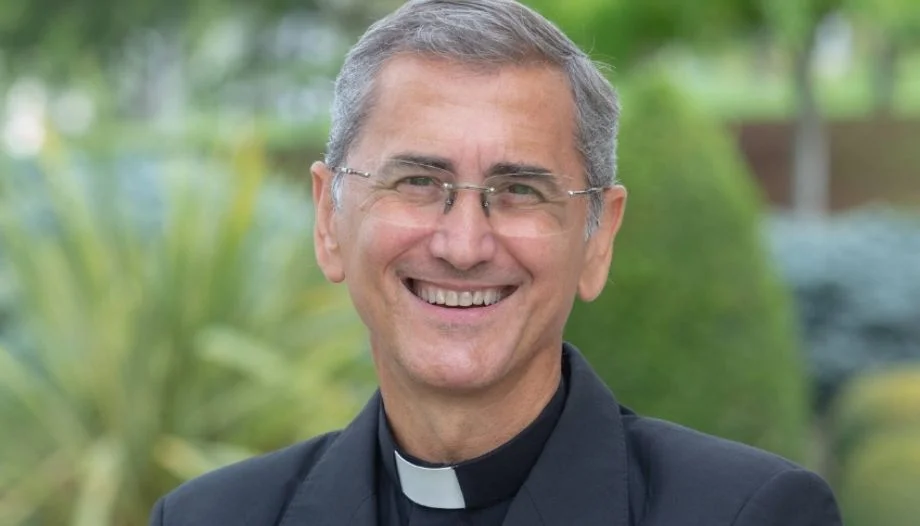
Historian Onésimo Díaz (Madrid, 1966), professor at the University of Navarra and professor of its Master in Christianity and Contemporary Culture, is the author of such books as History, culture and Christianity (1870-2020), Women protagonists of the 20th century., Expansion: The Development of Opus Dei between 1940 and 1945, o Florentino Pérez Embid: A biography. Now reviews the evolution of the Church in recent history in a title just published in Sekotia: From Leo XIII to Leo XIV.
Can it be said that in the last 150 years we have gone from a Church somewhat anchored in the past to a more modern one? To whom do we owe the change?
-Yes, it can be said that the Catholic Church has undergone a profound transformation from the end of the 19th century to the present day. In the pontificate of Leo XIII, an openness to the problems of the contemporary world already began, especially with the encyclical Rerum novarum (1891), which addressed the workers' question and laid the foundations of the Social Doctrine of the Church.
However, the great turning point was the Second Vatican Council, promoted by John XXIII and continued by Paul VI. The Council brought about an updating (“aggiornamento”) of the Church: a new relationship with the modern world, a greater role for the laity, ecumenical openness and a liturgical and pastoral renewal.
However, change does not depend only on Vatican II. Subsequent pontiffs such as John Paul II, Benedict XVI and Francis have also been influential, each responding to different challenges of his time.
What is there in common between the time of Leo XIII and that of Leo XIV?
-Both are marked by profound technological, social and cultural changes. Leo XIII lived through the impact of the industrial revolution, the rise of modern capitalism and the workers' question. Leo XIV faces the digital revolution, artificial intelligence, globalization and increasing secularization.
In both cases, the Church is faced with the challenge of dialoguing with a world in accelerated transformation without renouncing her identity. It is worth emphasizing precisely this historical continuity: the popes of the contemporary era, especially from Leo XIII to Leo XVI, tried to read “the signs of the times” and to offer moral and spiritual guidance in the midst of great historical changes.
And as for the challenges for the Church, are they the same?
-Some challenges are similar, although they are presented in different ways. The relationship between faith and modernity, the social question, economic inequalities and the loss of religious influence were already present in the time of Leo XIII. Today, however, new problems appear: digital culture, artificial intelligence, anthropological crisis, moral relativism, social loneliness or cultural fragmentation. Moreover, secularization in Europe is much more intense than it was a century ago.
It could be said that the substance of the challenge is the same-how to evangelize in a changing world-but the historical contexts are very different.
In reviewing the contemporary history of the Church, what do you think is its most important contribution to society?
-The defense of the dignity of the human person is probably one of the greatest contributions of the contemporary Church. Since the Social Doctrine of the Church began with Rerum novarum Until the social encyclicals of the 20th and 21st centuries, the Church has defended workers' rights, social justice, peace, religious freedom and the centrality of the person in the face of totalitarian ideologies or dehumanizing economic models.
The role of the Church in promoting education, health and care, as well as its intellectual and moral contribution to debates on human rights, bioethics and international solidarity, should also be highlighted.
The Church and the war
In these years there have been numerous wars. Has the Church always maintained the same position in the face of wars? Is Leo XIV's position on the U.S. war against Iran consistent with that line?
-The Church's position has evolved historically, although it maintains permanent principles: defense of peace, protection of human life and the search for diplomatic solutions.
Traditionally there was the theory of the “just war”, developed since St. Thomas Aquinas, but after the world wars of the twentieth century the popes have shown an increasingly critical position towards armed conflicts. In his first encyclical, Magnifica humanitas, The Pope questions the existence of the “just war”, except in case of self-defense and in a few other cases. Popes such as Benedict XV during the First World War, Pius XII during the Second World War, John XXIII with Pacem in terris, Francisco insisted on dialogue and mediation.
In this sense, Leo XIV's prudent and pacifying stance on the conflict between the United States and Iran is consistent with the line followed by contemporary popes: avoiding the escalation of war, defending diplomacy and remembering the human consequences of war.
In recent years, the Church has been losing political weight. Has this meant greater freedom for the Church itself?
-In part, yes. The loss of political and institutional power has also meant greater independence from governments and state interests. The contemporary Church, especially after the Second Vatican Council, has tended to distinguish more clearly between religious mission and political power.
This allows it to act with greater moral freedom and to focus more on its spiritual and social dimension. However, it has also meant less capacity for direct influence on legislation and public life, especially in secularized societies. Ultimately, the Church has learned to function in democratic and pluralistic contexts where it no longer occupies a hegemonic position, but can continue to influence through moral persuasion and witness.
Could Leo XIII be compared with the proclamation of the Social Doctrine of the Church, and Leo XIV with his magisterium on AI and the digital world?
-Yes, it is a plausible comparison. Leo XIII faced the great transformation of the industrial revolution and responded by offering ethical criteria on labor, capital and the social question. His social doctrine sought to give moral direction to a new world.
In a similar way, Leo XIV seems to want to address the challenges of the digital revolution and artificial intelligence. Just as Leo XIII addressed the “workers” question,“ Leo XIV seeks to address the ”technological question": how to preserve human dignity, freedom and moral responsibility in a context dominated by algorithms, automation and technological power. In both cases, the Church seeks to offer ethical principles to guide far-reaching historical changes.






 Español
  English
  Italiano
  Français
  Deutsch
  Polski