


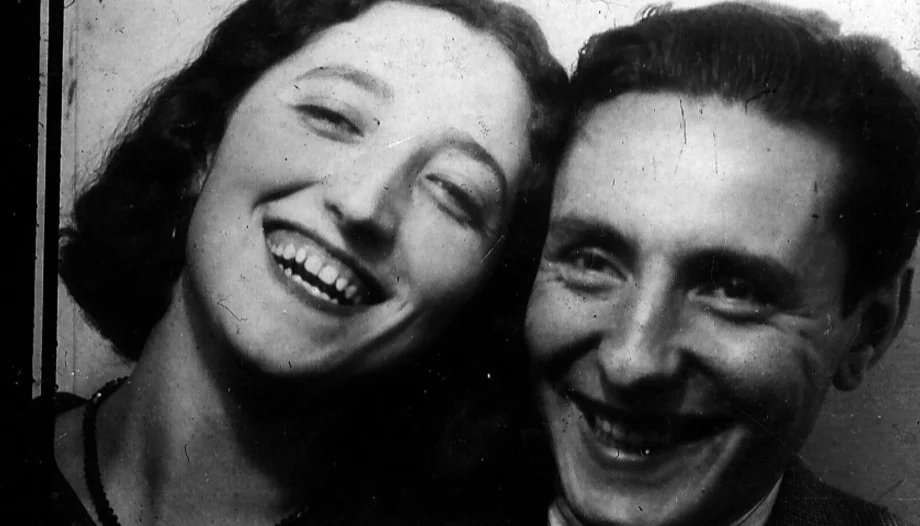
The process of beatification and canonization of the married couple Tomás Alvira (1906–1992) and Paquita Domínguez (1912–1994) took place in the Archdiocese of Madrid and received the decree of validity from the Dicastery in 2016. This is one of the causes for canonization with the widest-spread devotion worldwide. Both sought holiness in their daily lives and in their marital and family love within the contemporary Catholic Church. Both, originally from Aragon, dedicated their lives to teaching and to their large family (they had nine children); they were also among the first supernumeraries of Opus Dei—Tomás joined in 1947 and Paquita in 1952.
Recently (in July 2026), the Positio of their cause for canonization, bringing them one step closer to being declared Venerable. José Carlos Martín de la Hoz was the diocesan postulator for the cause, which is currently in the Roman phase; he is intimately familiar with the couple’s life and offers us some insights into it.
With the recent release of the Positio In Rome, what are the next legal and theological steps at the Dicastery for the Causes of Saints so that they can be declared blessed?
–The news of the submission of the *Positio* to the Dicastery—that is, the preparation of a summary of the life, virtues, reputation for holiness, and graces of each of the two (since holiness is personal) for study by the consultors—historians, theologians, canonists, bishops, and cardinals—means that the voice of the People of God, which is the diocesan process, will be examined by the Dicastery and will reach its conclusion, God willing. The voice of the Church—if it is positive—will designate this married couple as models and intercessors for the People of God, and they will be called Venerable Servants of God.
For a beatification to take place, a miracle attributed to their intercession is required. What kinds of favors or graces do people who entrust themselves to the Alvira couple today typically ask for and report receiving?
–Indeed, in a cause for beatification and canonization, it is necessary to listen to the voice of the People of God; this includes both the collection of their writings and documents, as well as the testimonies of those who knew and interacted with the Servants of God. The Dicastery’s study of this documentation would clearly express the voice of the Church through the designation of Venerable Servants of God. But the final voice would still be missing: the voice of God.
A miracle is the voice of God, which would indicate that a person could be beatified and would mark the beginning of public veneration limited to a diocese, an ecclesial community, a particular setting, etc. A second miracle would lead to canonization and the worldwide extension of public veneration.
Logically, the occurrence of a miracle would be the culmination of years of fostering private devotion, in this case, to a Christian couple who were receiving graces from God as intercessors for the Christian people and, at the same time, serving as role models and friends to many Christians around the world who trusted them as friends of God and intercessors.
What anecdote about the Alvira couple do you think best illustrates their holiness?
–The fact that both the husband and wife are in the process of beatification and canonization implies that this is a cause involving a married couple, that is, that both have presumably come to live, with the help of the Holy Spirit, the fullness of the Christian life and have practiced the virtues to a heroic degree through their spousal love. Therefore, they can be proposed as models to the People of God
This was the remarkable story of this married couple: they fell more and more in love with each other every day, so that the immense love they shared spread to their children, relatives, friends, and coworkers. In this way, as Pope Francis said in *Fratelli Tutti*, they contributed to the revolution of love that is Christianity.
San Josemaría Escrivá used to say that they should make their house a «bright and cheerful home.» In their daily lives, given the financial hardships they faced at first, how did they manage to maintain that positive atmosphere at home?
–Tomás and Paquita realized that the only way to love each other more and more each day was simply to seek to love God above all else. By grounding their lives in love for God, they were able to love one another and, through that love, inspire those around them.
Their children often saw them praying throughout the day, attending Holy Mass, praying the Rosary as a family, gazing at an image of the Virgin Mary hanging on the wall, or praying when they woke up and when they went to bed. They always saw them smiling and trusting in God’s love, which sustains all love on earth; and above all, they saw them gazing lovingly at one another and looking at them with infinite tenderness.
One of the cornerstones of the Alvira family’s approach to education was respect for their children’s freedom. How can one balance discipline and the teaching of Christian values with fostering each child’s personal autonomy?
–The secret to raising their children lay in the immense love and trust with which they treated them. Little by little, they gave them more freedom until they trusted their word completely—more than if a hundred notaries had affirmed the opposite.
Certainly, they had to discipline them, just as all parents must do, but they always waited until the children were in a lighthearted mood to correct them, so they addressed issues one by one, always offering encouragement and hope, since it was clear that they would overcome that situation with God’s grace and the love and trust with which they were approaching it.
Tomás Alvira was not a conventional teacher; he introduced concepts that were revolutionary for his time at the Ramiro de Maeztu Institute and the Civil Guard Orphanage. What did his «Living Classroom» method entail, and why is he considered a pioneer of active learning?
–I remember that Tomás Alvira was my Natural Sciences teacher in my senior year of high school at the Ramiro de Maeztu High School. He was a close friend of my father’s and treated me with great affection, as if I were his own son. One day, as I was observing a piece of olivine under a microscope, he said to me, “If we are to praise God for the macroscopic beauty of nature, we must praise God even more for its microscopic beauty.” One day I realized that he did the same with the other students: the secret to Tomás and Paquita’s teaching was their love for people’s souls and their desire to open up new horizons for them in life.
While Tomás excelled in public academic circles, Paquita carried out a tremendous amount of social and educational work, especially with domestic workers and women in her community. What was this ministry like, and what impact did it have on those women?
–Paquita had been a teacher in some villages in Huesca before she got married and devoted herself entirely to raising a large family, with practically no help for many years of her life. Just as she poured love and dedication into those children and their families at Bureau, she did the same for the domestic workers and the younger people around her. Paquita teaches us a very simple truth: a teacher never stops being a teacher.
Toward the end of their lives, both went through very difficult medical conditions (Tomás had cancer and Paquita had a brain disease). How did they experience this final stage of physical pain, and what messages did they leave for those who cared for them?.
–When you love deeply and build a family as beautiful and close-knit as the one they created, that school of love teaches you all of life’s lessons—both the seemingly pleasant ones and the seemingly unpleasant ones: life’s setbacks—and what they do is help us mature in love.
The school of suffering—the sanctification of physical limitations, fatigue, deafness, and our inability to fend for ourselves—makes us more humble, obedient, and simple: holiness is a gift from God that is expressed in the gift of the virtues, where God pours Himself out in response to the little effort we make—which is our freedom.
What theological and pastoral significance does the fact that the Church considers the holiness of Thomas and Paquita together, as a married couple, rather than individually, bring to the table?
–God wishes to teach us that the purpose of marriage is essentially the love between spouses. A love of such a nature that when the wedding day arrives and the sacrament of marriage is received, that natural love is transformed, through God’s grace, into a supernatural love that lasts for eternity.
Holiness is a gift from God, just as is the love that God instills in each of us and in Christian spouses. Discovering the fruitfulness of that love is the key to happiness. The Holy Father Benedict XVI expressed this very well in his first encyclical, “Deus caritas est.”.




 Español
  English
  Italiano
  Français
  Deutsch
  Polski