


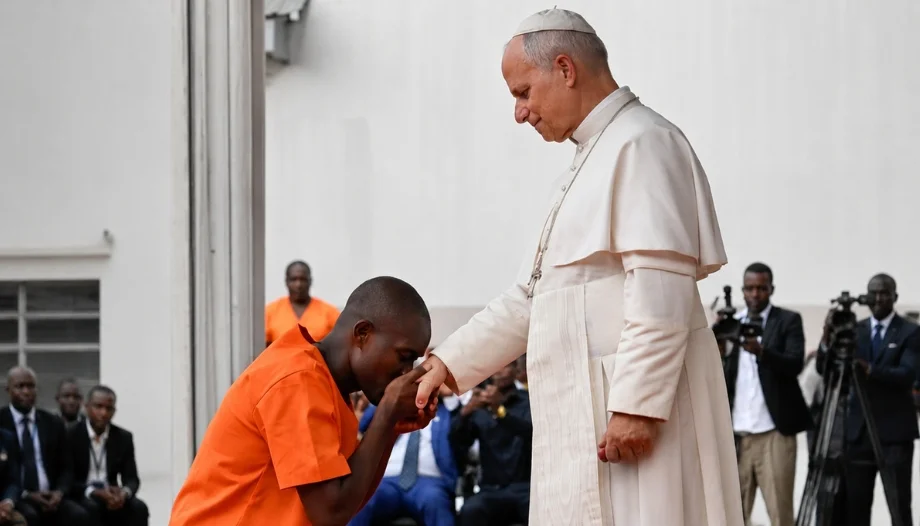
Among the most striking images of Pope Leo XIV's upcoming trip to Spain will not only be the Basilica of the Sagrada Familia or the Monastery of Montserrat. There will be another scene, much quieter and probably much more eloquent: the Pontiff's visit to the prison of Brians 1, in San Esteban Sasroviras, where he will meet with eighty prisoners.
At first glance, it may seem a minor gesture in an agenda loaded with institutional symbolism. Barely twenty minutes. No big speeches planned. No solemn ceremony. And yet, it is one of the most Christian gestures a Pope can make.
What does this gesture show?
At a time when much of the public debate is oscillating between exemplary punishment and the moral cancellation Christianity insists on something uncomfortable: no person is forever reduced to his or her worst act. The Christian tradition does not deny crime, harm or guilt. But neither does it accept that the human being is definitively identified with them.
That is why prisons occupy such a special place in the Gospel. Jesus Christ did not approach only the righteous, the pure or the respectable. Much of his preaching was directed precisely to those whom society considered lost: public sinners, outcasts, excluded or despised. “I was in jail and you came to see me”The Gospel of Matthew says in describing the final judgment. This is not a secondary metaphor. It is one of the central images of Christianity.
When a Pope enters prison, the Church visualizes exactly that idea: that even there, there is still human dignity, the possibility of redemption and hope.
It is not a matter of romanticizing crime or ignoring the suffering of victims, but of affirming that justice without mercy ends up becoming pure exclusion. And that a truly humane society must leave room for repentance, change and forgiveness.
Pope Leo XIV is not the first
In this sense, Leo XIV does not inaugurate a new tradition, but is part of one of the most constant and moving traditions of the contemporary papacy.
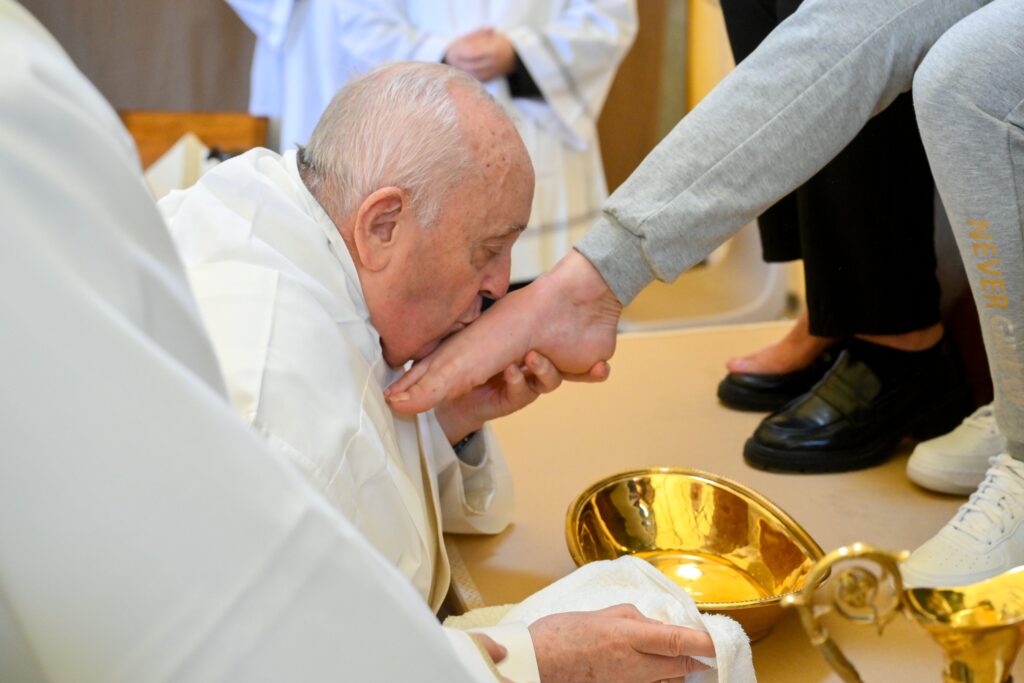
Pope Francis made prison visits one of the most characteristic signs of his pontificate. He did so since the first Holy Thursday of 2013, when he went to a juvenile prison in Rome to wash the feet of prisoners, including women and Muslims, breaking schemes even within the Church itself. Over the years he repeated that gesture in numerous prisons in Italy and abroad, always insisting on one idea: no one can be deprived of hope.
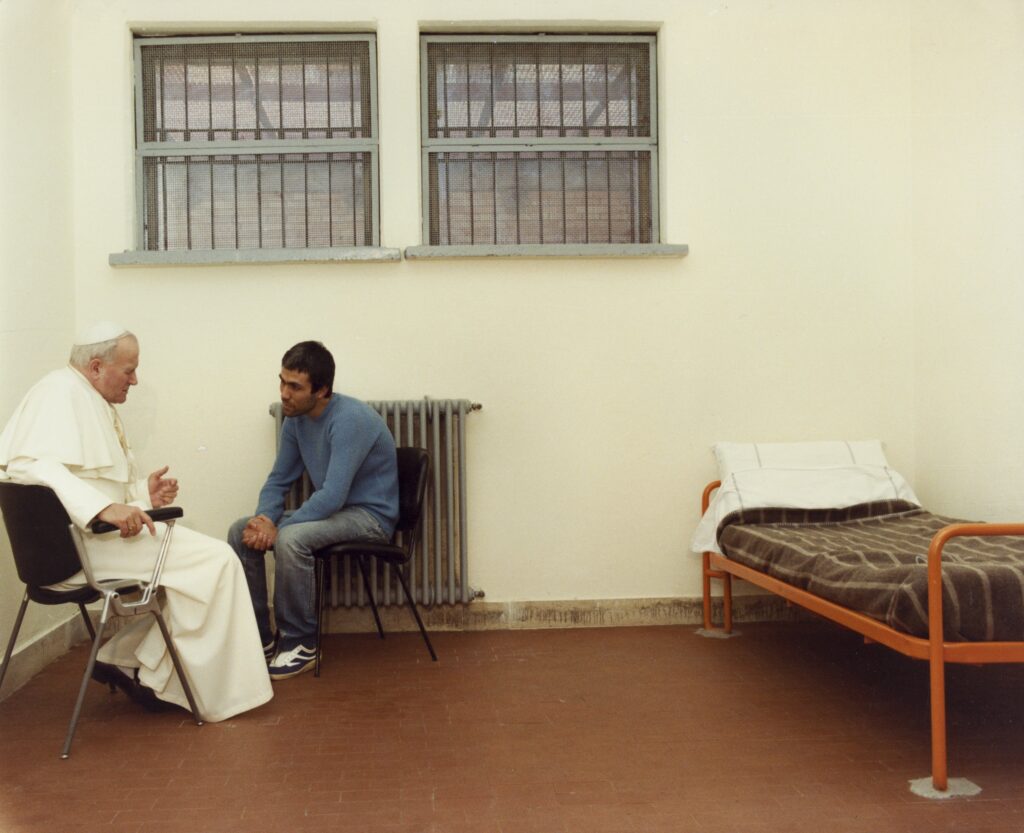
But before Francis, other pontiffs had already done so. St. John Paul II starred in one of the most shocking moments in the recent history of the Church when he visited Mehmet Ali Ağca, the man who had tried to assassinate him in 1981, in prison. That private conversation in Rebibbia prison became a universal image of Christian forgiveness. The Pope did not remove the gravity of the attack; he did something more difficult: he denied that hatred had the last word. Thus, he publicly forgave Agca and later declared that he did so «because that is what Jesus teaches. Jesus teaches us to forgive.
Benedict XVI also visited prisons during his pontificate, stressing that prison overcrowding is like serving a «double sentence» and that detainees must be treated with respect and dignity. Long before that, John XXIII and Paul VI had already shown a special sensitivity towards prisoners and the outcasts of society.
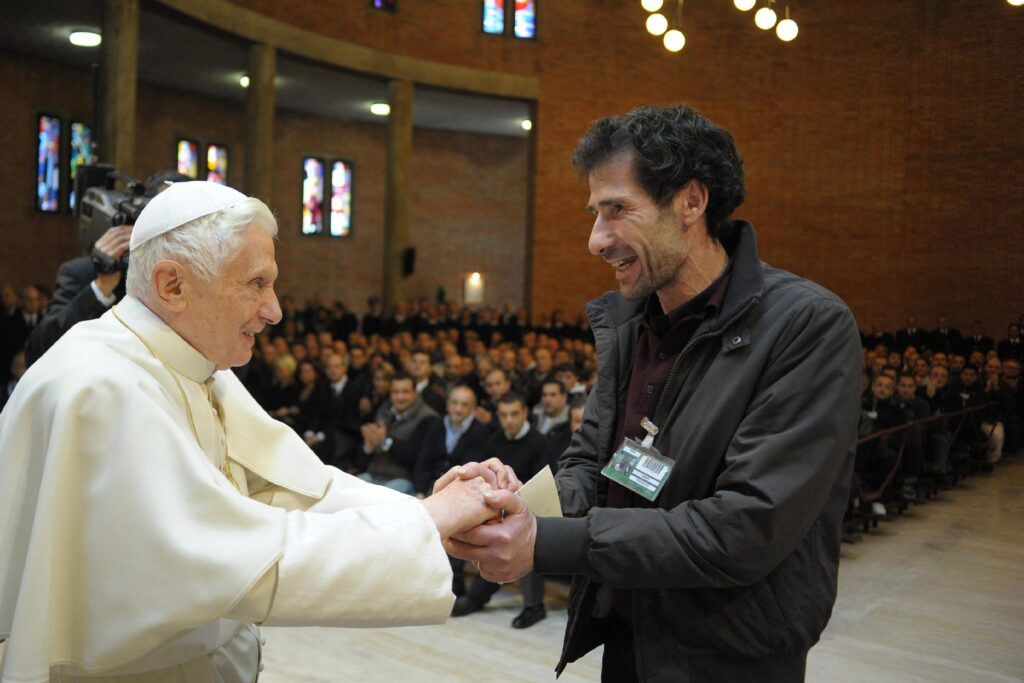
In reality, this tradition has its roots much further back. For centuries, prison ministry has been one of the most concrete expressions of Christian mercy: chaplains, religious and volunteers accompanying those whom the rest of society preferred not to look at.
A different logic
That is why the future visit of Leo XIV to Brians 1 has so much symbolic force, and perhaps that is one of the most necessary contributions today. In a culture increasingly inclined to label people definitively, the visit of a Pope to a prison introduces a different logic: that of mercy. A mercy that does not eliminate justice, but refuses to believe that anyone is condemned forever to be only his or her sin.
The fact that Leo XIV wanted to include “in extremis” a stop at Brians 1 is not, therefore, a minor agenda detail. It is a silent declaration of priorities. Before power, prestige or solemnity, the Pope wants to stop for a few minutes with those who live behind walls and bars.
And this, in the end, connects with a Christian intuition: that it is precisely there, where many stop looking, that the Church believes that hope can still appear.






 Español
  English
  Italiano