



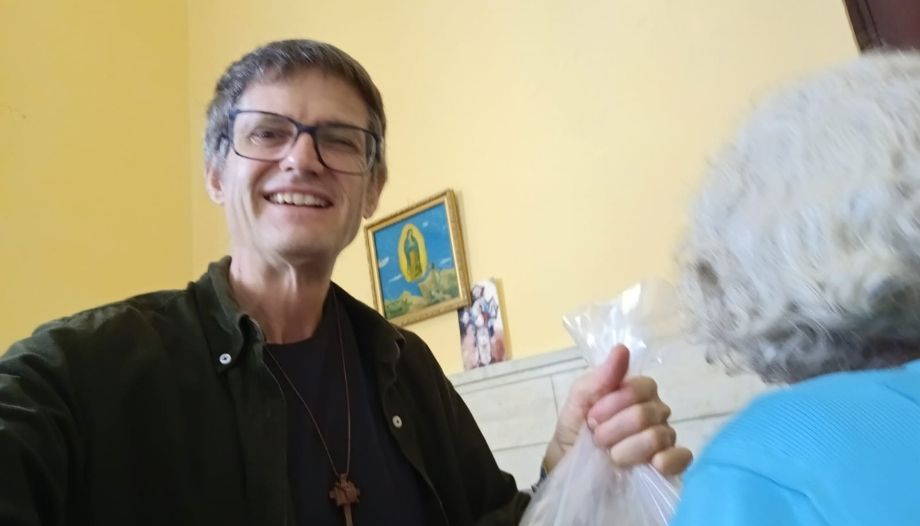
“Cuba is beginning to enter a phase of serious humanitarian crisis. A crisis aggravated not only by the economic blockade, but by a political blockade that from within does not recognize the collapse of things,” Fr. Luis Javier Reyes, OSA, told Omnes.
The friar Augustine, who joined the Order of St. Augustine in 1990 and has been a priest since 1997, has been in Cuba for a year and a bit, not a long time, but enough time to get to know the situation of the country and its people. The first thing he says is that “the fact that there are Augustinians in Cuba is due to the personal effort of Robert Prevost, now Leo XIV”.
Energy, food and health, especially for the elderly, take up most of the conversation. Many people, especially those without family outside, eat only once a day (some once a week), and outside Havana, there is only electricity for an hour a day, or two at most. And there is a lack of medicines, particularly mental health and the like.
Following Pope Leo XIV's recent Audience with U.S. Secretary of State Marco Rubio, the son of Cuban immigrants, the Vatican press office reported that “hot“ issues such as Cuba - in these days of high tension with the United States - were addressed, regarding which the need to support the Cuban people was reiterated“.
You are from Malaga, you have been stationed in Cadiz, Seville, 17 years in Portugal in a parish in the industrial belt of Lisbon. How was your arrival in Cuba?
- The Augustinians of Spain (Province of St. John of Sahagun), we are present in many places. When I arrived I found a diocese, the Archdiocese of Havana, which has many years, a whole history, few priests, we are in the neighborhood of Old Havana, although it is the center of Havana, are very unstructured neighborhoods, a community also very unstructured at the religious level.
You know you are going to a different place, to which you have to adapt, which has its peculiarities. There are some services in the city, but the deterioration can be seen at an accelerated pace. Eight months after arriving, I began to see things that I did not see when I arrived, in terms of misery, difficulties in day-to-day life, the price of things that skyrocket.
There is galloping inflation, and right now working for the State solves fifteen days, no more, and I am referring only to being able to eat, no longer to buy shoes.
The election as Pope of Cardinal Robert Prevost, an Augustinian, took place in May, a few months after your arrival in Cuba. A great joy for you.
- Yes, and especially here in Cuba, because when Pope John Paul II asked all the religious to come to Cuba, at the end of the 90's, when he made his visit, a first attempt was made from Spain, but the doors were closed to the Augustinians here, at the government level, and he was trying. He was General at that time, he started again the negotiations, and he managed to get us to come here. The fact that right now there are again Augustinians in Cuba is very, very, very much due to the personal effort of Robert Prevost, of Leo XIV.
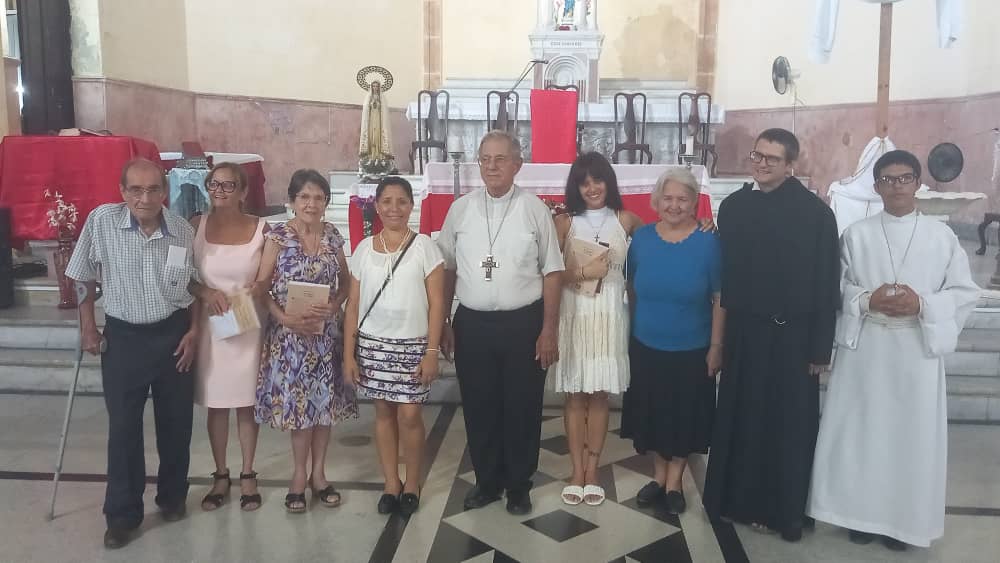
Are there other Augustinian missionaries in Cuba?
- I am currently alone in Havana, but there are other Augustinians in Cuba, specifically in Ciego de Avila, Chambas, where the Superior lives. It is a province in the center of the island, and there is a community that is completely different, in the countryside. The town of Chambas is well structured, and then they have many rural, agricultural communities. It is one of the few functioning camps in Cuba, Ciego de Avila.
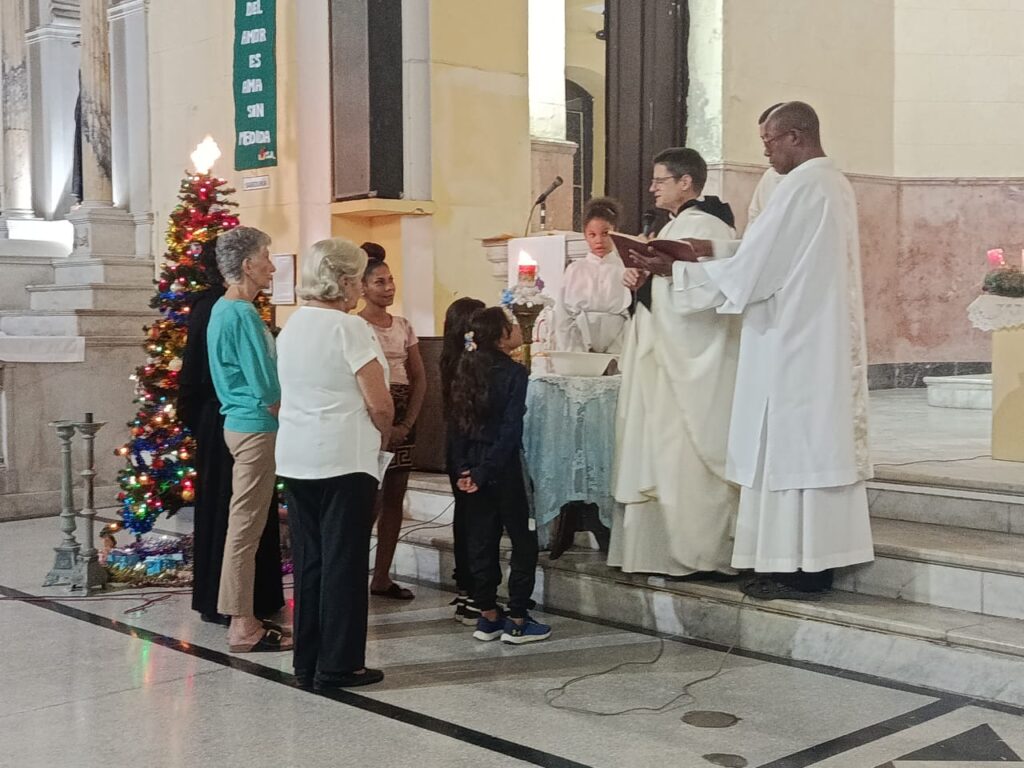
The news that reach us are children without food and school, lack of fuel for buses, ambulances or garbage trucks, electrical blackouts, a lot of unemployment. Tell me...
- There are now two things here. On the one hand, the energy blockade to which the United States is subjecting Cuba. But before that, there is the fact that there is no fuel, or very little fuel. You go to Havana and you see very few -electric- cars circulating, even before that.
And many, many hours of blackouts. Here, in Old Havana, we have two very good things: one, the electricity is underground, so there is light almost every hour of the day, which is only available in the event of a breakdown or when it is removed from one area and put in another. And two, the gas by conduction, that is to say, one has gas in the kitchen. Here there is a lot of electric cooking, it was promoted a lot in the 90's, even then there were electricity problems.
In Chambas, on the other hand, it is very difficult to contact them, because right now they have two hours of electricity. Or one. Just yesterday I was talking, and they had only half an hour all day.
In almost all the bars in Havana, except for two or three, gas is supplied by gas cylinder. For years, the distribution of gas cylinders has been controlled, and one or two per family, etc., are allocated per year. Now it is not available, only on the black market at exorbitant prices. And lately not even on the black market. It is practically no longer available.
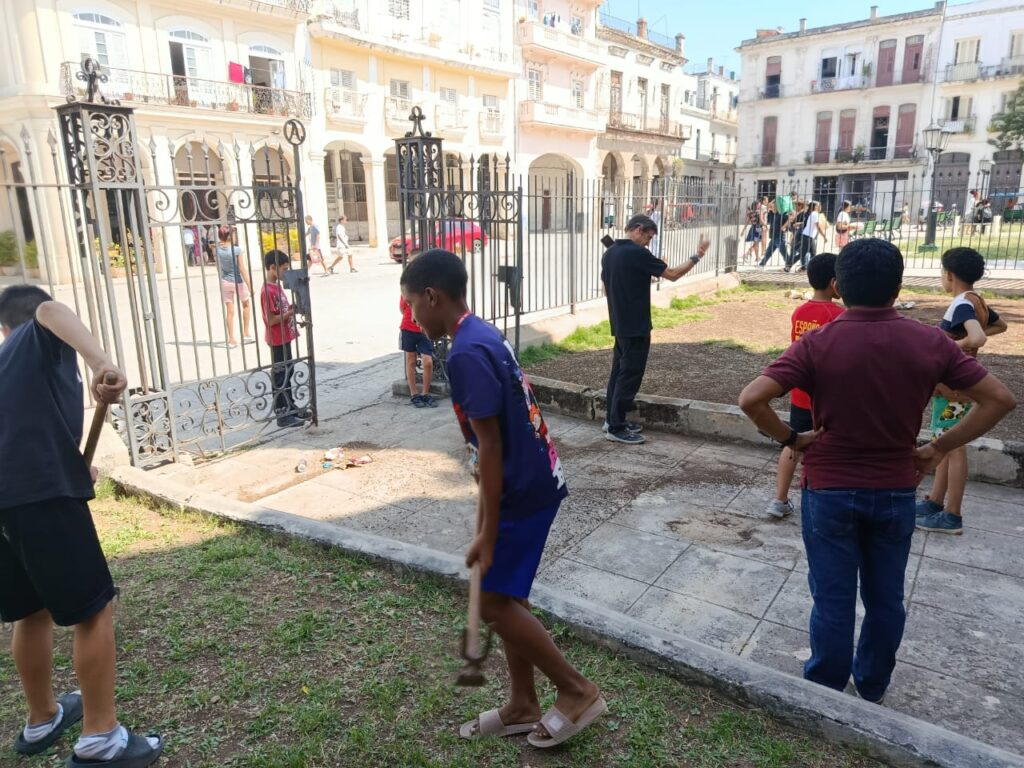
Can it be said that the farther one moves away from Havana, the fewer hours of electricity?
- Yes, as There are many power cuts, you can say that the farther away from Havana, the less electricity. Because many people live in Havana, and in order for people not to go out on the streets, as they are doing now... When I arrived, the electricity was out for 4 to 6 hours a day. With the existing data, in Havana people are having 4 to 6 hours of electricity a day, and outside Havana, one or two hours a day, no more. And that's when you have to put in for washing clothes and for cooking, those who have electric stoves.
In the countryside, outside Havana, firewood is easy to find, charcoal is more complicated, but in the city of Havana, the price is very expensive, and in a house, a person stands by the window or balcony to cook.
People tend to reduce meals. Adults start eating a loaf of bread with something at noon for lunch, and eat only dinner at the end of the afternoon. They want the children to always have lunch, but here, in the neighborhood of Old Havana, adults are on one meal a day, but not because they can't cook, but because the price has gone up so much that it is not possible.
You are talking about a serious humanitarian crisis, aren't you? An emergency situation.
- Yes, the economic issue here is in many cases an emergency. There are many people who have help from abroad, because they have family abroad, they manage to get by, more or less, and with difficulties. Let's think that most Cubans living abroad do not have big salaries, but here with 5 dollars a week you can provide food for 4 people. Now less, they have to send more.
We are getting to the point of an emergency. The other day we had a meeting in the diocese. And on the issue of social pastoral, the main concern in almost all the parishes is to maintain, with volunteers, a dining room where there are people who can have at least one heavy meal a week. It continues to be a matter of concern.
The Church does not currently have a sufficient network to support all those who will eventually run out of means.
The humanitarian food problem can be very serious if it is not addressed quickly, especially quickly.
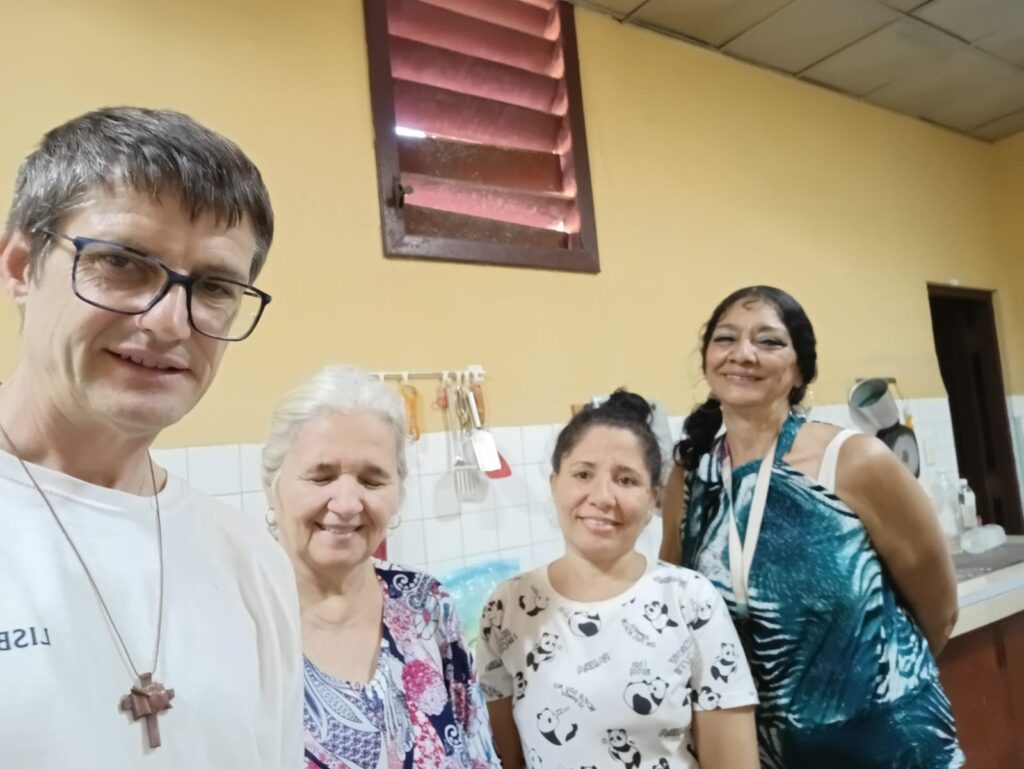
Is there a diocesan Caritas? You have a parish in Havana.
- Yes, we are here in Old Havana, our parish is called El Cristo del Buen Viaje. There is a diocesan Caritas. But since the pandemic this help from within has become unfeasible. The purchasing power of many people has collapsed. There are a few people with a lot of money, some are owners of small businesses, but the majority of the people are getting poorer by leaps and bounds, very quickly.
What are the most pressing needs of the people, in addition to those mentioned above? There should be some channel to help...
- It is difficult, because at the official level, Cuba has no needs, the Cuban government does not have them. Any help that could come from any government, for example, in medicines, especially those related to psychiatry, mental health, could solve many needs and would do a lot of good, but... There are many patients with schizophrenia and other diseases that are untreated. And they are a problem for them, and also for the physical security of the family that accompanies them, because they are without medication.
Here, the people who are having the hardest time are the elderly who have no family outside, who live in a small house, and for whom a pound of rice - 460 grams - is now costing between 280 and 300 pesos, not to mention a pound of meat, that is unthinkable. They cannot even live on rice. This is what feeds the most.
How are the ecclesial communities in Cuba. And the total population of the country
- In the Church The communities are very small, because here there has been a very strong emigration, and mainly people of working age have emigrated. It seems that before the pandemic there were 12 million Cubans, now there are almost 9, about 8 million and a bit. The vast majority of those who have left have been people of working age, and there are therefore a large number of elderly people who are having a very hard time.
Within that great collective there are those who have been church people, and to those people, the Church of Cuba owes a lot. When it was forbidden to come to church, when all jobs were cut off -the State had them-... If you were a doctor, you would never have a position of responsibility, if you worked in a company you were never going to have an important position, no matter how good you were, because you went to church... Those people, in spite of the penalties they have had, never stopped participating in the Christian community. In the parish, the daily Mass is attended by 15 to 20 elderly people, these people deserve everything.
Finally, a message. What would you like to convey to the world about what we have discussed.
- Now, Cuba is beginning to enter a phase of serious humanitarian crisis. A crisis aggravated not only by this economic blockade, but also by a political blockade that is not taking action from within, action that should be taken, which I do not know if it is due to lack of interest -which it is, because if not, they would have already done something-, or because they do not recognize the collapse of things, which are on the verge of collapsing.
And when all this falls, the humanitarian crisis is going to be really serious. Right now, one way to help is by sending medicines.
We do not know what is going to happen a month from now. What we do know is that whatever happens, the humanitarian situation is going to be very serious, and we have to be very attentive to act as quickly as possible, because right now people are with the minimum, minimum, minimum, minimum, in many ways. We are talking about a lot of people.
We ended up talking about the Félix Varela Cultural Center, This is a “very interesting” cultural and dialogue initiative, which will be postponed for another time. Reyes says he has never found a place where young people ask him so many questions about the metaphysics of Aristotle, for example.






 Español
  English
  Italiano