



– Katarzyna Szalajko, OSV News
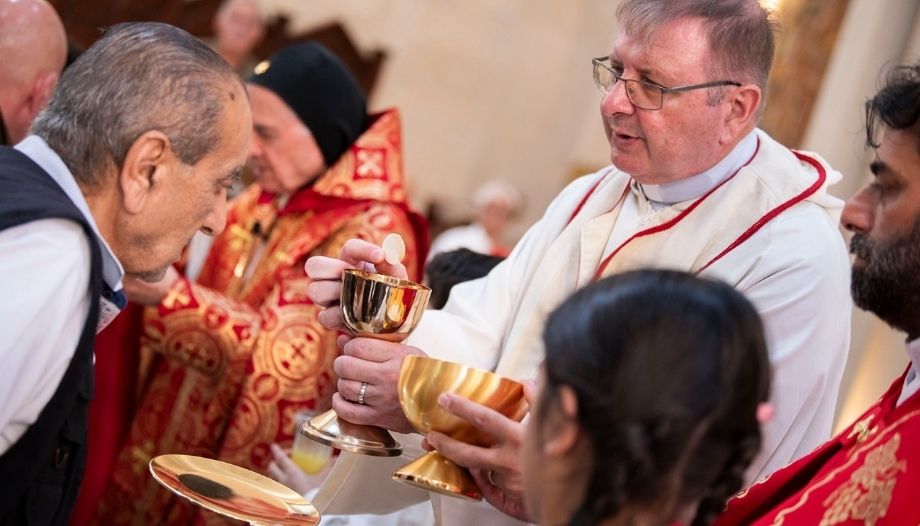
Father Jan Zelazny, director of the Polish section of the pontifical charity Aid to the Church in Need, met with Christian communities during his trip to Lebanon and Syria in late May. The priest said that local families are struggling not only to survive the crisis but also to “live fully,” feeling trapped in a war with which they do not identify and which they did not want, suffering its consequences on a daily basis.
The priest has spent years engaged in research, pastoral care, and humanitarian aid for Christians in the Middle East.
But during his travels through Lebanon and Syria, he has been able to see firsthand how the violence between Israel and Hezbollah continues destabilizing southern Lebanon and heightening fears among Christian communities. “Yesterday we had drones flying over the area,” he said. “Today there were Israeli attacks against Hezbollah in Lebanon.”.
Israel's attacks on Hezbollah continue
On May 25, Israeli Prime Minister Benjamin Netanyahu warned that military operations—which began in early March as part of the war against Iran—would intensify, claiming that Hezbollah was not respecting the ceasefire.
According to Reuters, the Israeli military was not letting its guard down. “On the contrary, I told them to step on the gas even more,” he added. (Note: In fact, the attacks continued on June 10.).
The result, according to Father Zelazny, is mounting pressure on villages near the southern border. “In some places, only small Christian villages remain,” he said. “Muslims have abandoned those areas. There are tunnels where Hezbollah fighters are hiding. The Christians remain there and live under a kind of constant siege.”.
Many refuse to leave, fearing that leaving would mean permanent exile. “They say that if they leave, they’ll never return,” Father Zelazny told OSV News.
Aid from the Church reaches some of the isolated villages through Catholic networks coordinated by Caritas and the Apostolic Nunciature in Beirut. The director of ACN mentioned three communities in particular—Debel , Ain Ebel and Rmecich—where humanitarian aid continues despite the growing insecurity.
Ordinary lives abruptly shattered
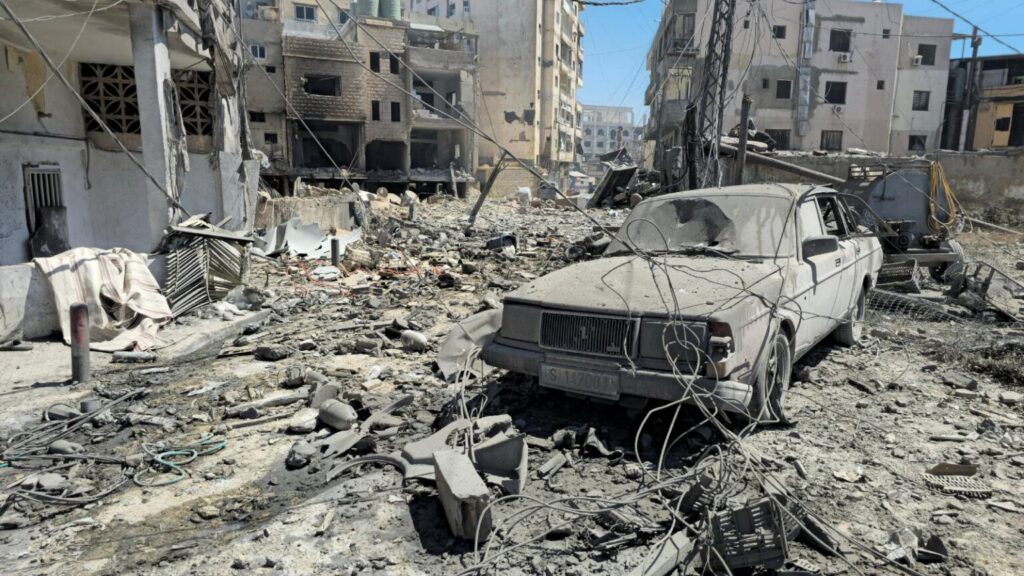
"The crisis is not measured solely in terms of destroyed buildings, but in terms of everyday lives that have been abruptly cut short," said the priest, who described his encounter with a displaced family from the region near Cana, in southern Lebanon.
His father had worked in telecommunications for years before deciding to return to his hometown due to family health issues. He sold everything, bought a small store, and started over.
“The store had even started turning a profit,” Father Zelazny told OSV News. “Nine months later, instead of a store, all that’s left is a huge ruin.” Now, two families share an unfurnished apartment with four girls, a young boy, and an elderly aunt. “They have practically nothing,” he said. “Garden chairs and mattresses on the floor are their only furniture.”.
For many Lebanese Christians, the future has come down to a matter of survival. However, Father Zelazny said that the greatest danger is despair, especially among young people.
“The most painful thing is that, when you talk to young people, all they ask about is how to get a visa,” he said. “They don’t see a future for themselves in this country.”.
Little freedom to enjoy the summer
Summer vacation has already begun in Lebanon, but for many children and teenagers, the constant insecurity, airstrikes, and economic collapse leave them with little freedom to enjoy it. Many spend most of the day at home, with few safe places to go. “What are young people supposed to do?” asked Father Zelazny. “They stay at home, maybe visit their friends. Is it any wonder they just want to get out?”.
Church groups are trying to create alternatives. He pointed to youth programs led by Franciscans and supported by Catholic charities, including recreation centers where children can play sports, swim, or simply spend time together safely.
They want “a future, a normal life”
Father Zelazny said that Christians in the region need help “not just to survive, but to have a life.” They want “a future, a normal life,” he told OSV News.
For this reason, many of ACN’s projects in Lebanon do not focus on direct aid, but rather on helping people earn a decent income. During his trip, Father Zelazny visited artisans who craft religious objects from cedar wood. Since Lebanon’s cedars are protected, the artisans use only carefully selected branches obtained from routine pruning.
Christian artists in the country's Cedar Region
During his trip through the Cedar Region of Lebanon—which gave the country its national symbol—Father Zelazny met several Christian artisans supported by ACN.
“Right now, we’re bringing in people who make items for us that we then sell, in order to help Christians who, with no tourists, simply have no way to survive,” Father Zelazny told OSV News by phone on May 27 from Lebanon.
Local Christians who made rosaries, cedar wood carvings, and small religious souvenirs were suddenly deprived of this source of income when tourists disappeared from Lebanon as fighting broke out in March.
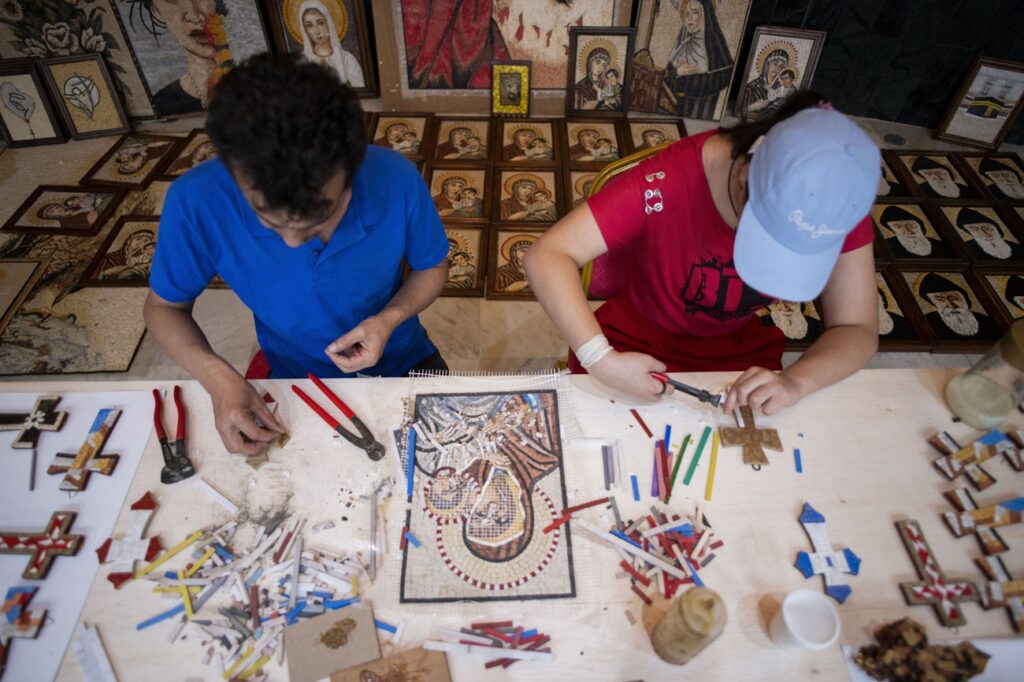
In another initiative related to the Holy Spirit University of Kaslik, a leading Lebanese academic center, Syrian students and refugees are working alongside a Syrian Catholic priest who is also an artist. Together, they create mosaics using stones imported from all over the world. “A single icon can provide them with a decent livelihood for a month,” said Father Zelazny. “Why just give them money when they can work? They don’t want charity. They want independence.”.
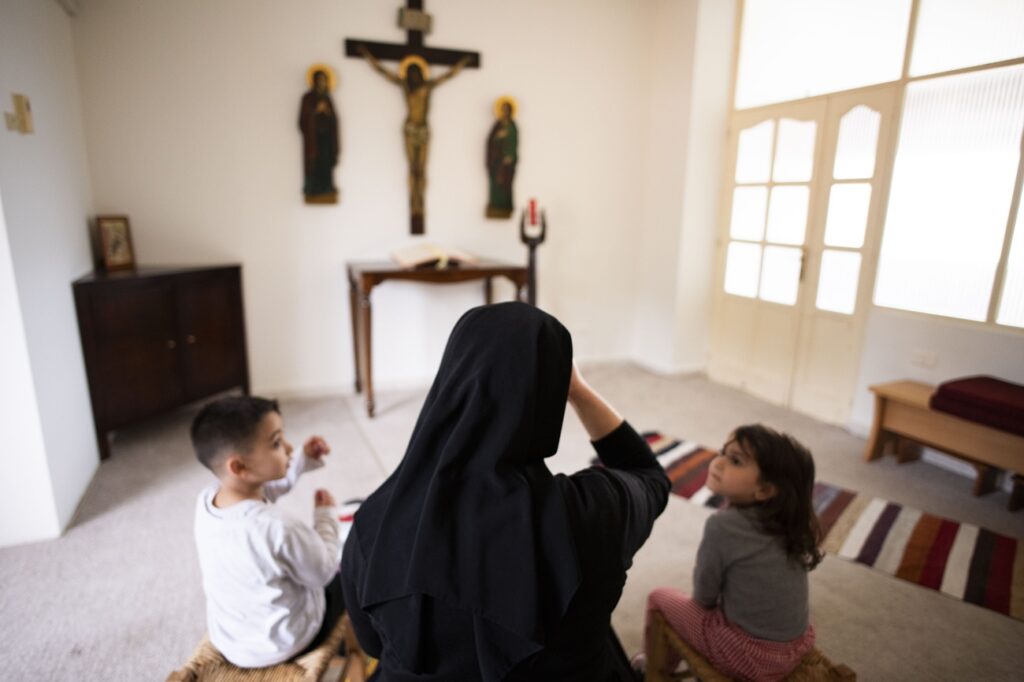
That same logic guided a recent project with the Greek Catholic Sisters of Our Lady of Perpetual Help, who took in displaced families at their monastery in Harissa. The convent had originally been designed as a retreat house. Then the war broke out.
Sharing a roof, a garden, and meals with the sisters
“The sisters took in 14 families—41 people,” Father Zelazny told OSV News. “They shared not only a roof over their heads, but also their garden and their food.” One of the biggest ongoing challenges was the electricity supply.
Lebanon’s national power grid operates intermittently, forcing many residents to rely on expensive fuel-powered generators. “The sisters could no longer afford the fuel,” he said. ACN approved funding to expand the solar panel installation.
“In Lebanon, there are nearly 300 sunny days a year,” said Father Zelazny. “It’s better to make a one-time investment in solar energy than to constantly spend money on fuel.” The panels now allow the convent to function despite overcrowding and economic collapse. Even if the displaced families eventually leave, the infrastructure will remain for the local Church.
The priest repeatedly returned to the same theme: Christians in Lebanon often feel trapped in a conflict that is not their own. “In the war between Israel and Hezbollah, they became millstones caught in the middle,” he said. “It’s not their war, but they are its victims.”.
“There is weariness,” Father Zelazny added to OSV News. “But there is also something deeper. Before our very eyes, the world of values has collapsed. International law no longer works in practice.”.
Lebanon's Slow Decline, but Faith Remains Visible
He spoke emotionally about the slow collapse of a country he loves. “Lebanon showed the world that people from different cultures and religions could live together,” he said. “And now all of this is being destroyed.”.
However, amid the destruction, faith remains surprisingly visible. Pilgrims continue to gather at the shrine of Saint Charbel Makhloufy at the Marian shrine of Our Lady of Lebanon in Harissa, while the churches remain full despite the current instability.
Father Zelazny said he had witnessed the same determination among Christians in the Syrian cities of Aleppo and Homs. “Those who remain persevere because of their faith,” Father Zelazny said. “Without faith, this cannot be overcome.”.
Basic needs. Children's joy at the sight of candy and chocolate
According to Father Zelazny, their needs are often extremely basic. In Debel, residents lack reliable access to water because the damaged infrastructure no longer functions properly. Local communities also face difficulties collecting trash and removing debris from destroyed buildings, amid ongoing restrictions and insecurity.
“They have very simple dreams,” said Father Zelazny. “Dreams of just one or two more days.”.
“When the aid workers arrived, the first thing the children asked was if they had any chocolate,” he said. Later, the volunteers returned with large quantities of candy. “The children were overjoyed,” said Father Zelazny.
“I know some might think this is insignificant,” he added. “But our entire reality is built on small things. And the fact that they dream of such insignificant things shows the magnitude of the humanitarian tragedy unfolding there.”.
——————–
– Katarzyna Szalajko writes for OSV News from Warsaw, Poland.
– This article was originally published in OSV News, and you can read it here.
--------






 Español
  English
  Italiano
  Français
  Deutsch
  Polski
  简体中文
简体中文