


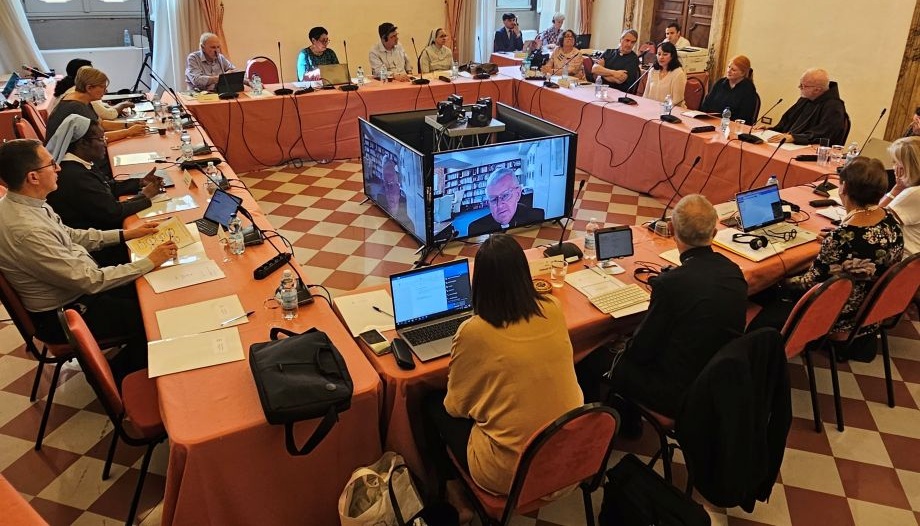
 'Tutela Minorum' urges "path of healing" from abuses"Tutela Minorum" consults on child protection measures.Celso Morga: "We are committed to eradicating child abuse".
The Holy See has published a “Rescriptum ex Audientia Sanctissimi” by which Pope Leo XIV approves the new Statute of the Pontifical Commission for the Protection of Minors (“Tutela Minorum”).
The approval was granted on May 20, 2026 to the Cardinal Secretary of State, Pietro Parolin, and takes effect immediately upon publication in the official Vatican media. The new norms will be valid “ad experimentum” for a period of three years.
Direct dependence on the Pope
According to the new statutes, the Commission is integrated into the Dicastery for the Doctrine of the Faith, and must collaborate with this organism respecting the different spheres of competence of each. Despite this linkage, the Commission maintains a direct line with the Pontiff, informing him directly through its President.
In order to strengthen collaboration in areas of common interest (such as ad limina visits or the preparation of the Annual Report), the Statute determines that the President or Secretary of the Commission will be appointed as a member of the Dicastery for the Doctrine of the Faith during his term of office. For his part, the Prefect of the Dicastery, currently the Cardinal Victor Manuel Fernandez, The Commission shall designate one or more observers for the Plenary Assemblies of the Commission.
Key competencies
The “rescriptum” details the main functions of the organism, focusing on the protection of the minors and people who are vulnerable to abuse sexual:
- Advice to the Pontiff: Offer advice and propose the most appropriate initiatives for protection and prevention;
- Support to Church structures: Assist diocesan/eparchial bishops, episcopal conferences and major superiors in developing and updating their local Guidelines;
- Reporting systems and shelters: Promote the creation of stable and easily accessible systems for reporting abuse, as well as regional and national centers where victims receive shelter and spiritual, medical, therapeutic and psychological assistance;
- Preparation of an Annual Report: Prepare and publish an objective report on the Church's guardianship policies, structured in sections “Missio universalis”, which “addresses specific issues related to guardianship that have a bearing on the ‘safeguarding’ of the Church throughout the world; and “Missio localis”, which is “addressed to locally related activities with special reference to the territories of the Episcopal Conferences on ‘ad limina Apostolorum” visits and to specific Institutes of Consecrated Life and Societies of Apostolic Life” . This document will be sent to the Pope after informative consultation with the Secretariat of State, and will require the explicit consent of the Roman Pontiff for its annual publication.
Organizational structure and internal operations
The Commission will be composed of a maximum of 23 members elected by the Pope for a period of five years, with the possibility of reconfirmation. These members shall be «clerics, members of Institutes of Consecrated Life and of Societies of Apostolic Life and lay people of various nationalities who are distinguished by their knowledge, proven ability and pastoral experience in the various fields of guardianship”.
On the other hand, the internal operating rules approved in the “rescriptum” include the following:
- Qualified majority: All proposals submitted to the Supreme Pontiff by the Commission must first be approved by a two-thirds majority of its members.
- Plenary Assembly: It shall meet ordinarily twice a year (with the option of videoconference) and shall require the presence of at least two thirds of the members to be validly constituted.
- Internal bodies: The Working Groups (divided into Regional and Study Groups) and the Executive Council are defined, the latter as the permanent body responsible for coordinating monthly work initiatives.
- Mandatory confidentiality: Both the members of the Commission and the consultants, officers and external collaborators have the strict obligation to observe confidentiality regarding the information they learn in the course of their duties.
- Headquarters and languages: The organization will maintain its legal headquarters and the confidential safekeeping of its archives in the Vatican City State, with Italian, Spanish and English as its official working languages.
At the end of the three-year trial period, the Commission will evaluate the development of these norms and will submit to the Supreme Pontiff the pertinent modifications for the drafting and approval of a definitive statute.






 Español
  English
  Italiano