


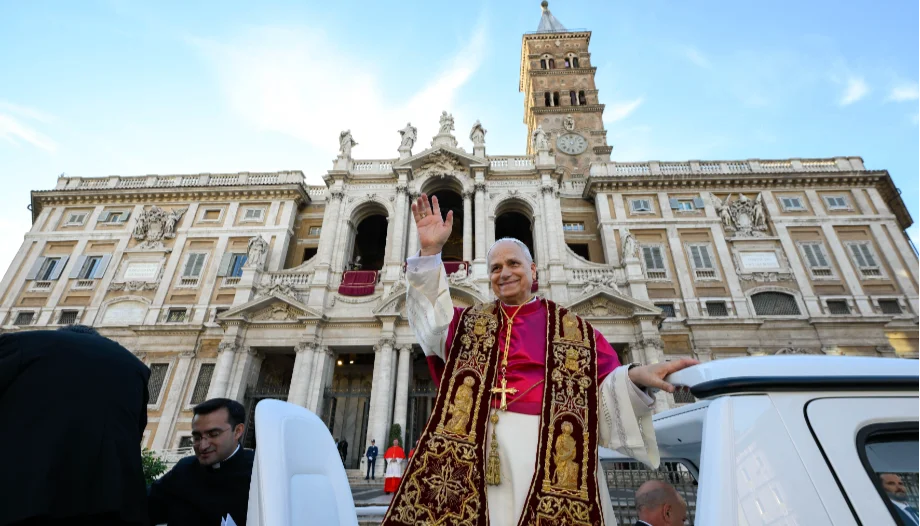
Anyone who lives in Rome knows how rare it is to see snow falling. A wonderful song was written about the extraordinary nature of this event: “La nevicata del ’56” (The Snowfall of ’56). The original lyrics were written by a great Roman singer-songwriter, Franco Califano, but it was made famous by one of the greatest performers in Italian music: Mia Martini.
“Do you remember? Once, all you could hear was the sound of the river in the afternoon / The fountain sang, and that water was clear—tell me it was like that / The sun was always shining, and the night was beautiful, just like you / The moon was there too, so much better than now, so much more than this / How is it, how is it, how is it that there was even room for fairy tales? / And quiet, so quiet, the snowfall of ’56 / Rome was all white, all clean and sparkling / You tell me yes: have you seen it like that again? What times those were!”
And, somewhere between dream and reality, that is exactly how that house came to be—the first house of the Mother of God in the West and the home of all her children—with the aim of making Rome and all her children pure, clean, and radiant, as only a mother knows how.
According to tradition, in fact, the founding of Santa Maria Maggiore began with a dream and culminated in a snowfall—something rare enough in Rome to begin with, and even more so in August of the year 358, during the pontificate of Pope Liberius (which is why the basilica is also called “Liberian”). The Virgin Mary appeared in a dream simultaneously to the pope and to a Roman patrician named John, commanding them to build a church on the spot where, the following day, they would find snow. And on the morning of August 5, on the Esquiline Hill—one of the seven hills of Rome—snow was indeed there.
The memory of the August snow lives on today in a celebration: Every August 5, the basilica commemorates the “Virgin of the Snows” with a shower of white petals falling from the top of the dome during Mass, similar to the shower of red petals at the Pantheon on Pentecost.
The End of a World
In the articles on Guadalupe, we saw how the Virgin literally came to the aid of a people—or rather, two peoples—who had lost all hope. This happened at a time when ancient traditions were falling into decline, the universe as it had been imagined was ceasing to exist, and there was no longer any reason to believe in the future.
Such was the situation at a time when Rome was losing its role as the capital of a vast empire and was on the verge of becoming little more than a village; the ancient gods were gradually being abandoned, a new faith—no longer persecuted—was emerging, and new authorities, both civil and religious, were rising from the catacombs.
And although historians debate the episode involving the snow—and most of them attribute the actual founding to Pope Sixtus III rather than to Liberius—the fact remains that it is an ancient monument: Sixtus had it built between 432 and 440, immediately after the Council of Ephesus in 431, which defined Mary as “Theotokos,” Mother of God, in opposition to the teachings of Nestorius, who sought to limit the title to “Christotokos,” Mother of Christ. A dogma that proclaimed Mary to be the Mother of God and, through the Son, the Mother of all mankind.
Of Rome’s four papal basilicas, Saint Mary Major is the only one that has preserved its early Christian structure intact: the same floor plan, the same naves, and the same 5th-century mosaics still in place. And in a sense, it was the architectural response to the dogmatic definition, as well as the «refounding» of a world—a new “axis mundi” based no longer on pagan religion, but on a Christian theophany. It was, moreover, not just a temple, but a home for the Mother and her children, who would also venerate her here as “Salus populi romani.”.
The Basilica: Mosaics, Icons, and a Taste of the New World
The mosaics, the basilica’s main feature, are visible from the old façade, which is partially covered by the newer one. Upon entering, one cannot help but be amazed by those in the central nave.
They were created during the papacy of Sixtus III, between 432 and 440, and are among the oldest Christian mosaics in the world, as well as still being in their original location.
The panels in the nave date from the 5th century and depict scenes from the Old Testament: Abraham, Moses, Joshua, and the life of Jacob, all set against golden backgrounds—a true visual catechism for a population that was overwhelmingly illiterate.
The triumphal arch depicts the Annunciation, the Adoration of the Magi, the Presentation in the Temple, and the Flight into Egypt; Mary is now depicted as a queen on the throne, dressed in purple and gold, in accordance with the proclamation of the dogma of Ephesus.
On the ceiling, Pinturicchio designed—at the request of Pope Alexander VI Borgia in the late 15th century—a coffered ceiling made of gold that, according to tradition, was donated by the Catholic Monarchs of Spain: the first gold to arrive from the Americas, brought back by Columbus upon his return. Every time I accompany Latin American groups to Santa Maria Maggiore, I welcome them home right beneath that gold that comes from their continent and hangs up there, forty meters high, illuminating the home of their Mother.
The apse features a 13th-century mosaic by Jacopo Torriti: *The Coronation of the Virgin*.
The crypt beneath the presbytery, known as the Chapel of the Manger, houses what is believed to be the oldest fragment of the Nativity scene: five sycamore wood planks, encased in a silver reliquary, representing the wood of the manger in Bethlehem.
“Salus Populi Romani”: Salvation for All
The Pauline Chapel houses one of the most venerated Marian icons in Christian history: the “Salus Populi Romani,” or “Salvation of the Roman People.” Tradition holds that it was painted by Saint Luke the Evangelist on a table in the Virgin Mary’s home and later brought to Rome by Saint Peter. Scholars, however, date it to between the 6th and 13th centuries. Whoever its creator may be, the devotion of the faithful and the popes toward it is immense. Pope Francis, for example, would spend time in prayer here before each departure and upon his return from apostolic journeys, and he has expressed his wish to be buried there, not far from his favorite icon.
It is worth pausing to consider the term “Romans.” This does not refer only to the inhabitants of Rome, but to all those baptized into the faith of the Roman Catholic Church, and even to every man and woman who turns to Mary as mother. It is the salvation of the universal people—those who belong to the Church and those who do not, those who arrive at the basilica amid the bustle of an organized group and those who enter alone, in silence, perhaps bearing the weight of something they cannot bring themselves to say aloud.
The “Salus Populi Romani” is a figure that looks down upon those who are small, those who are sick, and those who are pilgrims—in Rome and throughout the world.
The Baroque exterior and the Column of Majencio
The façade visible today dates from the 18th century and is the work of Ferdinando Fuga. The column standing in front of the façade, however—nearly fifteen meters tall and topped by a statue of the Virgin Mary—comes from the Basilica of Maxentius in the Roman Forum and is the only surviving column from that building. It was moved here in 1614 by Pope Paul V. The bronze doors of the central nave, meanwhile, come from the Forum of Nerva and were brought here in 1574.
Sub tuo praesidium
It is worth concluding with what is perhaps the oldest prayer written in honor of Mary, preserved on an Egyptian papyrus dating from around the year 250 A.D.:
“We take refuge in your protection, / Holy Mother of God; / do not despise our pleas / in times of need, / but rather, deliver us from all danger, / O glorious and blessed Virgin!” —





 Español
  English
  Italiano