


Throughout the history of the Church, some apparitions of the Virgin Mary have been associated with extraordinary events that, in popular parlance, are often referred to as ‘miracles of the Virgin’ and are linked to natural phenomena.
At times, there is a certain reluctance to use the term “miracles,” even in church language. However, the miracles of Jesus recounted in the Gospels were indeed numerous.
One need only read, as early as chapter 8 of the Gospel of Matthew, the first three miracles cited by the evangelist: the healings of a leper, a centurion’s servant, and Peter’s mother-in-law. Before that came the turning of water into wine at the wedding in Cana and the miraculous catch of fish, followed by the multiplication of the loaves and fishes, the raising of Lazarus from the dead, and many other miracles.
With the miracle at the wedding at Cana (the episode of *The Chosen* on this topic is magnificent), which St. John recounts at the beginning of chapter 2, the manifestation of the glory of the Son of God begins. “At Cana in Galilee, Jesus performed the first of his signs (miracles), through which he revealed his glory, and his disciples believed in him,” writes St. John. And there was his Mother, the Blessed Virgin Mary, collaborating in Jesus’ work of salvation.
The extraordinary events that have occurred in connection with apparitions of the Virgin Mary have not been formally declared miracles by the Church, but we can note a common thread among several of them: they involve nature—the sun, snow, flowers…. Let’s briefly look at some of them.
The August Snow at Santa Maria Maggiore in Rome
One of the oldest Marian stories of this kind is set in Rome in the 4th century. This is how it has said Gerardo Ferrara.
“According to tradition, the founding of Santa Maria Maggiore began with a dream and culminated in a snowfall—something rare enough in Rome, let alone in August—in the year 358, during the pontificate of Pope Liberius (which is why the basilica is also called “Liberian”). The Virgin Mary appeared in a dream simultaneously to the Pope and to a Roman patrician named John, commanding them to build a church on the spot where, the following day, they would find snow. And on the morning of August 5, on the Esquiline Hill—one of the seven hills of Rome—snow was indeed there.”.
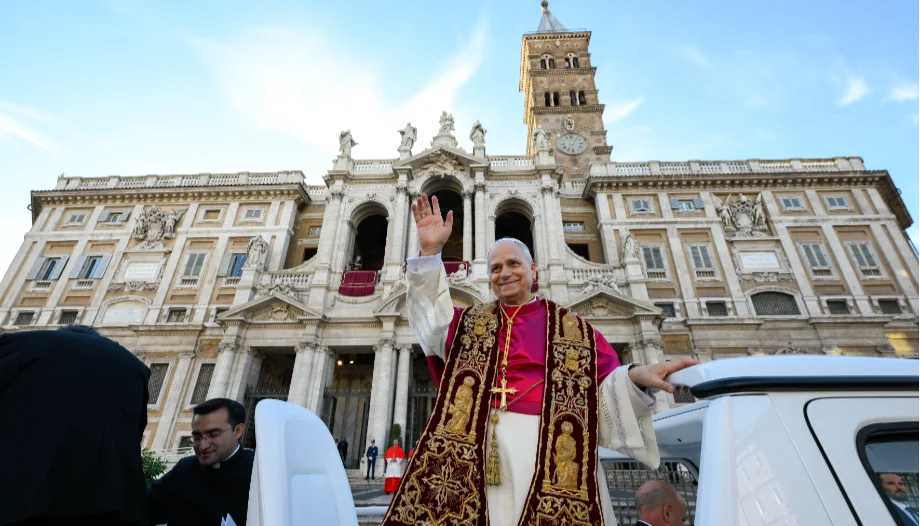
The memory of the August snow lives on today in a celebration: Every August 5, the basilica commemorates the “Virgin of the Snows” with a shower of white petals falling from the top of the dome during Mass, similar to the shower of red petals at the Pantheon on Pentecost.”.
Fátima: The Sun That “Danced” in 1917
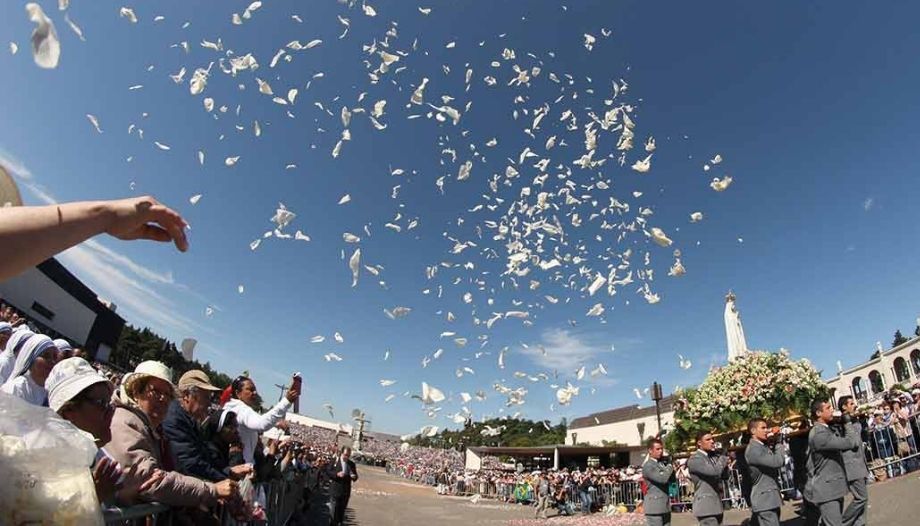
Perhaps no other phenomenon related to a Marian apparition has achieved as much notoriety as the so-called ‘miracle of the sun’ at Fátima. On October 13, 1917, during the last of Our Lady’s apparitions to the three shepherd children—Lúcia dos Santos and her cousins Francisco and Jacinta Marto, now canonized—a crowd gathered at Cova da Iria that the Shrine of Fátima estimates numbered between 50,000 and 70,000 people.
Lucia had announced that a sign would occur that day. Following the apparition, the phenomenon that would later be known as the ‘dance’ or the ‘dance of the sun’ took place. The account from the Portuguese newspaper O Século, published on October 15, 1917, describes how the sun appeared to tremble and make sudden movements that observers considered extraordinary. The Shrine of Fátima itself reproduces the testimony from that time and estimates that some 70,000 people were present.
Among other things, Manuel Fernando Sousa e Silva mentions the name of the author—the journalist Avelino de Almeida, a non-believer—in his book published by Homo Legens titled *The Little Shepherds of Fátima*. He also includes testimonies from scientists who visited the site. Ricardo Cardoso In *Omnes*, he has explained all the relevant aspects of these apparitions, based on Sister Lucia’s accounts (‘Memoirs of Sister Lucia”)’).
The solar phenomenon, combined with the message from Our Lady
It could be said that, at Fátima, the sign—the solar phenomenon—was linked to the Virgin’s message: prayer, conversion, and penance, and, in a very special way, the daily recitation of the Rosary.
It is significant that the phenomenon was witnessed by a crowd. It is precisely this circumstance that explains much of Fatima’s historical impact. And above all, the fact that Our Lady had repeatedly promised that in October she would perform a miracle so that everyone would believe in the authenticity of the apparitions, writes Sousa.
Guadalupe: The December Flowers and the Image on the Tilma
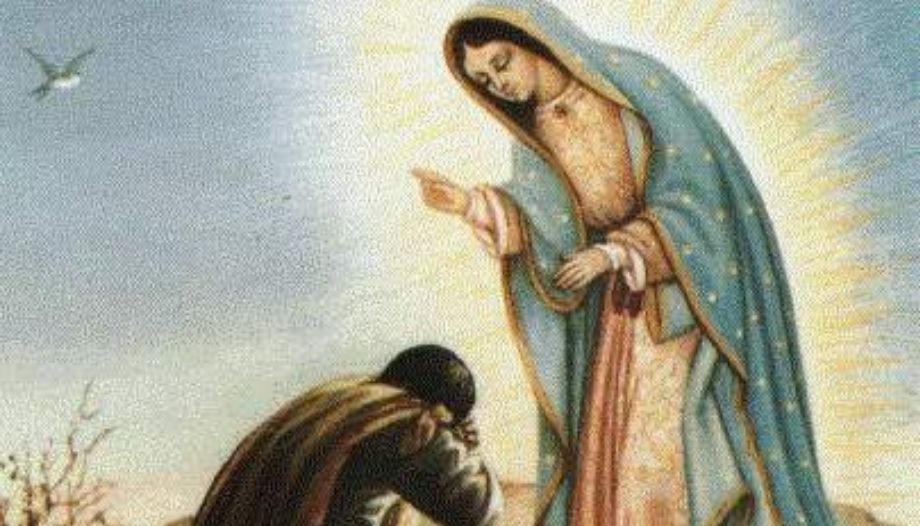
According to the guadalupana tradition, in December 1531, the Virgin Mary appeared several times to Juan Diego Cuauhtlatoatzin, an indigenous man who has since been canonized, on Tepeyac Hill (Mexico). During these apparitions, the Virgin asked him to go see Bishop Fray Juan de Zumárraga to request that a church be built on that site and to convey her message of love. The bishop asked for a sign as proof of the message’s authenticity.
In the next apparition, our Blessed Mother Mary of Guadalupe instructed Juan Diego to cut roses of Castile that miraculously bloomed in Tepeyac -something impossible in that time, December, and place- and to take them to the bishop wrapped in his tilma.
When he unfolded it before Fray Juan de Zumárraga, the flowers fell away, and the image of the Virgin Mary was miraculously imprinted on Juan Diego’s tilma, revealing her face and figure. In light of this sign, the bishop believed and ordered the construction of the requested church, giving rise to a deep devotion to Our Lady of Guadalupe in Mexico, throughout the Americas, and around the world.
On the other hand, there are numerous facts—at least nine—that experts have concluded are scientifically inexplicable, upon analyzing the ayate or tilma belonging to the indigenous man Juan Diego, which bears the image of the Virgin. These conclusions concern the tilma itself and, above all, the eyes of Our Lady.
Lourdes: The Spring That Gushed From the Rock
In Lourdes, on February 11, 1858, the Virgin Mary appeared for the first time to Bernadette Soubirous in the grotto of Massabielle. The apparitions continued until July 16, for a total of eighteen. In 1862, the Bishop of Tarbes, Monsignor Bertrand-Sévère Laurence, officially recognized the authenticity of the apparitions following an investigation.
One of the decisive moments took place on February 25. According to Bernadette’s account, the Lady told her to drink and wash herself at a spot in the grotto. The young girl dug into the ground with her hands, and water began to flow. That spring later became one of the defining symbols of Lourdes and the source of the water used by pilgrims.
The Healings
Lourdes has one exceptional feature: healings. Since the apparitions, thousands of cases have been reported of people who claim to have regained their health after visiting the shrine. To study these cases, the Office of Medical Verifications was established in 1883, specifically for the purpose of subjecting the alleged healings to rigorous, peer-reviewed medical investigation.
Caution is important. Not every healing that occurs in Lourdes is considered miraculous by the Church. The Shrine currently reports more than 7,000 recorded cases of healing, 70 of which have been recognized as miraculous by the Church. The procedure requires that doctors determine that the healing cannot be explained by current medical knowledge and that it meets the criteria for being considered extraordinary, lasting, and complete. It is then up to the competent ecclesiastical authority to rule on its miraculous nature.






 Español
  English
  Italiano
  Français
  Deutsch
  Polski
  简体中文
简体中文