



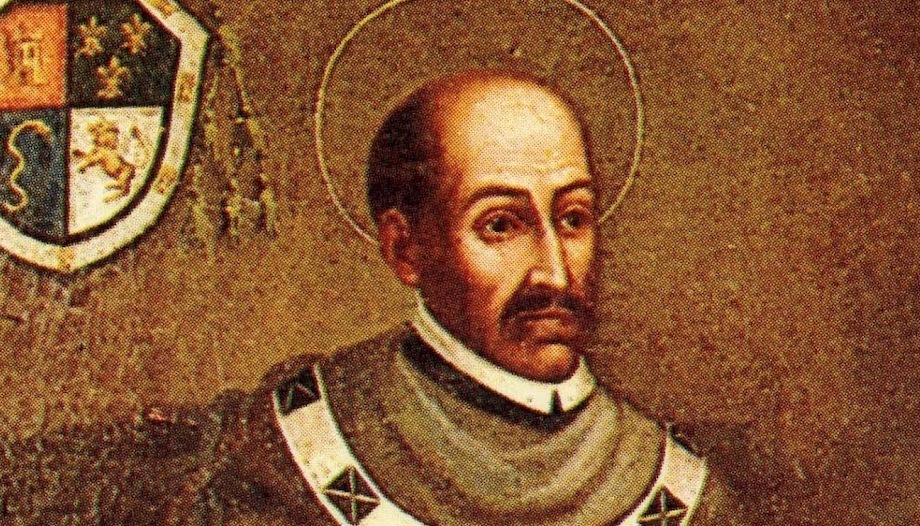
In his Letter, the Pope considers it a privilege to have exercised the episcopal ministry in the Peru, and “to know the faith of a people from whom I received much and to better understand what it means to be a pastor.”.
That experience brought him particularly close to Saint Toribio, the second archbishop of Lima, “who also came from afar to a land that he eventually made his own through pastoral charity,” adds Leo XIV. Indeed, Saint Toribio was born on November 16, 1538, in the town of Mayorga (Valladolid).
Now, on the occasion of the third centenary of the canonization of Saint Toribio de Mogrovejo, patron saint of the bishops of Latin America, and considering the qualities with which previous Popes describe him, the Holy Father Leo offers Latin American bishops several pieces of advice for their ministry.
They have been synthesized into 12, integrated into the Letter From the Successor of Peter to the bishops. The paragraphs are verbatim, although shortened.
Holiness, unity
1) Pastoral visit. The holy archbishop arrived in a land whose peoples and cultures he knew little about. To shepherd it, he had to immerse himself in that reality, and so he traveled throughout it.
Let us ensure that the pastoral visit retains all its power: let us personally go to meet our communities, let us listen to our flock. The ministry of a successor of the apostles demands to live with your heart in heaven and your feet on the road.
2) The School of the Cross. The cross reminds him that he must remain with the flock when times get tough, and that protecting the sheep can come at a price for the shepherd himself. Toribio extended that kiss to the suffering flesh of the Lord in his travels and labors, defending the indigenous people, correcting abuses, and remaining close to the poor and those who suffered.
The abandonment of the flock can begin long before a visible flight, when comfort, fear or self-interest outweigh the good of the faithful.
3) The holiness of the pastor cannot be taken for granted. (cf. 1 Tm 4,16). Saint Toribio was able to ask for an ecclesial life more faithful to the Gospel because he began by allowing himself to be measured by that same demand. Let us, therefore, take care of our inner life and let us retain the awareness that we are disciples in need of conversion.
Eucharistic adoration, a pastoral priority
4) Love for the Eucharist. The rite then leads the bishop to the Tabernacle, where he kneels and adores. Before beginning his ministry, he pauses in silence before the Blessed Sacrament. Bishops pass away; Christ remains (cf. Hb 13,8).
Therefore, I would like to invite you to to make Eucharistic adoration a pastoral priority. Toribio's love for the Eucharist was manifested in his desire to bring everyone closer to Jesus.
5) Unit. The holy prelate served a vast and diverse Church, striving to keep it united. It is our responsibility, too, to ensure that the diversity of our dioceses finds its unity in Christ. The altar reminds us that communion is at the very heart of our mission.
Transmission of faith
6) To transmit the faith in its entirety. The bishop has received the faith of the Church and is called to “guard the good deposit”, deepen it and make it understandable to those under his care (cf. 2 Tm 1,13-14). Saint Toribio understood this responsibility well.
The reception of the Council of Trent, the provincial councils, the diocesan synods, and his catechetical work bear witness to his desire to transmit the faith in its entirety and make it accessible to those before him. In a time when so many voices claim authority over the consciences of the faithful, it is the bishop's responsibility to offer clear, patient teaching rooted in that communion, to help his people recognize the voice of the one Shepherd.
Fraternity with priests
7) Formation of priests, closeness with them, fraternity. Fatherhood is especially evident in his relationship with the priests, united to him in a unique way in the one priesthood and in the mission entrusted to the particular Church. Toribio He oversaw their training, He was demanding in the admission to orders, visited his priests and maintained ecclesiastical discipline, aware that the life of the clergy has repercussions on that of the people.
Dear brothers, let us be close to our priests. Let us take special care of the seminary and the first years of ministry., Let us foster a true brotherhood And let us ensure that no priest feels he can only approach his bishop when there is a problem to solve. Episcopal fatherhood is recognized many times when a priest knows he can call with confidence at the door of the episcopal house.
8) To proclaim the Good News. Among the many responsibilities that fill our day, we have been sent to proclaim the Good News. Like the Apostles, we are called to persevere «in prayer and in the ministry of the Word» (Ac 6,4).
Saint Toribio made his life a prolonged preaching, and his message was credible because he had allowed the Gospel to shape his existence first. Let no urgency or pastoral task, however necessary, relegate prayer as the prelude to preaching.
The Holy Sacrifice of the Mass
9) Holy Mass. The celebration itself reveals the source of this fruitfulness. In the Holy Mass, Christ's one sacrifice for the salvation of the world is sacramentally made present, while his People are united to the offering of their Lord. From this Holy Sacrifice flows the grace by which the Church lives and through which Christ continues to gather and sanctify her throughout history.
The bishop, like every priest, lends his voice and hands to Christ, the High and eternal Priest, who acts through his ministry. What he celebrates must also extend into his own life, ever more closely united to the Lord's offering, until his entire existence becomes, in Christ, an offering to the Father.
Saint Toribio and other shepherds
11) The figure of Saint Toribio is not alone. The spiritual geography of the Church in Latin America is marked by pastors who made visible this union between the altar and life.
Throughout the centuries and in different regions of the continent, a veritable constellation of bishops has formed whom the Church venerates as saints and blesseds. Alongside the great Archbishop of Lima are Saints Antonio María Claret, Ezequiel Moreno, Rafael Guízar, and Óscar Romero, and Blesseds Juan de Palafox, Jacinto Vera, Mamerto Esquiú, Enrique Angelelli, Jesús Jaramillo, and Eduardo Pironio, among so many other distinguished bishops.
12) Let us entrust ourselves to Our Lady of Guadalupe Our desire to live with renewed fidelity the mission we have received. At the dawn of the evangelization of that beloved continent, She willed that Saint Juan Diego carry Her request to the bishop, and that he be the one to discern and accept what the Lord was accomplishing through a humble messenger.
That encounter remains an invitation for us pastors: to be attentive to the action of God, who often manifests himself in unexpected ways and uses those whom we would least expect.
Through the intercession of the Mother of God, let us ask for the grace to know, serve, and love the Churches entrusted to us, so that, when the time comes to give an account to the Lord of our ministry, we may hear: “Well done, good and faithful servant […] enter into the joy of your Lord” (Mt 25,21).






 Español
  English
  Italiano
  Français
  Deutsch
  Polski
  简体中文
简体中文