


 Don't get married youngA yes at all risks, a young married couple's adventurePep Borrell: "The 100 % of education is for children to see that their father and mother love each other".
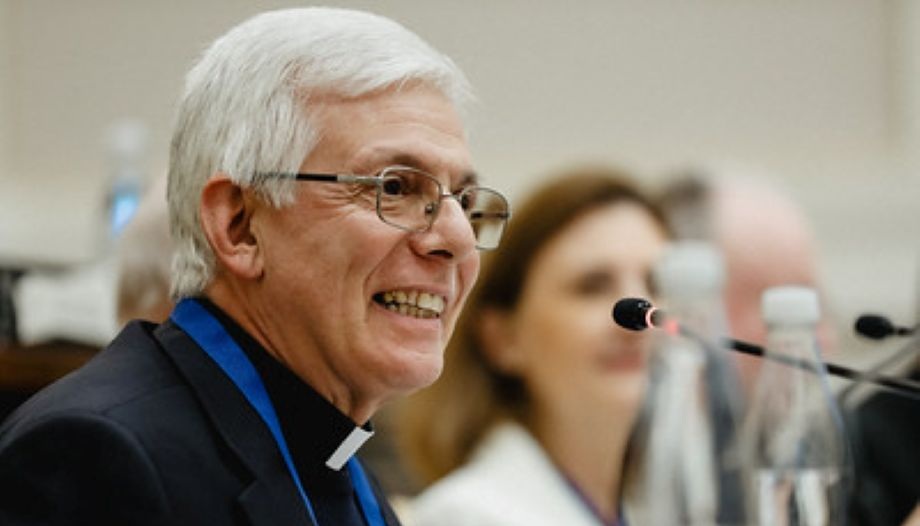
Andrea Bozzolo is the rector of the Pontifical Salesian University. D. in Classical Letters and in Systematic Theology, he participated with Fr. Fabio Rosini and Cardinal Kevin Farrel, Prefect of the Dicastery for the Laity, Family and Life, in a meeting with Cardinal Kevin Farrel, Prefect of the Dicastery for the Laity, Family and Life. study day on “the sacrament of Marriage, faith and the teaching world”.
During his speech, Father Bozzolo stressed the importance of moving away from a perspective that presents the sacrament of the sacrament of the Blessed Sacrament as a "sacrament of reconciliation". marriage as a mere contract, encouraging everyone to deepen their understanding of the beauty of this vocation and to share with young people stories that will help them understand this “path to fulfillment”.
After the study day, the rector of the university gave an interview to Omnes in which he talks about how to present the sacrament of marriage to young people and the role of priests in accompanying those who follow this path.
How can the Church present marriage as something “decisive” to young people who view living together before marriage as the only reasonable step before making a commitment?
- The Church can engage this question by interpreting what cohabitation expresses: the desire to verify love. The key is to show that love becomes decisive not through prolonged testing, but through a promise grounded in a truth greater than the couple itself.
Marriage is decisive because it recognizes that love is not self-founded. Without this horizon, cohabitation risks remaining a provisional experiment. The task is to reveal that the sacrament is not a final step after certainty, but the act that makes lasting love truly possible.
How can we restore the idea that love has an ontological structure and is not merely a private emotional contract?
- It is necessary to show that love is not just what one feels, but what reveals the meaning of existence. In loving another, one does not simply experience emotions but encounters a call to give oneself and to receive oneself anew. This points to an ontological structure: love concerns who we are, not only how we feel. Recovering this requires language that connects experience and truth, showing that love always implies a promise, a destiny, and a form of life that cannot be reduced to private agreement.
How can we explain to a couple in love that loving God “above all else” is precisely what will protect their love for one another from failing?
- Loving God above all does not diminish human love ; it frees it from impossible expectations. When the beloved becomes the absolute, love collapses under the weight of what no human can give.
Recognizing God as the ultimate source and fulfillment of love allows each spouse to be received as a gift, not possessed as a guarantee of happiness. In this way, faith protects love from illusion and resentment, grounding it in a promise that exceeds both partners and sustains them.
In your analysis of Genesis, you state that man only discovers his “self” in relation to the “you” of woman. To what extent does this perspective help combat the “psychologization of emotions” that confines the individual to his own psychological well-being?
- This perspective shows that the self is not constructed internally but emerges through encounter. The “I” arises in relation to a “you” that cannot be reduced to one’s own needs or projections.
This challenges the psychologization of emotions, which confines love to subjective well-being. Instead, love becomes a relational event that calls the person beyond themselves.
Identity is discovered, not produced, and this opens a path where emotions are integrated into a larger horizon of meaning and responsibility.
How can we present the Christian view of marriage without giving the impression that the Church is trying to “colonize” or appropriate the universal human experience of love?
- The starting point is the universality of human love, recognizing it as already meaningful and oriented beyond itself. The Church does not impose an external interpretation but unveils what is implicit within the experience: its openness to a greater origin and destiny. In this sense, the Christian view does not colonize love but serves it, helping it to recognize its full truth. The sacrament is not an addition but the explicit acknowledgment of a presence already at work within the relationship.
How can pastoral care help married couples see death not as the end of their love, but as the horizon where their covenant finds its ultimate meaning?
- Pastoral care can help couples see that love carries within itself a promise that exceeds death. The experience of loving already raises the question of whether this good is destined to endure or vanish. Faith answers that this promise is not an illusion but finds its fulfillment in God.
Accompaniment helps couples interpret their love within this horizon, so that death is not perceived as its negation but as the passage where its deepest truth—communion grounded in God—reaches fulfillment.
You state that “love is not merely a feeling,” but rather a fulfillment of the self. In a culture that idolizes the thrill of the moment, what educational tools do you propose for cultivating the will without falling into rigid legalism?
- Education needs to focus on forming desire, not suppressing it. This means helping young people recognize that true freedom is not the multiplication of experiences but the capacity to choose a good that endures.
Narratives, testimonies, and shared reflection on lived experience are more effective than abstract rules. The will grows when it is attracted by a meaningful form of life.
Avoiding legalism requires showing the beauty of faithful love, so that commitment is perceived not as a restriction but as a path to fulfillment.
You point out that theology has focused almost exclusively on the “moment of legal consent” in marriage. If we shift our focus to the “emotional journey” that precedes and follows it, how is the priest’s role redefined? Should he cease to be a “contract officiant” and become a “discernment partner” in a story that is already inhabited by God?
- If the emotional and relational journey is taken seriously, the priest’s role expands. He is no longer primarily an officiant of a juridical act, but a guide who helps discern the presence of God already at work in the couple’s story. This does not diminish the importance of consent but situates it within a broader process of faith.
The priest accompanies, interprets, and supports a path, helping the couple recognize that their love is called to become a conscious and lasting response to God’s initiative.






 Español
  English
  Italiano