


A longer version of this article can be found here.
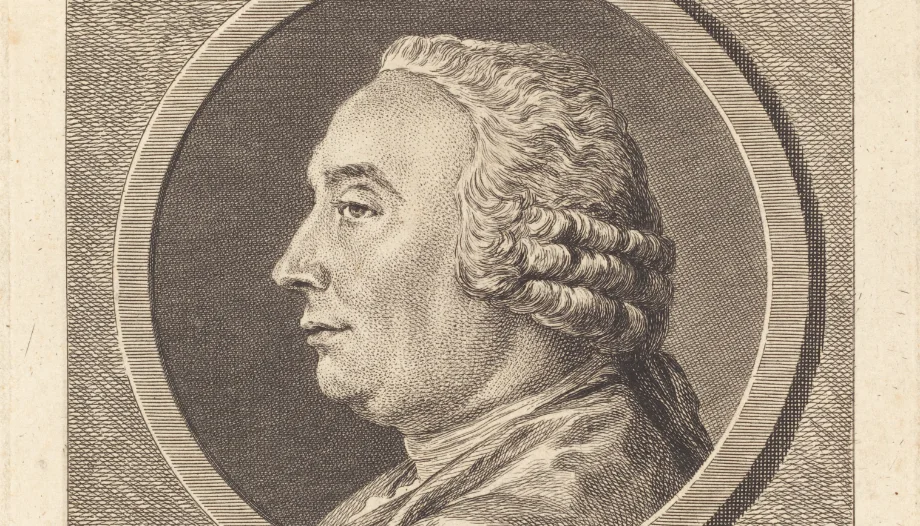
Born in Edinburgh, in 1711, education in Scotland, completed in France (Reims and La Flèche) between 1735 and 1737, the year in which he finishes his Treatise on human nature. Much criticized, it follows in 1748 as a mature version his Research on Human Understanding, in 1749, and in 1749 its Political speeches and its Investigations on the principles of morality. Historian in Edinburgh, enlightened in Paris from 1763, statesman in London from 1766, retired from 1769, died in Edinburgh in 1776.
Research on Human Understanding
a) Exhibition: The great shipwreck
Sinking the being
Locke had made his philosophy start from ideas -literally “what is seen” or “what is perceived”- but Hume, denying substances like George Berkeley, will be more radical and will start from impressions themselves. He distinguishes these from ideas, for the impression of fire -that which burns in the hand- is not the same as the idea or memory that we have of it. The impression is real, and the idea is the memory it leaves, with the confidence that the impression will come again. If I am seeing you, I have a real impression, but if I close my eyes I no longer have it, and I am left with only the idea I formed of it. The belief of your existence independent of me, it is only the confidence, based only on habit, that when I open my eyes again the impression will reappear. Only the impressions are real then, and nothing remains of the substance, of the being that underlies them.
Sinking causality
There are other ideas that we generate from these memories of impressions, by “association of ideas”, either by similarity - an idea reminds us of another similar one - or by contiguity, as the idea of an apartment suggests to us the idea of the “adjoining apartment”, or by causality, a kind of temporal contiguity. Causality is also a belief with no other basis than habit: the habit that what is called cause is followed by what is called effect: we are accustomed to the fact that, after ingesting food, our strength is restored. We say then that the one is the cause of the other, signifying thereby that there is a necessary nexus between the two, although no one has ever seen or ever demonstrated such a necessity, and it has, therefore, no rational justification:
“Who will claim to be able to give the ultimate reason why milk or bread is suitable food for man, and not for a lion or a tiger? ... Our senses inform us of the color, weight, and consistency of bread; but neither the senses nor reason can ever inform us of those qualities which make it suitable for the nutrition and sustenance of a human body.”
In fact, he adds, causality - a necessary link of which we have no impression or justification whatsoever - is the main source of chimerical ideas, and he gives the example of our idea of an author - even if we have never seen him - whenever we see a written letter, accustomed to someone writing first and then the letter being written.
This shows the chimericality of the idea of God as the author of me and of the world, but also the chimericality of the idea of the self as the cause of my actions, and even the chimericality of the idea of the world as something with existence independent of me, and the cause of the impressions given of me. Again, from the undoubted effect, the chimerical cause. God, world, I -the great themes of philosophy-, sunk.
Morale is sinking
This leaves morality without rational justification, which I illustrate thus: I see that a stone hits another and I think that the movement of the one is the cause of the movement of the other without freedom; but I decide to murder my rival and I stab him with a knife, being myself the cause of the effect which is the stab, but this time free cause. I have had no impression of either one causality or the other, but I have invented free causality for the same reason as always: “to find a culprit”. It is therefore understandable that his moral discourse (a certain utilitarianism based on sentiment) has inspired the pragmatists.
However, this does not align Hume with radical Pyrrhonian skepticism, since the skeptic wins in the academy - by his consistency - but loses when he goes out into life, by avoiding a fire or a precipice lest it “cause” him burns or death. He opts for a “moderate skepticism” that recognizes the “existence” of the fire and the precipice, and their undesirable “causality”, but not as true knowledge but as fiduciary belief with no other basis than habituation.
Sinking science
Thus, in particular, he is in favor of continuing to do experimental science, but without deluding ourselves about its validity as knowledge. On the one hand, there are the sciences in which necessary relations between ideas are demonstrated - arithmetic and geometry - knowledge to which he grants validity; and on the other hand, there are the sciences in which phenomena are recorded and explained by other phenomena as their causes - causality without rational foundation - and from particular experiences universal laws are arrived at, the so-called “induction” This has no rational justification, since it only consists in the confidence that things will happen in the future as they have done up to now.
Sinking philosophy
And as for pretended knowledge about ideas - “the seen” - which no one has seen, such as substances or causality, or the idea of soul, or of God, “when we have a suspicion that a philosophical term is used without any meaning or idea (as happens even too often) we need but inquire: from what impression is this supposed idea derived? And if it is impossible to assign any to it, this will serve to confirm our suspicion” What Hume thinks of a knowledge of this kind of ideas, in particular of metaphysics, is well captured in the final words of his work:
“When we go through libraries, persuaded of these principles, what havoc will we not wreak! If we take in our hands a volume of theology or scholastic metaphysics, for example, let us ask ourselves: does it contain any abstract reasoning about quantity and number? No. Does it contain any experimental reasoning about matters of fact and experience? No. Throw it then into the flames, for it can contain nothing but sophistry and delusion.”
b) Criticism: Who dares?
No one. David Hume convinced everyone. Immanuel Kant creates his transcendental philosophy to save from this shipwreck the ideas of substance and causality - and the others that make knowledge possible - but as mere aprioris that only occur in our faculty of knowing.
The inconsistency involved in adding to these aprioris an external reality as “causing” the sensible knowledge with which knowledge is initiated (when it has been said that causality is a mere apriori), Schopenhauer solved it by understanding the world -the external reality- as mere representation, the will being what is represented in it. He will therefore put the will in the place of being, and a Nietzsche will follow who will suffice and all the rest will be left over: the will to power, something that already sounds like the twentieth century.
But more radical is the way in which Hegel deals with Kant's incoherence: He will eliminate, with Fichte, the external reality in one fell swoop, and will be left with only the idea. And from the “all idea” to the “all matter” of Karl Marx's dialectical materialism there is only a change of nomenclature, as he himself says in his Misery of Philosophy. Marx, Nietzsche, the philosophies that will be political history in the 20th century, and what a history! The rest we already know.
Hume's other great work is the invalidation of induction as lacking rational justification. It came fortunately when science was already on the march, for it would have been paralyzing at the birth of mechanics in the previous century, the century in which Francis Bacon had proposed his animating inductive project. Pierre Duhem is seen among the philosopher-scientists from the 19th to the 20th century - he cites Ernst Mach and Henri Poincaré - who are unable to provide rational justification for the inductive basis of science, but marvel that science nevertheless works. From Karl Popper let us expect no more: he will reject the principle of induction for not being falsifiable, in which he rejects a philosophical principle -for it is philosophy of science- with a criterion designed to characterize which propositions are scientific.
Thomas Kuhn will limit himself to call induction a “thorny subject”, and thus avoid it. More recently, Evandro Agazzi devoted to it in his main work Topics and problems in the philosophy of physics just two lines, just to recommend a philosopher of science, Carl Hempel, who is an anti-inductionist. And, more closely, Mariano Artigas does give value to induction, but never in his work does he provide a rational justification for it. What, then, shall we answer?
Unreasonableness of their attack on the cause
Hume has deconstructed much. To his main destruction, causality, we will answer that not one of the arguments brought against him -all of them variants of the aforementioned- are sustained today, after the impressive progress of science thanks to the fact that scientists have continued to ask “why” before each new phenomenon, in spite of this paralyzing philosophy.
Is it true that there will never be found a necessary relationship between eating bread and the revival of our strength? We now know, one by one, the chemical reactions of the metabolization of the starch in bread until carbon dioxide and water are produced, with release of energy, and the chemical reactions which convert this into motive energy for the muscles. We understand these chemical reactions perfectly well as a consequence of the physics of the atoms involved, and, in turn, reduce this physics to pure mathematics, the only knowledge that Hume saves as perfectly valid. His attack on causality he had launched when it was still credible, but, now that it is no longer credible, his philosophy has already left its consequences.
The truth is that causality is already sentenced to death as soon as the substances have been eliminated, something that is subjective to those impressions of color, smell and taste of bread, and of which these are mere qualities. For can the same impressions of color, smell, taste, nourish and give strength? But if there is “something” that has that color, smell and taste as its qualities that we perceive, perhaps it has others that we do not yet see but perhaps we will see tomorrow with the advance of science. Such has been the atomic number of the elements that make it up, which gives reason for the chemical properties by which bread nourishes and gives strength.
And why did he get rid of substances to stay with mere impressions? He simply followed the recommendation of Locke - very important in his formation, like George Berkeley - who saw substances as superfluous in philosophy, since we do not have clear and distinct ideas of them, like those formed from our impressions (I argued in a previous article that this is a requirement proper to the ideas of the sciences, since we construct them with our definitions; a requirement proper to the scientific method, which is depauperating for philosophical thought. Error, then, of method, precisely since René Descartes).
In fact, one should not even have answered Hume, for although he says that there are only impressions, in each line he speaks several times of beings underlying them, what in philosophy we call substances. As Aristotle says, the skeptic who denies the possibility of knowing-the modern one even denies being-does not bother us, for, if he speaks, he himself is self-refuting; and, if he does not speak, he does not bother us either, for he is like a plant.
Rationality of induction
As for induction, we can argue that it is rational, i.e., that by inducing we do what reason always does. And what does it do? It always seeks unity between apparently unconnected facts, unrelated to each other, to the point that Kant will put this presupposition of unity in the world as one of the pure ideas of reason, condition of possibility and stimulus of our reasoning. Reason always seeks the simplest explanation, that which by itself explains and gives rationality to many facts that seemed unconnected and inexplicable, as in the cases of Hercule Poirot.
Well, by inducing a universal law, such as the expansion of metals with heat, this is what we do: we find a unity, or regularity, or identity among many experimental facts that without such a law would remain unconnected. Its statement is an affirmation and a prediction: we affirm that it has happened the same way in all past experiences, which can be real (and of this we can be certain) or false; and we predict that this will be the case from now on, a prediction that may can be found at (of which we are not absolutely certain). or not be fulfilled , but we do it on a rational basis: the simplest explanation that this has always happened, and always with the same coefficient of dilation, is that such a coincidence has not occurred by an accumulation of chance - the most convoluted, incredible and irrational explanation - but because it necessarily had to happen this way (although it has taken us two centuries to find the reason for such necessity), and therefore it will happen in the same way in future experiences.
And as for the final boutade, let us apply to the skeptic, according to Aristotle's recommendation, his own recipe. Let us take in hand the famous Research on human understanding Does it contain any abstract reasoning about quantity and number? No, no number or formula is to be seen in its pages. Does it contain any experimental reasoning on matters of fact and experience? No, there is in its pages no record of coefficients of dilatation, nor notation of any experiment. Throw yourself, then, into the flames, for it can contain nothing but sophistry and deception!
Complutense University of Madrid. SCS-Spain.






 Español
  English
  Italiano