


 “God is calling me to mess things up”: That’s how Vivir Abrazando was born «In Africa, you can see how the Gospel is transforming people's lives.»We're turning 100!
Carlos Bobillo arrived in Burundi as a university student, faithless and eager for adventure. Raised in an atheist family, he sought to help others through volunteering, but he found much more than he expected: the witness of missionaries who, amidst suffering, lived with a joy he couldn't quite grasp. "How can you be in the most remote place in the world, surrounded by suffering, with that joy in your eyes? That's not of this world," he recalls asking himself then.
That experience marked the beginning of a journey of conversion that, over time, led him to discover God and reevaluate his own life. After several years combining his work as a lawyer with mission experiences, he decided to leave a prestigious law firm to dedicate himself to cooperation and evangelization in Burundi through the NGO Komera, which he founded with a group of friends. Now, after years of discernment and living his faith in the charism of Hakuna, he has decided to take another step and dedicate his life to the mission. Starting in January, he will become the first missionary. ad gentes from Hakuna, with the desire to help others personally encounter Christ in Burundi.
In this interview, Bobillo recounts how the mission transformed his understanding of happiness, what he has learned from the faith of the Burundians, and why he believes that giving to others cannot be limited to a few weeks of volunteering, but is meant to transform one's entire life.
On his trip to Burundi, he discovered his mission in a way that changed his life. What did he experience there that caused such a profound shift in his understanding of life?
–I went to Burundi without knowing I was going on a mission. I signed up as a volunteer to lend a hand from a philanthropic point of view, without any reference to God, because I didn't have God in my life. I was drawn to the possibility of getting to know another continent, having adventures, and helping other people materially.
I arrived with a very predetermined way of thinking, the one many of us have here: we live in a world where we believe we control everything and are self-sufficient. I went to Burundi convinced that I knew what I was going to do and that I could foresee the results.
However, many things began to challenge my way of thinking, my upbringing, and everything I had experienced up to that point. I was amazed that people who had practically nothing could live such fulfilling lives. This doesn't mean romanticizing poverty, because we must rebel against it and be aware of the suffering it causes. But I was impressed by how they were able to transform that suffering into an opportunity to love, and how present God was in their lives.
They didn't know if they would be able to eat the next day or if their sick daughter would survive. And yet, they were able to live with a confidence that I struggled to understand.
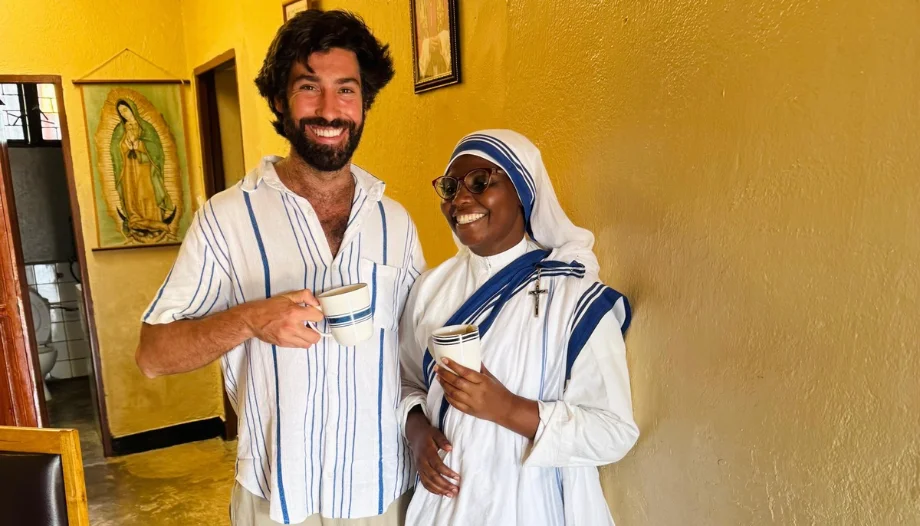
We also worked a lot with the Missionaries of Charity. I was struck by their lives, their testimonies, and their joy. I especially remember one missionary who had come from New York. I was impressed by how she could dedicate herself to others and be so happy. It wasn't just that she enjoyed herself; she lived a profound happiness, a peace that radiated from her, and a heart that seemed to expand as she gave to others.
When that experience ended, I longed to return. Afterwards, I would go back to Madrid, continue with my life, and sometimes do things that didn't fulfill me. Then I would ask myself again what had happened to me in Burundi and why I had been so happy there, when I had so much else here.
All of that began to change my life and awaken in me the desire to give myself more and more. It was a long process, with new experiences in Burundi and elsewhere, which allowed me to grow and deepen my understanding.
He arrived in Burundi without believing in God. What was that conversion journey like?
–I come from an atheist family, I received an atheist upbringing, and my parents were divorced. I had no reference to God.
For several years I lived with that dichotomy between Burundi and my world in Madrid. There I experienced something that fulfilled me, but afterwards I returned to my usual life, which, although I thought it made me happy, often weighed me down.
During that process, Hakuna appeared around 2015, a few years after my first trip to Burundi. She helped me a lot to discover that there were also people here who lived their faith with simplicity, freedom, joy, and normalcy. I saw in them something I had experienced in Burundi and that I also wanted for my own life.
Little by little, those concerns grew. Then something happened that deeply affected me. We were on a family trip for Christmas, and on the morning of January 6th, when we were about to open the presents, we found my father, who had died suddenly.
It was a moment of immense sadness, but I also experienced a great peace. Humanly speaking, it was very difficult, but at the same time, I thought that death hadn't won, that God had the final say. My father didn't believe in anything, but I told myself that he was in heaven, that everything was alright, that death didn't have the final say.
That could have led me away from God, but the opposite happened. I began to think that life is meant to be given, that it is short and must be enjoyed.
It was a significant moment of letting go. I left my house, my car, and many things in my life, including my girlfriend, to go to Burundi and ask myself what God wanted from me. There, the foundations of my conversion and my personal encounter with Him were laid.
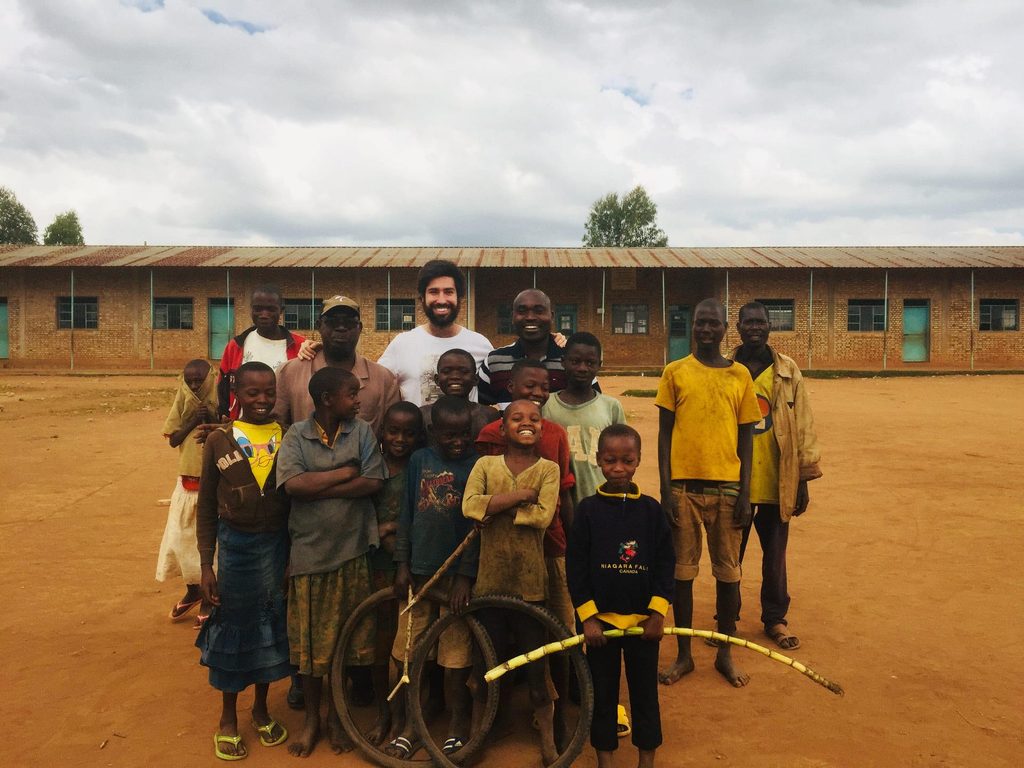
Volunteering is sometimes questioned because of the risk of seeking recognition or falling into what is known as "poverty pornography." At Hakuna, you talk about "community-sharing." What value do these experiences have, and what do they truly offer to those who participate in them?
“I myself was fortunate enough to encounter Christ during a mission experience, without even knowing it was one. That's why I value these experiences so much. If they are lived well, they can be incredibly helpful; if they are done poorly, they can cause a great deal of harm. It's essential to prepare, to be trained, to pray, and to have good support.”.
The mission begins before the trip, by getting to know the reality we're going to be involved in and preparing our hearts. And it continues during the experience, with an attitude of surrender and detachment. We're not going on a tourist trip, but to give ourselves to others. It's also important to live simply. It wouldn't make much sense to go on a mission and, at the same time, maintain a lifestyle completely detached from that of the people we're with. It's not about pretending to be poor, but about forgoing some comforts and desires to truly enter into what we're experiencing.
It's not about visiting a reality and observing it from the outside, but about getting involved in it. That's why it's also important to disconnect from our phones, be present, and nurture our spiritual lives, because it's difficult to truly give oneself if one doesn't know oneself to be loved by God. And finally, we must live the mission as a group. Community helps us share the good and the bad, grow together, and care for one another. What's the point of going to help children at a school if I don't then care about my roommate who is sick? The mission begins at home and, from there, extends to the world.
But it's also essential to prepare for the return. We can't dedicate ourselves fully for a month and then go back to living a life focused solely on ourselves. Sharing involves building upon what we've experienced, expressing gratitude for what we've received, and maintaining that attitude of giving in our daily lives.
It's not about helping for a few hours on the weekend or a month a year, but about letting the experience change our hearts and transform every facet of our lives. It's a continuous process of growth and renewal that allows us to keep our hearts open and willing to give to others, here and there.
After so many years connected to Burundi, what have you learned from the people you have met there?
–I have been incredibly lucky to find Burundi. And everything I have received I want to give back, because it is not mine. That is the dynamic of love: giving and receiving.
In Burundi, you receive so much. Beyond the warmth of the people, there is an immense spiritual richness. It is a country that, amidst material poverty, has been able to find a way of life that transforms suffering into something greater. Instead of succumbing to complaint in the face of suffering, which only makes it worse, I have been taught to surrender it and turn it into an opportunity to love more. In Burundi, I have witnessed this many times.
Material poverty coexists with immense spiritual wealth, and this is evident in everything: in the way we relate to creation, to others, and to God. There is a complete surrender to God. When you have practically nothing, you can discover that everything you receive is a gift. But it's not about clinging to God desperately, but about recognizing Him as Lord: nothing is mine, everything is yours.
Material poverty is not the goal, but it can teach us very important things. The essential thing is not poverty itself, but what we can learn from it. God willed that we be born in Spain, and we don't need to sell everything to live this lesson. It's about being aware of what we have and understanding that nothing truly belongs to us.
It's a life-changing lesson. Burundi touches those of us who visit it deeply because it shows us that happiness isn't about having many things, but about giving of oneself. That's the secret of life, something we all know, but continually forget. That's why I need to remember it and renew it, despite my own poverty and difficulties. Being closer to Burundi helps me become more aware of it.
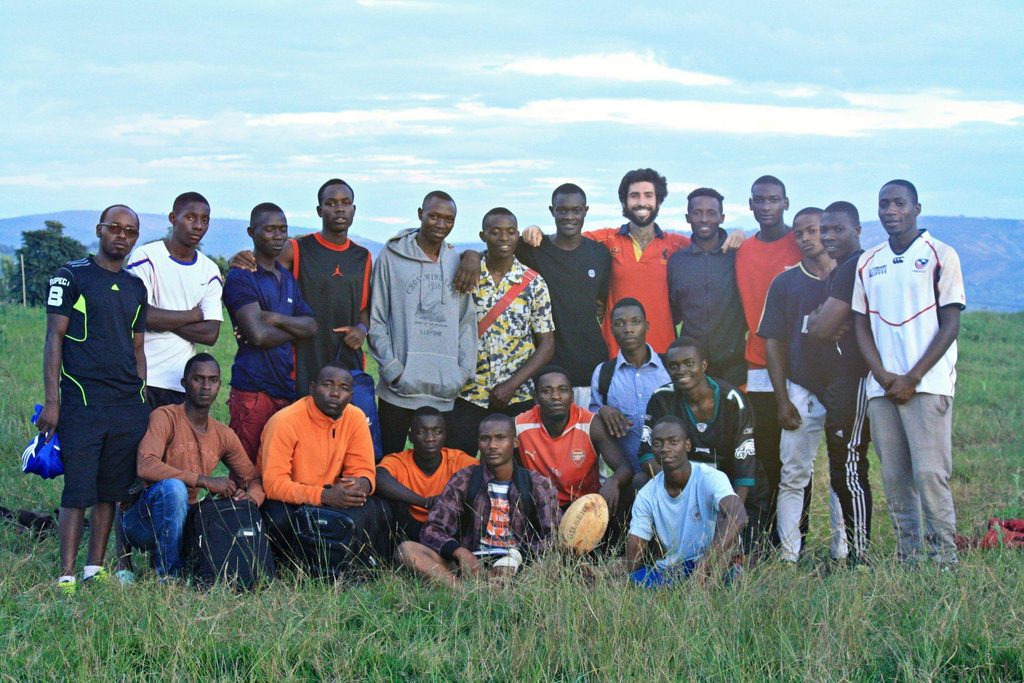
Even after discovering where true happiness lies, it's easy to return home and get swept away by the rhythm of the world. How can we Christians live out our missionary responsibility and help others discover that happiness?
–I think it's a double-edged sword. On the one hand, we might think that it's getting harder and harder, that the world is moving in a direction contrary to the Gospel, and that we'll never achieve it. But, at the same time, that can be a huge opportunity.
Human beings are made for something greater. When the world drifts further and further from what we experience and believe, it can become easier to recognize that this isn't the life we want. It's difficult, but I think it's something we're seeing today, also with the resurgence of young people in Spain and elsewhere. Many young people are beginning to realize that the life offered to us, centered on material things, instant gratification, pleasure, and self-fulfillment, doesn't make them happy. It only takes a little awareness to ask ourselves if we truly want to live like this. And when that question arises, another one appears: what do I want then? The hardest part is for a person to start asking themselves questions. After that, the Lord takes care of the rest.
And what can we do? I think the key lies in something that may sound repetitive, but is fundamental: more than doing, it's about being. The important thing is to nurture our relationship with Christ and let Him transform our lives. To say to Him, "Lord, my life is yours." And to cultivate that relationship in prayer and before the Blessed Sacrament.
We shouldn't focus on achieving goals, counting how many retreats we've done or how many times we've been to Burundi. It's about asking the Lord for the grace and the tools to live out what we feel called to do. From that personal encounter with Christ and that relationship with Him, everything else will spring. Each person will live it according to their gifts. Some will have very visible talents, but there are others that are equally valuable even if no one sees them.
The important thing is to nurture that relationship and allow the Lord, with who we are and what we have, to make us a light for the world. But we shouldn't focus on the light itself, but on the source of the light.
Tell us about Komera…
–Komera was born twenty years ago, as a result of a first trip to Burundi in 2007. We didn't go with the idea of forming an association or starting a project. We were a group of friends who decided to travel to Burundi.
Upon returning, we were deeply affected by what we had experienced and wondered what we could do with all that we had received. We felt we were bearers of a grace that couldn't remain only within ourselves. We didn't want it to be just a summer experience, followed by Interrail, an internship, or some other plan. Life has a way of putting things in their place, but we all felt that it was too much to keep to ourselves. We could only share it.
That's how Komera was born, very spontaneously, as a result of that first trip. We returned to Burundi the following year and continued repeating the experience, while launching small projects.
At that time we were students and didn't have much experience. We started by doing what we could. For example, we organized a children's camp under a tree because there was no school. We played with them and taught them outdoors. Then we realized that a school was needed and wondered how we could help build it.
Each of us contributed what we knew how to do: I could organize a play, my cousin sang, my uncle was a businessman… That's how we pooled our skills. That first year we built a school and started developing small projects.
Over these twenty years, everything has grown. We've been able to undertake more volunteer and mission trips, and also launch increasingly larger projects. At the same time, we ourselves have grown in our personal lives.



 Español
 English
 Italiano
 Français
 Deutsch
 Polski