


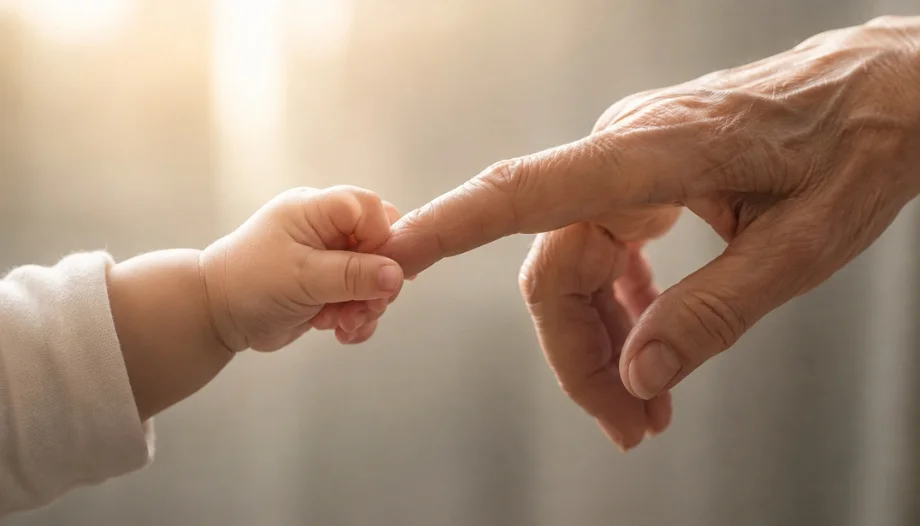
From a strictly scientific point of view, it is becoming increasingly difficult to uphold the theory that we are merely a cosmic accident, a simple product of chance. At the very least, in the most immediate sense, we are the fruit of the love of a man and a woman who have loved us, love us, and will love us regardless of what we were, are, or will become. But for those of us who also view the world through the eyes of faith, the perspective broadens infinitely: we know that we are the dream of a God who is Father. A Father who, like anyone who loves their children, has planned for us a kind of «novel» in which we are called to be the true protagonists.
Sometimes we decide to stray from the script and ignore the call. However, what is truly revolutionary about this Author is that He never closes the book. As Pope Leo XIV recalled during his recent and moving visit to the Brians 1 Correctional Facility, the mistakes we make do not define us. God always waits.
If our existence is so valuable, if every person is a unique and irreplaceable embodiment of dignity, at what point did we start to believe we had the right to play at being the directors of life and death?
Where is God in suffering?
It’s true that life can be tough. It deals us setbacks, throws our plans into disarray, and confronts us with situations that, at first glance, we can only describe as bad. In the midst of the shipwreck, when pain is at its worst, the human temptation is to fall into despair, indifference, or resentment, crying out the eternal question: “Where is God?” I prefer to turn the question around by drawing on an old lesson my mother taught me when I was a child: the real question we should be asking ourselves is, “Where isn’t He?”
It lies in fragility, in vulnerability, in those who have no voice. That is why, when faced with the turmoil of a high-risk pregnancy or the diagnosis of a serious and terminal illness, the response of a mature and compassionate society can never be the easy way out. In keeping with the prayer intention the Holy Father proposes for this month of July, the true challenge is to ask the Lord of life to «heal our hearts of indifference» so that we may learn to «tenderly support the fragile and courageously defend those who have no voice.» Succumbing to the throwaway culture through abortion or euthanasia is not a sign of progress, but of surrender.
Those of us who have been close to those crossroads know all too well the weight of reality. The initial fear and pain in the face of the uncertainty of a pregnancy are immense. But how few speak of the other reality—that of the immense joy and deep peace that fills a mother and a family when, overcoming adverse prognoses and social pressures, they courageously decide to carry that pregnancy to term. There is no greater human triumph than discovering that life, even when it comes with difficulties, always finds a way if given a chance.
To be there until the very last breath
That same truth applies to the other end of our existence. I’ve experienced this firsthand just this past two weeks, with the passing of my brother Javier. If we had chosen the path of indifference, the laws of cold pragmatism would have robbed our entire family of something sacred: more than a week of shared emotions, of necessary goodbyes, of forgiveness
comforting and, paradoxically, a source of immense joy at the gift of his life and at being able to be by his side—thanks to good palliative care—until his last breath.
Respect for human life is neither an abstract concept confined to a laboratory nor an ideological debate on a political platform; it is the defense of the mystery that dwells within every person from their very first moment until their last breath on earth. To love life as God loves it means to embrace it in its entirety—with its light and its cracks. It means proclaiming, through the steadfast witness of our daily actions, that fragility is not eliminated—it is sustained.





 Español
  English
  Italiano