



 Artificial Intelligence, Leo XIV and the Church's Social DoctrineWhat is the Internet doing in our minds?Internet and the deep nostalgia for the otherBreaking in the habit, a friar on the internet
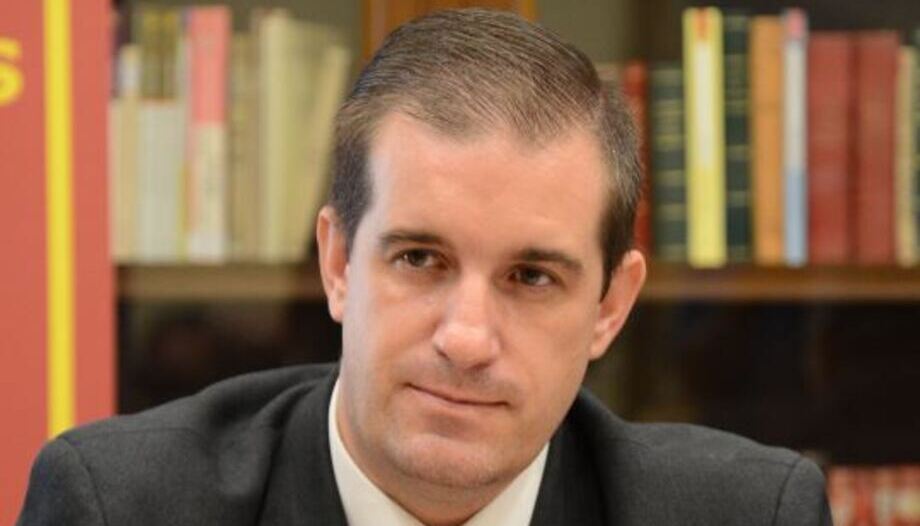
Fernando Mairata is the CEO of DLTCode, a Spanish cybersecurity company. He is also the chairman of Grupo Armora, a business group to which the company belongs, and of PETEC, the Association of Experts in New Technologies. He is also the chairman of the Cybersecurity Committee of CINTAC, the Association for Accessible Technologies.
As part of his work he also collaborates with the State Security Forces on cybersecurity issues and gives awareness talks in educational institutions and companies.
Why did you decide to write this book?
- One fine day, a Civil Guard friend proposed me to write this book to talk about cybersecurity from the family and I liked the challenge. We met with the publishing house Palabra, and there was only one condition: to donate all the rights of the book to the Asociación Pro-Huérfanos de la Guardia Civil.
From there I started to write and this book has become a reality. The truth is that we are very happy with the progress of sales and the great reception it is having.
The book is not tremendist, but it is clear that there is a certain urgency in dealing with this issue. Why is this urgency?
- The urgency is due to the fact that we have not yet seen the consequences of the first generations that we have left alone with the new technologies and with the social networks. We think that the kids are used to it, that they know all about it, that they know everything about it. technology and social networks, but they have not had the necessary support from parents and professionals to know how to use them responsibly.
We are not yet experiencing the consequences of having given them such a powerful weapon and not having explained to them how to use it properly. That is why there is urgency, because at the end of the day we have many generations that are being trained with the screens, The company has been able to explain to them that they are using the new technologies, the social networks, and that at no time have they been told about the problems that may arise, as well as the advantages of good use.
Technology is advancing very fast, because in fact the first smartphone is from 2007, as it were, from the day before yesterday. AI is coming and then quantum computing is coming, so the sooner we start to discuss these topics as a family and that they are not taboo, the better.
We still have time to avoid the big problems that many people are predicting.
In addition to this lack of communication in the family, what other common mistakes are there when it comes to dealing with this digital security?
- The first is the gap between the grandparents Who is currently taking care of our children? Usually the grandparents. When one of our young children stays with the grandparents and gets on the computer or the screen that is connected to the internet, they start doing things that the grandparents have no control over and for them it is also an insecurity and a discomfort to say “they may be doing things that I don't know about and that I can't help them with either”.
But then there are the parents, who are not setting an example of good use of new technologies. We spend too much time in front of the screens, we post too many things on social networks, and in the end we are leaving a little aside the family and the human relationship between us.
You go to a restaurant and you used to see people looking each other in the eye; now everyone is looking down and answering WhatsApp, or playing games. We are losing humanity and losing that personal contact that is so important.
What measures can we take then?
- Above all, we parents have to be an example for our children. Because if I tell my child that they have to cross on green and they see me cross on red every day, it is clear how they are going to cross: on red. Therefore, I can't get mad at them because they crossed on red.
The second thing is to encourage a lot of dialogue in the family and to see that we are all part of the solution, that our children can help their grandparents to have more confidence in these new technologies and to know how to use them properly. We, as children and as parents, can help our children and we can help our parents, but we also have a lot to learn from our children.
And above all, it is to build confidence in family, The idea of being able to talk about any subject without it being taboo so that - God forbid - the day we have a problem, we know how to react and how to ask for help so that our parents, our grandparents, or our environment can help us and we can face the problem without further consequences.
There is a fine line between monitoring and invading the privacy of what our children are doing on the Internet. How can we strike a balance?
- The balance is very easy, it is based on dialogue. If you give your children confidence, if you explain to your children what you do, they will explain what they do and they will teach you. If I sail next to my son when I am sailing, he will have no problem if I am next to him when he is sailing.
We have to navigate together and we have to work together and we have to talk about cybersecurity. Because it's not a thing that has suddenly appeared in this world, it's that we have to implement it in our DNA, implement it in our lives.
If we think about things first and then apply cybersecurity to them, we are already doing badly; if we think about things in a secure way, we will be succeeding. And be careful, this does not mean that we will not fall, as we will all fall in the end. But the important thing is to know how to react so that when we fall or when the person next to us falls, we can help them.
Going a bit to the negative side, what kind of threats do children, but especially teenagers, currently encounter in the digital environment?
- The use of images uploaded to social networks, that when you take an image you are taking it out of context, so that image can be turned against you and can lead to harassment.
We also find ourselves with artificial intelligences, which are being used for the evil side, because they are used to undress schoolmates and start distributing the images, we have already seen a lot of news of these things. We must be very careful and above all we must know how to react.
And the important thing is that we all have at our disposal the 017 telephone number of INCIBE, which is the National Institute of Cybersecurity, to help us with these cases.it is important to know that we can report, something essential. What is not reported does not exist, therefore, if we do not report it, we are not helping the criminals, we are not helping the professionals of the State Security Forces and Corps.
We have to know that we can always count on the National Police and the Civil Guard; they are constantly updating their knowledge, they are very involved in new technology issues and they are very up to date with crimes and cybercrimes, and we should have no doubt that they will help us.
You mentioned schools, what role do you think cybersecurity education should play?
- It is an essential role, but we have to start from the premise that education comes from home and we are trained in schools. And within this training, it is true that from a very young age they are already using screens, but they don't talk about cybersecurity or security until they are 9 or 10 years old, so we are already late.
If a student enters the school At 3 years old, we already have 6 years that he has been using new technologies, probably before because parents, so that children do not disturb, we let them use the devices to watch cartoons, entertain themselves and so on.
But they are many years with screens and they are also years in which their training is very important, because that is when they are sponges, and we are wasting time by not talking to them about safety and not explaining to them the proper use of new technologies.
With respect to parents, what warning signs should parents look out for to realize that there is something going on in the digital environment in which their children move?
- Exactly the same thing our parents did when the digital environment did not exist, with the difference that when we were little, this environment did not exist. Bullying, for example, in schools, when you left at 5 p.m. it was over until the next day. Not today, today bullying is 24/7, 365 days a year.
When we see that our children do not take off from the screens, suddenly we notice them strange, nervous, those are guidelines to say “there is something wrong here”. And if we see that they are very reserved, that they don't want to talk to us, there is also a problem.
I insist that it is key to educate our children at home so that they have that confidence and that when they see that they have a problem they are able to tell us and not think that we are going to scold them. Logically, if they have done something wrong, you will scold them, but maybe it is not the moment when they tell you, but a little later.
We have to be patient, we have to help them to get out of the problems and then we will see responsibilities, punishments or whatever we want, but the first thing is to act. Because also in the digital world all the evidence disappears at an amazing speed, so we have to be very fast to be able to safeguard them and to be able to file that complaint.
With regard to social networks, how can we manage both their use and what is shared?
- Working with them. Are there parental controls? Yes. Can they help us? Yes. But we also have to teach our young people what a parental control does and what all the crap it's taking away from them. Because a parental control is not to control what my children do, it is to help them to be safe, so that they see that when you have the parental control activated all the junk of ads and so on will not appear because it is blocked, all the junk of content that is not appropriate for your age will not appear either because it is blocked. That is not spying, that is accompanying.
And if we show our children how it works and everything we are preventing them from doing, it will help them understand that we are there to help them, not to spy on them. Because we don't have to read the messages, we have to have that trust for them to tell us when they have a problem.
Are there tools or resources you can recommend to parents to help them improve this digital safety?
- There are a lot of tools. What I recommend is to talk a lot. There are things I suggest in the book like watching a Disney movie with popcorn, enjoying the movie and then taking the opportunity to talk about what the Disney movie teaches us about cybersecurity, of which there are many. Whoever has the book may have some examples, but if we work with the kids we will see that there are countless.
On the other hand, there is the digital minute, which I also mention in the book. It consists of sitting down every day and for one minute we are going to talk about what we have done through the networks, the new technologies.
Another exercise is to search the internet for celebrity blunders, because they have uploaded photos or uploaded videos to their social networks in a hurry for the sake of “everything has to be immediate”, they have not checked what was around and they have screwed up.
In short: look for simple things to play with them and to learn together.
And then, on 017 and on the INCIBE website, the one that was opened especially for young people, which is is4k.es -Safe Internet for Kids-We have a lot of tools, we have games and a lot of material to be able to work with the family and not only with our children, but also with the older ones.







 Español
  English
  Italiano
  Français
  Deutsch
  Polski
  简体中文
简体中文