


— Marge Fenelon (OSV News) / F. Otamendi
Planning can begin by creating a home environment that fosters the anticipation of Advent. Why not adorn the banister and bookshelf with garlands of evergreens and purple and pink ribbons? Could we leave the Christmas tree undecorated until Christmas Eve, or decorate it gradually over the weeks leading up to it? AdventHow can we prepare our hearts for the arrival of the Savior at Christmas?
Creating a prayer corner will bring family members closer to Christ and encourage prayer and reflection. We want to surround ourselves with clear signs that we are in Christ. Advent.
Familiar Advent traditions can be renewed by practicing them more attentively, or in a different order or form. Here are a few:
1. Christmas Tree
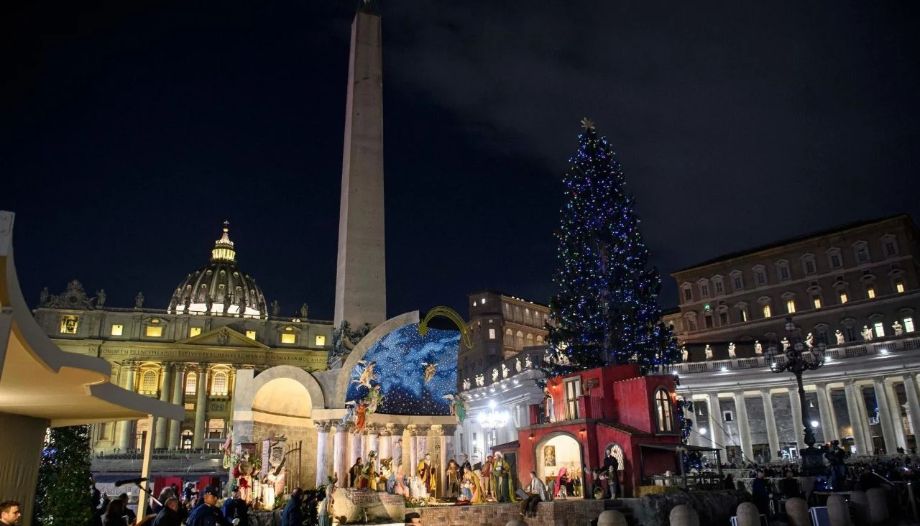
Pope Christmas tree It seems to have become a universal symbol of Christmas, even for those who don't believe in God. We Catholics know there's more to it, and that's why the Christmas tree tradition has religious significance for us.
Let us remember that Adam and Eve were not allowed to eat the fruit of a tree, and that our Lord died on another. Christmas trees are usually evergreen, which reminds us of eternity. The lights we place on the tree evoke the stars in the sky and God's beautiful creation. Some suggest that the ornaments recall the gifts the Magi gave to the Baby Jesus.
No one knows the origin of the Christmas tree with absolute certainty, but many sources attribute it to Saint Boniface in the 8th century. It is said that St. Boniface He gave the fir tree to the druids to use instead of the oak, the symbol of their idol.
Today it is customary for families to bless their Christmas tree before or after decorating it.
2. Tree of Jesse
The name Jesse Tree comes from Isaiah 11:1, where Jesus is mentioned as a shoot springing from the stump of Jesse, the father of David and great-great-grandfather of Jesus. The tree represents the ancestry of Christ (family tree), and ornaments—one for each day of Advent—are hung on it, bearing symbols that represent Jesus' ancestors and various events in the history of salvation, based on the day's Bible readings. Jesse Trees can be made of cardstock or fabric, or a branch of a real tree can be placed on a stand.
It appears that the tradition of the Tree of Jesse originated in Christian art, and in particular, in the elaborate stained-glass windows of European churches and cathedrals during the Middle Ages. The art and the stained glass depicted scenes from the life of Christ, thus fulfilling both an aesthetic and a catechetical function.
3. Advent Retreat
Advent is a wonderful time for spiritual retreat, and opportunities abound, whether they be special retreats, days of reflection, parish missions, or evening events. Stepping away from the daily grind is tempting, especially as we prepare our hearts for Christmas.
If going out is difficult, we can organize our own Advent retreat at home. While ideally we would get away from our usual surroundings, we can have an effective retreat at home simply by changing our routine and attitude. All it takes is planning and self-discipline.
4. The Inns
Las Posadas is the name of the Mexican Christmas tradition that begins on December 16 and represents Mary and Joseph's search for lodging in Bethlehem before the birth of Jesus.
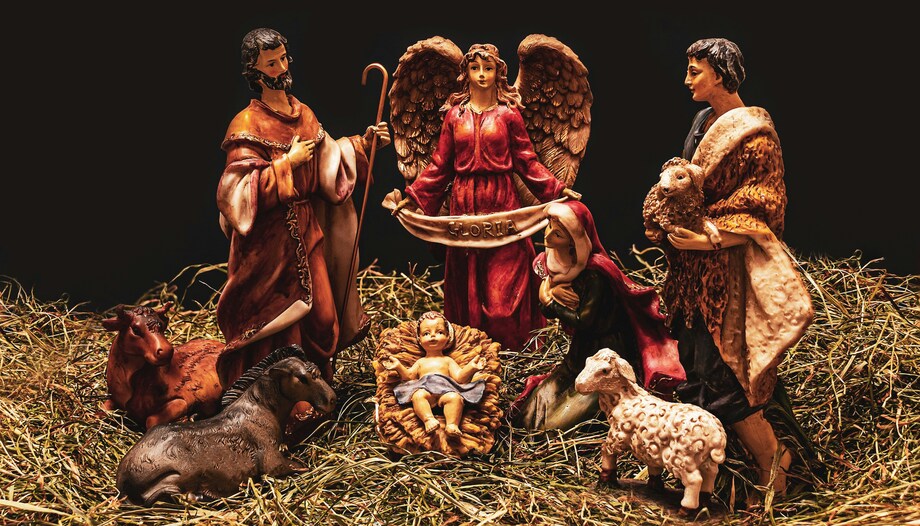
Families gather at a different house (chosen in advance) each night of the novena. The traditional posadas begin with a candlelit procession and hymns that tell the story of the Holy Family asking for lodging for the night. On each of the first eight nights, the procession passes through every room of the house, and then Joseph and Mary are turned away. On the ninth night, the families set up the Nativity scene, much like the crèches we all know.
In some areas, it is customary to include Holy Mass as part of the procession. After Mass and the procession, refreshments are served, including a variety of traditional dishes. In some groups, it is traditional to give children a piñata.
The Posadas originated in Mexico in the 16th century, presumably thanks to the Franciscan friars who worked among the Aztecs. The novenas also served to replace the Festivals of the Sun and contributed to the Christianization of the indigenous peoples.
5. Advent Nativity Scene
In addition to the Christmas nativity scene This tradition is a variation of the Nativity scene and is inspired by the prayer, penance, and charity characteristic of Advent. A Nativity scene is constructed from cardboard, sticks, or wood and placed in a prominent location in the home. There can be one Nativity scene for each person or one for the entire family.
Paper, cotton, or even straw is used to make the Nativity scene soft for the Baby Jesus. With each act of love or penance, a «straw» is added to the Nativity scene in the hope of filling it by Christmas Eve, when a figure is placed to represent the Baby Jesus. Some families prefer to have the Nativity scene blessed before using it.
6. Calendar
Advent calendars, an ancient German tradition, come in a wide variety of shapes and styles, but their purpose is always the same: to mark the days of Advent as Christmas approaches. They usually have a door or pocket that opens each day, revealing a Bible passage, a message, or a Christmas symbol. Some even contain small pieces of chocolate or toys.
The first Advent calendar as we know it was created in 1851, by hanging small pictures on the wall, one for each day, and the first printed one appeared in 1908.
7. Candle of Christ
A large, white candle is decorated with symbols of Christ using craft materials such as sequins, ribbons, vintage Christmas cards, or holly. The candle is lit on Christmas Eve to represent the birth of Jesus and then kept burning throughout the Christmas season to celebrate his coming.
Some families light it throughout the year, especially after Easter, to represent the Resurrection of Christ.
8. Candle of Mary
A separate candle or the Christ candle can be used. On December 8, the Feast of the Immaculate Conception, a blue veil is placed over the candle to represent Mary's holiness and the fact that she conceived the Child Jesus in her womb.
Marian symbols, ribbons, and images can also be added to enhance Mary's presence and recall her unconditional surrender as Mother of God and her joyful anticipation of his birth. Special Marian hymns can be sung and devotional prayers recited in veneration of Mary.
9. Christmas pastries
It seems that almost every country, especially those in Europe, has passed down traditional recipes for Christmas breads, cakes, and cookies. This custom is believed to stem from the teaching that Jesus is the Bread of Life, so we bake special treats to remember his sweetness.
For example, from France we have brioche, a flaky bread with a rich flavor. From Germany, we have Christstollen, a sweet bread with a crisscross pattern reminiscent of the baby Jesus wrapped in swaddling clothes. Melachrino is a Greek spiced cake, and cassata is an Italian custard tart. Traditional Christmas treats are meant to symbolize Jesus and announce the approach of his birth.

10. Christmas Theater
For parishes and families across the country, Advent is filled with scripts, costumes, rehearsals, and excitement as children prepare to dramatize the story of the Holy Family on stage. Performing the Christmas story makes it more tangible for both children and adults, and in many communities, Christmas wouldn't be the same without this age-old tradition.
It is believed that the Christmas play originated with Saint Francis of Assisi in the 13th century, when he created a living Nativity scene during Midnight Mass in Greccio, Italy. From there, the idea became popular.
11. Antiphons of the O
People of all ages and social backgrounds often pray the O Antiphons. These seven antiphons are recited (or sung) before the Magnificat during Vespers in the Liturgy of the Hours on those days, and they refer to the period of preparation for Advent known as the Octave before Christmas, or the Second Part of Advent, which takes place from December 17 to 24. There is evidence that they were already in use in the 5th century.
The antiphons are important for two reasons. First, each highlights a title for the Messiah: O Sapientia (O Wisdom), O Adonai (O Lord), O Radix Jesse (O Root of Jesse), O Clavis David (O Key of David), O Oriens (O Rising Sun), O Rex Gentium (O King of the Nations), and O Emmanuel (O God with Us). Second, each alludes to Isaiah's prophecy concerning the coming of Christ.
The antiphons have been arranged with a specific purpose. If we start with the last title and take the first letter of each—Emmanuel, Rex, Oriens, Clavis, Radix, Adonai, Sapientia—we form the Latin words ‘Ero cras’, meaning ‘Tomorrow I will come’. The O antiphons not only intensify our preparation for Advent, but also bring it to a joyful conclusion.
——————-
– Marge Fenelon is the author of “Strengthening Your Family: A Catholic Approach to Holiness in the Home.”.





 Español
 English
 Italiano
 Français
 Deutsch
 Polski