


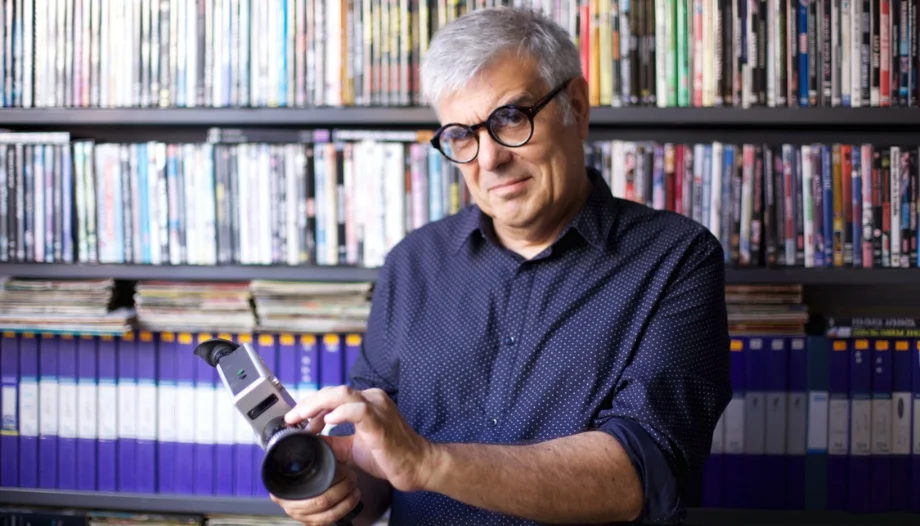
Four years of filming to capture the daily lives of the monks of Montserrat. That is how long director Carles Prats spent coming and going from the monastery to bring this story to life. The Weather in Montserrat («El Tiempo de Montserrat»), a documentary that, during the monastery’s millennium celebration, seeks to show—without judgment or voice-over—the daily life of the Benedictine community. The project began before the pandemic and allowed the team to witness an unusual side of Montserrat—practically empty of visitors—as well as to gain access to places and moments that are usually hidden from tourists’ view.
Prats, who is accustomed to working on documentaries about culture, film, and music («Peret and the Origins of Catalan Rumba», «Dracula Barcelona» ), acknowledges that this experience has been particularly enriching. The result is a contemplative look at a community whose daily life is marked by prayer, work, and a unique conception of time. Presented at the BCN Film Fest, it will premiere on September 10 at a special screening hosted by A Contracorriente Films.
There is also a personal story behind the project. Nuria Casaldáliga, a classmate of Prats’s and the niece of Bishop Pere Casaldáliga, was the one who spearheaded and brought the documentary to fruition alongside him. Her death last January also makes The Weather in Montserrat in a project for which the director is especially grateful.
In this interview, the director talks about his experience with the monks and what he has learned about monastic life, repetition, and a different way of understanding time.
Why make a documentary about the monks of Montserrat?
–Montserrat has always been a very interesting and inspiring place to me. A few years ago, I read an essay by Neil Postman in which he discussed how Benedictine communities managed their time. He even went so far as to say that it seemed as though the Benedictines had invented the clock.
On the other hand, making a documentary about daily life in a monastery is really complicated, because it requires them to open their doors to you. Driven by our fascination with the monastery, its use of time, and the opportunity to showcase its daily life, Nuria Casaldáliga—who set the production in motion—and I set to work.
The documentary places special emphasis on time. What can we learn from the way these monks manage their time?
–There comes a time in life when, at least in my case, you become more repetitive. That’s what Jorge Luis Borges said: “There comes a time in your life when you stop reading and all you do is reread.”
In the documentary, the abbot says that repetition leads you to an understanding of who you are and of the world. I think I, too, am very much in that moment of repetition, in a contemplative state. For me, it has been an enriching experience.
The community at Montserrat is very special. There are about 50 monks, and most of them have advanced degrees, so you find yourself among a community that is well-educated in a wide variety of fields.
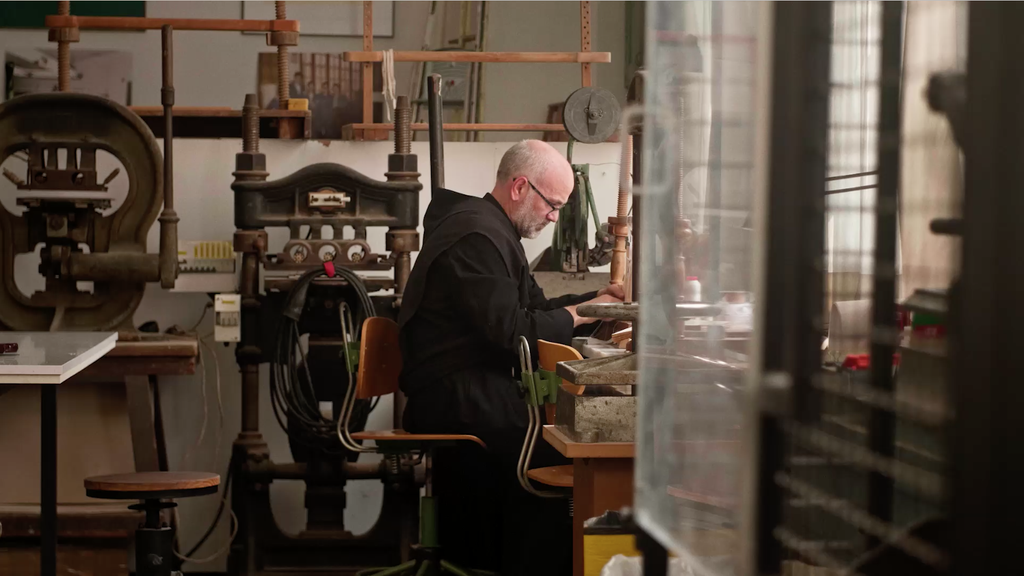
When you see the monks chanting in the basilica, the image you see has little to do with their daily lives. Each one has his own duties: some are in charge of the library, others run the guesthouse, and still others welcome pilgrims.
In addition, the community has changed a great deal. It is governed by the Rule of St. Benedict, a 6th-century text, but the abbot adapts it to the times. Nowadays, for example, all the monks carry cell phones and send each other WhatsApps, something that wouldn't have been the case 200 years ago.
One might think that, given the way they manage their time, the monks' lives seem monotonous. How would you respond to this misconception?
–Life depends on what you like or don't like. For example, they explained that the philosopher Kant did exactly the same thing every day. Perhaps in recent decades, people have come to value leisure, vacations, tourism, going to the movies, and video games a great deal. That's where this idea comes from.
But I don't think repetition is a bad thing; on the contrary. From the perspective of meditation and self-reflection, it can have positive effects.
There are some very restless people who are unable to stay there. For others, however, this is deeply fulfilling. What I've seen is that the monks enjoy it. This kind of highly structured daily routine allows them to lead a fulfilling life.
After living alongside this community for years, what do you think monastic life can offer today to a society that is living at an increasingly fast pace?
–I think we live in a society that, in some ways, is superficial. Everything moves so fast, and we’ve gotten used to short messages and highly fragmented content.
I believe that this approach to time management and the purpose for which you use your time bring about positive results. In fact, throughout history, there have always been people who have wanted to live in communities in remote places.
The Montserrat community is not a closed community. It is closely connected to the outside world: some monks teach outside the monastery and engage in various activities, although they follow the Benedictine schedule.
But at the same time, there is this model of monastic life—one that is more introspective and focused on meditation—which I think is very positive, especially in an increasingly frivolous world.
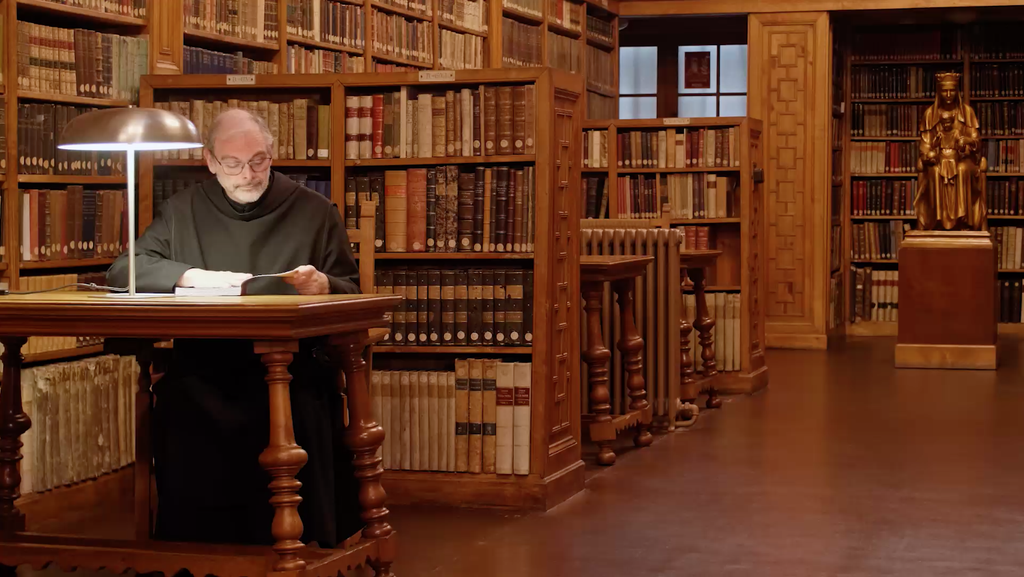
At one point in the documentary, one of the monks says that people have this image of a monk reading in the garden, and that it’s a distorted image. Do you think people have an image of monastic life that doesn’t match reality?
–Yes. In many ways, the reality of these monks’ lives is surprising. That monk is in charge of the library, and he’s very unassuming (he appeared in the documentary only after much insistence, because he had no desire to be in the spotlight). I found his reflection on that idealized image of a monk sitting under a tree reading a book really amusing.
The backgrounds of the various monks are also surprising. The man who is now the museum director had previously been in charge of IT security at an American company. The man who runs the sanctuary had been a manager at Burger King. Another had been a gardener, and yet another had taught at a university.
It's a very diverse world that you can't imagine until you get there. And yes, those stereotypes do exist.
Besides, once you start spending time with them, you discover a very different side to them. At the end of the day, they might get together to read the newspaper, talk about a soccer game, or play Parcheesi. The monks are fun. Like everyone else, some are more outgoing and others are more reserved, but for me it’s been a very interesting and enriching experience.
Was it difficult for the monks to open up in this way?
–It took us a while to get them to open their doors to us. One of the leading monastic documentaries, The Great Silence, had to wait 18 years before they let him in to film. We had to wait eight months.
You'll understand this once you're inside the monastery, because for the monks, their daily routine—their schedule of prayers and services—is more important than attending to someone who's come to make a documentary.
I was also surprised that all the monks wear watches. They explained to me that, when they join the community, the abbot collects their watches and redistributes them at random, so that each monk probably ends up with a different one than the one he had when he arrived.
The monks talk about why they left their former lives to enter the monastery. Was there any testimony or personal story that particularly touched you?
–I was really struck by what a monk who visited Montserrat as a young boy on a field trip had to say. He saw the monks and decided he wanted to become part of the community.
To make sure that his calling was truly monastic life, he asked to live outside the monastery for a year. They provided him with a place to live in a small village in the Pyrenees.
The townspeople were suspicious of him because he had long hair, and they thought he was a hippie. When they found out he was a monk from Montserrat, they began to treat him differently. He ended up staying in that town for 19 years, working in the fields.
After that, he left to care for his ailing mother and later his father. Another 12 years passed. In other words, he had planned to be away for a year, but ended up staying for 31 years before he decided to return to the monastery.
He came back, knocked on the door, and said, «Look, I left 31 years ago.» And he became a monk again. The story really caught my attention.
What is the most admirable aspect of these monks' lives?
–I admire that they came to the conclusion that they wanted to become monks. For a while, many try it out, and some give it up because they realize that monastic life isn't for them.
I’m also struck by the fact that people live together in a community in such a different way. We think a lot about ownership: «I’ve bought this, I want this, I want that.» There, the mindset is very different. It’s like a mental liberation from the obligations that consumption creates.
I think that, if you handle it well, it enriches you. Montserrat has been home to some fantastic intellectuals, and the publications from the Abbey of Montserrat are wonderful. You see that people who have lived there within the monastery have managed to produce truly admirable works.
A monk told me that they published a quarterly magazine. But he said, “If it comes out every six months, it’s no big deal,” because for them, the important thing is to stick to their daily schedule. I think that’s a valuable lesson: to prioritize the things that really matter. The rest will follow.






 Español
  English
  Italiano
  Français
  Deutsch
  Polski